Forget everything you think you know about cavities. Preventing them naturally is about so much more than just brushing your teeth twice a day. It’s about creating a healthy, balanced environment inside your mouth—one where your teeth can defend and repair themselves, keeping your smile bright and strong.
This approach hinges on neutralizing the harmful acids that weaken your teeth and actively helping your enamel remineralize. Get this right, and you can build a powerful, natural defense system for a smile that lasts a lifetime.
Your Foundation for Natural Cavity Prevention
First things first, a cavity isn’t just bad luck. It’s the end result of a disease process called dental caries, an active infection that damages your teeth. For this infection to take hold, it needs three things: specific bacteria, a food source (like sugar), and an acidic environment that eats away at your tooth enamel.
The main troublemaker is a bacterium called Streptococcus mutans. These microbes thrive on sugar, producing acid as a waste product. When that acid repeatedly washes over your tooth enamel, it starts pulling out essential minerals. This weakening process is called demineralization, and it’s the first step toward a cavity.
The Battle for Your Enamel
Think of your oral health as a constant tug-of-war. On one side are factors that cause decay—sugary snacks, acidic sodas, frequent grazing. On the other side is your body’s defense team, led by your saliva. Saliva is a natural wonder; it works around the clock to neutralize those acids and redeposit strengthening minerals back into your teeth. This vital rebuilding process is called remineralization.
A cavity forms when demineralization happens more often than remineralization. But here’s the great news: in its earliest stages, this damage is completely reversible. By tipping the scales in favor of remineralization, you can actively repair and strengthen your enamel, preventing a permanent cavity from ever forming and keeping your teeth looking and feeling their best.
A key indicator of your cavity risk is the pH level of your saliva. When the pH in your mouth drops too low (becomes too acidic), it creates the perfect breeding ground for “bad” bacteria to thrive and for your enamel to dissolve.
To help you get a clearer picture, here’s a simple breakdown of the core strategies that will make a real difference to your dental health.
Core Strategies for a Cavity-Resistant Smile
| Strategy | Why It Matters for Your Smile | Simple Action to Take Today |
|---|---|---|
| Mindful Nutrition | Starves acid-producing bacteria of their food source (sugar) and provides the essential minerals your teeth need to stay strong and white. | Swap one sugary drink (like soda or juice) for a glass of water to instantly reduce the acid attack on your teeth. |
| Effective Hygiene | Physically removes the sticky plaque biofilm where harmful bacteria live, protecting your enamel and keeping your gums healthy. | Gently brush along the gumline for a full two minutes to dislodge plaque and prevent inflammation. |
| Supporting Saliva | Your body’s best natural defense. It neutralizes acid, washes away food, and delivers strengthening minerals to your enamel. | Chew sugar-free gum with xylitol for 5 minutes after a meal to boost saliva and protect your teeth. |
Adopting a natural prevention strategy is all about enhancing your body’s ability to win this daily battle. The goal is to make your mouth a place where harmful bacteria struggle and where your teeth have everything they need to stay strong and healthy. It’s about working with your body to keep your smile vibrant and free of cavities.
Eating for Stronger and Healthier Teeth
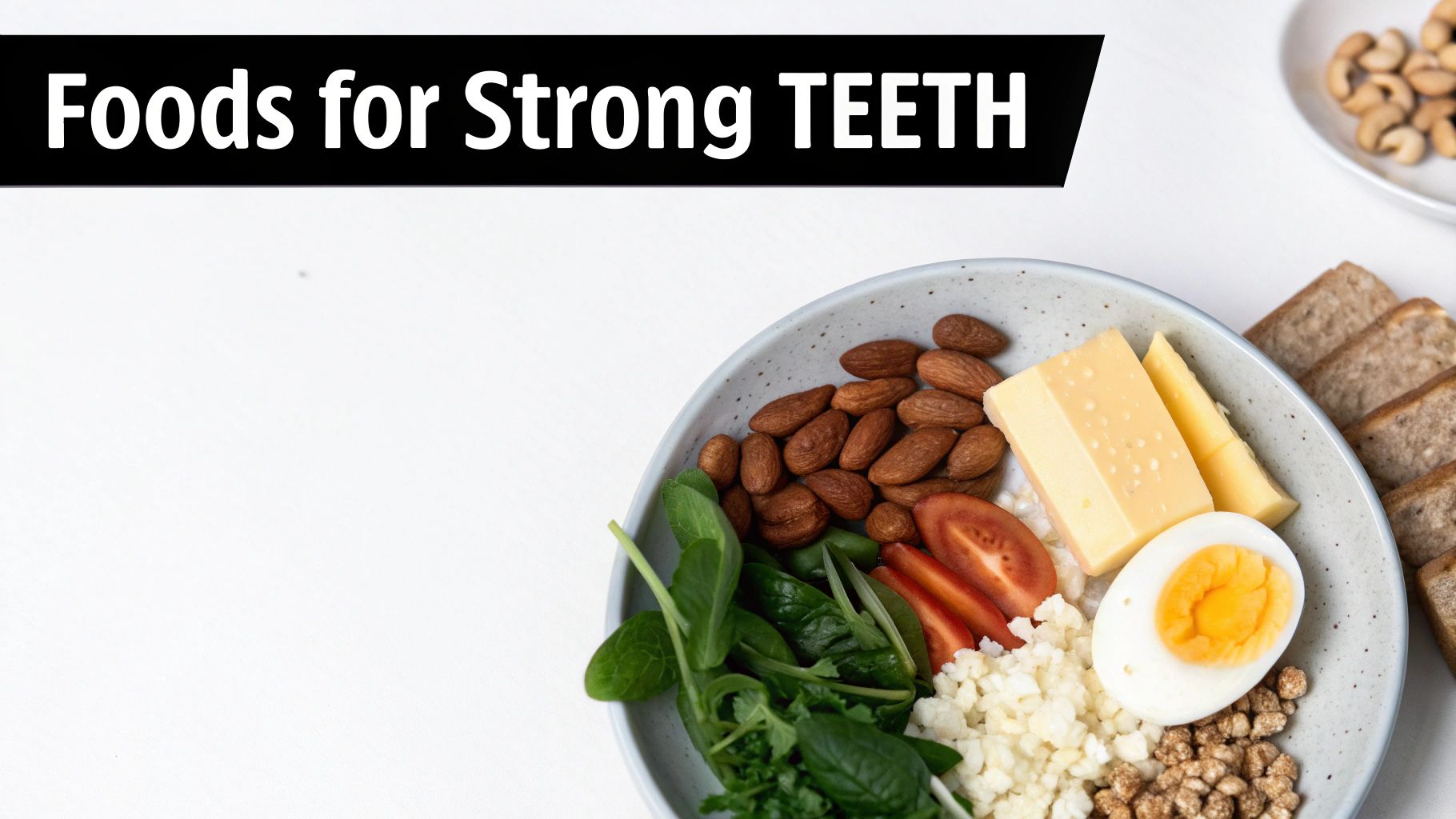
While brushing and flossing are your front-line defense, what you eat provides the essential building blocks for a resilient smile from the inside out. Your diet directly shapes the environment in your mouth, tipping the scales either toward enamel-damaging acid attacks or consistent strengthening and repair.
The link is simple. Cavity-causing bacteria, particularly Streptococcus mutans, thrive on sugar. When you consume sugary foods, these bacteria metabolize the sugars and release acids that steadily wear away your precious tooth enamel.
That’s why one of the most powerful things you can do for your smile is to learn practical strategies to cut out sugar.
We’re not just talking about candy bars. The World Health Organization (WHO) advises that “free sugars”—those added to foods and drinks, plus those in honey and fruit juices—should make up less than 10% of your daily calorie intake. For even greater dental health benefits, they recommend aiming for less than 5%.
These guidelines are crucial because dental decay is the most common noncommunicable disease in the world, affecting an estimated 2.5 billion people. High sugar consumption is a primary cause of this preventable health issue.
Building Your Enamel with Key Nutrients
Beyond cutting out harmful sugars, you can actively fortify your teeth by consuming specific minerals and vitamins. Think of these nutrients as the maintenance crew for your smile, constantly working to repair and reinforce your enamel.
Here’s what your teeth need to stay strong:
- Calcium: The main component of your teeth and bones. Dairy products like milk, cheese, and yogurt are excellent sources. For dairy-free options, choose leafy greens, almonds, and fortified plant-based milks.
- Phosphorus: This mineral works with calcium, helping your body absorb and use it to build strong enamel. You’ll find it in protein-rich foods like eggs, fish, lean meats, and nuts.
- Vitamin D: Often called the “sunshine vitamin,” Vitamin D is critical for regulating calcium and phosphate levels, making it essential for strong teeth and a healthy jawbone.
By enriching your diet with these nutrients, you provide your body with the raw materials needed for remineralization—the natural process of repairing and strengthening enamel. To learn more about how food impacts your oral health, check out our guide on the role of nutrition in dental health.
Foods that are firm and crunchy, like apples, carrots, and celery, act like natural toothbrushes. Chewing them stimulates saliva flow and helps scrub away plaque and food particles, giving your teeth a gentle cleaning that contributes to a brighter smile.
Smart Swaps for a Healthier Mouth
Improving your dental health through diet doesn’t require a complete overhaul. Small, consistent swaps can significantly reduce the acid attacks on your teeth.
For instance, instead of a sugary breakfast cereal, choose plain Greek yogurt topped with fresh berries and nuts. Swap that afternoon soda for a glass of water or a cup of green tea, which contains compounds that help control harmful bacteria.
These simple adjustments do two things at once: they starve the bad bacteria and provide the nourishment your teeth need, creating an oral environment that naturally resists decay and promotes a healthy, beautiful smile.
Mastering Your Natural Oral Hygiene Routine
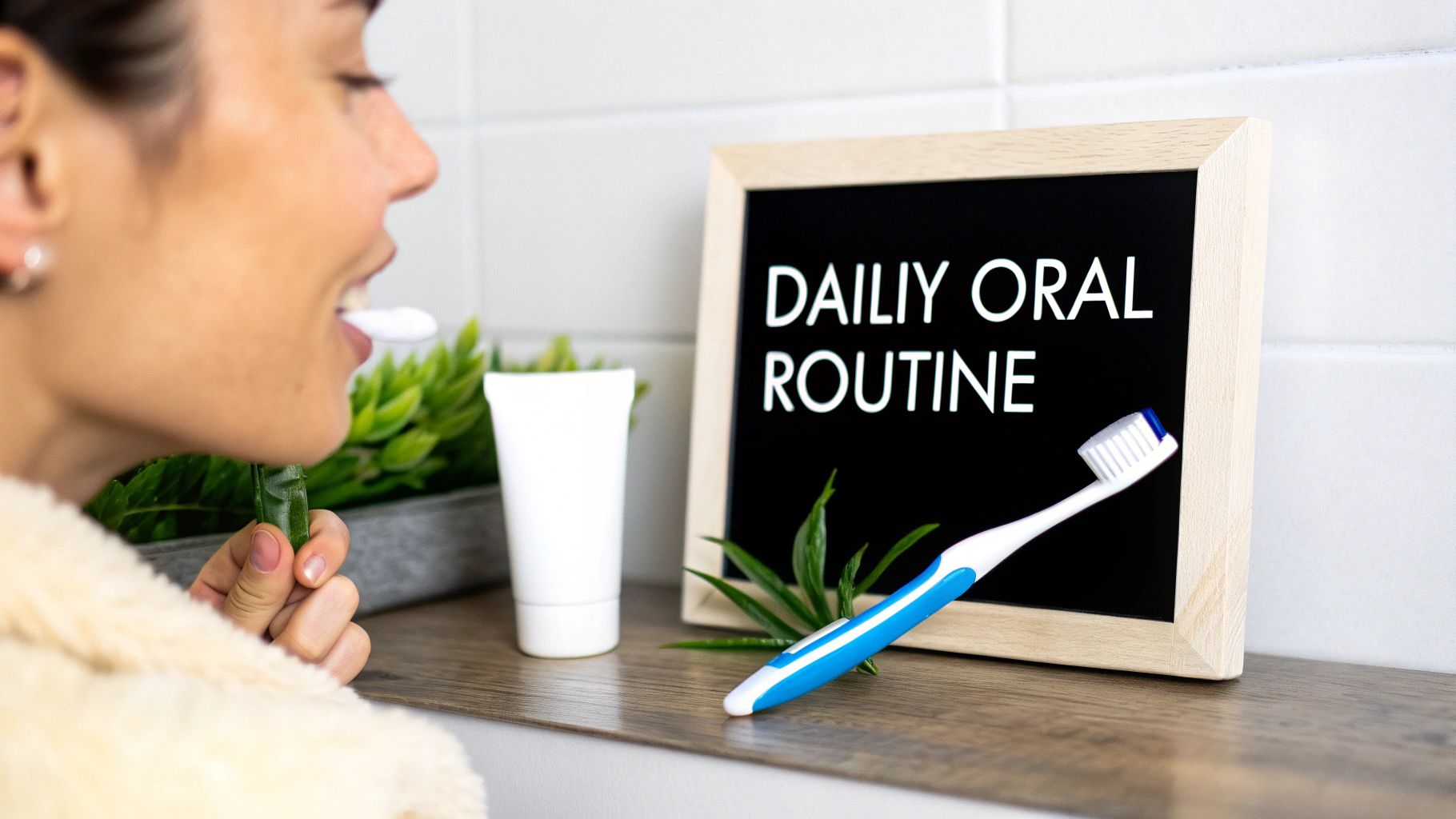
While a tooth-friendly diet builds your defenses from within, your daily hygiene routine is your active strategy to physically disrupt the plaque and bacteria that cause decay.
Think of it as a targeted mission to protect your smile. The goal is to keep harmful bacteria from colonizing on your teeth, ensuring your enamel stays strong and clean. It’s not about scrubbing harder; it’s about brushing smarter for maximum benefit.
Perfecting Your Brushing and Flossing Technique
Proper technique is what separates going through the motions from effectively removing plaque without harming your enamel or gums. The goal is to break up the sticky bacterial film, called biofilm, that constantly forms on your teeth.
A few tweaks can dramatically improve your results:
- Angle for Success: Always hold your toothbrush at a 45-degree angle to your gum line. This allows the bristles to sweep away plaque from both the tooth surface and the critical area just under the gums where disease often begins.
- Gentle, Circular Motions: Avoid aggressive back-and-forth scrubbing. Use soft, circular strokes instead. This method is far more effective at cleaning and won’t wear down your enamel or cause gum recession.
- Floss Correctly: Flossing should do more than remove food. Curve the floss into a “C” shape against each side of the tooth and gently slide it below the gum line. This removes the hidden plaque your brush can’t reach, preventing cavities between teeth.
Choosing Toothpaste with Natural Power
The right toothpaste can significantly boost your prevention efforts. While options seem endless, some key ingredients are scientifically proven to help you achieve a cavity-resistant smile.
Using a fluoride toothpaste is one of the easiest and most effective ways to prevent tooth decay. Health organizations worldwide recommend brushing with it twice daily. Studies show it can reduce cavity risk by up to 25% compared to non-fluoride options. It’s a cornerstone of dental health for its proven enamel-strengthening benefits.
Beyond fluoride, other natural ingredients are powerful allies for your teeth:
- Xylitol: A natural sweetener that harmful bacteria like Streptococcus mutans cannot digest. It effectively stops them from producing enamel-eroding acid.
- Hydroxyapatite: This is the same mineral your tooth enamel is made of. Toothpastes with hydroxyapatite can help patch up microscopic weak spots, contributing to the remineralization of your teeth.
Navigating the toothpaste aisle can be overwhelming. For a deeper dive, check out our guide to toothpastes to find the perfect one for your dental health needs.
A significant portion of the bacteria that cause bad breath and contribute to tooth decay lives on your tongue. Don’t forget to clean it! Using a tongue scraper or the back of your toothbrush daily can significantly lower the overall bacterial load in your mouth for better health and fresher breath.
When you combine the right techniques with powerful, naturally supportive ingredients, your daily routine becomes a proactive defense strategy. This approach doesn’t just clean your teeth—it actively strengthens them for a lifetime of excellent oral health.
Supporting Your Body’s Natural Defenses
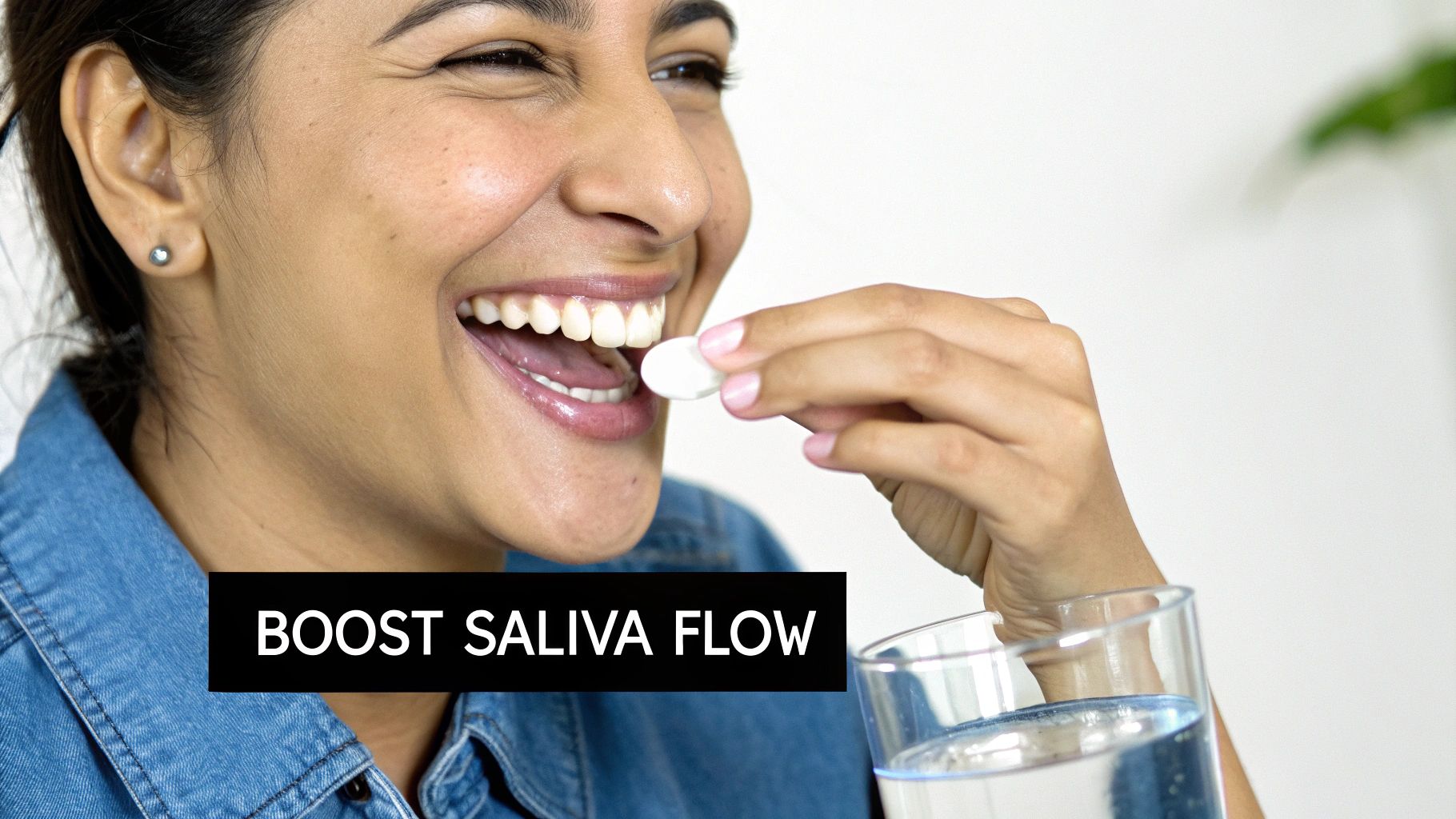
Beyond brushing and diet, your body has its own powerful system designed to protect your teeth 24/7. The undisputed hero of this system is your saliva.
Saliva is a dynamic fluid that actively fights the first stages of tooth decay. It acts as a natural buffer, neutralizing the corrosive acids that bacteria produce after you eat. It also washes away food particles that could feed those same microbes.
Most importantly, saliva is saturated with calcium and phosphate—the exact minerals your enamel needs to repair itself. This constant process of mineral replenishment is called remineralization. When your saliva is healthy and abundant, it’s constantly reversing microscopic damage before it can become a cavity.
Boosting Your Saliva Production
Keeping this amazing defense system strong starts with simple hydration. Dehydration thickens saliva, making it less effective. Drinking plenty of water throughout the day ensures your saliva can do its job properly.
You can also stimulate your salivary glands, especially after meals when acid levels are highest.
- Chew Sugar-Free Gum with Xylitol: The act of chewing signals your glands to produce more saliva. When the gum contains xylitol, you get a dual benefit: stimulated saliva flow plus an ingredient that actively fights harmful bacteria.
- Eat Crunchy, Fibrous Foods: Snacking on raw carrots, celery, or apples forces you to chew more, which ramps up saliva production and gives your teeth a gentle, cleansing scrub.
Of course, a robust immune system is a cornerstone of overall health, helping your body fend off all sorts of challenges. If you’re curious, you can learn more about how probiotics support immunity to keep your entire body resilient.
A Quick Note on Medications: Some common medications for allergies, depression, and high blood pressure can cause dry mouth (xerostomia). If you experience this, it’s critical to be extra diligent with hydration and other saliva-stimulating techniques to protect your teeth from increased decay risk.
Natural Agents That Support Enamel Health
Beyond stimulating saliva, you can incorporate natural agents that directly support your enamel’s strength. Think of these as allies that enhance your body’s defenses.
Look for oral care products containing hydroxyapatite, a naturally occurring mineral that is the main component of your tooth enamel. When used in toothpaste, it helps fill in microscopic weak spots on the tooth’s surface, actively aiding the remineralization process.
Similarly, compounds in green tea, known as polyphenols, have been shown to inhibit the growth of cavity-causing bacteria. Rinsing with or simply drinking green tea can help lower the bacterial load in your mouth, giving your saliva an easier job. By actively supporting these natural functions, you give your smile its best possible chance to defend itself against decay.
What Actually Works vs. What’s Just a Fad
When you explore natural dental care, it’s easy to encounter conflicting advice. The key is to separate strategies backed by real science from popular fads. Let’s focus on what truly helps keep your teeth strong and healthy.
Evidence-Backed Natural Helpers
Some natural approaches can genuinely boost your dental health. One of the best examples is xylitol, a plant-based sweetener. The great thing about xylitol is that harmful bacteria in your mouth, like Streptococcus mutans, cannot use it for energy as they do with sugar.
When these bacteria consume xylitol, they can’t produce the acid that damages tooth enamel. In short, xylitol helps starve the very bacteria that cause cavities, keeping your mouth’s pH level in a healthier, less acidic state.
Another powerful ally is green tea. It’s packed with compounds called polyphenols, which have been shown to interfere with the growth of cavity-causing bacteria. These compounds help slow down acid production, making green tea a simple and effective addition to your routine.
Putting Proven Strategies to Work
Incorporating these natural agents into your daily life is simple and can make a real difference for your smile.
- Try Xylitol Gum or Mints: Chewing xylitol gum for just five minutes after a meal stimulates saliva to naturally rinse your teeth while actively fighting off harmful bacteria.
- Use a Green Tea Rinse: After brushing, try swishing cooled, unsweetened green tea in your mouth for about 30 seconds. This can help reduce the overall amount of bacteria.
Think of these remedies as support for your mouth’s natural defenses, not magic cures. When combined with great brushing, flossing, and a smart diet, they create an oral environment where your teeth can truly thrive.
Fads That Don’t Hold Up to Scrutiny
On the other hand, some trendy practices lack scientific backing for preventing cavities. A major one is oil pulling—swishing oil, usually coconut oil, in your mouth for up to 20 minutes.
While proponents claim it “pulls” out toxins, scientific studies have not found any real proof that it reduces cavities. The act of swishing might dislodge some food particles, but water can do that just as well. There’s no evidence it can penetrate and break down the tough plaque biofilm where decay-causing bacteria thrive.
Relying on fads like oil pulling can create a false sense of security, possibly causing you to neglect proven habits that actually protect your teeth. For a natural approach that delivers real results, stick with what the evidence supports: disrupt bacteria with xylitol and green tea, maintain excellent brushing and flossing, and eat a tooth-friendly diet. This ensures your efforts are directed toward what truly works for your dental health.
Knowing When to Partner with Your Dentist
Natural prevention is the foundation of excellent dental health, but it achieves its best results when paired with professional care. Your daily habits are incredibly powerful, but even the most diligent routine can’t catch everything. Your dentist is an indispensable partner in maintaining your oral health.
Your toothbrush and floss are fantastic for removing soft, sticky plaque. However, once plaque hardens into tartar, it becomes cemented to your teeth, and no amount of brushing at home can remove it.
A professional cleaning is the only way to safely eliminate this stubborn buildup, preventing gum inflammation and keeping your smile bright. Regular check-ups are also your best defense for catching problems when they’re small, reversible, and simple to fix.
Red Flags That Mean It’s Time for a Visit
Your body often sends clear signals that it’s time to see a professional. Ignoring these can allow small issues to become major problems that natural remedies cannot resolve.
- Lingering Tooth Sensitivity: A sharp pain from hot, cold, or sweet foods that doesn’t go away could mean your enamel is thin or a cavity is forming.
- Visible Spots or Pits: Any dark spots, stains, or small holes on a tooth require immediate professional evaluation.
- Sore or Bleeding Gums: This is a classic early sign of gum disease. Professional treatment is key to managing it effectively and protecting your oral health.
Your Natural Tooth Decay Questions Answered
Exploring natural oral care often brings up questions. Getting clear, honest answers is key to making choices that benefit your health. Let’s tackle some of the most common questions about preventing cavities naturally.
Can I Completely Reverse a Cavity Naturally?
This is a great question, with a nuanced answer: yes and no.
You can absolutely reverse the very first stage of a cavity, known as demineralization. This is a “pre-cavity” stage where the enamel has lost minerals but a hole hasn’t formed. With meticulous hygiene, a mineral-rich diet, and remineralizing agents, you can help your enamel rebuild and stop the decay.
However, once decay breaks through the enamel and creates a physical hole—a true cavity—it cannot be reversed naturally. At that point, the structural damage is permanent. Professional dental care is essential to remove the decay and restore the tooth’s form and function, preventing further damage.
Is Charcoal Toothpaste Safe and Effective?
Charcoal toothpaste has gained popularity, but most dental professionals advise caution. Its primary issue is its abrasive texture, which can wear down your protective enamel over time.
This is problematic for two reasons: it can increase tooth sensitivity and, ironically, make your teeth more susceptible to cavities in the long run.
While it might remove some surface stains, there is little scientific evidence that charcoal toothpaste actually prevents cavities. For proven, safe protection and a healthier smile, you are much better off with pastes containing well-researched ingredients like fluoride or hydroxyapatite.
How Often Should I Replace My Toothbrush?
This simple habit makes a huge difference in your oral health. Plan to replace your toothbrush every 3 to 4 months.
Toss it sooner if you notice the bristles are frayed, bent, or worn out. A worn-out brush cannot clean effectively, leaving behind the sticky plaque that leads to cavities.
It’s also wise to get a new brush after you’ve been sick. This helps prevent reintroducing germs into your system and keeps your mouth as healthy as possible.
Your daily habits are the foundation of a healthy, cavity-free smile, but partnering with a dental team ensures your efforts lead to lasting success. At Grand Parkway Smiles, we believe in combining practical preventive guidance with modern, gentle treatments to help you achieve optimal oral health.
Whether you need a routine check-up and cleaning or have a specific concern, we’re here to help you maintain a vibrant, healthy smile. Schedule your visit with our Katy dental experts today by visiting us at https://dentistkatytx.com.