Let's get straight to the point: modern root canal treatment is not painful. In fact, the entire reason for the procedure is to get you out of the severe pain caused by a deep tooth infection and save your tooth, preserving your smile's health and appearance.
People often say the experience is no different than getting a routine dental filling, and they're right. The procedure is designed to be a comfortable, effective solution that protects your dental health for the long run.
Unpacking the Truth About Root Canal Pain
So, where did this terrifying reputation come from? It's all thanks to outdated stories and horror-movie portrayals that have absolutely nothing to do with modern dentistry.
The awful pain people talk about isn't from the procedure—it's the symptom of the infected tooth nerve that the root canal is designed to fix. Think of your endodontist as a firefighter for your mouth. They aren't starting the fire; they're showing up to put out the painful blaze inside your tooth.
This procedure is one of the most important tools we have for saving your natural teeth. By gently removing the infected tissue and sealing the tooth, a root canal prevents an extraction. This helps you avoid the domino effect of problems that follow tooth loss, like shifting teeth, jawbone loss, and the need for more expensive replacements like bridges or implants, all of which can compromise your oral health and the appearance of your smile.
Myth Versus Modern Reality
To really grasp why "is root canal treatment painful?" gets a hard "no" from dentists today, you have to see just how far we've come. The entire experience is now built around your comfort and effective, targeted pain management from the moment you sit in the chair.
This infographic breaks it down perfectly.
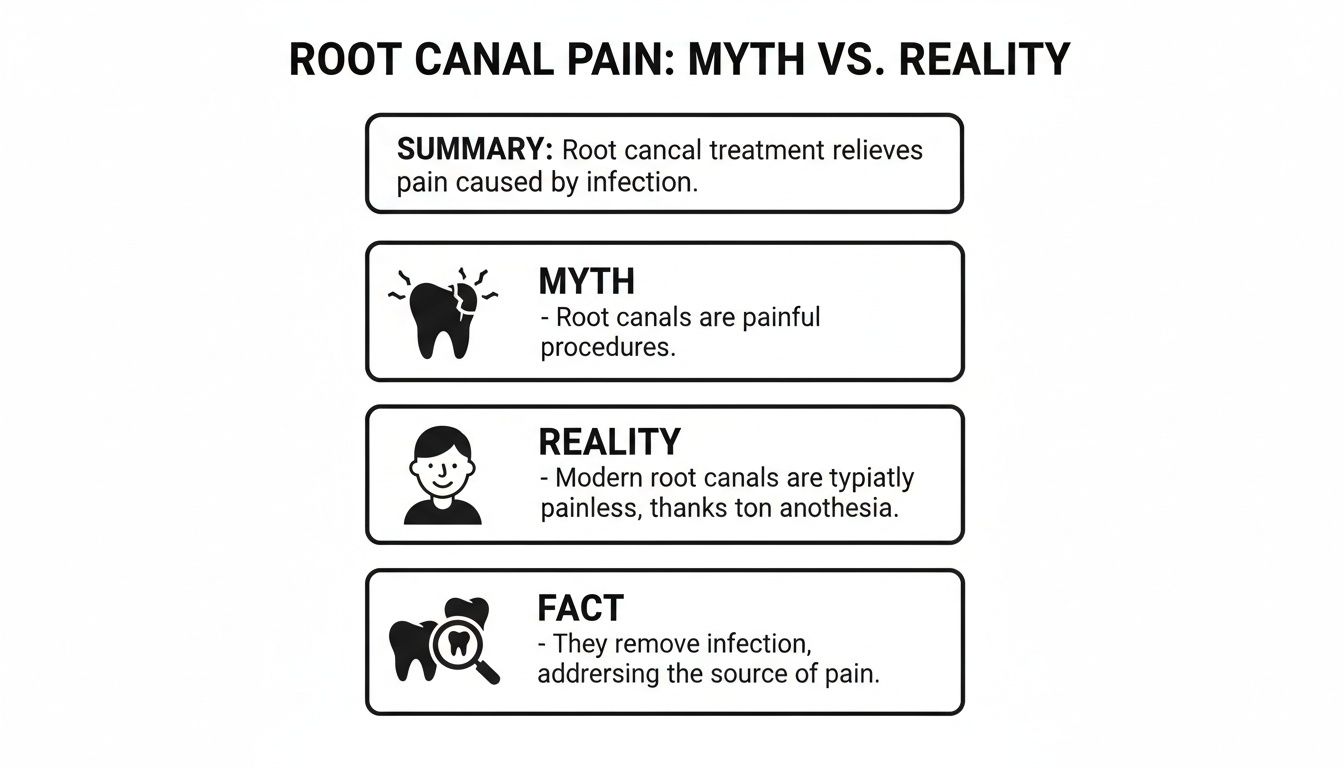
It’s a simple visual, but it powerfully shows the shift from an old, scary myth to the comfortable, pain-relieving reality of today's treatment. Let's compare the old fears with the current facts head-to-head.
Root Canal Pain Myth vs. Modern Reality
| Aspect | Common Myth | Modern Reality |
|---|---|---|
| During the Procedure | Excruciating, medieval-style pain. | Completely numb. Similar to getting a filling. |
| Anesthesia | It doesn't work well on infected teeth. | Advanced local anesthetics fully block pain signals. |
| After the Procedure | Weeks of agonizing recovery pain. | Mild, manageable soreness for a few days. |
| The Cause of Pain | The root canal procedure itself is torture. | The pain comes from the infection, which the root canal eliminates. |
The key takeaway is that the tools, techniques, and understanding of pain management have completely changed the game.
The primary goal of a root canal isn't just to treat an infection; it's to eliminate the source of your pain and save your natural smile. The procedure itself is the solution, not the problem.
And this isn't just anecdotal—the science is clear. A major 2009 study dug into patient experiences and found the average pain level during treatment was just 1.2 on a 10-point scale.
Even more telling? 54% of patients reported zero pain whatsoever. That's the power of modern local anesthesia. If you want to dive into the details, you can learn more about the research findings on root canal pain. This data is proof positive that the procedure isn't the source of agony but the end of it, preserving your tooth and your peace of mind.
Understanding the Source of Your Tooth Pain
To really get why a root canal is a relief, you have to understand what’s actually causing your pain. It’s not the dentist’s chair or the tools—the real problem is a crisis happening deep inside your tooth. That intense pain you feel? It’s your body’s alarm system screaming for help.
Picture your tooth like a tiny, natural fortress. The enamel is the hard outer wall, with a supportive layer of dentin just underneath. But right in the middle, there’s a soft, sensitive chamber called the dental pulp. This is the tooth's living core, filled with nerves, blood vessels, and tissue. It’s basically the tooth's command center.
When everything is healthy, this inner chamber is totally sealed off and sterile. The trouble starts when something breaks through the tooth's defenses.
How a Toothache Begins
A deep cavity, a crack from an injury, or even a chip can create an opening for bacteria to sneak in. Once those germs reach the pulp, they start to multiply like crazy. Your immune system kicks into gear, sending white blood cells to fight the infection, which causes major inflammation.
Here's the problem: all this creates a huge amount of pressure inside the rigid walls of your tooth. Unlike a swollen ankle that has room to expand, the pressure inside your tooth has nowhere to go. This intense pressure squeezes the nerve, causing that throbbing, non-stop pain that can keep you awake all night. What you’re feeling is your body telling you the nerve is infected and, unfortunately, dying.
A root canal doesn't cause pain; it relieves the intense pressure built up by an internal infection. The procedure is the only way to stop this painful process while saving your natural tooth and preserving the appearance of your smile.
If left untreated, this internal battle can get worse and lead to a dental abscess. An abscess is a pocket of pus that forms at the tip of the tooth's root as the infection seeps into the jawbone. This can cause facial swelling, fever, and even more severe pain, putting your overall health at risk.
Once you realize the agonizing toothache is coming from this internal infection, the purpose of a root canal becomes crystal clear. The treatment isn't something to be afraid of; it's a very precise and necessary solution designed to:
- Remove the Source of Pain: By cleaning out the infected and inflamed pulp, the procedure instantly takes the pressure off the nerve.
- Stop the Infection: It gets rid of the harmful bacteria, stopping them from spreading deeper into your jaw.
- Save Your Natural Tooth: Instead of pulling the tooth, a root canal allows you to keep it, maintaining your bite, your smile, and your dental health for the long run.
Thinking about it this way really changes your perspective. The procedure goes from being a source of anxiety to a welcome fix. The whole point is to end your suffering and get your tooth healthy again.
How Modern Dentistry Delivers a Comfortable Experience
So, let's get back to the big question: "is root canal treatment painful?" The honest answer, thanks to today's incredible dental technology, is a resounding no. The entire process is now designed from the ground up with your comfort in mind, from powerful anesthetics that completely numb the area to calming sedation and high-tech tools that make the work smooth and quick.
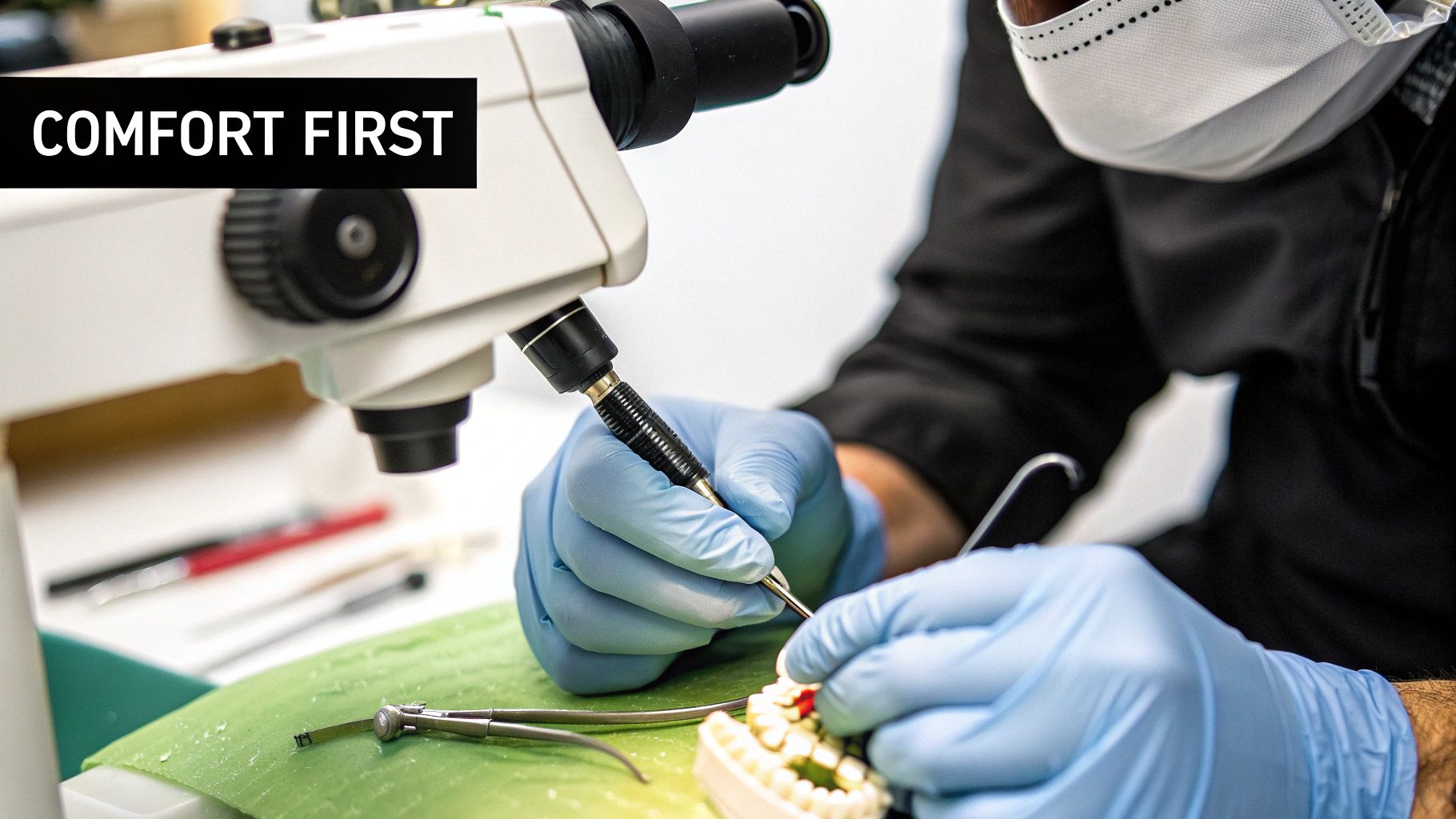
This comfortable experience all starts with highly effective local anesthesia. Your dentist will make sure the infected tooth and all the surrounding tissue are thoroughly numb, which completely blocks any pain signals from ever reaching your brain. For most people, this is more than enough to make the treatment feel no different than getting a simple filling.
Of course, we know that for many, the anxiety is the real challenge. If the very thought of the procedure has your heart racing, you have other options to help you relax.
Advanced Sedation for Total Relaxation
For anyone who needs a little extra help feeling at ease, we offer several sedation methods. These are specifically designed to put you in a calm, worry-free state, so you can get the care you need without any of the stress.
Common sedation options include:
- Nitrous Oxide: You probably know it as "laughing gas." It’s a mild sedative you breathe in through a small mask that creates a feeling of deep relaxation. Best of all, it wears off just minutes after the procedure is over.
- Oral Sedatives: This involves taking a prescribed pill shortly before your appointment. You’ll feel drowsy and very relaxed but will still be awake and able to communicate with your dental team.
These options are game-changers for managing dental anxiety. To get a better sense of how they can transform your visit, you can learn more about how sedation dentistry eases anxiety right here on our blog.
Precision Tools for a Better Procedure
It’s not just about sedation. The actual tools used during a root canal have improved dramatically. The old, rigid manual files have been tossed aside for advanced instruments that make the treatment faster, more accurate, and much less invasive.
For instance, dentists now work with ultra-flexible nickel-titanium files that can easily navigate the tiny, curved canals inside a tooth's root—something that was much harder to do with the old stainless-steel files. They’re both more efficient and far gentler.
Another huge leap forward comes from powerful surgical microscopes. These incredible tools magnify the inside of your tooth, giving your endodontist a crystal-clear view of the intricate canal system. This level of precision is key to ensuring all the infected tissue is removed, which boosts the procedure's success rate and helps save your natural tooth.
When you combine this kind of pinpoint visibility with more effective tools, the procedure becomes not only more comfortable but a lot quicker, too.
Despite the old horror stories, the facts tell a very different, and much happier, story. Research from the American Association of Endodontists shows that patients who have actually had a root canal are six times more likely to describe it as "painless." This dramatic shift is a direct result of modern anesthesia, sedation, and technology ensuring the treatment itself is no longer the source of the pain but a benefit to your overall dental health.
What to Expect After Your Root Canal
Knowing what’s coming after your root canal treatment can make the whole experience feel much less stressful. The procedure itself is all about getting you out of pain, and the recovery is usually just as smooth. Your body just needs a little time to heal, and you’ll be back to your old self before you know it.

It’s completely normal to feel some mild soreness or tenderness around the tooth for a few days. Think of it like a sore muscle after a new workout—your jaw and the nearby tissues were just involved in a healing procedure and need a moment to recover. This temporary sensitivity is just a sign that your body's natural healing process is kicking into gear.
This mild discomfort is typically easy to manage with over-the-counter pain relievers like ibuprofen. Any tenderness should fade steadily over the first few days as the inflammation goes down.
Your Aftercare Checklist for a Smooth Recovery
To make sure your recovery is as quick and easy as possible, it helps to follow a few simple guidelines. The main goal is to protect the treated tooth until we can place your permanent crown or filling.
Here’s a quick checklist to guide you through the first few days:
- Eat Soft Foods: For now, stick to things like yogurt, smoothies, mashed potatoes, and soup. You’ll want to avoid anything hard, crunchy, or sticky that could mess with the temporary filling.
- Chew on the Other Side: Just give the treated tooth a little vacation by chewing on the opposite side of your mouth.
- Maintain Gentle Oral Hygiene: Keep brushing and flossing like you normally would, but just be extra gentle around the treated area to avoid any irritation.
- Take Pain Relievers as Needed: If you feel any soreness, an over-the-counter anti-inflammatory medication can make a big difference.
Following these simple steps helps your body heal properly and sets your root canal up for long-term success.
Knowing the Signs of Normal Healing
While a little sensitivity is totally expected, it's also good to know what’s normal versus what might mean you should give us a call. The initial soreness should get better each day, not worse. If you notice severe or increasing pain, significant swelling, or have an allergic reaction to medication, please contact your dentist right away.
Persistent pain after a root canal is not the norm. In fact, research shows that long-term pain after a successful procedure is quite rare, highlighting the treatment's effectiveness in providing lasting relief and restoring the health of your tooth.
Studies back up just how effective root canals are at getting rid of pain for good. One review found that persistent pain only stuck around in about 12% of cases looked at months or even years after a successful procedure. That means for the vast majority of patients—88% to be exact—the treatment provides a permanent fix for their original toothache. You can explore the findings on long-term root canal success rates for yourself.
If you have specific worries, understanding the common causes of pain after a root canal and when to get in touch can be helpful. For almost everyone, though, the journey ends with a healthy, restored, and pain-free tooth.
The Lasting Benefits of Saving Your Natural Tooth
Beyond just getting you out of immediate pain, a root canal offers a far more powerful, long-term advantage: it saves your natural tooth. While pulling the tooth might seem like a quick and easy fix, choosing a root canal is one of the best investments you can make in your long-term dental health and the look of your smile.
Making this choice helps you dodge a whole series of problems that can pop up after losing a tooth. When a tooth is pulled, the ones next to it often start to drift into the empty space. This shifting can throw your bite out of alignment, leading to trouble chewing and even jaw pain down the line.
Preserving Your Smile and Jaw Structure
Keeping your natural tooth in place does more than just maintain the right spacing. Your tooth's root has a crucial job: it stimulates your jawbone, keeping it strong and healthy. When you remove the tooth, that stimulation is gone, and the bone often starts to shrink over time.
This bone loss doesn't just happen in a vacuum. It can weaken the stability of the surrounding teeth and even change the shape of your face, sometimes leading to a sunken-in look. A root canal saves the tooth root, which in turn protects your jawbone and your natural facial structure.
Saving your natural tooth with a root canal is the best path to protecting your smile's function and aesthetic. It allows you to eat, speak, and smile with confidence for years to come without the need for more complex restorative work.
Avoiding More Complex and Costly Treatments
Opting for an extraction might seem simpler and cheaper at first glance, but it often paves the way for more involved and expensive procedures later on. You can't just leave a gap in your smile—replacing that missing tooth is essential for your oral health, and the options can be pretty significant undertakings.
Just think about the alternatives to saving your tooth:
- Dental Implants: This is a surgical procedure where a titanium post is placed directly into your jawbone to act as a new root.
- Dental Bridges: This option requires grinding down the perfectly healthy teeth on either side of the gap to support a false tooth.
Both of these solutions are more invasive and carry a higher price tag than a root canal. By choosing to save your tooth, you're not just looking after your dental health; you're also protecting your wallet and your time in the future. The procedure is designed to be a solid, long-term solution that keeps your smile whole and healthy.
It's Time for a Healthy, Pain-Free Smile
Let's wrap this up. The anxiety a lot of folks feel about root canals is almost always tied to old stories and myths, not what happens in a modern dental office. The real pain, the one that keeps you up at night, comes from the infection inside the tooth. A root canal isn't the cause of pain—it's the solution.
Thanks to advanced anesthetics and incredibly precise technology, today's root canal treatments are all about keeping you comfortable from the moment you sit in the chair. The old idea of it being some awful ordeal just doesn't hold up anymore. When patients ask, "Is a root canal going to hurt?" we can confidently point to the comfortable experiences of millions who've had the procedure.
Don't let fear get in the way of a healthy mouth and a smile you can feel good about. Making the choice to get treatment is the single best step to ending your tooth pain for good and protecting your dental health for years to come.
Ultimately, choosing to have a root canal is a decisive move to get rid of the source of your discomfort. It's about more than just stopping a toothache; it's about saving your natural tooth. And keeping your own tooth is always, without a doubt, the best path forward for your overall oral health and the look of your smile.
By preserving that tooth, you keep your smile intact and avoid the hassle and expense of more complicated dental work down the road. The next step is a simple one: have a conversation with your dentist about your options.
A Few More Questions About Root Canal Pain
We’ve walked through the whole process, but you might still have a few things on your mind. Getting straight answers is the best way to feel good about your decision, so let's tackle the most common questions we hear from patients.
Is a Root Canal Really More Painful Than an Extraction?
Believe it or not, it's the other way around. Thanks to modern techniques and effective anesthesia, most people say a root canal feels a lot like getting a routine filling. The whole point of the procedure is to get you out of pain, not put you in more.
Pulling a tooth is a much bigger deal for your mouth. An extraction is a surgical procedure that often comes with more discomfort afterward and a longer, more involved recovery. Plus, saving your natural tooth with a root canal is always the best move for your long-term health and smile. It prevents other teeth from shifting and helps maintain your jawbone.
How Long Will My Mouth Be Numb Afterwards?
That powerful local anesthetic we use to make sure the treatment is totally painless usually lasts for about two to four hours after you leave our office. This is actually a good thing, as it keeps you comfortable while the initial healing gets underway.
We'll give you specific instructions, but a good rule of thumb is to avoid chewing anything until the numbness is completely gone. It’s an easy way to keep from accidentally biting your tongue, cheek, or lips.
People often wonder if a tooth that's had a root canal can get infected again. While today's treatments are incredibly successful, taking great care of your teeth at home is what truly ensures long-term success.
Can a Root Canal Get Infected Again?
It’s pretty rare. Modern root canals have an amazing success rate, with studies showing they work well over 95% of the time. A new infection in a treated tooth isn't something we see very often.
That said, it can happen. If a brand-new, deep cavity develops, or if the tooth cracks down the road, bacteria could find a way back inside. The absolute best way to protect your restored tooth is with excellent daily care—consistent brushing, flossing, and not skipping your regular dental check-ups. Think of it as protecting your investment and making sure that tooth stays healthy for life.
At Grand Parkway Smiles, making sure you have a comfortable, pain-free, and effective experience is our top priority. If you're dealing with tooth pain, don't just wait for it to get worse. Schedule your consultation today and take that first step toward feeling better for good.