Think of a dental crown as a custom-made, super-strong covering for a tooth. It's a cap designed to fit perfectly over a damaged or weak tooth, completely encasing it down to the gum line. Its primary job is to restore the tooth's original shape, strength, and appearance, making it one of the most effective ways to save a natural tooth and enhance your smile.
What Are Dental Crowns and How Do They Restore Your Smile?
A crown is far more than a simple patch; it’s a complete restoration for a tooth that's been compromised. Imagine a large cavity that's too extensive for a regular filling. A crown encases the entire visible portion of the tooth, providing a durable new outer surface that brings back its full strength and beauty.
This protective shield achieves two crucial goals for your dental health and appearance. First, it restores the tooth's function, allowing you to chew comfortably and confidently. Second, it seals off the vulnerable inner tooth from harmful bacteria, preventing further decay or infection. By covering the whole tooth, a crown prevents it from cracking under pressure—a major risk for teeth that are already weakened.
Why Would I Need a Crown on My Tooth?
While every patient's needs are unique, several common dental issues point to a crown as the ideal solution for both health and aesthetics. Understanding these reasons can help you see why your dentist might recommend this procedure as a smart, long-term investment in your smile.
Here are the most common reasons we place crowns on teeth to improve health and appearance:
- To restore a badly decayed tooth: When a cavity is too large for a filling, a crown provides the necessary strength and structure to save the tooth.
- To protect a weak tooth: A tooth can become brittle after a root canal or if it has a large, old filling. A crown acts as a helmet, holding the tooth together and preventing a fracture.
- To repair a cracked or broken tooth: A crown can salvage a fractured tooth by binding it together, stopping the crack from spreading and preventing tooth loss.
- To improve a tooth's appearance: For teeth that are severely stained, misshapen, or worn down, a crown offers a complete cosmetic enhancement, creating a beautiful and natural-looking tooth.
- To complete a dental implant: A crown serves as the visible, functional part of a dental implant, beautifully replacing a missing tooth and completing your smile.
The Benefits Beyond Simple Repair
Viewing a crown as just a "fix" overlooks its significant long-term benefits for your oral health and confidence. With proper care, a high-quality crown can last for 15 years or even longer, giving you the freedom to eat, speak, and smile without hesitation.
A dental crown doesn't just patch a problem—it completely rebuilds a tooth's form and function so it blends right into your smile. It’s a solution engineered for both strength and beauty, making sure your restored tooth works as good as it looks.
Ultimately, crowns serve two vital roles. They are crucial for preserving your natural teeth, protecting them from damage that could otherwise lead to extraction. Simultaneously, they deliver fantastic cosmetic results, matching your other teeth so perfectly that your smile appears seamless and natural. This powerful combination of function and aesthetics makes crowns one of the most valuable treatments in modern dentistry.
Choosing the Right Material for Your Dental Crown
Once you and your dentist agree that a crown is the best path forward, the next step is choosing the right material. This decision is key to ensuring your crown meets your specific needs for strength, durability, and appearance. The ideal material for a highly visible front tooth may differ from what's best for a back molar that handles intense chewing forces.
The final choice balances strength, aesthetics, and your unique dental situation. We'll guide you through the options so you can make a confident decision that you’ll be happy with for years to come.
This infographic breaks down the three main jobs every dental crown has, whether it's restoring strength, function, or your smile's appearance.
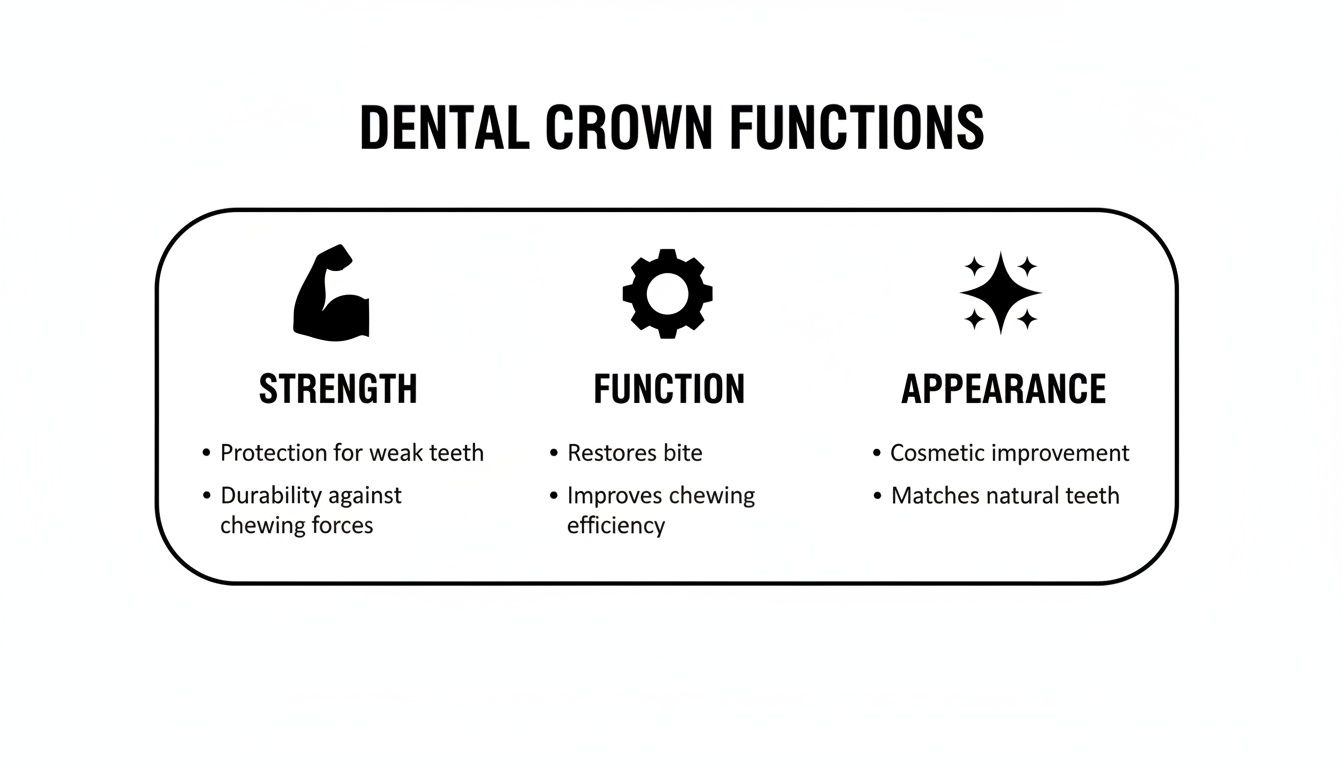
Each material excels in different areas, which is why selecting the right one is critical for a successful and beautiful long-term restoration.
All-Ceramic or All-Porcelain Crowns
When appearance is the top priority, nothing surpasses an all-ceramic or all-porcelain crown. These materials are renowned for their ability to mimic the natural color and translucency of tooth enamel, making them the premier choice for front teeth. They blend seamlessly into your smile, creating a flawless, natural look.
While modern ceramics have become significantly stronger, they are generally best suited for front teeth that don't endure the heavy biting forces that back molars do.
Zirconia Crowns
Zirconia is a revolutionary material that offers the best of both worlds: superior strength and stunning aesthetics. This type of ceramic possesses the beautiful, natural look of porcelain but with exceptional durability. Zirconia is highly resistant to chipping and cracking, making it an excellent choice for any tooth, including hard-working molars.
Its remarkable toughness also makes zirconia a top recommendation for patients who grind or clench their teeth. You get a beautiful, natural-looking restoration without compromising on strength.
Dental Crown Material At a Glance
Feeling a bit overwhelmed by the options? Don't worry. This table provides a quick side-by-side comparison to help clarify which material might be the best fit for restoring your tooth's health and appearance.
| Material Type | Best For Aesthetics | Durability | Ideal Tooth Location | General Cost |
|---|---|---|---|---|
| Porcelain/Ceramic | Excellent | Good | Front Teeth | Moderate to High |
| Zirconia | Very Good | Excellent | Front or Back Teeth | High |
| PFM | Good | Very Good | Back Teeth | Moderate |
| Gold/Metal Alloy | Low | Excellent | Back Teeth (Molars) | Varies with market |
The goal is to select a material that not only repairs the tooth but also enhances your smile. A great crown should be strong enough for its job and look so natural that you eventually forget it’s even there.
Porcelain-Fused-to-Metal (PFM) Crowns
For decades, PFM crowns were a trusted standard in dentistry. They are constructed with a strong metal alloy base for durability, which is then covered with a layer of tooth-colored porcelain for a natural-looking finish. This hybrid approach delivers both strength and aesthetics.
While PFM crowns are strong enough for any tooth, they have one potential cosmetic drawback. Over time, if the gums recede slightly, the underlying metal can become visible as a thin dark line at the gumline. They remain a great functional choice, but patients seeking perfect aesthetics often prefer all-ceramic options today.
Gold and Metal Alloy Crowns
When it comes to pure, uncompromising longevity, nothing outlasts a gold or metal alloy crown. These crowns are virtually indestructible and are very gentle on opposing teeth, causing less wear than harder materials. Their only significant drawback is their metallic appearance.
Because of their color, metal crowns are used almost exclusively for back molars where they are not visible. For a patient whose primary goal is the most durable, long-lasting solution for a molar, a gold crown is a fantastic investment that can last for decades. This legacy of reliability is why our investment in advanced dental technology and digital dentistry continues to refine these time-tested restorations.
Your Dental Crown Procedure Step by Step
Knowing what to expect can make any dental procedure feel more comfortable and less intimidating. Getting a crown is a routine process focused on restoring the health and beauty of your smile. Whether your treatment is completed in one or two visits, our priority is to ensure you feel informed and at ease throughout the experience.
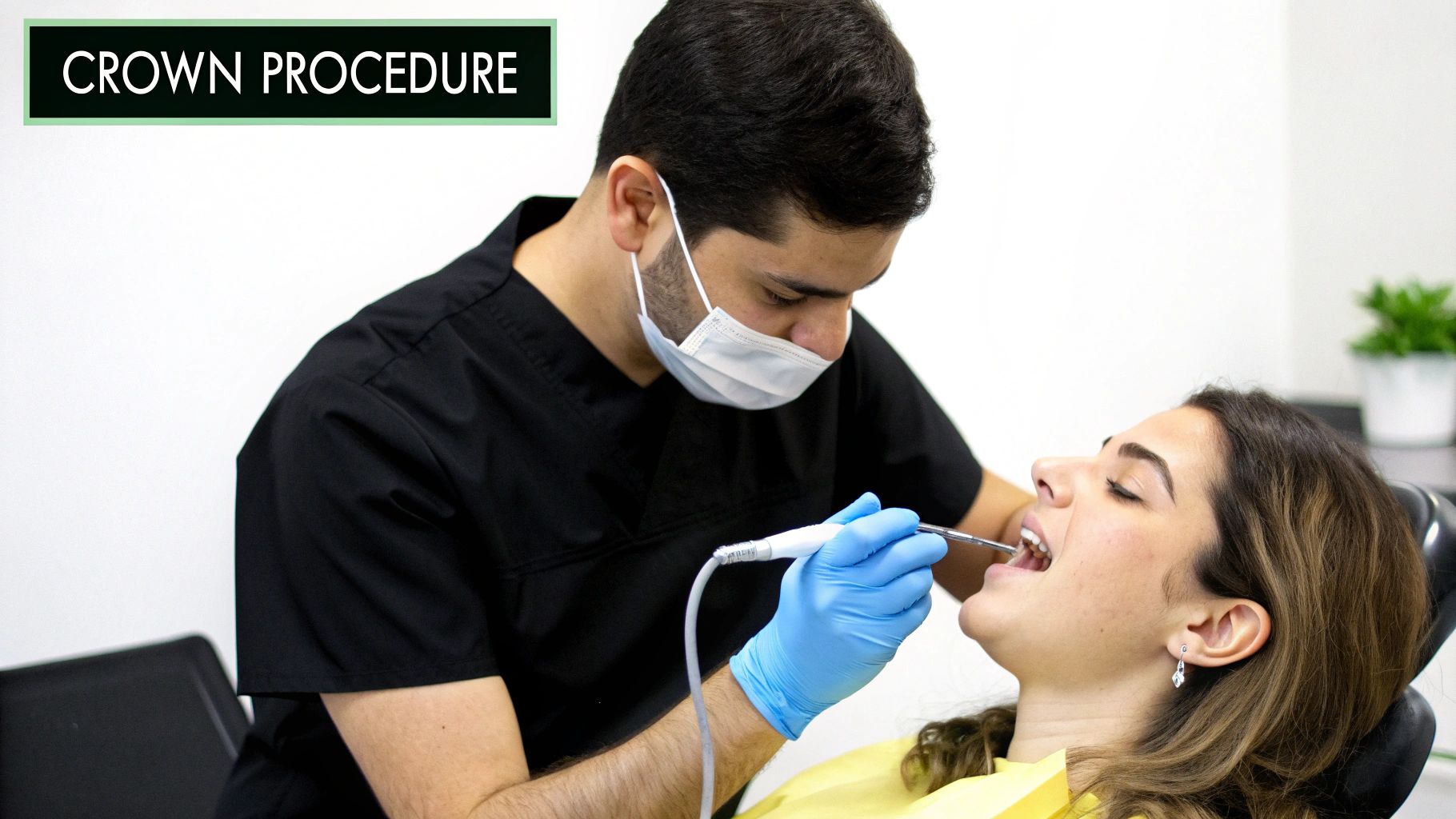
Let's walk through the entire journey, from preparing the tooth to the final placement of your beautiful new crown.
The Traditional Two-Visit Crown Process
The classic approach to placing a dental crown involves two separate appointments. This time-tested method allows for the creation of a precise, durable, and highly aesthetic restoration.
Your first visit is dedicated to preparing the tooth to ensure the new crown will fit perfectly and function correctly.
Here’s what happens during that first appointment:
- Numbing the Area: Your comfort is our top priority. We begin by applying a local anesthetic to completely numb the tooth and surrounding gums, ensuring a pain-free experience.
- Preparing the Tooth: We carefully reshape the tooth by removing any decay and trimming its outer surface. This creates a stable foundation for the crown to fit over securely.
- Taking a Precision Impression: Once the tooth is prepared, we use advanced digital scanners to create a highly accurate 3D model of your tooth. This digital blueprint is sent to a specialized dental lab where your permanent crown is custom-crafted.
- Placing a Temporary Crown: You will leave our office with a temporary crown in place. This protects the prepared tooth and maintains the appearance of your smile while your permanent restoration is being made.
After your visit, skilled lab technicians use our digital model to fabricate a crown that perfectly matches the color, shape, and contours of your natural teeth.
Your Second Visit: The Final Placement
Approximately two weeks later, you’ll return for your second and final appointment. This visit is typically shorter and focuses on permanently bonding your new crown.
First, we will gently remove the temporary crown and clean the underlying tooth. We then place your new permanent crown to check its fit, color, and alignment with your bite. We make any necessary micro-adjustments to ensure it feels comfortable and looks perfect.
The final step is to permanently bond the crown to your tooth using a strong dental cement. This creates a durable seal that protects the underlying tooth and restores its full function and appearance for years to come.
With your new crown securely in place, your tooth is once again strong, healthy, and ready to enhance your confident smile.
The Modern Alternative: Same-Day CEREC Crowns
We understand that life is busy, and scheduling two separate dental appointments can be challenging. That’s why we proudly offer CEREC (Chairside Economical Restoration of Esthetic Ceramics) technology, a revolutionary system that allows us to design, create, and place your permanent crown in just one visit.
Instead of sending impressions to an external lab, we use our in-house milling machine to craft your custom porcelain crown right here in our Katy office while you wait comfortably.
The single-visit process includes:
- Digital Scanning: We take a quick, comfortable 3D digital scan of your prepared tooth.
- On-Site Design: We use the digital model to design your crown on a computer, ensuring a perfect fit and appearance.
- In-Office Milling: The design is sent to our CEREC milling unit, which carves your crown from a solid block of high-quality ceramic.
- Final Placement: We bond the beautiful, finished crown to your tooth, and you leave with a fully restored smile in just one appointment.
This incredible technology means no temporary crown and no need for a second visit, saving you valuable time while delivering exceptional results.
Prioritizing Your Comfort with Sedation Dentistry
We recognize that dental anxiety is a real concern for many patients. To ensure your experience is completely stress-free and positive, we offer a range of sedation options. From mild sedatives to deeper IV sedation for total relaxation, we can help you feel completely at ease. Your well-being and comfort are central to the care we provide.
How to Care for Your Crown and Make It Last
A new dental crown is a significant investment in your smile's health and appearance. The great news is that with proper care, this investment can last for 15 years or even longer. A few simple, consistent habits are all it takes to protect your restoration and keep your smile looking its best.
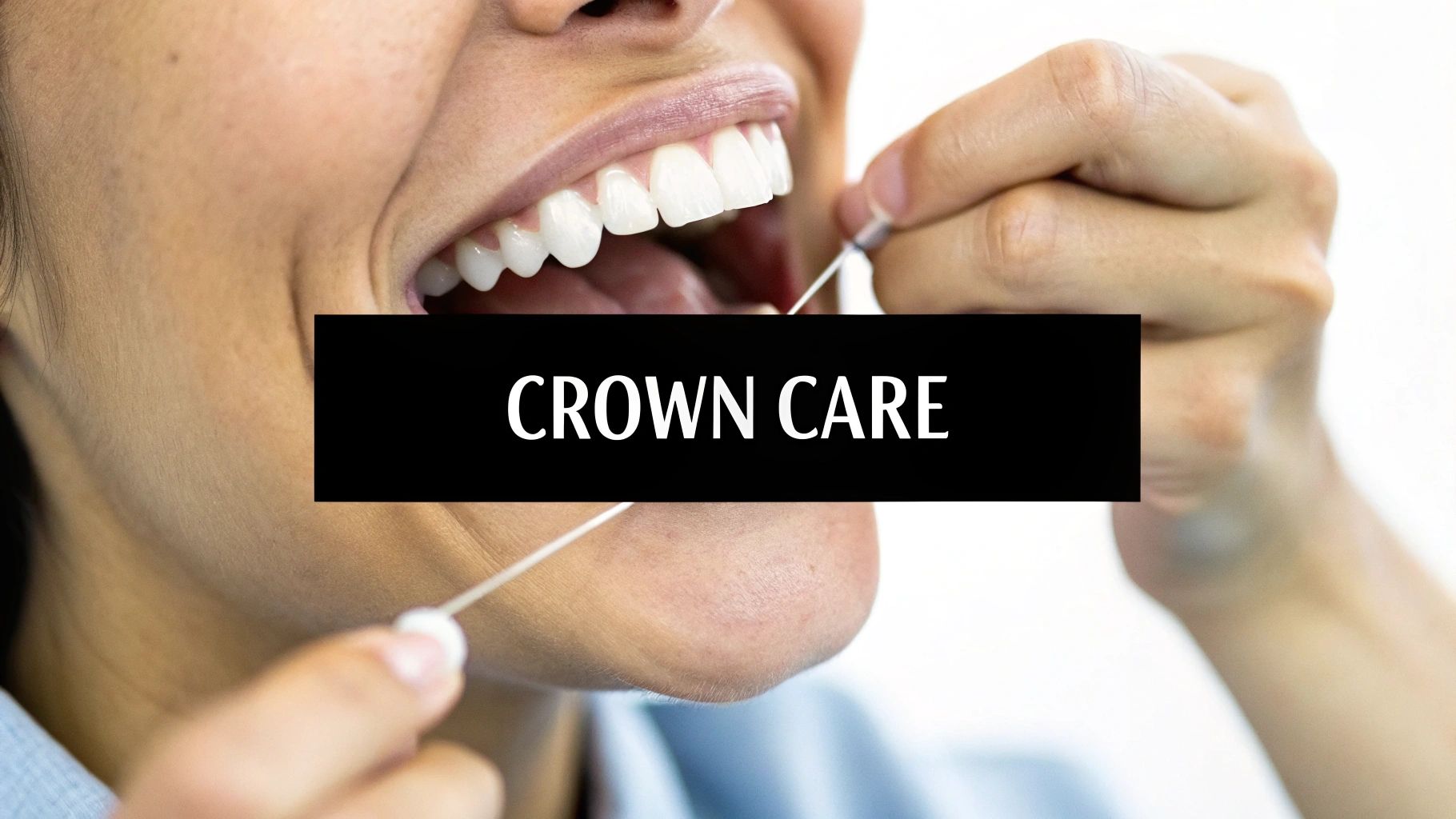
While the crown material itself is impervious to decay, the natural tooth underneath is not. The most critical area to protect is the margin—the seam where the crown’s edge meets your natural tooth at the gumline. If plaque accumulates here, decay can develop and compromise the health of the entire restoration.
Building a Crown-Friendly Oral Hygiene Routine
Your daily habits are the first line of defense in protecting your crown. The goal is to meticulously clean around the crown to maintain the health of the underlying tooth and gums, which are the foundation for a long-lasting restoration.
These habits are non-negotiable for long-term success:
- Brush Thoroughly but Gently: Brush twice a day with a soft-bristled toothbrush and fluoride toothpaste. Pay special attention to the gumline around the crown, angling your brush to sweep away plaque from the margin.
- Floss Every Single Day: Flossing is essential for cleaning between your teeth and under the gumline where a toothbrush cannot reach. Gently guide the floss along the side of the crowned tooth to keep the critical margin area free of plaque.
These two simple steps are the most effective way to prevent cavities from forming at the edge of your crown and to keep your gums healthy and supportive.
Smart Habits to Protect Your Crown from Damage
In addition to cleaning, how you use your teeth matters. Modern crowns are incredibly strong, but they are not indestructible. Certain foods and habits can place excessive stress on the porcelain or the cement that holds the crown in place.
Just like your natural teeth, a crown can be damaged by extreme forces. Treating your crowned tooth with a little extra care is key to avoiding preventable fractures or dislodgment.
To protect your crown, be mindful of what you chew. Avoiding extremely hard or sticky foods can significantly extend its lifespan.
Consider these protective measures:
- Avoid Chewing on Hard Objects: Never use your teeth—especially a crowned one—as a tool. This means avoiding chewing on ice, hard candy, popcorn kernels, pens, or fingernails.
- Be Careful with Sticky Foods: Extremely chewy foods like taffy or caramels can potentially pull on the crown and loosen it over time.
- Wear a Nightguard if You Grind: If you clench or grind your teeth at night (bruxism), the constant pressure can wear down or fracture a crown. A custom-fitted nightguard provides a protective cushion while you sleep.
The Importance of Regular Dental Check-Ups
Finally, professional dental care is crucial. Your regular check-ups at Grand Parkway Smiles are essential for maintaining the health of your crown and your overall smile. These visits allow us to inspect your crown, the tooth beneath it, and your gums to catch any potential issues early. Professional cleanings ensure all areas are free of plaque, protecting your investment for years to come.
Understanding Crown Costs, Insurance, and Payment Options
Let’s address one of the most common questions: the cost of a dental crown. We believe in complete transparency about finances so you can make informed decisions about your health. The final cost depends on factors like the material chosen and the specific needs of your tooth. Our primary goal is to make this essential restorative treatment accessible to you.
The focus on making high-quality dental care more attainable is driving growth in restorative dentistry. The global market for dental crowns was valued at approximately USD 4.21 billion and is projected to reach USD 7.25 billion by 2033. This expansion is fueled by technological advancements and more flexible payment and insurance options that help families receive the care they need.
Making the Most of Your Dental Insurance
If you have dental insurance, you're in a great position. Most PPO dental plans provide coverage for crowns, particularly when they are medically necessary to restore a damaged or decayed tooth. The amount of coverage varies, but it almost always helps significantly reduce your out-of-pocket expenses.
Our team at Grand Parkway Smiles is expert in navigating dental insurance. We will handle all the details for you:
- Verify Your Coverage: We will contact your provider to get a clear understanding of your benefits for crowns.
- Provide a Detailed Estimate: Before beginning treatment, you will receive a transparent breakdown of all costs, showing what your insurance is expected to cover and what your portion will be.
- Handle All the Paperwork: We file all claims on your behalf to ensure you receive the maximum benefits you are entitled to, making the process seamless for you.
Great Options, Even Without Insurance
We understand that not everyone has dental insurance. Your oral health should never be put on hold due to financial concerns. We offer several options to make the cost of a crown manageable and predictable.
Getting a crown is an investment in your long-term health. It stops small problems from turning into bigger, more expensive ones down the road. Our flexible payment solutions are here to help you make that investment without straining your budget.
For our patients without insurance, we offer an in-house savings plan that provides discounts on crowns and other treatments. We also partner with trusted third-party financing companies that offer low-interest, flexible payment plans. To see all your options in one place, check out our guide on understanding dental insurance and financing options. Our team is always here to help you find the best path forward.
Your Dental Crown Questions Answered
We find that once patients understand the benefits of a crown, a few common questions arise. To help you feel completely confident about your treatment, here are clear answers to the things we are asked most often.
Is Getting a Dental Crown Painful?
Patient comfort is our absolute top priority. We use an effective local anesthetic to ensure the entire area is completely numb before we start. You will not feel any pain while we prepare your tooth or place your new crown.
If you feel anxious about dental procedures, we are here to help. We offer several sedation dentistry options to help you feel completely relaxed and at ease. It is normal to experience some minor sensitivity for a few days afterward, but this typically fades quickly as your tooth adjusts to its new protective covering.
Can I Get a Crown in One Day for an Emergency?
Yes, absolutely. We know that a broken tooth requires immediate attention. Thanks to our in-house CEREC technology, we can design, fabricate, and place a permanent, beautiful ceramic crown in a single visit.
This is a major benefit for dental emergencies. Instead of dealing with a temporary fix and waiting weeks for a permanent crown, you can leave our Katy office the same day with your smile fully restored and protected. You get immediate relief and can return to your life with confidence.
A single-visit crown doesn’t just save you a ton of time; it also means you get to skip the hassle of a temporary crown. You leave with the final, durable, and perfectly matched restoration bonded securely in place, giving you instant peace of mind.
How Do I Know if My Insurance Will Cover My Crown?
Most PPO dental insurance plans provide coverage for crowns, especially when they are medically necessary to restore a tooth's function and health. Coverage amounts vary by plan, but it is common to see coverage around 50% of the cost after your deductible is met.
You don't need to navigate this alone. Our expert front office team will handle all insurance verification for you. We will provide a clear cost estimate before any work begins, so you know exactly what to expect. Our goal is to maximize your benefits and make your care as affordable as possible.
Can the Tooth Under a Crown Still Get a Cavity?
This is an excellent question. While the crown itself is made of decay-proof material like porcelain or zirconia, the natural tooth underneath is not. The most vulnerable area is the margin—the seam where the crown meets your tooth, typically near the gum line. If plaque is allowed to build up here, a new cavity can form.
This is why your home care is so crucial for the longevity of your crown. Brushing thoroughly twice a day and flossing daily, with special attention to the base of the crown, is your best defense. Regular professional cleanings are also key to protecting your investment and keeping the restored tooth healthy for years.
Ready to restore your smile with a dental crown that looks and feels completely natural? Contact Grand Parkway Smiles today to schedule your consultation and find out how our advanced technology and compassionate care can help you. Visit us at https://dentistkatytx.com to learn more.