Affordable partial dentures usually cost $300 to $3,000+, depending on the material, design, and how much customization your smile needs. For many people, that wide range is the confusing part, especially when the lowest upfront price doesn’t always mean the lowest long-term cost.
If you’re reading this, you may already know what a missing tooth changes. You smile a little less in photos. You chew on one side. You wonder if people notice the gap when you talk. Some patients tell me they’ve adjusted to it. Then, a few minutes later, they admit they avoid steak, crunchy vegetables, or laughing without covering their mouth.
That’s exactly why affordable partial dentures matter. They aren’t just a budget option. They can be a practical, attractive way to restore your smile, protect your remaining teeth, and make daily life feel normal again.
The key is choosing with your eyes open. A low price can be helpful. But the smarter question is this: what will this tooth replacement cost you over time, and what will it give back in comfort, appearance, and health?
Your Smile Is Worth Restoring
A patient might come in missing one back tooth and say it’s “not a big deal” because nobody can see it. Another might be missing a front tooth and feel embarrassed every time a camera comes out. The situations look different, but the emotional weight is often the same. Missing teeth affect confidence fast.
They also change small routines in ways people don’t expect. You may start choosing softer foods. You may talk differently. You may notice yourself turning your head when you smile. Those changes add up.
That’s one reason partial dentures have remained such a common treatment. By 2024, approximately 42.46 million Americans are projected to wear dentures, with a significant number using partial dentures to preserve their remaining natural teeth and restore their smiles, according to 2024 denture statistics. If you need help replacing missing teeth, you’re far from alone.
Missing teeth can feel personal, but needing tooth replacement is common. Getting help isn’t a sign that something has gone wrong. It’s a step toward getting your life back.
Affordable partial dentures can help in a very practical way. They replace the visible gap, support chewing, and often give patients a sense of relief right away. Many people stop focusing on what they’ve lost and start focusing on what they can do again.
Why affordability matters emotionally too
Cost affects more than your budget. It affects whether you move forward at all.
If treatment feels out of reach, people often delay care and try to “make do.” In my experience, that waiting period usually comes with more frustration, not less. An affordable option can be the difference between living around a problem and finally solving it.
A partial denture doesn’t have to be perfect to be life-changing. It just has to be the right fit for your mouth, your goals, and your budget.
What Are Partial Dentures and Why They Matter for Your Health
A partial denture is a removable appliance that replaces one or more missing teeth while fitting around the natural teeth you still have. The simplest way to think about it is as a custom puzzle piece. It fills the open space in your smile so the rest of your bite has support again.
That sounds cosmetic, and it is. But the bigger story is health.

When a tooth is missing, the gap doesn’t stay neutral. The nearby teeth can begin to shift, your bite can change, and chewing force can get concentrated in places that weren’t built to handle it. A well-designed partial helps hold space, support balance, and reduce that strain.
A partial denture does more than fill a gap
Patients often focus first on appearance. That makes sense. But from a dental health standpoint, the benefits go further.
- It helps maintain spacing: When a gap stays open too long, neighboring teeth may drift.
- It improves chewing balance: Instead of overworking one side, you can spread function more evenly.
- It supports speech: Missing teeth, especially in visible areas, can change how certain words sound.
- It protects confidence: Many patients smile more naturally once the gap is restored.
That combination matters because oral health and daily quality of life are tightly linked.
The nutrition connection is real
Chewing is not just about convenience. It affects what you’re willing and able to eat.
Poorly fitting or missing teeth can lead to a 20-30% lower nutrient intake. A well-made partial denture restores chewing efficiency, directly combating malnutrition risks and improving overall health and quality of life, especially for older adults, according to Penn Dental Medicine’s guidance on affordable dentures for low-income seniors.
That’s a very practical issue. If chewing is difficult, people often cut out foods that take more effort. Tough meats, raw vegetables, nuts, and other nutrient-dense foods can slowly disappear from the menu. Over time, that can affect energy, strength, and overall wellness.
Practical rule: If a missing tooth is changing what you eat, it’s no longer just a cosmetic issue.
Why fit matters as much as the denture itself
A partial denture should feel secure enough to function without pinching, rubbing, or shifting too much during normal use. No removable appliance feels exactly like a natural tooth, but a good one should help you eat, speak, and smile with much less self-consciousness.
Patients sometimes get confused about whether a partial is “temporary” or “permanent.” The honest answer is that it can serve either role depending on the material, your oral health, and your long-term plan. Some people use a partial as a transitional step before another restoration. Others wear one for years as their main tooth replacement.
What matters most is not the label. It’s whether the appliance protects your remaining teeth, fits your lifestyle, and keeps your mouth functioning well.
Exploring Your Affordable Partial Denture Options
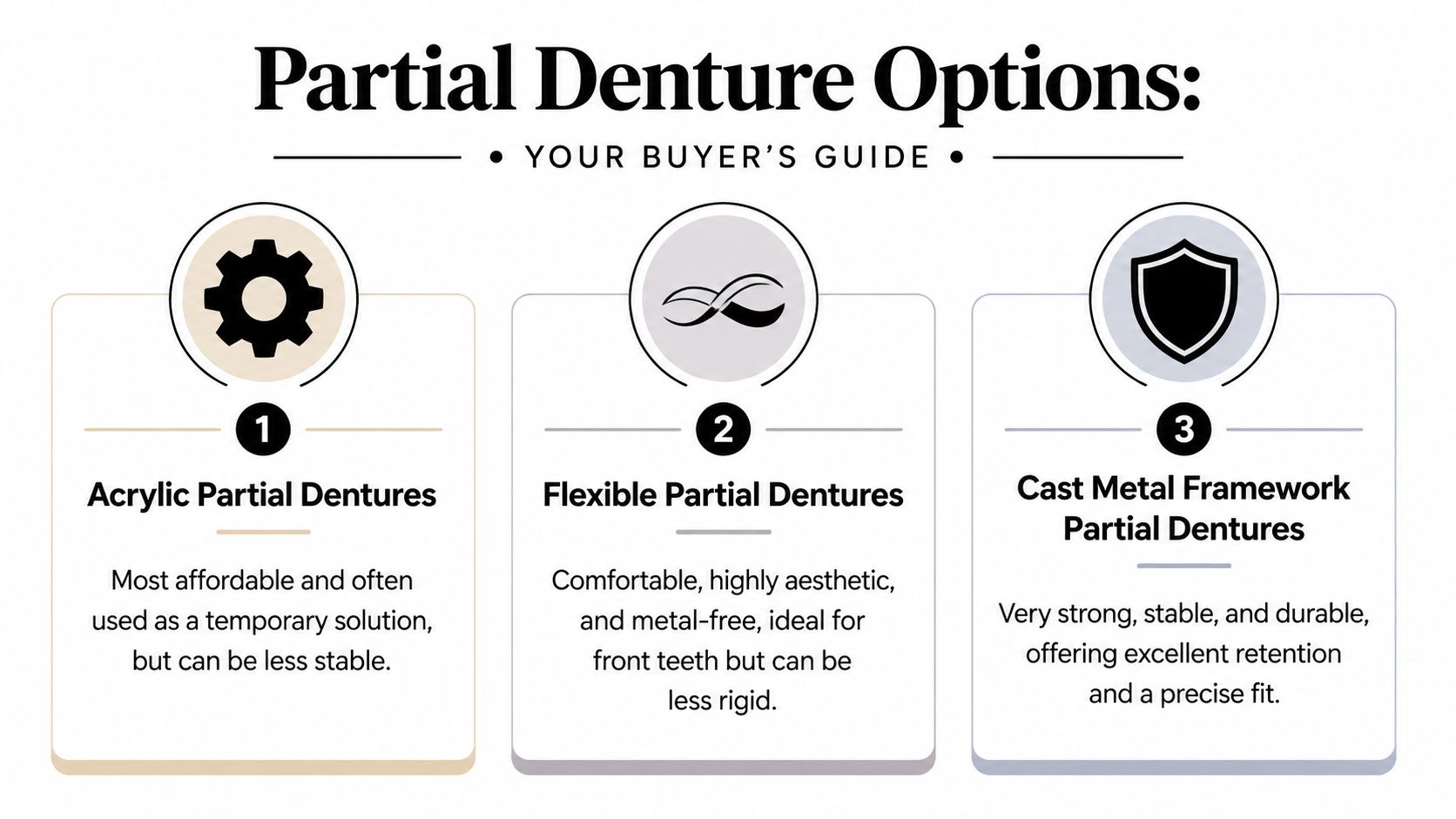
Different types of affordable partial dentures solve the same problem in different ways. The right choice depends on what matters most to you. Some patients want the lowest upfront price. Others care most about comfort or a metal-free look. Some need a stronger long-term option.
This comparison helps sort that out.
Side by side overview
| Type | Typical cost range | Best known for | Tradeoff |
|---|---|---|---|
| Acrylic partial | $300 to $1,000 | Lowest upfront cost | Less durable and often bulkier |
| Flexible partial | $700 to $3,000 | Comfort and appearance | Not always the easiest to repair |
| Metal framework partial | $900 to $2,500 | Durability and stability | Higher starting price |
The ranges above reflect partial denture pricing by material and design.
If you’d like a broader overview of designs before choosing, this guide to different denture types is also helpful.
Acrylic partials
Acrylic partials are usually the first thing people picture when they hear “affordable partial dentures.” They’re commonly chosen when budget is the biggest factor or when a patient needs a tooth replaced quickly.
They can be a good entry point because they’re accessible and straightforward. If someone has recently lost a tooth and wants an immediate cosmetic fix, acrylic often makes sense.
Here’s where people get confused. “Affordable” doesn’t always mean “best value over time.” Acrylic partials tend to be less durable than other options, and they can feel thicker in the mouth. Some patients do well with them for a meaningful period. Others see them more as a short-term bridge to a more stable solution.
Common reasons patients choose acrylic:
- Lower starting cost: They’re the most budget-friendly option in many cases.
- Fast replacement: They’re often chosen when appearance needs to be restored quickly.
- Simple purpose: They can work well as a temporary or transitional appliance.
Flexible partials
Flexible partials appeal to patients who care strongly about comfort and appearance. They’re made from a non-allergenic nylon resin that adapts to the contours of the mouth without visible metal clasps. That design can make them feel gentler and look more natural, especially in visible areas of the smile, according to Dental Lab Direct’s description of flexible partial dentures.
A lot of patients like them because they don’t have the obvious metal look that some traditional partials do. If you’re replacing teeth in the front of the mouth, that can be a major advantage.
They also distribute bite forces more evenly than a rigid clasp-based design, which may reduce pressure on the supporting teeth. That doesn’t mean they’re the right answer for every case. Some mouths need more rigidity and precision than a flexible base can provide.
If your top priority is a natural-looking partial with no visible metal, flexible designs often move to the top of the list.
Flexible partials often fit patients who want:
- Better aesthetics: The material blends more naturally with gum tissue.
- A softer feel: Many people find them more comfortable to wear.
- Metal-free design: That matters for both appearance and personal preference.
Metal framework partials
Metal framework partials are often the workhorse option. They cost more upfront than basic acrylic, but they’re usually stronger, more stable, and designed for long-term use.
Patients sometimes assume metal means bulky. In practice, a cast metal framework can feel slimmer and more precise than a thick acrylic base. That can improve comfort, especially for someone planning to wear the appliance daily for years.
This type is often a strong fit for people who need reliable function and don’t want their denture to feel like a temporary fix.
A simple way to choose
If you’re trying to narrow it down, start with the question that matters most to you.
- If your biggest concern is starting cost, acrylic may be the most realistic place to begin.
- If you care most about appearance and a metal-free look, flexible may deserve a closer look.
- If your goal is durability and stability, metal framework designs often make the most sense.
No chart can replace an exam. The number and location of missing teeth, the health of your remaining teeth, and the shape of your bite all matter. But understanding these categories makes your consultation much easier, because you can talk clearly about what you value instead of just asking for “the cheapest denture.”
Understanding the Full Cost of Partial Dentures in 2026
A patient sits down for a consultation after seeing an ad for a low-cost partial denture. The starting price sounds manageable. Then the better questions come up. Will it stay comfortable? How often will it need adjustments? What happens if it breaks or stops fitting well a year from now?
That is the cost conversation that matters.
The fee for the appliance is only one part of what you may spend over time. A partial denture is more like a set of tires than a kitchen plate. You do not judge it only by the purchase price. You also look at how it wears, how often it needs service, and how well it helps you function day after day.
For the initial appliance, costs can vary widely. A basic acrylic partial may start in the lower hundreds, while a custom metal framework design can reach into the thousands. If you want a broader look at denture pricing, this guide to denture costs and treatment factors helps explain why fees can differ from one case to another.

Why one patient pays more than another
Two partial dentures can replace missing teeth. They can still be priced very differently because they are not built for the same job.
A few factors usually shape the fee:
- Material choice: Acrylic, flexible materials, and metal frameworks each involve different lab work and design features.
- Case complexity: Replacing one tooth is simpler than replacing several teeth in different parts of the mouth.
- Customization: Matching tooth shade, refining the bite, and improving clasp placement all affect the final design.
- Local lab and office costs: Fees are not the same in every community.
The health of your remaining teeth matters too. If supporting teeth need treatment first, or if your bite needs careful adjustment, the total investment can rise because the denture has to work with the rest of your mouth, not just fill a space.
Costs people often miss
Many patients are often surprised by the fact that mouths change over time. Gums shrink after teeth are lost. Clasps can loosen. A denture that fit well on day one may need maintenance later, even if you take good care of it.
The American Dental Association notes that removable partial dentures may need periodic adjustments, relining, or repair as oral tissues and fit change over time. Those follow-up visits are normal ownership costs, not unusual complications.
Here is the practical version:
| Ongoing need | Typical expense | Why it happens |
|---|---|---|
| Adjustment visits | Varies by office | Pressure spots, bite changes, or sore areas can develop after delivery |
| Reline | Varies by material and lab work | Gums and bone change shape, so the inside fit may need updating |
| Repair | Varies by damage and design | Teeth, acrylic, or clasps can chip, crack, or bend |
| Replacement | Higher than a repair | Wear, major fit changes, or damage can make a new appliance the better choice |
A lower starting price can still make sense. But it should be weighed against how long the appliance is likely to serve you well, how often it may need service, and how it affects eating, speaking, and confidence.
Health costs count too
There is also a cost that does not show up neatly on a receipt.
If a partial denture fits poorly, you may avoid certain foods, chew on one side, or stop wearing it for long stretches. That can affect nutrition, strain other teeth, and make social situations feel harder than they need to be. A better-fitting option may cost more upfront, but it can save frustration and support better daily function.
That is why I encourage patients to think in terms of ownership, not just sticker price. The goal is not to buy the cheapest object. The goal is to choose a solution you can live with, maintain, and rely on.
How to Make Your Partial Dentures Truly Affordable
A common situation looks like this. A patient chooses the lowest quote, feels relieved for a week, then runs into sore spots, extra visits, and repairs that were never part of the original plan. The better question is not only, “What can I afford today?” It is, “What can I afford to live with comfortably over time?”
That is how partial dentures become affordable in a lasting way. You lower surprises, protect your oral health, and make choices that fit your daily life.
Start with the full plan, not just the delivery fee
A partial denture is a little like buying a car. The price on the windshield matters, but so do maintenance, repairs, and how well it holds up for the way you drive. Dentures work the same way.
Ask your dentist to walk you through the full picture in plain language:
- The fee for the appliance itself
- What follow-up visits are usually included
- What adjustments may cost later
- Whether relines or repairs are likely with that design
- How long that type of partial often serves patients before replacement becomes the better option
That conversation helps you compare choices fairly. A lower starting fee may still be a smart decision. It just needs to match your goals, your timeline, and the level of upkeep you can reasonably handle.
Use the benefits and payment options already available to you
Patients often have more help available than they realize.
Start by asking specific questions, not general ones. Instead of “Do you take my insurance?” ask, “What does my plan pay for removable partial dentures, and is there a waiting period or annual maximum?” That small change usually gets you a much clearer answer.
Other tools can help too:
- FSA or HSA funds: Pre-tax dollars can reduce the actual out-of-pocket cost.
- Monthly financing: Breaking a larger fee into smaller payments may fit your budget better.
- Phased care: In some cases, treatment can be timed around insurance benefits or other planned dental work.
- Office membership plans: These may help with exams, maintenance visits, or related care if you do not have traditional insurance.
The goal is simple. Use every dollar available before you pay from regular household funds.
Match the denture to the job it needs to do
A partial denture should fit your life, not just your budget sheet.
If you need a short-term solution while planning future treatment, a simpler option may make sense. If you expect to wear your partial every day for years, paying more at the start for better strength, fit, or appearance can be the less expensive path overall. Lower wear and fewer problems often mean fewer interruptions to eating, speaking, and social confidence.
Three questions usually clarify the decision:
- Is this a temporary step or a long-term solution?
- Which matters most for me: appearance, comfort, durability, or the lowest upfront fee?
- Can I set aside money for normal upkeep later?
Patients usually know the right direction once those answers are clear.
Protect what you paid for
A partial denture lasts longer when it is cared for consistently. That sounds simple, but it has a real effect on cost.
Clean it daily. Handle it over a folded towel or a sink with water in it, so a slip is less likely to turn into a crack. Keep your recall visits. If something starts to rub, call early. A small sore spot is usually easier and less expensive to correct than a problem that has been ignored for weeks.
Good maintenance also protects more than the appliance. It helps protect the supporting teeth and gum tissue that your partial depends on.
Affordable care should feel sustainable
The best affordable choice is the one you can wear, maintain, and rely on without constant frustration. That means looking past the first number on the estimate and paying attention to comfort, upkeep, and daily function too.
A well-planned partial denture does more than fill a space. It helps you eat with less effort, speak with more confidence, and avoid the hidden costs that come from a solution that does not fit your life.
Partial Dentures vs Other Tooth Replacement Choices
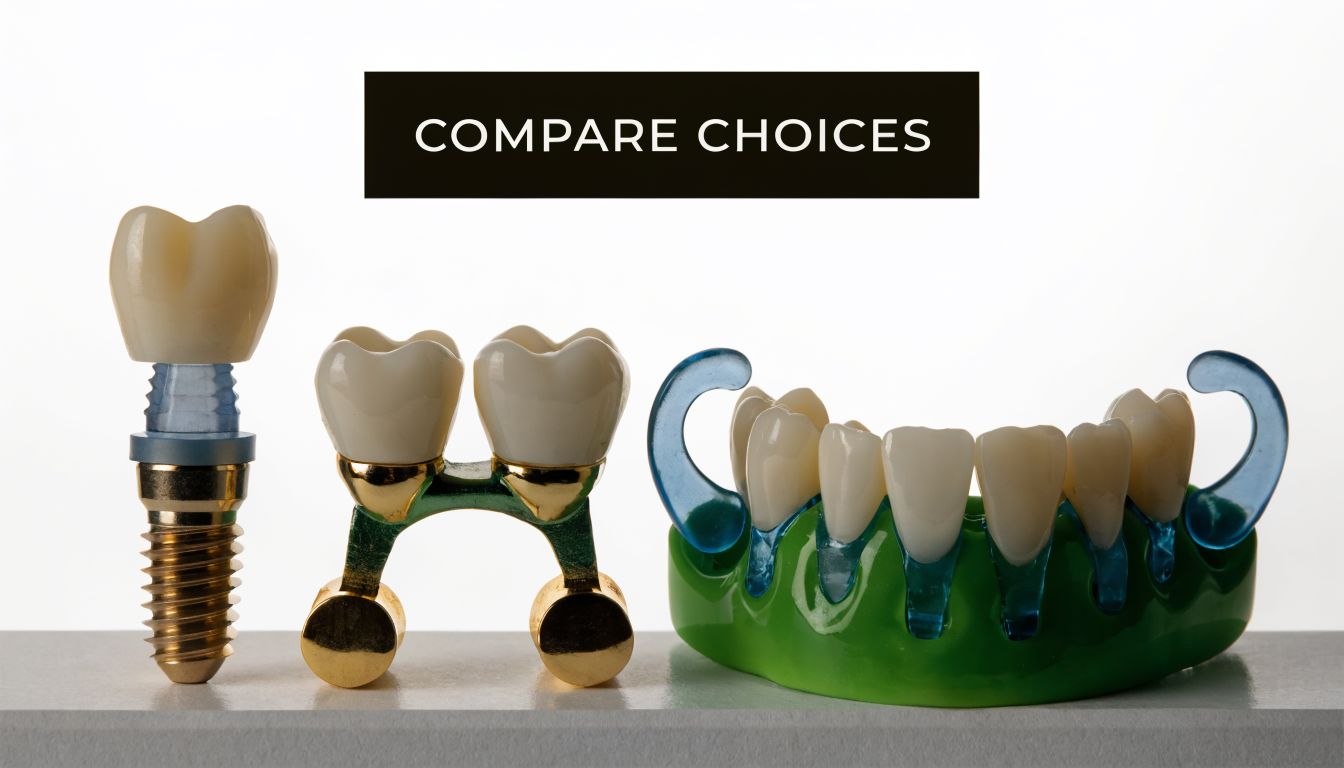
Partial dentures aren’t the only way to replace missing teeth. The most common alternatives are bridges and implants. Each option solves a different problem, and each asks you to accept a different tradeoff.
How partial dentures compare
A partial denture is removable. That’s either a benefit or a drawback, depending on the patient.
For many people, the advantages are clear. It’s conservative, doesn’t require surgery, and can replace multiple missing teeth in one appliance. It’s often the most approachable option when budget matters.
The downside is that it’s still removable. Some patients never mind that. Others want something fixed in place.
How bridges fit into the decision
A bridge stays in the mouth and doesn’t come out daily. Patients often like that fixed feel.
But bridges usually rely on the neighboring teeth for support. If those teeth are already heavily restored, that may be reasonable. If they’re healthy and untouched, some patients hesitate to involve them. That’s an important discussion to have with your dentist because the “best” option depends heavily on the condition of those adjacent teeth.
Where implants stand apart
Implants are often appealing because they don’t depend on a removable appliance and can support function in a very natural way. They’re often discussed as the most tooth-like replacement.
They also involve a different treatment path. Surgery, healing, and higher starting costs can make implants a longer and more complex process than affordable partial dentures. Some patients are ready for that. Others want a non-surgical solution they can start sooner.
A practical comparison
| Option | Best fit for | Main advantage | Main concern |
|---|---|---|---|
| Partial denture | Multiple missing teeth, budget-conscious care, non-surgical treatment | Removable and generally more affordable | Less fixed feel |
| Bridge | Replacing a missing tooth with support from nearby teeth | Fixed in place | May involve adjacent teeth |
| Implant | Patients wanting a tooth-like fixed replacement | Strong independent support | Higher complexity and cost |
The right replacement is the one that fits your mouth, your goals, and what you can maintain comfortably over time.
For some patients, a partial denture is the best long-term answer. For others, it works beautifully as a stepping stone. Neither role makes it second-best. This means treatment should match the person, not the other way around.
Choosing Your Dentist and Ensuring Long-Term Success
A well-made partial denture depends on more than the lab. It depends on the dental team evaluating your bite, the health of your gums, the strength of your remaining teeth, and how the appliance will function in daily life.
That’s why choosing the provider matters so much. You want a practice that looks at the whole mouth, not just the missing tooth. If a denture is planned without enough attention to supporting teeth and bite balance, comfort problems tend to show up later.
What to look for in a provider
A strong denture consultation should include careful examination, clear explanation of material options, and a realistic discussion of long-term upkeep. It also helps when the office can manage future needs if your treatment evolves.
Good signs include:
- Complete care: If your needs change, the same office can discuss other restorative options.
- Modern diagnostics: Digital tools can help improve planning and fit.
- Comfort support: For anxious patients, a gentle approach matters.
- Follow-up care: Adjustments are part of successful denture treatment, not an inconvenience.
How to help your partial last
Daily care is simple but important. Clean the appliance as directed, store it safely, and keep your natural teeth and gums healthy because they support the success of the partial.
If the denture starts to feel loose, rubs in one area, or changes how you bite, don’t wait. Small adjustments are easier on your mouth and your budget than letting a fit problem turn into damage.
Frequently Asked Questions About Partial Dentures
How long does it take to get used to a partial denture
Most patients need an adjustment period. It’s normal for the denture to feel a little unfamiliar at first when you speak or chew. Mild pressure can happen early on, but persistent soreness should be checked so your dentist can adjust the fit.
What should I eat at first
Start with softer foods and smaller bites. Chew slowly and try to use both sides of your mouth rather than only one side. As your confidence grows, you can expand your diet based on comfort.
Should I sleep with my partial denture in
Many patients do better removing it at night unless their dentist gives other instructions for a specific reason. Taking it out gives the tissues a break and makes cleaning easier.
What if it feels loose later
Don’t try to fix it yourself. A loose partial may need an adjustment or reline. If you ignore the movement, sore spots and chewing problems usually follow.
If you’re ready to replace missing teeth with a plan that balances comfort, appearance, and long-term value, Grand Parkway Smiles can help. Their team in Katy provides complete dental care under one roof, including restorative options, advanced technology, sedation for anxious patients, and flexible payment solutions so you can move forward with confidence.