You notice it at the wrong time. A tooth that’s been nagging you for a week starts throbbing during dinner. Or you catch your smile in a photo and decide you’re done putting off whitening, Invisalign, or replacing the tooth you’ve been hiding. Sometimes it’s less dramatic. You realize it’s been too long since your last checkup.
That moment matters because booking the appointment is usually the hardest part in your head, not in real life. Once it’s on the calendar, things get clearer. You know when you’re going in, what to bring, and what kind of help you need.
At a large multi-specialty office, the process should feel simple whether you need a routine cleaning, a pediatric visit, sedation for anxiety, or a consultation for implants and full-mouth work. If you want a broader look at how organized scheduling systems make booking easier, Twizzlo's booking optimization guide is a useful outside reference.
Your First Step to a Healthier Smile
A lot of patients wait because they think they need to “figure everything out” before calling. They think they need to know whether it’s a crown, a root canal, cosmetic bonding, or something surgical. Most of the time, you don’t. You just need to start.
A good dental appointment does more than fill a time slot. It creates a path toward less pain, better chewing, cleaner teeth, healthier gums, and a smile you don’t feel the need to hide. That’s true whether you’re booking for a child’s first visit or an adult consultation for All-on-4, dentures, or a smile makeover.
You don’t need the perfect words. You need a clear reason for the visit and a time you can actually keep.
People often think of dental booking as admin work. It isn’t. It’s the first clinical decision. The type of visit you choose affects how much time is reserved, which records are requested, and which provider sees you first.
Here’s the simple version of how to make a dentist appointment without overcomplicating it:
- If it’s routine: Book a preventive visit and mention whether you’re a new or existing patient.
- If something hurts: Say where it hurts, how long it’s been happening, and whether swelling or trauma is involved.
- If your goal is appearance: Ask for a cosmetic consultation and mention what you want to change.
- If you’re nervous: Tell the team when you book so they can shape the visit around comfort, pacing, and sedation options if appropriate.
That first step is practical. It also protects your dental health before a small issue turns into a bigger one.
Booking Your Visit Online vs Over the Phone
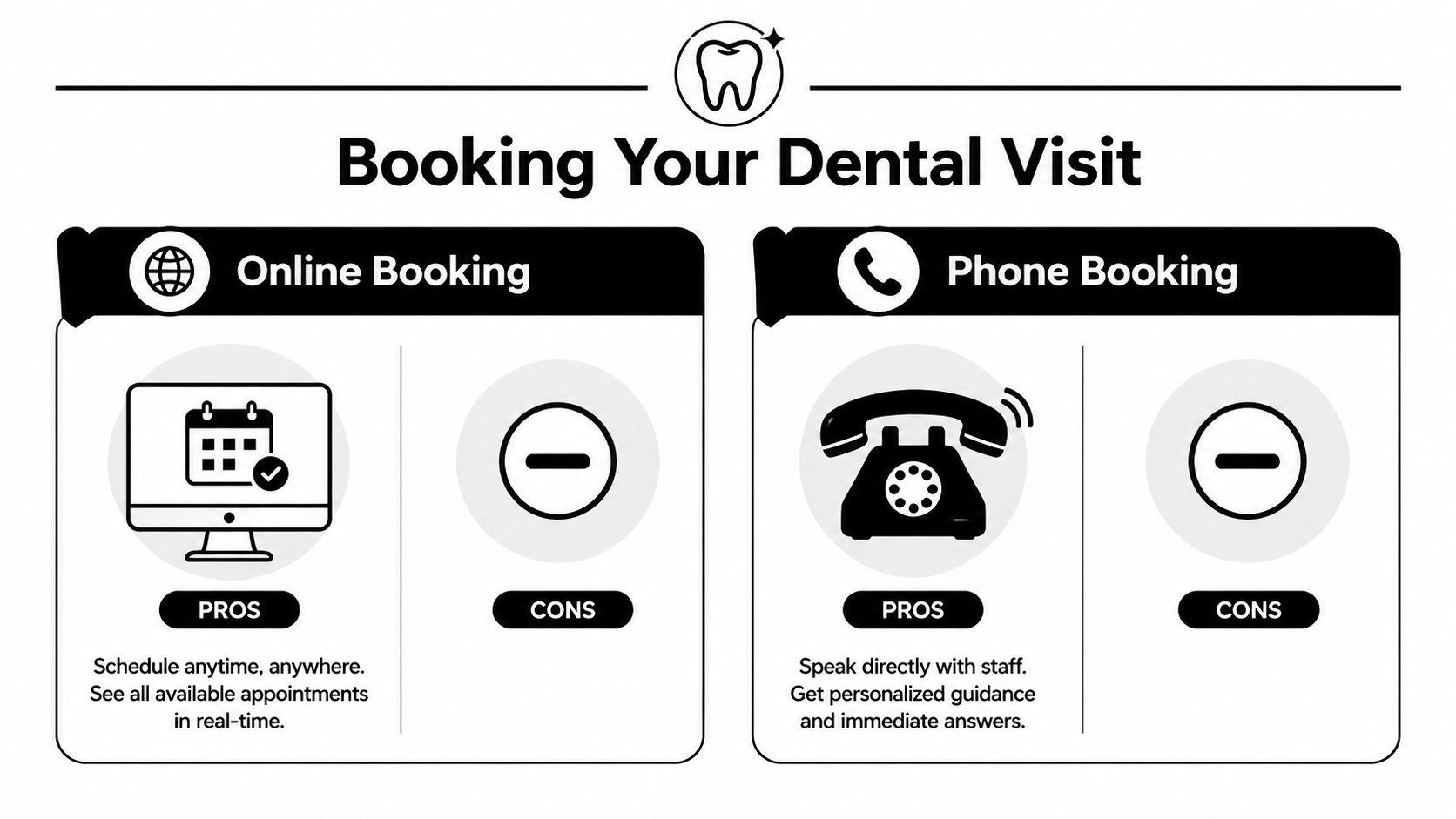
Some appointments are easiest to book online. Others are better handled with a real conversation. Both methods work. The right choice depends on what kind of care you need and how many questions you have.
When online booking makes more sense
Online scheduling is ideal when your needs are straightforward. Think routine cleaning, checkup, follow-up, or choosing a time after work when the office line may be busy.
There’s a strong patient preference for this convenience. 77% of patients choose providers offering online scheduling, yet only 26% of dental practices provide it, according to NexHealth’s dental scheduling statistics. That gap explains why patients often gravitate toward practices that let them book without waiting for office hours.
Online booking is usually the better fit if you want to:
- Book after hours: You can choose a slot when it’s convenient for you.
- Compare times quickly: Seeing openings on one screen makes decision-making easier.
- Avoid phone tag: No missed calls. No holding. No trying again later.
- Take action fast: If you’ve already decided to come in, speed matters.
If you’re ready to reserve a visit digitally, use the online appointment page and choose the option that best matches your reason for coming in.
When calling is the better move
Phone booking is still the smarter choice when the situation is less standard. If you’ve got pain, swelling, a broken tooth, questions about sedation, or you’re coordinating care for several family members, speaking with someone can save time.
A call is also useful when you’re unsure what to book. A patient may say, “I think I need implants, but I also have an old bridge that feels loose,” or “My child is overdue, and I need both kids seen on the same day.” Those details matter.
A quick comparison helps:
| Booking method | Best for | Main advantage |
|---|---|---|
| Online | Cleanings, routine exams, follow-ups | Speed and 24/7 access |
| Phone | Emergencies, sedation questions, family scheduling, specialist routing | Live guidance and clarification |
Practical rule: If you can describe the need in one sentence, online is usually fine. If it takes a conversation, call.
If making the call feels awkward, short prep helps. Some patients like reviewing phone scripts for booking appointments from BookedIn.ai before they call, especially if they haven’t seen a dentist in a while.
Choosing the Right Appointment and Providing Key Information
The most efficient booking starts with matching the appointment type to the reason you’re coming in. That sounds obvious, but it’s where many delays begin. A cleaning visit isn’t the same as a toothache exam. A cosmetic consultation isn’t the same as a surgical workup.
Common appointment types and who they fit
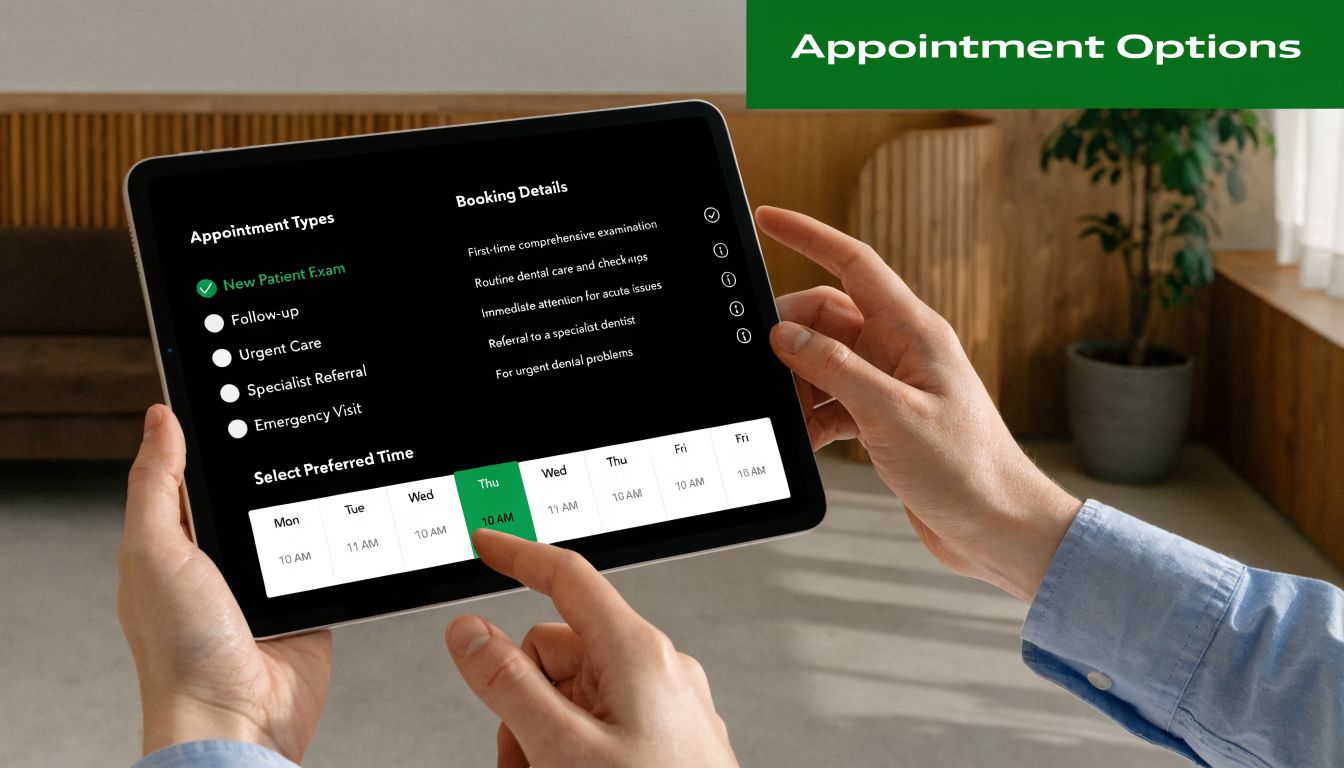
If you’re new to the office and want a full baseline, ask for a new patient exam. That’s the right choice if it’s been a while, you’ve changed offices, or you want a complete review of your oral health.
If your main concern is maintenance, book a routine preventive visit. This works for periodic checkups, hygiene care, and keeping your smile healthy before problems start.
Some needs require more targeted scheduling:
- Toothache or injury: Say exactly what happened and whether the pain is constant, sharp, or tied to biting.
- Cosmetic goals: If you want whitening, veneers, bonding, or a more balanced smile, say what you want to improve about color, shape, spacing, or symmetry.
- Missing teeth or advanced reconstruction: Mention implants, dentures, All-on-4, or full-mouth concerns so enough time is reserved.
- Wisdom teeth or oral surgery concerns: Ask for a surgical consultation rather than a general cleaning slot.
- Child’s visit: Let the scheduler know the child’s age and whether it’s a first visit or a return visit.
- Sedation needs: Bring this up early, not on arrival.
For initial triage, especially for emergencies or anxious patients, teledentistry adoption grew 25% in major U.S. markets like Houston over the last year, which makes remote assessment a practical first step when appropriate, as noted in this teledentistry overview.
The information to have ready
You don’t need a folder full of paperwork before booking. You do need a few basics.
Have these ready before you start:
- Your contact details: Full name, phone, email, and date of birth.
- Your reason for the visit: One or two clear sentences is enough.
- Insurance information if you have it: Carrier name and member details.
- Medication and health notes: Especially if you’re scheduling surgery, sedation, or complex restorative work.
- Timing preferences: Morning, afternoon, first available, or specific days.
- Past records if relevant: Recent X-rays, treatment plans, or referral notes.
Patients get scheduled more accurately when they describe the problem first and the treatment second. “I’m missing back teeth and can’t chew well” is often more useful than “I think I need implants.”
How a multi-specialty office helps
A larger clinic setup alters the experience. Instead of booking a general visit, finding out you need a specialist, then starting over elsewhere, the front office can route you based on the issue from the beginning.
That matters for appearance and function. A patient asking about replacing several teeth may need prosthodontic planning, imaging, and a surgical consultation. A parent calling for a nervous child needs a different setup than an adult coming in for whitening. The right appointment type saves time and gets you to the right care faster.
Understanding Payment Insurance and Financing Options
For many patients, the hardest part of scheduling isn’t fear of treatment. It’s uncertainty about cost. The fix is simple. Ask the money questions before the visit, not after.

Three common ways patients pay
Most patients fall into one of three groups. They use PPO insurance, they use an in-house savings plan or cash-pay option, or they use financing for larger treatment.
If you have insurance, ask practical questions when you schedule. Don’t just say, “Do you take my plan?” Ask whether the office works with your PPO, what information they need to verify benefits, and whether your visit type is likely to be preventive, diagnostic, or treatment-based.
If you don’t have dental insurance, you’re not alone. 28% of non-elderly U.S. adults don’t have dental coverage, and asking about in-house savings plans or cash-pay discounts matters because those options can reduce costs by 10% to 60%, according to this uninsured dental care discussion.
Questions worth asking when you book
These questions make scheduling easier and reduce surprises later:
- For PPO patients: “Can you check whether you’re in-network with my plan and what information you need from me?”
- For uninsured patients: “Do you offer an in-house savings plan, financing, or a cash-pay option?”
- For larger cases: “If I need implants, oral surgery, or a full treatment plan, how do payment phases usually work?”
- For parents: “Can you review how benefits work if I’m booking for more than one family member?”
For a fuller overview of the options available through one local practice, this guide on dental insurance and financing options at Grand Parkway Smiles outlines what patients typically ask before treatment starts.
Cost conversations go better when patients ask them early. It’s easier to plan care when the financial path is clear from the first call.
Payment planning also affects the type of appointment you book. A simple exam may only need basic verification. A larger cosmetic or reconstructive consultation may involve more detailed benefit checks and financing discussion. Asking about that upfront saves frustration.
How to Prepare for Your Dental Appointment
Once your appointment is set, a little preparation makes the visit smoother. It also helps you get more value out of the time in the chair. Good prep reduces rushed paperwork, missed instructions, and last-minute surprises.

If this is your first visit
New patients do best when they arrive with the basics handled. If forms are available ahead of time, complete them before you come in. Bring your ID, insurance card if applicable, medication list, and any recent dental records that relate to the reason for the visit.
It also helps to write down your priorities. Maybe you want healthier gums, a brighter smile, relief from pain, or a real plan to replace missing teeth. When patients state the goal clearly, the conversation gets better fast.
A short prep list works well:
- Bring records that matter: Prior X-rays, referral notes, or recent treatment plans.
- List your concerns in order: Pain first, then function, then appearance, or whatever matters most to you.
- Arrive with enough time: Rushing into the office tends to raise anxiety.
If you’re having sedation or surgery
Sedation appointments need more planning than routine cleanings. Follow pre-op instructions closely. If the office tells you to avoid food or drink before treatment, take that seriously. If you’ll be receiving IV sedation, arrange a ride and don’t treat transportation as an afterthought.
The same goes for surgical visits such as wisdom teeth removal, implant surgery, or more involved reconstruction. Wear comfortable clothing, review medication instructions, and ask questions before the day of treatment, not from the parking lot.
A smooth sedation visit usually starts the day before. Confirm the time, review instructions, and make sure your ride is fully arranged.
If you’re bringing a child or coming in for an emergency
Parents usually have the best pediatric visits when they keep the message simple. Tell your child the dentist will count teeth, clean them, and help keep the smile healthy. Avoid promising that “nothing will happen,” because uncertainty can make children more uneasy.
For an emergency, preparation is different. Call promptly, explain the problem clearly, and follow any instructions you’re given before arriving. If a tooth is chipped, broken, or knocked loose, handle it carefully and bring anything you were told to save. If swelling, trauma, or severe pain is involved, don’t wait for the problem to “settle down” on its own.
Cancellations Rescheduling and Managing Dental Anxiety
Life changes. Work meetings move. Kids get sick. Transportation falls through. Rescheduling happens, and that’s normal. What matters is telling the office as soon as you know.
Practices that use systematic scheduling buffers and reminders 24 to 48 hours prior can reduce no-shows by up to 40%, and a missed visit can cost 45 to 60 minutes of chair time per appointment, according to this dental scheduling guide from Unitek College. That’s why dental offices care so much about confirmations and notice. It isn’t just policy. It affects access for every patient on the schedule.
Why rescheduling is better than disappearing
If you’re anxious, the temptation is to ignore reminder texts and hope you’ll “deal with it later.” That usually makes the next call harder. A direct reschedule keeps you in control and gives the team a chance to offer a different time, a gentler pace, or a visit built around comfort.
Tell the office what’s behind the hesitation:
- Fear from a past bad experience
- Worry about pain or needles
- Embarrassment about the condition of your teeth
- Concern about gagging, noise, or loss of control
Those details help shape the visit. Some patients do better in earlier appointments. Others need more explanation before anything begins. Some need to discuss sedation options before they’ll feel ready.
Anxiety and scheduling work better together
Anxiety doesn’t mean you’re difficult. It means the appointment needs the right setup. If fear is high, say so when you book or reschedule. It’s much easier to prepare for an anxious patient than to guess in real time after they arrive overwhelmed.
Missing the visit rarely reduces fear. A better plan usually does.
Your Questions Answered About Dental Appointments
How far in advance should I book my appointment
For a routine checkup or cleaning, book as soon as you know your schedule. Preventive care is easier to keep when it’s reserved before your calendar fills up.
For more specialized care, don’t wait until you’re “ready to decide everything.” If you’re considering implants, All-on-4, full-mouth reconstruction, IV sedation, or oral surgery, book the consultation early. Complex care often starts with records, imaging, and planning, not treatment on day one.
Can I book appointments for my whole family at once
Yes, and it’s often the easiest way to handle family care. If you want family-block scheduling, say that at the start of the call. The scheduler can look for a cluster of times that fits parents, school schedules, and kids’ needs.
This is especially useful when one family member needs a routine visit and another needs something more specific, such as pediatric care or follow-up treatment. Booking together reduces repeat calls and makes it more likely everyone gets seen.
What if I need to see a specialist but don’t know which one
That’s common, and it’s exactly why describing the problem matters more than naming the procedure. Tell the office what you’re experiencing or what result you want. Say, for example, that you have a cracked molar, several missing teeth, jaw pain, a child with tooth discomfort, or cosmetic concerns about your front teeth.
From there, the scheduling team can place you with the right provider for the first visit. You don’t have to sort out whether you need general care, pediatric dentistry, endodontic evaluation, prosthodontic planning, or oral surgery before you make contact.
If you’re ready to stop guessing and get a clear plan for your smile, pain, or treatment goals, contact Grand Parkway Smiles. Whether you need a routine exam, a child’s visit, emergency care, sedation, or a consultation for implants or full-mouth treatment, the next step is getting the right appointment on the calendar.