You notice it while drinking water or brushing your teeth. Your head feels off, and there's a strange coppery or bitter taste in your mouth that wasn't there before. That combination can feel unsettling because it doesn't fit the usual picture of a simple headache or a routine dental problem.
As a dentist, I can tell you this symptom pair deserves attention, but it doesn't automatically mean something severe is happening. Sometimes the cause starts in the mouth. Other times the mouth is only where you're noticing part of a larger medical issue. The useful question isn't “Is this dangerous?” so much as “Which system is most likely causing it, and who should I call first?”
If you've also been wondering whether environmental triggers could be part of the picture, this overview on can mold cause migraines may help you think through one possible non-dental pathway.
Why Am I Experiencing This
A common scenario goes like this. Someone wakes up with pressure in the face, a dull headache near the temples or behind the eyes, then notices food tastes “off” or metallic at breakfast. By lunchtime, they're trying to decide whether this sounds like a cavity, a sinus problem, a medication side effect, or something else entirely.
That confusion makes sense. Headache and metallic taste in mouth can come from more than one pathway, and the symptoms can overlap. A dental infection may irritate nearby tissues and create referred pain into the jaw, cheek, or head. A sinus problem can create pressure that feels like tooth pain. A new medicine can change taste without causing any visible problem inside the mouth.
Why the combination gets attention
A metallic taste is usually discussed as dysgeusia, which means a distorted sense of taste. It's commonly linked to medications, oral disease, sinus problems, reflux, and certain vitamin or mineral exposures rather than to the headache itself. A clinical review also notes that some serious neurologic or infectious conditions can present with both symptoms, including subarachnoid hemorrhage, brain tumor, meningitis, and increased intracranial pressure.
Practical rule: If a metallic taste shows up with a headache, don't assume it's “just a migraine” or “just a bad tooth” until someone looks at the full picture.
That sounds alarming, but it's useful. Your body is giving a clue. The clue doesn't tell you the exact answer, but it tells you not to ignore the pattern.
The reassuring part
Many causes are treatable. In a lot of cases, the next step is identifying whether the source is more likely dental, sinus-related, medication-related, or neurologic. Once that's clear, the right treatment usually becomes much more straightforward.
Understanding a Metallic Taste or Dysgeusia
You take a sip of coffee, and it tastes like you licked a coin. Later, lunch seems bitter for no clear reason. If that strange taste shows up around the same time as a headache, it can be hard to know whether the problem starts in the mouth or somewhere else.
Dysgeusia is the medical word for a distorted sense of taste. People describe it as metallic, bitter, sour, medicinal, or unusual. Even water can seem strange.
That taste change is a clue. It often points to irritation somewhere along the path that creates flavor, including the tongue, saliva, nose, or the nerves that carry taste signals to the brain. In other words, the symptom is real, but it does not name the cause by itself.

Why taste and smell get tangled together
Flavor is built from several parts working at once. Your tongue picks up basic tastes such as sweet, salty, sour, and bitter. Your nose fills in much of the detail. Saliva helps dissolve food so taste receptors can do their job, and nerves carry that information forward.
If one part of that system is off, the whole experience can change.
That is why a stuffy nose can make food seem dull, dry mouth can make a metallic taste stand out, and inflammation inside the mouth can make normal foods seem unpleasant. Patients are often surprised by this because the problem may feel like it is on the tongue, even when the nose, saliva, or nerves are involved.
Common pathways include:
- Saliva changes: Dry mouth, dehydration, or irritated tissues can make tastes seem sharper, flatter, or metallic.
- Nerve changes: Irritation along taste pathways can distort flavor signals.
- Local mouth problems: Healing tissue, gum inflammation, or infection can leave a bitter or metallic taste.
- Medicine or supplement effects: Some antibiotics, vitamins, and other products can leave an aftertaste that lingers.
Why this matters for the dentist-or-doctor question
This is the part many people want help sorting out. If the metallic taste seems tied to chewing, gum swelling, a sore tooth, drainage, bad breath, or a recent dental procedure, a dental source moves higher on the list. If it began with a sinus illness, medication change, reflux symptoms, or a headache pattern that feels new or unusual, a medical source deserves more attention.
That first sorting step can save time.
For example, a person with swelling near one tooth and a bad taste may need an urgent dental exam. A person with a normal-looking mouth but a new medication and a diffuse headache may need to call their physician first. If you are noticing drainage, pressure, or swelling near a tooth, these warning signs of a dental abscess can help you judge how quickly to get checked.
Temporary symptoms can still deserve attention
A metallic taste may fade on its own, especially after a cold, minor irritation, or a short course of medication. But temporary does not always mean trivial. If the taste persists, keeps returning, or arrives with other symptoms such as facial swelling, fever, numbness, or a headache that is different from your usual pattern, it deserves a closer look.
People also confuse metallic taste with problems caused by clenching or grinding. Grinding does not usually create a metallic taste by itself, but it can contribute to jaw strain and headache, which makes the overall picture harder to read. If nighttime clenching is part of your story, these home remedies for grinding teeth may help while you arrange an evaluation.
What readers often get wrong
Patients usually miss in one of two directions. Some ignore the symptom because the mouth looks mostly normal. Others assume the worst right away.
A steadier approach is to ask:
- Did the taste start after dental pain, gum bleeding, a recent procedure, illness, or a new medicine?
- Do you notice swelling, drainage, bad breath, dry mouth, or pain when chewing?
- Does the headache feel familiar, or is it new, severe, or unusual for you?
Those answers help separate a problem that points first to the dentist from one that should start with a doctor.
The Dental Connection to Headaches and Metallic Taste
You wake up with a dull ache near your temple, then notice a strange metal-like taste when you swallow. That combination often feels random. In the dental chair, it usually follows a more traceable path.
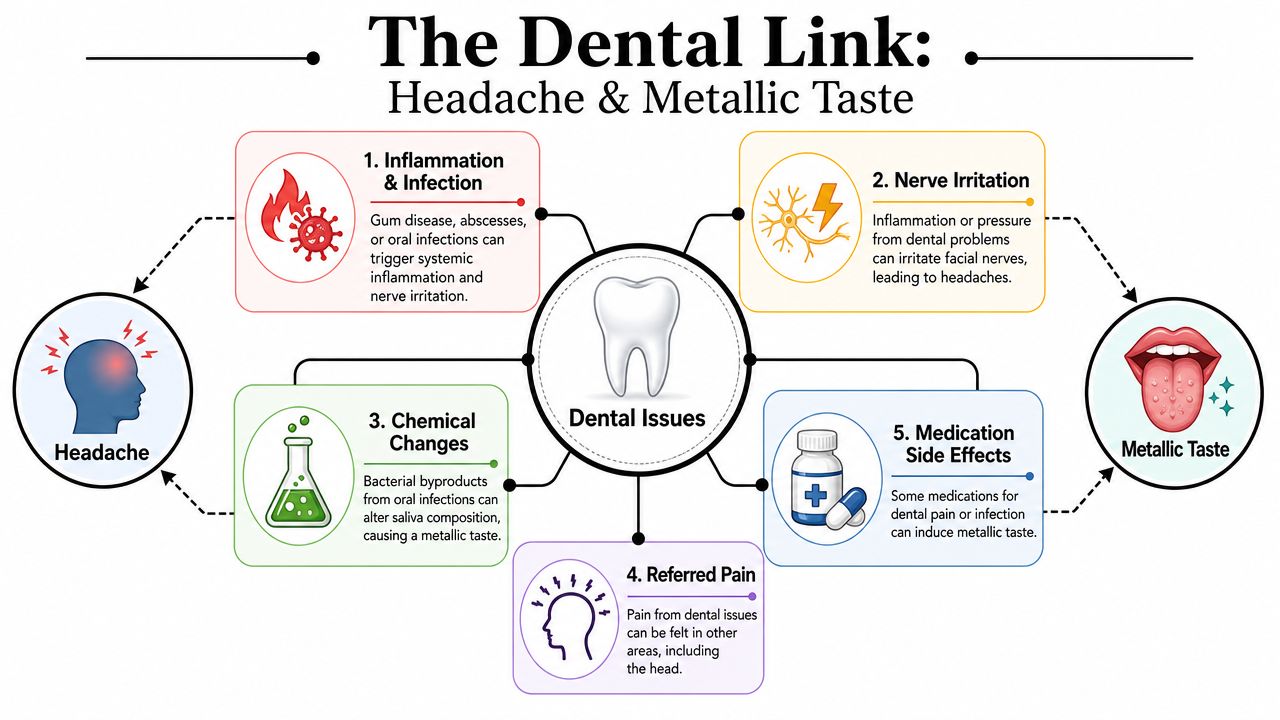
The mouth sits close to the jaw joints, facial muscles, sinuses, and major nerve branches. When a tooth, gum, or bite problem irritates that system, the signal can spread. Pain may show up as a headache, while blood, drainage, dry mouth, or inflammation can change the way things taste.
Infections can create both symptoms at once
A dental infection is one of the clearest examples. If bacteria collect around a tooth root or deep in the gums, the area can build pressure, leak fluid, and irritate nearby tissues. Patients may notice pain with chewing, a bad or metallic taste, swelling, and a headache that seems to settle into the cheek, temple, or ear.
That spread of pain confuses people. A back molar does not always hurt like a classic toothache. It can feel more like sinus pressure or a one-sided headache.
If you want to compare your symptoms with common warning signs, this guide to dental abscess symptoms can help.
Gum problems can change the chemistry of the mouth
Teeth are only part of the picture. Inflamed gums can bleed lightly, trap bacteria below the gumline, and release fluid that changes taste. Some people describe it as metallic. Others say bitter, sour, or just foul.
That is why a normal-looking tooth does not rule out a dental cause. The problem may be under an older filling or crown, between teeth, around a wisdom tooth, or in gum tissue you cannot easily see in the mirror.
A useful clue is timing. If the taste gets stronger after flossing, brushing near one area, chewing, or pressing on the gumline, the mouth is more likely part of the story.
Clenching and grinding usually explain the headache side
Jaw tension works a little like overworked shoulder muscles. If those muscles stay tight night after night, they become sore, fatigued, and easier to trigger. Clenching and grinding can cause temple pain, forehead pain, morning jaw soreness, and teeth that feel tender or sensitive.
By themselves, they do not usually cause a metallic taste. But they often travel with dry mouth, irritated gums, or a separate dental problem, which is why the combination can blur together. If that pattern sounds familiar, these home remedies for grinding teeth may help while you arrange an exam.
How to decide whether to call a dentist first
This is the practical fork in the road. If the metallic taste and headache come with signs that point to the teeth, gums, or jaw, a dentist is often the better first call because we can usually confirm or rule out an oral source quickly.
A dental-first pattern looks more likely when you also have:
- Pain with biting or chewing
- Sensitivity to cold, heat, or pressure
- Bleeding gums, swelling, or a pimple-like bump near a tooth
- Bad breath or drainage that keeps coming back
- Jaw soreness, limited opening, or morning clenching symptoms
- A recent filling, crown, extraction, or other dental work followed by new symptoms
That does not mean every headache with a metallic taste is a dental emergency. It means the mouth is one of the first places to check when the clues line up.
Medical and Systemic Causes You Should Know
Sometimes the mouth looks quiet, yet the symptoms are still very real. That usually means the signal may be coming from somewhere else. The taste buds, sinuses, stomach, nerves, and even certain medications can all influence what you taste and how your head feels.
A metallic taste plus a headache often falls into a few broad medical pathways. The first is sinus or airway inflammation. The second is medication or supplement side effects. The third is a body-wide issue such as reflux, dehydration, or a vitamin or mineral deficiency. It helps to sort these the way you would sort a household problem. If the faucet is dripping, the noise is in the kitchen, but the cause may be the valve behind the wall.
Potential causes at a glance
| Potential Cause Category | Dental Origins | Non-Dental Origins |
|---|---|---|
| Infection and inflammation | Abscess, gum infection, pericoronitis, irritation around a restoration | Sinus infection, upper respiratory illness, meningitis |
| Mechanical strain | Teeth grinding, clenching, TMJ-related muscle tension | Neck tension, primary headache disorder, sleep disruption |
| Chemical or taste changes | Blood in the mouth, drainage from infected gums or teeth, dry mouth after dental treatment | Medication side effects, reflux, supplements, vitamin or mineral deficiency |
| Pressure-related pain | Referred pain from teeth or jaw | Sinus pressure, neurologic conditions, increased intracranial pressure |
Sinus problems are one of the easiest ways to get fooled. Inflamed sinuses sit close to the roots of the upper teeth, so pressure there can feel like a toothache, a cheek ache, or a forehead headache. At the same time, congestion can blunt smell, and smell is a big part of flavor. When smell gets distorted, foods and saliva may seem metallic, bitter, or just off. If that pattern sounds familiar, this guide on whether sinus pressure can make your teeth hurt can help you sort out the source.
Medication effects are another common explanation, especially when the timing lines up. A new prescription, a changed dose, or even an over-the-counter product can alter taste directly or dry the mouth enough that odd tastes become more noticeable. Antibiotics, antihistamines, blood pressure medicines, metformin, and some antidepressants are frequent examples. Zinc lozenges, iron, prenatal vitamins, and some multivitamins can do the same thing.
A simple question often points you in the right direction. Did both symptoms begin soon after you started something new, or after you changed the dose? If yes, a physician or pharmacist may be the better first call.
Body-wide causes can be quieter and easier to miss. B12 or zinc deficiency can interfere with normal taste function. Reflux can wash acid and stomach contents into the throat or mouth, leaving a bitter or metallic sensation, especially after lying down or first thing in the morning. Dehydration and dry mouth can make normal tastes seem concentrated and unpleasant.
This is why a normal dental exam does not end the story.
It shifts the decision tree. If the symptoms come with congestion, postnasal drip, heartburn, medication changes, fatigue, or other whole-body symptoms, the medical side moves higher on the list.
When symptoms need prompt medical attention
Some combinations need quicker action because the headache matters more than the taste. Seek prompt medical care if the headache is sudden and severe, clearly different from your usual headaches, or paired with fever, confusion, weakness, numbness, trouble swallowing, persistent vomiting, mouth sores, or unexplained weight loss.
Those signs suggest this is no longer a dentist-versus-doctor puzzle. It is a medical evaluation first.
How Doctors and Dentists Diagnose the Problem
A good diagnosis works like sorting keys on a ring. The metallic taste is one key. The headache is another. Your clinician is trying to find which key fits the lock.
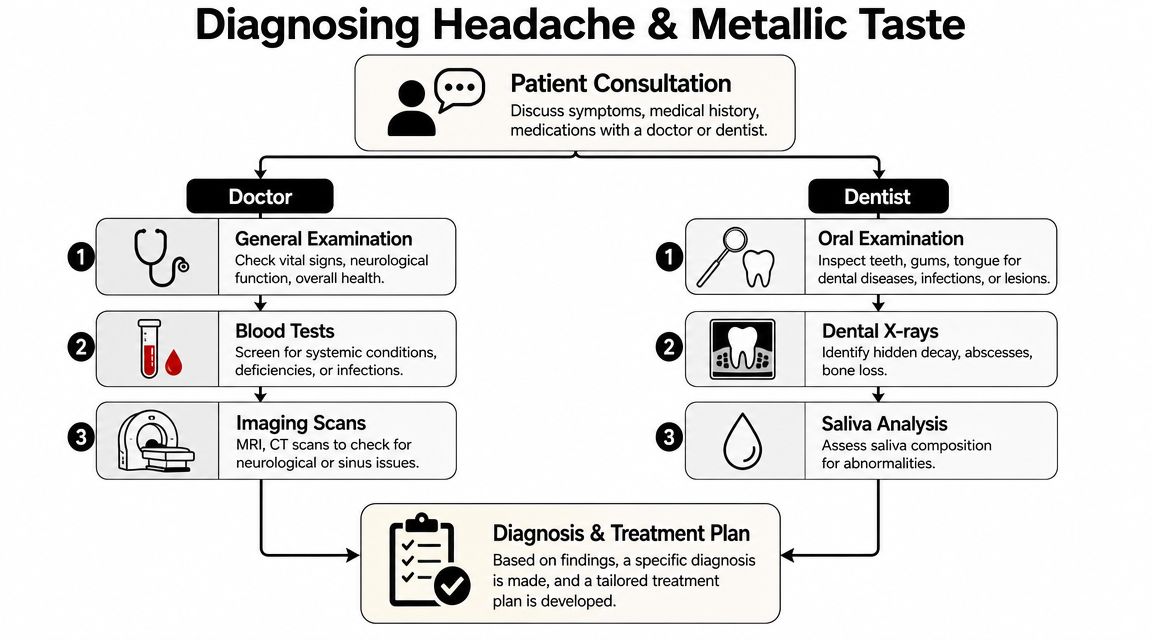
That is why the first step is usually a careful history, not a scan or a quick guess. The goal is to decide whether the pattern points toward the mouth, the jaw, the sinuses, a medication effect, or a broader medical issue.
What a dentist or doctor will ask
Expect questions that narrow the problem by timing and location:
- When did it begin: Sudden symptoms raise different concerns than a slow, gradual change
- What changed around that time: New medicines, supplements, illness, dental work, injury, or stress on the jaw
- Where does the pain sit: One tooth, the jaw joint, the temples, behind the eyes, the sinuses, or the whole head
- What comes with it: Swelling, fever, congestion, reflux, dry mouth, numbness, weakness, sores, or trouble swallowing
A dentist often focuses on clues tied to the mouth and bite, such as pain with chewing, tooth sensitivity, clenching, bleeding gums, or a bad taste from one spot. A physician usually looks harder at medications, sinus disease, nerve symptoms, hydration, and general health.
What the exam may include
A dental exam may include the teeth, gums, bite, jaw joints, tongue, and saliva. If something hidden is suspected, dental X-rays can help show decay, infection, bone changes, or problems around a tooth root.
A medical exam may include a general physical exam, a neurologic check, and sometimes lab work or imaging if the history points that way. The point is not to order everything. The point is to choose the right lane first.
At a clinic such as Grand Parkway Smiles, a same-day emergency dental evaluation can help determine whether the source appears to be an abscess, a gum problem, a bite issue, or another oral condition before you pursue medical follow-up if needed.
When to call your dentist first
Start with a dentist when the symptoms are centered in the mouth or jaw:
- You have tooth pain, especially with biting or chewing
- Your gums are swollen, sore, or bleeding
- There is drainage, bad breath, or a foul taste coming from one area
- The taste began after recent dental work
- You wake up with jaw soreness, temple tension, or signs of grinding
This route makes sense because dental causes often leave local clues. A small infection, a cracked tooth, or a strained jaw joint can refer pain upward into the head while also changing taste.
When to call your doctor or seek urgent care
Start with your doctor, or urgent care when needed, if the headache feels unusual for you or the metallic taste does not seem tied to a clear oral problem. A lasting taste change, especially with other whole-body symptoms, usually deserves medical review.
Go medical first when:
- You recently started or changed a medication or supplement
- The headache is new, strong, or clearly different from your usual pattern
- You have sinus pressure, congestion, reflux, or dry mouth without obvious dental signs
- You have confusion, numbness, weakness, fever, trouble swallowing, or unexplained weight loss
If you are using over-the-counter pain relief while waiting to be evaluated, these FindMyScript Aleve vs Ibuprofen insights can help you compare common options. They do not replace personalized medical advice.
The simplest decision framework is this: mouth-centered clues suggest a dentist first. Whole-body clues suggest a doctor first. If you are unsure, start where the symptoms are loudest and mention both problems together so the visit stays focused.
Your Next Steps to a Healthy Smile and Peace of Mind
The most important takeaway is simple. Headache and metallic taste in mouth is a clue, not a diagnosis. Sometimes the clue points straight to the mouth. Sometimes it points beyond it.
If you also have tooth pain, gum swelling, drainage, jaw soreness, or a recent dental problem, start with a dental exam. If the symptoms began after a medication change, have no clear oral trigger, or come with fever, confusion, numbness, weakness, or swallowing trouble, start with your physician or urgent care.
A practical plan for today
You don't need to solve the whole mystery on your own. Start with a few notes:
- Write down timing: When it started and whether it's getting better or worse
- List everything new: Prescriptions, over-the-counter medicines, vitamins, lozenges, and supplements
- Check for oral signs: Swelling, bleeding, bad breath, one-sided pain, or tenderness with biting
- Notice the headache pattern: Familiar and mild, or new and concerning
If you're using over-the-counter pain relief while waiting to be evaluated, it can help to review the differences between common options. These FindMyScript Aleve vs Ibuprofen insights may help you think through that choice, though they don't replace personalized medical advice.
The right next step is the one that identifies the source early. That protects more than comfort. It protects your teeth, your appearance, and your peace of mind.
If you want to rule out an oral source first, Grand Parkway Smiles offers thorough dental evaluations in Katy, including urgent care for tooth pain, abscess concerns, jaw pain, and other symptoms that may overlap with headache and taste changes. A focused exam can help determine whether the problem is dental, whether your smile and oral health are being affected, and whether you should be referred for medical follow-up.