You wake up, yawn, and your jaw feels worked over before the day has even started. Your molars may feel tender. Your temples may ache. By lunch, the headache is still hanging on, and by evening you catch yourself pressing your teeth together again while answering email or driving home.
That pattern is common, and it matters because it affects both comfort and dental health. Clenching overloads the chewing muscles, strains the jaw joints, and can wear enamel in ways that change how your teeth look and feel over time. Left alone, it can also put crowns, fillings, and already-stressed teeth under extra pressure.
Introduction and Recognizing Jaw Clenching Symptoms
Jaw clenching often starts as something people try to dismiss. They say their jaw is “just tight” or that they “must've slept funny.” Then the pattern becomes hard to ignore. Morning soreness turns into repeated headaches, chewing feels tiring, and the back teeth start showing flattened wear or small chips.
Bruxism includes both sleep grinding and awake jaw clenching, and its global prevalence is approximately 22.22%, meaning more than one in five people worldwide experience this condition according to this clinical review on bruxism prevalence. That number matters because it tells you this isn't a rare quirk. It's a widespread issue that deserves active treatment, especially when it starts affecting your smile, bite comfort, or enamel.
Signs I tell patients to watch for
Some symptoms are obvious. Others show up subtly.
- Morning jaw fatigue: Your jaw feels tired before breakfast.
- Temple or tension headaches: These often show up after sleep or after long periods of concentration.
- Tender chewing muscles: The masseter muscles, the thick muscles at the sides of the jaw, may feel sore when pressed.
- Tooth wear: Enamel can look flattened, edges can chip, and sensitive spots can appear.
- Neck and facial tightness: Clenching rarely stays limited to the jaw.
Clenching is rarely “just a habit” once it starts affecting enamel, chewing comfort, or daily headaches.
Why early recognition helps
The earlier you identify the pattern, the more likely you are to prevent visible tooth wear and bite-related irritation. That matters for appearance as much as comfort. Flattened incisal edges, craze lines, and chipped restorations can change the look of a smile long before someone realizes how much force they're generating.
If your teeth feel overloaded, your jaw clicks, or you regularly wake with pain, your body is giving you useful information. The best jaw clenching relief plans start by noticing when the problem happens, not by guessing.
Quick At-Home Relief Techniques
If your jaw is flared up today, start with simple measures that reduce muscle load instead of adding more work. The goal at home is not to “fight” the jaw. It's to create enough calm that the muscles stop guarding.
Reset your mouth resting position
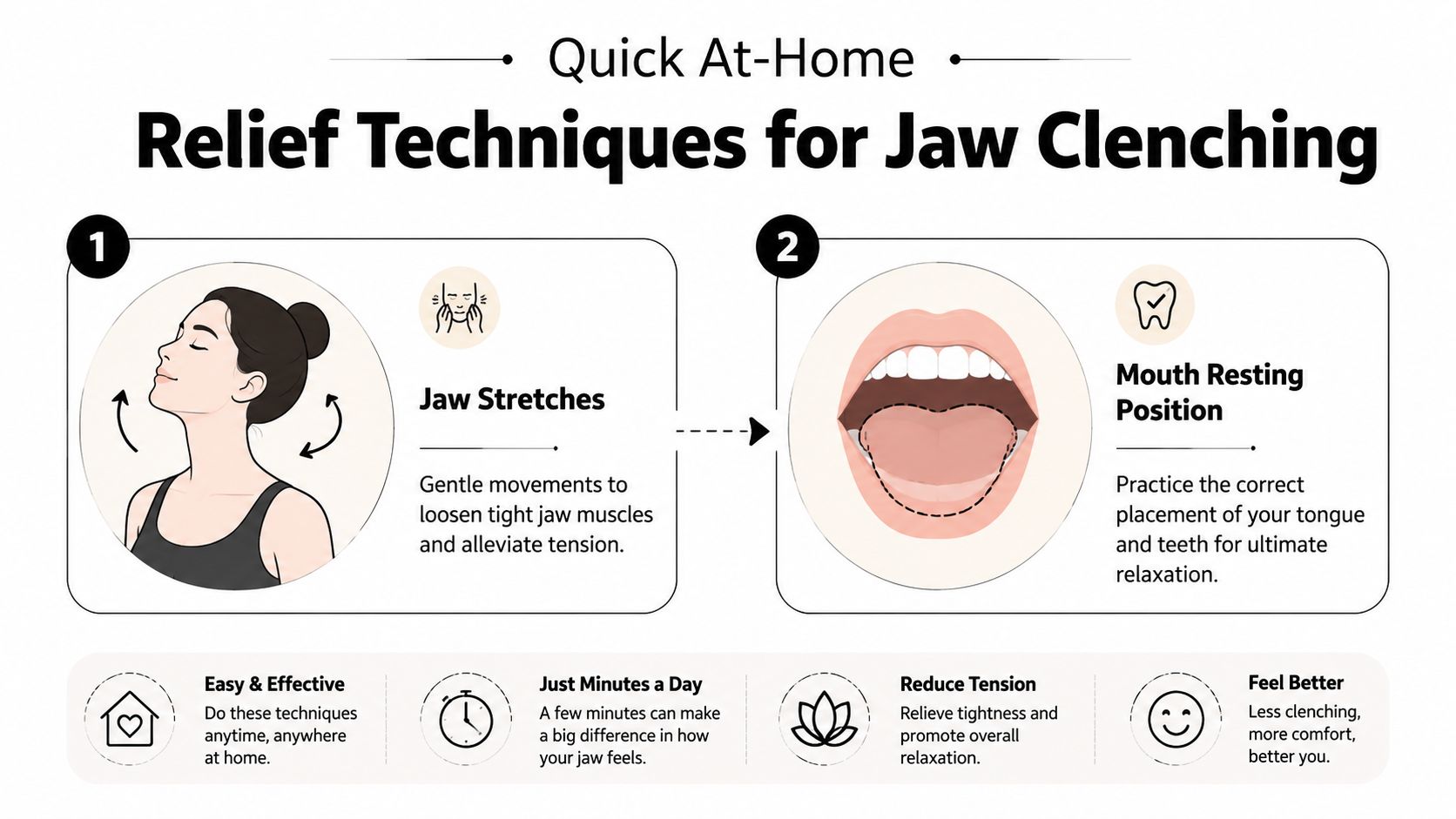
One of the most useful drills is the mouth resting position. Keep your lips closed, teeth slightly apart, and the tongue tip resting behind the upper front teeth. This isn't dramatic, but it helps unload the jaw.
Use it like this:
- Set the posture: Lips together, teeth apart, tongue up.
- Hold it briefly: Return to that position several times during the day.
- Pair it with check-ins: During computer work, traffic, or stress, ask, “Are my teeth touching?”
This kind of self-monitoring fits with first-line self-management principles for awake clenching. It also helps protect enamel because teeth that aren't pressed together aren't wearing each other down.
Use heat and cold with purpose
A warm compress can relax tight muscles, while cold can calm an irritated area. This overview of heat and cold for TMJ discomfort notes that applying a warm compress for 10 to 15 minutes helps muscles relax, and alternating with cold therapy for 10 to 15 minutes can reduce inflammation and numb pain.
Try this simple routine:
- Warm first: Use a warm compress over the jaw joints and cheek muscles.
- Cold second if inflamed: If the area feels hot, puffy, or irritated, switch to a wrapped cold pack.
- Stay gentle: The goal is easing tension, not forcing change.
Fix sleep posture if you clench at night
One of the most overlooked contributors to nighttime clenching is sleep position. A useful sleep posture discussion from the Osher Center points out that side-sleeping without neck support can force the jaw into a clenching position, and rolling a pillow under the neck to support the jaw can help prevent the masseter from overloading.
That means pillow setup matters. If you sleep on your side, support the neck so the head doesn't sag and drag the jaw with it. A well-placed pillow can reduce how hard the jaw has to stabilize itself overnight.
Practical rule: If you wake with one-sided jaw pain, inspect your sleeping setup before blaming only stress.
Be careful with massage
Massage helps some people, but more isn't always better. This video discussion on TMJ self-massage caution warns that over-massaging the masseter and temporalis can aggravate inflammation, and that gentle, infrequent massage is often safer than frequent deep pressure.
A few rules keep massage useful:
- Use light pressure: Deep digging often backfires.
- Keep it brief: Short sessions are enough.
- Stop if pain lingers: Relief should feel calming, not bruising.
Stress still matters, especially for daytime clenchers. If your jaw tightens during pressure-filled days, it may help to optimise your health with stress relief by building a broader stress-management routine around sleep, breaks, hydration, and relaxation habits.
Short-Term Solutions for Nighttime Clenching
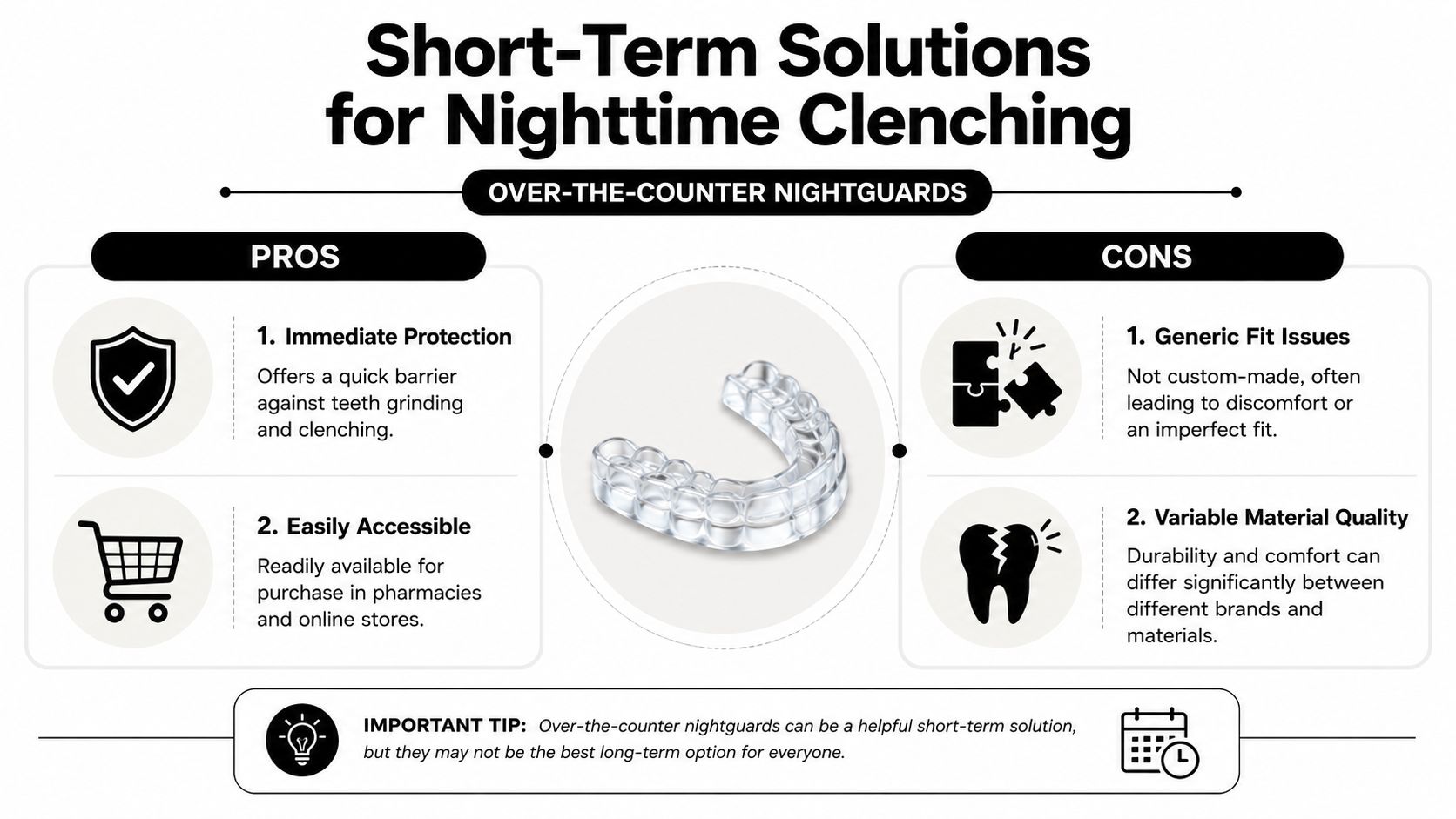
When you need fast protection for your teeth, over-the-counter nightguards can serve as a temporary bridge. The key word is temporary. They may protect enamel from direct tooth-to-tooth contact, but they aren't the same as a carefully adjusted custom appliance.
What works and what doesn't
Clinical research shows that first-line treatment combining counseling and self-management strategies, including self-relaxation, self-monitoring, massage, and jaw exercises, significantly reduces facial pain and the frequency of awake bruxism episodes, while a systematic review found no significant evidence that oral splints alone reduce pain or improve joint outcomes in that body of evidence, as summarized in this review on awake bruxism and treatment approaches.
That's the trade-off. A guard may protect teeth. It doesn't automatically solve the muscle habit.
Comparing common short-term options
| Option | Best use | Upside | Downside |
|---|---|---|---|
| Thin OTC guard | Immediate short-term tooth protection | Easy to buy quickly | Generic fit can feel awkward |
| Boil-and-bite guard | Temporary use when you need a closer fit | Better than an unshaped tray | Easy to overheat or distort |
| Bedtime bite-awareness routine | Helping reduce pre-sleep tension | No device needed | Requires consistency |
How to use a temporary guard wisely
A temporary guard should sit without obvious rocking, pinching, or gagging. If you wake up clenching harder, the fit may be part of the problem. If the appliance leaves one area taking all the pressure, stop using it and get it checked professionally.
Use a bedtime routine alongside it:
- Unclench before sleep: Let your tongue rest up, lips together, teeth apart.
- Soften the menu: Avoid very hard or chewy foods in the evening if the jaw is already irritated.
- Check the morning after: If you feel more sore with the guard than without it, that's useful feedback.
For a deeper patient-focused explanation of common nighttime grinding patterns and solutions, this guide on how to stop grinding teeth at night is a practical next read.
A nightguard can be a shield for enamel. It is not a substitute for correcting the behavior and muscle overload behind the clenching.
Advanced Dental and Medical Interventions
When jaw clenching starts wearing teeth, stressing restorations, or triggering repeat pain, professional treatment usually outperforms trial-and-error home care. The reason is simple. Long-term relief depends on fit, diagnosis, and follow-through. Teeth, joints, muscles, and sleep habits all interact.
Why custom care changes outcomes
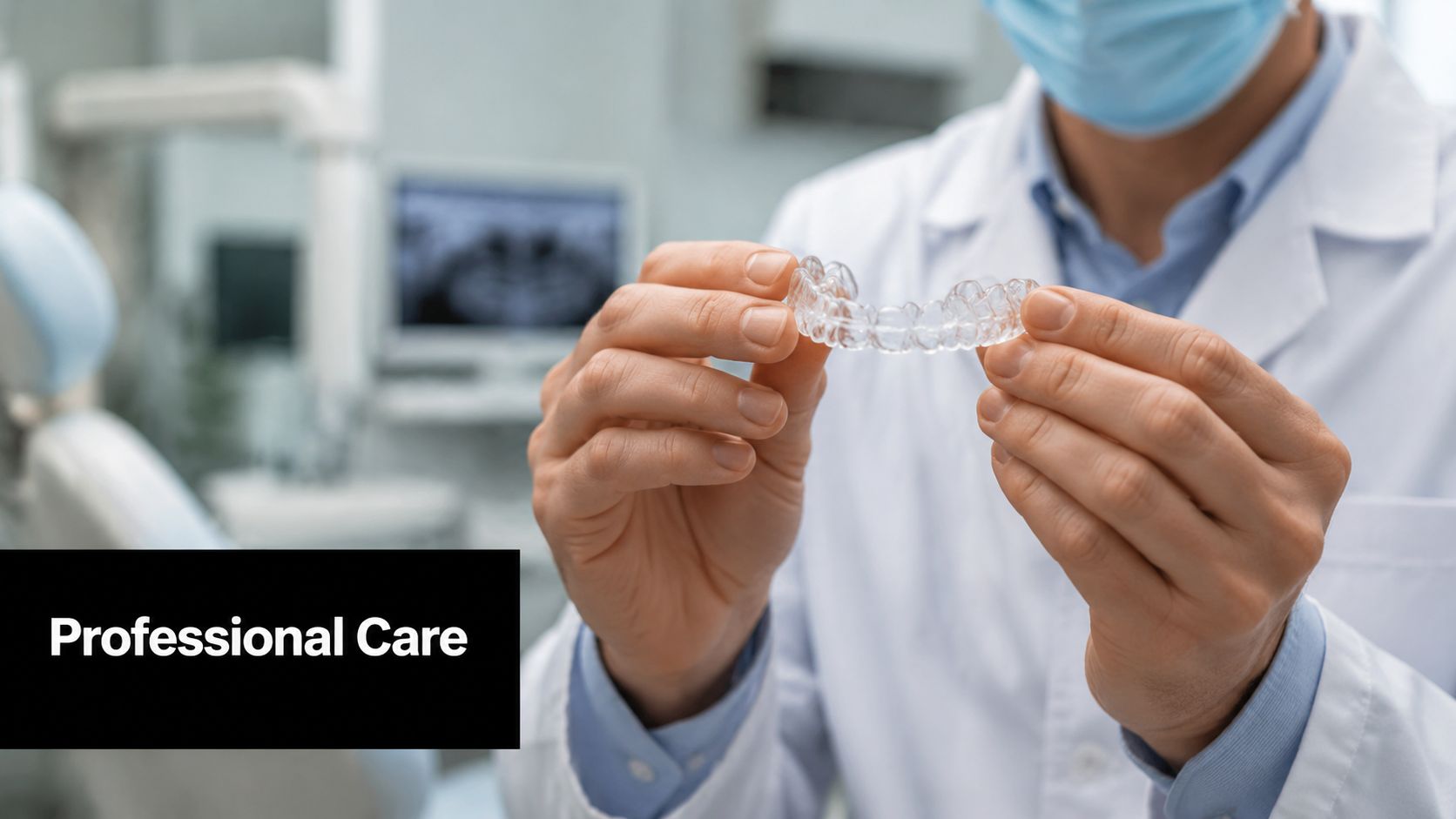
A professionally made nightguard or splint is built around your bite, not around a generic mold. That matters for comfort, retention, and how evenly force gets distributed across the teeth. If your enamel is already showing flattening, fracture lines, or edge wear, a custom appliance helps preserve what's left and reduce the risk of more visible damage.
Professional care may also include a bite analysis, evaluation of chewing muscle tenderness, and a review of dental work that may be taking too much force. In some cases, occlusal adjustment is considered. That has to be done carefully and only when the bite issue is clearly defined. Grinding away tooth structure without a diagnosis is not conservative dentistry.
Treatments worth discussing
If home care hasn't been enough, several options may help:
- Custom nightguards or splints: Best when the goal is protecting enamel, restorations, and the bite with a precise fit.
- Physical therapy: Helpful when the jaw, neck, and posture are all feeding the problem.
- Biofeedback: Useful for people who clench during the day without noticing it.
- Targeted manual therapy: Some patients benefit from soft-tissue work, especially when combined with exercise and posture correction. If you want a plain-language overview, this article on hands-on pain treatment explained gives helpful context.
When Botox enters the conversation
For severe bruxism that hasn't responded to other treatment, botulinum toxin injections may be offered to reduce muscle overactivity, and lifestyle steps such as avoiding hard foods, limiting caffeine after lunch, and maintaining consistent sleep hygiene can significantly decrease clenching behaviors, according to the Mayo Clinic guidance on bruxism treatment.
Botox isn't a first move for most patients. It can be useful when the muscles remain hyperactive despite conservative care. The trade-off is that it addresses muscle force, not the full habit pattern or any bite-related contributors. It's often strongest as part of a bigger plan, not as a stand-alone fix.
If jaw pain, joint strain, and bite stress are all part of the picture, this page on TMD and jaw pain solutions outlines the kinds of problems a more complete evaluation can address.
When to Seek Professional Help and What to Expect
Some clenching episodes settle down with home measures. Others don't. If pain keeps returning, if your mouth opening feels limited, or if your teeth are visibly changing shape, it's time for a professional evaluation.
Signs you shouldn't ignore
A dental exam becomes more important when you notice any of these:
- Visible tooth wear: Edges look flatter, shorter, chipped, or more translucent.
- Repeated morning pain: You wake with the same jaw soreness or headache over and over.
- Pain while chewing: Normal meals start to feel like work.
- Joint symptoms: Clicking, locking, or limited opening deserves attention.
- Dental work under stress: Fillings, crowns, or veneers feel like they're taking too much force.
Clenching can damage natural teeth and restorative work gradually. Patients often notice the symptoms before they notice the wear. That's why a direct exam matters.
What a thorough evaluation usually includes
A useful consultation doesn't stop at “you grind your teeth.” It looks at where the force is going and what structures are paying the price.
A clinician may assess:
| Part of the exam | Why it matters |
|---|---|
| Bite analysis | Finds heavy contacts and uneven loading |
| Muscle palpation | Identifies tenderness in the masseter and temporalis |
| Joint evaluation | Checks for clicking, deviation, or restricted opening |
| Imaging when needed | Helps evaluate teeth, bone, and joint-related concerns |
| Review of habits | Looks at sleep, stress, posture, and daytime clenching triggers |
If your jaw feels worse every morning than it does at bedtime, bring that detail to the appointment. It helps narrow the source of the load.
Questions worth asking at your visit
You don't need technical language. Clear questions work well.
- What kind of wear are you seeing on my teeth?
- Is this mostly a muscle problem, a bite problem, or both?
- Would a custom guard protect my enamel better than a store-bought one?
- Do I need physical therapy or a medical referral?
- Are my headaches likely related to clenching?
If dental anxiety has kept you from booking, ask about comfort options. Many practices now offer sedation support, and that can make a long-delayed visit much more manageable. If cost is your concern, ask about phased treatment and payment options. Protecting teeth early is usually simpler than rebuilding them after years of force.
Conclusion and Ongoing Jaw Care Tips
The most effective jaw clenching relief plan usually combines three things. Calm the muscles now, protect the teeth while you sort out the cause, and get a proper evaluation if the pattern keeps returning. That approach protects both comfort and the appearance of your smile.
Keep the daily plan simple:
- Rest the jaw: Lips together, teeth apart, tongue up.
- Use heat or cold thoughtfully: Don't overdo either one.
- Watch sleep posture: Support the neck if side-sleeping stresses the jaw.
- Be cautious with massage: Gentle beats aggressive.
- Protect enamel when needed: Temporary guards can help, but long-term fit matters.
- Clean up evening habits: Softer foods, less caffeine later in the day, steadier sleep.
A clenched jaw can make you feel like your mouth never gets a break. With the right combination of habit change, dental protection, and professional care when needed, it can.
If jaw pain, tooth wear, or nighttime clenching is starting to affect your daily comfort, Grand Parkway Smiles offers extensive dental care in Katy, TX with the technology and multidisciplinary support to evaluate bite strain, protect enamel, and build a personalized treatment plan for lasting relief.