When you're trying to figure out the best dental care for your child, the terms "pediatric dentist" and "family dentist" come up a lot. What’s the real difference? It all boils down to specialization and its direct impact on your child's dental health.
A pediatric dentist isn't just a general dentist who's good with kids. They've completed an extra two to three years of intensive training after dental school. This residency is laser-focused on the unique dental needs of infants, children, adolescents, and kids with special needs, ensuring they have the expertise to protect and enhance a developing smile. Think of them as the pediatricians of the dental world.
A family dentist, on the other hand, is a general dentist who provides care for patients of all ages, from toddlers to grandparents. This offers the benefit of convenience—one trusted office for everyone in the family to maintain their oral health.
Choosing the Right Dentist for Your Child's Smile
Making this decision is one of the first and most important steps in setting your child up for a lifetime of excellent oral health and a confident smile. The choice really depends on your child's age, their personality, and any specific dental challenges they might have.
A child's early experiences at the dentist can completely shape their feelings about dental care for the rest of their life. A positive, gentle, and supportive environment is key to building healthy habits and preventing dental anxiety. This is precisely why understanding the difference between these two types of dentists is so vital for parents who want the best health outcomes for their children.
This quick comparison helps break down the main distinctions.
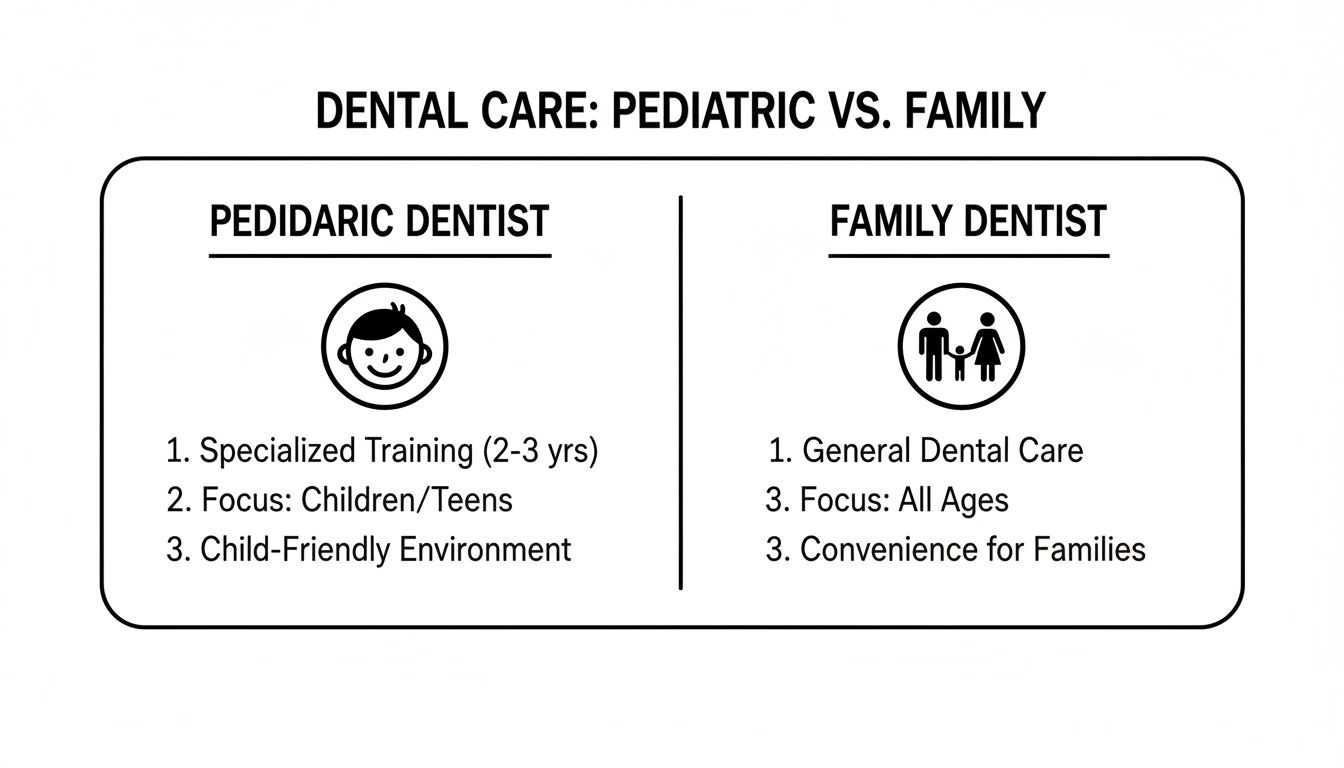
As you can see, while both are highly qualified dentists, the pediatric specialist brings a child-first focus that is designed to promote a healthy smile from the very beginning.
At-a-Glance: Pediatric vs. Family Dentist
To make things even clearer, here’s a simple table that summarizes the key differences at a high level. It's a great starting point for seeing how each practice contributes to your child's dental health.
| Attribute | Pediatric Dentist | Family Dentist |
|---|---|---|
| Primary Focus | Infants, children, teens, and special needs patients | Patients of all ages, from toddlers to seniors |
| Training | Dental school + 2-3 years of specialized residency | Dental school (general dentistry) |
| Office Environment | Designed to be child-friendly, colorful, and engaging | Typically a more neutral, professional setting for all ages |
| Expertise | Child psychology, growth, development, and behavior management | Comprehensive care for a wide range of general dental issues |
| Best For | First dental visits, anxious children, complex pediatric cases | Families seeking convenient, single-location care |
Ultimately, the goal is to find a dental home where your child feels safe and comfortable, which is why understanding these distinctions can help you make the best choice for your family's oral health needs.
Understanding the Professional Landscape
The demand for specialized pediatric dental care is on the rise, and for good reason. Parents are recognizing that a dentist who is an expert in children's developing smiles can lead to better health outcomes and a more positive dental experience.
The numbers back this up. In the United States, the number of practicing pediatric dentists saw a huge jump, going from 4,213 in 2001 to 8,033 in 2018. This growth shows a real shift in understanding just how important specialized care is for a child's oral and overall health.
If you're weighing your options, our comprehensive guide on finding the right dentist near you can offer even more helpful insights. The end goal is always the same: finding a professional who will protect your child's smile and make going to the dentist a positive, stress-free experience that promotes lifelong health.
The Critical Role of Specialized Pediatric Training
Both family and pediatric dentists start their careers with the same foundational dental degree, but that's where their paths split. A pediatric dentist goes on to complete an additional two to three years of a demanding residency program. This isn't just extra time in a classroom; it's a deep dive focused entirely on the unique dental world of infants, kids, teens, and patients with special healthcare needs.
This advanced training is the real heart of the pediatric dentist vs. family dentist debate. The curriculum moves far beyond general dental work, digging into specialized topics that are absolutely crucial for a child's dental health and development. It ensures every part of their care is perfectly tuned to create a healthy, beautiful, and growing smile.
Expertise in Child Development and Psychology
A huge piece of that residency puzzle is child psychology and development. These dentists learn exactly how to talk to kids at every stage, from a curious toddler to an anxious teenager. They're trained in proven behavioral guidance techniques designed to build trust and make dental visits a positive—not scary—experience, which is essential for consistent care.
This training makes a world of difference in the exam room. For instance, a pediatric dentist is a master of the "Tell-Show-Do" method. They’ll explain what they're going to do in simple terms, show the tool on a toy or their own finger, and only then perform the action. This simple approach demystifies the visit, reducing fear and building a great attitude about maintaining oral health.
A pediatric dentist's expertise isn't just about fixing teeth; it's about understanding the child attached to them. This specialized knowledge in behavior, growth, and development is essential for creating a foundation of trust and positive oral health habits that last a lifetime.
Advanced Knowledge of Developing Smiles
Beyond behavior management, the residency gives them an incredible depth of knowledge on the specific challenges of little mouths. This covers everything from managing the growth of a child's jaw to spotting and intercepting potential orthodontic problems early on, which can lead to a healthier and more aligned smile later in life. They also become experts in treating conditions unique to primary (baby) teeth.
Their training also covers complex areas that directly benefit your child's health and comfort:
- Pediatric Sedation: They receive extensive training in using safe and effective sedation methods for children, like nitrous oxide ("laughing gas") and conscious sedation, to keep them comfortable and relaxed during important procedures.
- Special Needs Dentistry: They develop specialized skills to provide kind and effective care for children with physical, developmental, or cognitive conditions, ensuring every child can achieve optimal dental health.
- Dental Trauma: They have deep expertise in handling common childhood dental emergencies—think knocked-out or chipped teeth—to give your child the best chance of saving the tooth and preserving their smile's appearance and function.
This unique skill set means a pediatric dentist is ready to handle every single part of your child’s dental journey. You can find out more about how this specialized approach supports a child's well-being by exploring the key benefits of pediatric dentistry in our detailed guide. On the other hand, a family dentist's training is much broader, preparing them to treat a wide variety of conditions in patients of all ages but without that same intense focus on the challenges specific to kids.
How Office Design Impacts Your Child’s Experience
A dental office's environment does more than just greet you at the door. It can fundamentally shape how your child feels about dental care, which directly affects their willingness to maintain good oral health for life. That first impression is incredibly powerful, and a welcoming space plays a huge part in building a positive attitude toward dental health from day one.
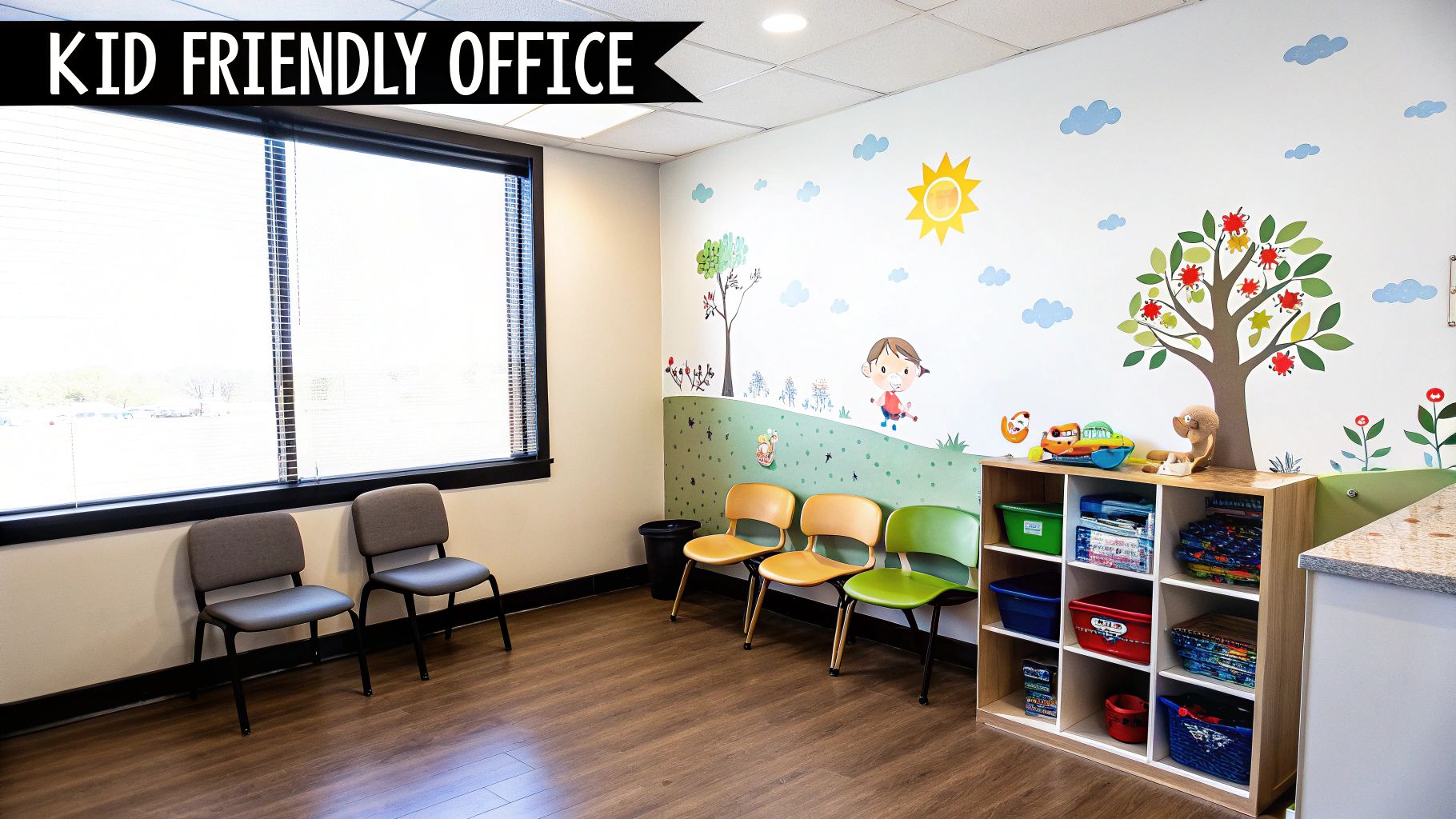
When you're looking at a pediatric dentist vs family dentist, the physical space is often one of the most immediate and striking differences. A pediatric office isn't just a dental clinic; it's an environment intentionally crafted to put a child at ease, making them more receptive to beneficial treatments.
The Pediatric Dental Office: A Child's Perspective
Imagine seeing the world from only three feet off the ground. A typical medical or dental office can feel massive and intimidating. Pediatric dental practices are built specifically to counteract this, using features that create comfort and fun, which directly improves a child's cooperation and the success of their visit.
These kid-centric design elements often include:
- Vibrant Colors and Themes: You'll see bright walls, cheerful murals, and fun themes like jungles or outer space that make the office feel more like a playground than a sterile clinic.
- Child-Sized Furniture: Small chairs, tables, and even sinks help children feel like the space was made just for them, giving them a sense of control and belonging.
- Engaging Distractions: Waiting areas are usually stocked with toys, books, and video games. These distractions are key to keeping young minds occupied and reducing anxiety before their appointment.
- Specially Designed Equipment: In the back, the examination rooms feature smaller, less intimidating dental tools and chairs, making the actual treatment process feel much less scary and more comfortable.
A child who feels safe and comfortable in their environment is far more likely to be a cooperative patient. This positive association is crucial for preventing dental phobia and ensuring they receive the preventive care needed for a lifetime of healthy smiles.
The Family Dentistry Environment: An Adult-Focused Space
In contrast, a family dental office is designed for broad appeal. While it will always be clean, professional, and comfortable, the look and feel are typically more neutral to suit an adult patient base. The furniture is standard-sized, the décor is calm and professional, and the waiting room entertainment might be limited to magazines or a news channel.
While a family dentist is perfectly capable of treating children, the environment itself isn't a specialized tool for managing a child's behavior. For an older, more confident child or a teen, this setting is perfectly fine. But for a young or anxious child, the lack of child-focused design can make the experience feel more clinical, potentially heightening their anxiety and making it tougher to achieve a positive health outcome.
Comparing Clinical Services and Treatment Philosophies
The real difference between a pediatric and a family dentist isn't just about the services they list—it’s about their entire treatment philosophy. It's the how and why behind their work that shapes everything from a routine cleaning to filling a cavity, and that philosophy directly impacts your child's long-term dental health and the appearance of their smile.
A pediatric dentist's entire practice is built on a foundation of prevention and early intervention. Their number one goal is to stop problems before they can start and to carefully guide the healthy development of your child’s smile. This proactive mindset is a huge part of their specialized training and leads to better long-term oral health.
While family dentists absolutely value prevention, their focus is much broader. They're juggling the restorative and cosmetic needs for patients of all ages—from fillings and crowns for adults to whitening and veneers. Their philosophy is geared toward maintaining and restoring oral health across an entire lifetime for the whole family.
A Focus on Proactive and Preventive Care
For a pediatric dentist, every single visit is a chance to protect a young, vulnerable smile. They put a heavy emphasis on services specifically designed to defend against decay in developing teeth, which are unfortunately much more susceptible to cavities. These procedures are essential for keeping your child's teeth healthy and bright.
You'll see a big focus on key preventive services in a pediatric office:
- Dental Sealants: This involves applying a thin, protective coating to the chewing surfaces of molars. This acts as a powerful shield to block out decay-causing food particles and bacteria, keeping teeth cavity-free.
- Fluoride Treatments: Using professional-grade fluoride to strengthen tooth enamel, making it more resistant to acid attacks from sugars and preserving the tooth's natural structure.
- Growth and Development Monitoring: Actively tracking how teeth are erupting and how the jaw is aligning. This allows them to catch potential orthodontic issues early, often leading to simpler and more effective treatments for a straighter smile.
This preventive-first approach isn't just a hunch; it's backed by research. Studies show that pediatric dentists provide significantly more preventive treatments for kids up to age 11 compared to general dentists. For the youngest patients under eight, they also handle more necessary extractions and use local analgesia more often, demonstrating a focus on appropriate and timely care for the best health outcomes. You can read the full research about these treatment patterns to see the data for yourself.
A pediatric dentist's ultimate goal is to keep your child's original smile as healthy as possible. By focusing on aggressive prevention, they aim to minimize the need for restorative work, ensuring teeth stay strong and properly aligned as they grow.
How Treatment Approaches Differ in Practice
These philosophical differences really come to life when you compare how each type of dentist handles a common situation, like a cavity in a baby tooth. To make it clearer, let's break down a few common scenarios.
Treatment Approach Comparison
| Dental Scenario | Pediatric Dentist Approach | Family Dentist Approach |
|---|---|---|
| Treating a Cavity in a Baby Tooth | Often uses tooth-colored composite or specialized stainless steel crowns (SSCs) made just for primary teeth. They'll use behavioral techniques to keep your child calm and prioritize saving the tooth to hold space for the permanent one, ensuring proper alignment in the future. | Will typically use tooth-colored composite or amalgam fillings. The approach is focused on efficiently fixing the tooth, using standard techniques and an environment designed for all ages to restore function. |
| Managing Dental Anxiety | Pulls from specialized training in child psychology, using methods like "Tell-Show-Do" to build confidence. They also offer a wider range of sedation options tailored specifically for children's physiology, from nitrous oxide to conscious sedation, ensuring a safe and positive experience. | Manages anxiety with a calm, reassuring chairside manner. While they may offer nitrous oxide, they generally have less extensive training in pediatric-specific behavioral or sedation techniques. |
| Early Orthodontic Concerns | Actively monitors jaw growth and tooth spacing. They might recommend early "interceptive" treatments like space maintainers or palatal expanders to correct issues, which can reduce the need for extensive braces later and lead to a healthier bite and smile. | Will identify obvious orthodontic problems and usually refer the patient to a separate orthodontist for a full evaluation and treatment once most of the permanent teeth have erupted. |
At the end of the day, a family dentist provides fantastic, broad-spectrum care for everyone. But a pediatric dentist's entire clinical world revolves around the unique needs of a child's developing mouth. They blend specialized techniques with a deep understanding of child psychology to help build a healthy, beautiful smile that lasts a lifetime.
So, How Do You Choose for Your Family?
Deciding between a pediatric dentist and a family dentist isn't about which one is "better" in general. It's about finding the right fit for your child's unique health needs. The best choice really comes down to a few key things: your child's age, their personality, and their specific dental needs. By looking at a few common situations, you can get your child started on a path to a lifetime of healthy smiles.
This decision is a big deal, especially when you look at the numbers. More than 20% of kids between 2 and 5 have already had cavities in their baby teeth. That figure jumps to a staggering 52% for kids aged 6 to 8. These stats really drive home how important early, specialized care can be for preventing decay and promoting good health. You can see a more detailed breakdown of pediatric dental statistics to understand the full picture.
When a Pediatric Dentist is the Way to Go
Sometimes, the specialized skills of a pediatric dentist are a clear advantage. Their extra training in child development, behavior, and unique oral health issues can be a game-changer for your child’s health and comfort.
You should definitely lean towards a pediatric dentist if your child:
- Is an Infant or Toddler: For that first visit (around age one), a pediatric dentist is invaluable. They are the experts in infant oral health and can give you priceless advice on teething, bottle habits, and stopping cavities before they start, protecting their smile from day one.
- Gets Really Anxious at the Dentist: If your child is terrified, a pediatric dentist has a whole toolkit of behavioral techniques and a super kid-friendly office designed to build trust and turn a scary visit into a positive one, ensuring they get the care they need.
- Has Special Healthcare Needs: That extra residency training is critical here. It gives them the know-how to provide safe, kind, and effective care for children with physical, developmental, or cognitive conditions, helping them achieve excellent oral health.
When a Family Dentist Is a Perfect Fit
As kids get older and head into their teen years, their dental needs and their ability to handle appointments change. For families with older kids who are comfortable in the dental chair, the all-in-one convenience of a family dentist can be a huge benefit for maintaining consistent care.
A family dentist is often a great choice when:
- You Have Cooperative Teens: Teenagers who don't have major dental fears or complex health issues will do just fine in a family practice, where they can receive excellent routine care to maintain their healthy smile.
- Convenience Is King: Juggling appointments for everyone at one location can be a lifesaver for a busy family schedule and helps ensure no one misses a check-up.
- You Value Lifelong Care: A family dentist can be with your child from their teen years all the way through adulthood, offering a consistent relationship and seamless care as they grow up and their dental needs evolve.
At the end of the day, it's all about your child's unique situation. The real goal is to find a "dental home"—a place where they feel safe, comfortable, and looked after. That’s the key to protecting their oral health for years to come.
Common Questions Parents Ask About Pediatric Dental Care
Even after comparing pediatric and family dentists, it’s natural to have a few more questions. Getting those last uncertainties cleared up is the final step in feeling confident about your choice for your child's dental health. Here are the answers to some of the questions we hear most often from parents.
When Should My Child Have Their First Dental Visit?
The American Academy of Pediatric Dentistry (AAPD) is clear on this: your child's first dental appointment should happen within six months of their first tooth popping through, and definitely no later than their first birthday.
This first visit is a huge milestone for their health. It’s not just about checking for cavities; it’s about establishing a "dental home." We can check that everything is developing correctly and give you the real-world tips you need to protect that new smile right from the start.
Think of that first visit by age one as your best preventive tool. It lays the groundwork for a lifetime of positive feelings about the dentist and dramatically cuts the risk of early childhood cavities, ensuring a healthier start for their smile.
Can a Family Dentist Sedate My Anxious Child?
Many family dentists are certified to use nitrous oxide, often called "laughing gas," which is great for mild anxiety. However, pediatric dentists go through years of extra training specifically in sedation for children.
They're experts in a full range of options, from conscious sedation to coordinating with hospitals for general anesthesia if it's absolutely necessary. Their deep understanding of a child's unique physiology means they can manage anxiety while performing procedures with the highest level of safety and comfort, leading to better treatment outcomes.
Does My Insurance Cover a Pediatric Dentist?
For the most part, yes. Most dental insurance plans recognize pediatric dentists as specialists and will cover their services, making their specialized care accessible.
That said, the details can differ from one plan to another. The best first step is always to check directly with your insurance provider. Our team here is also fantastic at helping you navigate your benefits to make sure your child gets the care they need without adding financial stress.
At What Age Do Kids Stop Seeing a Pediatric Dentist?
There isn't a hard-and-fast rule. Pediatric dentists are trained and equipped to care for kids from infancy all the way through their late teens, often up to age 18, ensuring their smile is healthy as it transitions into adulthood.
The transition to a general dentist usually happens naturally, once all the permanent teeth are in and your teen feels ready for an adult-focused dental office. It's a decision we typically make together—dentist, parent, and patient—to ensure the switch is smooth and supportive for their ongoing oral health.
Here at Grand Parkway Smiles, we're proud to have both specialized pediatric dentistry and comprehensive family dental care under one roof in Katy, TX. Whether you're scheduling a gentle first check-up for your one-year-old or looking for the convenience of booking appointments for the whole family, we’re here for you.
You can schedule your child's appointment today and let our expert team support every step of their dental journey toward a lifetime of excellent oral health.