
Losing a tooth can impact more than just your appearance; it affects your confidence, your ability to enjoy food, and even your long-term oral health. Fortunately, modern dentistry offers a permanent, life-changing solution with dental implants. However, navigating the various options can feel overwhelming. With so many advanced choices available, how do you determine which is the right one to restore your smile and confidence? This guide is designed to provide clarity.
We will break down the 8 primary types of dental implants, explaining precisely how each one works to restore chewing function, enhance your smile's appearance, and preserve your jawbone. You will gain a clear understanding of the most common solutions as well as specialized alternatives for more complex cases. Our goal is to demystify the process and equip you with the knowledge needed to have a confident conversation with your dentist about improving your dental health.
This comprehensive overview will cover everything from the universally trusted endosteal implant to advanced, full-arch restorations like All-on-4 and groundbreaking options for severe bone loss, such as zygomatic and pterygoid implants. We will explore the unique benefits each procedure offers for your health and appearance, who makes an ideal candidate, and what you can expect from each treatment.
At Grand Parkway Smiles, we believe an informed patient is an empowered one. This detailed roundup is your first step toward understanding the possibilities and reclaiming a healthy, beautiful smile that lasts a lifetime. Whether you are missing a single tooth or require a complete reconstruction, the ideal solution is within reach. Let's explore the options that can permanently restore your smile and quality of life.
1. Endosteal (Root Form) Implants
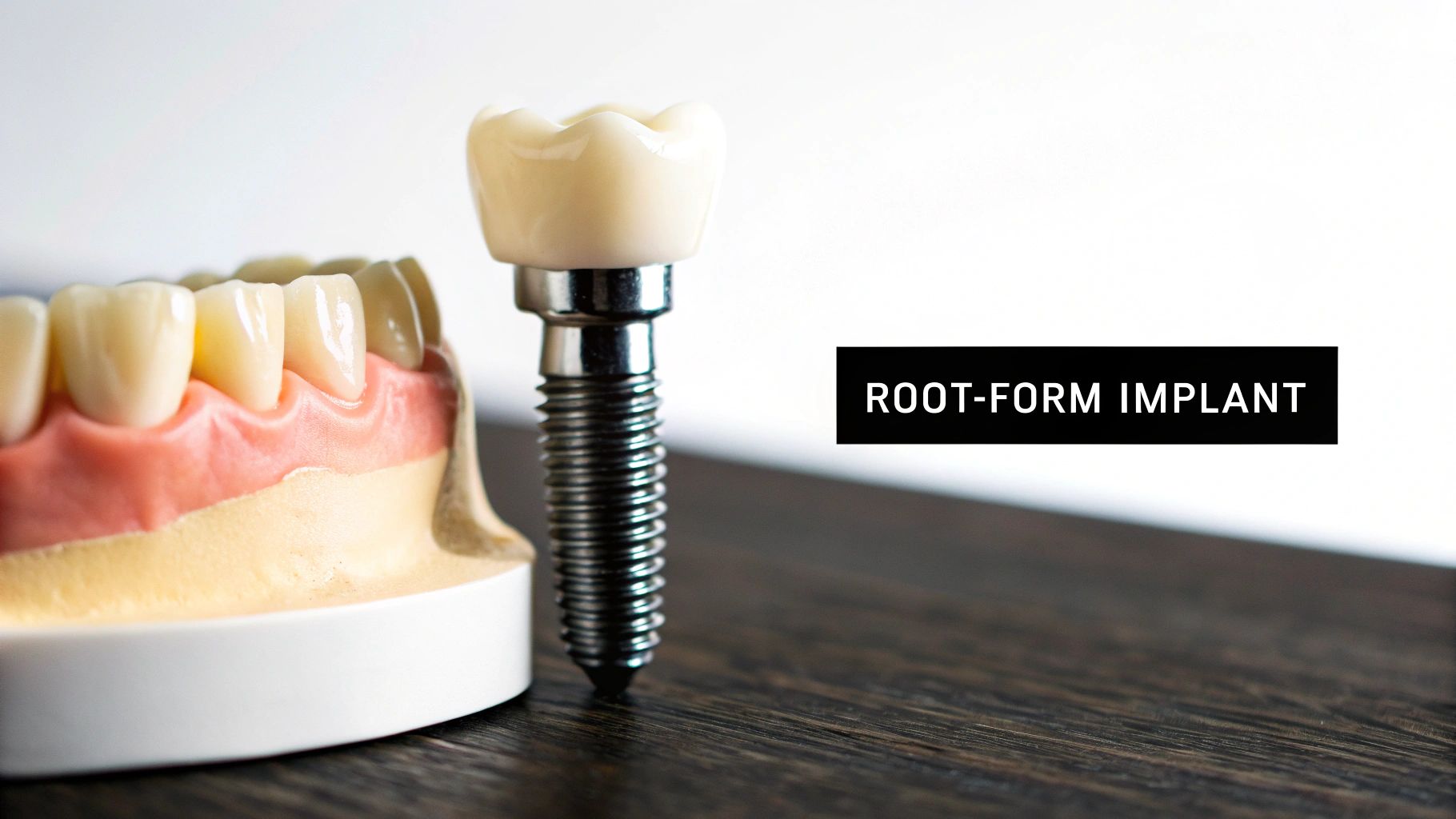
When people think of dental implants, they are most often picturing an endosteal implant. As the gold standard and most frequently used among all types of dental implants, endosteal implants are surgically inserted directly into the jawbone, where they function just like a natural tooth root. This approach offers a stable, permanent foundation for restoring one or more missing teeth, enhancing both the appearance and function of your smile.
The implant itself is a small, screw-like post, typically made of biocompatible titanium. This post is placed into the jawbone during a minor surgical procedure. Over several months, a remarkable process called osseointegration occurs, where the bone naturally fuses with the implant, creating an incredibly strong anchor that preserves jaw health.
How Endosteal Implants Restore Your Smile
The versatility of endosteal implants makes them an ideal solution for various tooth loss scenarios. Their primary benefit is the ability to restore dental health and aesthetics without affecting adjacent healthy teeth, which is a common drawback of traditional dental bridges.
Here are a few common applications:
- Single Tooth Replacement: One implant is placed to support a single dental crown, seamlessly filling a gap and restoring normal chewing function for better nutrition and comfort.
- Multiple Tooth Replacement: Two or more implants can be used to anchor a fixed bridge, replacing several missing teeth in a row for a complete and confident smile.
- Full Arch Restoration: A full set of upper or lower teeth can be replaced using a strategic number of endosteal implants to support a full-arch prosthesis, like those used in All-on-4® treatments at Grand Parkway Smiles, restoring your ability to eat and speak naturally.
Candidacy and Key Considerations
The ideal candidate for an endosteal implant has sufficient healthy jawbone density and volume to support the implant post. At Grand Parkway Smiles, we utilize advanced 3D CBCT imaging to precisely evaluate your bone structure and plan the placement for optimal success. If bone loss has occurred, a bone grafting procedure may be necessary first to ensure a stable foundation.
To ensure the longevity of your implant, which can exceed a 95% success rate, proper care is non-negotiable. This involves diligent daily hygiene and regular professional check-ups, which are vital for long-term dental health. To get the most out of your investment, it's crucial to follow specific maintenance guidelines. You can discover more about how to care for dental implants to protect your new smile for years to come.
2. All-on-4 Implants
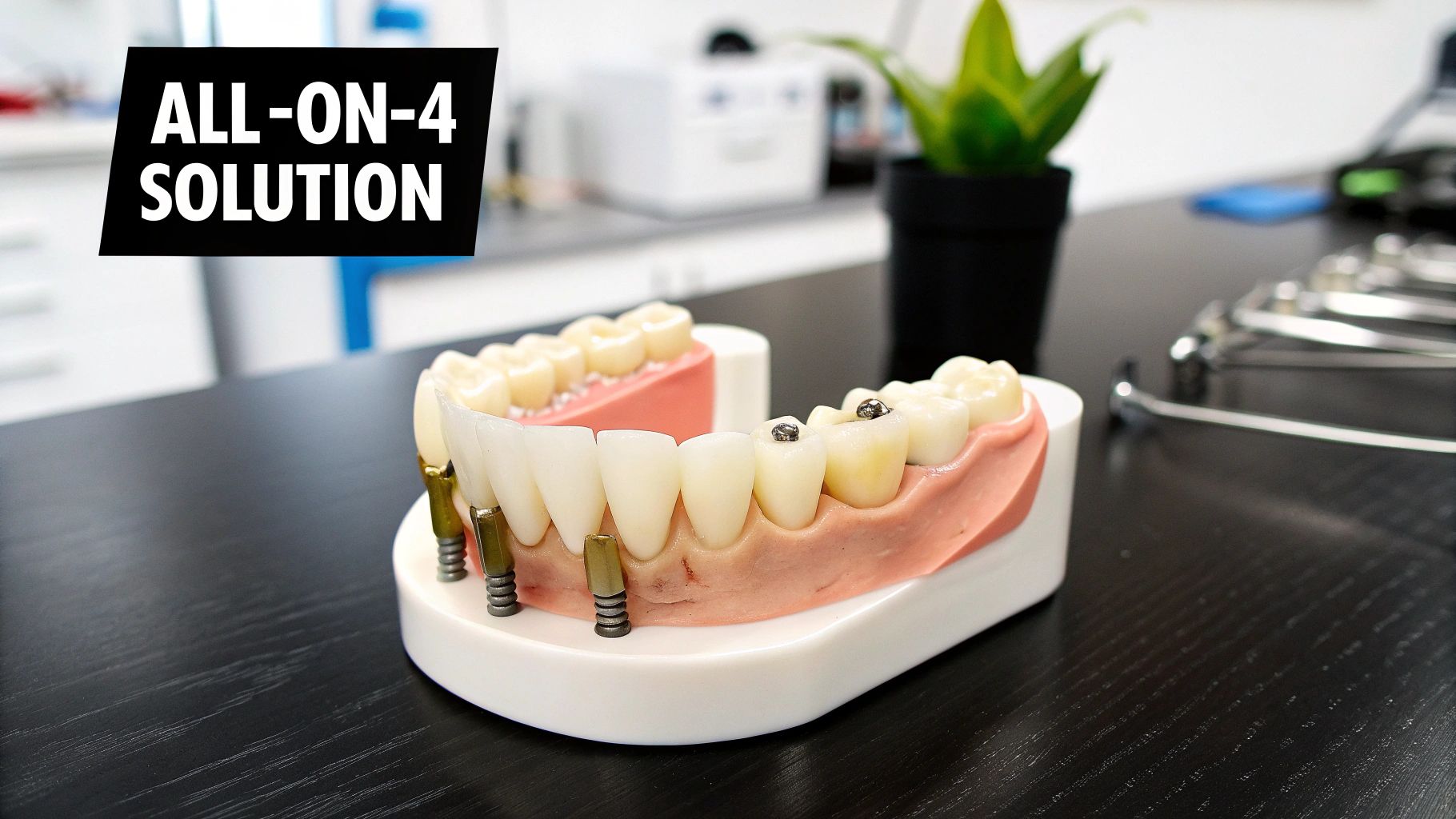
The All-on-4® treatment concept is a revolutionary and highly efficient approach to full-arch restoration, representing one of the most transformative types of dental implants available today. Designed for patients who have lost most or all of their teeth in an arch, this technique uses just four strategically placed endosteal implants to support a complete, fixed set of prosthetic teeth. It is an exceptional solution that often minimizes or eliminates the need for bone grafting, providing a stable and immediate enhancement to both oral function and appearance.
The genius of the All-on-4® method lies in its precise implant placement. Two anterior implants are positioned vertically, while the two posterior implants are tilted at a 45-degree angle. This angulation maximizes contact with available jawbone, particularly in areas where bone density might be lower, creating a strong, supportive foundation for a full-arch prosthesis that can often be attached the same day as surgery.
How All-on-4 Implants Restore Your Smile
All-on-4® implants offer a life-changing alternative to traditional removable dentures, delivering a permanent, non-removable bridge that looks, feels, and functions like natural teeth. This fixed solution restores confidence by eliminating the slipping, discomfort, and dietary restrictions associated with dentures, allowing you to enjoy your favorite foods and smile freely again.
Here are a few common applications for this groundbreaking treatment:
- Full Arch Restoration: A patient with no remaining natural teeth can receive a complete upper or lower arch restoration, often in a single day, for an immediate boost in appearance and oral health.
- Transition from Dentures: Long-time denture wearers can upgrade to a fixed, permanent solution, improving their bite force, overall quality of life, and facial appearance.
- Severe Periodontal Disease: Patients facing extensive tooth loss due to advanced gum disease can have failing teeth extracted and implants placed in the same appointment, immediately restoring a healthy, beautiful smile.
Candidacy and Key Considerations
The ideal candidate for All-on-4® implants is someone seeking a full-arch fixed solution who may have experienced some degree of jawbone loss. At Grand Parkway Smiles, we perform a comprehensive evaluation using 3D CBCT imaging to map out the precise placement of each implant for optimal stability and success. This advanced planning is crucial for achieving immediate functionality and a beautiful outcome.
Ensuring the longevity of your new smile requires a commitment to post-operative care and diligent hygiene. This includes following a soft-food diet during the initial healing period to allow for proper osseointegration and attending regular maintenance appointments. To see if this innovative treatment is right for you, you can explore more about our full mouth dental implant solutions and start your journey toward a permanent, beautiful smile.
3. All-on-6 Implants
Building upon the revolutionary full-arch restoration concept, the All-on-6 implant solution offers an enhanced level of stability and support. As another advanced option among the types of dental implants, this technique uses six dental implants to secure a full prosthetic arch, providing a robust foundation for patients who need maximum durability and longevity from their new smile. This approach distributes biting and chewing forces more evenly across the jawbone, protecting your long-term dental health.
The All-on-6 protocol involves the strategic placement of six biocompatible titanium posts into the jaw. By adding two extra implants compared to the All-on-4 method, this treatment significantly increases the support structure. This is particularly beneficial for patients with specific anatomical considerations or functional demands, ensuring the final restoration feels secure and performs optimally for years to come.
How All-on-6 Implants Restore Your Smile
The primary advantage of the All-on-6 system is its superior biomechanical stability. This makes it an excellent choice for patients who want the highest degree of confidence in their smile's function and aesthetics, effectively eliminating the worries associated with loose dentures or failing teeth. The additional implants provide a stronger, more resilient base for a full set of beautiful, natural-looking teeth.
Here are a few common applications for this approach:
- Enhanced Jawbone Support: Ideal for patients with softer bone quality or moderate bone loss, as the six implants provide a wider, more stable foundation for lasting health.
- Greater Prosthetic Security: The increased support is perfect for patients with bruxism (teeth grinding) or strong bite forces, reducing stress on the implants and the prosthesis for better long-term outcomes.
- Optimal Immediate Function: The added stability can make a patient a better candidate for an immediate-load prosthesis, allowing them to leave our office with a fixed, functional, and beautiful smile on the same day as their surgery.
Candidacy and Key Considerations
An ideal candidate for All-on-6 implants is someone seeking a full-arch replacement who has adequate jawbone to accommodate six implants. This method is often recommended for patients who want the ultimate peace of mind regarding the long-term stability of their restoration. At Grand Parkway Smiles, our team utilizes 3D CBCT imaging to meticulously map out the optimal position for each of the six implants, ensuring a predictable and successful aesthetic result.
To protect your investment and ensure your All-on-6 restoration lasts a lifetime, a commitment to excellent oral hygiene is essential. This includes diligent daily care and attending regular professional cleanings and check-ups. Following a consistent maintenance schedule is the best way to safeguard the health of your implants and the beauty of your smile.
4. Zygomatic Implants
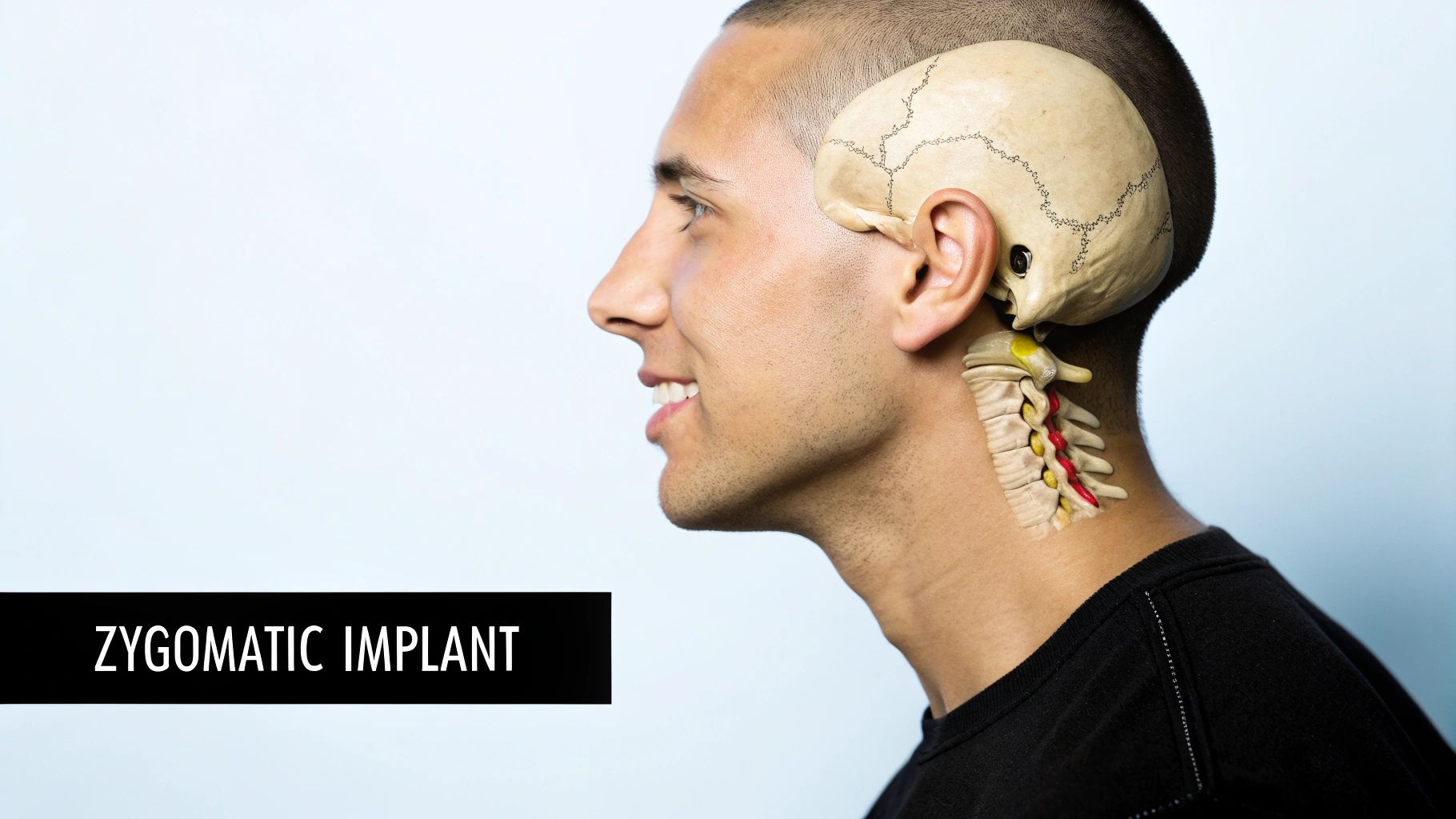
For patients who have experienced severe bone loss in the upper jaw, traditional implants are often not an option. Zygomatic implants represent a groundbreaking solution among the various types of dental implants, designed specifically for these complex cases. Instead of anchoring in the upper jawbone (maxilla), these exceptionally long implants anchor into the dense, stable zygomatic bone, more commonly known as the cheekbone. This innovative technique bypasses the need for extensive bone grafting procedures, offering a more streamlined path to a fixed, functional, and beautiful smile.
Zygomatic implants, which can range from 40-65mm in length, are placed at a precise angle through the jaw to engage the cheekbone. This provides a robust foundation for a full-arch restoration, even when maxillary bone is virtually non-existent. This approach is a game-changer for individuals who were previously told they could only wear removable dentures, giving them back their confidence and oral health.
How Zygomatic Implants Restore Your Smile
The primary advantage of zygomatic implants is their ability to provide immediate, stable support for a full set of teeth without relying on jawbone that has deteriorated. This is particularly transformative for patients who have faced significant dental challenges, restoring their ability to eat, speak, and smile with confidence.
Here are a few scenarios where this approach is ideal:
- Severe Jawbone Resorption: Long-time denture wearers often experience extreme upper jaw bone loss. Zygomatic implants provide a secure alternative, restoring facial structure and function.
- Post-Trauma or Surgery: Patients who have lost maxillary bone due to facial trauma or tumor removal can regain a full set of fixed teeth, dramatically improving their quality of life.
- Avoiding Bone Grafts: For individuals who wish to avoid the multiple surgeries and extended healing times associated with major bone grafting, zygomatic implants offer a more direct solution to a beautiful, permanent smile.
Candidacy and Key Considerations
Candidates for zygomatic implants typically present with severe atrophy of the upper jaw, a condition that disqualifies them from endosteal implants. At Grand Parkway Smiles, our multidisciplinary surgical team uses advanced 3D CBCT imaging to meticulously map the anatomy of the zygomatic bone and plan the complex surgery. This ensures the safest and most effective placement for a stunning final result.
Due to the specialized nature of the procedure, it's crucial to seek a highly experienced oral and maxillofacial surgeon. Proper postoperative care is also vital for success. This includes diligent hygiene around the implant sites and attending all follow-up appointments to monitor osseointegration and ensure the long-term health and stability of your restored smile.
5. Pterygoid Implants
For patients with severe bone loss in the upper back jaw, pterygoid implants offer a sophisticated and graft-free solution. As one of the advanced types of dental implants, pterygoid implants are specialized, extra-long posts (15-20mm) that anchor into the dense pterygoid plates of the sphenoid bone. This unique anatomical placement provides a powerful, stable foundation for full-arch restorations, even when conventional implants are not an option due to insufficient bone.
The implant is strategically angled to engage the solid bone behind the maxillary sinus, bypassing areas of poor bone quality altogether. This technique, performed by highly skilled oral and maxillofacial surgeons, allows for the immediate placement of a prosthesis, often as part of a comprehensive full-mouth reconstruction plan. This approach is transformative for patients who were previously told they were not candidates for dental implants, giving them a new chance at a healthy smile.
How Pterygoid Implants Restore Your Smile
The primary advantage of pterygoid implants is their ability to provide strong posterior support for a full set of replacement teeth without the need for a sinus lift or extensive bone grafting. This significantly shortens treatment time and reduces surgical complexity, delivering a beautiful and functional smile much faster.
Here are a few common applications for this technique:
- Graftless Full-Arch Restoration: Used in combination with traditional or zygomatic implants to support a full upper bridge, eliminating the need for bone augmentation procedures and restoring a patient's natural smile profile.
- Posterior Support for All-on-4®: When bone in the posterior maxilla is inadequate, pterygoid implants can be added to an All-on-4® treatment plan for enhanced stability and chewing power.
- Cases with Large Sinuses: Patients with enlarged sinuses that make sinus lifts risky can benefit from pterygoid implants that avoid the sinus cavity completely, ensuring a safer path to a restored smile.
Candidacy and Key Considerations
The ideal candidate for a pterygoid implant has significant bone atrophy in the posterior maxilla but sufficient pterygoid bone density. At Grand Parkway Smiles, our oral surgeons use state-of-the-art 3D CBCT imaging to meticulously assess the pterygoid plates and surrounding anatomy, ensuring precise and safe implant placement. This advanced procedure requires specialized training and collaboration between the surgeon and prosthodontist to achieve the best aesthetic and functional outcome.
Successful long-term outcomes depend on careful planning and diligent post-operative care. Patients must follow specific instructions, such as avoiding pressure on the area and maintaining excellent oral hygiene, to ensure proper healing. Regular check-ups are essential to protect the health and function of your new smile for a lifetime.
6. Subperiosteal Implants
While less common today, subperiosteal implants represent a crucial alternative among the different types of dental implants, particularly for patients with severe jawbone deterioration. Unlike endosteal implants that are placed into the bone, a subperiosteal implant consists of a custom-made metal framework that is designed to sit directly on top of the jawbone but underneath the gum tissue. This framework provides a stable base for attaching crowns, bridges, or dentures, restoring function where it was once lost.
The process involves creating a precise 3D model of the patient's jawbone using advanced CBCT imaging. This model is used to fabricate a perfectly fitting metal frame, which is then surgically placed over the bone. Posts attached to this framework protrude through the gums, serving as anchors for the final dental restorations. This method bypasses the need for healthy bone volume, offering a solution to restore a patient's smile when bone grafting is not an option.
How Subperiosteal Implants Restore Your Smile
Subperiosteal implants are a specialized solution for complex cases where conventional implants are not feasible. Their main advantage is providing a fixed and stable tooth replacement for individuals who might otherwise be limited to traditional, often unstable, dentures. They restore chewing ability and improve facial aesthetics by providing underlying support that can rejuvenate a patient's appearance.
This approach is considered in unique circumstances:
- Severe Bone Atrophy: For patients who have experienced significant and widespread bone loss, making them unsuitable for root-form implants or extensive grafting.
- Medical Contraindications: When a patient has medical conditions that prevent them from undergoing bone grafting procedures, this offers a path to a fixed smile.
- Failed Previous Procedures: In select cases where other treatments have failed, this can provide a stable foundation for a beautiful restoration.
- Patient Preference: For individuals who decline more invasive options but still desire a fixed restoration to improve their quality of life.
Candidacy and Key Considerations
The ideal candidate for a subperiosteal implant is someone with inadequate jawbone height and width who cannot or does not wish to undergo bone augmentation. At Grand Parkway Smiles, a thorough evaluation, including detailed 3D imaging, is essential to map the bone’s topography and determine if this highly customized approach is the most appropriate and safest path forward to a healthy outcome.
Because this is a more complex and less common procedure, it's vital to have realistic expectations. The long-term success of subperiosteal implants depends heavily on meticulous oral hygiene to prevent inflammation around the framework and gum tissue recession. Patients must be committed to a strict maintenance schedule and regular professional cleanings to protect their investment and ensure the health of their restored smile.
7. Mini Implants (Small Diameter Implants)
When standard implants are not viable due to insufficient jawbone width, mini dental implants offer a less invasive alternative. As one of the more specialized types of dental implants, these posts have a much smaller diameter, typically less than 3.5mm. They were initially developed to provide stability for lower dentures but are now used in various situations where bone volume is limited. This approach provides a practical solution for patients who want to improve their denture stability and overall oral comfort.
The implant itself is a single, solid piece of titanium that extends above the gum line to connect directly to the restoration. The placement procedure is often simpler and less invasive than that for standard implants, involving a smaller incision. This can lead to a quicker procedure and a more comfortable, faster recovery period for the patient, allowing them to enjoy the benefits sooner.
How Mini Implants Restore Your Smile
The primary advantage of mini implants is their ability to provide a stable foundation in narrow bone ridges, enhancing both function and confidence. They are particularly effective in securing loose or uncomfortable dentures, dramatically improving a patient's ability to eat, speak, and smile without worry. Their smaller size makes them a versatile tool in modern implant dentistry for improving quality of life.
Here are a few common applications:
- Denture Stabilization: Two to four mini implants can be placed to anchor a denture, preventing it from slipping or shifting for a more secure and comfortable fit.
- Single Tooth Replacement: In areas with very narrow bone, such as a missing lower front tooth, a single mini implant can support a dental crown, restoring a complete and natural-looking smile.
- Limited Space Solutions: They can serve as anchors for small bridges or as temporary solutions while a younger patient's jaw continues to develop, maintaining proper dental health.
Candidacy and Key Considerations
The ideal candidate for mini implants is often someone with significant bone loss in terms of width, who wants to avoid a bone grafting procedure, or who is seeking a more affordable option for denture stabilization. While less bone is required than for standard implants, having adequate bone height and density is still crucial for a successful, healthy outcome.
At Grand Parkway Smiles, we carefully evaluate each patient's unique anatomy to determine if mini implants are the most appropriate and predictable solution for their health and appearance goals. It is important to understand their load-bearing limitations; they are not typically recommended for replacing large molars. Proper planning with an experienced provider is key to ensuring the long-term stability and health of your restoration.
8. Hybrid Implant Systems (All-on-X with Mixed Implant Types)
For patients with complex patterns of jawbone loss, a single approach to implant dentistry may not be enough. Hybrid implant systems represent a highly advanced and customized solution, combining various types of dental implants within the same arch to create a stable foundation for a full-mouth restoration. This sophisticated strategy leverages the unique strengths of different implants, like endosteal, zygomatic, and pterygoid, to overcome significant anatomical challenges and deliver a beautiful, functional result.
This innovative protocol involves a meticulous pre-surgical planning process. The dental surgeon strategically places specific implants where bone quality and volume are optimal. For instance, longer zygomatic implants might be used in the posterior maxilla where bone is deficient, while standard endosteal implants are placed in the stronger anterior bone. This creates an optimized support system for a full-arch prosthesis, restoring full function and aesthetics even in the most severe cases.
How Hybrid Systems Restore Your Smile
Hybrid implant systems are the ultimate problem-solving tool in implant dentistry, enabling life-changing results for patients who were previously told they were not candidates for implants. By customizing the treatment plan to the patient's unique anatomy, this approach provides a secure, non-removable solution that feels and looks natural, completely transforming their smile and confidence.
Here are a few common applications for this advanced technique:
- Severe Maxillary Atrophy: Combining posterior zygomatic implants with anterior endosteal implants to support a full upper bridge, restoring facial structure and avoiding extensive sinus lift procedures.
- Post-Traumatic Reconstruction: Using a mix of implant types to rebuild a dental arch damaged by injury, placing implants in the remaining viable bone to restore both appearance and function.
- Full-Mouth Restoration: Designing a comprehensive plan for both upper and lower arches using a combination of zygomatic, pterygoid, and endosteal implants for total smile reconstruction.
Candidacy and Key Considerations
Candidates for hybrid implant systems typically present with severe, uneven bone loss across the jaw. At Grand Parkway Smiles, our multi-specialty team is uniquely equipped to handle these complex cases, utilizing advanced 3D CBCT imaging to map out bone availability and plan the precise placement of each implant for the best possible aesthetic and health outcome.
Success with a hybrid system requires exceptional surgical skill and prosthetic expertise. Patients should seek a team with proven experience in all advanced implant types. Diligent post-operative care is essential for a lasting result. Our team at Grand Parkway Smiles provides comprehensive evaluations to determine if this highly customized approach can restore your dental health and give you the permanent smile you deserve.
8 Dental Implant Types Compared
| Implant Type | Implementation complexity | Resource requirements | Expected outcomes | Ideal use cases | Key advantages |
|---|---|---|---|---|---|
| Endosteal (Root Form) Implants | Moderate — standard intra‑osseous surgery | Adequate jawbone, implant system, routine surgical team, 3D imaging | High success (>95%), durable (25–40+ years) with maintenance | Single or multiple missing teeth when bone volume is sufficient | Natural function/appearance, prevents bone loss, long-term cost‑effective |
| All‑on‑4 Implants | High — angled placement, precise planning | CBCT, experienced surgeon/prosthodontist, temporary prosthetic, possible immediate loading | Restores full arch function quickly; prosthetic lifespan ~15–20+ years | Edentulous or failing dentition seeking fixed, often same‑day teeth | Fewer implants, often avoids grafting, faster restoration |
| All‑on‑6 Implants | High — more implants and surgical time than All‑on‑4 | Advanced 3D planning, additional implants, longer surgery and healing | Improved stability and load distribution; lifespan ~20–25+ years | Patients needing greater posterior support or higher bite forces | Superior load-bearing, redundancy if individual implant has issues |
| Zygomatic Implants | Very high — complex, long implant placement into cheekbone | OMFS expertise, advanced imaging (CBCT), specialized surgical team, higher cost | Enables full‑arch upper restoration without grafting; success ~85–95% in experts | Severe maxillary atrophy, failed grafts, cases with minimal jawbone | Avoids extensive grafting; makes restoration possible when jawbone insufficient |
| Pterygoid Implants | Very high — posterior angled placement into pterygoid plates | Specialized surgeon, CBCT, careful anatomical assessment | Good posterior support for full arches; success ~85–90% in experienced hands | Posterior maxillary bone loss, extend support for full‑arch prosthetics | Extends posterior support, less invasive alternative to zygomatic implants |
| Subperiosteal Implants | High — custom framework placement beneath periosteum | Detailed CT/3D modeling, custom lab fabrication, specialized surgeon | Variable outcomes (historically 60–80%); niche modern role | Severe generalized bone loss where endosteal implants/grafts not feasible | Custom fit without relying on osseointegration; single‑stage options |
| Mini Implants (Small Diameter) | Low–Moderate — minimally invasive placement | Narrow‑ridge suitability, simpler surgery, lower cost, limited components | Lower load capacity; variable long‑term data (80–95% in some studies) | Denture stabilization, narrow ridge anterior single teeth, transitional use | Minimally invasive, faster recovery, cost‑effective for limited indications |
| Hybrid Implant Systems (All‑on‑X mixed types) | Very high — integrates multiple implant types and phases | Multidisciplinary team (OMFS, prosthodontist), extensive 3D planning, complex lab work, high cost | Customized full‑mouth solutions; lifespan 20–30+ years with multidisciplinary care | Severe bone loss, failed restorations, complex trauma or anatomy | Optimizes support across anatomy, minimizes grafting, tailored durable solutions |
Your Next Step Towards a Permanent Smile at Grand Parkway Smiles
Navigating the landscape of modern dentistry reveals a powerful truth: there is a solution for nearly every form of tooth loss. As we have explored, the various types of dental implants offer a spectrum of possibilities, moving far beyond a one-size-fits-all approach. From the foundational strength of endosteal implants to the revolutionary efficiency of the All-on-4 system and the bone-independent stability of zygomatic implants, the goal is always the same: to restore your health, function, and appearance.
This journey is not just about filling a gap in your smile; it is about reclaiming the simple joys of life. It’s about biting into an apple with confidence, speaking clearly without self-consciousness, and smiling freely in photos with your family. Each implant type discussed represents a pathway back to full oral function and aesthetic harmony, profoundly improving your quality of life.
Key Takeaways for Your Implant Journey
Understanding these options is the first crucial step, but applying that knowledge to your personal situation is what truly matters. Let’s distill the most important insights:
- Bone Health is Foundational, But Not a Barrier: While traditional endosteal implants rely on sufficient jawbone, innovative solutions like zygomatic and pterygoid implants have opened the door for patients previously told they were not candidates. A beautiful, healthy smile is still possible.
- Full-Arch Solutions Offer Transformative Results: Systems like All-on-4 and All-on-6 are not just about replacing teeth; they are about full-mouth rehabilitation. They provide a fixed, permanent, and highly functional set of teeth that dramatically improves a patient's appearance and confidence.
- Personalization is Paramount: There is no single "best" type of dental implant. The optimal choice depends entirely on your unique anatomy, health history, and aesthetic goals. A successful outcome hinges on a treatment plan tailored specifically to you.
The most significant takeaway is that hope is available. The field of implant dentistry is continuously evolving, and with the right team and technology, a durable, beautiful, and healthy smile is an achievable reality. The key is to move from passive reading to active planning.
Why Expert Guidance Makes All the Difference
Choosing among the different types of dental implants is a significant medical decision. The success of your procedure depends not only on the implant itself but on the precision of the diagnosis, the skill of the surgeon, and the quality of the final restoration. This is where a multidisciplinary team becomes invaluable.
At Grand Parkway Smiles, our entire process is built around this collaborative, patient-centered philosophy. We utilize advanced 3D CBCT imaging to create a detailed map of your oral structures, allowing our in-house oral surgeons and prosthodontists to plan your surgery with unparalleled accuracy. This technology ensures we can identify the ideal implant type and placement for maximum stability and a predictable, long-lasting, beautiful result.
Furthermore, we recognize that the journey can be intimidating. For patients with dental anxiety, our certified IV anesthesia and sedation dentistry options provide a calm, comfortable, and stress-free experience. Your well-being is our top priority from the initial consultation to the final reveal of your new smile. Don't let uncertainty or fear hold you back any longer. Your path to a restored smile begins with a conversation.
Ready to explore which types of dental implants are the perfect fit for your smile and lifestyle? The expert team at Grand Parkway Smiles is here to provide a comprehensive evaluation and personalized treatment plan using the latest in dental technology. Schedule your implant consultation today by visiting Grand Parkway Smiles and take the definitive step toward reclaiming your confidence and oral health.