Getting ready for oral surgery isn’t just about the day of your appointment; the path to a beautiful, healthy outcome begins weeks beforehand. This early preparation is dedicated to crucial steps like your initial consultation, medical clearances, and key lifestyle tweaks. Nailing this process sets you up for a smoother procedure and a faster recovery, ensuring the best possible results for your smile.
Your Pre-Surgery Roadmap Weeks Before Your Procedure
The journey to a restored smile doesn't just happen in the dental chair. It truly starts with the planning and preparation you do weeks in advance. This early phase is vital for making sure your body is ready, minimizing any potential complications, and ensuring your final results—whether it's from dental implants or wisdom teeth removal—are successful for the long haul. Think of it as laying a solid foundation for your future dental health and a confident smile.
The Critical Role of Your Initial Consultation
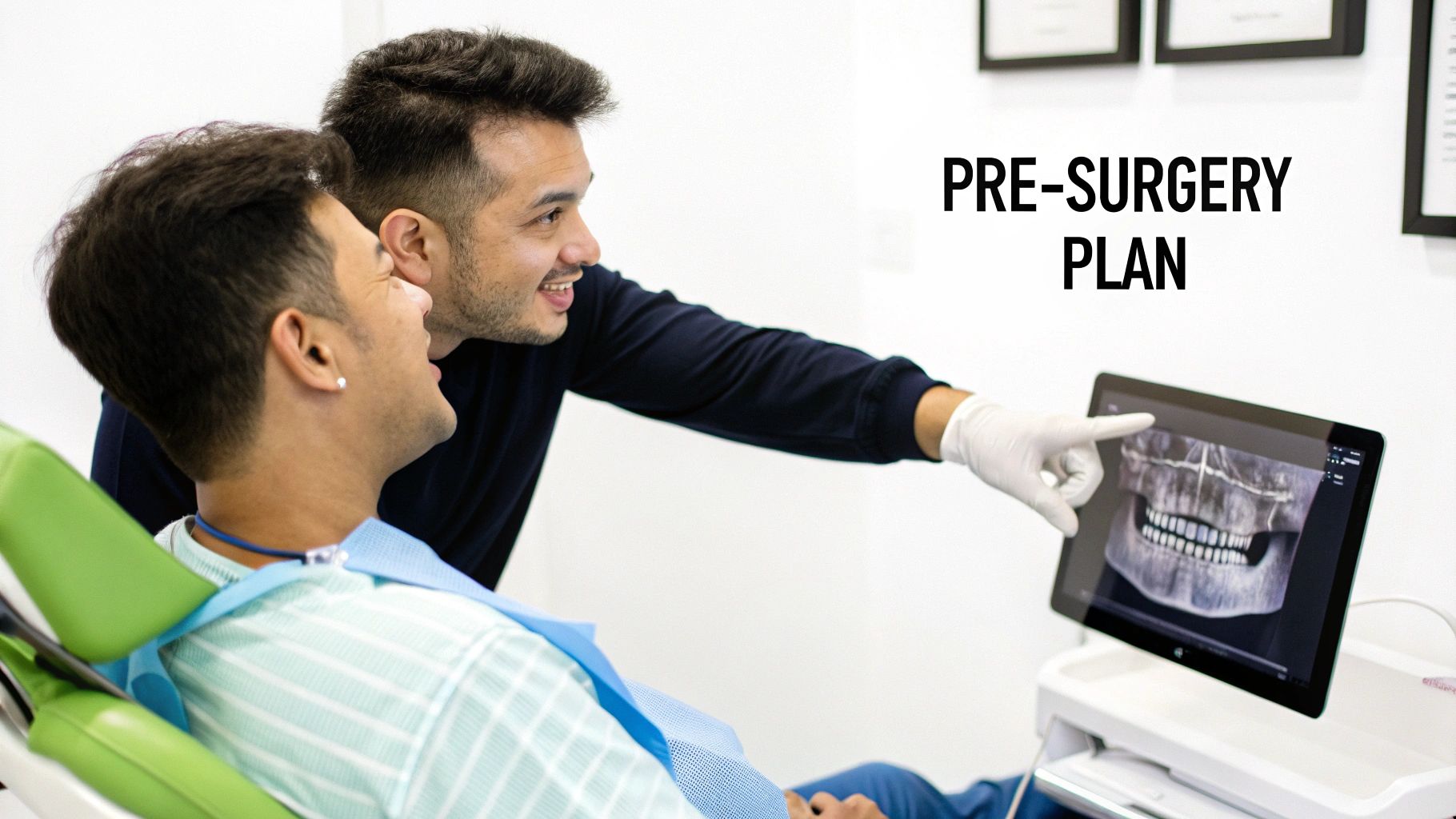
That first visit to our office is much more than a simple meet-and-greet; it’s where we map out the entire strategy for your new smile. At Grand Parkway Smiles, we rely on advanced 3D imaging to get an incredibly detailed picture of your jawbone, nerves, and all the surrounding structures. This isn't just a fancy extra—it allows our oral surgeons to plan your procedure with pinpoint precision, which is key to achieving a functional and aesthetically pleasing outcome.
For example, if you're coming in for dental implants, this imaging helps us find the absolute perfect spot for placement, ensuring both stability and a natural look. If you're having your wisdom teeth out, we can see exactly how they're impacted, which helps us avoid any surprises on surgery day. This meticulous planning is the secret sauce to achieving results that not only improve your oral health but also enhance your appearance.
Securing Medical Clearances and Lab Work
We have to make sure you're in good overall health before we proceed. It's a non-negotiable step for your safety and the success of your dental procedure. Depending on your medical history and how complex the surgery is, we might ask for a medical clearance from your primary care doctor. This is just a routine safety check to confirm your body can handle the procedure and anesthesia, setting the stage for optimal healing.
On top of that, we often order some pre-operative lab work, like a Complete Blood Count (CBC). This simple blood test can flag underlying issues that might impact your surgery. For instance, a CBC test can spot about 5% of anemia risks, which could otherwise complicate your healing. Catching these things early lets us take proactive steps, like suggesting iron supplements, which can boost your recovery outcomes by as much as 30%, leading to a healthier smile, faster.
Making Smart Lifestyle Adjustments
How you live your life in the weeks leading up to your surgery can make a huge difference in your recovery. Seriously, small changes now can lead to big improvements later, directly impacting your long-term dental health and the appearance of your final results.
Here are a few smart lifestyle shifts to consider:
- Embrace Light Exercise: Gentle activities like walking are fantastic for your circulation. Better blood flow brings more oxygen and nutrients to the surgical site, which can slash clot risks by 15% and promote faster, more effective healing.
- Prioritize a Nutrient-Rich Diet: Load up on foods packed with vitamins and minerals that help with tissue repair. We're talking leafy greens, lean proteins, and plenty of colorful fruits. A well-nourished body heals more efficiently, which is essential for a beautiful surgical outcome.
- Quit Smoking and Tobacco Use: If you do one thing, make it this. Smoking constricts your blood vessels, which severely slows down your body's ability to heal. It also ramps up your risk of infection and is a leading cause of dental implant failure, jeopardizing the investment in your smile.
To help you keep track, this infographic lays out a clear timeline for all your key pre-surgery tasks.
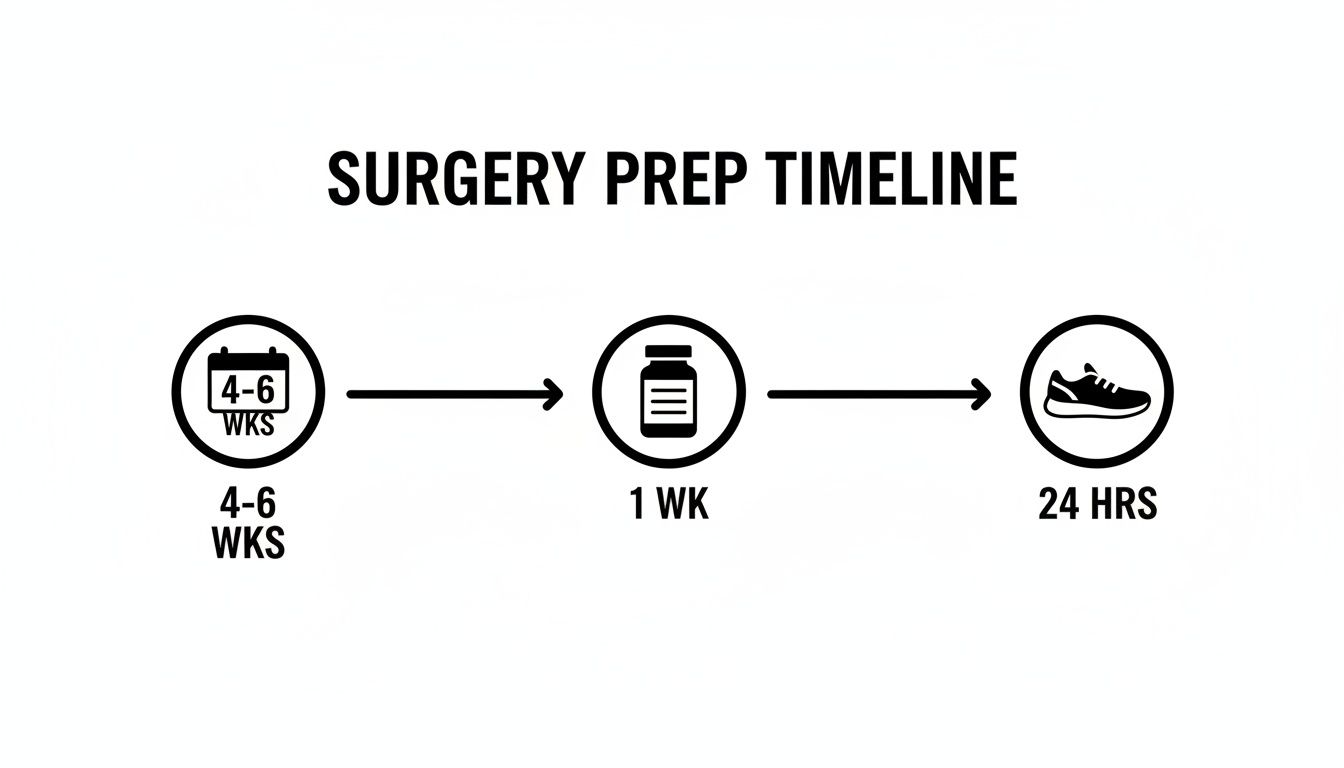
As you can see, your preparation is a phased process. It starts with the big-picture items weeks out and gradually narrows down to specific, last-minute actions as your appointment gets closer. To make it even easier, we’ve broken it down into a simple checklist.
Your Pre-Surgery Preparation Timeline
This handy table outlines the key tasks you'll need to tackle in the weeks and days before your oral surgery appointment. Following this timeline helps ensure nothing gets missed.
| Timeframe | Action Item | Why It Matters for Your Recovery |
|---|---|---|
| 4-6 Weeks Out | Schedule your initial consultation and complete 3D imaging. | This gives us a detailed blueprint of your mouth, allowing for precise surgical planning for the best possible cosmetic and functional outcome. |
| 2-4 Weeks Out | Secure medical clearances from your doctor and complete any required lab work (like a CBC). | This confirms you're healthy enough for surgery and anesthesia, identifying potential risks that could compromise your results. |
| 1-2 Weeks Out | Make lifestyle adjustments: quit smoking, focus on a healthy diet, and engage in light exercise. | These changes boost circulation and provide your body with the nutrients it needs to heal faster and fight off infection, protecting your new smile. |
| 1 Week Out | Arrange for transportation and a caregiver for the day of surgery. Confirm financial/insurance details. | Having logistics handled reduces stress and ensures you can focus solely on resting and recovering after the procedure. |
| 24-48 Hours Out | Follow all fasting instructions and medication guidelines provided by our team. Prepare your recovery space at home. | This is crucial for anesthesia safety and ensures you have a comfortable, stress-free environment to return to for optimal healing. |
By checking these items off your list, you’re not just preparing for a procedure—you’re actively participating in the success of your new smile.
Navigating Financial and Insurance Logistics
Feeling confident about the financial side of things can lift a huge weight off your shoulders. Our team at Grand Parkway Smiles is here to walk you through your insurance coverage, any out-of-pocket costs, and the financing options available to you. Getting these details sorted out early means no last-minute surprises, so you can focus 100% on your health and the positive changes ahead for your smile. Proper planning isn't just about your health—it's about making sure every part of your experience is as smooth and predictable as possible.
The Final Week: Managing Medications, Diet, and Hygiene
As your surgery date gets closer, the focus shifts from the big picture to the small, crucial details. This final week is all about fine-tuning your body for a safe procedure and a smooth recovery. Think of it as managing your body's chemistry—carefully handling medications, eating the right foods, and getting your mouth in the best shape possible for healing.
These final steps aren't just casual suggestions; they are absolutely essential for getting the beautiful, healthy outcome you want. Following these guidelines helps us build your restored smile on the strongest possible foundation.
Navigating Your Medications Safely
Being completely open about every medication you take is one of the most critical parts of preparing for oral surgery. This means everything: prescriptions, over-the-counter pain relievers, vitamins, and even herbal supplements. Each one can influence how your body handles anesthesia and how well you heal afterward, directly affecting the quality of your results.
For instance, common things like aspirin, ibuprofen, and even supplements like fish oil or Vitamin E can thin the blood. Taking these too close to your surgery can increase bleeding during and after the procedure, which really complicates things and can delay healing.
"A common mistake is assuming that 'natural' supplements are harmless. Supplements like ginkgo biloba, ginseng, and St. John's Wort can have powerful effects on blood clotting and anesthesia. Always provide a complete list so we can give you specific instructions for a safe procedure."
Our team at Grand Parkway Smiles will give you a personalized plan that details exactly which medications to pause and when. For critical prescriptions like blood thinners (e.g., warfarin), we’ll coordinate directly with your doctor to make sure your health is safely managed every step of the way.
Fueling Your Body for Healing
What you eat and drink in the days before your surgery makes a huge difference in your recovery. Your body is about to go through a stressful event, and giving it the right fuel can make a world of difference in how fast your tissues repair themselves, leading to a better final appearance.
Your pre-surgery diet should focus on two simple goals: hydration and nutrition.
- Stay Hydrated: Drink plenty of water all week long. Good hydration keeps your blood pressure stable and supports your organs, which is especially important since you’ll be fasting before surgery.
- Eat Nutrient-Dense Foods: Stick to whole foods that are rich in vitamins and protein. We're talking lean meats, fish, eggs, fruits, and vegetables. Vitamin C is a big one, as it’s essential for producing collagen and healing wounds effectively.
- Avoid Alcohol and Caffeine: It's critical to stop drinking alcohol at least 48 hours before your procedure. Alcohol can dehydrate you and interacts poorly with many anesthetics. Cutting back on caffeine can also help you get better sleep before the big day.
This is also when you'll get your final fasting instructions. Following these rules—usually no food or drink after midnight the night before surgery—is non-negotiable for your safety, especially if you're receiving IV sedation.
Optimizing Your Oral Hygiene
Starting with a clean mouth is a simple, proactive way to lower your risk of a post-op infection. The week before your surgery, be extra diligent with your brushing and flossing. This helps reduce the amount of bacteria in your mouth, which is vital for protecting the surgical site while it heals and ensuring the health of your surrounding teeth and gums.
We will likely prescribe a special antimicrobial mouth rinse for you to use for a few days before your appointment. This isn't your average drugstore mouthwash; it's much more potent and is designed to kill the specific germs that could cause problems. Taking these steps sets the stage for a healthier recovery and a cleaner healing environment for your new smile.
In fact, comprehensive research on surgical preparation has shown that patients who carefully follow their pre-op instructions experience up to 40% fewer postoperative infections. It's a small effort for a much better outcome.
Setting Up Your Home for a Comfortable Recovery
A successful oral surgery doesn’t just end when you walk out of our clinic. The real healing happens at home, and setting yourself up for a peaceful, well-managed recovery is one of the smartest things you can do beforehand.
Think of it as creating a healing sanctuary. By getting your space ready in advance, you can come home and focus completely on what matters most: resting. This is absolutely essential for getting the best possible aesthetic and functional results for your new smile.
Stocking Your Kitchen for a Soft-Food Diet
Your mouth is going to be pretty sensitive after surgery, so a kitchen stocked with easy-to-eat foods will be your best friend. The name of the game is getting plenty of nutrition without irritating the surgical site. Chewing is going to be off-limits for at least a few days, so think soft, smooth, and packed with nutrients.
Your shopping list should be all about foods that require little to no chewing. This isn't just about avoiding discomfort; it's about protecting the delicate healing tissues to make sure your final results are perfect.
Here’s a practical shopping list to get you started:
- Nutrient-Packed Smoothies: Blend up fruits like bananas and berries with yogurt or protein powder. It’s a filling, vitamin-rich meal that’s simple to drink.
- Creamy Soups: Go for blended soups like tomato, butternut squash, or cream of mushroom. Just be sure to serve them lukewarm, not hot.
- Yogurt and Puddings: These are fantastic sources of calcium and protein. Try to stick with plain or low-sugar options to keep inflammation down.
- Mashed Potatoes or Sweet Potatoes: Both are soft, satisfying, and full of energy-boosting carbs.
- Scrambled Eggs: When you feel up to it, fluffy and protein-rich scrambled eggs are a great soft-food choice.
Having these items ready to go means you won't have to stress about cooking or sending someone on a grocery run when you should be resting. This simple prep work directly supports your healing and the beautiful outcome of your procedure.
Creating Your Recovery Nest
After oral surgery, your number one job is to rest. Seriously. Designating one specific spot in your home as a "recovery nest" makes this so much easier. Pick a quiet, comfortable area—your bed or a cozy couch works great—and set it up with everything you might need within arm's reach.
The real key to a great recovery nest is elevation. Propping your head up with extra pillows is crucial for minimizing swelling, which is a huge part of managing post-op discomfort and promoting a faster return to a normal appearance. Keeping your head above your heart helps fluid drain away from the surgical area. For a deeper dive, you can learn how to reduce swelling after oral surgery in our detailed guide.
By preparing your recovery space beforehand, you eliminate the need to constantly get up and search for things. This minimizes physical strain and allows your body to dedicate its energy to healing the surgical site, which is vital for both comfort and the final aesthetic of your smile.
Make sure your nest includes warm blankets, your phone charger, and some light entertainment like books, magazines, or your favorite shows queued up and ready to go.
Preparing Your Post-Surgery Medicine Cabinet
Getting your post-op supplies organized and ready is just as important as stocking the kitchen. Trust us, you won’t want to be making a last-minute trip to the pharmacy when you're feeling groggy from anesthesia.
Here’s what your recovery kit should include:
- Prescribed Medications: Make sure any prescribed pain relievers or antibiotics are filled and waiting for you before your surgery day. Read the instructions ahead of time so you know the proper dosage and schedule.
- Over-the-Counter Pain Relief: Your surgeon might suggest an over-the-counter option like ibuprofen or acetaminophen to help manage discomfort. Always check with our team first.
- Gauze Pads: You'll need plenty of sterile gauze to manage any minor bleeding, especially in the first 24 hours. Having extra on hand is great for peace of mind.
- Ice Packs: Cold therapy is your best friend for the first 48 hours. It’s essential for controlling swelling and numbing discomfort, helping you feel better and look more like yourself sooner. Reusable gel packs are ideal, but a simple bag of frozen peas wrapped in a towel works perfectly in a pinch.
Taking the time to organize these essentials makes for a seamless transition from our clinic to your home. It removes a ton of stress from the equation, letting you focus on the most important task at hand: resting and letting your body heal beautifully.
The Day of Your Surgery: Your Final Checklist

The morning of your oral surgery doesn't have to be a scramble. With a simple plan, you can walk into your appointment feeling calm and ready to go. This final checklist covers the last few, but most important, steps in your preparation.
Following these guidelines helps ensure everything goes off without a hitch. It means you can arrive at our clinic completely prepared, letting you focus on the great outcome ahead for your smile.
Respecting the Fasting Window
This is the big one. The single most important rule on surgery day is to follow your fasting instructions to the letter. If you're scheduled for IV sedation or general anesthesia, this is a non-negotiable safety measure. Fasting makes sure your stomach is empty, which prevents a very serious complication called pulmonary aspiration, where stomach contents could enter your lungs.
Typically, this means no food or drink for at least eight hours before your scheduled appointment. That includes water, gum, and even mints. We will give you an exact time, but the standard rule is nothing after midnight.
Forgetting to fast will force us to reschedule your surgery. This isn't about convenience; it's a critical safety protocol we follow without exception to protect your health. If you accidentally eat or drink anything, call our office immediately.
Dressing for Comfort and Simplicity
On the day of your procedure, your outfit should be all about comfort. You'll be resting afterward, so choose clothing that is loose, soft, and easy to slip out of. Tight jeans or restrictive tops are not your friends today.
Think practical from head to toe:
- Loose-fitting tops: A short-sleeved shirt is ideal. Our team will need access to your arm for the blood pressure cuff and the IV line if you’re having sedation.
- Comfortable pants: Think sweatpants, joggers, or loose athletic pants.
- Flat, sturdy shoes: Wear sneakers or flats that you can easily slip on and off. You’ll be a bit groggy after sedation, so high heels or flimsy sandals are a definite no-go.
This simple approach makes the process smoother for both you and our team, letting us focus entirely on your procedure and achieving the best result.
Prepping for Your Arrival
Knowing what to bring—and what to leave behind—can make your morning so much easier and keep your valuables safe. Your only job is to focus on your procedure, not on keeping track of your stuff. While our clinic is secure, it's always best to travel light.
The goal is to bring only the absolute essentials for check-in and your ride home. A quick look at this table will help you pack just right.
What to Bring vs What to Leave at Home on Surgery Day
This quick-reference guide helps you pack the right items for your oral surgery appointment, ensuring you have everything you need without the extra clutter.
| Item Category | Bring to the Clinic | Leave at Home |
|---|---|---|
| Identification & Payments | A valid, government-issued photo ID (e.g., driver's license), your insurance card, and the agreed-upon form of payment. | Large amounts of cash or extra credit cards. |
| Personal Items | Your eyeglasses case, as you'll need to remove glasses before surgery. A list of your current medications. | All jewelry (rings, necklaces, earrings), watches, and contact lenses. It's best to wear glasses to avoid any hassle. |
| Comfort & Attire | A hair tie to keep long hair out of the way. Wear comfortable, loose-fitting clothing. | Perfume, cologne, or heavily scented lotions. Makeup, especially lipstick or foundation, to keep the surgical area clean. |
| Companionship | Your pre-arranged responsible adult driver who will stay at the clinic during your procedure and drive you home. | Multiple family members or friends, as our waiting area has limited space. |
Having just what you need streamlines your arrival and gets your appointment started smoothly.
Securing Your Ride Home
This is mandatory. Arranging for a responsible adult to drive you home is a crucial part of preparing for oral surgery, especially if you're receiving any form of sedation. The effects of anesthesia linger long after the procedure is done, impairing your judgment, coordination, and reaction time for up to 24 hours.
Your driver can't just drop you off. They need to be someone who can get you home safely and stay with you for several hours afterward. This person will help you settle in, pick up any prescriptions, and assist you as you recover from the initial grogginess. It's the final, vital step to ensure your safety and well-being after a procedure designed to improve your health and appearance.
Understanding Your Anesthesia and Sedation Options
Let's be honest, feeling a little nervous about an upcoming dental procedure is completely normal. The good news is that modern sedation dentistry is all about making your oral surgery not just successful, but also a comfortable and stress-free experience.
When you understand your options ahead of time, it really demystifies the whole process and puts you back in the driver's seat. Knowing what to expect helps quiet those pre-surgery jitters, letting you focus on the fantastic outcome: a healthier, more attractive smile. Here at Grand Parkway Smiles, we always tailor the sedation to fit your specific procedure and your personal comfort level.
Local Anesthesia Your Foundation for Comfort
For many of our more straightforward procedures, local anesthesia is all it takes. We simply inject a numbing agent directly into the area we'll be working on. It completely blocks pain signals from that spot, so you won't feel any discomfort at all during the treatment.
You’ll be fully awake and aware of what's going on, but the treatment area will be profoundly numb. This is the perfect option for things like simpler extractions or minor gum procedures where the main goal is just managing pain right at the source. It’s incredibly effective with a very low-risk profile, letting you get the care you need to improve your dental health without the lingering effects of deeper sedation.
IV Sedation for Ultimate Relaxation
For anyone with significant dental anxiety, or for those of you undergoing more involved procedures like wisdom teeth removal or getting All-on-4 dental implants, IV sedation is an excellent choice. With this method, we administer anti-anxiety medication directly into your bloodstream for immediate effect.
You'll drift into a state of deep relaxation, something many patients call a "twilight sleep." While you're technically still conscious and can respond to us if needed, you'll be completely at ease and often have little to no memory of the procedure afterward. For anyone who has put off essential dental work because of fear, this can be a real game-changer, opening the door to a healthier and more confident smile.
IV sedation doesn't just manage anxiety; it allows our surgeons to work more efficiently, often completing complex treatments in a single, comfortable appointment. This means less time in the dental chair and a faster path to your restored smile.
Our highly trained team, including our on-site oral and maxillofacial surgeon, continuously monitors your heart rate, blood pressure, and oxygen levels from start to finish. Your safety is our absolute top priority, and our state-of-the-art monitoring equipment ensures you are looked after every single second.
Choosing the Right Option for Your Smile
The best type of anesthesia for you really depends on a few things, and we’ll go over all of them in detail during your consultation. We look at the complexity of your surgery, your medical history, and most importantly, your personal comfort level.
Here’s a quick rundown of the options we offer at Grand Parkway Smiles:
| Sedation Option | Level of Consciousness | Best Suited For | Key Benefit |
|---|---|---|---|
| Local Anesthesia | Fully awake and aware | Simple extractions, minor procedures | Numbing a specific area without systemic effects, leading to a quick and easy recovery. |
| IV Sedation | Conscious but in a deep state of relaxation | All-on-4, wisdom teeth removal, high dental anxiety | Eases significant fear, enabling complex procedures needed for a full smile restoration. |
Each method is designed to make your treatment as positive an experience as possible. To help you get a clearer picture, we've put together a guide that explains the differences between IV sedation vs general anesthesia. Knowing exactly what to expect helps you feel much more confident in your treatment plan.
By providing safe and effective sedation, we can remove the barriers that anxiety often creates. This makes it possible for you to get the care you need for optimal dental health and the beautiful smile you absolutely deserve.
Your Top Oral Surgery Prep Questions, Answered
It’s totally normal to have a few questions running through your mind as your surgery day gets closer. Being well-informed is the best way to feel calm and ready. We've gathered the most common questions we hear from our patients to give you clear, straightforward answers and help you feel confident about the procedure ahead.
What Happens If I Forget to Fast Before IV Sedation?
This is a big one, and it's all about your safety. If you forget the fasting instructions and eat or drink something, we will have to reschedule your surgery. No exceptions.
This isn't us being difficult; it's a critical safety rule. Anesthesia relaxes your body's reflexes, and if there's anything in your stomach, it could come up and go into your lungs—a serious complication called aspiration. Your health is our number one priority. If you slip up and have something, please call us immediately so we can figure out the next steps together.
Can I Drive Myself Home After Just Local Anesthetic?
Even if you only have local anesthetic for a minor procedure and feel perfectly fine, we still highly recommend you arrange for someone to drive you home. Oral surgery, no matter how small, can take a lot out of you, and it's common to feel a bit shaky or tired afterward.
You should be focused on getting home to rest and begin healing, not navigating traffic. If your procedure involves any form of sedation, having a designated driver is absolutely mandatory. The medication makes it unsafe for you to operate a vehicle, as it will affect your judgment and coordination.
How Much Time Should I Take Off From Work or School?
Recovery is different for everyone and really depends on the complexity of your surgery. Giving your body the proper time to rest is the most important thing you can do for a smooth healing process and the best aesthetic result.
As a general guideline:
- For a simple extraction, most people are back to their usual routine in a day or two.
- For more involved procedures like wisdom teeth removal or dental implant surgery, you should plan for 3-5 days of real rest.
We’ll give you a personalized recovery timeline during your consultation that's specific to your treatment plan. Try not to jump back into strenuous activities too soon—it can slow down healing and impact the final appearance of your smile.
What If I Get a Toothache Before My Scheduled Surgery?
If a new problem pops up before your surgery date—like a bad toothache, swelling, or any sign of infection—please call our office right away. Don't just wait for your appointment to tell us.
We need to get any new infection or acute pain under control before we can proceed with your planned surgery, as this ensures a healthier foundation for your new smile.
An active infection has to be dealt with before surgery. Moving forward without treating it first can cause the infection to spread and seriously complicate the healing of your surgical site.
Our team at Grand Parkway Smiles will get you in, assess the problem, and decide on the best plan. This might mean a course of antibiotics or a preliminary treatment to clear things up. We are set up to handle same-day emergencies, ensuring your surgery can go ahead under the safest, most ideal conditions.
At Grand Parkway Smiles, we want you to feel completely supported and informed from start to finish. If any other questions come to mind about preparing for your oral surgery, don't hesitate to give our team a call. You can schedule your consultation by visiting us at https://dentistkatytx.com.