
Losing one tooth can feel like a small problem until it starts affecting your day. You notice the space in photos. Food keeps catching there. You may even find yourself smiling with your lips closed or chewing on one side without realizing it.
A lot of patients come in thinking they need to “just fill the gap.” What they usually want is something deeper. They want to look normal again, eat comfortably again, and stop worrying that the missing tooth is changing the rest of their mouth.
A single dental implant is often the closest thing we have to getting that tooth back in a way that looks, feels, and functions naturally. If you've been putting off treatment because the process sounds intimidating, that’s understandable. Patients often aren’t worried about the concept. They’re worried about the unknowns: Will it hurt? How long will it take? Will it look real? Is it worth the cost?
This guide walks through the full journey in plain language, the same way I’d explain it in the office.
That Gap in Your Smile A Modern Solution
A missing front tooth usually gets noticed first in the mirror. A missing back tooth often shows up at dinner.
You bite into something firm and suddenly that side of your mouth doesn’t feel dependable. Or you laugh in a group photo and your eyes go right to the gap. Even when no one else seems to notice, you do.
That’s why replacing one missing tooth matters for more than appearance. The empty space can affect how you chew, how clearly you speak, and how your neighboring teeth line up over time. Many patients tell me they thought they could “live with it” for a while. Then a few months turned into much longer, and the space started to feel like part of their identity.
A single dental implant offers a different path. Instead of attaching a replacement tooth to the teeth beside it or using something removable, an implant replaces the missing tooth in a way that stands on its own.
A well-planned implant doesn’t just fill a hole in your smile. It restores support where the natural root used to be.
That distinction matters. When we replace the root and the visible tooth, we’re aiming for a result that feels steady when you bite and blends in when you smile.
Modern implant care is also more organized and more comfortable than many anticipate. Planning is more precise. Imaging helps us see the site clearly before treatment starts. Sedation options can help anxious patients feel calm. The process still takes time, but it shouldn’t feel mysterious.
If you’ve been wondering whether one missing tooth is “worth” treating, the answer is usually yes. One space can affect your confidence, your dental health, and the way your smile ages. Replacing it with a single dental implant is often the most complete solution we can offer.
What Exactly Is a Single Dental Implant
A single dental implant has three parts, and each one has a different job. Once those jobs are clear, the treatment usually feels much less confusing.
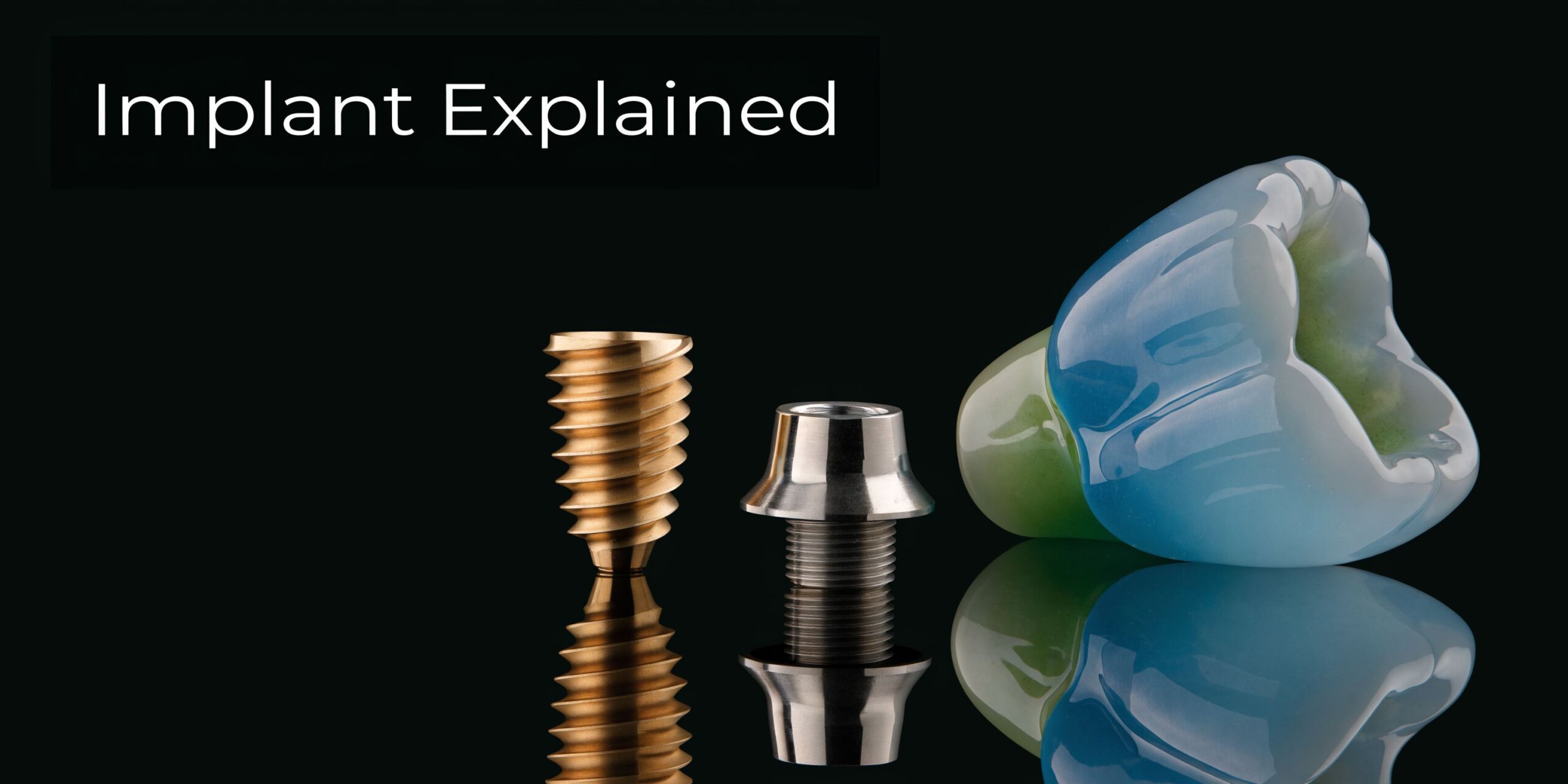
The three pieces that work together
At the bottom is the implant post. This is the small titanium piece placed in the jawbone, where the natural root used to be.
Above that is the abutment. It connects the implant post to the final tooth.
On top is the crown. This is the custom-made part you see when you smile, talk, and chew.
Each part has a separate role. The post provides support in the bone. The abutment joins the parts together. The crown restores the shape and look of the missing tooth. If you only hear the word "implant," it can sound like one single piece, but it is really a small system designed to replace both the root and the visible tooth in stages.
Why the implant post matters so much
The post is the part that changes this treatment from a simple space-filler into a true tooth replacement. It sits in the jawbone and heals there over time through osseointegration, which means the bone bonds to the titanium surface.
That bond is what gives an implant its steady feel.
A bridge can replace the part above the gums. A removable partial can fill the space in your smile. Neither option places a root-like support in the bone. With a single implant, the foundation is built first, then the visible tooth is attached after healing. That step-by-step approach is one reason the result often feels more natural when you bite.
At Grand Parkway Smiles, this is also where careful planning matters. Before treatment starts, the team studies the area with detailed imaging, checks the bone and gum support, and maps out where each part should sit. For patients, that means fewer surprises and a clearer idea of what happens first, what happens later, and why the process cannot be rushed.
A common point of confusion
A common point of confusion is the difference between the implant and the crown.
The implant is the root replacement under the gums. The crown is the tooth-shaped restoration above the gums. Once patients understand that difference, their questions usually become much more practical. They start asking whether they have enough bone, whether grafting may be needed, how the crown will match nearby teeth, and what the process will feel like from one visit to the next.
That is a good shift. It means the treatment is starting to feel concrete instead of mysterious.
Why a Single Implant Is the Gold Standard for Tooth Replacement
A single missing tooth may look like a small problem. In your mouth, it affects more than the visible gap.
The best replacement usually does three jobs at once. It restores the tooth you see, supports the way you bite, and helps preserve the bone that used to hold the root. That combination is why a single dental implant is often considered the gold standard for replacing one tooth.
It supports the jawbone in a way other options cannot
Your tooth root works like the part of a house post hidden below the ground. You do not see it, but it helps keep the structure supported.
After a tooth is lost, that root signal disappears. The jawbone in that spot can slowly shrink because it is no longer being used in the same way. Patients often notice the space first, but the bigger long-term issue is the change underneath the gums.
A single implant is placed in the bone and functions as an artificial root. That gives the area support again and helps maintain the shape of the ridge more predictably over time.
It lets healthy neighboring teeth stay healthy
This matters more than many patients expect.
A bridge can be a good treatment in the right situation, especially if the teeth next to the gap already need crowns. But if those nearby teeth are healthy, preparing them for a bridge usually means removing natural tooth structure so they can support the restoration.
A single implant stands independently. The teeth on either side do not have to do extra work, and they usually do not need to be reshaped. For a patient with one missing tooth and otherwise healthy teeth, that is often the most conservative choice.
At Grand Parkway Smiles, that decision is not made from a one-size-fits-all checklist. The doctors evaluate your bite, bone support, gum health, and the condition of the neighboring teeth so the recommendation fits your mouth, not a generic template.
It feels more secure in daily life
Patients rarely ask for a replacement that is merely present. They want to chew confidently, smile without overthinking it, and stop worrying that the area will feel different forever.
Because an implant is anchored in the jaw, it usually feels more stable than a removable option. The final crown is custom-shaped to fit your bite and match nearby teeth, which helps it blend in both visually and functionally. If you want a clearer picture of how that treatment is planned and placed, our guide to the single dental implant procedure walks through the details.
Pain and cost are common concerns here. That makes sense. What often reassures patients is understanding that the goal is not just to fill a space for today, but to choose an option that can protect surrounding structures and reduce future treatment on other teeth.
Long-term value comes from what it preserves
The strongest reason to choose an implant is not cosmetic alone. It is the way this treatment respects the rest of your mouth.
A single implant is often a strong option for patients who want:
- Bone support in the missing-tooth area
- A crown that is custom-made for the smile and bite
- A replacement that does not depend on adjacent teeth
- A plan focused on durability and day-to-day comfort
If your bone and overall health support implant treatment, a single implant often gives the most complete replacement for one missing tooth. This approach focuses on preserving the underlying support structure of your smile, not just replacing the visible tooth.
Your Step-by-Step Implant Journey at Grand Parkway Smiles
You notice the gap every time you smile, but the part that usually creates the most stress is not the missing tooth itself. It is not knowing what the process will feel like, how long it will take, or whether it will hurt.
At Grand Parkway Smiles, we guide patients through this one step at a time. Because implant care involves planning, surgery, healing, and the final restoration, it helps to have your exam, imaging, and restorative work coordinated in one place. That makes the process more predictable and easier to understand.
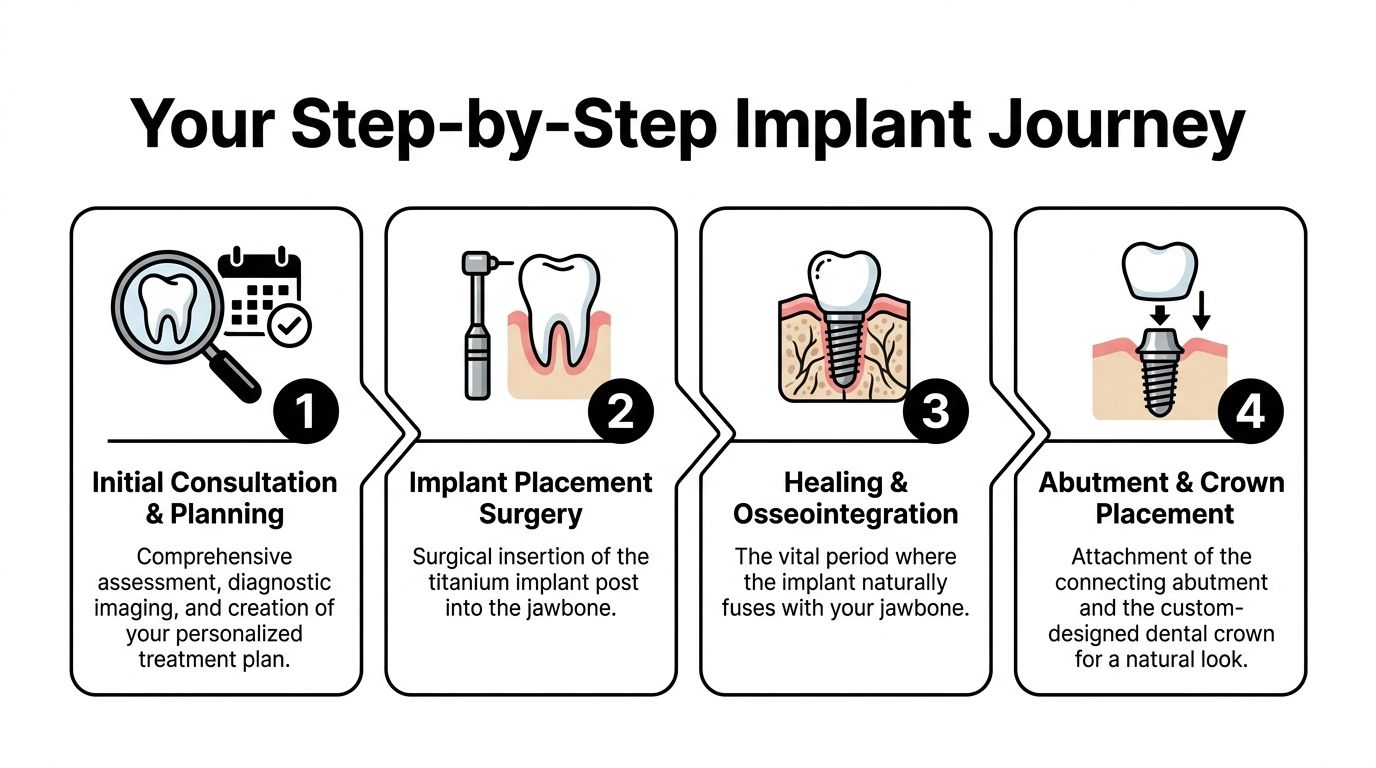
Phase one consultation and planning
Your first visit is a fact-finding appointment. We need to see whether the missing-tooth area has the bone, gum health, and spacing needed for an implant to succeed.
That starts with an exam and imaging. Regular X-rays give helpful information, but 3D CBCT imaging lets us see the area from multiple angles. It shows the height and width of the bone and helps us map out nearby structures before anything is placed.
We are also evaluating a few practical details that affect the plan:
Bone support
The implant needs enough healthy bone around it for long-term stability.Gum condition
Healthy gums lower the risk of complications and make home care easier later.Bite pressure
A front tooth and a molar do not handle force the same way, so the plan has to fit the location.History of the site
A recent extraction, past infection, or a gap that has been there for years can change timing and treatment steps.
If you need preliminary treatment, such as a bone graft, we explain that before surgery day. Patients who want a closer look at what happens during placement can review our guide to the single dental implant procedure.
Phase two implant placement surgery
Surgery day is usually more straightforward than patients expect.
We numb the area thoroughly first. If you feel nervous, we can talk about sedation options to help you stay relaxed. Some patients do very well with local anesthetic alone. Others prefer sedation because they want the visit to feel easier and less memorable.
The implant is then placed into the jawbone at the position we planned in advance. A good way to picture it is like setting a fence post in the right spot and at the right angle before attaching the visible part above ground. The placement matters because the future crown has to look natural and fit your bite comfortably.
For a single tooth, this is often a focused procedure with a shorter recovery than patients fear. Many people tell us the waiting and worrying were harder than the appointment itself.
Phase three healing and osseointegration
Healing is the quiet part of the process, but it is the part that gives the implant its strength.
After placement, the bone gradually bonds to the implant in a process called osseointegration. While the gums may look healed fairly early, the underlying bone needs more time to secure the implant well enough to support your new tooth. That is why this stage can take several months.
During this period, we help you protect the area and monitor progress. You will get instructions on eating, cleaning, and what to avoid while the site matures. Follow-up visits let us check the gums, confirm healing is on track, and answer questions before small concerns turn into bigger ones.
Some patients are surprised by this timeline. That reaction is understandable. A visible improvement in the gums does not always mean the implant is ready for the final crown, just like dry concrete on the surface is not the same as fully cured concrete underneath.
Phase four abutment and crown placement
Once the implant is stable, we move to the part patients have usually been waiting for most.
First, we attach the abutment, which is the connector between the implant and the crown. Then we take impressions or digital scans so the final crown can be designed to match the nearby teeth in shape, color, and bite.
This step is about more than looks. The crown should sit naturally in your smile, contact the opposing teeth correctly, and leave enough space for you to clean around it at home. If a crown looks good but feels bulky or traps food, it is not finished the way it should be.
What recovery usually feels like
Patients often ask two practical questions here. Will it hurt, and how disruptive will it be?
Soreness, swelling, or tenderness are common for a few days after implant placement. That is normal and usually manageable with routine post-op instructions, soft foods, and the medications we recommend. Many patients return to normal daily activities quickly, even if they take it a little easy at first.
The final crown visit is usually much easier than the surgical visit. By that point, the main work has already been done.
Cost worries also tend to ease when the process is explained clearly. You can see what each phase is for, why timing matters, and where added steps such as grafting may affect the overall plan. A single dental implant is not usually a one-visit fix, but it is a carefully staged treatment designed to give you a replacement tooth that feels stable, looks natural, and fits your life with less guesswork.
Comparing Your Tooth Replacement Alternatives
Not every patient chooses an implant, and not every situation points to the same treatment. The right choice depends on your bone, your budget, the condition of nearby teeth, and how permanent you want the solution to be.
For one missing tooth, the three most common options are a single dental implant, a fixed bridge, and a removable partial denture.
The everyday differences that matter
A bridge is fixed in place, so it doesn’t come in and out. That appeals to many people. But it usually relies on the neighboring teeth for support.
A partial denture is removable. It can replace a gap without surgery, but some patients don’t like the feel of taking a tooth replacement out at night or cleaning around clasps.
A single dental implant stands alone. It doesn’t usually depend on adjacent teeth, and it tends to feel closest to a natural tooth once treatment is complete.
Implant vs. Bridge vs. Partial Denture at a Glance
| Feature | Single Dental Implant | Fixed Bridge | Removable Partial Denture |
|---|---|---|---|
| Support | Independent support in the jawbone | Supported by neighboring teeth | Rests on gums and may use nearby teeth for retention |
| Effect on adjacent teeth | Usually leaves neighboring teeth untouched | Often requires reshaping adjacent teeth | May place some stress on neighboring teeth depending on design |
| Bone support | Replaces the root area and helps maintain support | Does not replace the root | Does not replace the root |
| Feel while chewing | Usually the most natural and stable feeling | Can feel stable, but support comes from other teeth | Often less stable than fixed options |
| Cleaning | Similar to caring for a natural tooth | Requires cleaning underneath the bridge area | Must be removed for cleaning |
| Appearance | Very natural when well-designed | Can look natural | Can look acceptable, but bulk and clasps may affect esthetics |
| Longevity mindset | Built as a long-term stand-alone solution | Often a medium- to long-term fixed option | Usually the least permanent feeling option |
When each one makes sense
Choose a single dental implant when
You want a replacement that acts independently and supports both health and appearance.Choose a fixed bridge when
The neighboring teeth already need crowns, or implant placement isn’t the right fit.Choose a removable partial denture when
You want a non-surgical option or need a more flexible short-term approach.
The best treatment isn’t the one with the fewest steps. It’s the one that fits your mouth and your long-term goals.
For patients who want a solution that protects neighboring teeth and feels the most like their own tooth, the implant usually comes out ahead. The tradeoff is that it takes more planning and healing time.
Are You a Good Candidate for a Dental Implant?
Most healthy adults with a missing tooth can at least be evaluated for a single dental implant. The better question is whether the implant can be placed with a high level of confidence, or whether the site needs preparation first.
Bone and space matter more than people expect
One of the biggest factors is whether there is enough bone in the area.
Clinical guidance for single-tooth implant planning notes that a standard implant generally needs at least 6 mm of bone width between adjacent teeth, which helps preserve at least 1 mm of bone around the implant and protect neighboring roots, as described in these guidelines for single-tooth implant success.
That sounds technical, but the idea is simple. The implant needs room. If the space is too narrow, the treatment may need a narrower implant design, additional planning, or a different approach altogether.
Good candidates usually share a few traits
A strong candidate often has:
Healthy gums
Active gum disease needs attention before implant treatment.Adequate bone support
If bone is limited, grafting may be recommended.Stable general health
Healing is part of the treatment, so your body needs to support that process well.Reliable home care habits
Implants need brushing, flossing, and regular professional maintenance.
Risk factors don’t always rule treatment out
Some patients hear they smoke or have diabetes and assume they’re automatically disqualified. That’s not always true.
These factors can lower predictability, but they don’t always end the conversation. What matters is how controlled the situation is, how healthy the gums are, and whether risks can be reduced before treatment begins.
For example:
- Smoking can interfere with healing.
- Uncontrolled diabetes can make healing less predictable.
- A history of gum disease can increase the need for close maintenance.
Patients with more complex needs often benefit from a team-based evaluation. In a multidisciplinary setting, the surgical, restorative, and periodontal sides of care can be coordinated more carefully, especially if bone grafting, site development, or esthetic planning are part of the case.
Questions worth asking at your consult
If you’re trying to judge whether you’re a candidate, these are useful questions:
- Do I have enough bone for an implant now?
- If not, would grafting improve the site?
- Are my gums healthy enough for long-term success?
- Is my bite putting extra force on that area?
- What could reduce my risk before treatment starts?
Those answers matter more than whether you “want an implant.” Wanting one is easy. Building one on a healthy foundation is what makes it last.
Understanding the Cost and Your Payment Options
Cost matters, and most patients want a straight answer. That’s reasonable.
The cost of a single dental implant usually reflects several parts of care, not just one item. You’re paying for diagnostics, surgical planning, the implant component itself, the connector, the final crown, and any site preparation that may be needed before placement.

What you’re investing in
A single dental implant is not just a crown. It’s a full replacement system.
That means the total plan may include:
Diagnostic work
Exams, imaging, and treatment planningSurgical care
Placement of the implant into the jawboneRestorative components
The abutment and the custom final crownPreparatory treatment
In some cases, grafting or extraction-related care
This is why one person’s treatment can be simpler than another’s. The site condition affects the final cost.
Why the lowest upfront price isn’t always the lowest long-term cost
The short-term comparison that patients often make is implant versus bridge. That’s understandable. A bridge may look less expensive at first.
But long-term planning matters. As noted in this discussion of questions to ask about dental implant costs and planning, a bridge may need replacement 2 to 3 times over 20 to 30 years, and that comparison may not include possible treatment needs on the crowned adjacent teeth. An implant, by contrast, is often approached as a single investment built for decades of use.
Making treatment more manageable
Patients don’t need to pay for care the same way.
Common payment paths include:
PPO dental insurance
Some plans may help with parts of treatment, depending on benefits.Financing
Monthly payment options can spread treatment cost over time.Membership or savings plans
These can help patients without traditional insurance.
One local option is Grand Parkway Smiles, which offers information about implant pricing and financing on its page about the cost of a dental implant.
The smartest way to look at cost is not “What’s the cheapest way to fill this space?” It’s “Which option gives me the healthiest and most durable result for the money I’m spending?”
Your Questions About Single Dental Implants Answered
Does the implant procedure hurt
During the procedure, the area is numbed. Many patients feel pressure more than pain. If you’re anxious, sedation can make the experience much easier.
After surgery, some soreness is normal. Many people find the recovery more manageable than they feared.
How long is recovery, and when can I eat normally
Early healing is usually measured in days to weeks, depending on the person and the site. Full implant integration takes longer than that, which is why the final crown is often delayed until the implant is ready.
You’ll usually start with softer foods and then expand your diet based on healing and your dentist’s instructions.
Can my body reject a dental implant
Dental implants aren’t rejected in the way people often think about organ rejection. But implants can fail if healing doesn’t go well or if the surrounding tissues break down.
As discussed in this review of who may or may not be a candidate for dental implants, failure risk can be higher for smokers, patients with uncontrolled diabetes, or people with a history of gum disease. That’s why a careful evaluation matters before treatment starts.
If you’re in Katy or the greater Houston area and want a clear answer about whether a single dental implant is right for you, the next step is a consultation and a close look at the bone, gums, and bite.
If you’re ready to replace a missing tooth with a solution that supports your dental health, appearance, and long-term comfort, schedule a consultation with Grand Parkway Smiles. A personalized exam can show whether a single dental implant fits your goals, what the process would look like in your case, and how to move forward with confidence.