A lot of people hear the same thing at a routine dental visit. “Your wisdom teeth are coming in.” Then the questions start right away. Do all wisdom teeth have to be removed. Is surgery automatic. If they don’t hurt, can they stay. If you’re a parent, you may also wonder whether it’s better to act early or wait.
That uncertainty is normal. Wisdom teeth sit in a strange category because they’re common, but the advice people hear is often all over the place. One friend says everyone gets them out. Another says they kept all four with no problem. Both can be true.
That’s part of why this topic comes up so often. Approximately 5 million Americans undergo wisdom teeth removal each year, involving around 10 million teeth, making it one of the most common procedures for young adults ages 15 to 25, according to wisdom teeth removal statistics reviewed here. But common doesn’t mean automatic.
The right answer depends on what your wisdom teeth are doing, how they’re positioned, whether you can keep them clean, and how they fit into your long-term dental health. For some people, removal protects nearby teeth and prevents a bigger problem later. For others, careful monitoring is the better choice.
That Common Question What About My Wisdom Teeth
A patient comes in for a cleaning before college starts. Nothing hurts. Chewing feels normal. Then the X-ray goes up on the screen, and there they are. Third molars, sitting in the back, half hidden, tilted, or maybe still developing under the gums.
That moment tends to create more anxiety than pain. The teeth may be quiet, but the question suddenly feels urgent.
Parents often ask whether it’s smarter to remove them before they become a problem. Young adults usually ask the opposite. If there’s no pain, why do anything at all. Adults in their 30s and 40s ask a different version. If these teeth never bothered me, do they matter now.
All of those questions are reasonable because wisdom teeth don’t follow one script.
Some come in straight and function like any other molar. Others never fully erupt. Some trap food and bacteria around the gumline. Some press against the tooth in front of them in a way that’s hard to feel but easy to see on imaging.
Wisdom teeth decisions are rarely about one dramatic symptom. They’re usually about whether the tooth helps your mouth, harms it, or creates a risk that develops without obvious symptoms.
Confusion often arises here. People assume the decision should be based on pain alone. Pain matters, but it isn’t the whole story. A wisdom tooth can be painless and still be difficult to clean, poorly positioned, or risky for the tooth next to it.
It also works the other way. The presence of a wisdom tooth doesn’t automatically make surgery the right move. If the tooth is healthy and manageable, keeping it may be completely appropriate.
The Modern Answer Not All Wisdom Teeth Need Removal
For years, many people were told that wisdom teeth were basically disposable. If they existed, they would eventually need to come out. Modern dentistry is more selective than that.
Why the old assumption changed
The short answer is that not all wisdom teeth have to be removed. Current thinking is less about routine removal and more about matching treatment to the actual condition of the tooth.
That shift shows up in how different age groups report their experience. While two-thirds of Americans over 45 have had all wisdom teeth removed, only 26% of those under 30 have undergone the procedure, reflecting a move away from blanket removal and toward monitoring when appropriate, according to this review of common wisdom teeth removal patterns.
That matters because it tells patients something important. Surgery is no longer treated as the default answer for every person.
When keeping wisdom teeth makes sense
A wisdom tooth can often stay if it checks a few key boxes:
- It’s fully erupted. The tooth has come in enough that the gum doesn’t trap debris around a partially covered crown.
- It’s positioned correctly. It lines up in a way that works with your bite instead of pushing into the tooth in front of it.
- It’s healthy. There’s no sign of decay, infection, or surrounding damage.
- You can clean it well. If your toothbrush and floss can reach it consistently, the long-term outlook is much better.
A simple example helps. If a wisdom tooth is acting like a normal back molar, meeting the opposite tooth properly, and staying clean without repeated gum irritation, there may be no reason to remove it.
If, on the other hand, it’s only halfway out and creates a pocket under the gum where food gets stuck, that’s a very different situation.
Monitoring is a real treatment plan
Some patients hear “let’s monitor it” and think that means no decision was made. In reality, monitoring is a decision. It means the tooth doesn’t currently show a strong reason for removal, but it deserves periodic review.
That usually includes regular exams and updated X-rays when needed. The goal is to catch change early, before it turns into pain, swelling, or damage to another tooth.
Practical rule: A healthy wisdom tooth that’s fully in place and easy to clean may be worth keeping. A difficult-to-clean wisdom tooth usually doesn’t become easier to manage with time.
This is why there isn’t one universal answer to do all wisdom teeth have to be removed. Some should come out. Some shouldn’t. The smart approach is individualized, not automatic.
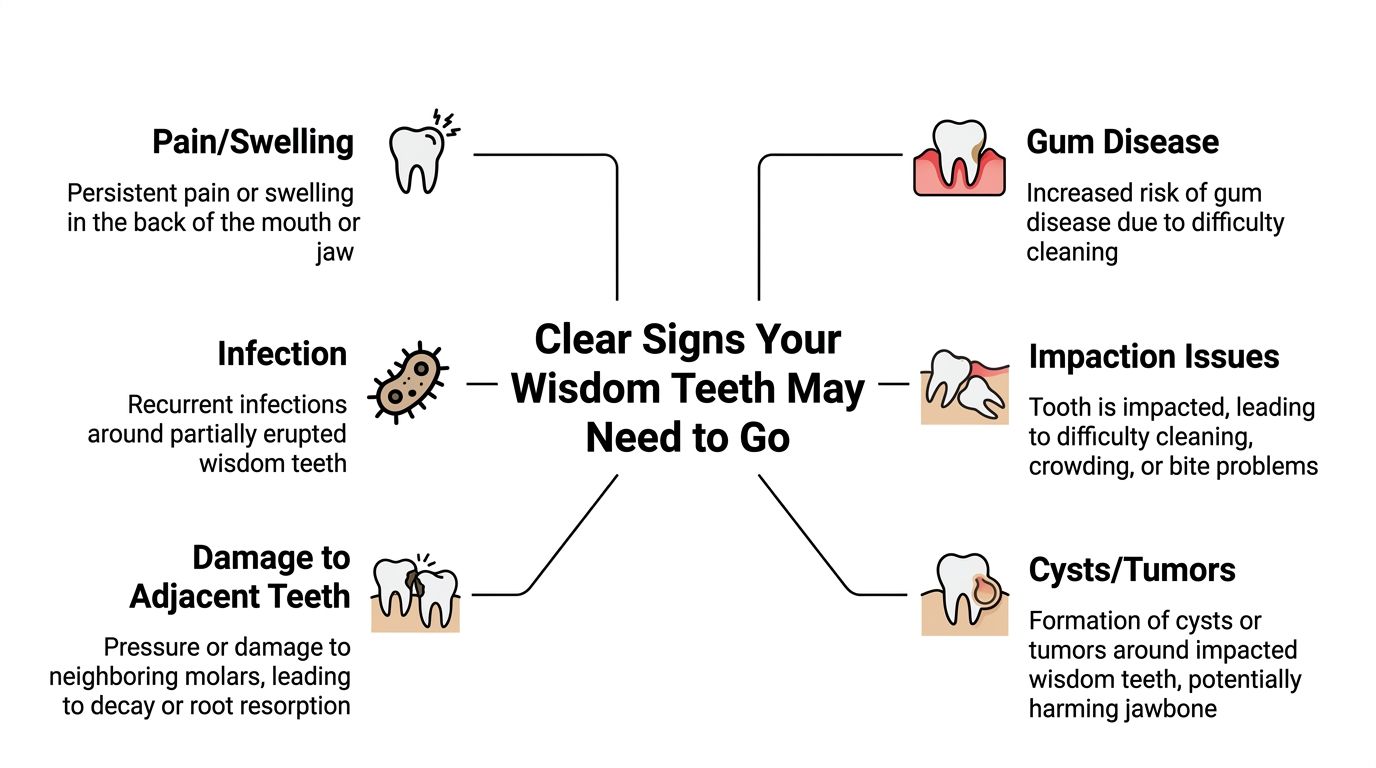
Clear Signs Your Wisdom Teeth May Need to Go
The best reasons to remove wisdom teeth are specific. Not “because everyone does it.” Not “just in case” without supporting findings. The strongest reasons are visible in the mouth, on imaging, or in the pattern of symptoms.
Impaction and poor positioning
An impacted wisdom tooth is one that doesn’t have enough room to erupt normally. Sometimes it stays buried under the gums or bone. Sometimes it comes in at an angle.
A useful way to think about it is a car parked sideways across two spaces. Even if that car isn’t moving, it creates trouble.
Common patterns include:
- Tilted forward teeth. These lean into the second molar and can trap food between the teeth.
- Partially erupted teeth. Part of the crown is visible, but part stays under gum tissue, creating a hard-to-clean pocket.
- Horizontally positioned teeth. These may sit sideways and press directly against the neighboring molar.
- Trapped teeth. These haven’t erupted and may still create risks inside the jaw.
When a tooth is in the wrong place, brushing skill alone often can’t solve the problem.
Pain, swelling, and repeated irritation
Some wisdom teeth announce themselves clearly. The back of the jaw feels sore. The gum gets puffy. Opening wide becomes uncomfortable. Chewing on that side starts to feel off.
One of the most common issues is irritation around a partially erupted wisdom tooth. Food and bacteria collect under the gum flap, and the area gets inflamed over and over.
Signs patients often notice include:
- Tender gums in the back
- Swelling near the jaw angle
- Bad taste or bad breath coming from one area
- Pain that seems to come and go, then return
That kind of repeating inflammation usually means the area is hard to maintain, not that you need to brush harder.
Damage to the tooth in front
This is one of the most important reasons for removal, and patients often don’t realize it’s happening.
The wisdom tooth may be the last tooth in the row, but the tooth in front of it often pays the price. If the third molar leans forward or creates a tight food trap, the second molar becomes harder to clean. Decay can develop where you can’t see it. In some cases, the neighboring root can also be affected.
That’s why a wisdom tooth can threaten both dental health and appearance. Losing or heavily restoring a second molar is usually a much bigger long-term problem than removing a poorly positioned third molar.
If a wisdom tooth is putting a healthy second molar at risk, the decision becomes less about the wisdom tooth itself and more about protecting a more valuable functional tooth.
Cysts, pathology, and gum disease risk
Some impacted wisdom teeth are associated with changes in the surrounding tissue that don’t cause obvious early symptoms. Imaging may show a cystic area or other pathology that needs attention.
Even without that, the back of the mouth is hard to clean. A poorly erupted or partly covered wisdom tooth can raise the risk of gum problems because plaque tends to sit undisturbed in those far posterior areas.
Bite and appearance concerns
Patients often ask whether wisdom teeth cause crowding. That question is more nuanced than people think, but there are real cases where a poorly positioned third molar contributes to pressure, bite interference, or cleaning problems that affect overall alignment and smile maintenance.
This matters most for patients protecting prior orthodontic work or trying to preserve a stable bite.
A wisdom tooth may need to go when it is:
- Repeatedly inflamed
- Stuck under the gums or bone
- Pressing on the second molar
- Associated with pathology
- Too far back to clean reliably
- Interfering with bite or long-term treatment goals
How We Diagnose The Need for Removal
No responsible clinician should decide on wisdom tooth removal by quick glance alone. The recommendation should come from what the mouth shows clinically and what imaging confirms.
The exam in the chair
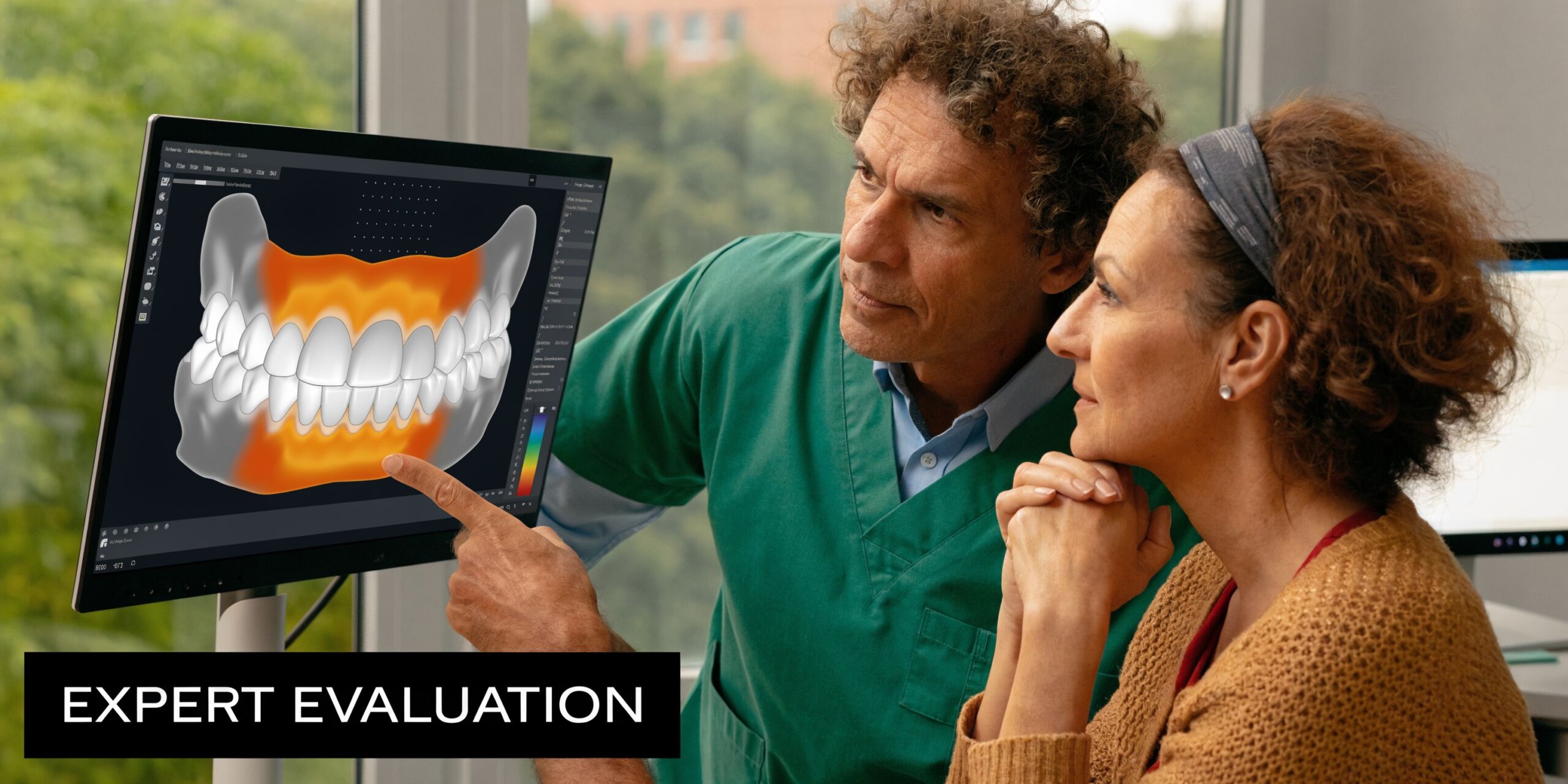
The first step is straightforward. We look at what’s happening in real life, not just on the X-ray.
That includes checking:
- The gum tissue. Is there swelling, redness, or a gum flap trapping debris?
- Your bite. Is the tooth erupting into function or hitting awkwardly?
- The surrounding teeth. Is the second molar at risk from pressure or a difficult contact point?
- Your symptoms. Pain pattern, food trapping, jaw soreness, or recurring infection all matter.
A symptom-free mouth can still hide a problem, but symptoms do help shape the decision.
Imaging shows what the eye can’t
Standard dental imaging often gives the first useful overview. It shows whether the tooth is upright, angled, partially erupted, or significantly impacted.
For more complex cases, 3D Cone Beam Computed Tomography, or CBCT, gives a much more detailed map. It can show the roots, bone levels, tooth angulation, and the relationship to nearby structures with far greater precision than a flat image.
That kind of detail matters when a tooth sits close to important anatomy or when the surgical path needs to be planned carefully.
Age changes the conversation
One reason timing comes up so often is that surgery tends to get more difficult with age. Surgical difficulty and complication risk increase materially after age 25 because jaw bone becomes denser and tooth roots are fully formed, as explained in the Mayo Clinic discussion of wisdom teeth removal timing.
That doesn’t mean adults over 25 can’t have wisdom teeth removed successfully. It means the decision about waiting should be thoughtful, especially when imaging already suggests the tooth is unlikely to become easier to manage later.
What the final recommendation depends on
A recommendation usually comes from several factors together, not one isolated detail.
A clinician is weighing questions like these:
- Is the tooth healthy right now
- Can the patient clean it predictably
- Does the position create a future risk
- Would waiting improve anything, or just delay an inevitable surgery
That’s why two patients of the same age can get different advice. One may be a strong candidate for monitoring. Another may have anatomy that points clearly toward removal.
Extraction vs Monitoring Weighing Your Options
Once the diagnosis is clear, the main decision begins. Remove the tooth now, or keep it under active review.
Neither option is automatically better in every case. The better option is the one that fits the tooth’s anatomy, your oral hygiene access, your symptoms, and your long-term plans.
When monitoring is reasonable
Monitoring works best when the tooth isn’t just quiet, but also favorable.
For an asymptomatic wisdom tooth to be safely monitored, it should be fully erupted, positioned correctly for biting, and accessible for daily cleaning. If imaging shows a high risk of food impaction or the tooth sits within 2 mm of adjacent roots, extraction is more strongly indicated, according to this review of asymptomatic impacted third molars.
That distinction matters. “No pain” isn’t the same as “low risk.”
When removal is the stronger choice
Removal tends to make more sense when the tooth is awkwardly positioned, repeatedly inflamed, hard to clean, or likely to damage the tooth next to it.
Some patients also prefer one planned procedure over years of periodic watching, repeated imaging, and the possibility of an urgent flare-up at a bad time. That’s a personal judgment, not just a dental one.
Wisdom Tooth Decision Guide Removal vs Monitoring
| Factor | Wisdom Tooth Removal | Active Monitoring |
|---|---|---|
| Current tooth position | Better when the tooth is impacted, partly erupted, or threatening nearby structures | Better when the tooth is fully erupted and favorably aligned |
| Daily hygiene | Helps when the area is consistently hard to clean | Works when brushing and flossing access is reliable |
| Future risk | May prevent later infection, decay, or damage to the second molar | Avoids surgery now, but requires continued observation |
| Recovery | Usually involves one defined healing period | No surgical recovery now, but future treatment may still become necessary |
| Cost timing | Front-loads the cost into one treatment episode | Spreads costs over exams, imaging, and possible later surgery |
| Peace of mind | Often preferred by patients who want the issue resolved | Often preferred by patients with stable, low-risk teeth |
Questions to ask before choosing
Patients usually make better decisions when they ask practical questions instead of broad ones.
Consider asking:
- Can I clean this tooth well at home
- What is this tooth doing to the second molar
- If we wait, what change are we hoping for
- Would later removal likely be simpler, or harder
- How does this fit with future orthodontic or restorative treatment
The best wisdom tooth plan isn’t the most aggressive one. It’s the one that solves the core problem without creating an unnecessary one.
If you’ve been wondering do all wisdom teeth have to be removed, the answer here becomes personal. A healthy, accessible tooth can often stay. A risky one usually shouldn’t.
The Wisdom Tooth Surgery Experience at Our Katy Office
For patients who do need removal, the procedure is often much less intimidating than they expected. Fear usually comes from not knowing what the day will feel like.
The experience starts well before the procedure itself. You’ll review your health history, go over imaging, talk through sedation options, and receive pre-op instructions so there aren’t surprises on surgery day.
Before the appointment
Most patients want to know simple things first. Can I eat. Do I need a driver. Will I be awake. How sore will I be after.
Those details matter because a calm patient is easier to care for and usually feels more confident during recovery. If you’re someone who gets anxious in the dental chair, reviewing sedation options ahead of time helps a lot. Patients who want a clearer sense of what sedation involves can learn more about IV sedation and whether it’s the right fit.
That emphasis on comfort isn’t unique to dentistry. Good healthcare settings pay close attention to communication, preparation, and emotional ease. This broader guide to improving patient experience captures why patients do better when they know what to expect and feel listened to.
During the procedure
Wisdom tooth surgery is adapted to the position of the teeth. A fully erupted tooth may come out more easily. An impacted tooth may require the gum to be gently opened, the tooth sectioned, and the area carefully cleaned before closure.
Patients under IV sedation often remember very little of the procedure itself. That’s a major relief for people with dental anxiety, a strong gag reflex, or fear of hearing and feeling the surgical process.
The goals during surgery are clear:
- Protect nearby structures
- Remove the tooth as conservatively as possible
- Keep you comfortable throughout
- Set up a smoother recovery
Right after surgery
Recovery starts immediately. Gauze pressure, hydration, rest, and the right food choices matter more than many patients expect.
The first day usually feels less difficult when patients prepare their home setup before the appointment. Soft foods, ice packs, medications, and a quiet ride home all help.
Helpful early steps include:
- Follow the bite-on-gauze instructions carefully
- Stick with soft, cool, or lukewarm foods at first
- Avoid smoking, straws, and vigorous rinsing
- Take medications exactly as directed
- Call promptly if something feels off
Some practices also use PRF, or Platelet-Rich Fibrin, to support healing. This material is made from the patient’s own blood and placed into the extraction site to support tissue repair. Patients often appreciate options that aim for a more comfortable recovery and better healing support.
Most wisdom tooth recoveries go well when patients respect the first few days. The trouble usually comes from doing too much too soon.
What patients usually care about most
People rarely ask for a technical lecture after surgery. They want to know when they can eat normally, sleep comfortably, smile without puffiness, and get back to work or school.
That’s why the best surgical experience isn’t only about the extraction. It’s about planning, sedation, clear instructions, and having a team that takes both safety and comfort seriously.
Long-Term Health and Financial Planning for Your Smile
The wisdom tooth decision doesn’t only affect this year. It can shape what’s possible later, especially for adults who may someday need implants, major restorative care, or full-mouth reconstruction.
A retained wisdom tooth in the wrong position can complicate future treatment planning. That matters most in adults who already have missing teeth, heavily restored molars, or bone concerns in the back of the jaw. For adults considering full-mouth reconstruction, retained wisdom teeth can increase surgical complexity. A 2025 study noted 15 to 20% higher complication rates in implant patients with unerupted third molars, as discussed in this review of why removal may matter before advanced implant treatment.
That doesn’t mean every adult should rush to surgery. It means wisdom teeth should be evaluated as part of your bigger oral health plan, not as an isolated issue.
Why this matters for appearance too
Long-term dental health and appearance are closely connected. A compromised second molar, chronic gum inflammation in the back of the mouth, or bone changes near impacted teeth can affect both function and the kind of restorative options available later.
For patients thinking ahead about costs, the primary comparison often isn’t “surgery versus no cost.” It’s planned treatment now versus monitoring over time, plus the possibility of more complex treatment later.
If you’re trying to budget carefully, this overview of how much wisdom teeth removal can cost can help frame the conversation around timing, insurance, and payment options.
A good wisdom tooth decision protects more than the back of your mouth. It helps preserve future choices.
Frequently Asked Questions About Wisdom Teeth
Can you keep some wisdom teeth and remove others
Yes. Treatment doesn’t have to be all or nothing. If one or two teeth are healthy and easy to maintain while others are impacted or problematic, a mixed approach can make sense.
If my wisdom teeth don’t hurt, are they fine
Not always. Some risky wisdom teeth stay quiet for a long time. Pain is only one clue. Position, hygiene access, and what the tooth is doing to nearby structures matter just as much.
Do wisdom teeth always cause crowding
Not always. This issue is often oversimplified. Some wisdom teeth contribute to pressure or bite problems, but not every case of crowding is caused by third molars.
Is it better to remove wisdom teeth younger
In many cases, younger patients heal more easily and surgery is less complex. That doesn’t mean every teenager needs extraction. It means timing is part of the decision when a tooth already looks unfavorable.
What if I’m an adult and my wisdom teeth were never removed
That’s common. Adults can still keep healthy wisdom teeth if the teeth are stable and maintainable. Adults can also have them removed successfully when they begin to create problems or interfere with future treatment plans.
What’s the simplest way to know what I should do
Get a clinical exam and imaging, then ask one practical question. Is this tooth helping my mouth, neutral, or likely to hurt something I want to keep. That usually leads to a much clearer answer than asking whether wisdom teeth are “good” or “bad” in general.
If you’re trying to decide what to do about wisdom teeth, the next step is a personalized evaluation, not guesswork. Grand Parkway Smiles helps patients in Katy and the greater Houston area understand whether a wisdom tooth should be removed, monitored, or factored into bigger plans like implants or full-mouth reconstruction.