If you’re searching “pediatric dentistry near me” from your phone while your child complains about a tooth, fights brushing, or is getting that first tiny tooth, you’re probably not looking for a random dental office. You’re looking for reassurance. You want someone who understands children, explains things clearly, and helps your child leave with a healthier smile instead of a scary memory.
That search can feel harder than it should. Many offices say they see kids, but parents usually need more practical answers than that. Who should handle a first visit? What happens if your child is anxious? What if they have sensory sensitivities, a tongue-tie, or a sudden dental injury? And how do you know whether a local office in Katy is equipped for more than a quick cleaning?
A child’s dental care affects more than cavities. It shapes comfort with future dental visits, supports eating and speech, and protects the appearance and function of growing teeth. When parents understand what pediatric dentistry involves, choosing care becomes much easier.
Your Search for a Children's Dentist Ends Here
Typing “pediatric dentistry near me” usually starts with urgency. Maybe your toddler chipped a tooth on the coffee table. Maybe your baby’s gums look swollen and you’re wondering if teething is normal. Maybe your older child is nervous about the dentist and you’re trying to avoid a battle before the appointment even begins.
The question isn’t just “Who is close by?” It’s “Who knows how to care for a growing smile in a way that feels safe, gentle, and practical for my family?”
What most parents are actually looking for
Parents usually want four things at once:
- Specialized skill so problems are caught early and treated appropriately for a child’s age
- A calm experience that doesn’t turn one visit into a long-term fear of dentistry
- Clear communication about what’s happening, why it matters, and what to do at home
- Local convenience because easier appointments make preventive care more realistic
That matters because children aren’t just small adults in a dental chair. Their teeth are developing. Their jaws are growing. Their behavior changes quickly from infancy to the teen years. A child who’s playful and cooperative one day may be frightened and overwhelmed the next.
Practical rule: A good pediatric dental visit should protect both your child’s teeth and your child’s confidence.
For families in Katy and the greater Houston area, local care also matters in very practical ways. A nearby office makes it easier to keep routine visits, get help for a sudden toothache, and build familiarity over time. Children often do better when they recognize the setting and the people caring for them.
What “gentle care” should mean in real life
Gentle care isn’t just a friendly voice. It includes age-appropriate explanations, kid-sized communication, thoughtful pacing, and options for children who need extra support. That might mean a simple lap exam for a baby, a slow introduction to instruments for a preschooler, or sedation support for a child with major anxiety or complex treatment needs.
Some families also need a practice that can coordinate care beyond routine cleanings. If your child has special needs, difficulty breastfeeding because of a tongue-tie, or extensive decay, specialized pediatric support becomes even more important.
The strongest local choice is usually the one that can meet your child where they are now and continue supporting their smile as they grow.
What is Pediatric Dentistry A Foundation for Healthy Smiles
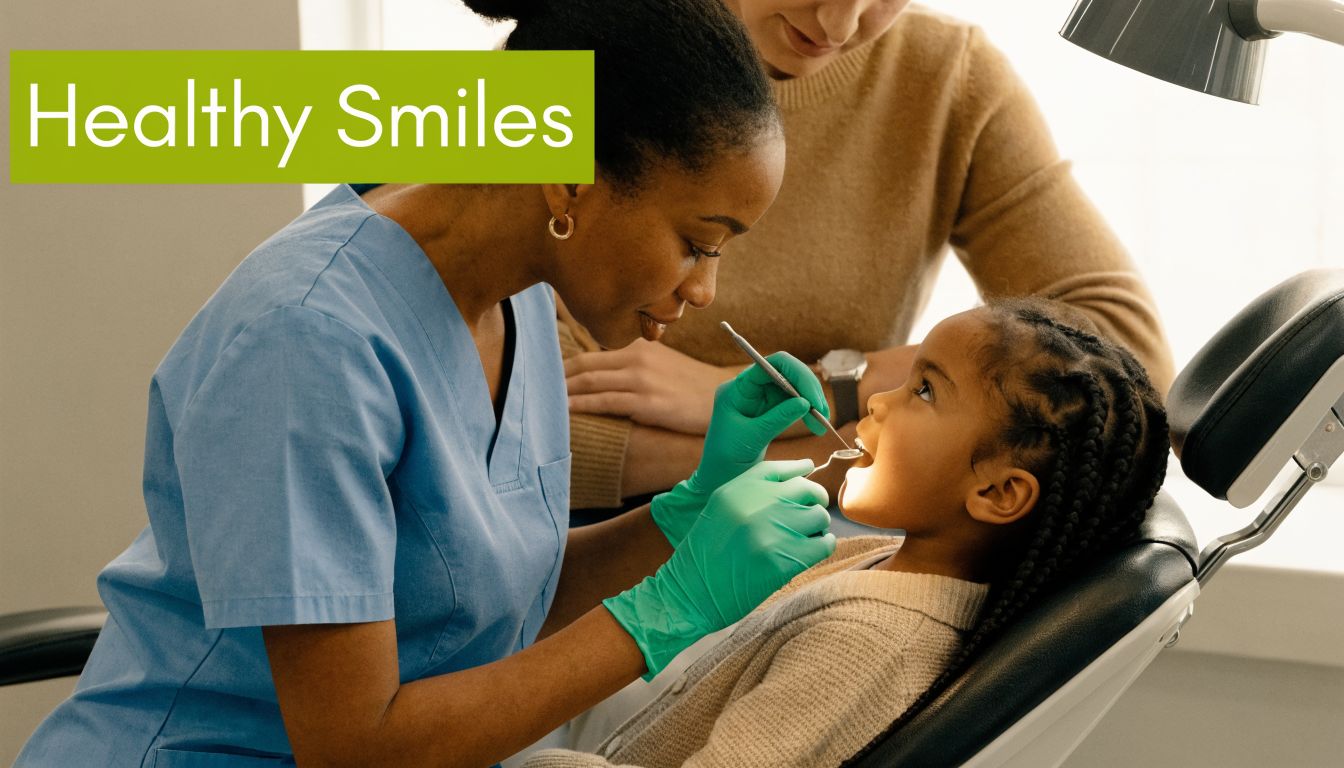
A pediatric dentist is often best understood as a pediatrician for teeth. They focus on infants, children, and teenagers, but the difference isn’t only the age of the patient. It’s the training, the approach, and the ability to care for a mouth that’s still developing.
The extra training matters
Pediatric dentistry requires an additional 2 to 3 years of training beyond standard dental school, with education focused on child development, behavior guidance, and the dental needs of infants through teens, according to the Colorado Academy of Pediatric Dentistry. That same source notes that pediatric-trained dentists show up to 30 to 50 percent better preventive care adherence in young patients.
That extra training has practical value in the chair. A pediatric specialist learns how to assess early eruption patterns, guide oral habits, watch jaw development, and manage common childhood concerns without making the visit feel overwhelming.
What makes pediatric care different day to day
A child at age 1 needs different care than a child at age 7. A teenager needs something different again. Pediatric dentistry adjusts for those stages.
Here’s how that often looks:
| Age stage | What the dentist watches for | Why it matters |
|---|---|---|
| Infants | First teeth, oral habits, feeding concerns | Early guidance can prevent problems before they grow |
| Toddlers and preschoolers | Brushing habits, early decay, bite changes | These years shape comfort, home habits, and cavity risk |
| School-age children | Chewing surfaces, spacing, injury risk | Prevention helps protect function and appearance |
| Teens | Orthodontic concerns, hygiene consistency, sports injuries | Monitoring supports a healthy, confident smile |
Children also communicate differently from adults. Some need simple words. Some need to touch a toothbrush or mirror before it’s used. Some need breaks. Pediatric teams are trained to read those cues and adjust.
Pediatric dentistry isn’t only about fixing teeth. It’s about helping children accept care, trust the process, and build habits that last.
Why this helps dental health and appearance
Baby teeth matter. They help children chew, speak clearly, and hold space for adult teeth. When they’re healthy, children are more comfortable eating and smiling. When they’re neglected, small problems can become painful and affect how permanent teeth come in.
That’s why specialized care isn’t a luxury. It’s part of protecting long-term oral health, appearance, and daily comfort. If your child’s smile is still growing, the provider you choose should understand how growth changes treatment decisions.
Your Child's First Dental Visit What to Expect
The first dental visit often feels bigger to the parent than to the child. Parents worry about tears, resistance, and whether their child will sit still. In a pediatric setting, the visit is usually much simpler and gentler than people expect.
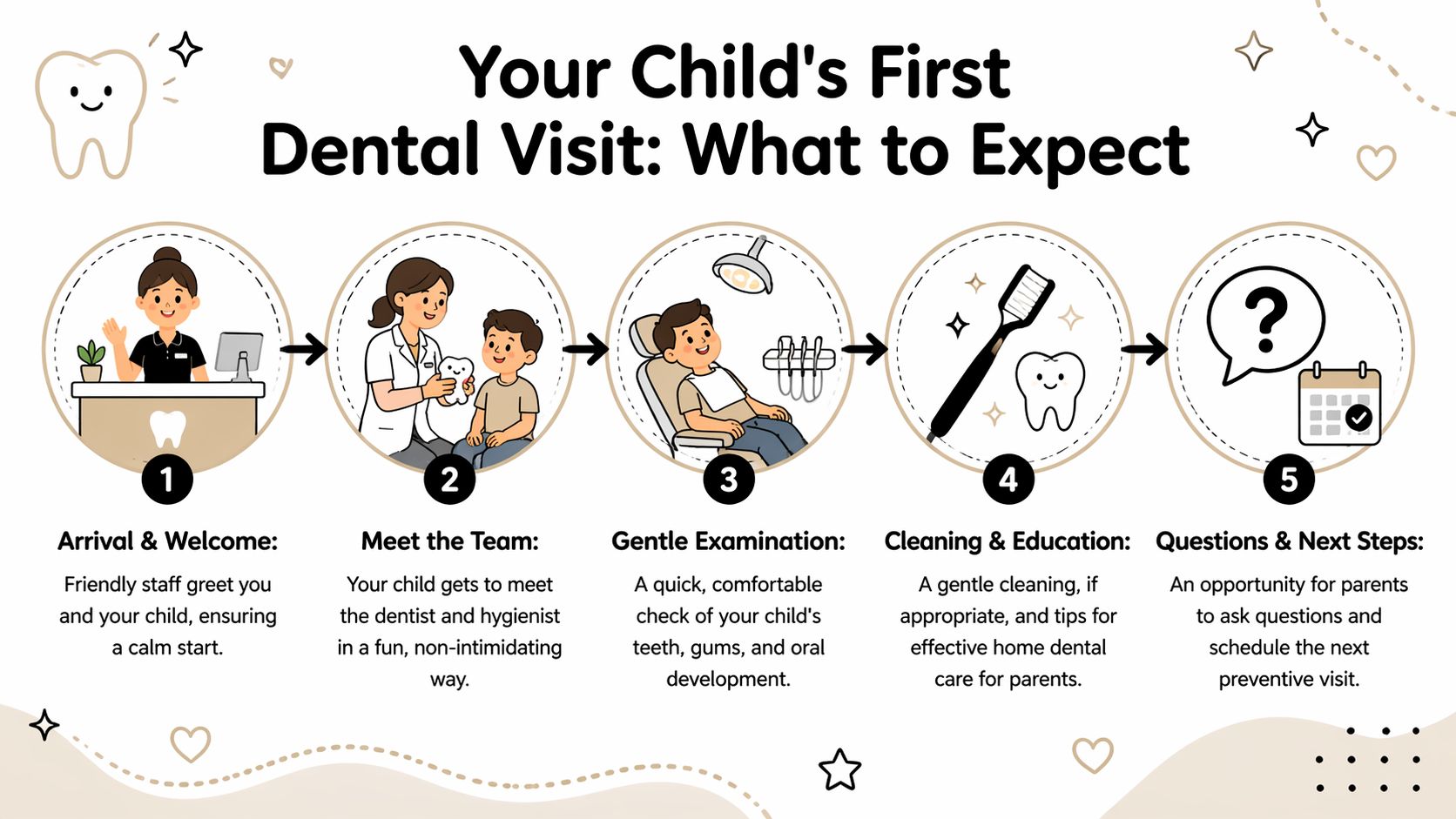
A common first visit begins calmly. You arrive, your child gets used to the room, and the team meets them without rushing. For some children, the exam happens in the chair. For babies, it may happen in a position that feels more secure and familiar.
Why age one matters
The Pediatric Dental Center at Children’s Hospital Colorado reports that 43% of children ages 2 to 11 have experienced dental caries, and children who see a pediatric dentist by age 1 have 40% fewer cavities by age 5. That’s why first visits are encouraged around the first tooth eruption, typically 6 to 12 months.
At that age, the appointment is less about polishing tiny teeth and more about catching problems early. The dentist may look at eruption, gum health, bite development, and any signs of early decay. Parents also get guidance on brushing, feeding habits, and what changes are normal.
If you’re wondering whether your child is teething or if symptoms seem dental-related, this parent-friendly guide on when do babies start teething can help you understand the early timeline before your appointment.
What the visit usually feels like
Many pediatric teams use a simple approach often described as tell, show, do. They explain in child-friendly words, let the child see the tool or action, and then complete the step gently. That sequence lowers surprises, which lowers fear.
A first visit often includes:
- A warm greeting so your child can settle in instead of being rushed straight to treatment
- A short exam of the teeth, gums, tongue, and bite
- A gentle cleaning, if it fits your child’s age and comfort level
- Parent coaching on brushing, snacks, bottles, sippy cups, and habits
- Planning the next visit so dental care becomes routine, not emergency-only
A successful first appointment doesn’t require perfect cooperation. It requires trust, patience, and a child who leaves feeling safe.
For parents who want practical ways to make that visit easier, this guide on how to prepare your child for their first dental visit in Katy gives useful ideas for talking about the appointment at home.
What confuses parents most
Many parents assume baby teeth don’t need much attention because they’ll fall out anyway. That misunderstanding leads to delayed visits and missed prevention. Others think the first appointment should happen only when there’s a problem.
In reality, early visits work best as low-pressure introductions. They help a child learn that dental care is normal, brief, and manageable. That foundation often matters as much as the exam itself.
Common Pediatric Dental Services for Lifelong Health
Parents often hear a list of services without being told what each one does for a child’s smile. The easiest way to understand pediatric treatment is to split it into two groups. One group helps stop problems from starting. The other repairs damage while keeping the child comfortable and the smile looking natural.
The preventive shield
Preventive care protects enamel, lowers cavity risk, and helps children keep a clean, comfortable mouth as they grow.
Some common examples include:
- Regular exams and cleanings help the dentist spot early trouble before your child feels pain or visible damage appears.
- Fluoride treatments strengthen enamel, which is especially useful for children still learning brushing habits.
- Dental sealants cover the grooves on back teeth where food and bacteria easily collect. If your child has deep chewing grooves, a dentist may recommend this protection to reduce the chance of future decay. Parents who want a closer look at this option can read more about dental sealants for kids.
- Habit and diet guidance supports everyday choices at home, including brushing routines, snack patterns, and bottle or pacifier use.
These services don’t change the personality of a smile. They protect it. They help teeth stay strong, clean-looking, and less likely to need repair later.
Gentle repairs that protect appearance and function
When a cavity or injury does happen, pediatric treatment aims to restore the tooth while preserving comfort and a natural look whenever possible.
That may include:
| Service | What problem it solves | Why parents care |
|---|---|---|
| Tooth-colored fillings | Cavities in visible or chewing areas | Repairs damage without a metallic look |
| Crowns for damaged baby teeth | Extensive decay or structural weakness | Restores chewing and helps hold space for adult teeth |
| Monitoring injuries | Chipped, bumped, or painful teeth | Protects function and avoids complications as the mouth develops |
A repaired baby tooth still matters. It supports eating, speech, comfort, and spacing. It also helps children smile without the embarrassment that can come from visible decay or damaged front teeth.
A specialized example parents often overlook
Tongue-tie can affect more than speech later on. In babies, it can interfere with latch and feeding. The Chicago Kids DDS discussion of laser frenectomy describes early intervention for tongue-tie as showing 90% resolution of nursing difficulties, with healing in 24 to 48 hours compared with 7 to 10 days for traditional methods, and notes an 85% reduction in speech articulation disorders by age 5.
That’s a good example of why pediatric care is broader than cavity treatment. Sometimes the issue isn’t a decayed tooth at all. Sometimes the concern is feeding, oral development, or the way the tongue moves.
Some pediatric services are preventive. Some are restorative. The best plans usually do both, protecting what’s healthy and repairing what’s already been affected.
When parents understand the purpose behind each service, treatment feels less mysterious. It becomes easier to see how these small decisions support not only dental health, but also comfort, confidence, and the appearance of a growing smile.
Comfort and Safety Sedation and Emergency Dental Care
Parents often hear the word sedation and immediately think something must be seriously wrong. In pediatric dentistry, sedation is often a comfort and safety tool. It can help a child receive needed care without panic, repeated failed visits, or unnecessary distress.
That matters for children with strong anxiety, special needs, very young age, or treatment that would be difficult to complete while fully awake and upset.
Different levels of support
Not every child needs the same approach. Some children do well with reassurance and slow pacing. Others need more help staying relaxed and still.
A pediatric office may discuss options such as:
- Nitrous oxide for mild relaxation during simpler procedures
- Oral conscious sedation when a child needs a deeper level of calm but still isn’t undergoing hospital-level treatment
- General anesthesia for extensive treatment, special behavioral needs, or situations where completing care safely in one visit is the better choice
The point isn’t to force treatment. The point is to match the environment and support to the child’s needs.
When general anesthesia makes sense
For some families, general anesthesia is the safest and least traumatic path. The Lurie Children’s dentistry information states that treatment under general anesthesia achieves 95 to 98 percent procedure completion rates compared with 40 to 60 percent while awake, and that this one-visit approach can reduce re-treatment needs by 70 percent over two years.
Those numbers matter because unfinished treatment creates its own risks. If a child cannot tolerate care in the chair, delaying treatment can mean more pain, infection, poor sleep, trouble eating, and more complicated repair later.
Choosing sedation doesn’t mean your child failed at the dentist. It means the care team is choosing the safest, most realistic way to protect their health.
Emergency care is part of pediatric care
Children fall. They bite hard foods. They wake up with swollen gums or sudden pain. A dental office that sees children regularly should also be ready for urgent situations.
Call promptly if your child has:
- A knocked or chipped tooth
- Facial swelling or significant tooth pain
- Bleeding that doesn’t stop easily
- A broken restoration or visible damage after a fall
In those moments, parents need calm instructions and timely evaluation. Emergency care isn’t only about stopping pain. It also helps preserve appearance, protect developing teeth, and reduce the chance that a small injury turns into a bigger one.
Why Choose Grand Parkway Smiles for Your Child in Katy
You find a dentist close to home, book the visit, and then a practical question hits you. If my child is nervous, has sensory sensitivities, chips a tooth at practice, or later needs more advanced treatment, will this office still fit our family?
That is often what parents in Katy are really trying to solve. They are not only looking for a child-friendly office. They are looking for a place that makes the next step clear, whether the need is a routine cleaning or something more involved.

That local context matters. Katy families often juggle school schedules, sports, traffic, and the stress of trying to make the right health decision quickly. An office that can care for children within a larger multi-specialty setting can make that process easier to handle because parents spend less time piecing together referrals and more time understanding what their child needs.
Why clear information matters for special needs families
For parents of children with autism, anxiety, developmental differences, or sensory sensitivities, the hardest part is often uncertainty. A website may say an office treats children, but that does not answer the deeper questions a parent has.
Parents usually want practical details. Will the team slow the visit down if a child needs time? Can they explain instruments before using them? Are sedation options discussed in plain language if standard approaches are not enough? Across pediatric dentistry, families often struggle to find this kind of specific information online, and that gap can make it harder to choose care with confidence.
A helpful office explains how it adapts, not just that it does.
What families should ask any local office
If you are comparing options for pediatric dentistry near me, these questions can help you separate general promises from real day-to-day care:
- How do you help a child who is nervous at the first visit? Look for a clear explanation of pacing, language, and how the team introduces treatment.
- What changes can you make for sensory or behavioral needs? Some children need a quieter room, shorter appointments, or a slower start.
- What happens if my child needs more than routine care? Ask how the office handles treatment planning, sedation, and referrals if a case becomes more complex.
- How do you handle dental injuries or urgent problems? This helps you know what support is available when life does not go as planned.
Specific answers matter because they tell you what your family can expect in real life, not just what sounds good on a website.
How all-in-one local care helps in real life
A child’s dental needs rarely stay the same from year to year. One season may be all about cleanings and cavity prevention. Another may include an accident on the playground, orthodontic concerns, or treatment that requires extra support. Pediatric dental care works a bit like a child’s growth chart. It is most useful when the team can follow changes over time and respond early.
Grand Parkway Smiles offers pediatric dentistry in Katy within a broader setting that also includes advanced technology, sedation dentistry, and same-day emergency care. For many families, that setup is practical. It can mean fewer handoffs between offices, one place for records and imaging, and a clearer plan when needs change.
Parents also benefit from consistency. When the same office understands your child’s history, temperament, and previous treatment, decisions often feel less confusing and less rushed.
The right dental home should help a child feel safe enough to return and help a parent feel informed enough to say yes to care. That is often what turns a search for a local pediatric dentist into a long-term relationship that supports healthy habits as a child grows.
Your Pediatric Dentistry Questions Answered
Do you accept dental insurance and offer payment help
Many families need the financial side explained plainly. Grand Parkway Smiles accepts most PPO insurance plans and helps patients understand available benefits before treatment. If a family doesn’t have insurance, or if part of the care isn’t covered, the office also offers an in-house savings plan and financing through third-party lenders. The important part for parents is knowing the estimate before treatment starts, not after.
What if my child has special needs or severe anxiety
This is one of the most important questions to ask before the appointment. Children with sensory sensitivities, developmental differences, or strong fear often need a visit adjusted to their pace. Helpful accommodations can include quiet spaces, a slower introduction to the room and tools, behavior guidance techniques, and sedation options when needed. The most useful offices explain these supports clearly so parents know what to expect.
When should I worry about thumb-sucking or pacifier use
These habits are common in infants and toddlers. Many children stop on their own. If the habit continues and you start noticing bite changes, front teeth moving, or speech concerns, bring it up at your child’s dental visit. Early guidance is usually gentler and easier than waiting until the habit has affected how the teeth line up.
What if my child cries or won’t cooperate
That doesn’t mean the visit was a failure. Young children often need time, repetition, and calm coaching before dental appointments feel normal. A pediatric-focused team expects that. Progress may look like sitting in the chair, opening for a quick exam, or leaving less afraid than they arrived.
If you’re looking for compassionate, practical pediatric dental care in Katy, Grand Parkway Smiles offers a place to start. Whether your child needs a first visit, preventive care, help with anxiety, or evaluation for a more complex issue, the next step is getting clear answers from a team that can meet your child where they are.