Your child just turned two. You may be planning a small celebration, taking new photos, and wondering how your baby suddenly became a running, opinionated little person with a growing vocabulary and a very strong sense of what they do and don't want.
That birthday also tends to bring a practical question to the top of the list. What exactly should happen at the 2 year old check up?
Most parents think first about the pediatric visit, and that makes sense. This age is a major checkpoint for growth, development, and routine screening. But from a pediatric dentist's perspective, there's another milestone happening at the same time. Your child is also at a perfect age to build a dental home, meaning a familiar place for regular dental care, prevention, and calm guidance before a problem starts.
That matters more than many people realize. At two, children are learning routines, forming impressions, and getting their full set of baby teeth into place. A positive early dental experience can help your child see the dentist as a normal part of staying healthy, not as a place they only visit when something hurts. That shift can influence brushing habits, comfort with care, and even the appearance and health of their smile for years.
If you're feeling a little anxious, you're not alone. Parents often worry about crying, cooperation, cavities, fluoride, and whether they're already behind. Usually, they're not. They just need a clear roadmap.
Introduction
A two-year-old's world gets bigger fast. One week they're toddling carefully across the room. The next they're running, climbing, pointing, naming body parts, and insisting on brushing their own teeth with great confidence and very mixed results.
That's why the 2 year old check up is such an important moment. It isn't just another appointment on the calendar. It's a chance to pause and ask, “How is my child growing, developing, and building daily habits?” It's also a chance to look closely at the mouth, because healthy baby teeth support comfort, chewing, speech, and the look of a growing smile.
For many families, the medical visit feels familiar. The dental side can feel less clear. Parents often ask if they should wait until a child is older, or until there's an obvious issue. In my experience, waiting usually makes things harder. A first visit that happens during pain or swelling can teach a child to connect dentistry with fear. A calm visit at age two does the opposite. It builds trust before treatment is ever needed.
Practical rule: The best first dental visit is usually a simple, low-pressure one. It lets your toddler meet the dental team, sit with you, and learn that tooth care is safe and routine.
If you think of this milestone as both a health visit and a smile visit, it becomes easier to see the big picture. You're not checking a box. You're laying the groundwork for a healthy body, a healthy mouth, and a child who grows up feeling comfortable with care.
The Dual Importance of the Two Year Milestone
The pediatric side of the 2 year old check up matters because this age gives doctors a strong snapshot of how a child is growing and learning. At the 24-month well-child visit, the American Academy of Pediatrics says clinicians typically review growth, development, and feeding, and parents complete an autism spectrum disorder screening questionnaire, which is one reason this visit is considered such a foundational screening point according to the AAP checklist for the 24-month visit.
Why pediatricians pay close attention at age two
By this age, many children can do things that are easy for parents to observe at home. The same AAP guidance notes that age-two milestones often include running, walking up a few stairs with or without help, eating with a spoon, pointing to at least two body parts, and playing with more than one toy at the same time. Those everyday skills help a pediatrician compare expected development with what your child is doing.
If you like having a simple way to understand child's developmental journey, it can help to review milestones before the appointment so you can walk in with your own observations ready.
Why the dental side is just as important
Now picture the same day from a different angle. Your toddler has a mouth full of small, newly erupted teeth. They're eating more textures, trying more snacks, resisting help at bedtime, and often drinking from cups, pouches, or still sometimes bottles. That combination makes age two a turning point for dental habits.
A dental check at this age isn't mainly about “finding bad teeth.” It's about prevention. It's where a child learns that someone can count their teeth gently, look at their smile, and talk to their parent without anything scary happening.
Here's the difference it makes:
- Early familiarity helps your child see dental visits as normal.
- Parent coaching helps you spot cavity risks before they become visible.
- Positive language reduces the odds that your child will grow into dental fear.
- Smile development gets attention early, when guidance is easiest to apply.
A calm first impression often matters more than a perfect exam. Trust comes first. Cooperation grows from there.
Many parents feel relief when they realize the first real dental visit is usually brief, gentle, and centered on comfort. For a two-year-old, that's exactly what it should be.
What Happens at the First Real Dental Visit
Parents often expect a miniature version of an adult cleaning. That's usually not what a toddler dental visit looks like. A good visit is much simpler and much kinder to a child's stage of development.
The visit often starts in your lap
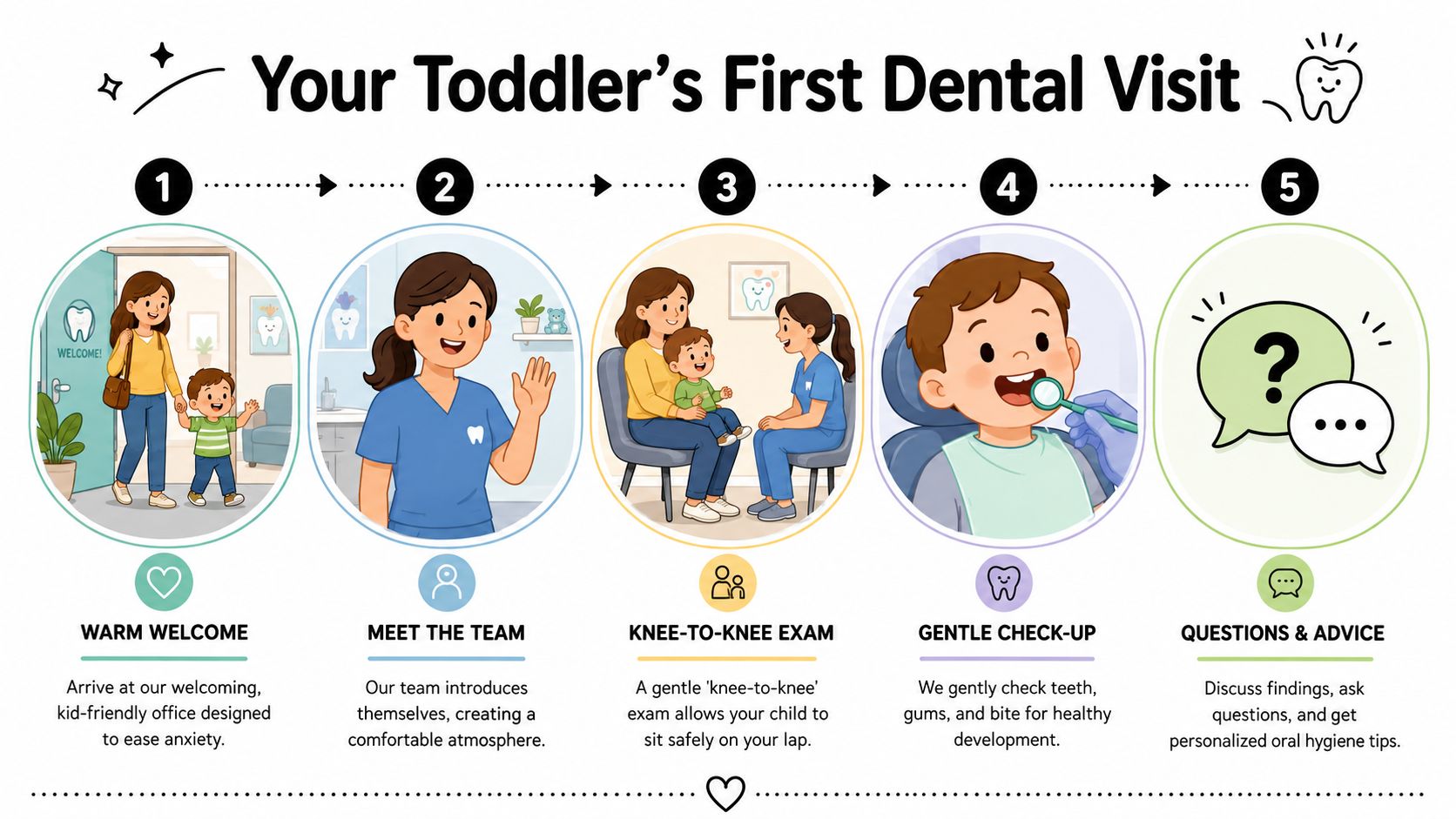
Many pediatric dentists use a knee-to-knee exam for toddlers. You and the dentist sit facing each other, knees touching. Your child starts sitting on your lap facing you, then leans back so the dentist can see into the mouth while your child still feels anchored to you.
That setup works well because it matches how toddlers handle new experiences. They can see your face, hear your voice, and stay close during the exam.
A typical first visit may include:
- Tooth counting so the dentist can see which baby teeth are present and how they're coming in.
- A cavity check with special attention to common trouble spots, including the upper front teeth.
- A bite look to see how the teeth and jaws seem to be lining up as your child grows.
- A gum and tissue exam to make sure the mouth looks healthy overall.
Why this simple visit matters so much
Parents sometimes wonder whether a quick “look” can really matter. It can. Preventive care works best when we catch patterns early. A small area of plaque, enamel weakness, or a snack habit that raises cavity risk is much easier to address now than after a painful toothache.
For toddlers, the science of prevention is practical. Baby teeth have thinner enamel than permanent teeth. That means they can be more vulnerable to decay, and once a cavity gets started, things can change faster than parents expect.
If you want practical ideas for making the day smoother, this guide on how to prepare your child for their first dental visit in Katy gives a helpful parent-friendly checklist.
A good first visit also includes time for your questions. You might ask about brushing battles, thumb sucking, snacks, sippy cups, lip ties, teething, or whether your child's bite looks typical. Those conversations are part of prevention too.
For some families, it helps to bring a comfort item or schedule the visit when the child is usually rested and fed. Even the toys you use at home can support oral and sensory development in indirect ways, so thoughtful resources like Grow With Me's toy selection advice can be useful if you're trying to choose age-appropriate play that supports coordination and routine.
Key Preventive Care for a Healthy Toddler Smile
When parents hear “preventive care,” they sometimes think it means doing a lot. Usually it means doing a few smart things consistently.
Fluoride varnish and why it helps
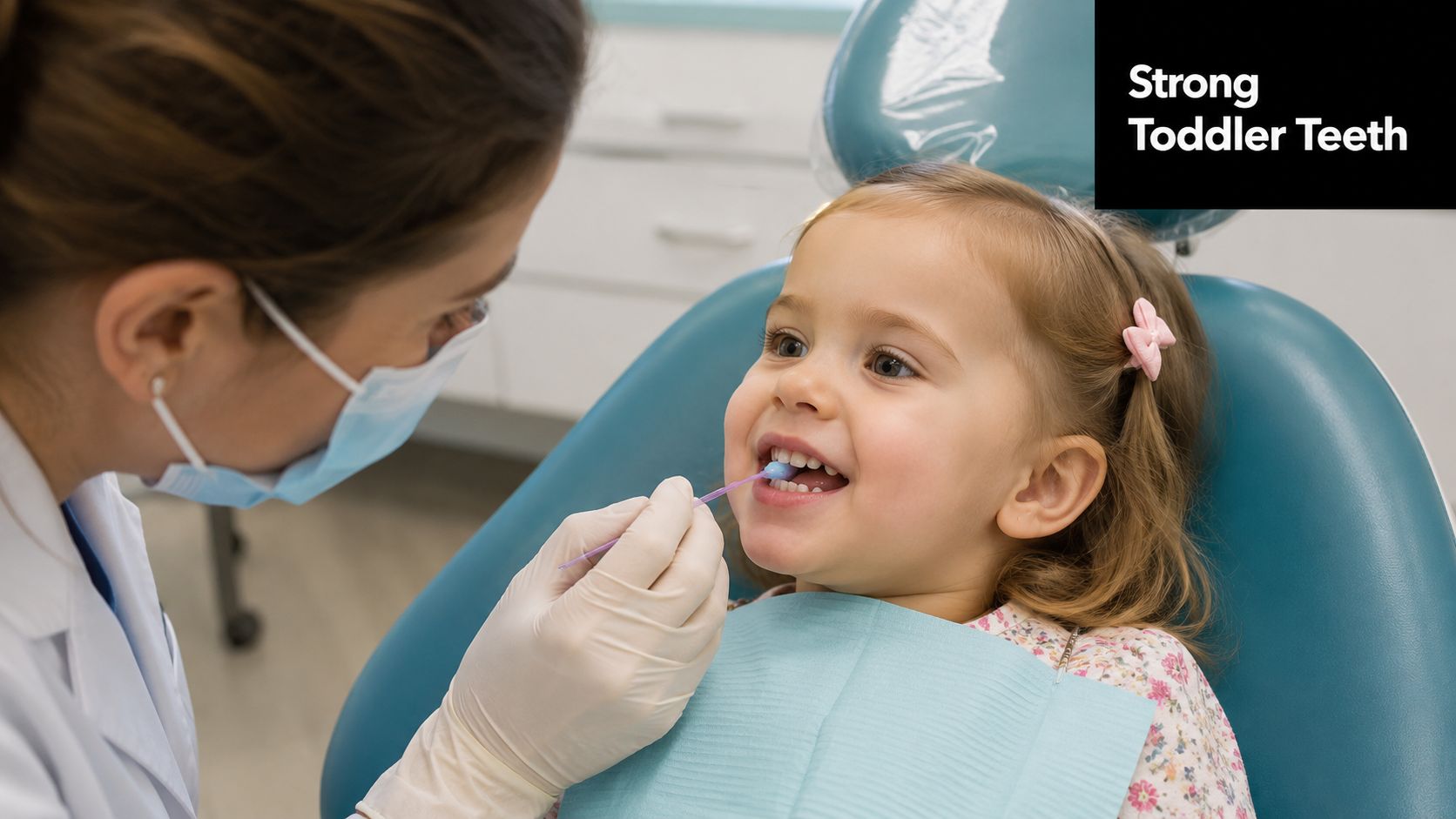
Fluoride varnish is a sticky, painted-on coating placed on the teeth to help strengthen enamel. I often describe it to parents as a light shield for vulnerable teeth. It doesn't replace brushing or diet changes, but it gives enamel extra support.
Authoritative pediatric guidance includes dental exams every 6 months and fluoride varnish every 3 to 6 months for children at increased risk of cavities, which highlights its role in preventing early childhood tooth decay according to Nationwide Children's screening guidance from birth to age 2.
Parents also ask if varnish is safe. In a dental setting, it's applied in a small amount and placed directly on the teeth, where the benefit is targeted.
Prevention at home works best when it feels doable
Try building your routine around a few repeatable habits:
- Brush twice a day with a small, soft-bristled toothbrush.
- Use a tiny smear of fluoride toothpaste. For toddlers, less is more.
- Offer water between meals instead of constant sipping on sweet drinks.
- Keep snacks structured rather than grazing all day.
- Choose tooth-friendly foods like cheese and crunchy vegetables when you can.
If you want extra ideas for daily routines, this guide to healthy habits for children's teeth can be a useful companion for parents.
Some children also benefit from a more individualized cavity-prevention plan. If you'd like a deeper overview of day-to-day risk reduction, this article on how to prevent cavities in toddlers covers common trouble spots in plain language.
Think of prevention as stacking small wins. A tiny smear of toothpaste, fewer sugary sips, and regular exams can change the path of your child's smile.
Sealants usually become part of the conversation later, especially when permanent molars arrive, but the mindset begins now. Protect the teeth early, and life gets easier later.
Building Healthy Oral Hygiene Habits at Home
Home care with a two-year-old is rarely neat. That's normal. The goal isn't a picture-perfect routine. The goal is a routine that happens every day, even when your child wiggles, laughs, protests, or insists on “doing it myself.”
Make brushing predictable, not negotiable
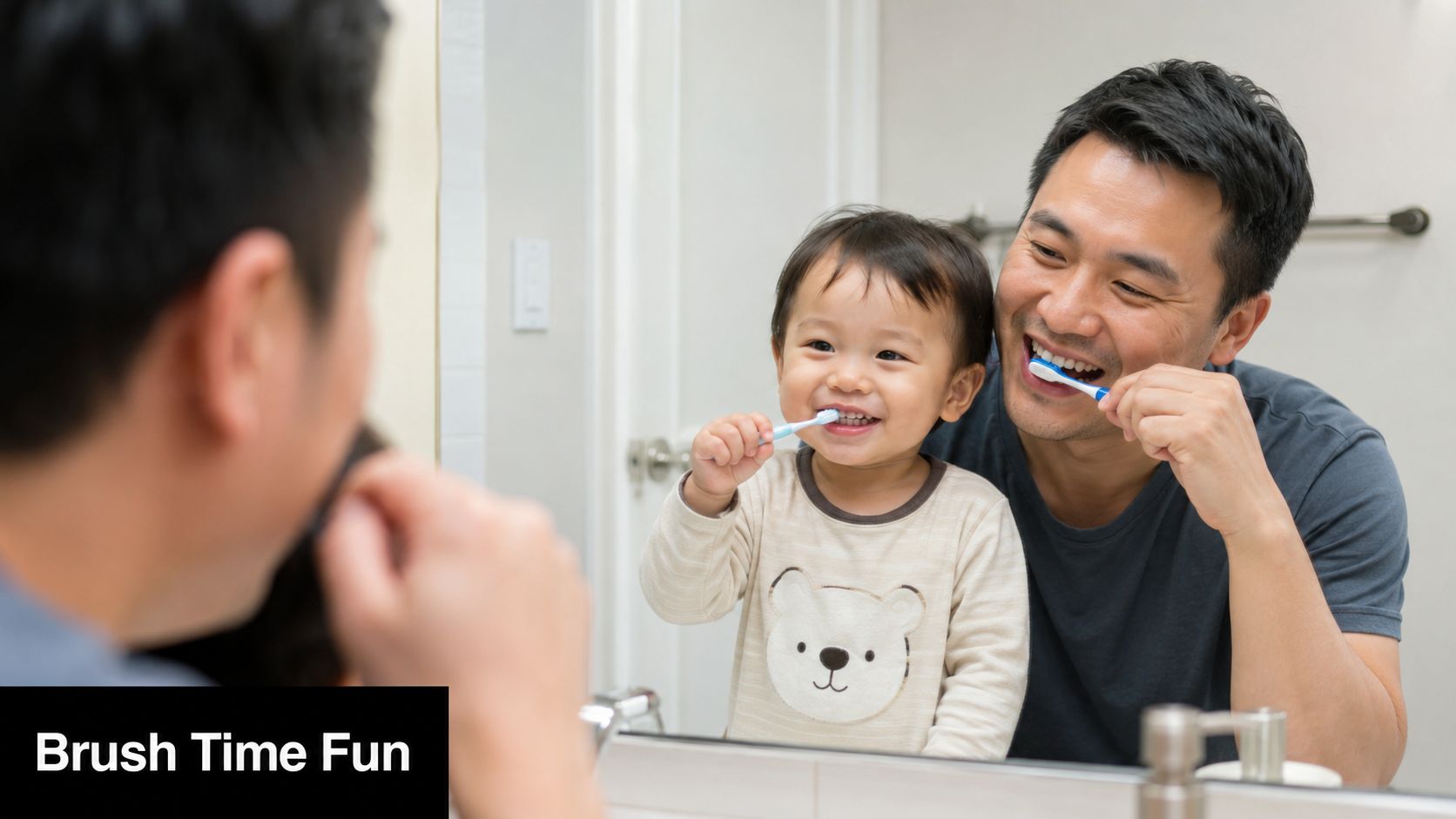
Toddlers do well when brushing follows the same pattern each day. A simple rhythm helps. Brush after breakfast. Brush before bed. Use the same stool, same song, same toothbrush spot.
A lot of parents get better cooperation when they let the child start and the parent finish. That preserves the child's sense of control without giving up the quality of the brushing.
Try this routine:
- Let your toddler hold the brush first for a short turn.
- Say what comes next in calm, simple language. “Now it's my turn to help the sugar bugs off.”
- Angle the brush gently along the teeth and gumline.
- Lift the lip to see the front teeth clearly, especially on top.
- End the same way each time, with praise, a hug, or a sticker.
Food habits shape the smile you see
Many cavities in toddlers aren't about one candy moment. They're about repeated exposure. Frequent snacking, sipping sweet drinks, and bedtime milk in a bottle can keep teeth bathed in sugar longer than parents realize.
A few swaps can help:
| Habit that raises risk | Easier alternative |
|---|---|
| Grazing through the day | Set snack times |
| Juice or sweet drinks in cups | Water between meals |
| Bedtime bottle with milk | Brush, then water only |
| Sticky processed snacks | Cheese, fruit, or crunchy vegetables |
Prepare for dental visits through everyday routines
What helps at home often helps at the dentist too. If your child is used to you lifting the lip, counting teeth, and looking inside the mouth, a checkup feels less strange.
Use simple games such as:
- Tooth counting during bath time
- Stuffed animal checkups with a toy toothbrush
- Mirror practice so your child sees their own smile
- Choice within limits like picking the toothbrush color
That combination of emotional preparation and daily logistics usually works better than trying to reason a toddler into cooperation in the moment.
How Grand Parkway Smiles Creates a Kid-Friendly Experience
A two-year-old often walks into a dental office with one big question, even if they cannot say it yet. “Is this place safe?” The answer comes less from words and more from the room, the pacing, and how the team responds to normal toddler behavior.

For parents, this visit is doing two jobs at once. It checks today's teeth and gums, and it starts the child's dental home. A dental home is the place your family can return to for routine care, questions, injuries, and changes as your child grows. That relationship matters because toddlers learn from repetition. If early visits feel calm and predictable, later visits usually feel more familiar too.
What helps a toddler feel safe
Young children do best with simple, concrete steps. A pediatric-friendly team often uses tell-show-do. That method works a lot like easing a child into bath water. First you explain in plain language, then you let them see or hear what will happen, then you do the step gently and briefly.
The wording matters too. Toddlers do not need technical terms. They need language that sounds clear and nonthreatening. A dentist might count teeth out loud, describe a mirror as a tooth checker, or keep instructions short enough for a child to follow in the moment.
A kid-friendly visit often includes:
- A slow start so the child has a moment to look around and settle
- Parent participation during the exam and conversation
- Expectations that fit toddler behavior, including wiggles, tears, or needing breaks
- A clear review for parents about what was seen, what is normal, and what to watch for at home
That approach helps build trust. It also gives parents something just as important. A clearer sense of why each step is being done.
When extra support may be part of the plan
Some two-year-olds are comfortable with a quick knee-to-knee or lap exam. Others are scared, sore, overtired, or need more than a simple preventive visit. In those cases, having a practice that can offer added support can make treatment safer and less stressful for everyone.
Grand Parkway Smiles includes pediatric dental care within a family practice setting. The office also offers services such as sedation dentistry and same-day emergency care. For parents, that can be helpful because the same dental home may continue to fit their child if needs change from a routine checkup to urgent care or more involved treatment.
The goal is not a perfectly still toddler. The goal is a positive pattern. Over time, that pattern can shape how a child feels about dental care for years.
When to Seek Urgent Dental Care for Your Toddler
Most dental visits at this age are routine. Some situations need faster action. When a toddler falls or suddenly develops swelling, parents often feel panicked. A simple checklist helps.
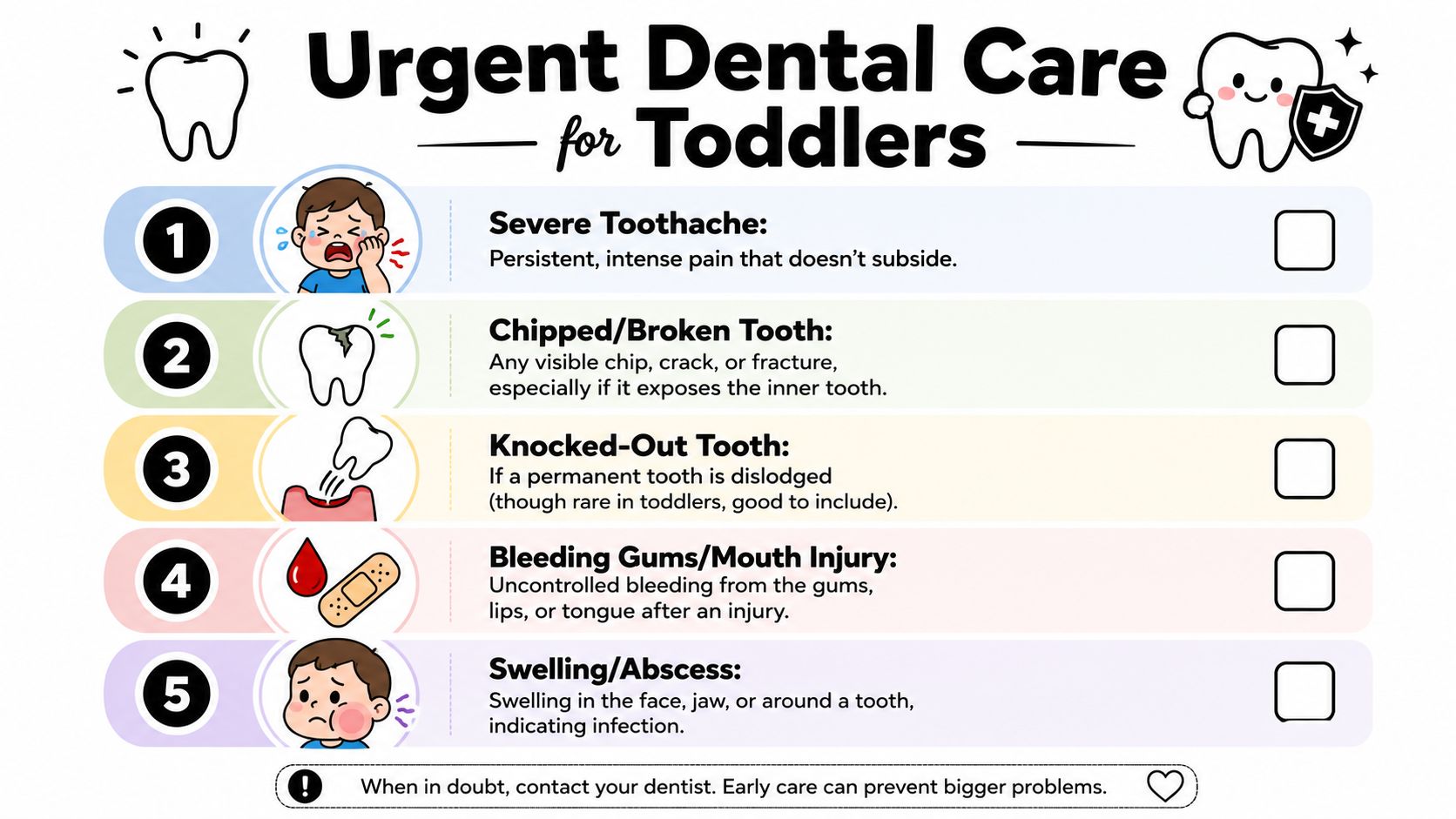
Situations that deserve an immediate call
A persistent toothache
If your child keeps pointing to the same tooth, wakes up crying, or refuses to chew on one side, call the dentist. Rinse the mouth gently and avoid very hot or very cold foods until your child is seen.A chipped or broken tooth
Look for bleeding, sharp edges, or changes in color. Save any tooth fragment if you can and contact the dental office for guidance.A knocked-out tooth after a fall
In toddlers this is often a baby tooth, not a permanent tooth. Don't try to force it back in. If a permanent tooth is ever involved, keeping it moist, including in milk, is important while you seek urgent dental care.Bleeding that won't stop
For lip, gum, or tongue injuries, apply gentle pressure with a clean cloth or gauze. If bleeding keeps going, call right away.Facial swelling or gum swelling
Swelling can mean infection. This deserves prompt attention, especially if your child seems uncomfortable, has trouble eating, or the area looks puffy.
One calm step at a time
If there's an injury, start with comfort. Hold your child, check for mouth bleeding, and look for obvious tooth changes. Then call the dentist and describe what happened as clearly as you can.
Parents don't need to diagnose the problem first. They just need to notice that something looks or feels wrong and ask for help quickly.
Frequently Asked Questions About Toddler Dental Care
Parents usually leave the appointment with one or two lingering questions. These are some of the most common ones I hear.
What if my toddler cries and won't open their mouth
That's very normal. Two-year-olds often cry because the setting is unfamiliar, not because anything painful is happening. Pediatric dental teams expect that. We use short visits, lap exams, playful language, and lots of patience.
A crying child can still have a successful visit. Sometimes success means we looked, counted teeth, answered your questions, and made the next visit easier.
They're just baby teeth, so why do they matter so much
Baby teeth do important work every day. They help your child bite and chew comfortably. They support speech development. They also help guide the space for future adult teeth.
They matter for appearance too. Healthy front teeth support a natural smile and help children eat, speak, and interact without discomfort. When baby teeth are lost too early because of decay, it can create problems that are harder to manage later.
When do the two-year molars come in
Parents often use the phrase “two-year molars” because these back teeth commonly appear around this stage. Some toddlers get them with only mild fussiness. Others drool more, chew on everything, or have sleep disruption for a while.
You can usually help with:
- Cold washcloths or teething toys
- Gentle gum rubbing with a clean finger
- Simple, softer foods if chewing seems sore
- Extra patience with brushing while the area is tender
If the gums look very swollen, your child seems unusually distressed, or you're not sure whether it's teething or a dental problem, call your dentist.
Is fluoride in toothpaste and water safe for my toddler
Used appropriately, fluoride is a standard part of cavity prevention. For toddlers, the key is the amount. A small smear of fluoride toothpaste is enough. Parents should apply it and supervise brushing.
That balance matters. Too much toothpaste isn't helpful, but the right tiny amount supports enamel and helps protect against cavities.
What if I feel like we're already behind
You probably aren't. Many parents come in feeling guilty because brushing has been inconsistent or because they waited longer than they intended for the first dental visit. What matters most is starting now.
A dentist doesn't need a perfect history to help your child. We just need a current picture of the teeth, habits, and risks so we can guide you forward.
How can I make the next visit easier
Keep the message simple and upbeat. Avoid telling your child “it won't hurt,” because that can introduce fear they didn't have. Instead, say the dentist will count their teeth and help keep their smile healthy.
Role-play at home can help too. Count stuffed animal teeth, let your child practice opening wide, and schedule the visit when they're usually rested.
If your child is due for a 2 year old check up and you want support for the dental side of that milestone, Grand Parkway Smiles is a local option for families in Katy and the greater Houston area seeking pediatric dental care, preventive guidance, and help with routine or urgent dental needs. A calm early visit can make future care easier for both you and your child.