
You're probably doing what many Katy families do when dental care moves from “sometime soon” to “we really need to choose a dentist.” Maybe your child is due for a cleaning, you've been ignoring a sensitive tooth, or a parent in the family needs more than routine care and you're realizing that not every office handles complex treatment in-house.
That's where the search for a family dentist in Katy, TX gets more complicated than it first appears.
You don't just need a place that can clean teeth. You need a dental home that protects oral health, improves appearance when needed, helps anxious patients feel safe, and can keep up with your family as needs change over time. For one person, that may mean sealants or a filling. For another, it may mean a crown, root canal, dentures, implant planning, or a full-mouth restoration that brings back normal chewing and a confident smile.
Choosing the Right Dental Home for Your Family in Katy
Choosing a dentist in Katy takes more thought than many people expect. In Katy, Texas, there are more than 50 practicing dentists serving the local community, making the choice of a long-term dental partner a significant decision for families seeking consistent, high-quality care according to Delta Dental's Katy provider directory.
That kind of choice is good for patients, but it also means you need a clear filter. The closest office isn't always the right fit. A family dentist should help protect dental health today and still be equipped to handle more involved needs later, including cosmetic improvements, restorative work, and age-related concerns.
Start with the questions that matter
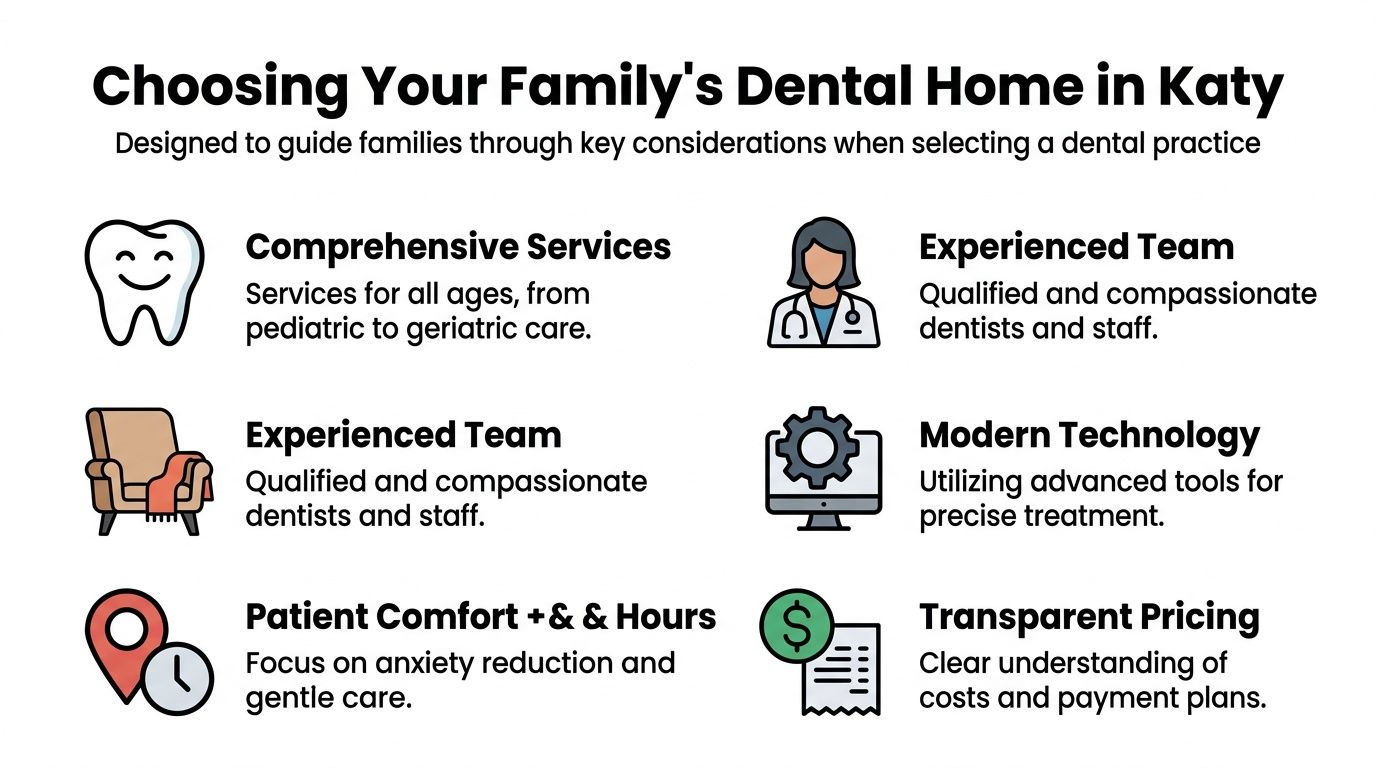
When families compare offices, I suggest asking practical questions instead of focusing only on a website gallery or a coupon.
Can this office care for all ages?
A true family dental home should make room for children, teens, adults, and older adults. That matters because oral health changes with age. A child may need habit coaching and prevention, while a senior may need more advanced reconstruction to restore bite strength and comfort.How do they handle fear and comfort?
Many people avoid treatment because of bad past experiences. If an office can't clearly explain comfort options, that's a problem.Do they use modern diagnostics?
Better imaging and planning tools often mean more precise treatment, less guesswork, and more predictable healing.Will costs be explained clearly?
Families need treatment plans they can understand, not vague estimates.
Practical rule: Choose the office that can explain care in plain language. Clear explanations usually reflect organized, patient-centered care.
Look beyond routine cleanings
A lot of dental offices can handle exams and basic fillings. The key difference appears when your family needs more than routine maintenance.
For example, some families eventually need a dentist who can coordinate pediatric care, root canal treatment, oral surgery, cosmetic improvements, implant planning, and senior-focused reconstruction without sending patients all over town. That kind of continuity makes treatment easier to follow and easier to trust.
Access matters, too. If you're interested in broader healthcare ideas around scheduling, communication, and convenience, this overview of improving patient access to care gives a useful patient-centered lens for thinking about what accessibility should look like in a modern practice.
What a dental home should feel like
A strong family practice should offer more than services. It should give you confidence.
Look for these signs:
- Consistent care: The team tracks changes in your teeth, gums, bite, and habits over time.
- Age-appropriate treatment: Kids need a different approach than adults, and seniors often need more specialized planning.
- Comfortable communication: You should never feel rushed when asking about pain, appearance, or recovery.
- Long-term thinking: Good dentists don't just fix the current problem. They help prevent the next one.
That's the standard families should use when choosing a family dentist in Katy, TX.
Comprehensive Dental Services for Every Generation
The easiest way to understand family dentistry is to picture one household with very different needs.
A young child may need a gentle first visit that builds trust. A teenager may want straighter teeth or advice about protecting enamel during sports and snacking. A parent may need a worn filling replaced before it turns into a larger problem. A grandparent may want to eat comfortably again and stop hiding their smile in photos.
A real family practice should be able to care for all of them.

For children and teens
For kids, the first goal isn't just a clean mouth. It's a positive relationship with dental care. That means slow introductions, simple explanations, and prevention-focused visits that help children learn what healthy teeth feel like.
Teens often bring a different set of concerns. Some are focused on appearance. Others have crowding, wisdom tooth concerns, or sports-related risks. At this stage, family dentistry should protect both dental health and confidence. A healthy smile is easier to maintain when a patient understands how daily habits affect enamel, gum health, and bite development.
A child who feels safe at the dentist is more likely to become an adult who doesn't delay care.
Families looking for a broader overview of preventive habits across life stages may find this guide on family dental care and healthy habits for all ages in Katy helpful.
For busy adults
Adults often postpone care because they're managing everyone else's schedule first. Then a small issue becomes a painful one.
That's where restorative dentistry matters. Family dentists provide restorative treatments such as fillings, crowns, and bridges, which are clinically designed to restore the function of damaged teeth and prevent further oral health deterioration, supporting a healthy smile for all ages, as described by Castle Dental's family dentistry overview in Katy.
Here's what that means in plain language:
- Fillings help stop decay before it spreads deeper into the tooth.
- Crowns protect a weakened tooth so you can chew comfortably again.
- Bridges replace missing teeth and help maintain bite balance.
Those treatments aren't only about fixing damage. They protect chewing ability, speech, smile appearance, and the stability of surrounding teeth.
For adults who want cosmetic improvement
Some patients are healthy dentally but unhappy with how their smile looks. Staining, uneven edges, or old dental work can make people smile less often, even when their teeth function well.
Cosmetic care can improve appearance quickly and conservatively in the right case. For example, Family Dentist Katy notes that teeth whitening procedures offered by Katy family dentists can produce a brighter smile in just one weekend visit, which appeals to patients who want visible improvement without a long treatment process.
That kind of care may seem optional, but appearance affects behavior. When people like how their smile looks, they often become more motivated to maintain it.
For seniors with more complex needs
Often, many “family dentist” discussions become too shallow.
Older adults often deal with dry mouth, root decay, worn teeth, missing teeth, older dental work that's failing, and bite changes that affect eating and speech. Some also need a coordinated plan that involves prosthodontic, endodontic, and surgical support rather than a simple cleaning-and-filling model.
A family-centered practice can't ignore that reality. When a senior patient needs dentures, implant-supported replacement, full-mouth rehabilitation, or treatment sequencing across several disciplines, convenience matters. So does continuity.
One option in Katy that offers this broader model is Grand Parkway Smiles, which provides general, cosmetic, restorative, and surgical care under one roof for patients at different life stages, including children, adults, and seniors with more complex reconstruction needs.
Advanced Technology for Precise and Gentle Dental Care
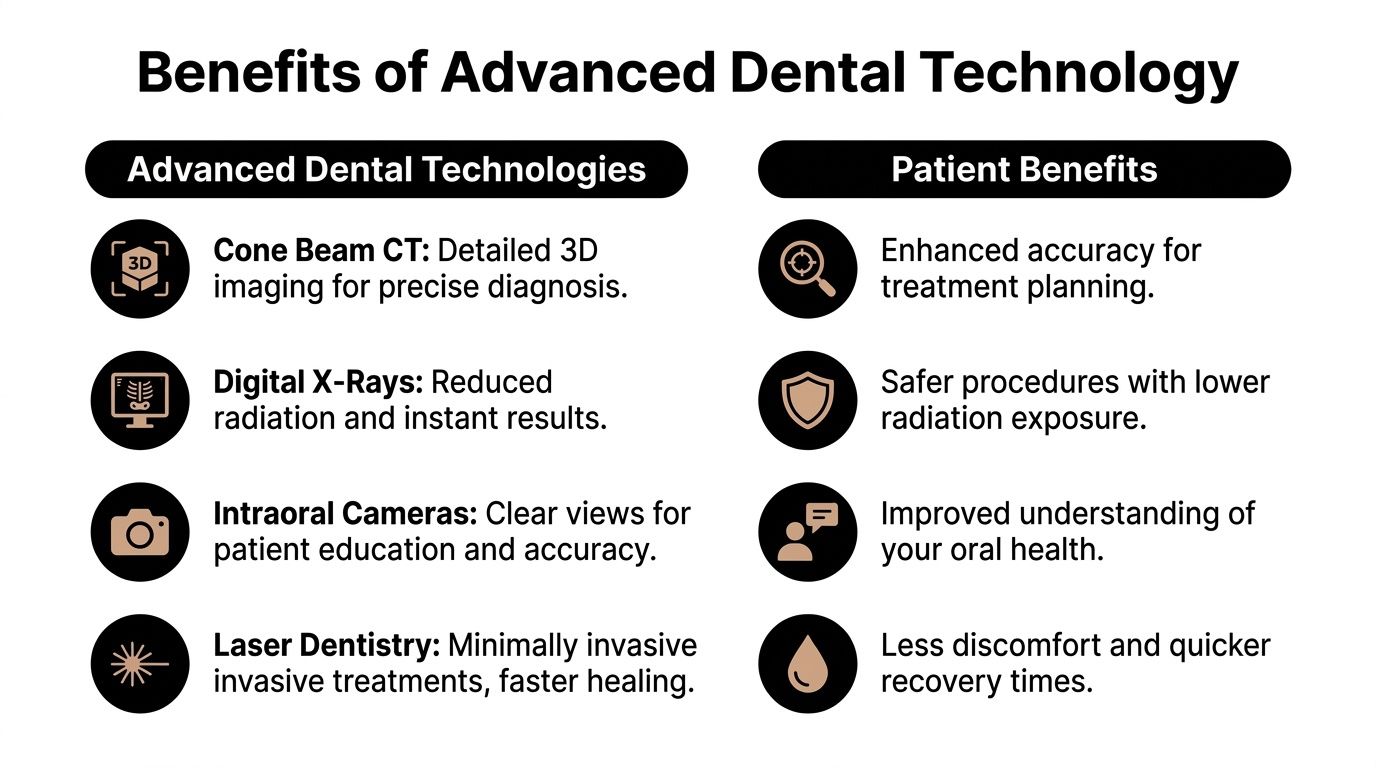
Dental technology can sound intimidating until its value to patients is understood. Patients don't want “advanced equipment” for its own sake. They want treatment that is more accurate, gentler on the mouth, and less likely to create surprises.
That's why modern imaging matters.
Why 3D imaging changes treatment planning
Traditional two-dimensional images have limits. They can be useful, but they don't show the jaw with the same depth and clarity as a 3D scan.
According to KTX Smiles' overview of advanced dental technology, Cone Beam Computed Tomography (CBCT) generates 3D data of the jaw within one minute with 90% less radiation than conventional X-rays, enabling clinicians to visualize anatomical structures that are invisible in 2D imaging and facilitating precise implant planning that reduces surgical complications and healing time.
That matters because treatment quality depends on what the dentist can see before starting.
A CBCT scan can help with:
- Implant planning: It shows bone shape and nearby structures more clearly.
- Surgical safety: Better visualization supports more precise positioning.
- Recovery: More accurate planning can reduce unnecessary tissue trauma.
- Long-term function: Proper placement helps the final restoration feel and work more naturally.
Better technology should feel better to the patient
Patients usually experience technology through outcomes, not machines.
If a crown fits more accurately, you notice it when your bite feels natural. If imaging helps a procedure stay conservative, you notice it in comfort and healing. If the team can show you what's happening inside your mouth, treatment starts to make more sense.
Better diagnostics don't replace clinical judgment. They give the dentist a clearer map before treatment begins.
Precision matters in complex cases
This becomes especially important in implants and full-arch reconstruction. The more complex the case, the less room there is for guesswork.
Artaza Dental's implant process overview explains that computer-guided and robotic implant surgery systems such as the YOMI® Robotic System can provide sub-millimeter accuracy in implant placement, supporting minimally invasive procedures and more precise implant positioning. For patients, the practical takeaway is simple. Precision helps protect health, supports appearance, and improves how the final teeth function under daily chewing forces.
Even in routine family dentistry, the same principle applies. Better visualization leads to better planning, and better planning often leads to a smoother experience.
Overcoming Dental Anxiety with Comfortable Sedation Options
Fear keeps many patients from getting treatment they already know they need. Some worry about pain. Others worry about losing control, hearing sounds they don't like, or reliving a bad experience from years ago.
That fear is common, and it deserves a real solution.
Why sedation options matter
According to the Texas Department of State Health Services dental resource page, 36% of adults in Texas report significant dental fear, and the availability of advanced IV anesthesia is important because it supports pain-minimized and anxiety-free treatment for complex procedures such as wisdom teeth removal or root canals.
That number reflects something I see all the time. Many anxious patients aren't avoiding dental care because they don't value their health. They're avoiding it because fear feels stronger than intention.
Different levels of support
Not every patient needs the same comfort approach.
A mildly nervous patient may do well with a calm environment, clear communication, and a lighter sedation option. A patient with stronger anxiety, a long procedure, or a surgical treatment may need IV sedation so they can relax more while the dental team works efficiently.
Here's the key distinction:
- Mild anxiety support helps take the edge off
- IV sedation is better suited to patients who fear treatment intensely or need more involved care
If you've ever canceled a dental appointment because your heart was racing the night before, your anxiety is significant enough to discuss sedation.
Anxiety relief protects oral health
Sedation isn't just about comfort in the chair. It protects your long-term oral health because it makes care possible.
When patients can complete needed treatment, they're less likely to let decay progress, less likely to live with chronic pain, and more likely to restore the appearance and function of their smile before problems grow larger. For children and adults alike, a more comfortable experience can also reshape how they feel about future visits.
Your First Visit and Handling Dental Emergencies
The first appointment should feel organized, not mysterious. Most families want the same basic answers. What happens first, how long does it take, will anyone explain the findings clearly, and what if we have an urgent problem later?
A good first visit usually starts with conversation. The team reviews your health history, listens to your concerns, and examines your teeth, gums, and bite. If something is bothering you, the appointment shouldn't feel like a generic cleaning visit. It should feel specific to what your mouth needs right now.
What to expect as a new patient
For a routine first visit, individuals can expect a sequence like this:
- Health review: Your medications, symptoms, past dental experiences, and priorities matter.
- Thorough exam: The dentist checks for decay, gum concerns, wear, bite issues, and damaged restorations.
- Imaging if needed: Diagnostics help confirm what can't be fully seen during the visual exam.
- Clear recommendations: You should leave knowing what's healthy, what needs attention, and what can wait.
This is especially helpful for families balancing very different concerns in one office, such as a child's preventive care, a parent's cracked tooth, and an older adult's missing teeth.
When a dental problem can't wait
Emergencies create a different kind of stress. A sudden toothache, swelling, a broken tooth, or an injury can interrupt work, school, meals, and sleep almost immediately.
That's why scheduling flexibility matters. Villagio Family and Cosmetic Dental shows the kind of access many families now look for in Katy, with night hours until 8:00 PM and full weekend availability at some practices. For patients, the larger point is that family dental care should fit real life. Problems don't always happen during a quiet weekday morning.
How families should respond
If you think you're dealing with a dental emergency, keep the next step simple:
| Situation | What to do first |
|---|---|
| Toothache | Call right away and describe the pain clearly |
| Broken tooth | Save any pieces if possible and seek prompt evaluation |
| Swelling | Treat it as urgent and contact a dentist immediately |
| Injury | Get dental help quickly, especially if function or appearance changed |
Fast evaluation helps protect both health and appearance. In many cases, timely care can mean the difference between a smaller fix and a more involved repair.
Making Quality Care Affordable with Flexible Payment Options
Cost worries stop many families before treatment even begins. That's understandable. People want healthy teeth and a better-looking smile, but they also need a realistic path to paying for care.
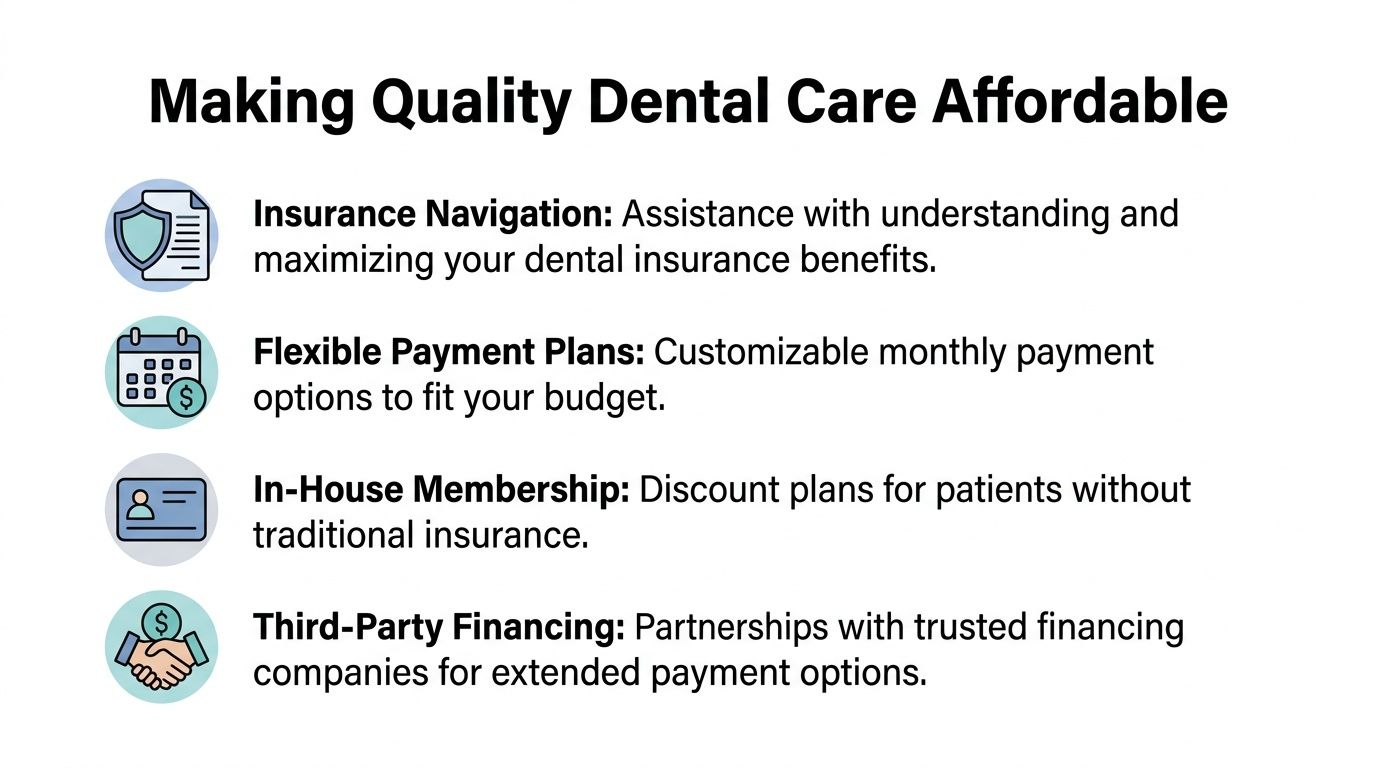
The good news is that affordability doesn't depend on just one route. Most families use some combination of insurance, office support, membership-style plans, or financing.
If you have dental insurance
Start by asking the office to review your benefits before treatment begins. That won't answer every question perfectly, but it can make your expected portion easier to understand.
A helpful front desk team should be able to walk you through:
- Preventive coverage basics: Cleanings and exams are often handled differently than larger procedures
- Restorative categories: Fillings, crowns, and similar services may involve different patient portions
- Treatment timing: In some cases, spacing treatment can make planning easier
The main goal is clarity. Patients shouldn't feel like they need to decode insurance language on their own.
If you don't have insurance
Many families assume quality dental care is out of reach. It often isn't.
According to Katy Family Dentists' payment options page, Dental Savings Plans provide access to deductible-free, affordable oral health care through an annual membership, making essential preventive and restorative treatments financially accessible for families without dental insurance.
That kind of plan can be a practical fit for households that want ongoing maintenance and occasional restorative care without the structure of traditional insurance.
For a deeper explanation of how benefits, savings plans, and financing can work together, this article on understanding dental insurance and financing options at Grand Parkway Smiles is a useful starting point.
Cost discussions should happen before treatment starts, not after you're already committed.
Other payment paths to ask about
Some families also prefer phased treatment or third-party financing when larger care plans are involved.
Ask whether the office offers:
- Monthly payment arrangements: Helpful when treatment involves several visits
- Third-party financing: Useful for bigger restorative or cosmetic plans
- Written estimates: Easier to review at home and compare with your budget
Affordable care doesn't mean cutting corners. It means building a plan that lets you protect your teeth, restore function, and improve your smile without financial confusion.
Frequently Asked Questions About Family Dentistry in Katy
Do I really need a family dentist, or can each person go to a different office?
You can split care across offices, but many families find it harder to manage. One dental home makes records, scheduling, treatment planning, and follow-up simpler. It also helps when patterns run across generations, such as crowding, grinding, or recurring restorative needs.
What makes one Katy office different from another?
A lot of practices offer routine cleanings and exams. The bigger difference is whether the office can handle life-stage changes and more advanced needs without turning every complex case into an outside referral.
That matters for seniors in particular. Some local content doesn't address the gap in geriatric-focused family care very well, even though older adults often need more than basic maintenance. Village Center Dentistry's discussion of older adults and family dentistry highlights this underserved area, including the importance of multidisciplinary care for seniors with issues such as root decay, mobility concerns, and more involved restoration needs.
If I'm nervous, should I wait until the problem gets worse?
No. Anxiety usually shrinks when patients understand their options and address problems early. Waiting often gives a cavity, crack, or infection more time to worsen, which can make treatment more involved.
If fear has kept you away, say that directly when you call. A good office won't treat that as unusual.
Can a family dentist also help with appearance, not just health?
Yes. Family dentistry isn't limited to disease treatment. It also includes care that improves the appearance of a smile, such as whitening, replacing missing teeth, repairing worn or broken teeth, and restoring natural-looking function. Health and appearance often overlap. A tooth that looks better is often easier to protect when it's properly restored.
Will I need referrals for complex treatment?
Sometimes referrals are still appropriate, but many patients prefer a practice that can provide broader in-house care. That's especially helpful when treatment involves surgery, endodontic care, prosthetic planning, or sedation support. Fewer handoffs can mean less confusion and a smoother experience.
Are convenient appointment times realistic in Katy?
Yes. Many local offices recognize that families need care outside a narrow weekday window. The practical question isn't whether convenient hours exist. It's whether the office you choose can support routine visits and urgent problems without making your schedule harder.
What's the biggest mistake families make when choosing a dentist?
They choose only for convenience today instead of capability over time. The better question is this: can this practice help my family maintain healthy, attractive smiles now and still manage more serious needs later?
If you're looking for a dental home that supports children, adults, anxious patients, and seniors with complex needs, Grand Parkway Smiles is one place to start. Review the services, ask your practical questions, and choose the office that gives your family clear answers, comfortable care, and a plan for long-term oral health.