You've brushed, you've flossed, and still there's a little pink in the sink. Or maybe your gums feel puffy by the end of the day, and your breath doesn't stay fresh as long as it should. That's when people start reaching for mouthwash, hoping the right bottle will calm things down and make the gums look healthier again.
The best mouthwash for gums is not just the one with the strongest mint. The right choice depends on whether you need short-term control of inflammation, everyday maintenance, help for dry mouth, or a gentler formula that won't irritate sensitive tissues. The ingredients matter, and so does how long you use them.
Introduction Why Your Gums Deserve More Than Fresh Breath
Bleeding gums usually get ignored until they become hard to miss. A patient might notice blood while brushing, a swollen edge around the teeth, or a mouth that feels less clean even after a good routine. At that point, mouthwash can be helpful, but only if it's chosen for the right job.
A lot of consumer rinses focus on minty breath and a clean feeling. That's fine for freshness, but gum health needs more than fragrance. The products that matter most are the ones that help reduce plaque, calm irritation, and support the tissue that holds your teeth in place.
Practical rule: if your gums are irritated, don't shop by flavor first. Shop by active ingredient and by how long you actually plan to use the rinse.
That shift in thinking changes the outcome. A short-term therapeutic rinse may help when gums are inflamed, while a milder daily rinse can make more sense for ongoing care. The goal isn't to rinse harder, it's to match the product to the problem.
For people who want a broader view of gum care habits beyond rinses, this guide on improving gum health naturally can help connect mouthwash with brushing, flossing, and daily routines. Mouthwash is only one part of the picture, but it can be a smart part when the formula fits the need.
The Science Behind Effective Gum Care Mouthwash
A mouth can feel clean while plaque is still sitting along the gumline. That sticky biofilm is what keeps irritating gum tissue, and once inflammation starts, the problem is usually the biology of plaque and the body's response to it, not breath odor.
What an effective rinse tries to do
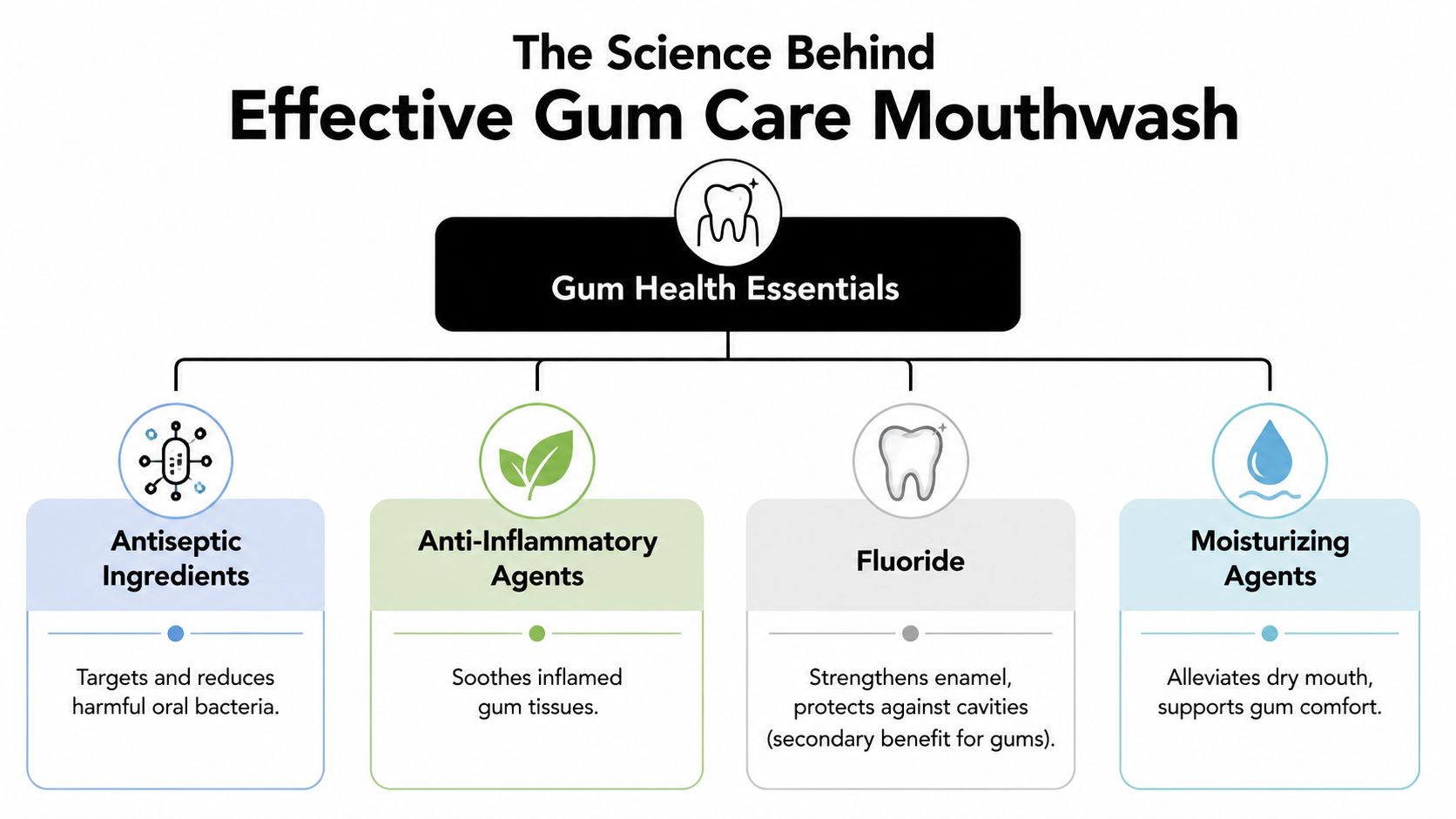
A good gum rinse usually works on three fronts. It lowers the amount of harmful bacteria near the gums, slows how quickly plaque builds back up, and helps irritated tissue settle down.
Ingredient choice shapes those effects. Antiseptic ingredients such as chlorhexidine are used to target bacteria. Moisturizing agents matter when dry mouth leaves the tissues feeling rough or sore. Fluoride does not treat the gums directly, but it helps protect teeth, which matters when gum recession exposes root surfaces.
Evidence for chlorhexidine is particularly strong. A later review summary of a 2017 Cochrane review reported high-certainty evidence that daily chlorhexidine mouthwash used for 4 to 6 weeks produced a large reduction in dental plaque, based on 12 clinical trials with 950 participants and a standardized mean difference of −1.45. The same review summary reported a gingival index reduction of 0.21 on a 0-to-3 scale after 4 to 6 weeks in 10 trials with 805 participants, with benefit still present at 6 months at a mean difference of 0.20 in 13 trials with 2,616 participants (review summary).
The most effective gum rinse is not the one that feels strongest in your mouth. It is the one that lowers plaque and inflammation without creating a new problem you will not want to keep using.
A separate systematic review in orthodontic patients found chlorhexidine rinses reduced plaque- and gingival-inflammation-related indices in most studies. Two studies that measured pocket probing depth also found a significant reduction with chlorhexidine versus placebo. That matters because pocket probing depth is a clinical measure of gum health, not just a surface-level change.
Active Ingredient Comparison for Gum Health
| Ingredient | Primary Action | Best For | Considerations |
|---|---|---|---|
| Chlorhexidine | Strong antiseptic action and plaque control | Short-term gum inflammation control | Best supported for intensive, limited use |
| Cetylpyridinium chloride (CPC) | Helps reduce plaque and gingivitis | Daily maintenance and long-term routines | Often found in alcohol-free options |
| Essential oils | Antimicrobial support and anti-gingivitis help | Everyday plaque control for some users | Useful for maintenance, not the same intensity as chlorhexidine |
Decoding Active Ingredients for Healthier Gums
The label on the back of the bottle tells you most of what you need to know. If the active ingredient does not match the goal, the rinse can feel helpful without really addressing the problem. That is why one person may need a short-term formula during a flare-up and a different one for everyday upkeep.
Chlorhexidine for short-term control
Chlorhexidine gluconate is the ingredient most closely tied to therapeutic gum care. The evidence base is strong, and a narrative review describes chlorhexidine as the most efficacious compound for antiplaque and antibacterial activity. In practice, this is the rinse dentists consider when gums are actively inflamed or when short-term control matters after treatment.
The key point is that chlorhexidine is a tool, not a daily default. It works best when the goal is focused, time-limited support. People often expect one product to do everything, then feel disappointed when the tradeoffs appear.
CPC and essential oils for maintenance
For routine use, cetylpyridinium chloride (CPC) is a practical option. A clinical trial of an alcohol-free rinse with 0.075% CPC + 0.05% NaF found statistically significant reductions in both dental plaque and gingivitis after 3 and 6 months versus baseline, and it outperformed the fluoride-only control on plaque and gingivitis control (trial). That makes CPC a useful maintenance ingredient for people who want support beyond brushing and flossing. For a broader look at steady, low-intensity approaches, you can also read this guide to how to improve gum health naturally.
Essential-oil rinses also have support. A comparative review reported that chlorhexidine and essential-oil mouthrinses both provided clinically significant anti-gingivitis and anti-plaque benefits, while chlorhexidine showed better plaque control than essential oils in some studies (review summary). That is why essential oils often fit the “good maintenance choice” category rather than the “strongest therapeutic choice” category.
How to think about the bottle
Start with the active ingredient, then match it to the situation. A short-term flare usually calls for a more targeted therapeutic rinse, while ongoing gum support often fits better with CPC or essential oils. The bottle may look similar on the shelf, but the job it does in the mouth can be very different.
Therapeutic Rinses vs Daily Maintenance
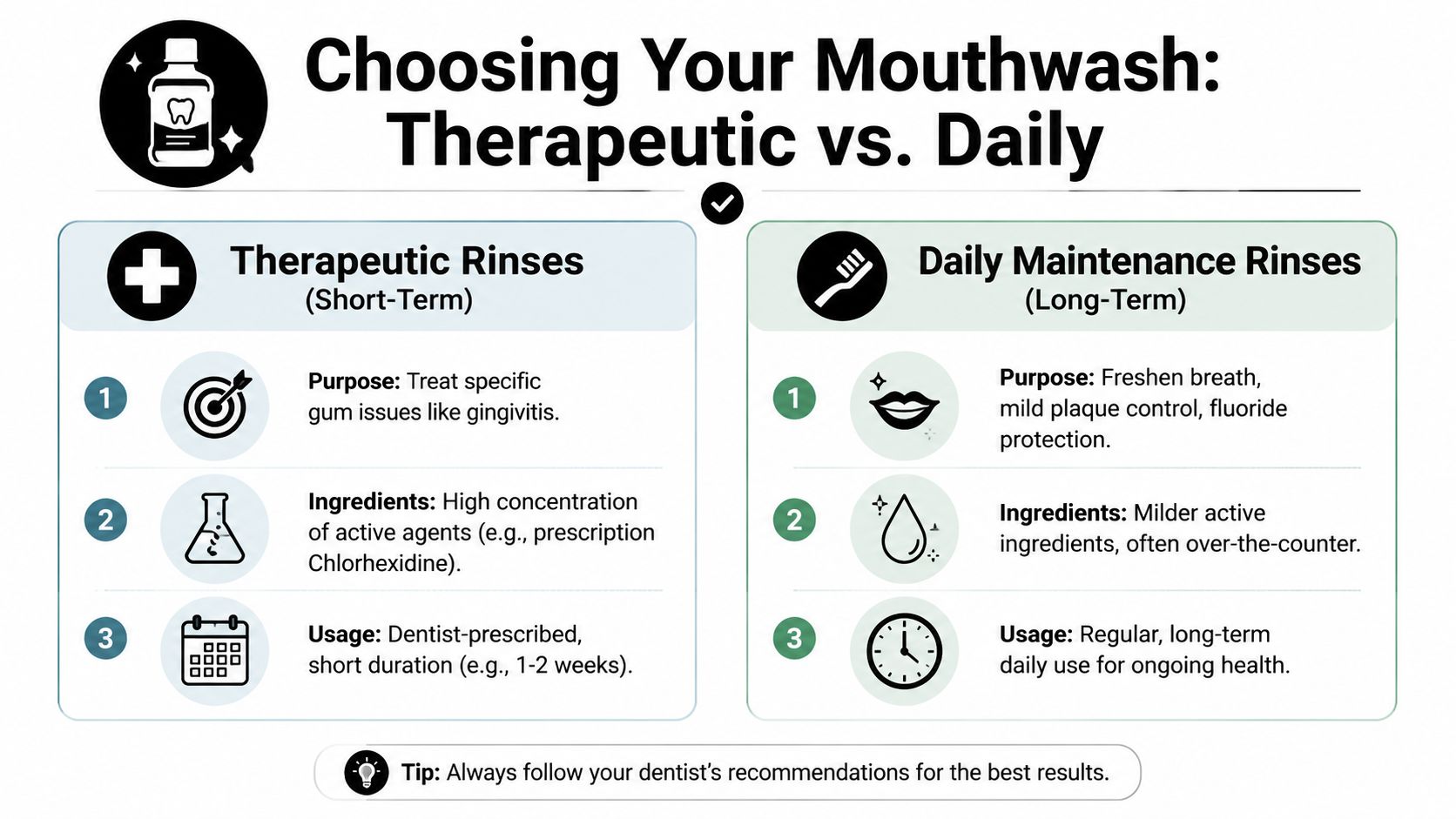
The biggest mistake people make is using every mouthwash like it serves the same purpose. A rinse meant for a flare-up can be too much for long-term use, while a gentle daily rinse may not be strong enough when gums are actively inflamed. Matching intensity to the situation makes the difference.
Short-term therapeutic rinses
Therapeutic rinses are the ones you use when there's a clear reason. They're often recommended after dental procedures or during a gingivitis flare, because they focus on lowering the bacterial load quickly. Chlorhexidine is the classic example, and the evidence base behind it is much stronger than the average cosmetic rinse.
These products are not designed to be the bottle you grab forever without thinking. Their value comes from focused use. If you need a stronger rinse, a dentist can tell you whether the problem is simple inflammation or something more advanced that needs treatment.
Daily maintenance rinses
Daily rinses are for long-term support. They're usually better suited to alcohol-free formulas, milder antimicrobials, and ingredients that people can tolerate every day. CPC-based rinses fit here well, especially when dryness or irritation is part of the picture.
The practical advantage is consistency. A rinse that feels too harsh is often abandoned after a few uses, and that's a problem because maintenance only works when you use it. For many people, a gentler formula beats a stronger one that never stays in the cabinet long enough to help.
Bottom line: use the strongest rinse that matches the problem, not the strongest rinse you can tolerate once.
For people comparing at-home maintenance options with professional care, the broader treatment path at Grand Parkway Smiles may be part of the conversation when gum issues need an exam or deeper cleaning. Mouthwash can support the routine, but it can't replace diagnosis.
Special Considerations for Sensitive Mouths
A lot of people need gum support and dryness support at the same time. That creates a common problem, because some rinses feel too sharp, especially if the mouth already feels irritated or parched. In those cases, comfort isn't a luxury, it's what determines whether the rinse gets used at all.
Dry mouth and alcohol-free formulas
Alcohol-based mouthwashes can sting in a dry mouth. They can also make some people more aware of irritation, which leads to less consistent use. That's why alcohol-free options are often the better fit for people with sensitivity, medication-related dryness, or a history of oral discomfort.
The American Dental Association notes that mouthrinses with ingredients like chlorhexidine or CPC can help with gingivitis, but the choice has to be balanced with patient needs, including dry mouth, where alcohol-free options are preferable for tolerability and long-term use (ADA guidance). That's a practical point, not a marketing one. A rinse only helps if it's comfortable enough to keep using.
Sensitivity, appearance, and everyday comfort
Sensitive mouths often need a simpler formula. Strong flavors, heavy alcohol, and overly aggressive antiseptics can make the mouth feel less comfortable even when the product is technically effective. For some patients, that discomfort also affects how the gums look, because an irritated mouth is harder to keep clean consistently.
If you're also concerned about visible staining or color changes on the teeth, it helps to read about preventing teeth discoloration so you can understand how daily habits and product choices interact. Gum care and appearance are connected more often than people realize.
Who should be extra careful
People with dry mouth, frequent irritation, or complex oral health needs should think in terms of tolerability first. That doesn't mean choosing the weakest rinse available. It means choosing a formula you'll readily use, and one that won't make the mouth feel worse while you're trying to help the gums.
When Mouthwash Is Not Enough See Your Dentist
A mouthwash can support gum health, but it cannot remove hardened tartar or reach infection that sits below the gumline. If plaque has turned into calculus, or if the gums have started to pull away from the teeth, a rinse alone will not solve the problem. A dental exam shows what is happening under the surface and helps match the treatment to the cause.
Warning signs that need an exam
Bleeding that keeps coming back, gums that are receding, loose teeth, and bad breath that does not improve are all signs that should be checked. Deep spaces around the teeth and pain when chewing also deserve attention. These are not the kinds of problems to manage by trying one bottle after another.
A dentist can tell whether the issue is gingivitis or a more advanced form of gum disease. If the buildup sits below the gumline, deep scaling and root planing may be needed to remove the deposits and give the tissue a chance to heal. That treatment works at the source in a way a rinse cannot.
Why a dental visit protects both health and appearance
Gum disease often changes how the mouth looks before it causes strong pain. Redness, swelling, gum recession, and staining can make the smile look less healthy even when the person still feels mostly fine. A dentist checks the tissue, the pockets around the teeth, and the supporting bone, which gives a clearer answer than symptoms alone.

If you are also concerned about visible color changes, reading about preventing teeth discoloration can help you see how daily habits and oral products affect appearance. Gum care and tooth appearance often overlap, so the right plan should account for both.
A good rinse can help, but a real diagnosis tells you whether you need a rinse, a cleaning, or both. Grand Parkway Smiles in Katy can evaluate gum concerns, talk through the right at-home products, and treat the deeper causes when the problem goes beyond over-the-counter care.
If your gums bleed, feel puffy, or seem harder to keep clean, book an exam with Grand Parkway Smiles in Katy, TX. The right mouthwash can help, but the right diagnosis shows whether you need a therapeutic rinse, a daily maintenance formula, or professional periodontal care.