Your Guide to a Flawless Smile Transformation
Have you ever looked in the mirror and wished you could fix a chip, close a gap, or permanently brighten your smile? You're not alone. A confident smile changes how people carry themselves, how freely they laugh, and how comfortable they feel in photos, at work, and in everyday conversations. Veneers are one of the most effective ways to improve both dental appearance and smile harmony when the underlying teeth and gums are healthy.
If you've been searching for real dental veneers before and after examples, the most useful galleries do more than show a prettier smile. They reveal what problem was solved, how the teeth were reshaped, and why one result looks natural while another looks flat or overly white. That's the difference between wanting veneers and knowing how to ask for the right outcome.
At Grand Parkway Smiles, that distinction matters. Patients don't just want whiter teeth. They want edges that look age-appropriate, proportions that suit their face, and a result that improves appearance without sacrificing oral health. If you're considering a smile upgrade, you can enhance your smile with veneers and still make careful, informed decisions about fit, function, and long-term maintenance.
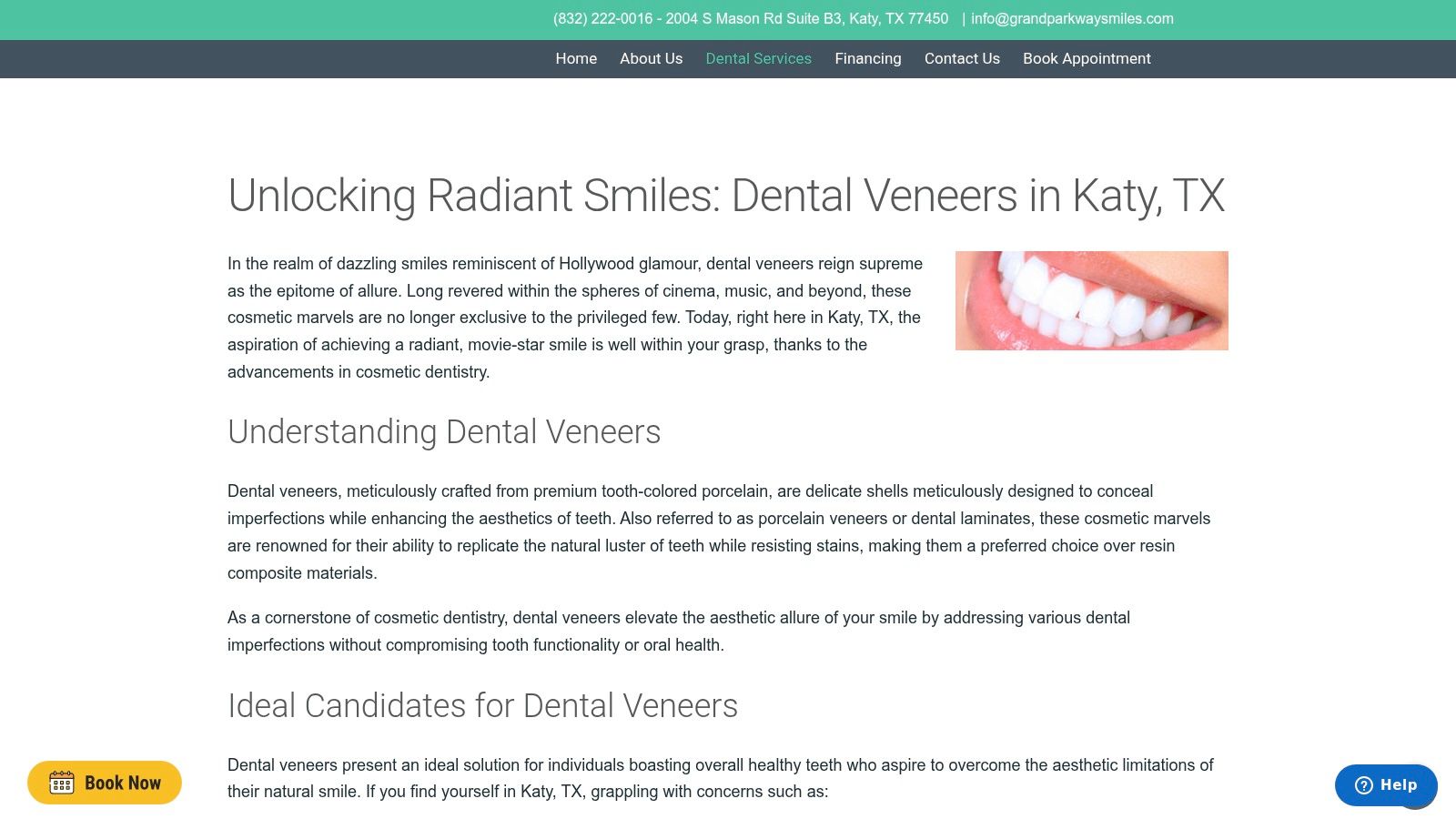
1. Dental Veneers in Katy, TX – Grand Parkway Smiles
A patient walks in wanting a brighter smile after years of hiding a chipped front tooth. During the exam, the underlying issue turns out to be more than color. The edge position is uneven, an older filling is failing, and the bite is placing extra force on the front teeth. Cases like that explain why veneer photos are only part of the story. The lasting result comes from diagnosis, design, and execution.
At Grand Parkway Smiles, the veneer discussion starts with those details. Chipped, stained, worn, misshapen, or slightly spaced teeth can often be improved with veneers, but the plan depends on enamel thickness, gum health, bite function, and the condition of any existing dental work. Patients can review the practice approach on the Grand Parkway Smiles dental veneers page.
That clinical foundation matters because this article is not just a gallery roundup. It is also a case-reading guide. The useful question is not only whether the after photo looks better. It is what problem was corrected, how the tooth proportions changed, whether the shade suits the face, and whether the final result looks believable at conversational distance.
Why this clinic stands out
Grand Parkway Smiles brings general, restorative, cosmetic, and specialty care together in one office. That matters in veneer treatment because smile design often overlaps with replacement of old restorations, bite adjustment, whitening of adjacent teeth, or planning for long-term maintenance. A beautiful veneer case can fail early if those factors are ignored.
The process is also easy for patients to follow. The usual sequence is consultation and records, tooth preparation and impressions, then final bonding. Clear staging reduces surprises and gives patients time to understand temporary veneers, expected sensitivity, and the habits that protect the final result.
Practical rule: Strong dental veneers before and after results start with bite analysis and tooth condition, then the cosmetic design follows.
Best fit and real trade-offs
This practice is a good fit for patients who want more than a generic "perfect smile." In my experience, the best veneer outcomes come from specific goals: soften sharp edges, close a narrow gap without making teeth look bulky, brighten dark enamel without choosing an unnatural shade, or rebuild worn front teeth while keeping speech comfortable.
There are trade-offs, and they should be stated plainly:
- Good candidates have healthy support. Veneers work best when teeth and gums are stable and there is enough enamel for predictable bonding.
- Some problems need treatment first. Active decay, gum disease, and heavy grinding can shorten the life of veneers if they are not addressed before cosmetic work begins.
- Preparation is permanent. Veneer placement usually involves removing about 0.5 millimeters of enamel, so this is a long-term treatment choice.
- Maintenance still counts. Veneers resist stains well, but they are not maintenance-free. Patients still need routine checkups, careful home care, and common-sense caution with ice, hard candy, and other high-force habits.
For patients in Katy and the greater Houston area, Grand Parkway Smiles earns the top spot here because the veneer process is handled with both technical discipline and aesthetic judgment. That combination is what turns a nice before-and-after photo into a smile that still looks natural years later.
2. Dr. Kevin Sands, Beverly Hills
If your idea of dental veneers before and after leans toward dramatic polish, Dr. Kevin Sands is a useful benchmark. The Beverly Hills gallery style makes it easy to study veneer count, shade selection, spacing correction, and how much edge redesign contributes to a "celebrity smile" look.
That matters because many patients arrive with a reference photo but don't have the vocabulary for what they're reacting to. In these cases, you're often seeing a combination of brighter value, more uniform incisal edges, broader smile display, and controlled translucency rather than just "white teeth." You can browse the practice at Dr. Kevin Sands Beverly Hills.
Where this gallery helps most
This is one of the better styles of gallery for comparing high-glamour outcomes. Patients trying to decide between subtle refinement and a more camera-ready result can often learn a lot by observing how shape and texture affect the final appearance.
A few things make that especially useful:
- Case variety: Discoloration, spacing, shape asymmetry, and smile uniformity are easier to compare side by side.
- Aesthetic benchmark: If you want a polished, red-carpet style finish, this gives you a clear visual reference.
- Smile design language: It helps patients identify whether they prefer softer contours, squarer edges, or brighter overall shade families.
Some patients don't want "Hollywood white." They want Hollywood-level polish with a natural finish. Those are not the same thing.
The main downside is practical, not clinical. For patients outside Los Angeles, travel adds complexity, and destination cosmetic practices usually aren't where budget-conscious patients start. Still, from an educational standpoint, this gallery is helpful because it trains the eye to notice texture, balance, and shade layering instead of focusing only on brightness.
3. Atlanta Dental Spa
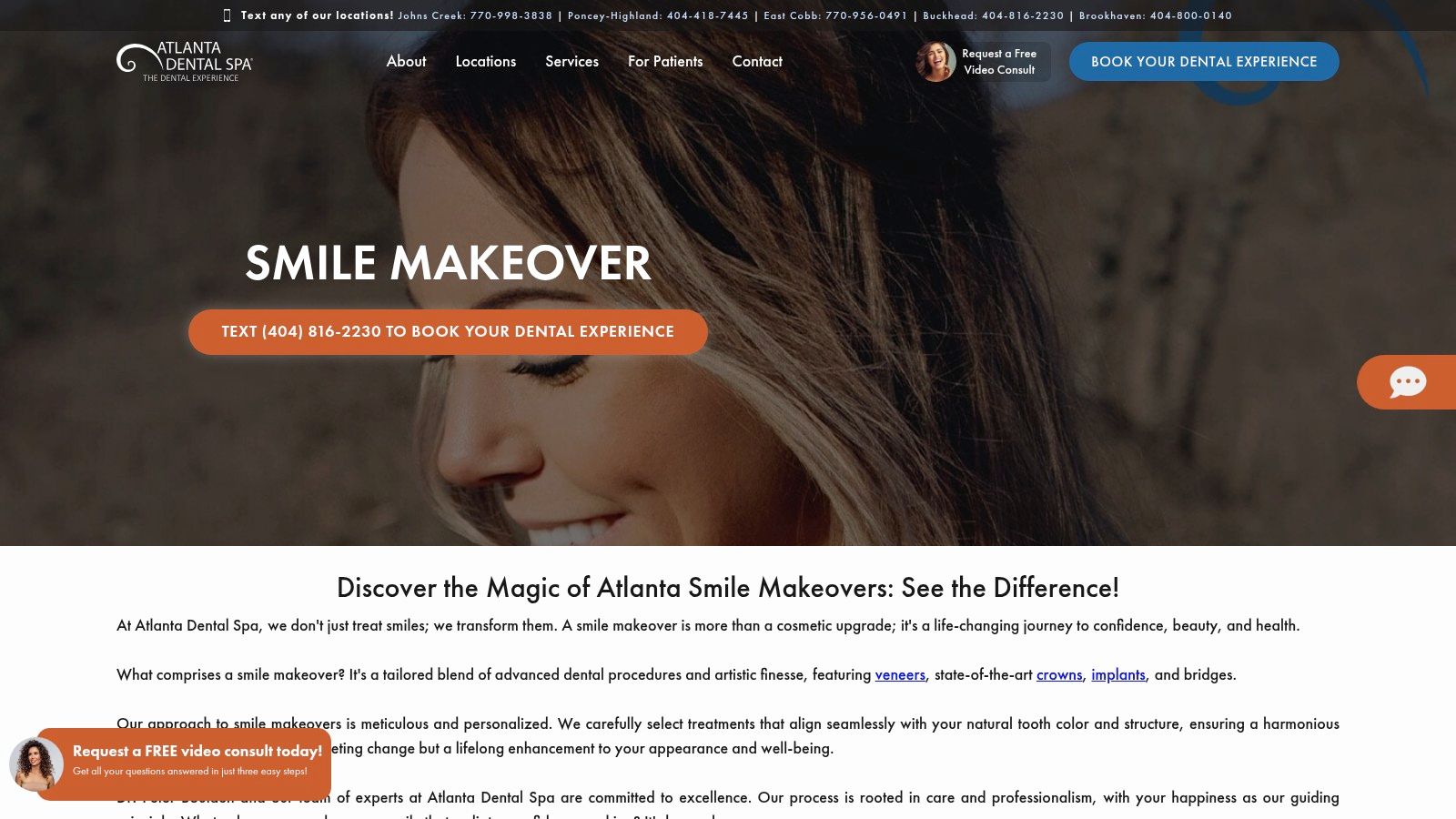
A patient sees a before-and-after smile online, decides they want veneers, then learns in consultation that one dark tooth needs a crown, the gumline is uneven, or the neighboring teeth need whitening to match. That is why this gallery is useful. The cases on the Atlanta Dental Spa smile makeover page show cosmetic dentistry in a more realistic clinical setting, where the final result often depends on more than placing porcelain on the front teeth.
From a practitioner's standpoint, that broader case mix matters. Veneer outcomes are shaped by the starting problem. A small chip calls for a different plan than generalized wear, spacing, old bonding, or a tooth that has already lost too much structure. Readers trying to interpret dental veneers before and after photos can learn a lot here by asking a better question: what problem was the dentist solving, and what combination of treatments made the result look believable?
What this practice illustrates well
This gallery helps patients build useful smile-design vocabulary before a consultation.
A few patterns stand out:
- Mixed-treatment planning: Some results appear to involve veneers alongside crowns, whitening, or gum reshaping. That reflects how smile makeovers often work in practice.
- Range of patient goals: You can compare conservative changes for chips, shape correction, or mild discoloration with fuller cosmetic redesigns.
- Facial context: The presentation gives more than isolated tooth shots, which helps readers judge whether tooth length, width, and smile arc fit the face.
That last point matters. Veneers can look technically clean and still feel wrong if the proportions ignore lip dynamics or the patient's age, expression, and overall facial balance.
The trade-off is that online galleries still cannot answer the structural question. If a tooth is heavily filled, cracked, root canal treated, or missing too much enamel, a veneer may not be the most durable choice. In those cases, the better result is often the one that preserves function first and cosmetics second. That is also why a case gallery should be used as a planning reference, not a treatment decision by itself.
4. The Chicago Dental Studio (River North)
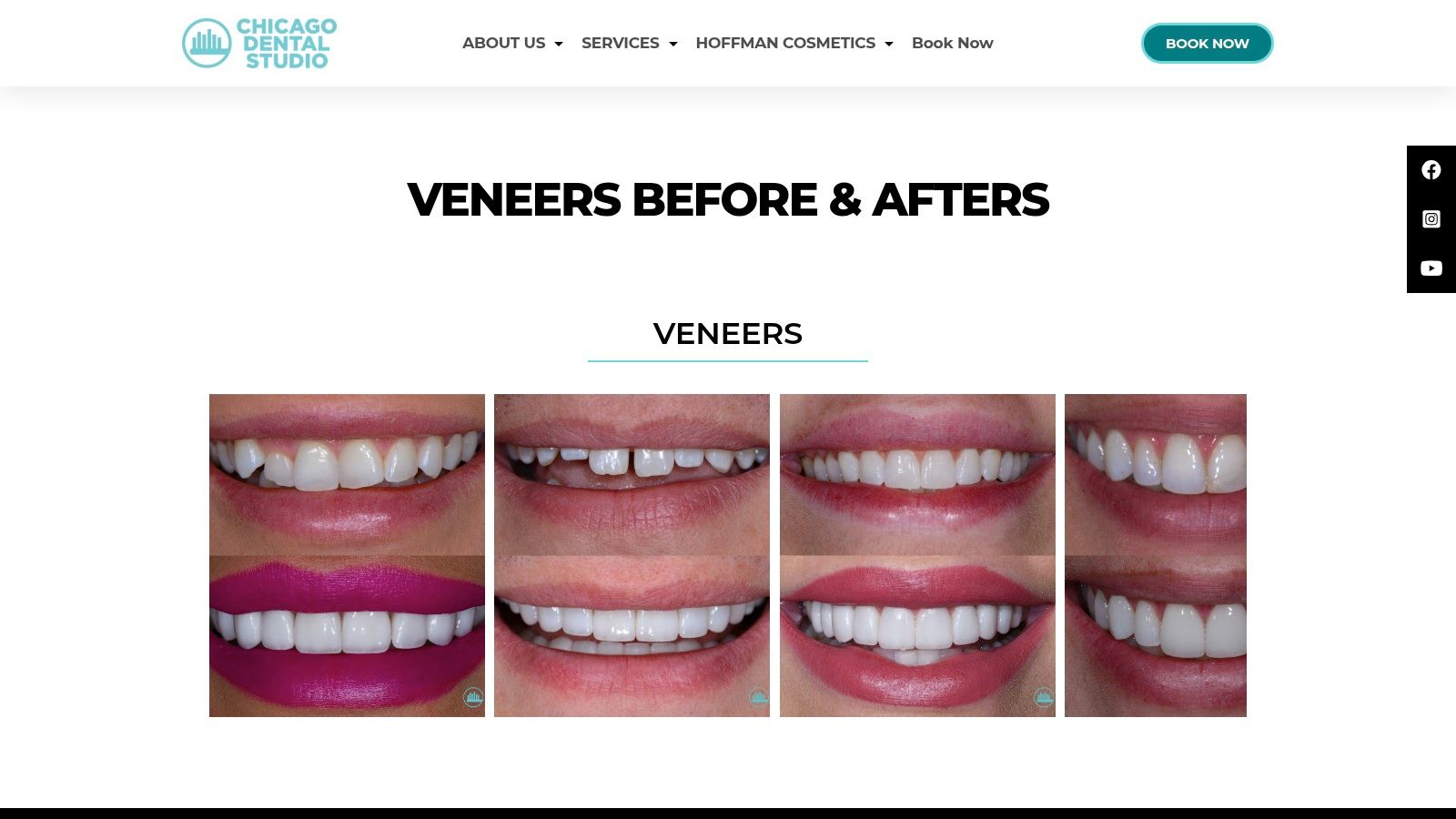
The Chicago Dental Studio's River North veneer gallery is useful for a different reason. It doesn't just show cosmetic change. It shows photography consistent enough to compare edge shape, midline control, and surface character without guessing whether lighting is doing half the work. You can see the gallery on The Chicago Dental Studio veneers before and after page.
For patients researching dental veneers before and after results, consistent photography is more important than it sounds. If every "after" image is brighter, closer, and better lit than the "before," it's hard to judge the dentistry. A cleaner studio-style presentation lets you evaluate what changed in the teeth.
Why the imaging matters
This gallery works especially well for people trying to avoid an artificial result. Not every patient wants opaque, flat, ultra-white veneers. Many want lifelike ceramics that still show softness at the edges and natural variation in surface reflection.
- Veneer-only browsing: You don't have to sort through unrelated cosmetic procedures.
- Good visual comparison: Shade, texture, and tooth length changes are easier to inspect.
- Useful for single-tooth planning: Patients with one dark, chipped, or misshapen front tooth can compare smaller corrections against larger smile designs.
Clinical insight: Natural-looking veneers usually aren't one uniform block of white. The best ones manage light, line angles, and edge detail so the smile still looks alive.
The downside is familiar. Online pricing detail is limited, and urban scheduling or travel can add friction. But as a visual education tool, this is one of the cleaner examples of how to judge craftsmanship rather than just brightness.
5. Halsted Dental – Dr. Widen
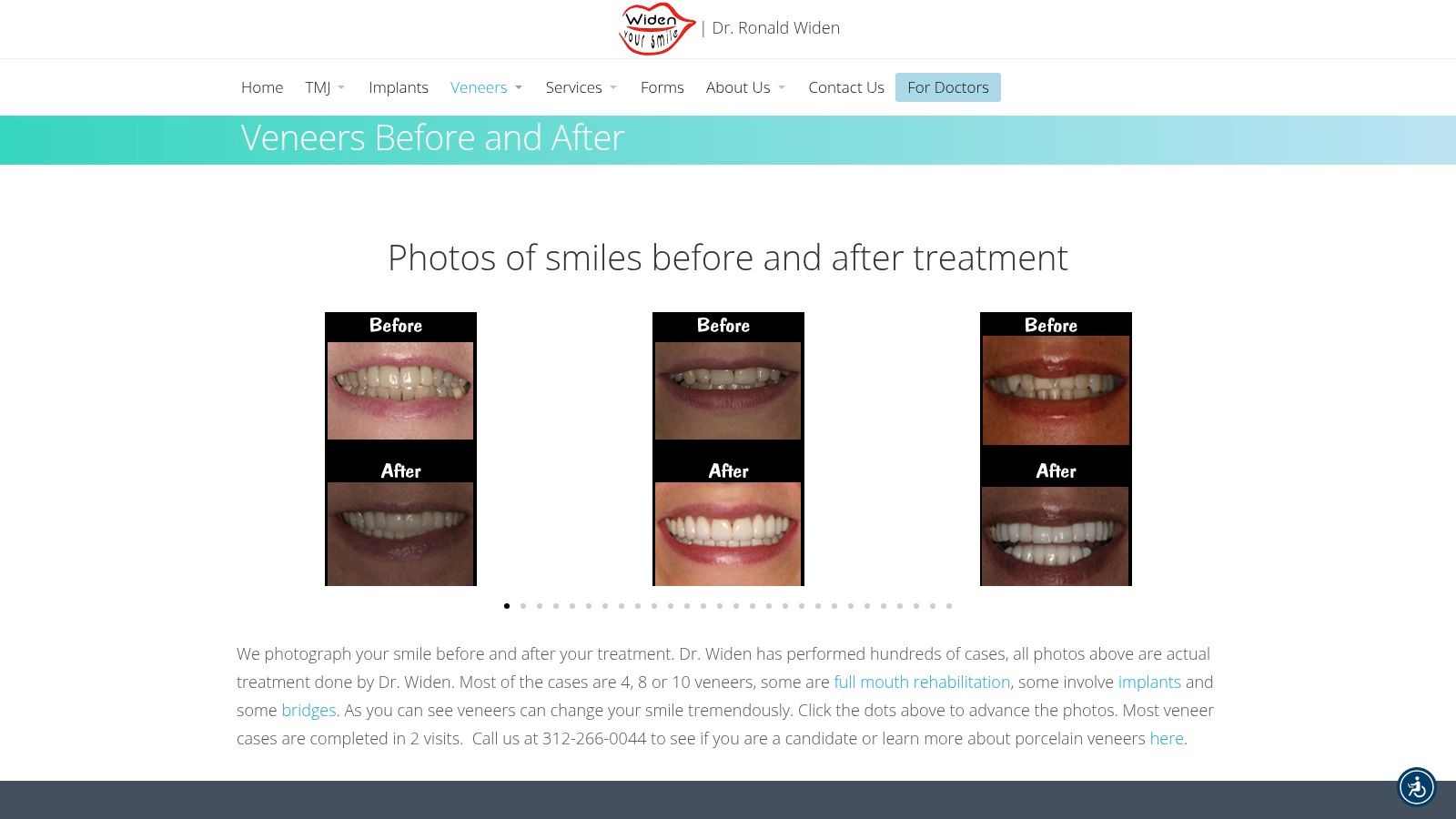
A patient with one chipped front tooth, a small gap, or uneven incisal edges usually is not looking for a dramatic makeover. They want to know whether veneers can correct the specific flaw without making the whole smile look manufactured. That is where a tighter case gallery can be useful. Halsted Dental keeps the presentation concise, and you can review it at Halsted Dental veneer before and after photos.
From a clinical standpoint, this kind of gallery helps patients study decision-making, not just the final photo. That matters. In veneer consultations at Grand Parkway Smiles, many of the best conversations start once a patient can point to a case and say, "I like how this one closed the space without making the teeth too wide," or "I want this level of brightness, but not that much length." A focused set of cases gives people better language for those preferences.
What this gallery helps you evaluate
The strongest value here is range. Some cases appear to involve a limited number of teeth, while others show broader cosmetic changes. That helps patients compare two very different veneer goals: blending one or two restorations into an existing smile versus redesigning the visible front teeth for symmetry, shade, and proportion.
A few practical takeaways stand out:
- Clearer case selection: Easier to study veneer examples without sorting through unrelated treatments.
- Helpful planning context: Mentions of visit flow or treatment scope can help patients anticipate the process.
- Good for isolated concerns: Useful reference for chips, uneven edges, spacing issues, or a small number of mismatched front teeth.
One long-term point deserves attention. Veneers themselves resist stain better than natural enamel, but the surrounding teeth can still darken over time. The Cleveland Clinic notes that veneers resist stains, not that the rest of the smile stays the same color forever, which is why whitening plans and shade selection should be discussed before treatment begins and revisited later if needed: Cleveland Clinic's veneer overview.
That trade-off is easy to miss in before-and-after galleries. A strong cosmetic result is not only about the delivery day photo. It also depends on how well the veneer shade, the adjacent teeth, and the maintenance plan continue to work together in the years that follow.
6. Smile Texas

A patient may start by asking for whiter teeth, then realize the underlying concern is a mix of color, shape, gum symmetry, and an older crown that no longer matches. That is where a broader cosmetic gallery becomes useful. Smile Texas presents veneers as one part of smile design rather than as an isolated product, and that gives patients a more realistic planning reference. Their cosmetic overview is available on the Smile Texas veneers page.
That perspective matters because veneer cases are rarely only about shade. In practice, I often see patients who need to decide whether the better result comes from veneers alone or from a staged plan that may also include whitening, contouring, or restorative updates. A gallery built around full smile transformation helps patients see those combinations before they sit down for a consultation.
For readers comparing regional options, this section is useful for studying case strategy.
What stands out is the range between softer, conservative changes and more noticeable smile redesign. That is helpful if you are trying to put words to your own goals. Do you want to close small spaces, repair worn edges, and keep the look subtle? Or do you want to change tooth length, symmetry, and overall brightness across the visible smile line? Those are different veneer conversations, and the better galleries make that distinction easier to spot.
A few practical strengths:
- Helpful for mixed concerns: Good reference for patients dealing with more than one cosmetic issue at the same time.
- Useful smile-design context: Lets readers compare tooth shape, display, and gum balance instead of focusing on color alone.
- Better consultation prep: Makes it easier to describe whether you want refinement, correction, or a fuller makeover.
The trade-off is the same one patients run into with many veneer galleries. Photos can show the finish, but they rarely show the planning decisions behind it. You may still need to ask how many teeth were treated, whether provisional try-ins were used, how the final shade was chosen, and what maintenance looks like if adjacent natural teeth change over time. Those details often determine whether a result looks convincing in person, not just in a before and after photo.
7. URBN Dental (Houston)
A patient often starts here with a practical question. Can veneers fix this one chipped tooth, these small spaces, or the color mismatch that shows every time I smile? URBN Dental's gallery helps answer that type of question because it combines before and after photos with treatment education on the URBN Dental veneer before and after page.
That educational layer matters.
A gallery is more useful when it helps patients connect a visible problem to a likely treatment approach. For someone comparing veneer cases, that means looking beyond whiteness and noticing the specific corrections made. Was the goal edge repair, shape refinement, gap closure, or a broader smile redesign across several teeth? That is the kind of thinking that leads to a better consultation, and it fits the same case-analysis mindset we use at Grand Parkway Smiles when we review veneer options with patients.
URBN Dental also has a practical advantage for Houston patients. Multiple locations can make the process easier to manage, especially when treatment involves consultation, records, preparation, try-in, and follow-up.
Strong points and limits
The main strength here is clarity for first-time veneer patients. The cases give readers a better way to describe their own concerns and start separating a minor cosmetic fix from a larger aesthetic plan.
- Helpful educational framing: The gallery gives context, not just finished photos.
- Useful for specific complaint matching: Patients can compare concerns such as chips, spacing, uneven edges, and discoloration with similar cases.
- Convenient access in Houston: Multiple locations may reduce scheduling friction for consults and review visits.
The trade-off is that a gallery still cannot show the full clinical decision-making process. Before choosing veneers, I would want any patient to ask a few direct questions. How many teeth were treated? Was enamel preserved? Were temporaries or mock-ups used to preview shape and length? How was the shade selected so the restorations would not look flat or overly bright next to natural teeth?
Long-term veneer success depends less on marketing language and more on case selection, bite forces, oral habits, and bonding to healthy enamel. Published research has reported high long-term survival for porcelain veneers under favorable conditions, including a study indexed by PubMed that found a 91 percent survival rate at 20 years (Beier et al.). In day-to-day practice, that means the exam, records, and treatment planning deserve as much attention as the final before and after photo.
7-Clinic Before & After: Dental Veneers
| Provider | Implementation complexity | Resource requirements | Expected outcomes | Ideal use cases | Key advantages |
|---|---|---|---|---|---|
| Grand Parkway Smiles (Katy, TX) | Moderate, documented 3‑visit workflow with digital planning | Digital dentistry, prosthodontic/restorative team, sedation options; moderate‑high cost | Personalized, predictable camera‑ready results | Local patients seeking precise, comfortable smile makeovers | Multidisciplinary expertise, 3D planning, patient comfort and flexible payment |
| Dr. Kevin Sands (Beverly Hills) | High, advanced layering and full‑smile cosmetic workflows | Premium lab materials, high‑volume cosmetic team; higher fees and travel | Dramatic, high‑glamour “Hollywood” aesthetics | Patients seeking celebrity‑level, red‑carpet transformations | Extensive portfolio/gallery, benchmark for high‑end outcomes |
| Atlanta Dental Spa | Moderate–High, combination treatments and large case mix | Large team, multiple specialties, consistent photographic protocols | Consistent realism across subtle and dramatic cases | Patients wanting a range of outcomes and practice convenience | Wide variety of cases, reliable photography, multi‑office access |
| The Chicago Dental Studio (River North) | Moderate, veneer‑specific studio workflows with digital planning | Studio‑grade imaging, boutique team, modern tech | High‑precision aesthetic results with clear translucency/edge detail | Patients comparing fine details of veneer design and shade | Veneer‑only gallery, consistent studio imaging for easy comparison |
| Halsted Dental – Dr. Widen | Low–Moderate, veneer‑focused, many two‑visit cases | Smaller team, concise case notes; lower volume | Straightforward veneer outcomes with realistic timelines | Patients seeking quick, transparent veneer treatments | Clear process transparency, succinct case documentation |
| Smile Texas | Moderate–High, full‑mouth and staged rehabilitation workflows | Comprehensive team including surgical/implant capability; higher resources | Broad spectrum from subtle refinements to full transformations | Complex or staged rehabilitation cases in Houston area | Comprehensive team, strong local option for combined treatments |
| URBN Dental (Houston) | Moderate, education‑linked veneer sequencing across locations | Multi‑location access, patient education resources, restorative menu | Practical, well‑explained outcomes for single‑to multiple‑tooth cases | First‑time patients needing education and local convenience | Educational content tied to gallery, convenient regional access |
Your Next Steps to a Veneer Smile Makeover
You see a before and after case that looks close to your smile. One patient closed small gaps. Another corrected worn edges. A third brightened dark, resistant staining. The right next step is not to copy one result. It is to identify which details match your teeth, bite, facial proportions, and expectations.
That is the value of reviewing real cases with an expert eye. A good veneer consultation should give you language for what you are seeing, whether that is lengthening short teeth, softening sharp corners, closing black triangles, masking discoloration, or correcting uneven symmetry. In practice, that matters. Patients make better decisions when they can describe the problem clearly and understand the trade-offs behind each design choice.
Not every cosmetic concern should be treated with veneers. Veneers work well for chips, gaps, wear, stubborn discoloration, and minor shape discrepancies when the underlying teeth are healthy enough for bonding. Teeth with large fillings, active decay, cracks, or heavy structural damage may need a different restoration because strength and long-term function come first.
The process is straightforward when it is planned carefully. Consultation and smile design come first. We study tooth display, gum levels, bite position, proportions, and shade goals to decide whether veneers are the best option. Then come preparation, digital scans or impressions, and temporaries when they are needed. Final bonding is where precision matters most, because fit, surface texture, edge shape, shade, and bite all have to work together.
Porcelain remains the material many patients prefer for a reason. It holds color well, reflects light in a natural way, and tends to give the polished, lifelike finish people expect from veneer before and after photos. Composite can be a better fit in selected cases, especially when a patient wants a more conservative or lower-cost option, but it usually involves different durability and maintenance expectations.
Veneers also require a lasting commitment. Tooth preparation means the decision is permanent, even though the veneers themselves will need replacement over time. Patients who clench or grind may need a night guard. Patients who want a very bright shade may also need whitening on untreated teeth first so the final smile looks even from corner to corner.
Cost is part of the conversation, and it should be. The fee depends on the material, the number of teeth, the amount of planning involved, and whether the case includes bite correction or other restorative work. The right question is not just what veneers cost. It is whether the plan addresses the actual problem, protects the teeth, and gives a result that will still look right years from now.
At Grand Parkway Smiles, we approach veneer makeovers with that balance in mind. If you are comparing before and after cases and trying to figure out which one resembles your own smile goals, a consultation can turn that comparison into a clear treatment plan.
If you're thinking about veneers, crowns, implants, or a complete smile redesign, Grand Parkway Smiles offers complete care in Katy with cosmetic, restorative, and specialty expertise under one roof. Schedule a consultation to get a clear answer on whether veneers are the right fit for your teeth, your appearance goals, and your long-term dental health.