
When your dentures start looking a little less brilliant than they used to, it can be disheartening, impacting both your appearance and confidence. That morning coffee, a nice glass of red wine, or just daily life can leave behind stubborn stains that your regular cleaning routine just can't seem to tackle. The good news? You don't have to put up with a dull or yellowed smile. A brighter set of dentures not only looks better but is also a sign of good oral hygiene.
Let's get straight to it: you need fast, safe ways to bring back that sparkle and enhance your smile.
Your Quick Guide to a Dazzling Denture Smile
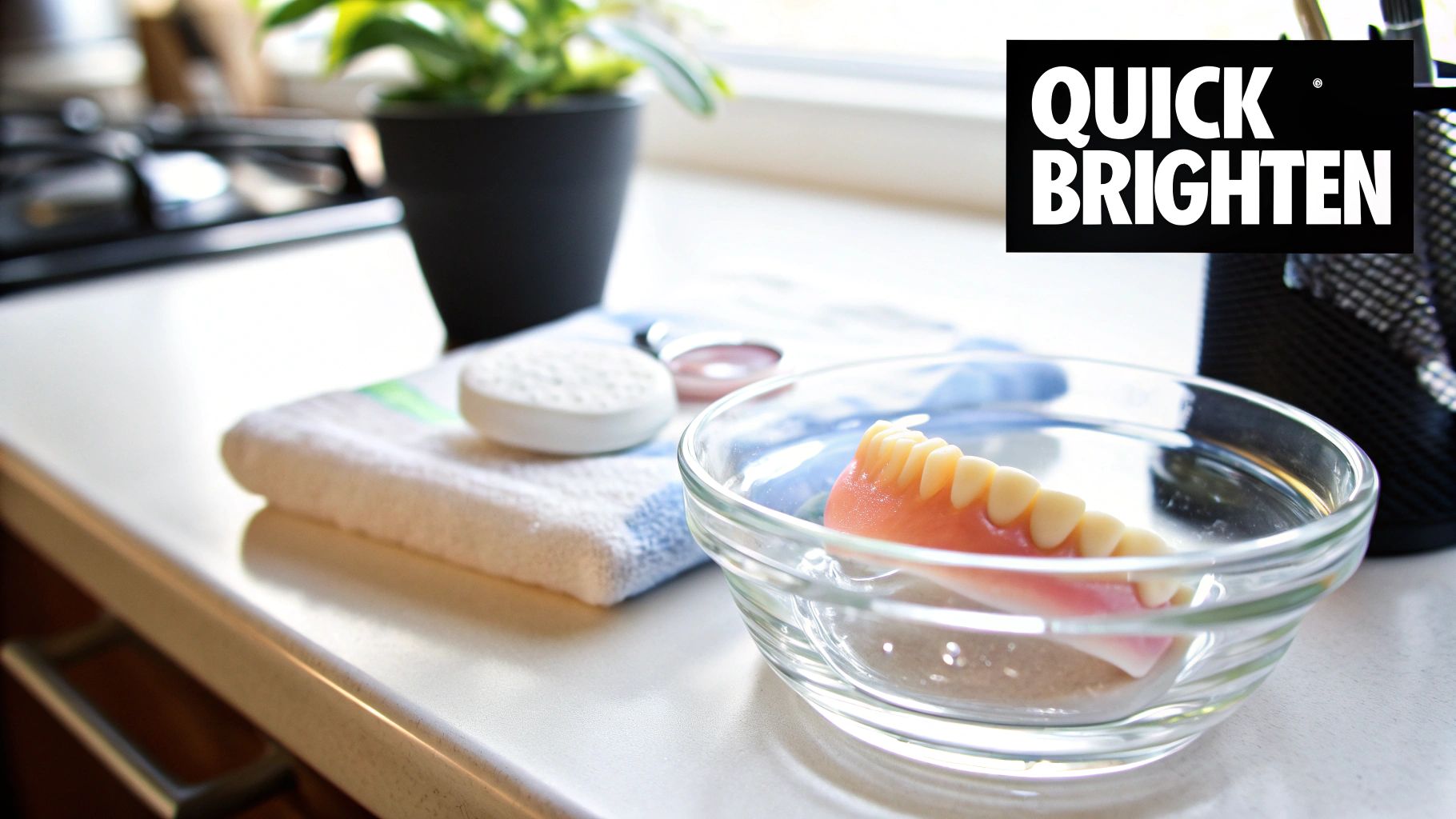
Knowing how to whiten your dentures quickly means picking methods that improve their appearance without harming the appliance itself. Unlike natural teeth, dentures are typically made from porous materials like acrylic. This means they can be easily damaged by harsh chemicals or abrasive cleaners, compromising their integrity and your oral health.
This guide is all about giving you immediate, practical solutions to restore that brilliant shine. We're focusing on quick wins that will boost your confidence and give you a clean, bright smile you're proud to show off. A well-maintained denture is key to a healthy mouth and a vibrant appearance.
The Power of At-Home Whitening Solutions
The desire for convenient whitening reflects a growing focus on personal appearance and health. In fact, the at-home teeth whitening market, which is perfect for these kinds of speedy denture fixes, commands 68.67% of the entire market share. Plenty of gels and specialized cleansers can deliver a noticeable lift in just a few days. You can explore more about these market trends and how they're shaping modern dental care.
For denture wearers, this translates into a great selection of products specifically formulated to be gentle on your appliance but tough on stains, helping you maintain a pristine look.
A brighter smile is more than just a cosmetic fix—it’s a sign of great oral hygiene and a major boost to your self-esteem. Fast, safe whitening gives you the power to feel your best every single day.
The right approach really just depends on how much time you have. Whether you need a quick touch-up for an event tonight or a more gradual whitening over a few days, there’s a solution that fits your life and helps you put your best face forward.
Fastest Denture Whitening Methods At a Glance
To help you choose the best path forward, here’s a quick comparison of the most effective and speedy methods for whitening dentures at home. This table gives you a snapshot of what to expect from each option for improving your smile's appearance.
| Method | Time to See Results | Best For | Safety Level |
|---|---|---|---|
| Denture Cleaning Tablets | 5-15 Minutes | Daily stain removal and a quick freshen-up | Very High |
| Hydrogen Peroxide Soak | 1-3 Days | Lifting moderate, set-in discoloration | High |
| Baking Soda Paste | Immediate | Polishing away minor surface stains | High |
| Professional Ultrasonic | 1 Visit | Deep, stubborn, and long-term stains | Professional |
As you can see, each method targets stains a bit differently to improve your dentures' appearance. Effervescent tablets create a bubbling action that lifts fresh surface stains right off. A diluted hydrogen peroxide soak penetrates a little deeper to break down discoloration over a day or two. And a gentle baking soda paste works as a mild abrasive to polish the surface.
Ultimately, getting—and keeping—a whiter set of dentures comes down to consistency and using the right techniques. By starting with these proven methods, you can quickly bring back your smile’s vibrancy and maintain it for years to come, ensuring both a beautiful appearance and good oral health.
Before you even think about whitening your dentures, you need to know exactly what you're working with. It's a bit like laundry—you wouldn't throw a silk shirt in the same hot wash as your cotton towels. The same logic applies here. The material your dentures are made of will completely change how you should clean them, and taking a one-size-fits-all approach is a fast track to damaging them.
Figuring out the difference between materials is the first step toward getting that brilliant smile back without accidentally ruining your dental appliance. Let's break down the two most common types: acrylic and porcelain. They look similar, but they couldn't be more different.
Acrylic vs. Porcelain Dentures: What You Need to Know
Most dentures you see today are crafted from acrylic resin. There's a good reason for this: it's light, your dentist can easily adjust it, and it’s generally easier on the wallet. The downside? Acrylic is porous. Think of it like a sponge. Over time, it soaks up stains from things like coffee, tea, and red wine, which can dull your smile.
Porcelain, on the other hand, is a whole different ballgame. It's a much harder and less porous material, which makes it fantastic at resisting everyday stains and general wear and tear. While porcelain has an incredibly natural look and is super durable, it's also more brittle and can be a bit abrasive against any natural teeth you might still have.
The bottom line is simple: whitening methods that are perfectly safe for tough, non-porous porcelain can be way too harsh for the softer, porous acrylic. Using the wrong product can permanently scuff up the acrylic's finish, leaving it looking dull and damaged, detracting from your appearance.
Why Harsh Chemicals Are Your Dentures' Worst Enemy
I get it. It’s tempting to grab a powerful household cleaner like bleach for a quick whitening fix, but this is one of the absolute worst things you can do for the health and longevity of your appliance. Bleach and other aggressive chemicals will wreck your dentures.
Here's what can happen:
- It causes discoloration. Instead of whitening the teeth, bleach can actually strip the color from the pink, gum-colored acrylic parts of your dentures, leaving them faded and blotchy. This creates a very unnatural look.
- It weakens the material. These chemicals break down the acrylic resin itself, making your dentures brittle and much more likely to crack or snap. This compromises their function and your dental health.
- It actually invites more staining. Harsh abrasives and chemicals etch tiny, microscopic scratches into the acrylic. Ironically, these new scratches give stains a perfect new place to grab onto, making your smile look worse over time.
Your dentures are a big investment in your health and confidence. Protecting them means they'll stay comfortable, functional, and looking great for years. Picking the right whitening method is a huge part of that.
For a safer, effective alternative, a controlled soak works wonders. A pro tip used by an estimated 40% of U.S. denture wearers is to soak dentures in a 3% hydrogen peroxide solution for about 10 minutes a day. This gives you a fast, safe whitening boost without the hefty price tag of a professional clean, which can average around $300.
Knowing your appliance is also key if you have more advanced options like snap-in dentures, which come with their own unique care instructions. You can learn all about them in our complete guide to snap-in dentures to make sure you’re following the best practices for your specific type.
By simply knowing what your dentures are made of and steering clear of harmful chemicals, you're already setting yourself up for a much faster, safer, and more successful whitening experience that enhances your smile.
Safe and Speedy At-Home Whitening Techniques
If you need to brighten up your dentures fast, several reliable at-home methods can give you impressive results without damaging them. The trick is to use techniques that gently lift stains instead of relying on harsh chemicals or aggressive scrubbing. This way, you maintain not just the look but also the health and longevity of your dental appliance.
Before you start, you have to know what your dentures are made of. Different materials require different approaches to achieve the best appearance safely.
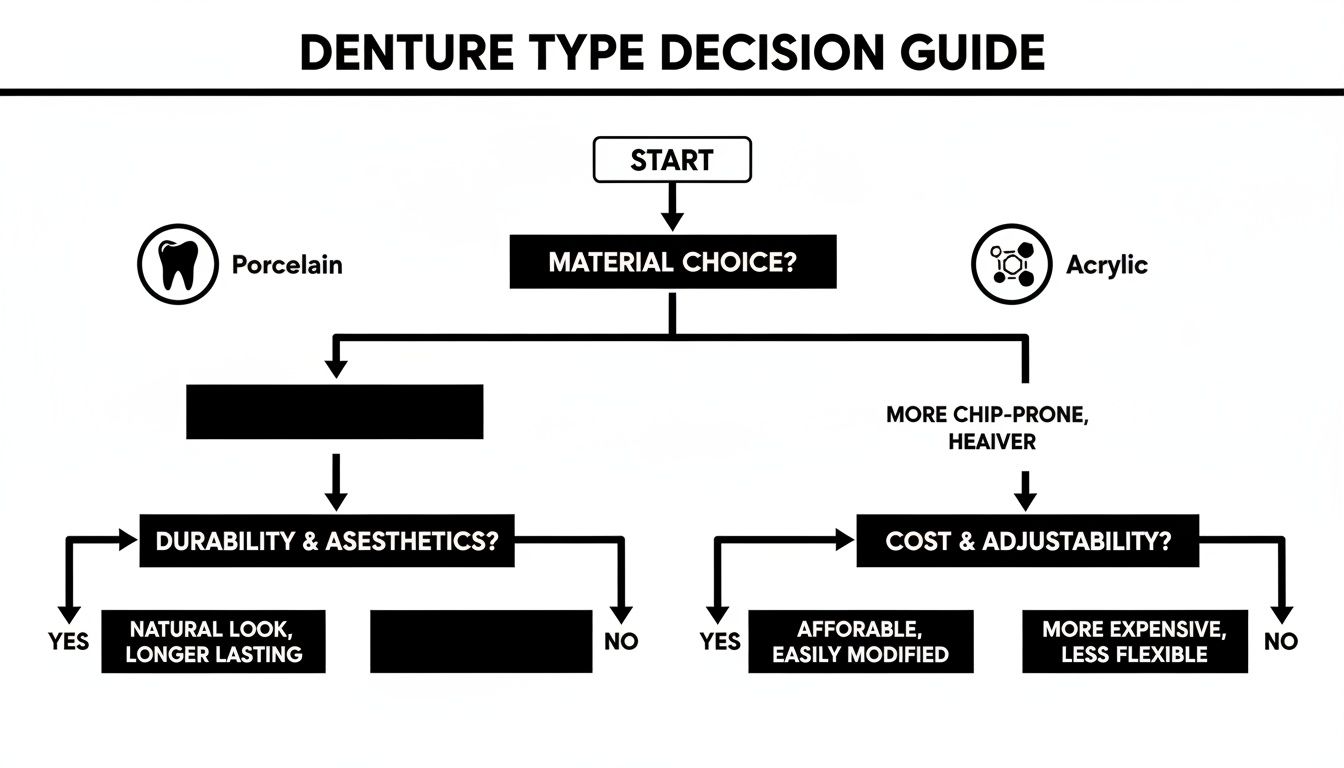
This guide makes it simple. If you have durable porcelain dentures, you have a few more options. For acrylic dentures, you'll need to stick with gentler, non-abrasive solutions to avoid damage and keep them looking great.
The Power of Over-the-Counter Cleansers
For a quick and easy fix, you can't go wrong with over-the-counter denture cleansing tablets. These are your best first move for improving your smile's appearance. They're specifically made for denture materials and use a fizzing action that creates tiny bubbles to scrub away surface stains and bits of food. They work great for daily cleaning or a quick touch-up before you head out.
Just pop a tablet into a cup of lukewarm water with your dentures. Let them soak for the time listed on the package—usually around 5 to 15 minutes. It’s a simple routine that not only whitens but also kills odor-causing bacteria, which is essential for good oral hygiene and fresh breath.
This method fits right in with what people want these days: convenient whitening solutions. The global market for whitening products, like strips, is expected to jump from $83.7 million to $212 million by 2032. Users in Europe, which holds a 27.4% market share, report an 85% satisfaction rate with products that whiten quickly. You can find more market details on fortunebusinessinsights.com.
Creating a Gentle Hydrogen Peroxide Soak
For stains that have been there a while, a diluted hydrogen peroxide soak can pack a bit more punch to restore a brighter appearance. Hydrogen peroxide works by releasing oxygen, which breaks down the molecules that cause stains from things like coffee, tea, or tobacco.
To make the soak, follow these steps exactly:
- Mix the Solution: Use one part 3% hydrogen peroxide and one part cool water. A stronger mix can be too harsh, especially on acrylic.
- Soak Your Dentures: Let your dentures sit completely submerged in the solution for about 15-30 minutes. Any longer, and you risk weakening the material over time.
- Rinse Well: After the soak, rinse your dentures thoroughly under cool running water to get all the peroxide off before putting them back in your mouth. Proper rinsing is crucial for your oral health.
Don't do this every day. Once or twice a week is plenty to get a whiter look without causing any harm to your appliance.
Polishing with a Baking Soda Paste
Got minor surface stains? A homemade baking soda paste can do wonders for a quick appearance boost. Baking soda is a very mild abrasive, so it gently polishes the denture surface to buff away discoloration without scratching it. It’s perfect for an immediate brightening effect.
To make the paste, mix two teaspoons of baking soda with just enough water to create a thick consistency. Put the paste on a soft-bristled denture brush and gently scrub all the denture surfaces in small, circular motions for about two minutes.
Remember, the goal is to polish, not to scrub aggressively. A gentle touch is all that’s needed to lift surface stains and restore a natural luster to your dentures, enhancing your smile.
After you're done, give your dentures a complete rinse under cool water. This is a great, simple technique for managing daily stains and keeping your smile bright between deeper cleanings.
Of course, whitening is just one part of keeping your dentures in top shape. For a full look at daily care and professional services that support your dental health, check out our guide at the denture care center.
By working these safe and quick methods into your routine, you can fight off stains and keep your smile looking its best. Consistency is what really makes the difference for your appearance and confidence.
Common Mistakes That Can Ruin Your Dentures
When you're looking for fast ways to whiten your dentures, you'll find a lot of advice online. But knowing what not to do is just as important as knowing the right steps. The wrong method won't just fail to brighten your smile—it can cause permanent damage, turning what seems like a quick fix into an expensive problem that affects your health and appearance.
Many of those popular internet "hacks" can lead to discoloration, warping, and a fit so uncomfortable you can't even wear your dentures. Remember, protecting your appliance means protecting your oral health, your appearance, and the investment you've made in your smile. Let’s walk through the most common misguided tips so you don't fall for them.
The Dangers of Household Bleach
It might seem logical to grab a powerful cleaner like bleach for tough stains, but this is one of the most destructive things you can do to your dentures. Household bleach is way too harsh for denture materials, particularly the porous acrylic resin that makes up the appliance.
Instead of whitening, bleach actually has a chemical reaction with the pink, gum-colored part of your dentures. This can leave it looking faded, blotchy, and completely unnatural. Worse yet, it weakens the entire structure, making the acrylic brittle and much more likely to crack, posing a risk to your dental health.
Why You Should Never Use Boiling Water
Here's another common myth: boiling water will sterilize and whiten your dentures. While it will definitely sterilize them, that extreme heat will permanently warp the acrylic. Dentures are custom-molded to fit the unique shape of your mouth perfectly, which is what makes them stable and comfortable.
Boiling water completely distorts that precise shape. The result is a poor fit that can cause painful sores, make it difficult to eat, and impact your overall oral health. Once a denture is warped, it can't be fixed—it has to be replaced entirely. Stick to cool or lukewarm water for all your rinsing and soaking.
The Problem with Abrasive Toothpastes and Brushes
Using your regular toothpaste and a standard hard-bristled toothbrush is another frequent mistake. Most whitening toothpastes are designed for natural teeth and contain tiny abrasive particles that scrub stains from tough tooth enamel. Your dentures are made of a much softer material.
These abrasive ingredients will scratch the surface of your dentures. At first, you won't even see them, but these microscopic scratches create a rough texture that becomes a magnet for more stains and bacteria. This not only makes your dentures look duller over time but also makes them harder to keep clean, which is detrimental to your oral hygiene.
Your dentures are a custom medical device, not a household item. Treating them with care using products specifically designed for them is the only way to guarantee they stay bright, comfortable, and functional for years to come.
To make things simple, here’s a quick guide summarizing what you should and shouldn't be doing to keep your dentures looking great and supporting your health.
Denture Whitening Dos and Don'ts
| Do This | Never Do This |
|---|---|
| Use a soft-bristled denture brush | Use a regular or hard-bristled toothbrush |
| Clean with non-abrasive denture paste | Use whitening toothpaste or household cleaners |
| Soak in lukewarm or cool water | Use hot or boiling water |
| Use specialized denture cleaning tablets | Use household bleach or other harsh chemicals |
By sidestepping these common pitfalls, you can focus on safe, effective methods that will actually improve the look of your smile. When you protect your dentures from damage, you ensure they'll continue to support your health and confidence without needing expensive repairs or replacements.
When to See a Professional for Faster Results
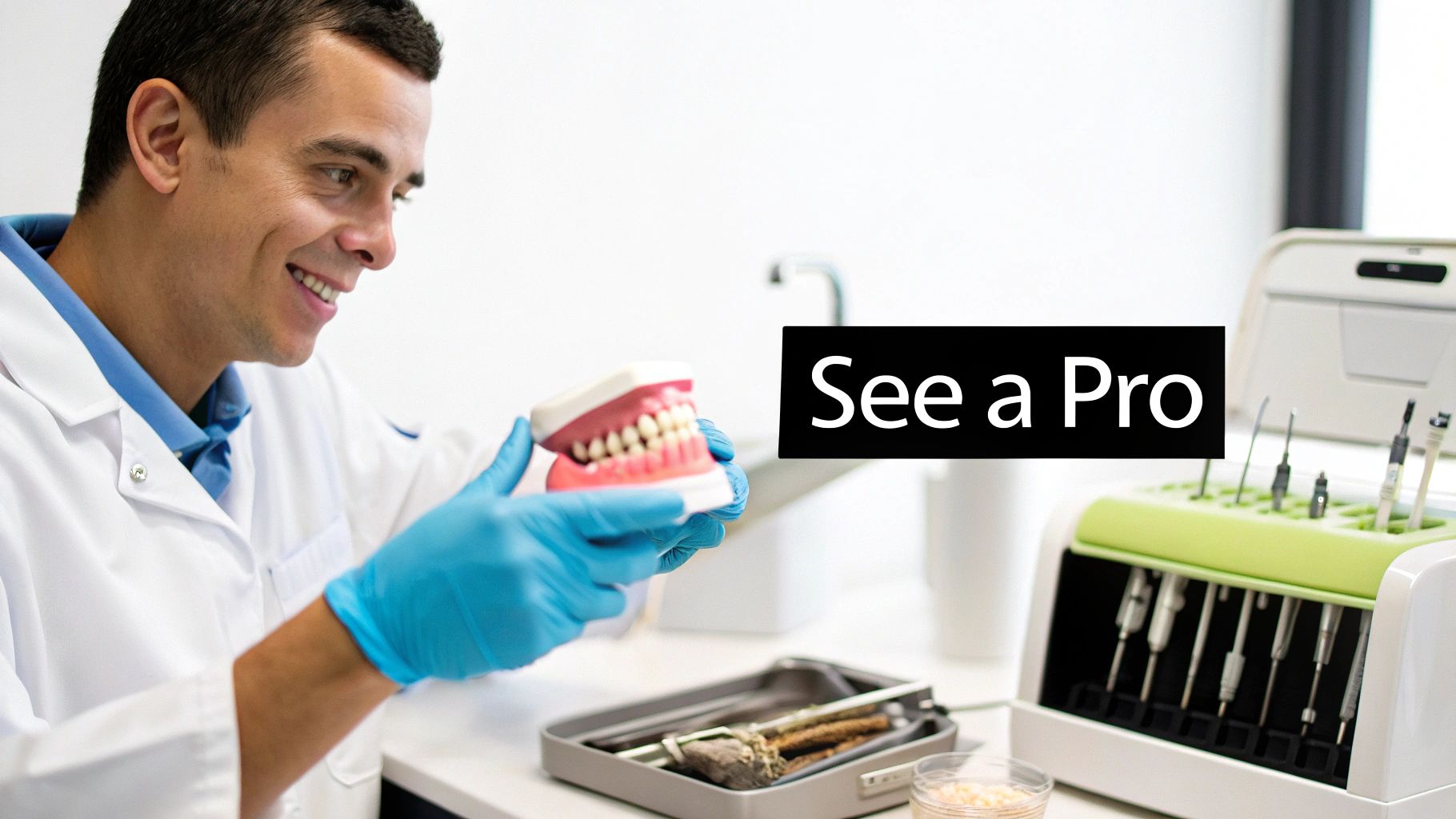
While the at-home methods we’ve covered are great for routine upkeep and lifting fresh stains, there comes a point where some discoloration is just too stubborn for a DIY approach. Years of coffee, red wine, or tobacco can create deep-set stains that a simple soak just won’t touch.
If you feel like you're fighting a losing battle with your appearance, that's your cue. Seeing a dental professional is by far the fastest and safest way to truly restore your denture's original color and ensure your oral health is on track.
It's easy to see why people try at-home solutions first. The entire U.S. teeth whitening market is expected to hit $2.62 billion by 2032, and a huge part of that—68.67% of consumers—prefer DIY kits. After all, professional treatments can cost anywhere from $500 to $1,000. You can explore more about these consumer preferences in teeth whitening on fortunebusinessinsights.com.
But for dentures with serious discoloration, a professional cleaning delivers value that home kits simply can't replicate, offering a dramatic improvement to your smile.
Recognizing the Signs It’s Time for a Visit
So, how do you know you've reached the limit of what you can do at home? A few clear signs related to your dental health and appearance will tell you it's time to book an appointment.
Keep an eye out for these red flags:
- Deep, Stubborn Stains: You’ve been consistent with safe home-cleaning methods, but those ugly yellow or brown spots aren’t budging. This means the stains are embedded deep in the material, affecting your smile.
- A Persistent Odor: If a bad smell lingers even after a thorough cleaning, it’s likely a sign of bacterial buildup or stubborn plaque that only professional equipment can remove, impacting your oral health.
- A Change in Fit: Do your dentures feel a little loose or just not right? A buildup of calculus (hardened plaque) can actually alter how they fit. Your dentist can clean them and check the alignment, which is vital for your comfort and health.
- Dull or Lifeless Appearance: Sometimes it’s not one specific stain, but an overall lack of brightness that at-home polishing can't seem to fix, diminishing the beauty of your smile.
Ignoring these issues won’t just affect your smile’s appearance; problems like calculus buildup can irritate your gums and even shorten the lifespan of your dentures.
The Power of Professional Ultrasonic Cleaning
When you take your dentures to a dental clinic, they won't just give them a good scrub. They’ll use a high-tech piece of equipment called an ultrasonic cleaner. This procedure offers benefits for both your appearance and oral health that are a world away from any at-home soaking solution.
This device uses high-frequency sound waves to create microscopic bubbles in a specialized cleaning liquid. This process, known as cavitation, creates a powerful but gentle scrubbing action that blasts away years of built-up stains, calculus, and bacteria from every nook and cranny. It's a deep clean that no brush can ever hope to match.
A single professional ultrasonic cleaning can often get your dentures back to their original bright shade in just one appointment. It's the ultimate reset button when home remedies just aren't cutting it anymore.
After the ultrasonic bath, the dental professional will polish your dentures with special pastes and tools. This final step is crucial—it smooths out the surface, restores that brand-new gloss, and makes the material more resistant to future stains. You’ll walk out with dentures that look and feel completely revitalized, boosting your confidence and promoting better oral hygiene.
Still Have Questions About Whitening Your Dentures?
Even with the best instructions, a few questions always pop up when you're trying to get your dentures looking their best. Let's tackle some of the most common ones I hear from patients so you can feel totally confident in your routine for maintaining a beautiful, healthy smile.
It’s no surprise people are curious. The desire for a brilliant smile has never been stronger, with North America making up a massive 38% of the $7.58 billion global teeth whitening market. This has been great for the 35 million Americans with dentures, leading to better products and techniques. You can discover more insights about the teeth whitening market to see just how much is changing.
With all the information out there, it's easy to get confused. Let's clear things up.
How Often Can I Safely Whiten My Dentures at Home?
This is a great question because it's all about finding the right balance between appearance and the long-term health of your appliance. Consistency is your best friend, but so is being gentle.
For daily upkeep, soaking your dentures in a special non-abrasive denture cleanser is completely safe—in fact, I highly recommend it. It's the simplest way to keep them fresh and stop stains from setting in, benefiting both your appearance and oral health.
But for the tougher stuff, you need to be more careful. If you're using a hydrogen peroxide solution to lift deeper stains, pull back and only do this once or twice a week, tops. Using it too often can start to wear down the acrylic over time.
The best advice? Just pay attention to your dentures. If you notice any weird changes in the texture, color, or how they fit, stop what you're doing and give your dentist a call to protect your oral health.
Can I Use Whitening Strips Made for Natural Teeth?
I get why this is tempting—you see them everywhere! But please, avoid using whitening strips or gels made for natural teeth on your dentures. They are simply not made for denture materials and can cause more harm than good to your appliance.
Here’s exactly why it’s a bad idea for your dentures' appearance:
- They won't stick right. The adhesive on those strips is formulated for smooth, non-porous tooth enamel, not the acrylic or porcelain of dentures.
- You'll get patchy results. Because they can't get a good grip, you’ll likely end up with a blotchy, uneven look. Not exactly the aesthetic you're aiming for.
- You risk damaging them. The bleaching agents can be too aggressive for denture resin, potentially causing permanent discoloration or making the material weaker.
Stick to products that are specifically made for dentures. They are formulated to work effectively on acrylic and porcelain without causing damage, ensuring you get the bright, even results you're looking for.
Will Whitening Get My Dentures Back to Their Original Color?
Yes, that’s precisely what these treatments are designed to do for your smile's appearance. Think of denture whitening as a deep clean for surface-level stains—the kind that build up from coffee, tea, red wine, and just everyday life. The goal is to lift all that gunk and restore your dentures to the exact shade they were when your dentist first fitted them.
What whitening can't do, however, is change the built-in color of the denture material itself. If you've had your natural teeth whitened and now want your dentures to match, or if you just want a brighter shade than you started with, that's a different conversation. You'll need to talk to your dentist about professional adjustments or perhaps even having a new, brighter set of dentures made to achieve your desired look.
How Do I Keep My Dentures From Staining Again So Quickly?
Once you’ve put in the work to get your dentures sparkling, keeping them that way comes down to daily habits. A little prevention goes a long way in maintaining a bright, healthy-looking smile.
Being proactive is your best defense. The moment you finish a cup of coffee, a glass of red wine, or a bowl of berries, give your dentures a quick rinse under cool water. Brush them daily with a soft-bristle denture brush and a non-abrasive cleaner, and let them soak overnight in a cleaning solution. And don't forget, regular professional cleanings are key for long-term brightness and overall oral health.
At Grand Parkway Smiles, our team is here to help you get and keep a smile you absolutely love. Whether you need a professional cleaning for your dentures or want to discuss other cosmetic and restorative options, we’re ready to provide the expert care you deserve. Visit us online at https://dentistkatytx.com to schedule your appointment.