
A dental bridge is a tried-and-true solution for replacing one or more missing teeth, effectively closing the gap to restore your smile's health and appearance. It’s custom-made and typically involves an artificial tooth, called a pontic, which is securely held in place by crowns attached to the healthy teeth on either side of the space.
Restoring Your Smile and Function
Losing a tooth is about much more than just a gap in your smile. It’s a real disruption to your dental health and can even shake your confidence. When a tooth is gone, the surrounding teeth naturally start to drift into that empty space. This shift can lead to a misaligned bite, trouble chewing, and even change your facial structure over time. This is exactly where a dental bridge comes in as a powerful, reliable solution to restore both function and aesthetics.
Think of it just like a bridge you'd drive over. The healthy teeth on either side—which we call abutment teeth—act as the strong support towers. We place a custom-made crown on each of these abutment teeth, and those crowns are fused to an artificial tooth (the pontic) that sits perfectly in the empty spot. The result is a complete, beautiful, and fully functional arch.
To put it simply, here’s a quick breakdown of what makes up a dental bridge.
Dental Bridge at a Glance
| Component | What It Does |
|---|---|
| Pontic | The artificial tooth that fills the gap left by a missing tooth. |
| Crowns | Caps that are placed over the healthy neighboring teeth to anchor the bridge. |
| Abutment Teeth | The natural, healthy teeth on either side of the gap that support the bridge. |
This structure is what allows a dental bridge to be so effective at restoring both the health and beauty of your smile.
The Dual Benefits of a Dental Bridge
The impact of getting a dental bridge goes far beyond just filling an empty space. It offers major advantages for both your oral health and your appearance. By getting a dental bridge, you can expect to:
- Enhance Your Appearance: A bridge brings back the natural shape of your teeth and gums, giving you a seamless, complete smile you can feel great about.
- Improve Oral Function: It re-establishes your ability to chew your food properly and speak clearly—restoring comforts that are often compromised when you're missing teeth.
- Maintain Facial Structure: By stopping the remaining teeth from shifting, a bridge helps preserve your natural face shape and prevents a sunken-in look that can make you appear older.
- Distribute Bite Forces Evenly: It ensures the pressure from your bite is spread out correctly, protecting your other natural teeth from excessive wear and strain.
A dental bridge isn’t just a cosmetic touch-up; it's a functional restoration that protects the alignment of your existing teeth and supports your long-term oral health. It’s a trusted method for getting back the practical ability to chew and speak with confidence while enjoying a beautiful, complete smile.
Exploring the Four Main Types of Dental Bridges
If you're considering a dental bridge, it's important to know they aren't a one-size-fits-all solution. Different designs are crafted for very specific situations, depending on where your missing tooth is and the health of the surrounding teeth. Getting familiar with these options is the first step toward figuring out the best way to restore your smile’s health and appearance.
The four main types of bridges each take a unique approach to closing that gap, so there’s a reliable option for nearly every patient.
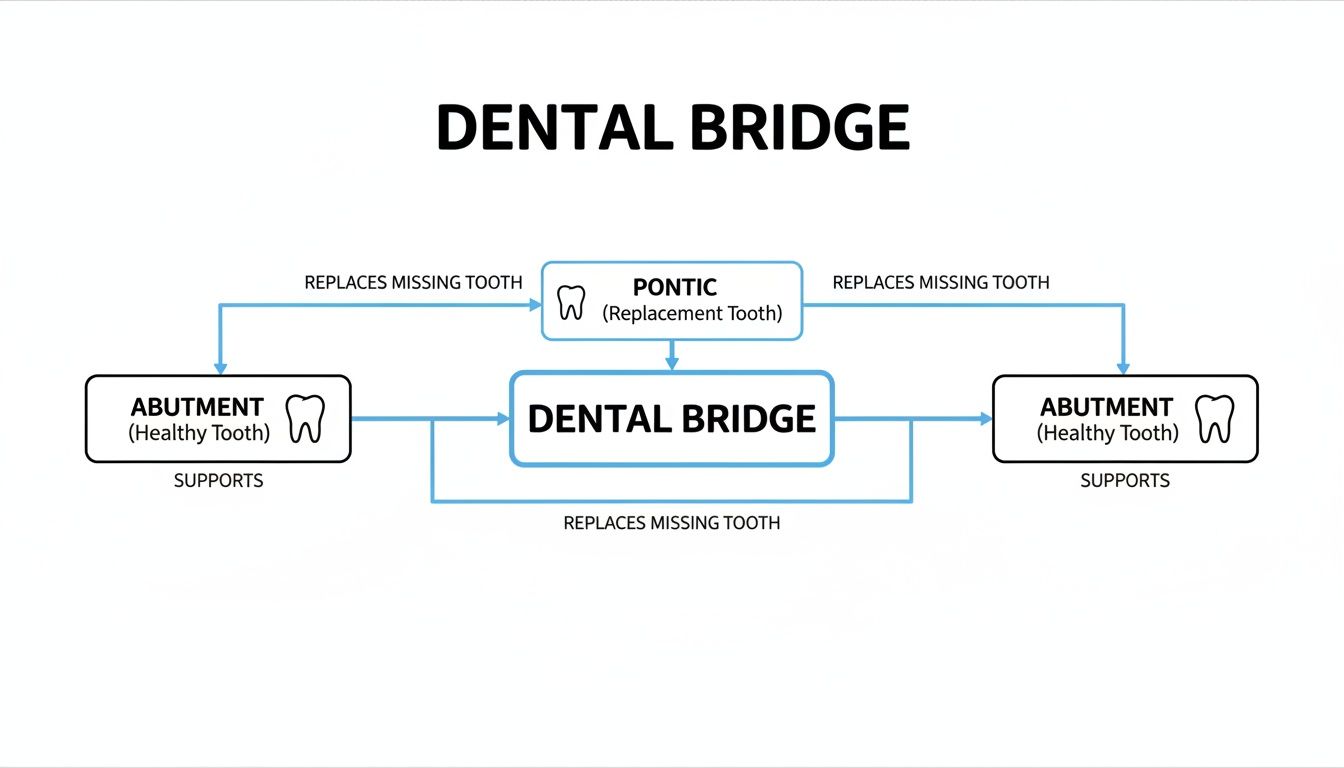
This visual really shows how a bridge leans on its neighbors to create a complete, stable smile.
Traditional Dental Bridges
The traditional dental bridge is the most common type, and for good reason. It's made of one or more artificial teeth, called pontics, which are held firmly in place by dental crowns. These crowns are cemented right over the healthy teeth on either side of the gap, known as abutment teeth.
This design is incredibly effective and durable, restoring your bite and smile beautifully. It's the go-to choice when you have strong, healthy natural teeth to act as anchors. By literally creating a "bridge" over the empty space, it completely restores your bite and brings back the natural appearance of a full set of teeth.
Cantilever Bridges
What happens when you only have a healthy tooth on one side of the gap? That’s where a Cantilever bridge comes in. Instead of being anchored on both ends, the pontic is attached to a crown on just a single abutment tooth. Think of it like a balcony that's supported from one side.
This is a fantastic solution for replacing teeth at the very back of your mouth where another anchor isn't available. While they aren't used as often as traditional bridges, they solve a very specific problem, helping to prevent bite alignment issues and making chewing easier.
Maryland Bridges
For a more conservative approach that preserves more of your natural tooth structure, there’s the Maryland bridge. This clever design ditches the full crowns. Instead, it uses a metal or porcelain framework with "wings" on the back that are bonded directly to the abutment teeth.
Because we don't have to significantly reshape the anchor teeth, more of your natural tooth structure stays intact. Maryland bridges are a great choice for replacing missing front teeth, where chewing forces aren't as intense. They offer a strong, aesthetic fix that’s much less invasive.
Implant-Supported Bridges
The strongest and most secure option is the implant-supported bridge. This type doesn’t rely on your natural teeth for support. Instead, the bridge is anchored directly to dental implants—small titanium posts that are surgically placed right into your jawbone.
An implant-supported bridge is often the best solution when several teeth in a row are missing. Because it doesn't put stress on natural teeth and helps preserve jawbone density, it provides a superior long-term benefit for both your dental health and overall facial structure. This approach creates an incredibly secure foundation, restoring full function and a beautiful, confident smile.
The Dental Bridge Procedure: A Step-by-Step Journey
Thinking about getting a dental bridge? It’s a straightforward process, and knowing what to expect can make the whole experience much more comfortable. The entire journey to your new smile is usually wrapped up in just two main appointments, each with a clear purpose focused on restoring your dental health and appearance.
We blend artistry with dental science to get your smile back to full health and beauty. Let’s walk through how it all comes together.
Visit One: Laying the Foundation
Your first appointment is all about prep work. This is where we lay the groundwork to ensure your final bridge fits perfectly and looks completely natural, seamlessly blending with your smile.
-
Consultation and Smile Design: First, we’ll talk about your goals for your smile's appearance. We'll pick out the perfect shade and shape for your new tooth so it blends in flawlessly with its neighbors for a natural look.
-
Preparing the Abutment Teeth: To give the bridge a solid foundation, we'll gently reshape the abutment teeth—the healthy teeth on either side of the gap. This involves removing a tiny layer of enamel to make room for the crowns that will hold the bridge securely. The health of these anchor teeth is absolutely essential for a long-lasting restoration.
-
Taking Impressions: With the teeth prepped, we take a highly accurate impression or a digital scan of the area. This serves as the precise blueprint for our dental lab, who will use it to craft a bridge that is custom-made for your mouth.
-
Placing a Temporary Bridge: You won't leave with a gap. We’ll place a temporary bridge to protect the prepared teeth and gums, maintaining your smile's appearance while your permanent one is being created.
Visit Two: The Final Placement
About one to two weeks later, your custom bridge will be ready. This second visit is usually quicker and is all about achieving that final, perfect fit for a beautiful and functional result.
During this appointment, we’ll remove the temporary bridge. Then, we’ll carefully place your permanent bridge, checking everything—the fit, the color, and how your bite feels. We'll make any small adjustments needed to ensure it’s comfortable and looks just right.
Once you and your dentist are completely happy with it, the bridge is bonded securely in place with a strong dental cement. You're all set to enjoy your restored smile!
This two-visit process is designed to be as efficient and comfortable as possible. Every step, from preparing the anchor teeth to cementing the final restoration, is focused on giving you a new dental bridge that not only looks fantastic but also lets you chew and speak with total confidence again.
Are You a Good Candidate for a Dental Bridge?
A dental bridge can be a life-changing restoration, but it's not the right fit for every situation. Determining if you're a good candidate involves a close look at your overall oral health, as the success of any bridge hinges on a rock-solid foundation.
The single most important factor is the health of the teeth on either side of the gap. These abutment teeth must be strong enough to anchor the crowns and support the new tooth (the pontic). If these potential anchor teeth have large fillings, significant decay, or signs of gum disease, they might not provide the stable support needed for long-term success.
Key Factors for Candidacy
Beyond having strong anchor teeth, a few other health factors are crucial for a dental bridge to be your best choice. Ideal candidates almost always share these traits:
- Great Oral Hygiene: A commitment to a solid routine of brushing and flossing is essential. This keeps the bridge, anchor teeth, and your gums clean and healthy, ensuring the longevity of your restoration.
- Healthy Gums: Your gums must be free from periodontal disease. Healthy gum tissue is vital for giving those abutment teeth the strong support they need.
- Sufficient Bone Structure: There must be enough jawbone to hold the anchor teeth firmly in place. Significant bone loss can compromise the stability of the entire bridge and impact your overall dental health.
On the flip side, if the neighboring teeth are weak or there's substantial bone loss, a bridge might not be the best first option. It's always a good idea to explore the various costs of replacing a missing tooth to get a clear picture of all the potential treatments available to you.
Material Science and Modern Bridges
It's amazing how far dental technology has come. Today’s bridges are incredibly durable and look completely natural, thanks to centuries of material science. The journey started way back in the 1770s with early porcelain that was brittle and looked unnaturally white.
A huge leap forward came in 1903 with the invention of the porcelain jacket crown, paving the way for modern designs. By fusing porcelain to a metal base in the mid-1900s, dentists finally achieved the perfect blend of strength and beauty we rely on today to create healthy, natural-looking smiles.
The only way to know for sure if you're a good candidate is to come in for a professional consultation. Your dentist will perform a thorough exam to assess your unique smile and recommend the most effective, long-lasting solution for your specific health needs.
How Long Do Dental Bridges Last and What Are the Real Benefits?
A dental bridge is more than just a way to fill a gap—it's a significant investment in your long-term health, daily comfort, and confidence. The benefits extend far beyond cosmetics, restoring key functions that dramatically improve your quality of life.
A well-made bridge immediately gives you back a complete, beautiful smile. This means you can speak, laugh, and eat your favorite foods without hesitation.

Functionally, a bridge restores your ability to chew properly, which is essential for good digestion and nutrition. But perhaps the most critical health benefit is that a bridge acts as a placeholder. It stops neighboring teeth from drifting into the empty space, a crucial role that keeps your bite aligned and protects your face from changing shape over time.
Durability and Long-Term Value
With proper care, a modern bridge made from high-quality materials like porcelain or zirconia can easily last 10 to 15 years, and often much longer. This durability makes it a reliable and lasting solution for your dental health.
Of course, the longevity of your bridge depends on solid oral hygiene and regular dental checkups. The payoff for that small effort is a stable, functional, and beautiful smile for years to come.
A dental bridge is far more than a simple cosmetic fix. It's a functional restoration that protects your bite, preserves your facial structure, and genuinely improves your quality of life.
The concept of replacing missing teeth isn't new. The desire for a full, healthy smile goes back thousands of years, with some of the earliest bridgework using gold wire and ivory appearing as far back as 1500 BC. While those early attempts were mostly for appearance and didn't improve chewing, they show just how deeply rooted the need for a complete smile is. It's pretty amazing to learn about the fascinating history of dental bridges and see how far the technology has come.
The Health and Appearance Benefits
Opting for a dental bridge triggers a chain reaction of positive effects for both your dental health and your appearance, leading to a total smile upgrade.
- Brings Back a Natural Smile: Today's materials are incredible. They can perfectly match the color and translucency of your natural enamel, making the bridge virtually indistinguishable from your other teeth.
- Improves Chewing and Speaking: A bridge restores the power to bite and chew all sorts of foods comfortably. It also helps you speak more clearly, without any whistling or slurring caused by a gap.
- Keeps Teeth in Line: By filling the empty space, a bridge prevents surrounding teeth from shifting. This is a huge health benefit, as shifting can lead to bite problems, TMJ issues, and even jaw pain.
- Preserves Your Facial Shape: Losing teeth can cause your cheeks to get a sunken look over time. A bridge provides the underlying support needed to maintain your natural facial contours and a youthful appearance.
Frequently Asked Questions About Dental Bridges
Even after covering the basics, it's completely normal to have more questions. Choosing a dental bridge is a big decision for both your health and your smile, so feeling confident in your choice is key. Let's tackle some of the most common questions we hear from patients.
How Do I Care for My Dental Bridge?
Caring for your bridge is much like caring for your natural teeth, with one extra step to ensure its longevity and protect your gum health. You'll still need to brush twice a day and floss daily. The key difference is cleaning the space underneath the pontic (the replacement tooth).
This is a spot where plaque can accumulate, so keeping it clean is crucial for preventing gum disease. We often recommend special tools like a floss threader or an interdental brush to clean this area effectively. Regular dental checkups are also non-negotiable; they allow us to professionally clean your bridge and ensure it remains stable and functional.
Is Getting a Dental Bridge Painful?
No, the procedure itself is not painful. Before we begin, your dentist will use a local anesthetic to completely numb the area. You might feel some light pressure while the anchor teeth are being prepared, but you should not feel any pain.
After the anesthetic wears off, it’s common to experience some mild sensitivity for a few days. This is a normal part of the healing process and is usually easy to manage with over-the-counter pain relievers. Our focus is always on ensuring your complete comfort from start to finish.
How Much Does a Dental Bridge Cost?
The cost of a dental bridge can vary, as several factors influence the final price. These include:
- The type of bridge you get (a traditional bridge has a different cost than an implant-supported one).
- The materials used—porcelain, zirconia, and metal alloys all have different price points.
- How many teeth are being replaced.
- Your specific location and the fees at our dental office.
Dental insurance often covers a portion of the cost, and we are always happy to discuss financing options to help make this important health investment fit your budget.
It's helpful to see a bridge as more than just an upfront cost. It’s a long-term investment in your ability to eat comfortably, speak clearly, and smile with confidence.
What Is the Difference Between a Bridge and a Dental Implant?
This is a very common and important question. Both are excellent options for replacing missing teeth, but they benefit your dental health in different ways. A dental bridge "bridges" a gap by using the neighboring teeth as anchors for support.
A dental implant, on the other hand, is a small titanium post that is surgically placed into your jawbone to act as a new tooth root. A crown is then attached to the implant. Because an implant is a standalone solution, it doesn't involve altering adjacent teeth and it also helps preserve your jawbone density. Your dentist will review the unique benefits of each to help you determine the best path for your long-term oral health.
Ready to get your full, healthy smile back? The expert team at Grand Parkway Smiles has helped countless patients right here in the Katy and Houston area restore their confidence with beautiful, custom-fit dental bridges. We combine advanced materials with a gentle, patient-focused approach to create results that look and feel natural.
Schedule your consultation today to find out if a dental bridge is the right solution for you. Just visit us at https://dentistkatytx.com to get started.