When you're weighing implants vs dentures, the decision profoundly impacts your long-term dental health and appearance. Think of it this way: dental implants are a permanent solution that integrates with your jawbone, which is crucial for preventing bone loss and preserving your facial structure. Traditional dentures, on the other hand, are a removable option that sits on top of your gums. While aesthetically pleasing, they do not support jawbone health and can, over time, contribute to its deterioration.
The right choice really boils down to your personal health and aesthetic goals. Are you looking for a long-term investment that preserves your jaw structure and offers a completely natural look and feel? Or is a non-surgical, more immediately affordable solution the better fit for restoring your smile right now?
Making the Right Choice for Your Smile
Choosing a tooth replacement option is a significant decision. It’s not just about appearance; it affects your confidence, your daily comfort, and your oral health for years to come. This guide is designed to go beyond a simple pros and cons list to help you understand the real-world impact of choosing either dental implants or dentures. The goal isn't just to get your smile back, but to restore your ability to eat, speak, and live with renewed confidence and optimal health.

What you decide now lays the groundwork for your future dental well-being, influencing everything from your facial structure to how you'll care for your beautiful new smile each day.
Understanding the Fundamental Differences
At their core, these two solutions address tooth loss in completely different ways, each with distinct benefits for your health and appearance. One literally becomes a part of your jaw, while the other is a custom-made appliance you take in and out. This is the key distinction that drives all the long-term benefits and trade-offs.
-
Dental Implants: These are essentially artificial tooth roots. A small titanium post is surgically placed directly into the jawbone. Your bone then naturally grows around and fuses to it—a process called osseointegration. This creates an incredibly stable, permanent base that keeps your jawbone strong and stimulated, just like a natural tooth root would, preserving your facial contours.
-
Dentures: These are custom-fitted removable prosthetics that rest on your gum tissue, designed to restore a full and beautiful smile. They're held in place by natural suction, sometimes with the help of a dental adhesive. While today's dentures look exceptionally natural, they don't provide any stimulation to the jawbone underneath.
Implants vs Dentures at a Glance
To give you a quick snapshot, here’s a breakdown of the key differences in terms of health, appearance, and function.
| Feature | Dental Implants | Dentures |
|---|---|---|
| Stability | Fused directly to the jawbone; permanent and secure. | Rests on gums; can shift when eating or speaking. |
| Bone Health | Prevents jawbone loss by stimulating the bone. | Can contribute to bone deterioration over time. |
| Maintenance | Cared for like natural teeth (brushing and flossing). | Removed daily for cleaning and soaking. |
| Functionality | No food restrictions; provides natural chewing power. | May require dietary adjustments to avoid sticky or hard foods. |
| Appearance | Look and feel exactly like natural teeth. | Aesthetically pleasing but may feel bulky. |
This table gives a high-level view, but the real impact of these benefits is felt in your daily life and long-term health.
The most significant long-term benefit of dental implants is their ability to prevent jawbone resorption. When a tooth is lost, the jawbone no longer receives stimulation and begins to deteriorate, which can alter your facial structure. Implants are the only solution that actively prevents this process, safeguarding your appearance for years to come.
How Dental Implants Restore Your Natural Smile
When you hear “dental implant,” don’t think of it as just a replacement tooth. It’s an advanced solution designed to become a fully functioning part of your body, perfectly mimicking a natural tooth from the root to the crown. The entire structure is built for permanence and stability, delivering a beautiful smile that goes far beyond simply filling a gap.
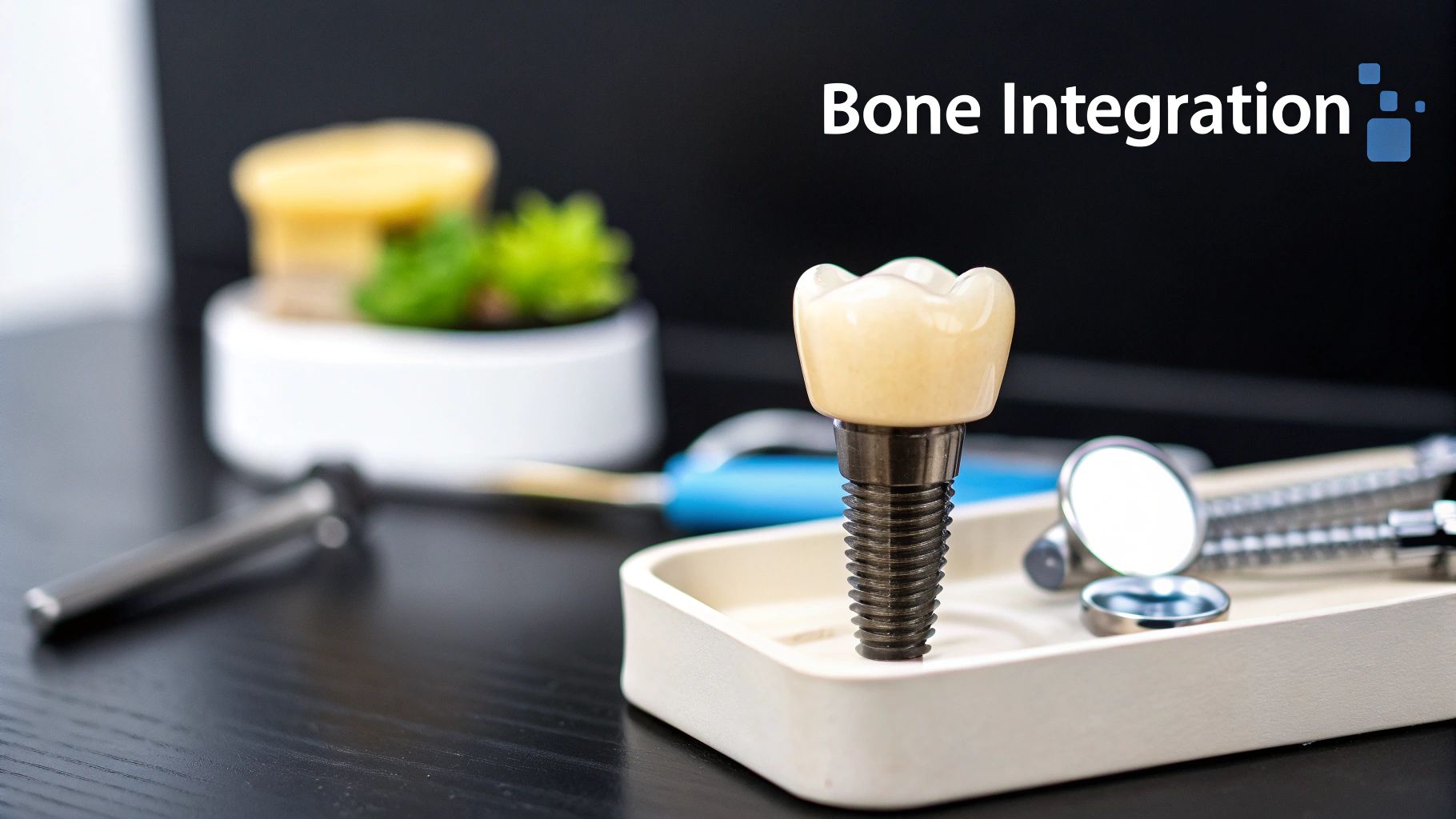
The magic behind this is a biological process called osseointegration. We surgically place a biocompatible titanium post—think of it as an artificial root—into your jawbone. From there, your body’s natural healing power takes over, fusing the bone directly to the implant’s surface.
This fusion creates an incredibly strong foundation, essentially locking the implant into your jaw. It’s this integration that sets implants apart, ensuring long-term oral health and a smile that looks and feels completely natural.
Preserving Your Jawbone and Facial Structure
One of the most vital health benefits of dental implants is their power to stop jawbone deterioration. When you lose a tooth, the part of the jawbone that supported it no longer gets the daily stimulation from chewing.
The body responds with a process called resorption, breaking down that bone. Over time, this bone loss can cause a sunken facial appearance, often making people look older than they are.
Dental implants are the only tooth replacement option that actively stops this bone loss. By acting as a prosthetic root, the implant provides the stimulation needed to keep your jawbone strong and healthy, which in turn preserves your natural facial contours and youthful appearance.
The Three-Part System for a Perfect Smile
A complete dental implant isn't just one piece. It’s a system of three core components working together to flawlessly replicate the look and function of a real tooth. This brilliant design is what delivers superior strength and a seamless, natural appearance.
- The Implant Post: This is the titanium screw placed surgically into the jawbone, serving as the new tooth root.
- The Abutment: A small connector piece that attaches to the implant post, sitting right at or just above your gum line.
- The Crown: This is the visible, tooth-shaped prosthetic secured to the abutment. We custom-craft each crown to perfectly match the color, shape, and size of your other teeth for a flawless smile.
By replicating the entire tooth structure from root to crown, dental implants restore chewing power that is nearly identical to that of natural teeth. This means you can eat the foods you love without worry or hesitation—a significant benefit for your quality of life and nutrition.
The success of this system is well-documented. Dental implants have exceptionally high clinical success rates. The average global failure rate is just 3.1%. Even better, specialized solutions like All-on-4 implants boast a prosthetic survival rate of 98.8%. With proper care, your implants can last 25 years or longer, making them a reliable, permanent investment in your oral health and appearance. You can explore more data on dental implant success rates to see their long-term value.
This durability also means caring for your implant is as straightforward as caring for your natural teeth. Regular brushing, flossing, and dental check-ups are all that’s needed to maintain your beautiful, restored smile for a lifetime.
Getting to Grips with Traditional Dentures
For a long time, dentures have been the go-to solution for anyone needing to replace missing teeth and bring back a full, confident smile. They're a non-surgical, straightforward way to restore the appearance of natural teeth, making them a solid choice if you're not a candidate for surgery or simply need a faster, more budget-friendly option to improve your smile.
Modern dentures are not one-size-fits-all; they are custom-made prosthetics designed to sit comfortably on your gums and look beautiful. You'll generally find two types: full dentures for replacing an entire arch of teeth and partial dentures, which cleverly fill in gaps while your healthy, natural teeth remain. The process starts with our team taking precise impressions of your mouth to create a set that looks and feels as natural as possible.
How Do Dentures Actually Work?
Unlike dental implants, which are surgically anchored into the jawbone, traditional dentures simply rest on your gum tissue. A well-made full denture stays in place using natural suction that forms between the base of the denture and your gums.
For a little extra peace of mind and stability, especially when you're first getting used to them, dental adhesives can be a great help. This helps keep them from shifting when you eat or talk, giving you a welcome boost of confidence in your smile. The main benefit is a quick aesthetic and functional restoration without any surgery.
The Importance of a Daily Care Routine
Living with dentures means adopting a new daily hygiene routine to keep both your mouth and your prosthetic healthy. Since they're removable, you must take them out every night. This is non-negotiable, as it gives your gum tissues a chance to breathe and recover, preventing irritation.
This nightly break is also crucial for cleaning. Your maintenance plan should include:
- A Thorough Clean: Gently brush the denture using a soft-bristled brush and a non-abrasive denture cleanser. This removes food particles and plaque, keeping your denture looking its best.
- Overnight Soaking: Keep your denture submerged in a special soaking solution or just plain water overnight. This prevents it from drying out, which can cause it to warp and lose its custom fit.
- Gum Care: Even with no teeth, you need to brush your gums, tongue, and the roof of your mouth to boost circulation, remove plaque, and maintain oral health.
Sticking to this routine is key for the denture's lifespan and helps prevent sore spots and potential infections, ensuring your smile remains comfortable.
While dentures do an excellent job of restoring your smile's appearance, they don't stimulate the jawbone like natural tooth roots or implants do. The pressure they put on the gums can actually speed up bone resorption over time—a critical health difference to remember when comparing them to implants.
The Adjustment Period and What Happens Down the Road
There's definitely a learning curve when you first get dentures. They might feel a bit bulky at first, and you'll need some practice to get the hang of eating and speaking as you learn to control the denture with your tongue and cheek muscles.
As the years go by, the shape of your jawbone and gums will naturally change due to bone resorption. This often causes a once-snug denture to feel loose. To keep them fitting securely and comfortably, you'll likely need to have them professionally relined every few years. Eventually, they'll need to be replaced entirely, typically every five to ten years, to maintain a proper fit and appearance.
A Head-to-Head Comparison for Your Health and Lifestyle
Once you get past the initial procedures, the real difference between implants and dentures shows up in your day-to-day life. How will your choice affect the way you eat, talk, and handle your oral hygiene? Let's dig into the practical side of things—the functional stability and long-term health impacts that truly matter for your quality of life.
The core difference is how each option works with your body. Dental implants actually become part of your jawbone, offering permanent health and aesthetic benefits. Dentures, on the other hand, are removable prosthetics that simply rest on your gums, which means a completely different experience.
Functional Stability: Biting into the Details
Think about biting into a crisp apple or a juicy steak with total confidence. That simple act is where you'll feel the biggest benefit of an implant's stability.
Because dental implants fuse directly to the jawbone, they can restore nearly 100% of your natural chewing power. This stability means you can eat whatever you want without worrying about your teeth slipping. It’s a seamless experience that feels just like having your own strong, healthy teeth back.
Dentures, which rely on suction and sometimes adhesives, just can't offer that same level of strength. They sit on top of the gum tissue, and biting down too hard can make them shift. This is why many denture wearers have to adjust their diets, often avoiding sticky, hard, or chewy foods to prevent discomfort or an embarrassing moment.
The most critical functional differentiator is bone stimulation. Implants act like natural tooth roots, stimulating the jawbone with every bite. This preserves bone density and your natural facial structure, whereas dentures, by placing pressure only on the gums, can actually contribute to accelerating bone loss over time.
Long-Term Oral Health and Bone Preservation
Your long-term health and appearance are directly tied to the health of your jawbone. When a tooth is lost, that part of the jawbone no longer gets the stimulation it needs and starts to shrink. Over time, this can lead to a sunken facial appearance and make future dental work much more complicated.
Dental implants are the only solution that actively stops this bone loss. By mimicking a tooth root, the implant provides the constant stimulation needed to keep your jawbone strong and healthy, protecting your facial contours for a lifetime.
Traditional dentures, however, don't engage the jawbone at all. As the bone underneath resorbs, the denture will start to feel loose. This means you'll need periodic relining and eventual replacement just to maintain a decent fit, creating an ongoing cycle of adjustments.
Daily Maintenance and Durability
Your daily routine will look quite different depending on which path you choose. Here's a quick rundown of what to expect for everyday care and how each option supports your smile long-term.
-
Dental Implants: The care routine is simple and exactly the same as for natural teeth. Just brush, floss, and keep up with your regular dental check-ups. With proper care, a dental implant can last 25 years or more, making it a true long-term investment in your health and appearance.
-
Dentures: This option has a more involved daily cleaning process. You have to remove them every night to brush them with a special cleanser and let them soak. Because of changes in jaw shape and normal wear and tear, dentures typically need to be replaced every 5 to 10 years.
For a quick overview, this infographic shows some of the key benefits of the non-surgical denture approach.
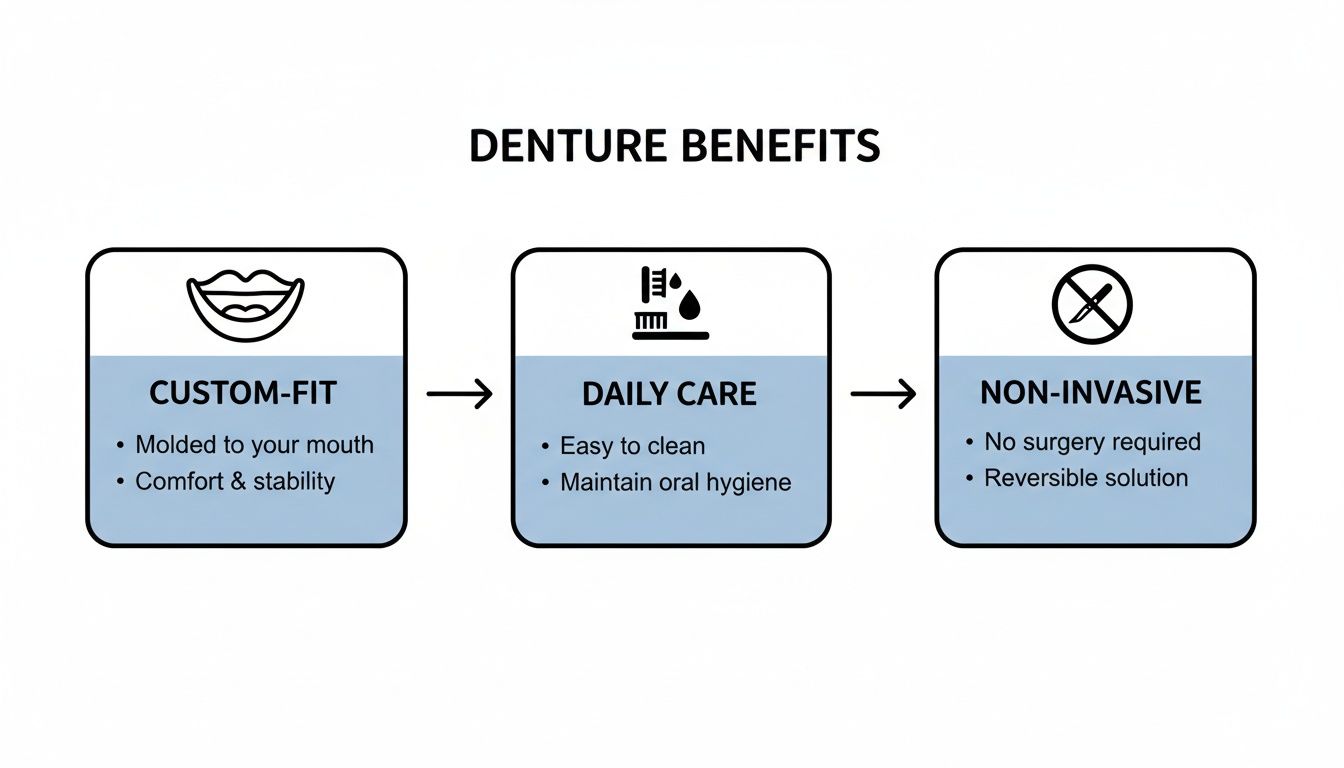
As you can see, dentures are custom-fit, don't require surgery, and have a manageable daily care routine—all important benefits for many patients to consider.
This difference in durability and daily upkeep is a major reason why patient preferences are shifting toward permanent solutions. The global dental implant market has grown tremendously, showing a clear trend toward treatments that offer lasting health benefits.
Of course, for those looking for a happy medium, there are hybrid solutions that blend the stability of implants with the full coverage of a denture. You can learn more about how implant-supported dentures are combining function and aesthetics in our detailed guide.
What's the Real Cost? A Look at the Lifetime Value of Your Choice
When you’re weighing implants against dentures, the financial aspect is a major factor. But looking at the initial price tag alone doesn't tell the whole story. To truly understand the investment in your smile and health, you have to consider the lifetime cost of each path.
Dentures almost always have a lower upfront price, which is appealing. But over the years, the recurring expenses for maintenance, refitting, and replacements can add up. Dental implants, on the other hand, are best thought of as a one-time investment in your health. The initial cost covers a permanent fix that, with good care, can last for decades without needing constant adjustments.
Breaking Down the Initial Investment
This is where you'll see the biggest difference on paper. A single dental implant costs more initially because it involves a surgical procedure, premium materials, and sophisticated technology to ensure a perfect, lasting outcome.
Dentures are a non-surgical solution, making them a more budget-friendly choice right out of the gate. For a closer look at what goes into that initial price, you can check out our guide on how much dentures cost. That lower entry point makes them a practical option for many people who need to restore their smile right away.
The Hidden Costs of Dentures Over Time
The true cost of owning dentures reveals itself over the years. As your jawbone naturally changes shape without tooth roots to support it, a series of ongoing expenses become necessary to keep your dentures comfortable and functional.
- Replacements: Most dentures need to be completely replaced every 5 to 10 years due to wear and tear and the shifting of your jaw.
- Professional Relining: As your jaw shrinks, your dentures will get loose. They'll need to be professionally relined periodically to restore a snug fit, which adds to the long-term bill.
- Adhesives and Cleaners: You’ll be making regular trips to the drugstore for special cleaning tablets and dental adhesives to keep them stable and hygienic.
When you do the math, the combined cost of new dentures every decade, plus relines and supplies, can easily outstrip the initial investment of a dental implant over a 20-year span. What starts as a budget-friendly choice can turn into a cycle of ongoing payments.
Implants: A Long-Term Investment in Your Health
Dental implants completely change the financial equation. Yes, the upfront cost is higher, but it covers a solution built to last a lifetime. This one-time investment eliminates the endless cycle of replacements and adjustments that come with dentures. There are no adhesives to buy, no relining appointments to worry about.
This value is reflected across the entire dental industry. Dental implants are a huge reason the global dental prosthetics market was valued at over USD 50 billion in 2023. While one implant is a significant purchase, its 25+ year lifespan and minimal upkeep often make it the more economical choice over the long haul. You can discover more insights about the dental prosthetics market at IDAresearch.com.
By choosing an implant, you’re not just buying a tooth—you’re investing in a durable, permanent solution that protects your health, enhances your appearance, and gives you a predictable, one-and-done financial outcome.
So, Which One is the Right Fit For Your Future?
Making the final call between dental implants and dentures is a deeply personal decision that comes down to your unique health situation and long-term goals for your smile. Understanding the ideal scenarios for each option is the best way to walk into a conversation with your dentist feeling confident and prepared.
The first step toward restoring your smile is always a thorough evaluation. This allows us to assess the health of the bone and gum tissues that will need to support your new teeth for years to come.
Who Makes a Great Candidate for Dental Implants?
For a dental implant to be successful, it needs a solid foundation. The number one factor we look at is your jawbone density. Implants need enough healthy bone to fuse with, creating that rock-solid, permanent anchor they're famous for.
Even if you've already lost some bone—a common side effect of missing teeth—it doesn't automatically rule you out. We can often perform procedures like bone grafting to rebuild the jaw, making implants a viable and excellent option again.
Beyond the bone, the best candidates for implants typically have:
- Good Overall Health: Conditions that can slow down healing, like uncontrolled diabetes, can sometimes interfere with the implant process.
- Healthy Gums: We'll need to treat any active gum disease before we can proceed with surgery.
- A Commitment to Oral Hygiene: Implants are incredibly low-maintenance, but they aren't "no-maintenance." You'll still need to brush and floss daily to keep your smile healthy for a lifetime.
We always use an advanced 3D CBCT (cone-beam computed tomography) scan for planning. This isn't your standard X-ray; it gives us a crystal-clear, multi-dimensional map of your jawbone, nerves, and sinuses. This level of detail is critical for planning a safe, predictable, and aesthetically perfect surgical outcome.
When Do Dentures Make More Sense?
Implants offer incredible, life-changing benefits, but they aren't the right answer for everyone. Dentures remain an excellent and highly appropriate choice in several specific situations.
For example, if you have significant bone loss and either can't or don't want to go through a bone grafting procedure, dentures offer a non-invasive way to get a full, beautiful smile. They're also a much more practical choice for people with certain medical conditions that would make any surgery a higher risk.
Dentures can also be the perfect fit if your main priorities are getting a fast aesthetic fix and keeping the initial cost down. They can restore the look of your smile very quickly and without the months-long healing period required for implants—a huge benefit for many of our patients.
Your Personalized Consultation is Everything
At the end of the day, the only real way to know what's best for your health and smile is to sit down with a professional. When you come into Grand Parkway Smiles, we'll pull all the pieces together—your health history, your smile goals, and the data from our 3D imaging—to give you a clear, honest picture of your options. We’ll talk through the functional benefits, long-term health implications, and financial aspects of each choice.
Our goal is simple: to help you find the solution that doesn't just look great, but also gives you lasting comfort, function, and confidence. The right choice is the one that fits seamlessly into your life.
Frequently Asked Questions About Tooth Replacement
When you're facing a decision about replacing missing teeth, questions are bound to come up. Understanding how each option truly impacts your health, appearance, and day-to-day life is what matters most. We've put together some straightforward answers to the questions we hear all the time from patients trying to decide between implants and dentures.
Our goal here is simple: to give you the clear, practical information you need to feel confident in your choice for a new smile.
Will Implants or Dentures Look More Natural?
Both modern implants and high-quality dentures can look incredibly natural and give you a beautiful smile. The real difference is in the details. Dental implants often have the edge because they emerge directly from the gum line, exactly like a natural tooth would. There's no visible prosthetic base, creating a truly seamless appearance.
Well-made dentures look fantastic too, but the acrylic base they rest on can sometimes be a subtle giveaway. For a look that’s truly indistinguishable from your natural teeth, dental implants are the superior choice.
Which Option Feels More Comfortable Day to Day?
When it comes to comfort, stability is key. Because dental implants are fused right into your jawbone, they feel completely natural—like they've always been a part of you. You won't experience the slipping, clicking, or bulky feeling that can sometimes be an issue with dentures.
Dentures sit on top of your gums, and even with a great fit, you might occasionally experience sore spots. While most people adapt well, implants offer a level of comfort that is the next best thing to having your own healthy teeth back.
Can I Eat Anything I Want with Implants or Dentures?
This is one of the biggest lifestyle benefits of dental implants. With implants, your chewing power is restored to nearly 100% of your natural ability. That means zero dietary restrictions. You can bite into an apple or enjoy chewy foods without a second thought, which is a huge boost to your quality of life.
Dentures require a bit more caution. Biting into hard or crunchy foods can be a challenge and might make the denture feel unstable. Many people who wear dentures learn to avoid certain foods to prevent any awkward or uncomfortable moments.
The most significant long-term health question is about jawbone preservation. Dental implants are the only solution that actively stimulates the jawbone, preventing the bone loss that naturally occurs after teeth are lost. This preserves your facial structure and overall oral health for a lifetime.
Is One Option Better for My Overall Oral Health?
From a pure health standpoint, dental implants are the superior choice for the long term. By integrating with your jawbone, they provide the stimulation needed to stop bone loss. This is a massive benefit, as it helps maintain your facial structure and keeps the foundation of your mouth solid for years to come.
Traditional dentures don't offer that benefit. In fact, over time, the pressure they put on the gums can contribute to bone loss. This changes the shape of your jaw, which is why dentures need to be relined or replaced periodically to maintain a proper and healthy fit.
Ready to figure out the best way to restore your unique smile? The expert team at Grand Parkway Smiles uses advanced 3D imaging and offers comfortable sedation options to ensure you receive the highest quality care. Schedule your personalized consultation today!