Think of Invisalign as a modern alternative to traditional metal braces. It’s a way to straighten your teeth and improve your smile’s health and appearance, but without the very noticeable look of wires and brackets.
What Is Invisalign Explained Simply
Let's imagine a personalized roadmap for your smile, where every stop brings you a little closer to perfect alignment. That's really the big idea behind Invisalign. Instead of using metal brackets that are glued to your teeth, this treatment uses a series of clear, removable trays that are custom-molded to fit perfectly over them for a beautiful, healthy result.
Each tray in the series is just a little different from the one before it. This design is intentional—it’s engineered to apply gentle, consistent pressure on specific teeth. This controlled force is what gradually nudges your teeth into their ideal positions, improving both the look of your smile and your overall dental health.
You’ll typically switch to a new set of aligners every one to two weeks, with each new tray picking up where the last one left off. The result is a step-by-step transformation that not only gives you a beautiful smile but also improves the function of your bite and makes your teeth easier to clean.
To give you a quick overview, here are the key aspects of the treatment at a glance.
Invisalign at a Glance
| Feature | Description |
|---|---|
| Treatment Method | A series of clear, custom-fit plastic aligners worn over the teeth. |
| How It Works | Each aligner applies gentle, controlled pressure to gradually shift teeth. |
| Aligner Schedule | A new set of aligners is typically worn every 1-2 weeks. |
| Appearance | The aligners are made from clear plastic, making them virtually invisible. |
| Convenience | Aligners are fully removable for eating, drinking, brushing, and flossing. |
| Comfort | Made from smooth plastic with no sharp metal wires or brackets. |
This table sums up why so many people find Invisalign to be a convenient and effective way to achieve their dental health and appearance goals.
A Modern Approach to Orthodontics
The system was first developed by Align Technology back in 1999 and has since become an incredibly popular choice for both adults and teens who want to straighten their teeth without the hassle of braces. Its growth has been nothing short of remarkable.
By 2018, around 5 million people had used Invisalign. Fast forward to 2023, and that number has exploded to 17 million people worldwide. A huge part of that growth includes the 4.5 million teenagers who have chosen clear aligners. You can dig into more Invisalign statistics to see just how widespread it's become.
So, why are so many people choosing Invisalign? It really comes down to a few key benefits that greatly enhance both your appearance and dental health:
- Virtually Invisible: The clear plastic makes the aligners very hard to spot. You can improve your smile discreetly without feeling self-conscious about your appearance.
- Improved Comfort: The aligners are made from a smooth, BPA-free plastic. This means you can avoid the poking wires and irritated cheeks that often come with metal braces.
- Enhanced Oral Hygiene: Being able to remove your aligners is a game-changer for dental health. You can brush and floss just as you normally would, which is great for keeping your gums healthy and preventing decay during treatment.
- No Dietary Restrictions: Since you take the aligners out to eat, you don’t have to give up any of your favorite foods. This makes maintaining a healthy diet and enjoying meals much easier.
At its core, Invisalign is a powerful orthodontic solution that fits into your life, not the other way around. It combines advanced 3D imaging technology with proven orthodontic principles to deliver a healthier, more beautiful smile, all while keeping your comfort and appearance in mind.
Your Invisalign Treatment Journey Step by Step
Thinking about how Invisalign actually works can make the whole idea feel a lot less intimidating. Your path to a healthier, more confident smile isn't a mystery; it's a carefully planned journey that starts the moment you walk into our office and continues until you see that final, beautiful result. It all begins with getting a crystal-clear picture of your unique smile.
Forget those goopy, messy molds you might remember from the past. The first step is a quick and comfortable digital scan. We use a handheld scanner to capture a precise, 3D image of your teeth, creating an interactive model of your mouth that becomes the foundation for your new smile.
Your Custom Digital Treatment Plan
This 3D model is the blueprint for your entire treatment. Using advanced software called ClinCheck, we map out every single shift and rotation your teeth will make to get to their final, ideal position. One of the greatest benefits is that you get to see a virtual preview of how your smile will look at the end, before you even start.
This digital preview is more than just a motivational tool; it's a precise, step-by-step simulation that shows exactly how your teeth will shift, ensuring predictable and effective results for a smile you'll be proud to show off.
Once you and your dentist give the plan the green light, your custom aligners are made. You’ll get a series of clear trays, with each one designed to be worn for about one to two weeks before you pop in the next set. Each new aligner is a small step forward, gently guiding your teeth closer to their final, healthier position.
The simple, three-stage process that powers your treatment is illustrated below.
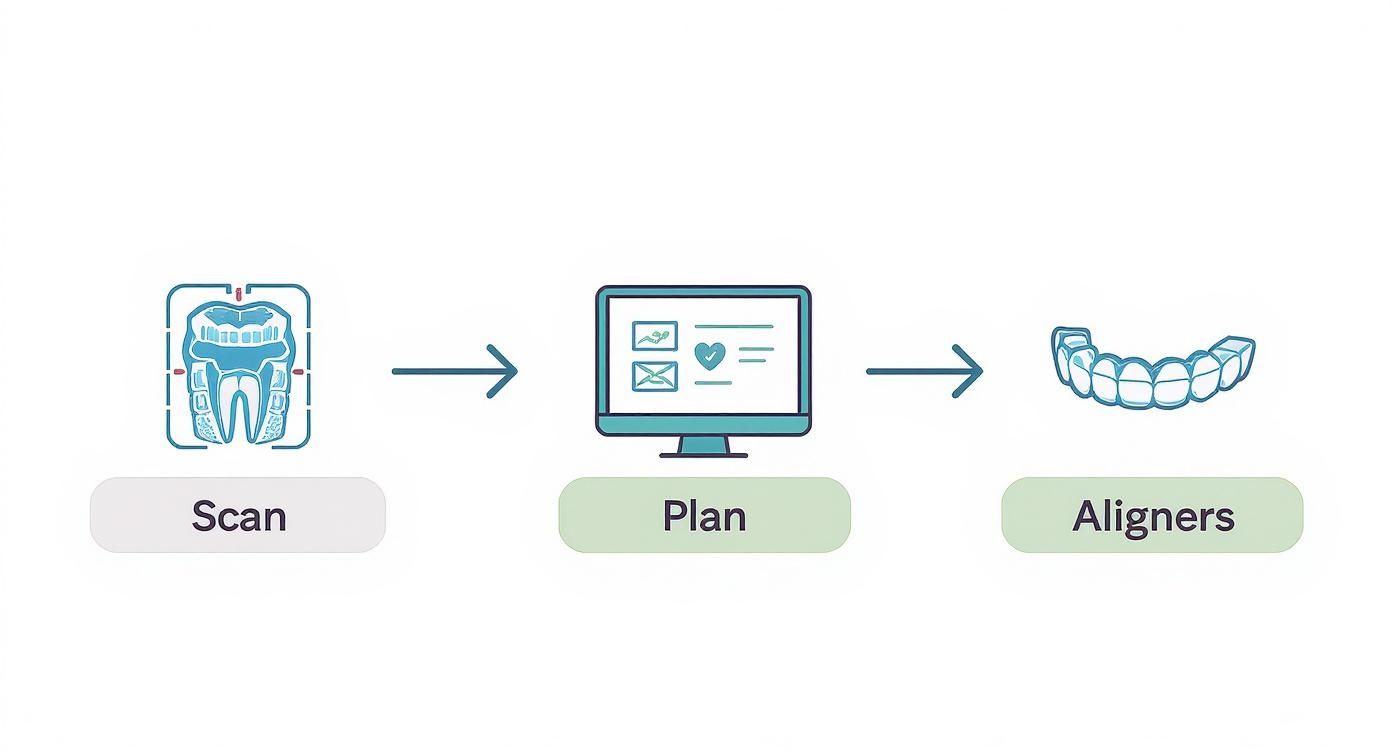
As you can see, your journey flows from the initial 3D scan to the digital plan, and finally to your own set of custom-made aligners that transform your smile's appearance.
The Key to Success: Wearing Your Aligners
For the magic to happen, you have to be consistent. It's really that simple. You’ll need to wear your aligners for 20 to 22 hours every day. The only time they should come out is when you're eating, drinking anything other than plain water, brushing, or flossing. This constant, gentle pressure is what actually moves your teeth into a healthier and more attractive alignment.
Throughout the process, you'll have quick check-ins with your dentist, usually every six to eight weeks. These aren't long, involved appointments. We’re just making sure everything is moving along as planned, answering any questions, and giving you your next few sets of aligners. It’s a structured, predictable path to a straighter, healthier smile with almost no disruption to your life.
To see how this process works for our patients, you can learn more about getting Invisalign in Katy, TX.
Could Invisalign Be the Right Choice for You?
Figuring out if Invisalign is the right move for your smile comes down to matching its strengths with your dental needs and, just as importantly, your lifestyle. While these clear aligners are incredibly versatile, they really shine when tackling specific orthodontic issues that affect both your health and appearance.
Invisalign is fantastic for correcting many of the common concerns that people have about their smile’s appearance and health. For instance, if your teeth feel crowded or overlap, the aligners work gently to create space for a straight, healthier look that's easier to clean. They're also highly effective at closing those small to moderate gaps between teeth.
But it’s not just about spacing. Invisalign can handle more complex bite problems that have a major impact on your dental health.
- Overbite: This is when your upper front teeth overlap the lower ones a bit too much, which can lead to jaw pain and uneven tooth wear.
- Underbite: The opposite situation, where the lower front teeth stick out in front of the upper teeth, impacting your ability to chew properly.
- Crossbite: This happens when some of your upper teeth actually sit inside your lower teeth when you bite down, which can cause tooth wear and gum problems.
Fixing these isn't just for looks. A properly aligned bite helps you chew more efficiently, reduces unnecessary strain on your jaw, and contributes to better long-term dental health.
Are You a Good Candidate? And Are You Ready for the Commitment?
While Invisalign is a powerful tool, it's generally best for mild to moderate alignment cases. Some really severe or complex situations, like a major jaw discrepancy, might still need the heavy-duty force that only traditional braces can deliver. The only way to know for sure is to come in for a professional consultation.
Your personal commitment is the single most important part of getting a great result. The aligners can only straighten your teeth when they're in your mouth. Sticking to the 20-22 hour daily wear time is absolutely essential for achieving the healthy, beautiful smile you’re hoping for.
This commitment also means being on top of your oral hygiene. Since the aligners come out for meals, you have to be diligent about brushing and flossing right after you eat. This prevents food from getting trapped against your teeth, which is critical for preventing cavities and keeping your gums healthy throughout the process.
The popularity of clear aligners has exploded, and for good reason. In 2020 alone, adoption rates jumped by 36.7% for adults and 38.7% for teens. With success rates for mild to moderate cases often hitting 80% to 90%, it’s clear how effective the treatment can be for the right person. You can dig into more of the numbers with these Invisalign market trends and data.
Ultimately, a successful Invisalign journey is a partnership between you and your dentist, working together toward that final, beautiful smile.
Invisalign Vs. Traditional Braces: A Head-to-Head Comparison
Choosing between Invisalign and traditional braces is a big decision for your dental health and your appearance. While both are fantastic tools for straightening teeth, they offer very different experiences that can impact your confidence and daily routine. Let's break down how they compare.
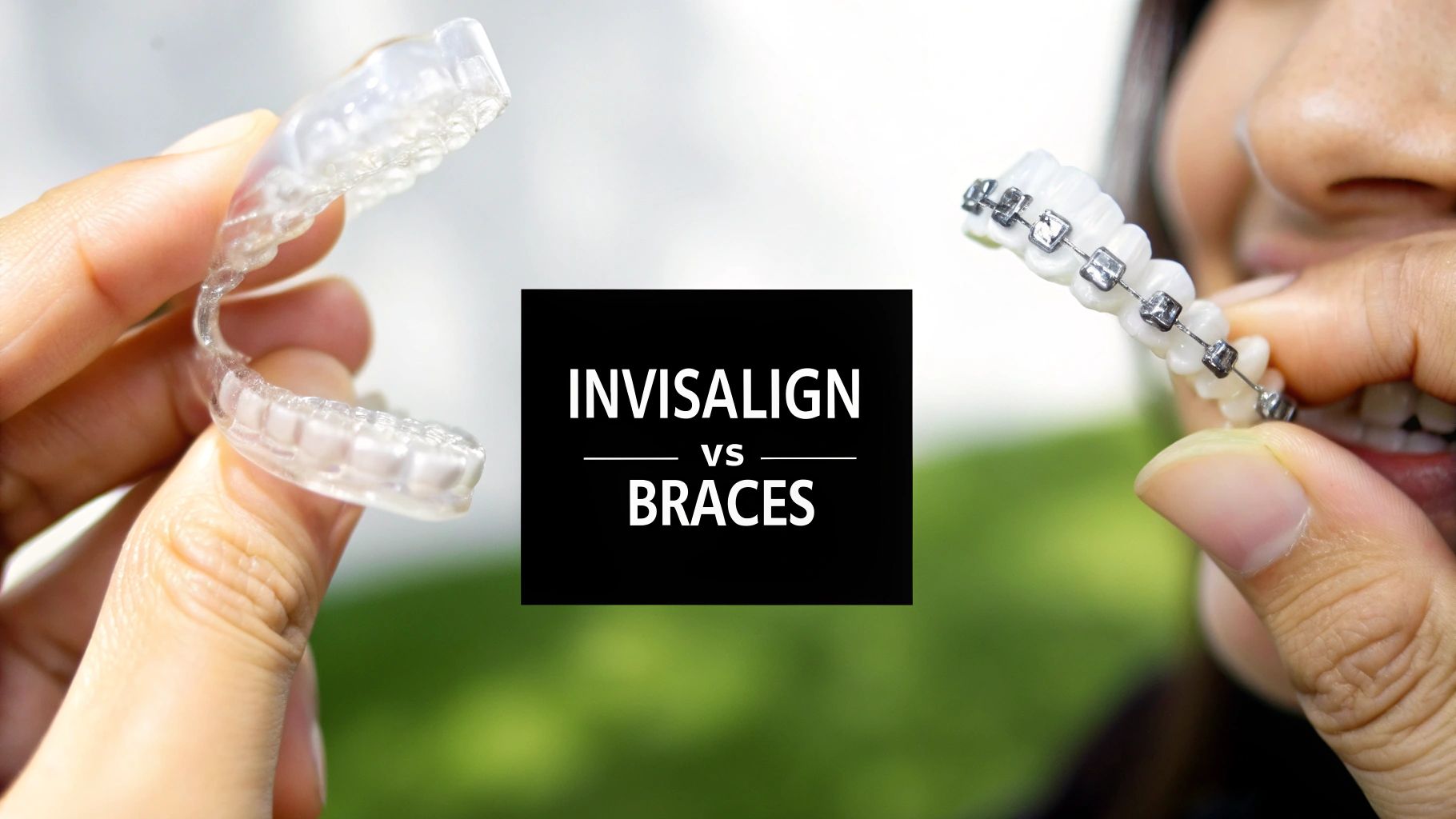
The most immediate difference, and often the biggest concern for patients, is how they look. For many adults and teens who want to improve their smile without broadcasting it to the world, this is a major consideration.
Aesthetics And Comfort
When it comes to appearance, the winner is clear. Invisalign aligners are made from a transparent, medical-grade plastic that fits snugly over your teeth, making them virtually invisible. You can smile, talk, and go about your day with confidence, knowing most people won't even realize you're improving your dental health.
Traditional braces, on the other hand, are made of metal brackets and wires bonded to the front of your teeth. Even though they've gotten smaller over the years, they are still highly noticeable, which can make some people feel self-conscious about their appearance in professional or social settings.
Comfort is another area where Invisalign really shines. The aligners' smooth plastic is designed to be gentle on your gums and cheeks. In contrast, the metal brackets and wires of traditional braces can sometimes poke and scrape, causing irritation and sores, especially right after an adjustment.
Convenience And Lifestyle Impact
Your daily routine is definitely affected by your choice of orthodontic treatment. Invisalign was designed to fit into your life with as little disruption as possible, mainly because the aligners are removable.
This removability is a total game-changer for eating and oral hygiene. You simply take your aligners out to eat, brush, and floss. That means no food restrictions and, most importantly, a much easier time keeping your teeth and gums healthy and cavity-free during treatment.
With traditional braces, keeping your teeth clean is a lot more involved. You have to learn to navigate around wires and brackets, which love to trap food and can increase the risk of plaque buildup and cavities. It takes extra time and special tools like floss threaders to do the job right.
Plus, braces come with a long list of foods you have to avoid—think hard, sticky, or chewy things that could damage the hardware. With Invisalign, you just pop the aligners out for meals and can enjoy all your favorite foods without a second thought. This freedom makes the experience of improving your smile much more pleasant.
To make it simple, let's look at a side-by-side comparison.
Comparing Invisalign And Traditional Braces
| Feature | Invisalign | Traditional Braces |
|---|---|---|
| Visibility | Nearly invisible, offering a discreet appearance. | Very noticeable metal brackets and wires. |
| Oral Hygiene | Easy; remove aligners to brush and floss normally. | More difficult; requires special tools to clean around hardware. |
| Dietary Freedom | No restrictions; remove aligners to eat anything. | Many restrictions; avoid hard, sticky, or chewy foods. |
| Comfort | Smooth plastic minimizes irritation to gums and cheeks. | Metal can cause sores and discomfort. |
| Maintenance | Requires fewer, shorter dental visits for progress checks. | Involves regular, often lengthy, adjustment appointments. |
While Invisalign offers powerful benefits for your appearance and dental health, it's important to remember that traditional braces are still the go-to solution for certain severe or complex orthodontic cases. The best choice always comes down to your specific dental needs, your lifestyle, and a professional recommendation from your dentist.
Let's face it, one of the first questions on everyone's mind is, "What's this going to cost?" When you're thinking about Invisalign, it helps to see the price not just as a number, but as a real investment in your long-term dental health, your smile's appearance, and your confidence. There isn't a single, one-size-fits-all price tag because every smile is unique.
The biggest factor driving the cost is how much work your smile needs. A simple case, maybe just closing a small gap or straightening a few slightly crooked teeth for a cosmetic improvement, will naturally take less time and fewer aligners. A more complex situation that involves correcting a significant bite issue for health reasons will require a more involved plan.
The total time you'll be in treatment also plays a big role. A longer treatment plan means more custom aligners and more check-in appointments with your dentist, and all of that is built into the final price.
What’s Included in the Invisalign Price Tag?
When we give you a price for Invisalign at Grand Parkway Smiles, we're talking about the whole journey, from your first scan to your final retainer. You're not just buying a box of plastic trays; you're investing in a complete, professionally guided process to get you the healthy, beautiful smile you've always wanted.
Here’s a breakdown of what that all-inclusive price typically covers:
- Your Initial Consultation & 3D Digital Scans: This is where it all begins. We use advanced imaging to map out your entire treatment with incredible precision.
- All of Your Custom-Made Aligners: Every single aligner you'll need to get from your current smile to your new one is included.
- All Scheduled Progress Appointments: We'll see you for regular check-ins to make sure everything is tracking perfectly for a great final appearance.
- Your First Set of Retainers: This is absolutely essential. Your retainers will protect your investment and keep your beautiful new smile from shifting back.
You can think of the Invisalign cost as a complete package for your smile makeover. It’s set up to give you everything you need for a fantastic, healthy-looking result without any surprise fees popping up down the road.
Making Your New Smile Affordable
Getting a healthier, straighter smile is more within reach than most people think. There are plenty of payment and financing options available that can make the cost of Invisalign fit comfortably into your budget. For instance, many dental insurance plans that help cover traditional braces will offer similar coverage for Invisalign.
You can also use pre-tax money to pay for your treatment through a Flexible Spending Account (FSA) or a Health Savings Account (HSA). Using these accounts is a smart way to stretch your healthcare dollars further.
The demand for clear aligners is a testament to how much people value them. The global market for Invisalign was valued at around USD 4.5 billion in 2023 and is only expected to keep growing. You can read more about the Invisalign market growth on dataintelo.com. This incredible popularity shows just how many people see the benefits of a healthier, more confident smile as a worthwhile investment in themselves.
Living with Invisalign Your Daily Guide to Success
Getting into the rhythm of daily life with Invisalign is surprisingly easy once you lock in a few simple habits. The real secret to success with this treatment is just being consistent. A solid routine is what makes the journey to that healthier, more beautiful smile as smooth and quick as possible.
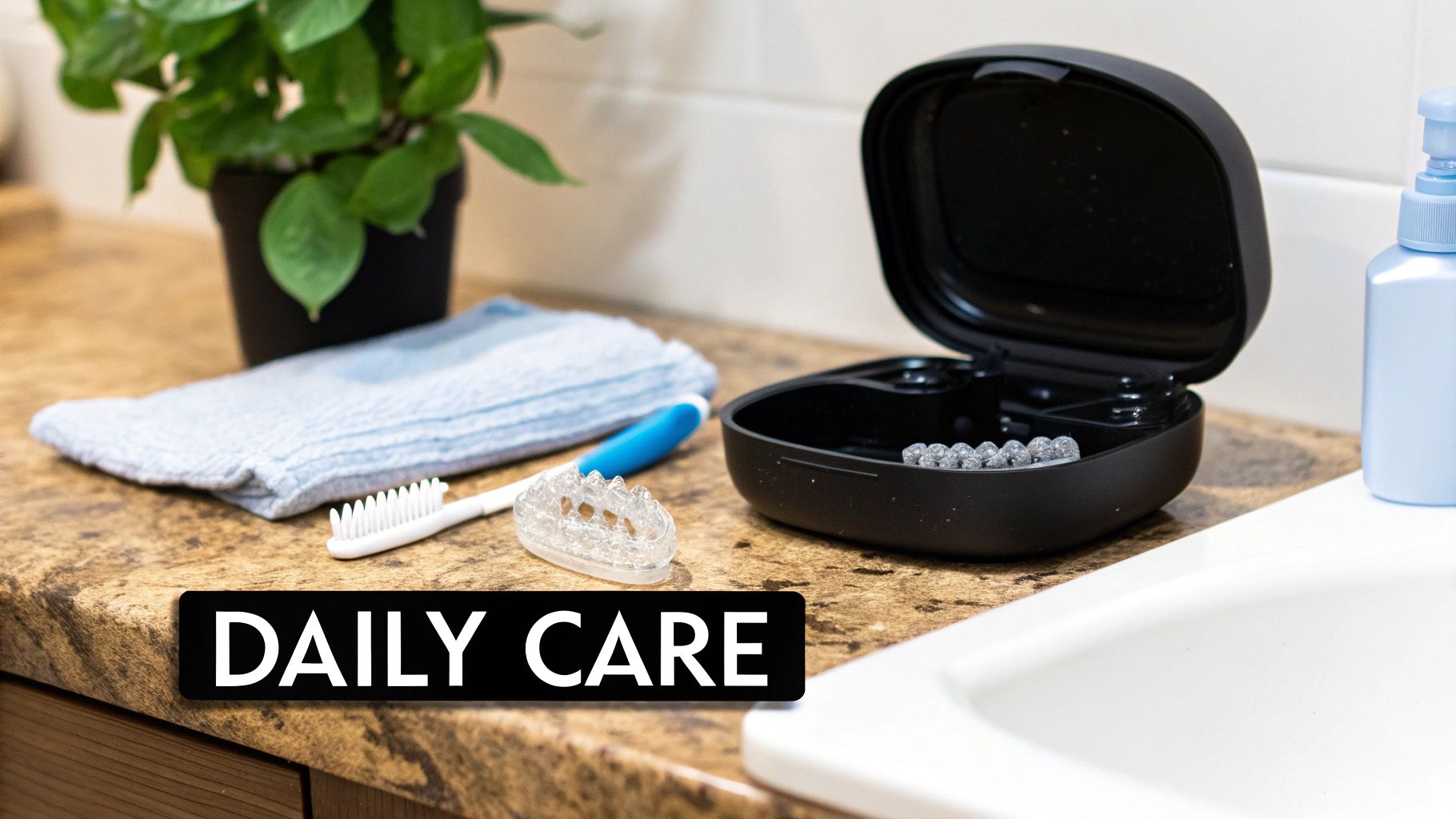
The cornerstone of your entire treatment is wearing your aligners for the recommended 20-22 hours a day. Think of it this way: that constant, gentle pressure is what’s actually moving your teeth according to the plan we've designed. The only time they should ever come out is when you’re eating, drinking anything besides plain water, or taking care of your teeth.
Sticking to that wear time isn't just about speed; it's also about the health of your teeth and gums. Because the aligners fit so snugly, they can easily trap food particles and sugars against your enamel if you pop them back in without cleaning your teeth first, increasing the risk of cavities.
Oral Hygiene and Aligner Care
Keeping your teeth and gums in great shape during treatment is simple, but it's absolutely non-negotiable. The goal is to keep both your teeth and your aligners sparkling clean to avoid any plaque buildup, cavities, or staining. For a deep dive, you can check out these essential Invisalign maintenance tips to keep your aligners clean.
Here are the key habits you'll want to build for a fantastic experience:
- Brush After Every Meal: Before your aligners go back in, always give your teeth a thorough brush and floss. This simple step gets rid of food debris and prevents bacteria from being trapped against your teeth, which is vital for your dental health.
- Clean Your Aligners Daily: Gently brush your aligners with a soft-bristled toothbrush and lukewarm water. A word of caution: stay away from hot water, as it can actually warp the plastic.
- Always Use Your Case: Whenever your aligners aren't in your mouth, they belong in their protective case. This little habit saves them from getting lost, damaged, or exposed to germs.
Think of your aligner care routine as an extension of your oral hygiene. A clean aligner means healthier teeth and gums, ensuring your final smile is not just straight, but also bright and strong.
It's also worth noting that some patients notice a slight lisp or feel a little discomfort for the first day or two with a new set of trays. This is completely normal and almost always fades quickly as your mouth gets used to the new fit. Using orthodontic "chewies" for a few minutes each day can also be a big help in seating the aligners perfectly, which ensures they’re working as effectively as possible.
Your Top Invisalign Questions, Answered
Deciding if Invisalign is the right choice for you is a big step, and it's completely normal to have questions swirling in your head. Getting clear, straightforward answers is the best way to feel confident about your decision to invest in your dental health and appearance.
How Long Will My Treatment Take?
Every smile is unique, so there’s no one-size-fits-all timeline. For most of our patients, the complete Invisalign journey takes somewhere between 12 and 18 months.
That said, if you only need minor cosmetic tweaks and adjustments, you could be done in as little as six months. The total time really just depends on how much work your teeth need to get into perfect alignment for both health and aesthetic reasons.
Is Invisalign Painful?
Most people wouldn't use the word "painful" to describe Invisalign. What you'll likely feel is a bit of gentle pressure or maybe some mild soreness for the first day or two after you switch to a new set of aligners.
Think of that feeling as a good thing! It's a sign that your aligners are doing their job, gently nudging your teeth into their ideal positions. This feeling means the treatment is working to improve your smile's health and appearance. It's a world away from the sharp, tightening sensation that comes with metal brace adjustments.
What Happens After I Finish My Treatment?
Once you've used your last aligner, your journey isn't quite over. To protect your beautiful new smile and make sure your investment in your dental health lasts a lifetime, you'll enter what we call the retention phase. This part is absolutely crucial for long-term success.
We'll fit you for a custom-made retainer designed to keep your newly straightened teeth from shifting back to their old spots. Wearing it exactly as your dentist prescribes is the key to keeping your smile looking perfect and maintaining the health benefits you've achieved for years and years.
Ready to see if Invisalign could be the key to unlocking your dream smile? The friendly experts at Grand Parkway Smiles are here to answer every one of your questions and map out a treatment plan designed just for you. Schedule your no-pressure consultation today at https://dentistkatytx.com.