Figuring out what to eat after a root canal is crucial for a smooth recovery and protecting the investment you've made in your dental health. The golden rule? Stick to lukewarm liquids and super soft foods until the numbness from the anesthetic completely disappears. This is non-negotiable—it's the best way to protect your mouth, ensure the long-term success of the procedure, and keep your smile healthy.
Your First 24 Hours: A Food Game Plan for Optimal Healing
The first day after your procedure is all about healing. Your main job is to give your body the fuel it needs without disturbing the treated tooth, which now has a temporary filling to protect it. How you handle these initial hours directly impacts the success of your root canal and sets the stage for a complication-free recovery.
The Critical Waiting Period
Right after you leave our office, the most important thing to do is wait. Do not eat until the local anesthetic has completely worn off. When your cheek, tongue, and gums are numb, it's incredibly easy to bite down hard without realizing it, which can cause significant injury to your soft tissues and jeopardize the treated area.
This numbness usually fades within 2 to 4 hours.
While you're waiting, sip on lukewarm water to stay hydrated. It is essential to avoid using a straw. The suction can dislodge the temporary filling or irritate the healing tissues, undermining the procedure designed to save your natural tooth.
This timeline gives you a good visual for easing back into eating and protecting your tooth.
As you can see, it's a gradual process. Rushing back to your normal diet can compromise the healing process and the integrity of your tooth.
Choosing Your First Meals to Support Dental Health
Once you can feel your mouth again, it's time for your first meal. The goal is to choose foods that require minimal to no chewing. This protects the sensitive tooth and gums, reduces discomfort, and safeguards the delicate dental work that has just saved your tooth from extraction.
Some great options that promote healing include:
- Lukewarm Soups: Creamy tomato soup or a simple vegetable broth provides essential nutrients without any risk to the treated tooth.
- Yogurt and Smoothies: Perfect for getting calories and vitamins, supporting your body's healing process.
- Applesauce or Pudding: The smooth texture is gentle on your entire mouth, ensuring no pressure is placed on the temporary restoration.
Sticking to this soft-food plan isn't just about avoiding pain; it's about protecting the investment you've made in your dental health. Following your dentist's advice is the surest path to a quick and uneventful recovery, preserving your natural smile.
For the first 24 hours, soft, nutrient-rich foods are your best allies. If you want something more substantial, protein-rich choices like fluffy omelets are fantastic because they provide real nutrition for tissue repair without straining the tooth. Following these post-op instructions directly impacts the long-term success of the procedure. A root canal is a highly effective treatment for saving a natural tooth, and studies show that about 97% of root canals are successful long-term when patients follow proper aftercare.
Your Post-Root Canal Eating Timeline
To make things even easier, here's a quick-reference table to guide you through the first week. It breaks down what to eat, what to avoid, and other key tips to protect your tooth as it heals.
| Timeframe | Recommended Foods | Foods to Strictly Avoid | Key Precaution |
|---|---|---|---|
| First 2-4 Hours | Lukewarm water only | ALL food and other drinks | Do NOT eat until numbness is completely gone to prevent injury. |
| Day 1 | Liquids & purées: Smoothies, yogurt, broths, applesauce, pudding | Hot, spicy, crunchy, hard, or chewy foods | Avoid straws. Chew on the opposite side to protect the treated tooth. |
| Days 2-4 | Soft foods: Scrambled eggs, oatmeal, mashed potatoes, soft pasta | Sticky candy, nuts, seeds, tough meats, hard bread | Continue chewing on the opposite side. Rinse gently with salt water for clean healing. |
| Days 5-7 | Semi-soft foods: Steamed veggies, soft fish, ripe bananas, avocado | Popcorn, hard crackers, steak, raw carrots, chewing gum | Gradually reintroduce firmer foods as comfort allows, promoting safe healing. |
Following this timeline will help ensure your recovery is smooth and comfortable, getting you back to your regular diet safely and preserving the health and function of your treated tooth.
Expanding Your Diet in the First Week
You've made it through the first 24 hours—great work. Now you can start bringing some variety back to your meals. While a steak dinner is still off the table, this first week is about gently reintroducing different textures that won't disrupt the healing process or compromise the temporary filling that protects your tooth.
Think of it as moving from a "no-chew" to a "low-chew" phase. The main goal is to pick foods that are still soft and easy on your tooth. You want meals packed with nutrients to support tissue repair but that don’t require any serious biting or grinding that could damage the restoration.
Building Your Week 1 Menu
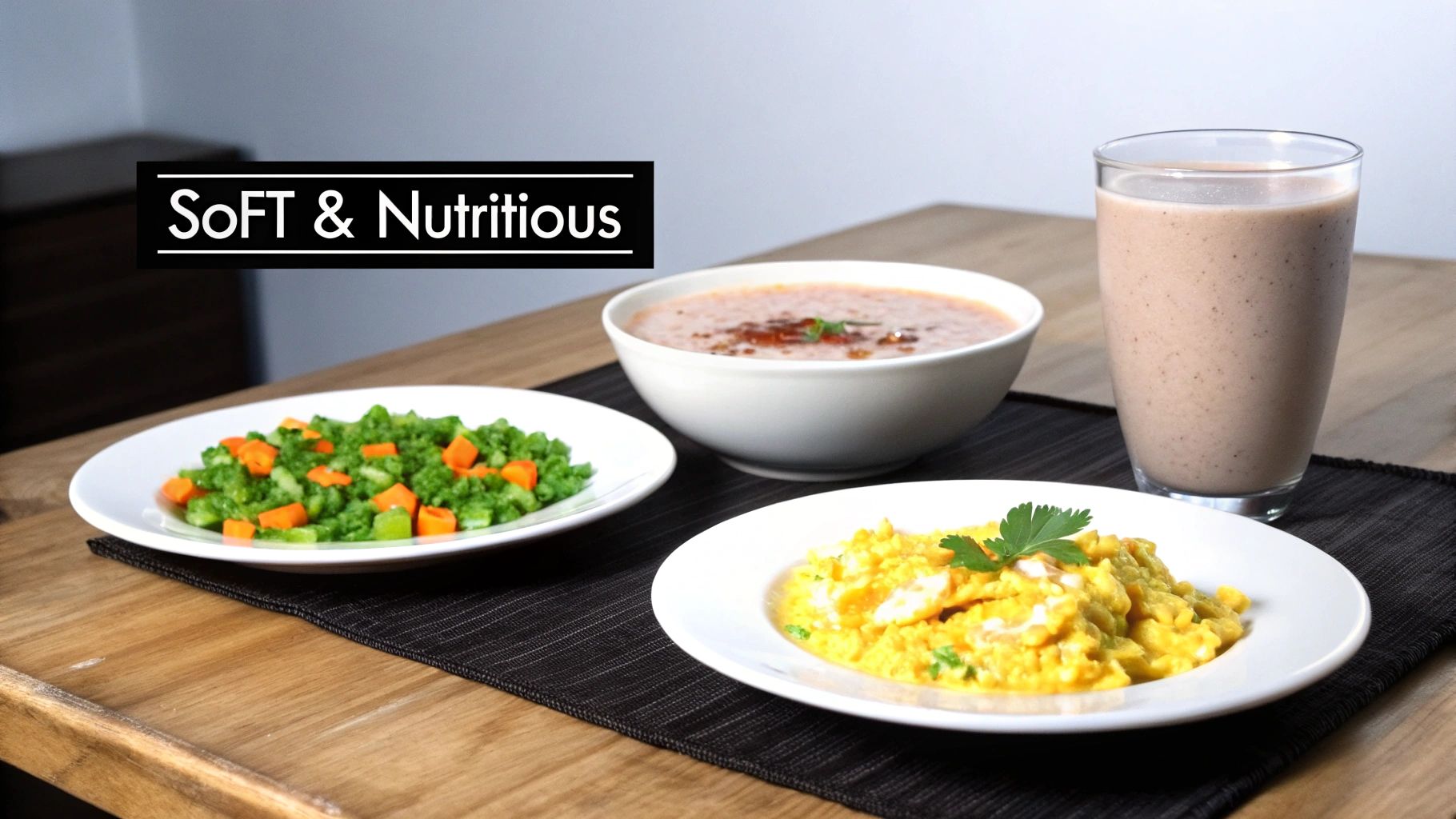
Once you're past the initial liquid diet, you can start bringing in more substantial foods. This is your chance to get creative and avoid diet boredom. Keeping up with your protein, healthy fats, and vitamins is crucial for helping your body heal efficiently and strengthening the tissues around the treated tooth.
Here are some excellent food groups to focus on:
- Soft Proteins: Scrambled eggs, flaky baked fish (like salmon), and soft-cooked, shredded chicken are perfect. They provide the protein needed for tissue repair without stressing the tooth.
- Cooked Vegetables: When steamed or boiled, vegetables like carrots, broccoli, and zucchini become incredibly tender. Mashed potatoes or sweet potatoes are also fantastic and comforting.
- Ripe Fruits: Stick with soft fruits you don't need to crunch into. Bananas, avocados, and ripe peaches are all excellent options. Blending them into a smoothie is an easy way to get a big dose of vitamins for healing.
Key Takeaway: The entire focus for this first week is getting nourishment without causing irritation. Every food choice should protect that temporary filling. Putting pressure on it can compromise the tooth, potentially leading to complications and affecting the long-term success of your root canal.
Simple Meal and Recipe Ideas
Having a meal plan makes a huge difference. Instead of wondering what you can possibly eat after a root canal, a few go-to ideas will make recovery tastier and support your dental health.
Breakfast:
A warm bowl of oatmeal or cream of wheat is filling and requires no chewing. For a protein kick, try Greek yogurt with a scoop of protein powder mixed in to aid tissue repair.
Lunch:
Creamy soups are your best friend. A butternut squash or tomato bisque is hydrating and full of vitamins. Add a side of cottage cheese or hummus for a more complete meal.
Dinner:
A piece of baked salmon with simple herbs is a great option, rich in omega-3s that help with inflammation. Serve it with mashed cauliflower and steamed asparagus tips. Soft-cooked pasta with a smooth, non-acidic sauce is also a satisfying choice.
Choosing foods that aid recovery can also give you an advantage. Anti-inflammatory foods can help calm your body's natural healing response. You can find great anti-inflammatory meal prep recipes online. It’s also a good time to remember how diet impacts your overall oral health. Learn more by reading the role of nutrition in dental health in our Katy guide. This knowledge will help you protect your entire smile, not just the tooth we worked on.
Foods and Habits That Jeopardize Healing
Knowing what you can safely eat is only half the battle. Just as important is knowing which foods and habits can actively work against you, potentially damaging your temporary crown, causing pain, and setting back your recovery.
Think of this as protecting your investment. You've gone through the procedure to save your tooth; now it's time to create the best environment for healing. That starts with a clear "do not touch" list for the first week or two.
The main goal here is to avoid putting any unnecessary stress on that treated tooth. Your temporary filling is a placeholder—it's surprisingly tough, but it's not designed to handle the same pressure as your permanent crown. Certain foods are a direct threat to that temporary seal, which is your tooth's only defense against bacteria and food particles that could cause infection.
Foods That Can Damage Your Tooth
Treating your post-root canal diet as a protective measure is the best mindset you can have. Your choices now directly impact the final success of the procedure. Considering that the median survival time for a treated tooth is well over 10 years, a week or two of caution is a small price to pay for a lifetime of health for that tooth. You can learn more about the long-term success rates of root canal treatments right here.
So, here are the top offenders to keep off your plate for now:
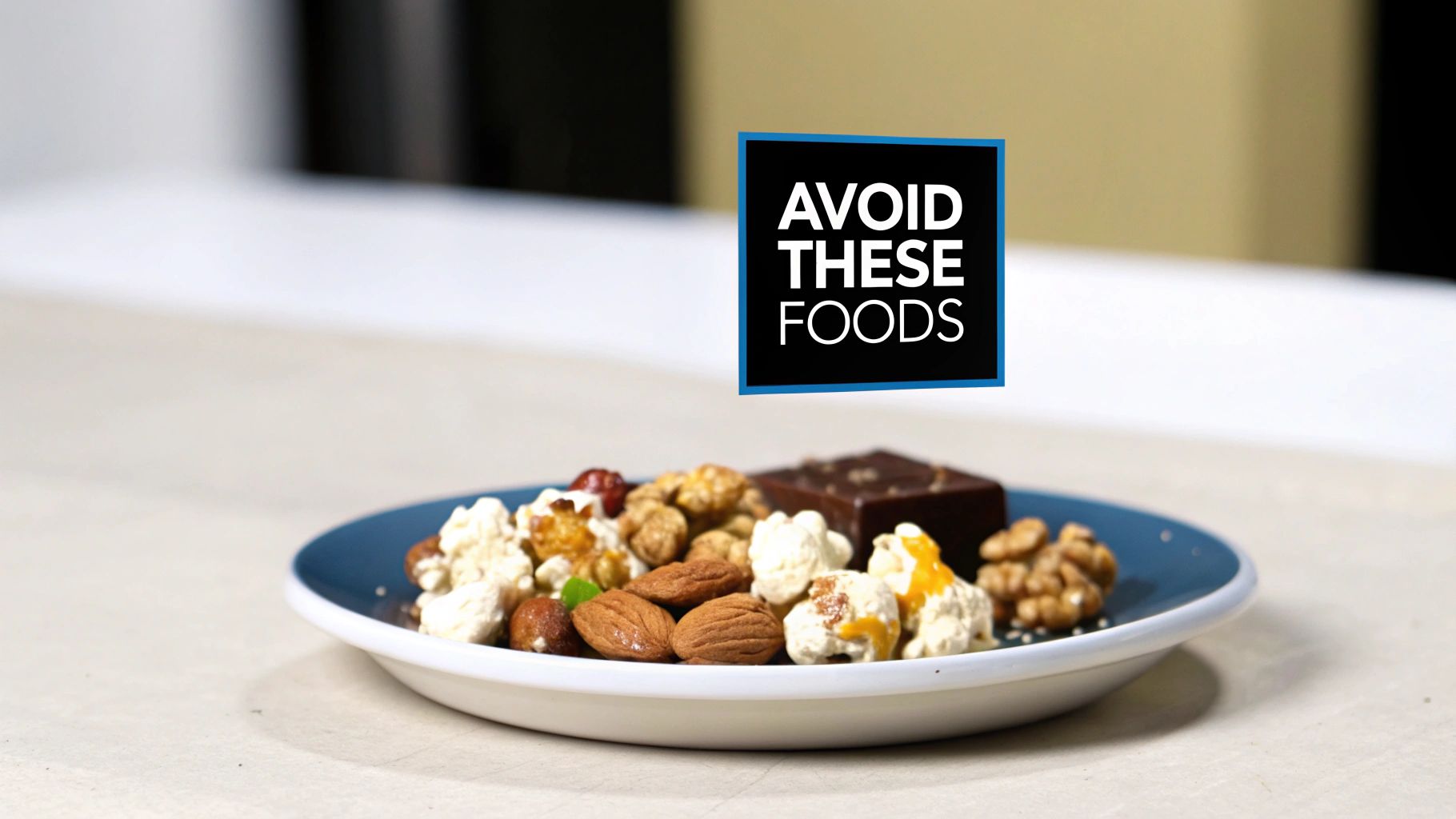
- Hard Foods: This is a big one. Think nuts, hard candies, ice cubes, and even hard raw veggies like carrots. Biting down on something like this can easily crack or dislodge your temporary filling, exposing the tooth.
- Crunchy Foods: Popcorn is a major problem. Its small, sharp hulls are notorious for getting wedged under the gum line, which can cause serious irritation and even lead to an infection. Chips and crusty breads fall squarely into this category, too.
- Sticky and Chewy Foods: Anything like caramel, taffy, gummies, or chewing gum is a no-go. These foods can grab onto your temporary restoration and pull it loose, compromising the seal that protects your tooth from bacteria.
It's easy to think, "Just one bite won't hurt." But from our experience, a single hard nut or piece of sticky candy is all it takes to compromise that temporary filling. This exposes the treated tooth to bacteria and often means an unscheduled trip back to the dentist, delaying your final restoration.
Habits That Interfere with Healing
It's not just about what's on your plate. A few common habits can seriously get in the way of your body's healing process and increase your risk of complications. Changing your behavior for a short time is absolutely essential for a smooth recovery and a successful outcome.
Avoid These Habits:
- Chewing on the Treated Side: This is the most critical habit to break. Get used to chewing everything on the opposite side of your mouth to give that treated area a complete rest.
- Using Tobacco Products: We can't stress this enough. Smoking and chewing tobacco significantly slow down healing by restricting blood flow to your gums and introducing harmful chemicals to the site.
- Consuming Alcohol: Alcohol can interfere with any prescribed pain medication and is dehydrating, which hinders your body's natural healing capabilities.
By steering clear of these specific foods and habits, you're taking an active role in your own recovery. It's the best way to ensure your root canal is a total success and your tooth stays healthy for years to come.
How to Eat Comfortably and Keep Your Mouth Clean
Figuring out what foods to eat after a root canal is a great start, but how you eat and care for your mouth is just as critical for a smooth recovery. A few simple adjustments can make a world of difference in your comfort level and help protect the vital dental work that’s been done.
The single most important change to make is to chew exclusively on the opposite side of your mouth. Your treated tooth is in a vulnerable state, protected only by a temporary filling. By shifting all chewing pressure away from that area, you prevent irritation and stop the temporary filling from getting dislodged. Think of it as your best line of defense until your permanent crown restores the tooth to full function.
Managing Discomfort and Staying Hygienic
It’s normal to feel some tenderness while your mouth heals. If you feel sore before a meal, a little planning goes a long way. Taking an over-the-counter anti-inflammatory about an hour before you eat can reduce sensitivity, making mealtime much more enjoyable.
Excellent oral hygiene is also a major player in your recovery. Keeping the area clean prevents infection and supports the healing tissues, but this requires a gentle touch.
- Warm Salt Water Rinses: Mix half a teaspoon of salt in a glass of warm water and rinse your mouth gently a couple of times a day, especially after eating. Salt water is a natural disinfectant that reduces inflammation and promotes a clean healing environment.
- Careful Brushing: When you brush, be extra gentle around the treated tooth. Use a soft-bristled toothbrush and avoid making direct, forceful contact with the temporary filling.
- Gentle Flossing: You can and should still floss, but be careful. When flossing around the treated tooth, don't pull the floss straight up. Instead, slide it out to the side to avoid accidentally pulling on the temporary filling.
Proper aftercare isn’t just a checklist; it’s about being an active partner in your own healing. By taking these gentle, deliberate steps, you’re helping to ensure the long-term success of your root canal and protecting your smile.
This mix of mindful eating and careful hygiene creates the perfect environment for a recovery free of complications. If you want a fuller picture of the entire procedure, check out our detailed guide on the root canal therapy process and pain management. This information can empower you to feel confident and in control of your dental health journey.
Transitioning Back to Your Normal Diet
After a week or two of smoothies and soft foods, the thought of biting into something with a real crunch probably sounds pretty good. Getting back to your normal routine is a great sign you're recovering well, but it's a process you can't rush. Jumping the gun can irritate the tooth and set back your healing.
Think of this as a gradual reintroduction. You're slowly letting the treated tooth—still protected by a temporary filling—get used to handling pressure again. The whole point of a root canal is to save your natural tooth so you can get back to enjoying all your favorite foods without a second thought.
Signs Your Tooth Is Ready for More
So, how do you know it's time to start bringing more solid foods back to the table? Your body will give you some pretty clear signals. The number one sign is a lack of pain or major sensitivity when you put gentle pressure on that tooth.
Here are a few positive indicators to look for:
- No Spontaneous Pain: The tooth isn't aching or throbbing on its own anymore.
- Minimal Sensitivity: A sip of a cold drink doesn't send a jolt through your tooth.
- Comfortable Chewing (On the Opposite Side): You've been eating just fine on the other side of your mouth without any referred pain.
If you feel any sharp pain or a persistent ache when you chew, that's your tooth telling you to hold off. It just needs a little more time before it's ready for tougher stuff.
A common mistake we see is people assuming that once the initial ache is gone, the tooth is 100% ready for anything. The reality is that the bone and ligaments deep around the root are still healing. Easing back into your diet respects that healing process and sets your tooth up for better long-term health and stability.
A Step-by-Step Guide to Reintroducing Foods
When you feel confident your tooth is ready, don't immediately reach for a handful of almonds or a tough piece of steak. You want to start with foods that are semi-soft and slowly work your way up in texture. It's like climbing a ladder—each rung is a little firmer than the last.
Week 2-3 Reintroduction Plan:
- Start with "Flaky" and "Soft-Cooked" Foods: First up, try things like baked fish, well-cooked pasta, or steamed veggies like broccoli florets. These foods need more chewing than mashed potatoes but are still very gentle on the tooth.
- Move to "Tender" Meats and Cooked Vegetables: Next, you can try things like shredded chicken, ground meat in a sauce, or vegetables that have a slight bite to them, like cooked green beans.
- Cautiously Introduce "Crisp" and "Crunchy" Textures: Once you can handle that without any problems, you can start testing out firmer foods. Try a slice of toast or a softer type of apple. When you do, make sure to chew carefully, starting on the opposite side of your mouth first.
And remember, a temporary filling isn't nearly as strong as your permanent crown will be. Until your final restoration from Grand Parkway Smiles is in place, you need to keep avoiding anything extremely hard, crunchy, or sticky. That final step is what gives the tooth its full strength back, ensuring it will function just like a normal, healthy tooth for years to come.
Got Questions About Root Canal Aftercare? We Have Answers.
Going through a root canal is one thing, but knowing exactly what to do afterward can bring up a whole new set of questions. It's completely normal. Getting clear, straightforward answers is the best way to protect your tooth, ensure proper healing, and secure the long-term benefits of the procedure.
How Long Until I Can Eat Normally?
This is the number one question we get! Most people can return to their regular diet once the permanent crown is in place, which is usually a few weeks after the root canal. The real green light, however, is when your tooth feels completely normal—no soreness or sensitivity.
When you think you're ready, don't jump straight to chewing nuts or hard candy. Ease back into it. Try something a little firmer and see how the tooth responds. If you feel even a twinge of pain, that's your cue to back off, stick to soft foods for a bit longer, and give our office a call. Patient, gradual reintroduction is key to the lasting health of your restored tooth.
Can I Drink Coffee After a Root Canal?
Yes, you can absolutely have your coffee. The most important rule here is to wait until the numbness from the anesthetic is 100% gone. It’s surprisingly easy to burn the inside of your mouth when you can't feel it properly.
For the first couple of days, it's also smart to let your coffee cool down to lukewarm. Super hot drinks can irritate the sensitive gum tissue around the healing tooth. Also, consider skipping extra sugar, as this can promote bacteria around the temporary filling, which you want to keep as clean as possible.
The main goal is to avoid shocking the area. Extreme temperatures—hot or cold—can trigger sensitivity in the ligaments and bone around the tooth's root, which can slow down your recovery and healing process.
What Should I Do If My Temporary Filling Comes Out?
First thing's first: don't panic. It happens. The most important thing to do is call our office right away so we can get you in to have it fixed. That temporary filling is a crucial barrier that keeps bacteria and food debris out of the inside of your tooth, protecting it from infection.
While you're waiting for your appointment, avoid chewing on that side of your mouth altogether. Keeping that area as clean and undisturbed as possible is key to ensuring your root canal is a long-term success, preserving your natural tooth for years to come.
At Grand Parkway Smiles, we're with you every step of the way, even after you leave our office. If any other questions pop up or you run into any issues during your recovery, please don't hesitate to reach out. Your comfort and long-term dental health are what matter most to us. You can learn more about all our comprehensive dental services on our website.