Protecting your toddler’s smile starts with a few simple, consistent habits. The key to preventing cavities in toddlers is a straightforward combination of daily brushing with fluoride toothpaste, making smart food choices that limit sugar, and establishing a positive relationship with a dentist early on. Building these foundational habits is the most powerful thing you can do to keep their baby teeth healthy, strong, and bright.
Your Guide to a Cavity-Free Toddler Smile
Seeing those tiny new teeth emerge is exciting, and protecting their pearly white appearance is simpler than you might think. Preventing cavities boils down to three key pillars that create a powerful defense against decay: consistent daily care, smart food choices, and partnering with your pediatric dentist.
Establishing these habits early is crucial because baby teeth do more than just look cute. They play a vital role in your child's overall health and appearance:
- Proper Chewing: Healthy teeth allow your toddler to eat a variety of nutritious foods, which is essential for their growth and development.
- Speech Development: Teeth are critical for forming sounds and words correctly, contributing to clear and confident speech.
- Guiding Adult Teeth: Baby teeth act as perfect placeholders, ensuring permanent teeth have the right space to emerge straight and properly aligned, contributing to a beautiful future smile.
Key Dental Milestones
Knowing the general timeline for your toddler's dental development helps you provide the right care at the right time. This simple timeline highlights the major milestones that lead to a full set of healthy primary teeth.
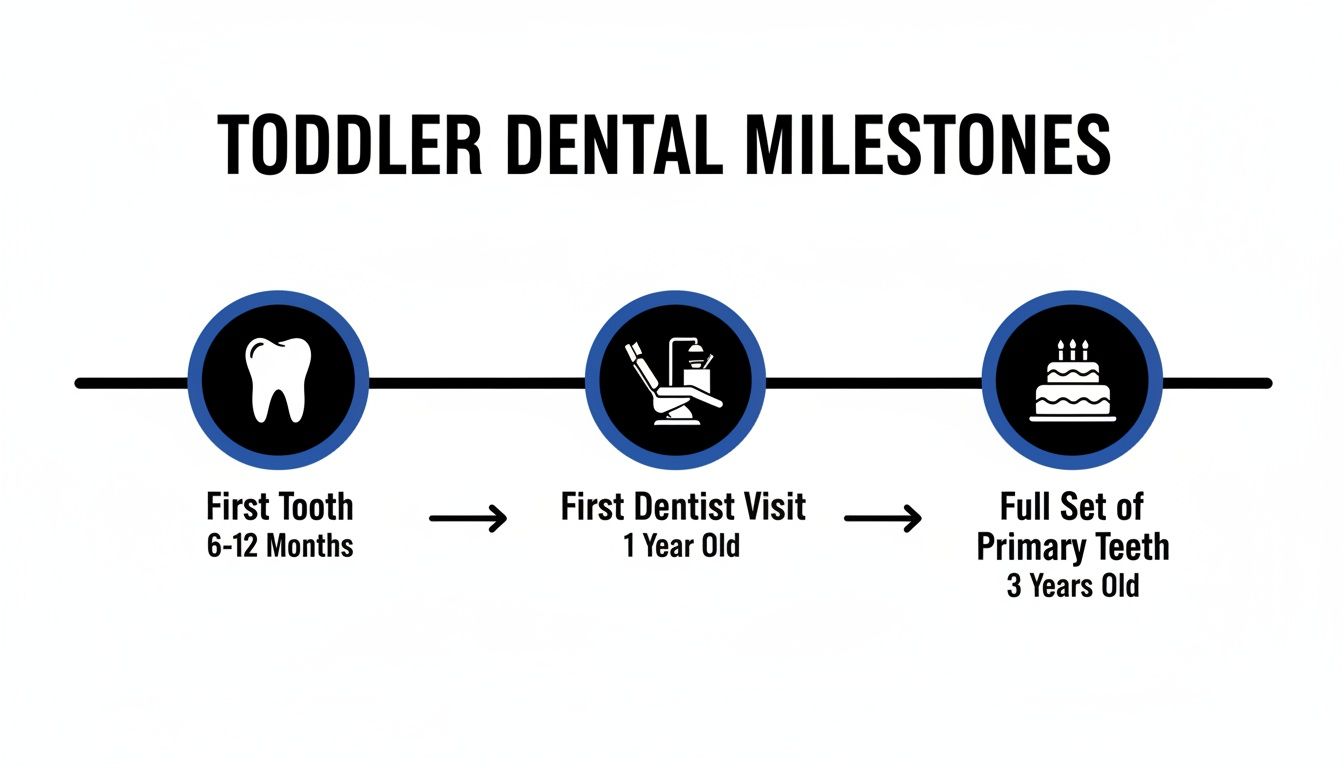
This visual guide is a great reminder that preventive care should kick in the moment that first tooth pops through, and professional checkups should start by age one to ensure everything is on track for a healthy smile.
The statistics on early childhood decay highlight the importance of starting early. More than 1 in 10 children aged 2–5 years have at least one untreated cavity. This is why dentists recommend using a rice-grain-sized smear of fluoride toothpaste as soon as the first tooth erupts. That tiny amount provides significant protection, strengthening the enamel against the acid attacks that cause decay. You can find more insights on this in the CDC's latest childhood oral health report.
Remember, the health of baby teeth truly sets the stage for a lifetime of healthy smiles. A cavity can cause pain and infections that affect your toddler's overall well-being. Prioritizing preventive care from day one is one of the best investments you can make in their long-term oral health and confident appearance.
Here’s a quick-reference table to help you keep track of what to do and when.
Toddler Dental Care Timeline: First Tooth to Age 3
| Age Group | Daily Brushing Routine | Key Diet Tip | First Dental Visit |
|---|---|---|---|
| First Tooth (6-12 months) | Start brushing 2x daily with a tiny smear (grain of rice) of fluoride toothpaste to protect new enamel. | Avoid putting baby to bed with a bottle of anything but water to prevent decay. | Schedule their first "happy visit" to establish a dental home. |
| 1-2 Years | Continue brushing 2x daily. Let them "help" before you do the real cleaning to build good habits. | Limit sugary snacks and drinks (especially juice) between meals to protect teeth from acid. | Continue with regular checkups as recommended by your dentist (usually every 6 months). |
| 2-3 Years | Use a pea-sized amount of fluoride toothpaste. Supervise closely to ensure they spit it out for safe, effective cleaning. | Offer water instead of juice or milk in sippy cups throughout the day to rinse away sugar. | Your dentist may recommend a professional fluoride varnish treatment for extra cavity protection. |
This timeline is a simple guide, but it covers the most critical actions you can take to build a strong foundation for your child's oral health from the very beginning.
Creating a Positive Daily Brushing Routine
Turning the daily chore of brushing into a predictable, positive ritual is the goal. The benefit of establishing a good routine is not just cleaner teeth today, but a lifetime of healthy habits that preserve their smile. It’s less about what you do and more about how you do it—making the experience calm and effective.
Your positioning can be a complete game-changer. For a squirmy toddler, try sitting on the floor and having them lie back in your lap. This gives you a secure hold and a perfect view of their teeth. Another effective method is the "lap-to-lap" technique, where two adults sit facing each other with knees touching, and the child lies across their laps, offering incredible support and access for a thorough clean.
Choosing the Right Tools for the Job
The right toothbrush and toothpaste can significantly improve your toddler's cooperation and the effectiveness of your cleaning. The benefit of using the right tools is a more comfortable experience for your child and better protection against cavities.
When you're in the dental aisle, look for these features:
- Soft Bristles: Toddler gums are delicate. A brush with extra-soft bristles is a must to clean gently without causing irritation.
- Small Brush Head: The brush head needs to be small enough to easily reach all surfaces, especially those hard-to-reach back molars where cavities often start.
- Fluoride Toothpaste: Fluoride is your best defense against cavities. The American Academy of Pediatric Dentistry confirms that it safely and effectively strengthens tooth enamel from the moment the first tooth appears.
The amount of toothpaste you use is critical for safety and effectiveness. For any child under three, you only need a tiny smear the size of a single grain of rice. This minuscule amount provides all the cavity-fighting power they need and is completely safe if swallowed.
Making Brushing Fun and Effective
Turning brushing into a game is one of the easiest ways to get your toddler on board. You could play their favorite two-minute song, use a colorful sand timer, or pretend you’re hunting for "sugar bugs" to make their teeth sparkle.
Letting them take the first turn can also give them a sense of control. Hand over the brush and let them "help" before you step in to do the thorough cleaning. For a few more creative tricks, check out these 5 tips for brushing your children's teeth.
The single most important brush of the day is the one right before bedtime. The benefit of this is combating the reduced saliva flow during sleep, which leaves teeth more vulnerable to cavity-causing bacteria. Ensuring their teeth are clean before bed is a non-negotiable for preventing decay and morning breath.
As soon as two teeth are touching, it's time to start flossing. You can begin gently with a soft, plastic flosser pick. The goal at this age is to make it part of the nightly routine, removing plaque from between the teeth where a brush can't reach. By making brushing and flossing a consistent, positive part of their day, you’re laying the foundation for a lifetime of excellent dental health and a beautiful smile.
Smart Food Choices for Stronger Teeth
What your toddler eats—and how often—plays a starring role in their dental health. The benefit of smart food choices is not just better overall health, but also a stronger defense against cavities.
Cavities happen when bacteria in the mouth feed on sugars, creating acids that attack tooth enamel. This "acid attack" is the enemy of healthy, white baby teeth. Every time your toddler has a sugary or starchy snack, their mouth becomes acidic. Saliva works to neutralize these acids and help the enamel remineralize, but it needs time to work.
The Power of Scheduled Snacking
One of the most effective ways to protect teeth is to shift away from all-day grazing. When a child constantly sips sugary drinks or nibbles on snacks, their teeth are under a non-stop acid attack, preventing saliva from restoring a healthy pH balance in their mouth.
The benefit of limiting snacks to set times—like mid-morning and mid-afternoon—is that it gives their mouth a much-needed break. During these rest periods, the enamel can recover and strengthen, making this small routine change a huge factor in cavity prevention.
Make Tooth-Friendly Swaps
You don’t have to completely overhaul your pantry to protect that little smile. The benefit of a few strategic swaps is dramatically lowering their risk for cavities without a major lifestyle change. The goal is to choose options that aren't sticky, starchy, or sugary.
Here are a few easy swaps for better dental health:
- Instead of crackers or granola bars, which get trapped in molars, try offering cheese sticks or plain yogurt. Dairy helps neutralize mouth acids.
- Instead of fruit snacks or raisins, which are sticky and high in sugar, offer fresh fruits like apple slices or melon chunks.
- Instead of juice or sports drinks between meals, serve water. It helps rinse away food particles and has zero sugar, promoting a clean, healthy mouth.
These simple changes help starve cavity-causing bacteria and contribute to a much healthier oral environment.
A critical rule for toddler dental health is to never put a child to bed with a bottle or sippy cup of anything but plain water. The benefit of this rule is preventing "baby bottle tooth decay," a severe form of decay caused by sugars pooling around teeth all night.
Beware of Hidden Sugars
Many foods marketed as "healthy" for toddlers are packed with hidden sugars that fuel tooth decay. Items like flavored yogurts, applesauce pouches, and cereal bars can contain surprising amounts of added sugar.
The link between diet and children's dental health is a global issue, with early childhood caries affecting nearly half of all preschoolers worldwide. The benefit of reading nutrition labels is that it empowers you to make informed choices and protect those precious baby teeth from sugars lurking in everyday foods. You can learn more about how diet impacts a child's oral health from resources on lifelong children's dental health commitments on ostrowonline.usc.edu.
Making the First Dental Visit a Success
The first dental appointment is designed to be a gentle and positive introduction to oral healthcare. The benefit of a successful first visit is creating a comfortable foundation for all future appointments, preventing dental anxiety and promoting lifelong care. The goal is simple: show your child that the dentist's office is a safe, and even fun, place.
Here at Grand Parkway Smiles, we make that first checkup a happy visit. It's our chance to partner with you, answer your questions, and give you the knowledge you need to protect your child's unique smile.

This first visit is a huge step in preventing cavities because it establishes a professional support system from the beginning. By normalizing dental care before any problems arise, we help ensure your child sees dental visits as a positive part of staying healthy.
What to Expect During the Visit
The exam itself is very low-key. We often perform a "lap exam," where your toddler sits on your lap and gently leans back into the dentist's lap. This position helps them feel secure while giving us a clear view to check their teeth, gums, jaw, and bite.
During this quick and gentle check, we’re looking for a few key things:
- Proper Oral Development: We check that teeth are emerging correctly and look for any early signs of issues with their bite or jaw alignment.
- Early Warning Signs: We carefully inspect each tooth for the earliest signs of decay, which often appear as faint, chalky white spots.
- Oral Hygiene Review: We’ll assess their current oral hygiene and offer personalized tips on brushing techniques for a more effective clean.
This initial checkup is the perfect time to get professional advice tailored to your child. We can discuss everything from teething to the best snacks for their dental health. If you're wondering about timing, you can learn more about when is the best time for your baby's first dental checkup in our detailed guide.
The benefit of establishing a "dental home" by your child's first birthday is having a trusted professional for routine care, advice, and emergencies. This partnership is focused on your child's long-term oral health and maintaining their beautiful smile.
Ultimately, this first visit is about building trust and confidence. By starting early, you're setting the stage for a positive relationship with dental care and taking a powerful step toward ensuring a lifetime of healthy smiles.
Advanced Protection with Sealants and Fluoride
Even with diligent brushing and a healthy diet, toddler molars can be a challenge. Their deep grooves are magnets for food and plaque. The benefit of professional preventive treatments is that they provide an extra layer of defense to keep these vulnerable teeth cavity-free.

Two of the most effective tools in pediatric dentistry are dental sealants and professional fluoride varnish. Both are quick, painless, and give your child’s smile an invisible shield of protection against decay.
How Dental Sealants Work
A dental sealant is a protective coating for the chewing surfaces of back teeth. The benefit of a sealant is that it smooths over the deep fissures that are impossible to clean completely with a toothbrush. We simply paint a thin, tooth-colored coating onto these surfaces.
The process is fast and comfortable. We paint the liquid material into the grooves, and a special light hardens it, creating a durable barrier. This barrier effectively seals out food and plaque, dramatically lowering the risk of decay on these crucial chewing teeth and preserving their health and function.
The Benefits of Fluoride Varnish
While sealants shield specific surfaces, professional fluoride varnish strengthens the entire tooth. Fluoride is a natural mineral that helps rebuild and fortify tooth enamel, making it much more resistant to acid attacks.
The benefit of fluoride varnish is its ease of application and long-lasting protection. We use a small brush to paint a concentrated fluoride solution onto your child's teeth. The varnish stays in place for hours, giving the enamel ample time to absorb the fluoride and become stronger. It's one of the best ways to get full-mouth protection and keep teeth looking healthy and bright.
Both sealants and fluoride varnish are safe, proven methods endorsed by major dental associations. They are essential parts of early childhood preventive care, working with daily brushing and smart eating to ensure a healthy, cavity-free smile.
Comparing Professional Treatments
Understanding these two powerful tools helps you discuss a prevention plan with your pediatric dentist. Each serves a distinct, complementary purpose in protecting your little one's smile.
Fluoride Varnish vs Dental Sealants
| Feature | Fluoride Varnish | Dental Sealants |
|---|---|---|
| Primary Goal | Strengthens the entire tooth surface (enamel) to resist decay. | Creates a physical barrier over chewing surfaces to block plaque. |
| How It's Applied | Painted on all tooth surfaces with a small brush. | Painted specifically into the grooves of molars. |
| Appearance | A temporary yellowish tint that brushes off later. | Clear or white, making it virtually invisible on the tooth. |
| Best For | Overall cavity risk reduction for all teeth. | Preventing decay in the hard-to-clean back teeth. |
These treatments often work best as a team. Sealants provide targeted physical protection for molars, while fluoride varnish gives a powerful mineral boost to every tooth. Partnering with your dentist allows you to create a personalized prevention strategy that keeps your toddler’s smile bright, healthy, and cavity-free.
Answering Your Top Questions About Toddler Dental Health
As you navigate toddler dental care, it's normal to have questions. Feeling confident in your choices is key to protecting your child's smile. Let's address some of the most common questions from parents.
Do Baby Teeth Really Matter if They’re Just Going to Fall Out?
Yes, they are incredibly important for both health and appearance. The health of baby teeth is essential for your toddler's development.
Healthy baby teeth are key to proper chewing, clear speech, and, critically, they act as placeholders for permanent teeth. Losing a baby tooth too early due to decay can cause adult teeth to shift, leading to crowded or crooked smiles later. Furthermore, a severe cavity can cause pain and infections that affect your child's overall health. Protecting baby teeth is the first step toward a lifetime of healthy, beautiful smiles.
What Can I Do if My Toddler Fights Tooth Brushing?
This is a common struggle! The secret is to shift brushing from a battle into a fun, predictable routine. The benefit of a consistent and calm approach is a cooperative child and effectively cleaned teeth.
Here are a few tricks that can help:
- Give Them Some Control: Let your toddler pick their own toothbrush. One with a favorite character can make it more exciting.
- Make it Fun: Sing a two-minute song, use a brushing app, or pretend you’re a superhero "chasing the sugar bugs" to make their teeth sparkle.
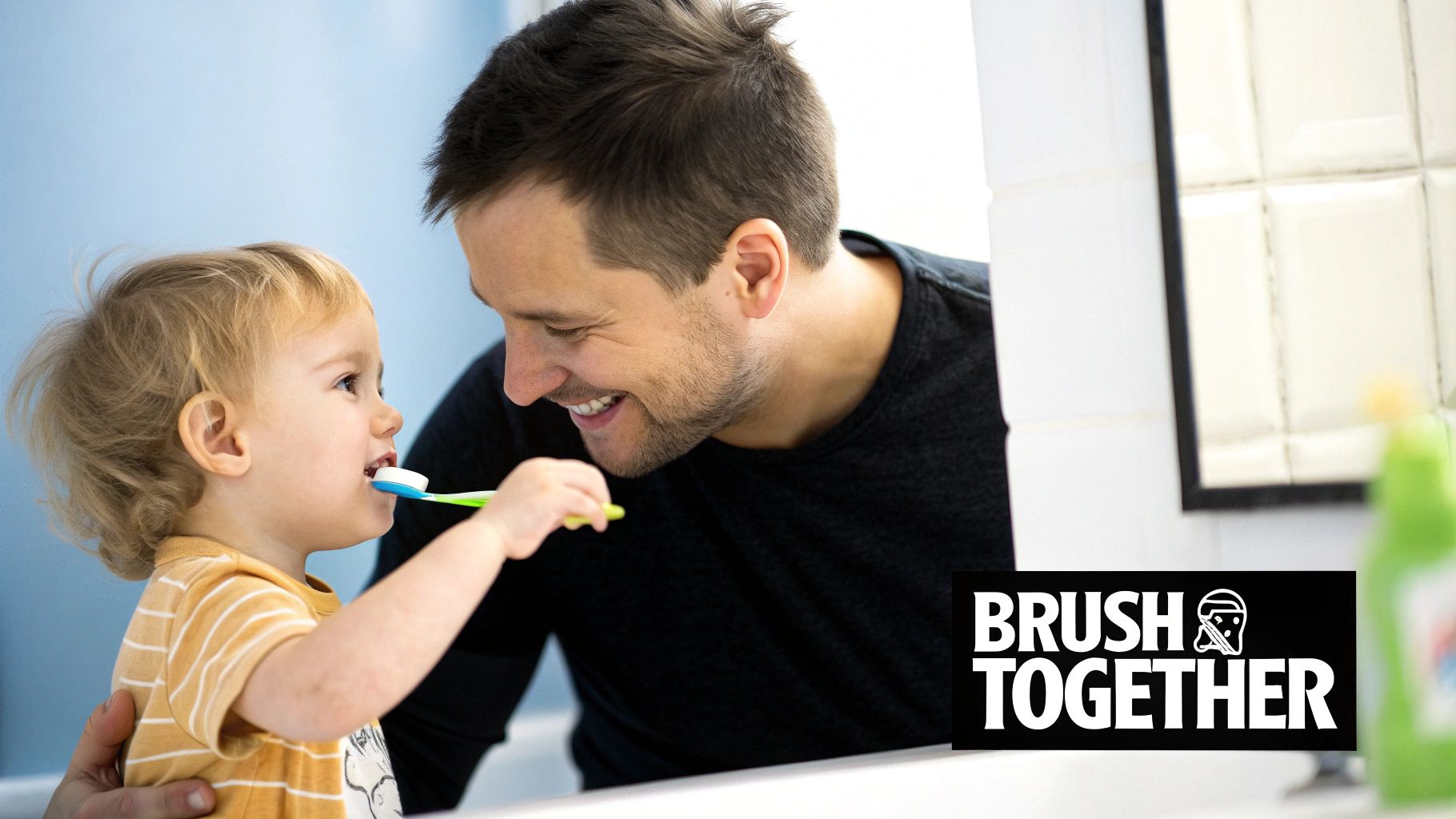
- Brush Together: When they see you brushing your own teeth, it normalizes the activity and makes it a family habit.
If they're still resistant, try a different position. Having them sit on your lap, facing away from you, often works well. The goal is to make it a positive experience that contributes to their beautiful, healthy smile.
The very first sign of a cavity is often a subtle, chalky white spot on the tooth near the gumline. This indicates that the enamel is weakening. The benefit of regular dental checkups is catching decay at this early stage, when treatment is simpler and less invasive.
Is Fluoride Toothpaste Safe for My Toddler?
Yes, when used correctly, fluoride is both safe and one of the most effective tools for preventing cavities. Major health organizations, like the American Academy of Pediatric Dentistry, strongly recommend it.
The benefit of using the right amount is maximum protection with complete safety. For toddlers under three, you only need a smear the size of a single grain of rice. This amount provides powerful protection for their enamel and is safe if swallowed.
Once they turn three and can reliably spit, you can upgrade to a pea-sized amount.
At Grand Parkway Smiles, we're here to be your partner in your child's oral health journey, from their first tooth to their adult smile. If you have more questions or are ready to schedule that important first visit, our caring pediatric team is here to help. Book your appointment online today and let's get started.