Figuring out the cost of dentures is usually the first question people ask when they're ready to restore their smile and regain their confidence. For a standard, full set of dentures, you can generally expect the cost to fall somewhere between $1,000 and $3,000 here in the U.S. This makes them a highly effective and accessible way to restore full dental function, especially when compared to more complex procedures.
Your Guide to Understanding Denture Costs
Investing in a new set of dentures is about so much more than the price tag. It’s a genuine investment in your day-to-day comfort, your dental health, and your overall quality of life. When you're dealing with missing teeth, it can affect everything from enjoying your favorite meals to feeling confident in social situations. Here at Grand Parkway Smiles, we know our Katy and Houston families need clear, straightforward information to make the best decision for their health and appearance.
Our goal is to demystify the numbers and show you that a beautiful, functional smile is absolutely within your reach. This guide will walk you through the typical price ranges, covering everything from conventional dentures that restore your appearance to advanced implant-supported options that preserve your jaw health. We believe in personalized care, and that starts with ensuring you understand all the benefits of your choices.
Quick Guide to Average Denture Costs
To make things a bit simpler, here's a quick table breaking down the estimated costs and key benefits for the most common denture types we offer at Grand Parkway Smiles.
| Denture Type | Estimated Cost Range (Per Arch or Set) | Common Materials | Best For |
|---|---|---|---|
| Complete Conventional Dentures (Full Set) | $1,000 – $3,000 | Acrylic, Resin, Porcelain | Patients missing all teeth, seeking to restore their smile's appearance and chewing ability. |
| Partial Dentures | $700 – $1,800 (Per Arch) | Acrylic base, metal framework, flexible nylon | Replacing several missing teeth to improve appearance and prevent remaining teeth from shifting. |
| Implant-Supported Dentures (Overdentures) | $3,500 – $6,000+ (Per Arch) | High-strength acrylic, reinforced with metal, attached to titanium implants | Patients looking for maximum stability, restored chewing power, and long-term jawbone preservation. |
| Immediate Dentures (Same-Day) | $1,500 – $3,500 (Full Set) | Acrylic | A temporary solution placed immediately after tooth extractions to maintain appearance during healing. |
Keep in mind these are general estimates. Your final cost will depend on your specific dental health needs, which we'll determine during your consultation.
What Shapes the Cost of Your New Smile
The final cost of your dentures isn't just about the physical appliance itself. It reflects a combination of the quality materials, detailed craftsmanship, and clinical expertise needed to create a solution that restores your smile and oral health perfectly. Think of it like a bespoke suit—while off-the-rack options exist, a custom-tailored solution provides superior comfort, appearance, and function. Dentures are very similar in that regard.
Several key factors come into play:
- The type of denture: Are we restoring a few gaps with a partial denture or creating a brand new smile with a complete denture?
- The materials used: Options range from standard acrylic to premium, high-impact resins or porcelain that offer a more durable and incredibly natural-looking appearance.
- Preparatory procedures: Sometimes, treatment is needed to create a healthy foundation for new dentures. This might include tooth extractions or other therapies to optimize your oral health.
Your smile is a huge part of your identity and well-being. Investing in a set of high-quality, well-fitting dentures is a direct investment in your health. It helps prevent future dental problems and dramatically improves your ability to eat, speak, and smile with confidence.
The need for smile restoration solutions is only growing. The global dentures market was valued at USD 2.29 billion in 2024 and is expected to hit USD 3.79 billion by 2032. A major driver for this is periodontal disease, which unfortunately affects over 50% of adults worldwide. This highlights how common and vital these procedures are for restoring health and function. You can learn more about the trends shaping the dentures market if you're interested.
Ultimately, understanding what goes into the cost of dentures empowers you to choose the best path forward for both your long-term health and your budget.
What Really Determines the Price of Your Dentures
Ever wonder why one set of dentures might cost more than another? The price tag is a direct reflection of the quality, durability, and personalized care that goes into creating your new smile. This investment is directly tied to improving your long-term dental health and restoring your confidence.
The answer to "how much do dentures cost?" is complex because several key elements are involved. These factors ensure your new teeth aren't just a replacement, but a functional, comfortable, and beautiful enhancement to your daily life. Let’s break down what truly influences the cost.
The Foundation of Your Smile: The Materials
One of the biggest drivers of the final cost is the materials used, which directly impacts both the appearance and lifespan of your dentures. It’s like choosing finishes for a home renovation—standard options are functional, but premium ones deliver superior aesthetics and long-lasting performance.
- Acrylic Resin: This is the pink, gum-colored base of the denture. While standard acrylic is effective, higher-grade, impact-resistant acrylics offer much greater durability. They are less prone to breaking and better withstand the daily forces of chewing, ensuring your smile remains intact.
- Denture Teeth: The teeth themselves come in a range of materials. Basic acrylic teeth are cost-effective but can wear down more quickly. In contrast, premium, multi-layered resin or porcelain teeth cost more but provide a stunningly natural, translucent appearance that mimics real tooth enamel and lasts significantly longer.
Opting for higher-quality materials means your smile will look incredibly lifelike, resist stains better, and stand up to daily use for years. This isn't just about looks—it supports better nutrition by allowing you to eat a wider variety of foods with complete confidence.
The Complexity of Your Dental Needs
No two mouths are the same. The journey to new dentures is unique for every patient, and the complexity of your situation plays a significant role in the overall cost. A straightforward case will naturally cost less than one requiring preparatory work to ensure optimal health.
For instance, some patients need to address underlying issues before we can craft the final denture.
- Tooth Extractions: If you have failing or decayed teeth that need to be removed, this is a necessary first step to create a healthy foundation. The cost will depend on the number and complexity of the extractions.
- Bone Grafting: When teeth have been missing for a while, the jawbone can recede. A bone graft might be necessary to rebuild the bone, creating a stable and solid base for the denture—this is especially crucial for implant-supported options that preserve bone health.
These preparatory steps are vital for your long-term oral health. They ensure the denture fits securely and comfortably, preventing sore spots and protecting your jaw from further bone loss.
A well-fitting denture does more than just fill a gap; it supports your facial muscles, prevents that “sunken” look, and helps maintain the natural contours of your face, preserving a more youthful appearance.
The Expertise Behind the Fit
Finally, the skill of the dental team and the technology used to craft your dentures are critical components of the cost. A generic, one-size-fits-all approach may seem cheaper upfront but often leads to poorly fitting dentures that cause pain and frustration. A custom solution from an experienced team provides lasting health benefits and value.
This includes:
- Clinician’s Experience: A skilled dentist designs your denture with a deep understanding of oral biomechanics. Their ability to take perfect impressions and make precise adjustments is what results in a truly comfortable and functional fit, allowing you to speak and eat naturally.
- Advanced Technology: Modern practices like Grand Parkway Smiles utilize tools like 3D imaging and computer-guided design. This digital approach allows us to map your mouth with incredible accuracy, leading to a prosthesis that feels right from day one and functions beautifully.
While these advanced techniques might increase the initial price, they deliver daily returns in comfort, function, and aesthetics. A precision-fit denture prevents slipping, improves your ability to speak clearly, and restores your power to enjoy the foods you love. It's a life-changing investment in your well-being.
Comparing Denture Types and Their Costs
Feeling overwhelmed by your denture options is completely normal. The good news is that understanding what each type offers makes the decision much clearer. Choosing to restore your smile is a huge step toward better health and renewed confidence, and we're here to guide you through it.
Think of choosing a denture like selecting the right tool for a job. Each is designed for a specific purpose and offers different levels of stability, aesthetics, and long-term health benefits. We'll break down the most common solutions, from replacing a few teeth to achieving a complete smile makeover.
Conventional Full and Partial Dentures
When most people think of "dentures," this is what comes to mind. Conventional dentures are a time-tested, reliable, and affordable method for restoring your smile and improving your ability to chew.
A full conventional denture replaces all the teeth in your upper or lower jaw. It rests on your gums and is held in place by natural suction. This is a fantastic solution for regaining the appearance of a full set of teeth and supporting your facial muscles, which helps you avoid the sunken look associated with tooth loss.
A partial denture is designed to fill the gaps left by missing teeth while your healthy, natural teeth remain. It typically uses a subtle framework with clasps that anchor to your existing teeth. This not only completes your smile but also crucially prevents your other teeth from shifting out of place, which is vital for maintaining a proper bite and oral health.
The final price tag for these dentures depends on a few key things, as you can see in the visual guide below.
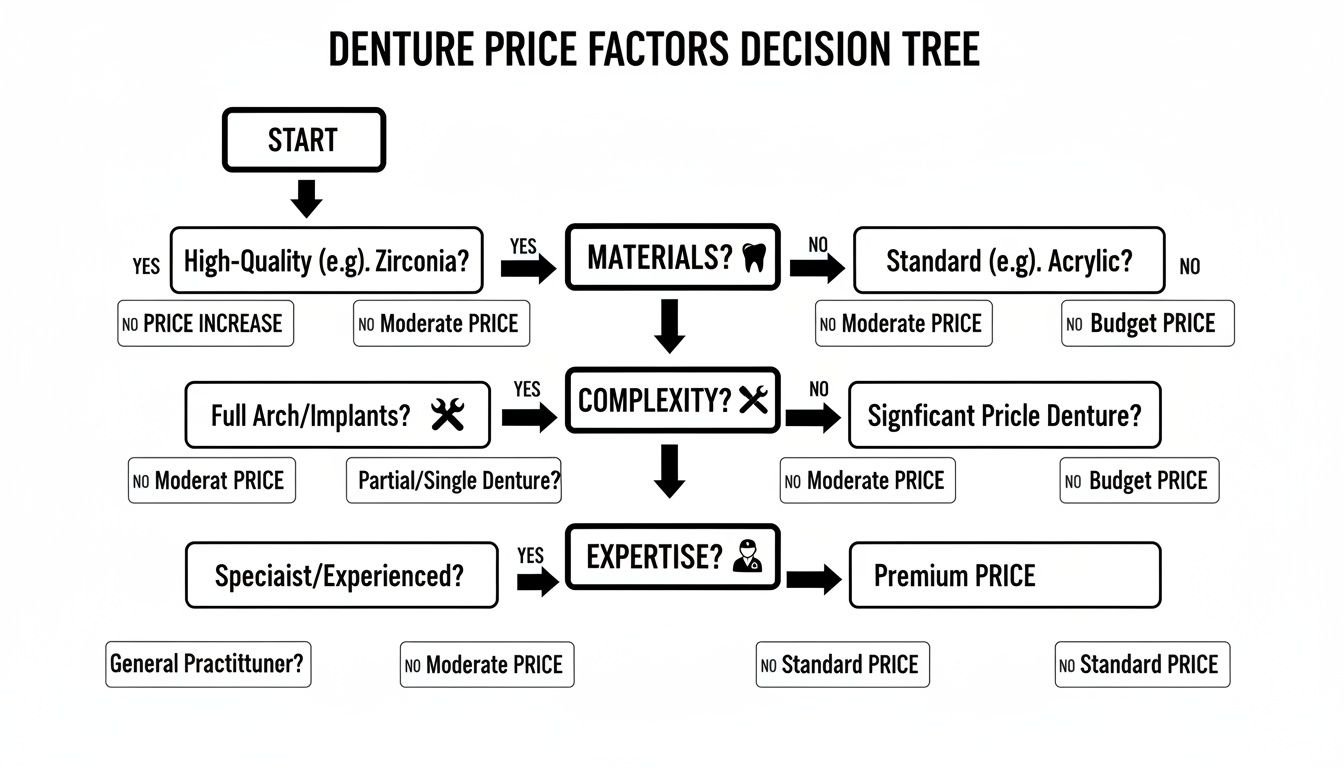
As the infographic illustrates, the final cost is determined by the quality of materials, the complexity of your dental needs, and the experience of your dental team, all of which contribute to a healthier, more beautiful outcome.
Immediate Dentures for a Seamless Transition
The primary benefit of an immediate denture is that you leave our office with a new set of teeth on the same day your natural teeth are removed. This means you never have to go without teeth, preserving your appearance and confidence while you heal.
We craft these dentures before your extraction appointment and place them immediately after. Because your gums and jawbone will change shape as they heal, immediate dentures require adjustments and relines to maintain a comfortable fit. They are an excellent temporary solution that supports you until your mouth is fully healed and ready for a permanent denture.
Implant-Supported Dentures: The Gold Standard
For anyone seeking the ultimate in stability and function, implant-supported dentures are in a class of their own. They provide a secure, fixed solution that locks your smile in place, protects your jawbone from deteriorating, and fully restores your ability to eat and speak with confidence.
Implant-supported dentures are not just a cosmetic fix; they are a long-term investment in your oral health. By stimulating the jawbone like natural tooth roots, they prevent the bone loss that inevitably occurs with tooth loss, preserving your facial structure and health for years to come.
The process involves placing a few small titanium posts into your jawbone to act as artificial tooth roots. Your custom denture then "snaps" onto or is permanently fixed to these implants. The result is a secure set of teeth that won't slip, click, or move. You can finally enjoy all your favorite foods without hesitation, which significantly improves your nutrition and quality of life.
To help you weigh the options, here's a side-by-side look at the benefits of traditional removable dentures versus their modern, implant-supported counterparts.
Removable Dentures vs Implant-Supported Dentures: A Cost and Benefit Comparison
| Feature | Conventional Removable Dentures | Implant-Supported Dentures (e.g., All-on-4) |
|---|---|---|
| Initial Cost | Lower upfront investment. | Higher initial investment. |
| Stability | Relies on suction and adhesives; can shift or slip while eating or speaking. | Anchored to dental implants; extremely stable and secure for confident function. |
| Jawbone Health | Does not prevent jawbone loss, which can alter facial appearance over time. | Stimulates the jawbone, preventing bone loss and preserving your natural facial structure. |
| Eating & Speaking | Some restrictions on hard or sticky foods; can affect speech clarity. | No food restrictions; allows for natural eating, better nutrition, and clear speech. |
| Maintenance | Requires daily removal for cleaning and adhesives. | Can be cleaned much like natural teeth; some are removable for easy cleaning. |
| Comfort | Can cause sore spots or irritation on the gums from rubbing. | More comfortable as they don't rest directly on the sensitive gum tissues. |
| Lifespan | May need replacement or relining every 5-7 years due to jaw changes. | Implants can last a lifetime with proper care; denture may need updates. |
While the upfront cost for implant-supported options is higher, the unmatched long-term benefits for your health, appearance, and overall quality of life are clear.
Globally, removable dentures still hold an 80% market share, but technology is making stable, same-day solutions more accessible. Modern CAD/CAM technologies can reduce chair time by as much as 50%, adding value and convenience. You can find more details on global denture market trends and see how quickly the field is advancing.
Ultimately, the best choice depends on your personal goals, health priorities, and budget. Whether you opt for a conventional denture for its affordability or invest in an implant-supported solution for its profound health benefits, the goal is always the same: to restore your smile and improve your life.
How to Make Your New Smile Affordable
Concerns about cost should never stand between you and a healthy, functional smile that restores your confidence. While understanding "how much do dentures cost" is the first step, the next is knowing how to make that investment manageable. Restoring your smile is about more than just aesthetics; it's about regaining the ability to eat nutritious foods, speak clearly, and engage with the world confidently.
At Grand Parkway Smiles, we are committed to creating a clear financial path for our Katy and Houston patients. We don't believe that financial worries should force you to compromise on your dental health. That's why we have several solutions in place to ensure you can move forward with the care that will enhance your well-being.
Using Dental Insurance for Your Dentures
For many of our patients, dental insurance is a key tool for reducing out-of-pocket costs. Most PPO (Preferred Provider Organization) dental plans offer coverage for restorative procedures like dentures because they are essential for proper oral function and overall health.
Coverage can vary significantly, but it often helps with a percentage of the cost for the dentures and any necessary preparatory work, such as extractions.
Our team at Grand Parkway Smiles has extensive experience working with a wide range of PPO insurance providers. We will help you understand your benefits by:
- Verifying your coverage: We contact your insurance company to confirm the specifics of your plan's benefits for dentures.
- Maximizing your benefits: We ensure claims are filed correctly to help you receive the maximum reimbursement your policy allows.
- Providing a clear estimate: Before beginning treatment, we provide a detailed breakdown of what insurance is expected to cover and what your portion will be.
This proactive approach eliminates guesswork, allowing you to budget effectively for your new smile and the health improvements that come with it.
Flexible Financing and In-House Plans
We understand that not everyone has dental insurance, or sometimes a policy's coverage is limited. To bridge this gap, we offer several other financial pathways to make your treatment accessible.
A new smile is a powerful asset. By making high-quality dentures affordable, we empower you to invest in your long-term health, helping you avoid the cascading problems that come from missing teeth, such as jawbone deterioration and nutritional difficulties.
For patients without insurance, our in-house savings plan is a fantastic alternative. It’s a membership-based plan that provides significant discounts on many treatments, including dentures, for a low annual fee. This is a straightforward way to get the care you need without the complexities of traditional insurance.
We also partner with trusted third-party financing companies. These options allow you to break down the total cost of your treatment into predictable, low monthly payments that fit comfortably into your budget. This means you don't have to delay getting the treatment that will improve your health, appearance, and quality of life.
With an estimated 178 million Americans missing at least one tooth, payment flexibility is more important than ever. While a single implant can run between $3,400 and $5,000, conventional dentures remain an affordable choice at under $3,000. We are also seeing a trend where annual dental plan maximums are rising, which helps ease this burden and makes a healthy, beautiful smile achievable for more people.
The Journey to Your Custom-Fit Dentures
Getting dentures is a significant and positive step, and we find that understanding each stage makes the experience feel more comfortable and empowering. Think of it as a collaborative project to restore your smile’s health, function, and unique appearance. At Grand Parkway Smiles, we are with you every step of the way, ensuring you feel confident and informed from our first conversation to your final fitting.
This is a true partnership between you and our dental team. Your input on how you want your new smile to look and feel is essential. It’s what helps us create a solution that not only allows you to chew and speak properly but also brings back the unique character of your smile.
Let's walk through the key milestones on the path to your beautiful new dentures.
The Initial Consultation and Digital Design
It all begins with a detailed conversation and a comprehensive oral exam. During this first visit, we’re not just examining your teeth and gums; we’re listening. We want to understand your goals, your concerns, and what you hope to achieve with your new smile. This conversation is the foundation upon which we build your treatment plan.
We use advanced 3D imaging to get a highly detailed, accurate map of your entire mouth. This technology allows us to see your jawbone, soft tissues, and remaining teeth from every angle. It provides the perfect blueprint for planning your treatment with incredible precision, ensuring your final dentures fit perfectly and look natural.
Creating the Perfect Mold
Once we have a complete picture of your oral health, the next step is taking precise dental impressions. These molds capture every detail of your gums and jaw, serving as the physical model for crafting your custom dentures. A perfect impression is crucial for achieving a comfortable fit that won't cause sore spots.
Our team takes great care during this stage to ensure the impressions are exact. This meticulous work allows our lab technicians to create a set of dentures that feels stable and natural, empowering you to eat and speak with renewed confidence.
The Collaborative Try-In Appointments
This is the exciting part—where your vision for your new smile begins to take shape. Before creating the final dentures, we make a wax "try-in" model. This mock-up allows you to see exactly how your new teeth will look and feel, giving you the opportunity to provide feedback.
During these appointments, we fine-tune all the important details together:
- Tooth Shape and Size: We ensure the teeth look natural and complement your facial features for a harmonious appearance.
- Color and Shade: We match the shade to create a bright yet believable smile.
- Alignment and Bite: We adjust everything to ensure your bite is comfortable and functions correctly.
Your feedback is what makes the difference. We will continue making adjustments until you are 100% happy with the look and feel. The goal is a smile you will be proud to share.
A custom-crafted denture isn't just about replacing teeth; it's about restoring your unique identity. The try-in process empowers you to co-design your smile, making sure it reflects your personality and gives you renewed confidence.
A Calm and Comfortable Experience
We understand that dental visits can cause anxiety for some. To ensure your journey to a new smile is as stress-free as possible, we offer sedation dentistry options. These solutions help you relax completely during any necessary procedures, like extractions, turning the entire experience into a calm and positive one.
Finally, the big moment arrives: you receive your final, custom-made dentures. We’ll make any last-minute adjustments for a perfect fit and provide you with all the information you need on how to care for them. It’s the culmination of our journey together—a brand new smile that enhances your health, appearance, and quality of life.
Protecting Your Investment with Proper Denture Care
Think of your new dentures as a significant investment—not just in your appearance, but in your overall health and daily confidence. Like any valuable asset, they require regular care to perform optimally and last for years. Proper maintenance ensures your dentures remain comfortable, functional, and looking great, so you can continue to eat, speak, and smile without hesitation.
Viewing your dentures as a high-performance tool is helpful. A small daily commitment is all it takes to protect your oral health and preserve the perfect, custom fit that enhances your smile.
Daily Care for Longevity and Health
A consistent cleaning routine is the cornerstone of keeping both your dentures and your mouth in excellent condition. It's the best way to prevent the buildup of plaque, stains, and bacteria that can lead to gum irritation or infections. Following these simple steps will keep your smile bright and your mouth healthy.
- Rinse After Every Meal: A quick rinse under water helps dislodge food particles, preventing buildup and keeping your dentures comfortable.
- Brush Your Dentures Daily: Use a soft-bristled denture brush and a non-abrasive denture cleaner. Regular toothpaste is too harsh and can create micro-scratches. Gently brush all surfaces to remove plaque and food deposits, keeping them fresh and clean.
- Clean Your Mouth Thoroughly: Even if you have no teeth on an arch, you must clean your gums, tongue, and the roof of your mouth. A soft toothbrush or gauze stimulates circulation and removes plaque, promoting good oral hygiene.
Handle them carefully. A great tip is to clean your dentures over a sink filled with water or over a folded towel. This provides a soft landing in case they slip, preventing accidental damage.
Storing Your Dentures Correctly
When you are not wearing your dentures, they must be stored properly to maintain their shape. If they dry out, the material can warp and become brittle, which will ruin the precise fit and lead to discomfort.
Proper storage isn't just about cleanliness; it’s about preserving the custom fit of your prosthesis. Keeping your dentures moist ensures they retain their shape, providing consistent comfort and function day after day.
Always keep your dentures in a cup of cool water or a special denture-soaking solution overnight. Avoid hot water, as it can permanently warp the acrylic base and ruin the fit. This simple nightly habit is one of the easiest ways to maximize the lifespan of your investment in your smile.
Regular Check-ups and Knowing When to Adjust
With good care, a set of conventional dentures can last anywhere from 5 to 10 years. However, your mouth naturally changes over time. Your jawbone and gums can shrink, which can eventually cause your dentures to feel loose.
This is why regular check-ups at Grand Parkway Smiles are so important. We will monitor your oral health, check the condition of your dentures, and ensure they continue to fit properly. If you notice them slipping, hear clicking sounds when you talk, or feel new sore spots, it’s time to call us. A professional reline or a simple adjustment can restore that snug, comfortable fit and prevent more significant issues from developing, protecting both your comfort and health.
Common Questions About Denture Costs and Care
To wrap things up, let's address some of the most common questions we hear from patients considering dentures. Getting clear answers can make a world of difference as you weigh the costs and benefits, helping you move forward with confidence in your decision to improve your smile.
Investing in your oral health is a big step, and it's natural to have questions about the financial aspects and what daily life will be like with your new teeth.
Will Dental Insurance Cover the Full Cost of Dentures?
Usually, no. Dental insurance typically does not cover the full cost of dentures, but it often provides significant assistance. Most PPO plans recognize dentures as a medically necessary restorative procedure and will cover a portion—often around 50%—after your deductible is met.
The specifics depend on your individual plan. Our team will always verify your benefits to give you a clear, accurate estimate of your out-of-pocket costs, so you can plan accordingly.
How Long Do Dentures Really Last?
With proper care, a set of conventional dentures generally lasts between 5 and 10 years. Over time, the materials can wear down, and more importantly, your jaw and gums will naturally change shape, affecting the fit.
Implant-supported dentures tend to have a longer functional lifespan because the implants help preserve the jawbone, preventing these changes. While the implants can last a lifetime, the denture portion may need to be updated or replaced every 10-15 years to maintain optimal appearance and function.
Is the Process of Getting Dentures Painful?
The process itself is designed to be comfortable. Taking impressions and fitting the dentures is completely painless. If you need teeth removed beforehand, you will experience some soreness during healing, but we manage this effectively with medication and clear post-operative instructions to ensure your comfort.
Your comfort is our top priority. A well-made denture should not cause pain. If you feel any discomfort, especially after the initial adjustment period, it's a sign that a professional adjustment is needed to perfect the fit and protect your oral health.
Will I Be Able to Eat My Favorite Foods with Dentures?
Yes, but it takes a little time to adjust. Initially, it's best to stick with softer foods. As you become more comfortable and proficient, you can gradually reintroduce a wider variety of foods into your diet.
Patients with implant-supported dentures often find they can eat virtually anything they want. The implants provide exceptional stability that feels very similar to natural teeth. This ability to enjoy a full, nutritious diet is one of the greatest benefits for your overall health and quality of life.
Restoring your smile is a journey, and we’d be honored to take it with you. If you have more questions or are ready to see what's possible, the expert team at Grand Parkway Smiles is here to help. Schedule your personal consultation today and discover a path to a healthier, more confident smile.