When you get a tooth pulled, a smooth recovery is key to protecting your long-term dental health and the appearance of your smile. Smoking is one of the biggest risks to that recovery. It dramatically increases your chances of developing a dry socket, an incredibly painful complication that derails the healing process. A dry socket happens when the blood clot that's supposed to protect the empty tooth socket gets dislodged or dissolves too soon. This leaves the sensitive nerve and bone underneath exposed, which is the source of severe pain and a major setback for healing and your oral health.
What Is Dry Socket and Why Is It So Painful
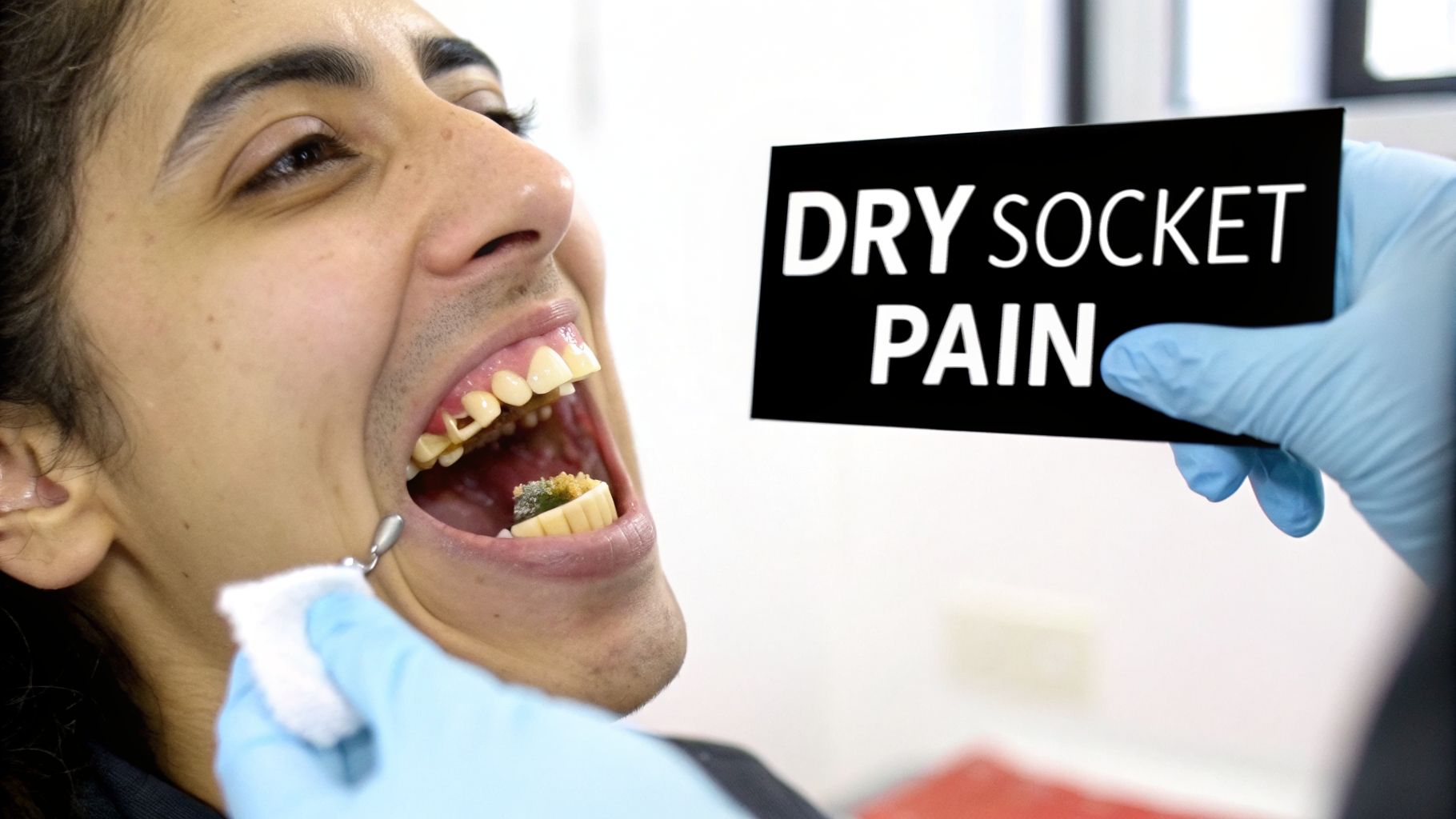
After we extract a tooth, your body immediately starts the healing process by forming a blood clot in the empty space. You can think of this clot as a natural, custom-made bandage. It's there to shield the underlying bone and delicate nerve endings from the rest of your mouth, creating a safe, clean environment for new tissue to grow. This is the foundation for a healthy recovery and prepares the site for future dental work like implants, ensuring your smile remains complete.
A dry socket—which dentists call alveolar osteitis—is what happens when this essential bandage is lost. This can happen if the clot doesn't form right in the first place, gets physically dislodged, or breaks down before the wound has had a chance to heal. Without that protective layer, the sensitive structures in the socket are left completely exposed to air, food, and bacteria.
The Source of Intense Pain
This raw exposure is exactly why a dry socket is so excruciating and a threat to proper healing. The nerves in your jawbone, normally tucked away and safe, are suddenly irritated and inflamed. The pain isn't the typical soreness you'd expect after a dental procedure; it's a deep, throbbing ache that often kicks in two to five days after your extraction. This timing is a huge red flag—at this point, your pain should be getting better, not worse.
This discomfort also has a nasty habit of traveling. Many people with a dry socket feel the pain radiate far beyond the extraction site itself. It can spread:
- Along the jawline
- Up toward the ear on that same side
- Into the temple or even the eye area
This kind of radiating pain can make simple things like talking or eating almost impossible and usually doesn't respond to typical over-the-counter pain relievers, disrupting your daily life.
Other Telltale Signs of a Dry Socket
Besides that signature pain, there are a few other clear warning signs to watch for that signal a problem with your oral health. If you peek in the mirror, the socket might look noticeably empty. Instead of a dark, reddish clot, you might even see the whitish color of the bone itself. This is a sign that the foundation for new tissue growth is missing.
The loss of that blood clot also allows food debris and bacteria to get trapped in the socket. This almost always leads to a foul taste in your mouth or persistent bad breath (halitosis) that even brushing can't seem to fix, affecting your confidence and social interactions.
Understanding what a dry socket is makes it crystal clear why habits like smoking are so risky for your dental health. The mix of chemical interference and physical suction is a direct threat to your mouth's healing process. That healthy blood clot is absolutely essential for a comfortable recovery and a good aesthetic outcome. The connection between dry socket and smoking is one of the most serious risk factors your dentist will warn you about for good reason.
How Smoking Wrecks Your Mouth's Healing Process

When we talk about dry socket and smoking, it's not a matter of bad luck—it's a direct threat to your dental wellness. Smoking sets off a chain reaction that interferes with your body's natural ability to heal after a tooth extraction. Understanding what’s actually happening in your mouth is the first step toward achieving a smooth, pain-free recovery and protecting your oral health.
The most immediate danger is purely physical. The act of inhaling on a cigarette, vape, or pipe creates a powerful suction in your mouth. This negative pressure can easily dislodge the delicate, essential blood clot from the empty socket, undoing the first step of healing.
The Chemical Assault on Healing
Beyond the physical force, the real damage happens on a chemical level. The nicotine in tobacco is a powerful vasoconstrictor, meaning it clamps down on your blood vessels. This tightening action dramatically reduces blood flow to the extraction site, which is detrimental to your healing.
This is a huge problem because the healing socket is desperate for two things carried by your blood:
- Oxygen: This is the fuel for generating new gum tissue and preventing infection, which are vital for a healthy-looking smile.
- Nutrients: These are the essential building blocks your body needs to repair itself and form a stable clot, ensuring the jawbone heals correctly.
With a choked-off blood supply, the very foundation of healing is undermined. Your body simply can't get the resources it needs to do its job, making it much harder to form that protective clot and begin creating healthy new tissue.
And it’s not just the nicotine. Tobacco smoke contains thousands of other toxic chemicals that can directly poison the healing tissues. This can cause the blood clot to break down or dissolve on its own, leaving the bone exposed and delaying the recovery of your healthy smile.
The Overwhelming Evidence Against Smoking
This isn't just a theory; the numbers tell a stark story. Study after study confirms that smokers are significantly more likely to develop a dry socket, compromising their dental health.
A major 2022 review, which looked at data from eleven different studies, found that tobacco smokers have more than a three-fold increase in the odds of getting a dry socket compared to non-smokers. The actual rates were about 13.2% for smokers versus only 3.8% for non-smokers. You can dig into the full findings about this dental health risk, but the conclusion is crystal clear. The combination of physical suction and chemical warfare makes smoking one of the biggest risks to a smooth recovery and a healthy dental outcome.
Recognizing The Warning Signs of Dry Socket
So, how can you tell if what you’re feeling is just normal soreness after an extraction or the start of a dry socket? It's true that some discomfort is a normal part of healing, but the pain from a dry socket is in a totally different league. It's an intense, throbbing pain that usually hits you two to five days after your surgery—right when you’d expect to be feeling better and getting back to normal.
This delayed start is a classic red flag. The pain isn't just bad; it's a deep, persistent ache that often doesn't let up, even with over-the-counter pain relievers. This is your body's way of shouting that the protective blood clot has been lost, leaving the sensitive nerve and bone underneath exposed and stalling your oral healing.
A Closer Look at the Symptoms
That deep, radiating pain is the main giveaway for a dry socket. But there are a few other telltale signs that something isn’t right with your healing process. Knowing what to look for is key to getting the fast treatment you need to find relief and protect your long-term dental health.
Key warning signs include:
- Visible Bone in the Socket: A healthy healing socket should look dark red, filled with the blood clot. If you peek in the mirror and see a whitish or yellowish surface, you might be looking directly at the exposed jawbone. This indicates the healing foundation is gone.
- A Foul Taste or Odor: Without the clot to protect it, the empty socket can trap food particles and bacteria. This often leads to a persistent bad taste in your mouth or bad breath that you can't seem to brush away, impacting your confidence.
- Radiating Pain: The pain rarely stays put. You might feel it spreading along your jaw, up towards your ear, or even into your temple on the same side of your face.
To make it even clearer, let's compare what's expected during a healthy recovery versus what points to a dry socket.
Normal Healing vs. Dry Socket Symptoms
| Symptom | Normal Healing After Tooth Extraction | Signs of Dry Socket |
|---|---|---|
| Pain Level | Mild to moderate, peaks in the first 24-48 hours and gradually improves. | Severe, throbbing pain that starts 2-5 days after surgery and gets worse over time. |
| Pain Location | Centered around the extraction site. | Radiates from the socket to the ear, eye, or temple on the same side of the face. |
| Pain Relief | Responds well to prescribed or over-the-counter pain medication. | Pain medication offers little to no relief. |
| Socket Appearance | A dark blood clot is visible inside the socket, indicating healthy healing. | The socket appears empty, or a whitish/yellowish bone is visible. |
| Taste & Smell | No unusual or persistent bad taste or odor. | A foul taste in the mouth or persistent bad breath. |
Seeing your symptoms in a side-by-side comparison can help you understand if what you’re experiencing is part of the normal healing journey or a sign you need to call your dentist.
The link between dry socket and smoking is something we can't ignore, as smokers are at a significantly higher risk. Research shows that while dry socket occurs in about 3.2% of all extractions, that number jumps to a staggering 12% for smokers, compared to just 4% in non-smokers. You can explore the full research on this significant risk gap.
Don't Just Try to Tough It Out
Ignoring these symptoms is never a good plan. A dry socket won't heal correctly on its own and will only lead to prolonged pain and a higher risk of infection, jeopardizing the health of the surrounding teeth and gums. It’s also crucial to remember the risk isn't just from cigarettes; it's well-known that vaping can cause dry socket because the suction and chemical exposure create the same damaging conditions.
If you're dealing with escalating pain a few days after your tooth was removed, especially if you have any of the other signs we’ve talked about, this isn't a test of your pain tolerance. It's a clear signal to call your dentist right away. Quick treatment is the fastest way to get relief and make sure your jaw heals properly for your long-term oral health and a confident smile.
Your Prevention Playbook to Avoid Dry Socket
Protecting the extraction site after your procedure is all about having a solid game plan. Think of it as your personal playbook for a smooth, comfortable recovery that supports your dental health. The steps are simple, but following them closely—especially the rules around dry socket and smoking—is the best way to ensure proper healing and avoid this painful complication.
Your prevention strategy actually begins before you even sit in the dental chair. The most important thing you can do for your oral health is to stop smoking. If you can quit a week or more before your appointment, that’s fantastic, but even stopping just 24 hours before your extraction can make a real difference in how well your body heals.
The Critical Post-Extraction Rules
Once your tooth is out, the first 72 hours are absolutely crucial. This is when the protective blood clot that forms in the empty socket is at its most fragile. Your one and only job during this time is to protect that clot to ensure a healthy foundation for new tissue.
This means avoiding anything that creates suction in your mouth, which could easily pull the clot out of place:
- No Smoking: The powerful suction from inhaling is the number one enemy of a healing socket. You must avoid smoking for at least 72 hours to protect the site.
- No Straws: Just like smoking, using a straw creates a vacuum that can dislodge the clot. It's much safer to drink directly from a glass.
- No Forceful Spitting: Instead of spitting, just let saliva or water gently fall from your mouth.
- Gentle Oral Hygiene: Be very careful when brushing your other teeth. Stay completely away from the extraction site for the first few days to keep your mouth clean without disturbing the clot.
Why Nicotine Alternatives Are Not Safe
We get this question a lot: what about vapes, patches, or chewing tobacco? The answer is a hard no for vaping and chewing tobacco. Vaping still uses suction, putting the clot at risk. Plus, both introduce nicotine and other chemicals that tighten up your blood vessels and get in the way of proper healing. A nicotine patch is the only potentially safe alternative since it delivers nicotine without suction or exposing the surgical site to harmful chemicals that can damage healing gum tissue.
The timeline for not smoking is directly tied to your risk level. Studies show that heavy smokers might face a shocking 25-40% chance of getting a dry socket. The good news? Quitting for just 12 hours before surgery can drop that risk to below 8%—a huge improvement for your recovery and long-term dental health. You can find more details on how smoking habits impact healing post-extraction.
Beyond avoiding suction, sticking to soft foods is a must. Things like yogurt, smoothies, and mashed potatoes will keep you nourished without any chewing that might disturb the healing socket. Following these steps creates the perfect environment for your body to heal up quickly and correctly, paving the way for a healthy and complete smile. For even more detailed advice, be sure to check out our guide on how to prevent dry socket.
How Your Dentist Treats Dry Socket and Relieves Pain
If you end up with a dry socket even after taking all the right precautions, the first thing to remember is not to panic. While the pain can feel overwhelming, your dentist has a straightforward and highly effective treatment to provide relief and get your healing back on track. You absolutely do not have to just grit your teeth and bear it at home.
The benefit of this procedure is immediate pain relief and the prevention of further complications. First, we'll gently clean out the empty tooth socket. Think of it as a gentle rinse to flush away any food debris or bacteria that may have gotten trapped inside. This simple step helps prevent infection and prepares the area for a soothing treatment.
The Medicated Dressing That Promotes Healing
Once the socket is clean, your dentist will place a special medicated dressing inside. This isn't just a wad of cotton; it's a small, purpose-made dressing soaked in soothing compounds that get right to work. Most often, this includes eugenol, a natural substance from clove oil that's famous for its anesthetic and antiseptic qualities.
This dressing is the secret to getting you comfortable—fast. It immediately forms a protective barrier over the exposed bone and nerve endings, shielding them from irritation. This is what calms the inflammation and takes the edge off that relentless, throbbing pain, allowing you to function comfortably again.
As this timeline shows, prevention is all about timing—both before your surgery and especially during that critical window afterward.
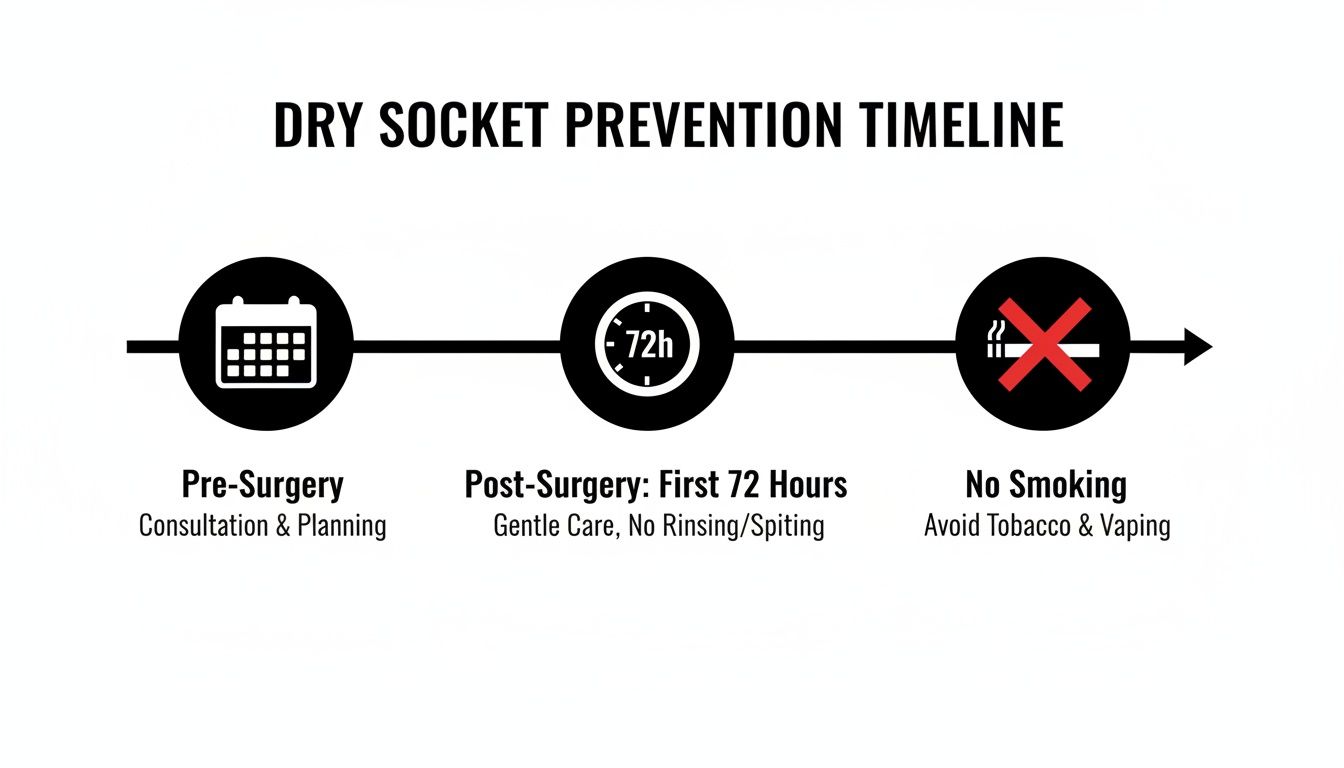
The key takeaway is that avoiding dry socket and smoking is a two-part process. It starts with preparation before the extraction and continues with strict avoidance for at least the first 72 hours post-op. This protects your investment in your dental health.
The Healing Process and Follow-Up Care
Getting that first dressing placed isn't always the end of the story. Depending on how severe your pain is, we might need you to come back every day or two for a fresh dressing. Each change keeps the area soothed and clean while your body begins the real work of healing from the bottom up, building new, healthy tissue.
Over the next few days, you'll notice the pain steadily subsiding as new gum tissue starts to grow and cover the exposed bone. Eventually, the dressing won't be necessary anymore, and your body will have everything under control. You can get more details on our approach by checking out our guide to dry socket pain treatment. Our goal is to get you out of pain quickly and create the perfect environment for your body to heal properly, ensuring your smile stays healthy and beautiful for the long run.
Frequently Asked Questions About Dry Socket and Smoking
We've covered a lot of ground on the risks of dry socket and smoking, how to spot it, and how we treat it. But we know you probably still have questions. Getting clear answers is the first step toward a smooth, worry-free recovery that protects your dental health.
Let's walk through some of the most common questions our patients ask.
Is Vaping or Chewing Tobacco Safer Than Smoking After an Extraction?
It’s a common thought—is vaping or using chewing tobacco a safe workaround after an extraction? Unfortunately, the answer is a clear no. They might seem different, but they create the same problems for your healing socket and your oral health.
Vaping still requires that same suction motion when you inhale. That negative pressure is more than enough to pull the vital blood clot right out of the socket, which is the direct cause of dry socket.
Plus, the nicotine in both vapes and chewing tobacco constricts your blood vessels, which chokes off the supply of oxygen and nutrients your body needs to heal the site. For a healthy recovery and the best aesthetic outcome, you must avoid all forms of tobacco and nicotine. If you're worried about cravings, talk to us about using a nicotine patch—it delivers nicotine without the suction or direct chemical exposure to your mouth.
How Long Do I Absolutely Have to Wait to Smoke?
This is probably the most urgent question we get, and we want to be crystal clear to ensure your best healing outcome. You absolutely must wait a minimum of 72 hours (3 days) before even thinking about smoking. This is when the blood clot is most fragile and the risk of dislodging it is incredibly high.
But just because you've hit the 72-hour mark doesn't mean you're in the clear. That's just the bare minimum to get past the highest danger zone. To give your body the best chance to heal properly and avoid complications that could affect your smile, we strongly advise waiting a week or even longer. The longer you can hold off, the better your oral health will be.
Will a Dry Socket Heal on Its Own Without Treatment?
Technically, the body will eventually heal the area over time, but letting a dry socket heal on its own would be an incredibly painful and drawn-out experience. More importantly, leaving the bone and nerve exposed for that long opens the door to serious infections that can cause much bigger health problems and compromise the integrity of your jaw.
A dry socket is not something you can "tough out." It requires professional care to stop the pain, prevent infection, and ensure the site heals correctly for future dental health. The treatment is quick and provides almost immediate relief.
When you come in, we gently clean the socket and place a medicated dressing inside. This dressing soothes the exposed nerve endings and protects the site so it can finally heal properly. The benefit is a faster, more comfortable recovery. If you even suspect you have a dry socket, don't wait—call your dentist right away to protect your well-being.
Can I Put Gauze Over My Socket to Smoke Safely?
We hear this idea a lot, but putting gauze over the socket does not make smoking safe. The main danger isn't the smoke touching the clot directly; it's the powerful vacuum-like suction created in your mouth when you inhale. No amount of gauze can stop that force from dislodging the clot and jeopardizing your healing.
On top of that, the intense heat and thousands of toxic chemicals in smoke can still easily get through or around the gauze. These toxins will still reach the healing tissue, restrict blood flow, and stall your recovery. There are no shortcuts here—the only way to protect your dental health and ensure a beautiful result is to completely avoid smoking during that critical healing window.
If you are experiencing severe tooth pain or believe you may have a dry socket after an extraction, don't wait. The team at Grand Parkway Smiles offers same-day emergency appointments to provide fast relief and expert care. Contact us today to ensure your dental health is protected. Find out more at https://dentistkatytx.com.