Many people think the important part is remembering to do both. That is true, but it leaves out a useful detail. Are you supposed to floss or brush first? The order changes how clean your teeth feel, how much plaque you remove, and how well fluoride reaches the tight spaces where cavities often start.
That matters because flossing is still the step many people skip. According to the American Dental Association, only 50.5% of Americans floss daily, while 18.5% never floss at all, and the areas between teeth can hold up to 80% of the plaque missed by brushing alone (sunvalleypediatricdentistry.com/statistics-brushing-flossing-oral-health). If you want a simple companion guide to stronger everyday habits, this overview on How to Maintain Oral Health is a practical read.
The Daily Dental Debate That Matters for Your Smile
This question sounds small, but it is not. The order of your routine affects the places your toothbrush cannot fully reach on its own.
Think about where dental problems usually begin. Food particles wedge between teeth. Plaque sits along the gumline. Breath starts to smell stale when bacteria stay trapped in hard-to-clean spaces. Those are not just health issues. They also affect the appearance of your smile by making teeth look less fresh and gums look more irritated.
Why people get confused
Part of the confusion comes from habit. Many people were taught, “Brush your teeth,” and floss became the optional extra. Others feel that once toothpaste is in the mouth, the job is done.
A better way to think about oral care is this:
- Brushing cleans open surfaces
- Flossing cleans the contact points between teeth
- The sequence determines how well those steps work together
A good routine is not just about effort. It is about doing the steps in the order that helps each one work better.
When patients ask me this, they are usually really asking a bigger question. “How do I get the cleanest mouth possible at home without making my routine harder?” The good news is that the answer is straightforward.
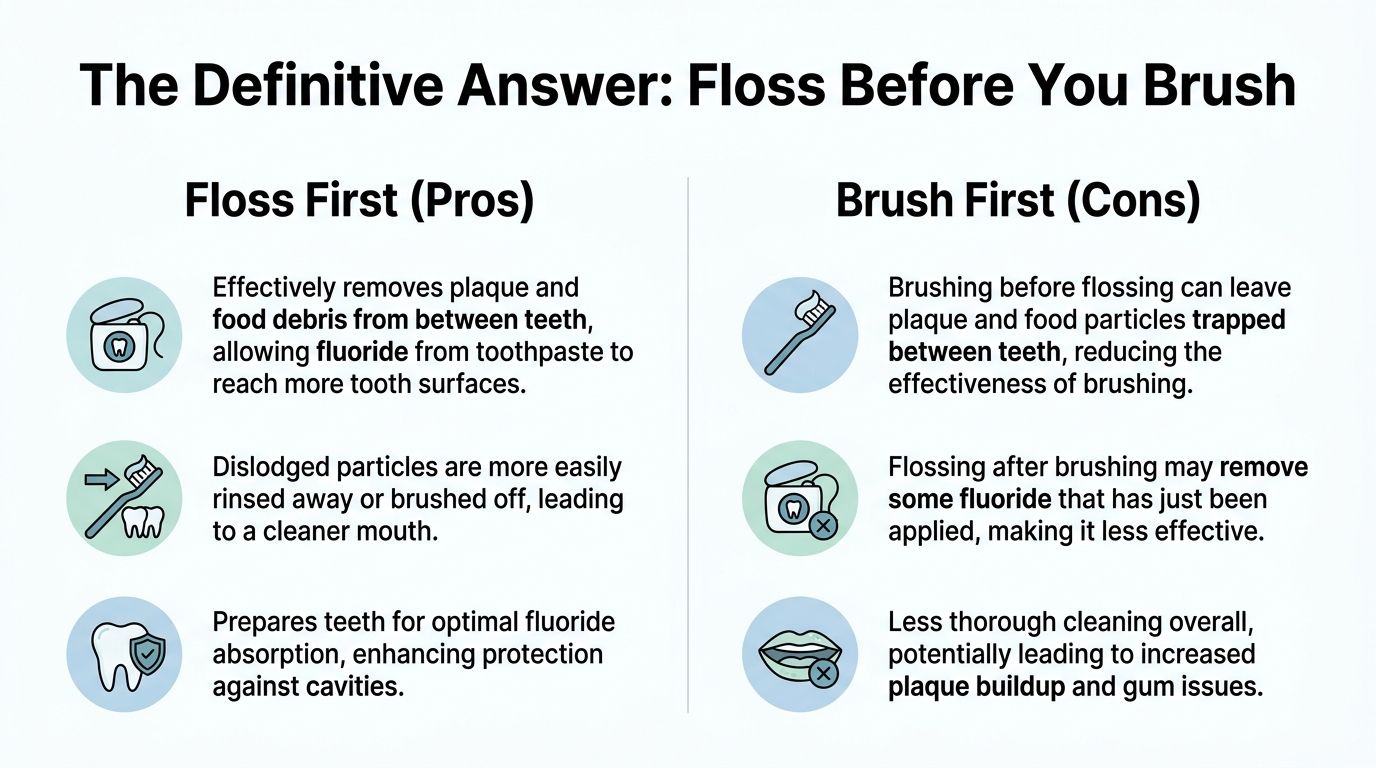
The Definitive Answer Floss Before You Brush
Floss before you brush. That is the clearest answer.
The easiest way to remember it is to compare it to cleaning a floor. You would sweep before you mop, not after. Flossing is the sweeping step. It loosens food bits, soft plaque, and debris from the narrow spaces between teeth. Brushing then clears those loosened particles away.
What flossing first does for you
When you floss first, you create access. The toothpaste foam and fluoride can move into cleaner spaces instead of hitting a barrier of packed debris.
That gives you a few practical benefits:
- Cleaner contact areas because floss breaks up what your toothbrush bristles cannot reach
- A fresher feeling after brushing because the loosened particles do not stay behind
- Better fluoride contact with the tooth surfaces between teeth
Why brushing first is less effective
If you brush first and floss afterward, you often pull out debris after the brushing step is already over. That can leave your mouth feeling like you need to rinse or brush again.
Some people say, “But I always brush first and my teeth seem fine.” Habits can still work reasonably well. But if you want the most thorough routine, the better sequence is floss, then brush.
If you only remember one thing from this article, remember this rule. Floss first, brush second.
The Science Behind the Floss-First Method
The recommendation is not just based on preference. It is backed by clinical research.
A 2018 randomized controlled trial in the Journal of Periodontology found that the floss-brush sequence led to a significantly greater reduction in interdental plaque (p=0.001) and overall plaque (p=0.009). The study also found that fluoride concentration between the teeth was significantly higher in the floss-brush group (perio.org/press-release/new-study-suggests-the-ideal-sequence-for-removing-plaque).

What those findings mean in normal language
Two points matter most.
First, the floss-first group removed more plaque from between the teeth. Those are the exact zones where toothbrushes struggle.
Second, the floss-first group had more fluoride left in those spaces after the routine. That matters because fluoride helps protect enamel and supports cavity prevention.
Why this changes your daily routine
This is why order matters. Flossing first opens up tight areas. Brushing afterward carries fluoride into places that were blocked a minute earlier.
If plaque stays in place, it can harden over time. If you want a simple explanation of that difference, this page on plaque vs tartar is helpful.
Here is the clinical logic in a quick comparison:
| Sequence | Likely result |
|---|---|
| Floss then brush | Debris is loosened first, then brushed away, with better fluoride contact between teeth |
| Brush then floss | Debris may come out after brushing is done, and the fluoride step is less efficient |
This is one of those rare oral hygiene questions where the science gives a very practical answer. The better sequence is also the easier one to understand once you know why.
Your Guide to a Perfect Flossing Technique
Knowing the right order helps. Technique is what turns that order into healthier gums and a cleaner-looking smile.
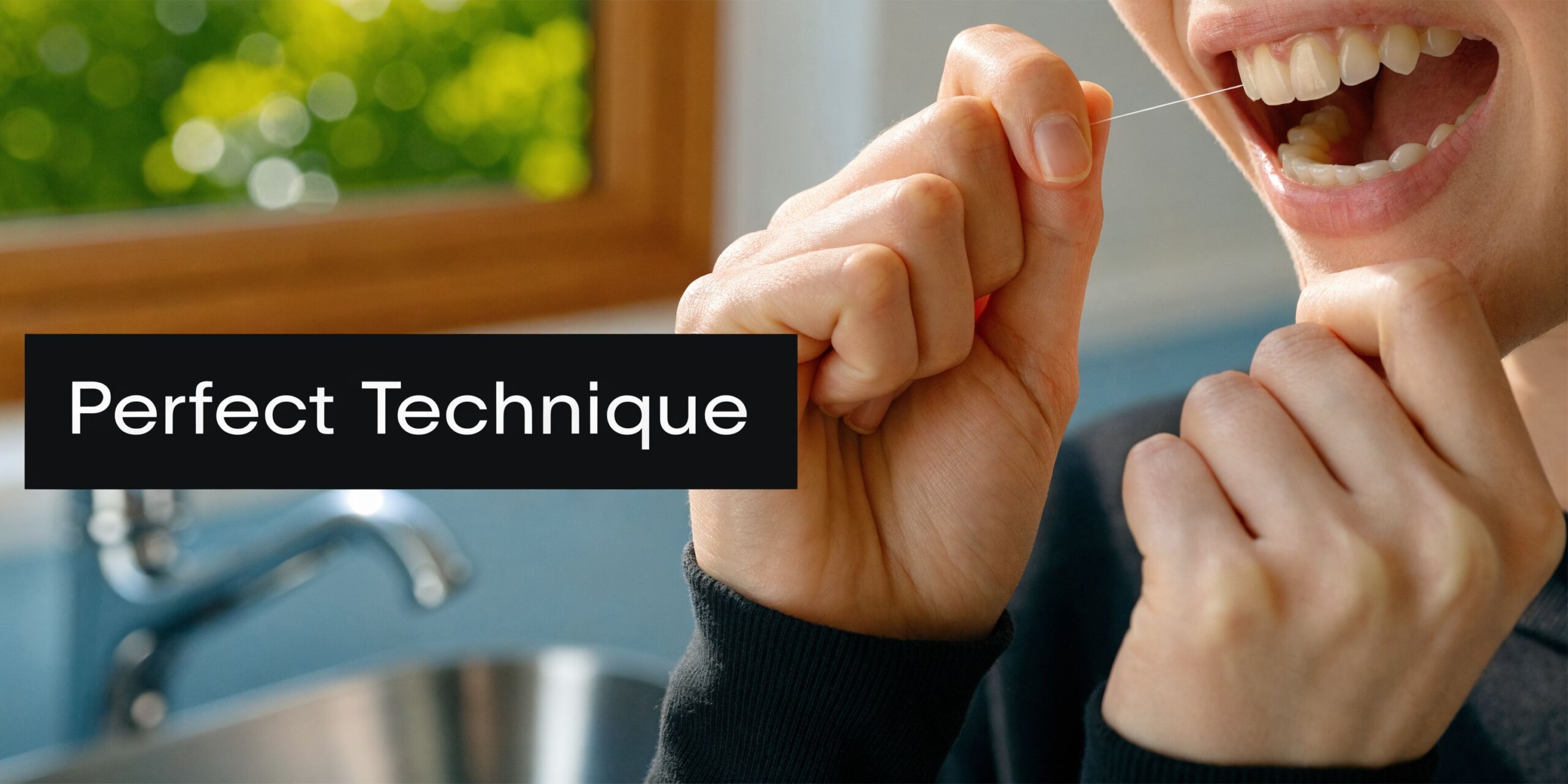
How to floss without hurting your gums
A lot of people think flossing should feel like snapping a guitar string between the teeth. It should not. Good flossing is controlled and gentle.
Use this sequence:
Start with a clean section
Wrap most of the floss around one middle finger and the rest around the other so you can move to a fresh segment as you go.Guide it down gently
Ease the floss between the teeth. Do not force it straight into the gums.Make the C shape
Curve the floss around one tooth so it hugs the side of the tooth.Slide below the gumline carefully
Move it up and down against the tooth surface, then repeat on the neighboring tooth.Use a fresh segment at the next space
That keeps you from moving debris from one area to another.
Common mistakes that reduce the benefit
- Snapping the floss down can irritate gum tissue
- Only popping in and out misses the sides of the teeth
- Reusing the same dirty section spreads plaque around
- Skipping the back teeth leaves a lot behind
If you want another visual walkthrough, this guide on how to floss properly can reinforce the basics. If braces make flossing feel frustrating, this resource on the best way to floss with braces is especially useful.
Healthy flossing should leave your mouth feeling cleaner, not your gums feeling attacked.
Mastering Your Brushing for a Final Polish
Brushing is the finishing step. Once floss has loosened what was trapped between the teeth, your toothbrush can clear away residue and leave a smoother, cleaner surface.
How to brush so it helps
Aim the bristles toward the gumline at about a 45 degree angle. Use small, gentle motions instead of hard horizontal scrubbing.
Hard brushing is a common mistake. People often think more pressure means more cleanliness. In reality, aggressive brushing can irritate gums and wear down tooth surfaces.
A simple pattern helps:
- Outer surfaces first so you cover the smile line methodically
- Inner surfaces next because they are often rushed
- Chewing surfaces last where food can sit in grooves
What to focus on during those two minutes
Use a fluoride toothpaste and give yourself enough time to cover every area. If you rush, you usually miss the same zones over and over, especially behind the back teeth and around the gumline.
Try this mental checklist:
- Front teeth
- Side teeth
- Tongue side
- Chewing side
- Gumline throughout
An electric toothbrush can help some patients keep a steadier motion, but the same rule applies. Let the bristles do the work. Do not scrub like you are cleaning grout.
Brushing after flossing acts like a final polish. It removes what floss loosened and leaves the mouth feeling finished.
Special Considerations for Your Unique Smile
The basic rule stays the same, but some mouths need a more customized routine. With a customized routine, people often feel unsure, especially with braces, implants, or anxiety.

If you have braces
Brackets and wires create extra places for debris to hide. That makes cleaning between teeth and around hardware more important, not less.
For orthodontic patients, using a water flosser before brushing can remove 29% more debris from around brackets and wires (aaoinfo.org/blog/should-i-floss-or-brush-first). In real life, that means a water flosser can be a very helpful first step before a regular brush.
A practical braces routine might look like this:
- Water flosser first to flush around wires and brackets
- Threader or orthodontic floss if needed for tighter areas
- Brush last to clean surfaces and leave fluoride behind
If you have dental implants or bridges
Implants need excellent home care. The concern is not just a trapped food particle. The bigger issue is inflammation around the implant.
For patients with dental implants, flossing first is critical for preventing peri-implantitis because dislodging debris before brushing creates a cleaner implant environment and improves fluoride exposure in those areas, which supports long-term stability (same source above).
If you have a bridge, implant, or a larger restoration, ask your dentist which tool fits your design best. Some patients do well with floss threaders. Others prefer super floss or a water flosser. The goal is the same. Clean under and around the restoration before brushing.
If dental anxiety makes routines harder
People with dental anxiety often struggle less with knowledge than with follow-through. A routine can feel unpleasant if it triggers gagging, bleeding fears, or worry about “doing it wrong.”
Keep it simple:
- Floss first while your mouth is dry and calm
- Brush after, once the tight spaces feel cleared
- Use the same order every day so it becomes automatic
The fewer decisions you make at night, the easier the routine is to keep.
If you tend to avoid oral care when stressed, aim for a routine you can repeat consistently, not a perfect routine you abandon after three days.
If you are helping a child
Kids usually do better with a fixed sequence than with lots of explanation. “Floss, then brush” is easier to teach than a flexible system.
For children with spacers, early orthodontic appliances, or crowded teeth, parents may need to do part of the cleaning. Keep the language simple. “First we clean between the teeth. Then we brush everything away.”
That routine supports both health and appearance. Cleaner teeth look brighter. Calmer gums look healthier. Breath stays fresher.
When to See Your Dentist at Grand Parkway Smiles
A strong home routine does a lot, but it cannot replace professional care. The CDC reports that over 47% of U.S. adults age 30 and older have some form of periodontal disease (puredentalhealth.com/brushing-and-flossing-does-order-matter). Regular cleanings help remove buildup you cannot fully handle at home.
Schedule a dental visit if your gums bleed often, your breath stays unpleasant, your teeth feel sensitive, or you need help cleaning around braces, implants, or dental work. It is also smart to ask for guidance if dental anxiety has made your routine inconsistent.
If you want help building a floss-first routine that fits your teeth, appliances, and comfort level, schedule a visit with Grand Parkway Smiles. The team provides preventive care, pediatric dentistry, implant care, sedation options for anxious patients, and complete treatment planning for families across Katy and the greater Houston area.