A simple tooth extraction appointment usually takes about an hour, while a complex surgical extraction can last up to two hours or more. If you're trying to figure out how much of your day to set aside, the answer depends on more than the moment the tooth comes out, and that full timeline matters just as much as the procedure itself.
If you've just been told you need an extraction, this is probably the question on your mind right now. Patients often want to know whether they can fit it into a lunch break, whether they'll need a ride, and how long they'll be away from work or family responsibilities. The answer isn't one-size-fits-all, because a tooth extraction includes check-in, numbing, possible imaging, the removal itself, and time to make sure you're safe and comfortable before you leave.
Your Tooth Extraction Appointment Timeline Explained
You check in expecting the tooth to be out in 20 minutes, then realize the visit has a few more steps before and after the extraction itself. That is normal. The actual removal is only one part of the appointment, and the full visit is built around keeping you comfortable, making the procedure predictable, and sending you home with a good start on healing.
At Grand Parkway Smiles, I tell patients to plan for the whole appointment, not just the moment the tooth comes out. A straightforward visit may still include updated health history, X-rays or 3D imaging, time for local anesthetic to fully work, the extraction itself, and a few minutes at the end to review aftercare and make sure bleeding is controlled. If sedation is part of the plan, the timeline can stretch further, even when the extraction itself is not difficult.
One patient guide from Aspen Dental's extraction timeline resource explains that a full visit can run longer because of imaging, anesthesia onset, and post-op monitoring. That matches what patients often notice in real life. The hidden time is usually there for a good reason.
What happens between check-in and check-out
A typical extraction visit may include:
- Check-in and paperwork: We confirm medications, allergies, recent health changes, and consent forms before treatment starts.
- Exam and imaging: Imaging and exam findings help determine whether the tooth looks simple to remove or whether the roots, infection, or tooth position could add time.
- Numbing and waiting for it to work: Local anesthetic needs a few minutes to fully set in. Rushing this step usually makes the visit harder, not faster.
- Extraction and site management: After the tooth is removed, the socket may need irrigation, gauze placement, or stitches depending on the case.
- Recovery review before you leave: Clear aftercare helps protect the blood clot, reduce bleeding, and lower the chance of dry socket or other setbacks.
The trade-off is simple. A slightly longer visit often means better planning, steadier pain control, and fewer surprises during the procedure.
That is why the total appointment time can feel longer than patients expect, even when the extraction itself is efficient.
The 20-Minute Procedure for Simple Tooth Extractions
A simple extraction is often the shortest part of the visit. If the tooth is fully above the gumline, has a straightforward root shape, and can be reached easily, the removal itself may be over quickly once the area is completely numb.

For many routine cases, patients spend more time getting numb, having the tooth checked, and reviewing aftercare than they do having the tooth lifted out. That is normal. A short procedure usually means the case is favorable, not that the appointment is rushed or casual.
What a simple extraction usually feels like
The sequence is usually straightforward. First, local anesthetic is placed around the tooth. Then we give it a few minutes to work fully, because good numbing makes the rest of the appointment easier. Once the tooth and surrounding tissue are numb, the tooth is gently loosened and removed with controlled pressure.
Pressure is expected. Sharp pain is not.
Removing a badly decayed, cracked, or loose tooth can stop pain, reduce infection risk, and protect the surrounding gum tissue and neighboring teeth from further stress. In a simple case, the technique is less invasive than a surgical extraction, which is one reason the timeline is shorter.
Why a quick case still deserves careful technique
Speed is helpful, especially if you came in hurting. Control matters more. In practice, taking an extra few minutes to confirm numbness, loosen the tooth gradually, and check the socket well often leads to less tissue trauma and a smoother first day of recovery.
That trade-off is worth it.
Here are some of the practical benefits of a simple extraction when it is the right treatment:
- Relief from a damaged tooth: Removing the source of constant pain or biting tenderness can bring fast relief.
- Better infection control: Taking out a tooth that cannot be restored can help stop ongoing inflammation or drainage.
- Protection for nearby teeth: A failing tooth can trap bacteria, affect your bite, or make home care harder.
- Less time in the chair: Simple cases are usually easier to fit into a work or school day than surgical extractions.
At Grand Parkway Smiles, I want patients to know that a fast extraction is only one part of a good appointment. The goal is to remove the tooth safely, keep you comfortable, and send you home with clear instructions so healing starts off well.
For patients dealing with sudden tooth pain, same-day emergency care addresses the problem before pain, swelling, or infection gets worse.
Surgical Extractions for Wisdom Teeth and Impactions
A surgical extraction usually feels longer because more happens before the tooth comes out. With wisdom teeth and other impacted teeth, part of the appointment may involve updated imaging, reviewing how close the roots sit to nearby nerves or the sinus, getting you fully numb, and deciding whether sectioning the tooth will make removal gentler on the area.
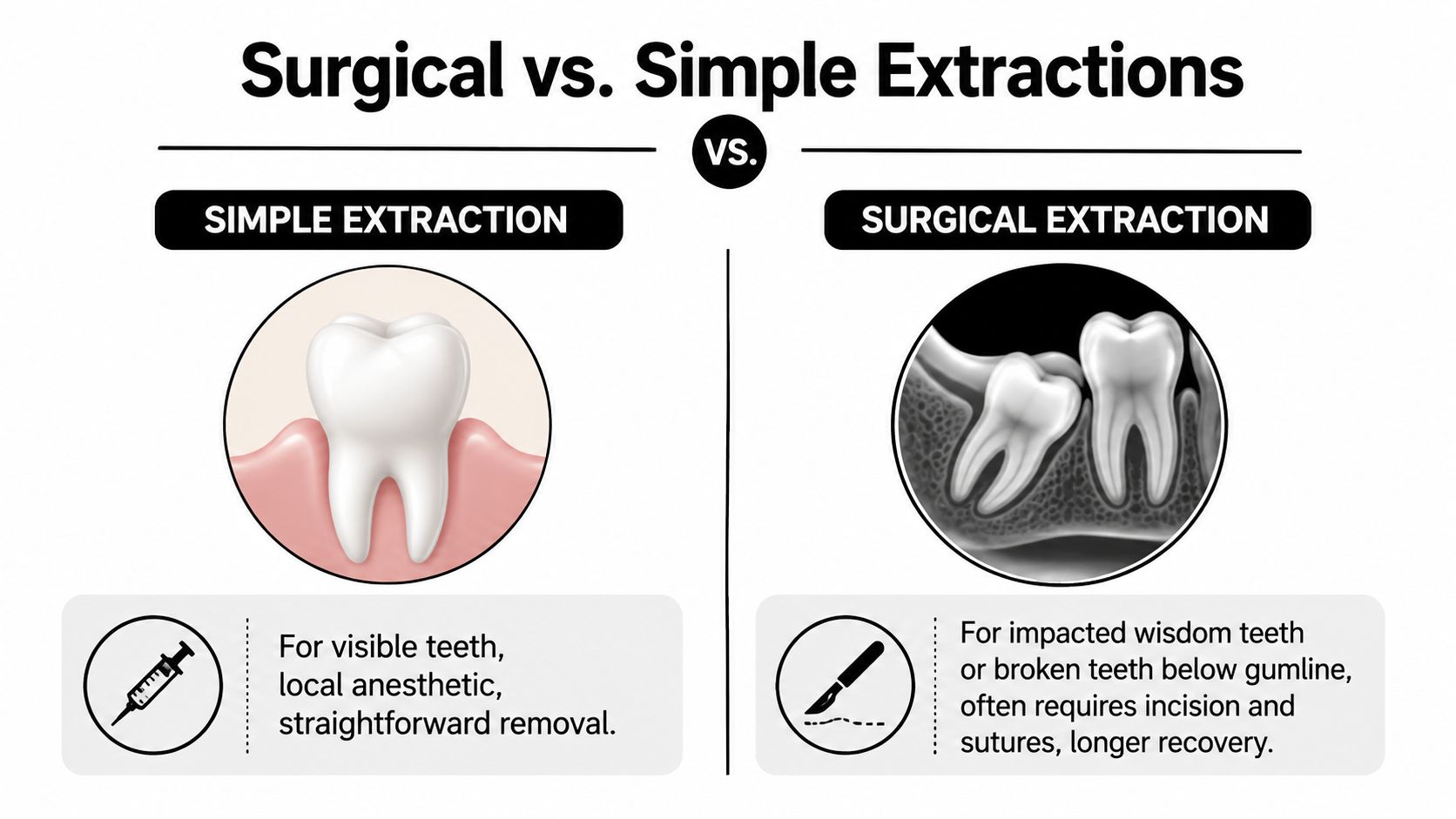
The procedure itself often takes longer than a simple extraction because access is limited. A wisdom tooth may be stuck under the gums, angled into the tooth beside it, or covered partly by bone. A broken tooth below the gumline can create the same issue. According to this wisdom tooth extraction timing guide, surgical extractions can range from 45 minutes to over two hours, with many full wisdom tooth appointments landing in the 60 to 120 minute range.
Why surgical cases take longer
The extra time usually reflects technique, not trouble.
In a surgical case, the dentist or oral surgeon may need to lift the gum tissue, remove a small amount of bone, or divide the tooth into sections before taking it out. That approach reduces force and gives better control, especially when the tooth is close to a nerve or pressed against a neighboring molar.
The goal is to protect the structures around the tooth, including:
- Adjacent teeth
- Jawbone
- Nerves
- Gum tissue
From a patient perspective, this is also where the full appointment timeline matters. The surgical portion may be one block of time, but the visit can run longer if your case calls for 3D imaging, extra anesthetic time, sedation setup, or more detailed post-op checks before you leave.
Common situations that change the timeline
One patient's wisdom tooth appointment can be much shorter than another's, even when both are having surgical extractions. The difference usually comes down to what the team sees on the scan and what has to happen to remove the tooth safely.
| Situation | Why it adds time |
|---|---|
| Impacted wisdom teeth | Gum tissue or bone may need to be opened to reach the tooth |
| Curved or multiple roots | The tooth may need to be sectioned for controlled removal |
| Broken teeth below the gumline | Access is harder and often requires a surgical approach |
| Infection around the tooth | Inflamed tissue can limit visibility and may need careful cleaning |
The benefit of a more detailed procedure
Surgical extraction often solves more than the immediate problem tooth. Impacted wisdom teeth can contribute to pressure, swelling, repeated gum irritation, food trapping, and damage to the tooth next to them. Careful removal of impacted wisdom teeth protects your oral health and lowers the chance that the surrounding teeth and tissue will keep taking that stress.
Healing also tends to ask more of your schedule than a simple extraction. I tell patients to plan for a slower first few days, especially if bone removal, tooth sectioning, or multiple wisdom teeth are involved. The appointment may be longer, but that added time often supports a cleaner procedure and a more predictable recovery.
Key Factors That Influence Your Extraction Time
If your friend had a tooth out quickly and your treatment estimate is longer, that doesn't mean something is wrong. It usually means your tooth presents a different mechanical problem.

The biggest driver is tooth anatomy. Teeth with curved, fused, or multiple roots may require tooth segmentation or bone removal, which can add 15 minutes or more compared with a single, straight-rooted tooth, according to this explanation of extraction complexity.
What your dentist is evaluating
Before estimating time, the dental team looks at more than the crown you can see above the gumline.
Key variables include:
- Root shape: Straight single roots are usually simpler than roots that curve or spread.
- Tooth position: Front teeth and some premolars are often more direct to remove than large molars.
- Access: A tooth that's broken or partly trapped can require a surgical approach.
- Condition of the surrounding bone and tissue: Dense bone or inflamed tissue can change the procedure plan.
Why personalization helps your outcome
An extraction should fit the tooth, not the clock. When treatment is adjusted to your anatomy, the procedure is usually safer and more predictable. That helps protect surrounding structures and can make recovery smoother.
If a dentist studies your X-rays carefully and gives you a wider time range, that's usually a sign of planning, not uncertainty.
The role of imaging and exam findings is critical. They help the team choose the least traumatic path to remove the tooth while preserving as much healthy tissue as possible.
How Sedation Options Affect Your Appointment Time
For some patients, the hardest part of an extraction isn't the tooth. It's the anxiety leading up to it. That's where sedation options can make a big difference, but they also change how long you'll be in the office.

Local anesthesia adds time for administration and onset, but deeper sedation changes the schedule more substantially. According to this review of extraction timing with sedation, IV sedation or general anesthesia can extend the total appointment to over 2 hours because of pre-operative monitoring, sedation induction, and post-operative observation before discharge.
Local numbing compared with deeper sedation
Local anesthesia is standard for many extractions. It keeps the area numb while you stay awake, and it usually fits well with shorter appointments.
IV sedation is different. It can be a very good option for patients with significant dental anxiety, a strong gag reflex, or more involved treatment plans. The trade-off is time. You need monitoring before, during, and after the procedure.
A simple comparison helps:
| Option | What it changes |
|---|---|
| Local anesthesia | Shorter overall appointment, you remain fully awake |
| IV sedation | More comfort for anxious patients, but more preparation and recovery time |
Why the extra time is worth it for some patients
A longer appointment under sedation isn't a delay. It's part of safe care. Monitoring and recovery are built into the process so you can leave only when the team is satisfied that you're stable and ready.
If you're comparing methods, this guide on IV sedation vs oral sedatives at Grand Parkway Smiles can help you understand which approach may fit your needs.
For patients who've been postponing care because of fear, sedation often changes the entire experience. Instead of bracing through the appointment, they can receive the treatment they need in a calmer, more manageable way. That's often what finally allows an unhealthy tooth to be removed before it causes more damage.
Comfort is a clinical issue, not just a convenience. A patient who feels safe is more likely to get needed treatment and follow through with care.
Planning for a Smooth Tooth Extraction and Recovery
Once you know your likely timeline, planning gets easier. A little preparation can make the day feel much less stressful and can support better healing afterward.
What to do before your appointment
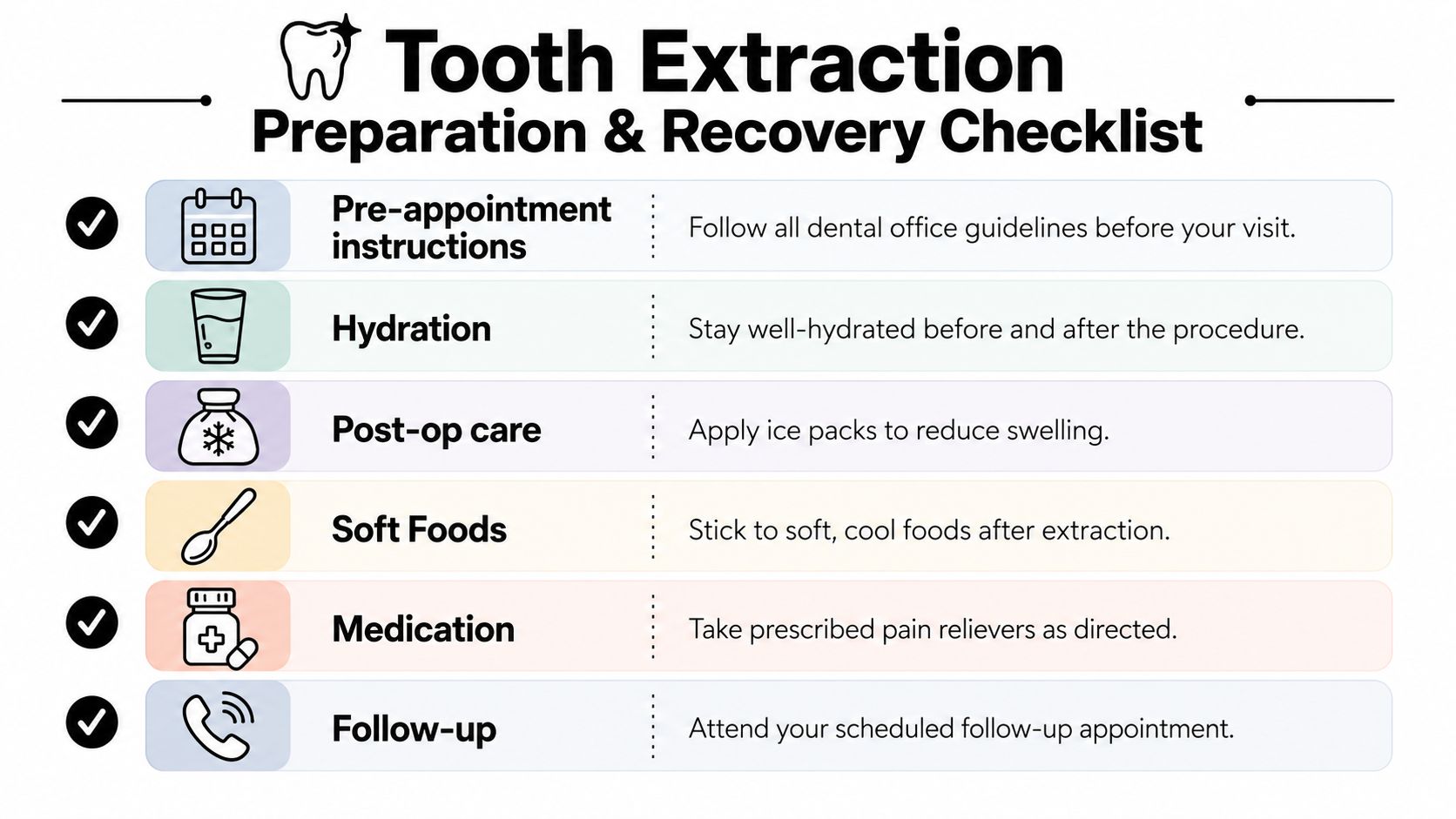
Use a short checklist before treatment:
- Clear your schedule: Give yourself room for the appointment and some downtime afterward.
- Arrange a ride if you're being sedated: This is especially important for deeper sedation options.
- Prepare soft foods at home: Yogurt, soup, mashed foods, and smoothies eaten without a straw are practical choices.
- Review medication instructions carefully: If you're prescribed pain medicine, it helps to understand it before you need it. This overview on understanding acetaminophen and codeine is a useful primer on how that combination medication works and what to keep in mind.
What helps after the tooth is removed
Your aftercare influences healing more than most patients realize. Keep your instructions where you can see them, and follow them closely. If you'd like a straightforward reference, these after tooth extraction instructions cover the basics of protecting the site and supporting recovery.
A few habits matter most:
- Rest early: Take it easy after the procedure instead of trying to jump back into a full day.
- Use cold packs as directed: This can help with swelling after more involved treatment.
- Stick with gentle foods: Choose foods that won't disturb the area.
- Take medications exactly as directed: Don't wait until discomfort builds if you've been told to stay ahead of it.
- Call if something feels off: Persistent bleeding, severe pain, or concerning swelling should always be reported.
Healing goes more smoothly when patients treat the first day seriously. Most post-op problems start when the area gets disturbed too soon.
A tooth extraction is a common procedure, but it isn't minor if the tooth has been causing pain, infection, or crowding. Removing the problem tooth can protect the rest of your mouth, support future restorative treatment when needed, and help you get back to eating and speaking more comfortably.
If you need a personalized answer to how long your extraction will take, Grand Parkway Smiles offers consultations so you can understand the timing, sedation options, and recovery steps for your specific tooth and treatment plan.