Yes, you can be allergic to titanium, but it's rare. Approximately 0.6% of patients receiving titanium dental implants appear to experience this kind of reaction, and titanium is generally considered a safe, reliable implant material.
If you're reading this after noticing strange gum irritation, a metallic taste, or a history of reacting to jewelry, your concern is valid. The good news is that this issue is manageable, diagnosable, and treatable. In dentistry, the main priority isn't just identifying a problem. It's protecting your health, preserving function, and making sure your final smile still looks natural and confident.
Titanium Implants The Gold Standard in Dentistry
Titanium became the standard in implant dentistry for a reason. It's durable, stable, and widely used because the body usually accepts it very well. Even when patients ask, can you be allergic to titanium, the honest answer is yes, but the risk is still considered low.
One commonly cited estimate puts titanium allergy or titanium-related implant failure at about 0.6% of patients receiving titanium dental implants according to clinical discussion of titanium implant hypersensitivity. That number matters because it keeps the conversation balanced. This is a real possibility, but it is not the typical outcome.
Why titanium is still used so often
Titanium works well because it has a long record of success in dentistry and medicine. In implant treatment, the material needs to do two jobs at once. It has to support chewing forces, and it has to remain compatible with surrounding bone and gum tissue over time.
For most patients, titanium does both.
That's why it's still the default option in many implant cases, including single-tooth replacement, implant bridges, and full-arch treatment. When treatment planning is done carefully, titanium remains an excellent choice for restoring bite strength, speech, and smile appearance.
Practical rule: A rare complication shouldn't scare you away from implants. It should push you toward better screening and better planning.
When concern makes sense
Some patients should ask more questions before moving forward. A history of reacting to metal jewelry, watches, or other metal exposures can be relevant. Even outside dentistry, people who are careful about metal sensitivity often benefit from learning how high-quality titanium behaves in other settings, such as the guidance in these Timebomb piercing safety tips, because material quality and personal sensitivity both matter.
If there's any suspicion of hypersensitivity, the answer isn't guesswork. The answer is to evaluate it properly and choose the right material from the start.
What a Titanium Allergy Actually Is
A patient may do well right after implant surgery, then come back weeks or months later saying the area still does not feel right. The gum looks irritated, healing seems uneven, or there is a strange taste that does not match the rest of the mouth. In rare cases, that pattern raises the question of titanium hypersensitivity.
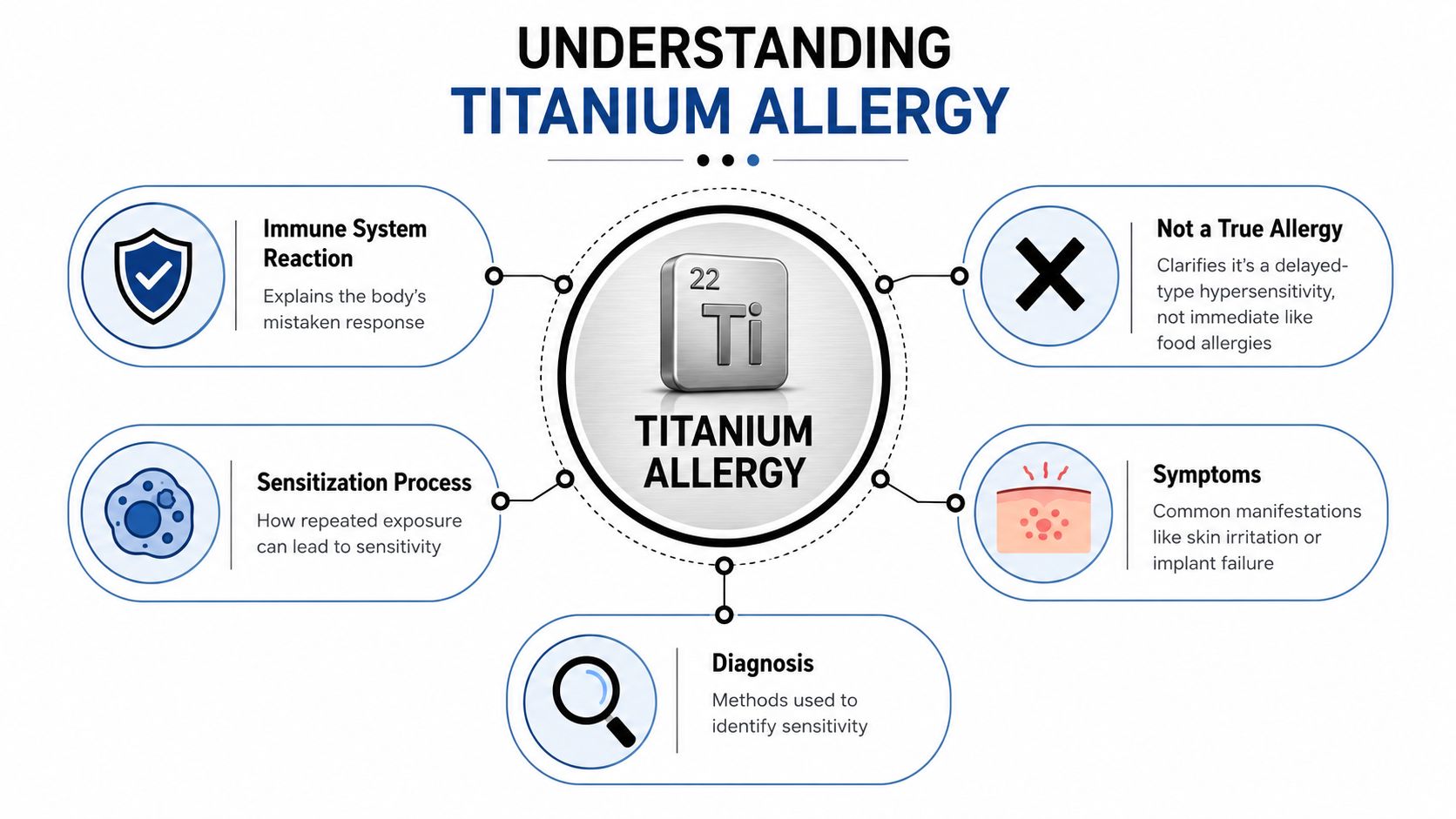
Titanium allergy is usually described as a Type 4 hypersensitivity reaction, which is a delayed immune response rather than an immediate one. A review in the Journal of Clinical Medicine discusses titanium hypersensitivity as a cell-mediated reaction involving T lymphocytes and macrophages, which helps explain why symptoms can appear gradually and persist instead of showing up all at once, as outlined in this review on titanium hypersensitivity and implant allergy.
It does not follow the pattern patients expect
With a delayed reaction, the immune system can stay quiet at first and then create a slower inflammatory response in the tissue around the implant.
This distinction is important because patients often expect an allergy to be obvious and immediate. With titanium, the problem may look more like lingering inflammation, slow healing, gum changes, or vague oral discomfort. Some patients also notice symptoms that overlap with other concerns, including a metallic taste in the mouth with headache-like symptoms, which is one reason self-diagnosis is unreliable.
What the body is reacting to
The concern is not a classic food-style allergy. The issue is an immune response to titanium exposure that can keep the surrounding tissues in an inflamed state.
In implant dentistry, that matters for more than comfort. Healthy gum tissue frames the implant, supports long-term stability, and shapes the final cosmetic result. If the tissue stays inflamed, the implant may feel off, the gums may not look natural, and the smile can lose the balanced appearance patients expected. In full mouth reconstruction and high-visibility smile cases, material selection has to protect both function and appearance.
That is why these rare cases should be handled with a treatment-planning mindset, not fear. If titanium is not the right fit, alternatives such as zirconia can give patients a metal-free option that supports esthetics well, especially in visible areas.
For readers comparing titanium exposure in different settings, this overview on understanding titanium in cookware gives helpful background on how the body may encounter titanium in everyday life versus a medical or dental implant setting.
Why this can be missed early
Timing often complicates the picture.
If symptoms appear long after placement, patients may assume the cause is clenching, gum irritation, sinus pressure, bite imbalance, or normal healing that is taking too long. Sometimes one of those explanations is correct. Sometimes a material reaction needs to be considered, especially if the implant looks acceptable on routine exam but the tissues never seem fully healthy.
A delayed immune response often presents as a problem that will not fully settle, rather than a dramatic event. In practice, that is the clue that deserves a closer look.
Warning Signs of an Implant Reaction
A patient may come in months after implant placement saying, “It never felt quite right.” The implant may look acceptable on a quick glance, yet the tissue still looks irritated, chewing feels strange, or the smile around that tooth never settled into a natural appearance. That pattern deserves a closer look, especially in patients who need stable, attractive results for a single front tooth, All-on-4 treatment, or a full mouth reconstruction.
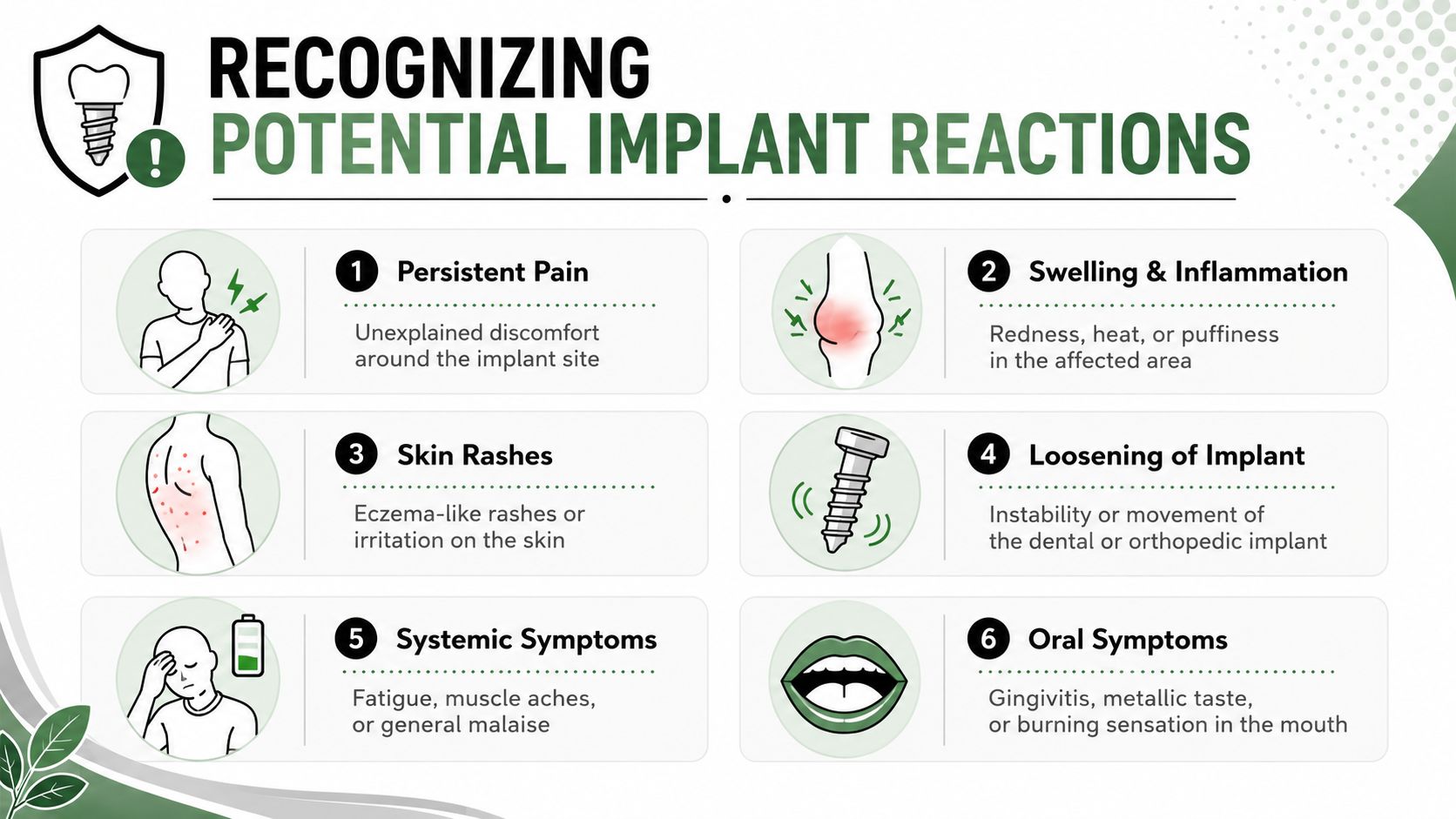
Reports on titanium hypersensitivity describe a delayed immune reaction that can show up as ongoing inflammation, burning sensations, taste changes, skin symptoms, or poor tissue tolerance around the implant. The challenge is that none of those findings proves an allergy by itself. Infection, bite overload, clenching, peri-implantitis, sinus disease, and unrelated medical conditions can produce a similar picture.
Local signs inside the mouth
The signs that concern me most are the ones that persist despite reasonable healing time and good home care:
- Gum inflammation that does not resolve, even after the area should have calmed down
- Redness or swelling around the implant, especially if it keeps returning
- Burning, tingling, or soreness near the implant site without a clear mechanical cause
- A metallic taste that feels new or unusually persistent
- Implant mobility or loosening, which always needs prompt evaluation
These changes affect more than comfort. They affect appearance. Inflamed tissue loses the clean contour that makes an implant crown blend with natural teeth, and that is a real problem in visible areas of the smile. In complex restorative cases, material tolerance and esthetics have to work together.
Symptoms outside the implant site
Some patients also notice complaints that do not seem dental at first:
- Facial rash or eczema-like irritation
- Fatigue
- Brain fog
- Recurring sinus pressure or congestion
Those symptoms are nonspecific. The reason this is important is that self-diagnosis is unreliable. If you are noticing oral discomfort along with taste changes or head pressure, this guide on headache and metallic taste in the mouth explains why several dental and medical problems can overlap.
What makes these cases hard to sort out
A loose implant can be mechanical failure. Swelling can be infection. Sinus symptoms can be unrelated. A metallic taste can come from medications, dry mouth, reflux, or other oral conditions.
That is why I look for a pattern, not a single symptom. I want to know when the problem started, whether it improved at all, what the gums look like over time, whether imaging shows another explanation, and whether the patient has a history of metal sensitivity. For patients who are already trying to make sense of testing choices, understanding allergy testing options can help frame the conversation before formal evaluation.
One more point matters here. If titanium sensitivity is part of the problem, the goal is not just to identify it. The goal is to move the patient toward a healthier, better-looking, dependable result. In the right case, zirconia implants or other metal-free restorative strategies can solve both the biologic concern and the esthetic concern, which is especially important in smile-zone and full-arch treatment.
If an implant site stays irritated without a clear reason, it needs an explanation, not more waiting.
Persistent symptoms do not automatically mean allergy. They do mean the case deserves a careful workup.
Getting a Definitive Diagnosis
A real diagnosis starts with restraint. The worst approach is deciding on your own that the implant must be the problem, or assuming it can't be the problem because titanium is usually well tolerated. Both shortcuts lead people in the wrong direction.
The right path is clinical evaluation, symptom review, and appropriate testing. That matters even more if you've had prior reactions to metals.
Why patch testing has limits
Patients often assume a skin patch test will give a clear yes or no answer. Unfortunately, titanium doesn't make diagnosis that easy.
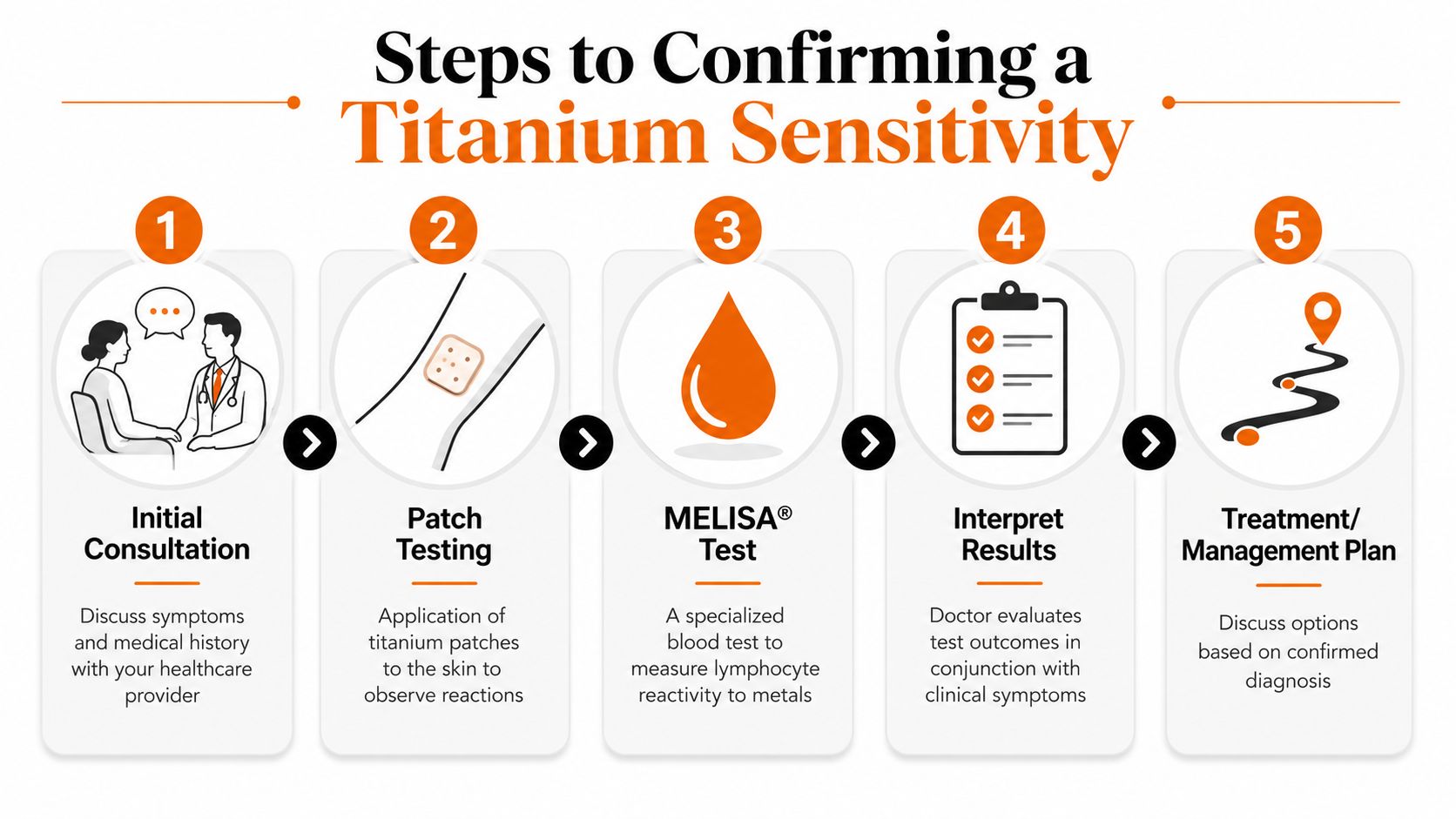
There is no validated patch test for titanium, and current skin testing is described as having about 75% sensitivity for Type IV allergy, while MELISA blood testing is considered the most reliable method to detect immune reactivity according to this overview of titanium allergy testing and implant risk.
A patch test can still be part of the conversation, especially when an allergist or dermatologist is evaluating broader metal sensitivity. But it's not the kind of test I'd want a patient to treat as the final word in a complicated implant case.
What tends to work better
Blood-based testing such as MELISA or Lymphocyte Transformation Test (LTT) is often more helpful because it looks at how immune cells respond to metal exposure in a lab setting. That doesn't mean every positive or negative result should be interpreted in isolation. It means the test can add a more useful layer of information when symptoms and history raise concern.
If you've ever tried to understand why one allergy test gives a different level of confidence than another, this explanation of understanding allergy testing options offers a plain-language comparison that patients often find helpful.
What a careful workup usually includes
A strong diagnostic process usually involves more than one step:
Medical and dental history
Prior reactions to jewelry, nickel, watches, or other metals matter.Clinical exam
The dentist checks the implant, surrounding tissue, bite, radiographs, and signs of infection or overload.Rule out common causes first
Peri-implant inflammation, occlusal trauma, hygiene issues, and restorative design problems can mimic allergy.Coordinate with an allergist or dermatologist when needed
Complex cases are better handled collaboratively.Use test results in context
No single report should outweigh the full clinical picture.
Good diagnosis is less about finding one dramatic test result and more about matching symptoms, history, exam findings, and immune testing into a coherent picture.
That approach protects patients from unnecessary treatment and helps identify the people who require a different implant material.
The Best Alternatives to Titanium Implants
If titanium hypersensitivity is confirmed, the conversation should shift quickly from worry to solutions. Modern implant dentistry offers metal-free options that can restore function and still produce a refined, natural-looking result.
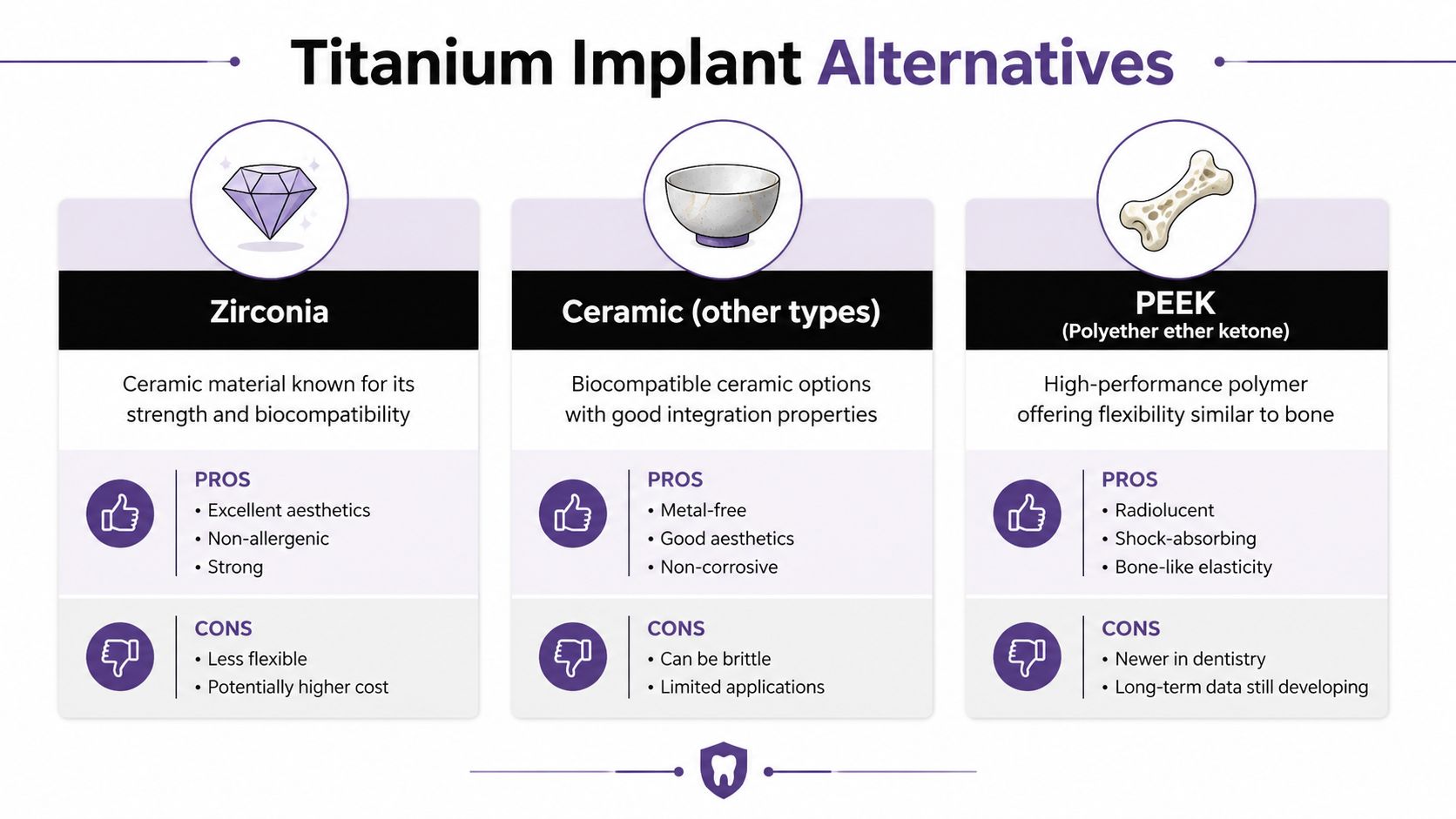
The leading alternative is zirconia, a ceramic implant material used when biocompatibility and appearance both matter.
Why zirconia stands out
For patients with confirmed titanium hypersensitivity, zirconia dental implants offer a hypoallergenic alternative that maintains the structural integrity and aesthetic benefits needed for high-quality smile makeovers, while avoiding the allergic concern associated with titanium, as discussed in this review of zirconia as an alternative to titanium implants.
That last part matters more than many patients realize. In visible areas of the mouth, implant dentistry is not only about replacing a root. It's about how the gum and crown look together under natural light, in photos, and at conversational distance.
Zirconia is tooth-colored. That gives it an aesthetic advantage in some cases, especially where thin gum tissue might otherwise make underlying metal show through as a gray cast. If someone is investing in a front-tooth replacement, a smile makeover, or a full-mouth reconstruction with a strong cosmetic component, that visual detail can matter a lot.
Comparing the main options
| Material | Main advantage | Main trade-off | Best fit |
|---|---|---|---|
| Titanium | Long track record, widely used, strong | Not ideal for patients with confirmed hypersensitivity | Most standard implant cases |
| Zirconia | Metal-free, hypoallergenic, highly aesthetic | Case selection matters and planning is more specific | Patients with sensitivity concerns or high cosmetic demands |
| PEEK | Metal-free option discussed in hypersensitivity cases | More limited role in routine implant dentistry | Select situations guided by specialist judgment |
What works well for aesthetics
When appearance is a major priority, zirconia often gets the most attention for good reason:
- Natural-looking color helps the restoration blend better with surrounding tissues.
- No gray metal show-through can be an advantage in thin or delicate gum architecture.
- Strong cosmetic value makes it attractive in anterior cases and smile design work.
- Metal-free approach appeals to patients who want to eliminate concern about metal sensitivity entirely.
This is one reason metal-free treatment planning has become part of more advanced restorative conversations. It's not only about allergy. It's also about tissue presentation, confidence, and the final look of the smile.
What still requires judgment
No material is automatically better in every case. Bone volume, bite force, smile line, gum thickness, overall health, and the design of the final restoration all influence the decision.
For some patients, zirconia is the clear answer. For others, a broader discussion about implant and non-implant options makes more sense. If you're exploring that bigger picture, this guide on possible solutions and alternatives when dental implants aren't right for you can help frame the choices.
A thoughtful plan should answer three questions:
- Will it be biologically compatible for this patient?
- Will it restore comfortable chewing and speech?
- Will it look like it belongs in the smile?
If the answer to all three is yes, you're on the right track.
The best replacement tooth isn't just the one that integrates. It's the one that lets you eat comfortably, smile freely, and stop thinking about the problem.
That's especially important in larger rehabilitation cases. Patients considering full-mouth treatment or All-on-4 style reconstruction often assume a rare material sensitivity would eliminate their options. It doesn't. It changes the planning, not the goal.
When to See Your Dentist or an Allergist
If you're considering implants and you already know you react to metals, say that early. Mention reactions to jewelry, belt buckles, watches, or previous implants before treatment is finalized. That information can change the material discussion and prevent a lot of frustration later.
If you already have an implant and the area stays inflamed, feels strange, develops a metallic taste, or never seems to stabilize, book an evaluation instead of waiting it out. Persistent peri-implant inflammation and related intolerance symptoms deserve clinical review, and when titanium intolerance is diagnosed after placement, mild cases may sometimes be managed non-operatively, but definitive treatment requires explantation of the titanium implant to halt immune activation and prevent further tissue damage according to this clinical review of symptomatic titanium intolerance.

Two situations that call for action
Before implant treatment
If you have a known metal sensitivity history, ask about:
- Material selection based on your history
- Testing referral when the history is suspicious
- Alternative options such as zirconia if appropriate for your case
After implant placement
If symptoms persist, ask for:
- A thorough implant evaluation
- Review of other causes first, including infection or bite overload
- Coordination with an allergist or dermatologist if hypersensitivity is suspected
Who does what
The dentist evaluates the implant, surrounding tissue, restoration, radiographs, and functional factors. The allergist or dermatologist helps assess metal sensitivity and interpret testing in the broader context of your immune history.
That collaboration matters because not every sore implant is allergic, and not every allergy-like symptom starts in the mouth. The goal is clarity, not assumptions.
The reassuring part is that patients usually have options. Even in the uncommon case where titanium isn't the right fit, dentistry still offers ways to restore comfort, chewing ability, and a smile that looks like your own.
If you're concerned about metal sensitivity, implant irritation, or want a second opinion on the best material for your smile, Grand Parkway Smiles can help you explore clear next steps with detailed implant, restorative, and full-mouth treatment planning in Katy, TX.