That awful, sickening crunch when you bite down on something wrong, followed by the instant realization that a piece of your tooth is now missing—it’s a feeling that sends a jolt of panic through anyone. But the most important thing you can do in that moment is to stay calm and act quickly. Your immediate response can make all the difference in protecting the tooth from more damage and setting the stage for a simple, successful chipped tooth repair that restores both your dental health and your confidence.
What to Do the Moment You Chip a Tooth
A chipped tooth isn't just a cosmetic problem; it's a genuine dental injury that needs attention right away to prevent further damage and protect your oral health. That newly created sharp edge can cut your tongue, and the exposed inner part of your tooth is suddenly vulnerable to bacteria that can lead to decay and infection.
Taking the right first-aid steps is a lot like treating any other injury. You wouldn't just ignore a deep cut, and a chipped tooth deserves the same careful response. What you do in those first few minutes and hours is critical for your comfort and for preserving the long-term health and appearance of your tooth.
Your Immediate Action Plan
If you've just chipped a tooth, take a deep breath. Here are a few simple but incredibly effective steps to take before you can get to our office:
- Rinse Your Mouth Gently: Mix about half a teaspoon of salt into a glass of warm water and swish it around your mouth. This helps clean the area to reduce the risk of infection, soothe gum irritation, and wash away any tiny tooth fragments.
- Save the Fragment (If Possible): If you can find the piece that broke off, great! Rinse it gently with water and pop it into a small container with milk or a bit of your own saliva. In some cases, we might actually be able to bond it back on, providing a perfectly natural repair.
- Manage Pain and Swelling: Grab a cold compress or an ice pack and apply it to the outside of your cheek or lip over the injured tooth. Hold it there for about 15 minutes at a time to help numb the area and reduce any swelling, which improves your comfort.
- Protect Your Mouth: A chipped tooth can feel like a tiny razor blade in your mouth. To prevent it from cutting your tongue or cheek, you can temporarily cover the sharp edge with a small piece of sugar-free gum or some over-the-counter dental wax.
Why Prompt Action Matters
Following these steps isn't just about managing the immediate problem—it's about protecting your overall oral health and ensuring the best possible outcome for your smile. A chip can compromise the tooth's entire structure, making it much more likely to fracture further and potentially require more extensive treatment.
And if this has happened to you, know that you're not alone. Dental injuries are incredibly common. In fact, one recent survey found that 13% of American adults had chipped a tooth in the past year alone. By acting fast, you help ensure your chipped tooth repair will be as straightforward and effective as it can be. For more tips, check out our complete guide on what to do in a dental emergency.
What Are My Options for Fixing a Chipped Tooth?
Once you've handled the immediate first aid, the next step is getting a permanent fix that restores your smile's health, function, and appearance. It can feel like there are a million different dental terms out there, but when it comes to a chipped tooth repair, it’s really about matching the right solution to the level of damage to achieve the best result.
I often tell my patients to think of a chipped tooth like a damaged piece of pottery. A tiny chip on the surface might just need a little bit of carefully matched filler to look perfect again. But if there's a big crack that threatens the whole piece, you’ll need a full cover to give it strength. Your dentist will recommend the best path forward based on the chip’s size, where it is in your mouth, and your overall dental health. The goal isn't just to patch the damage but to make the tooth strong, healthy, and beautiful for the long haul.
So, you have a chipped tooth. What's the very first thing you should do? It really depends on one thing: pain. This simple flowchart can help you decide on your immediate next move.
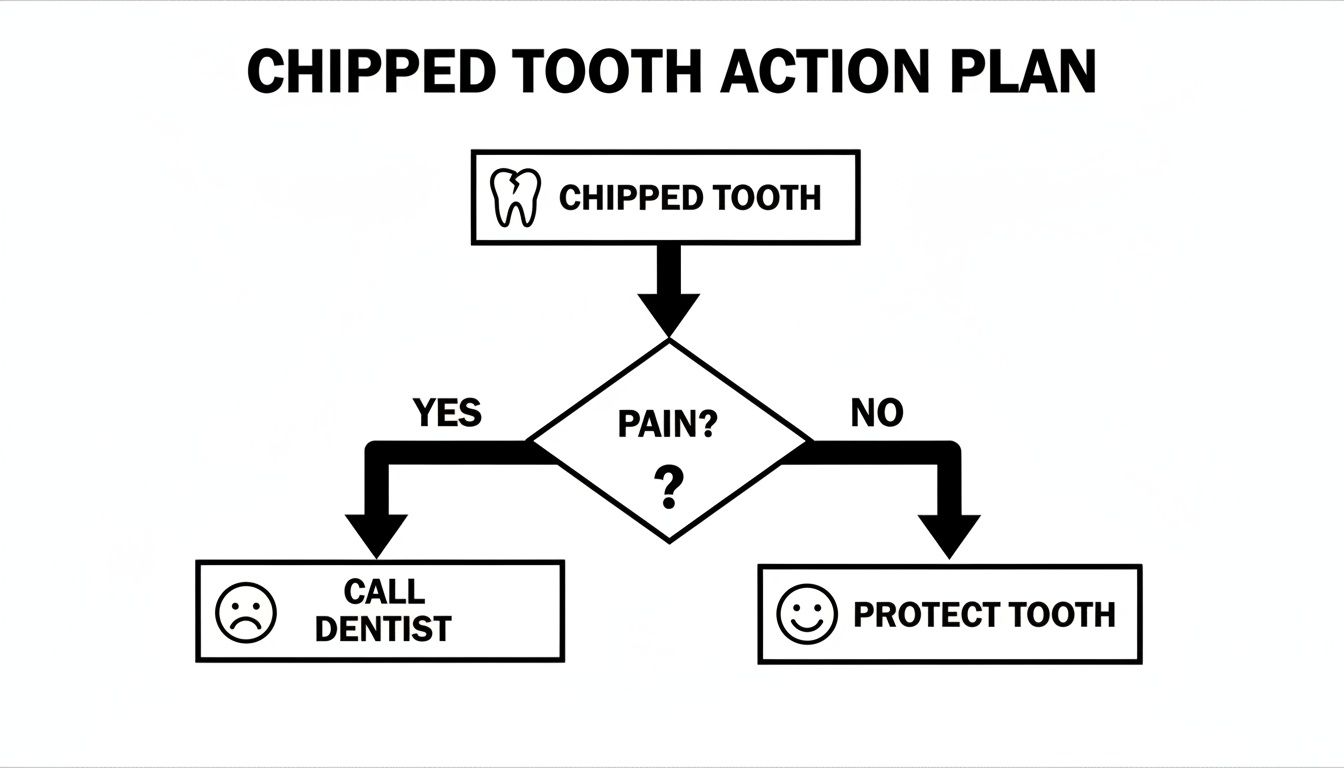
As you can see, pain is your signal for urgency. If it hurts, you need to call your dentist right away. But even a painless chip needs a professional's eye to make sure a small cosmetic issue doesn't become a big health problem down the road.
To help you understand the most common treatments, we've put together a simple comparison table. This breaks down the main options so you can see how they stack up against each other in terms of cost, time, and durability.
Comparing Chipped Tooth Repair Treatments
| Treatment | Best For | Procedure Time | Durability | Appearance |
|---|---|---|---|---|
| Dental Bonding | Small, cosmetic chips, especially on front teeth. | 30-60 minutes | 5-10 years | Good, but can stain over time. |
| Veneers | Moderate chips, discoloration, or cosmetic issues. | 2 visits | 10-15+ years | Excellent, very natural. |
| Crowns | Large chips, fractures, or structurally weak teeth. | 2 visits | 15+ years | Excellent, full restoration. |
Each of these treatments has its place, and the best one for you depends entirely on your unique situation. Let's dig a little deeper into what each one involves.
Dental Bonding: The Quick Fix for Minor Chips
For those small, simple chips—especially the ones you can see on your front teeth—dental bonding is often the perfect answer. It’s a fast, effective, and minimally invasive way to restore your tooth's appearance. In fact, we can usually complete the repair in a single visit without any need for numbing. That makes it a super convenient chipped tooth repair option that gets you back to smiling confidently right away.
The process is pretty straightforward. We use a tooth-colored composite resin, which has a putty-like consistency, and apply it directly to the damaged spot. I then sculpt the resin by hand to perfectly match the natural shape of your tooth. Once it looks just right, we use a special light to harden the material, bonding it securely to your tooth. A quick final polish, and it blends right in with your natural enamel. You can dive deeper into this technique in our guide on what is composite bonding on teeth.
Dental bonding is a fantastic choice for restoring both the look and function of a tooth after a minor chip. It seals off the sensitive inner tooth layer (dentin), which helps reduce sensitivity and protects against decay.
The biggest benefits of bonding are its speed and affordability, allowing for a quick aesthetic improvement. The one tradeoff is that the composite material isn’t quite as tough or stain-resistant as porcelain or your natural enamel. With good care, a bonded repair can last for years, but it might need a touch-up every now and then to maintain its perfect appearance.
Porcelain Veneers: The Smile Makeover Solution
When a chip is more noticeable or you’re looking to address other cosmetic concerns at the same time, a porcelain veneer can be a game-changer for your smile's appearance. A veneer is a super-thin, custom-made shell of dental porcelain that we permanently bond to the front of a tooth. It’s designed to cover up imperfections and create a flawless, beautiful look.
Veneers give you the best of both worlds: stunning aesthetics and serious durability. They are incredibly resistant to stains from things like coffee, tea, or red wine, so they stay bright and white for years. The porcelain also has a unique ability to reflect light just like natural tooth enamel, which gives your smile a vibrant, lifelike quality that boosts your confidence.
Getting a veneer is typically a two-visit process:
- Preparation: We start by removing a tiny amount of enamel from the tooth's surface to make space for the veneer.
- Creation: We then take a precise impression and send it to a dental lab where your custom veneer is meticulously crafted.
- Placement: On your second visit, we check the fit and color before permanently bonding the veneer to your tooth, transforming your smile.
Dental Crowns: The Ultimate Protector for Damaged Teeth
For a severely chipped or fractured tooth, nothing offers more protection and strength than a dental crown. A crown, sometimes called a cap, is a custom-fitted covering that encases the entire visible part of a tooth right down to the gumline. It completely restores the tooth's original shape, size, strength, and appearance.
We turn to a crown when a chip is so large that it has weakened the tooth's structure, leaving it at risk of breaking further. It’s also the go-to treatment after a root canal, since that procedure can make a tooth more brittle. By covering the entire tooth, a crown acts like a helmet, holding it together and absorbing the daily forces from biting and chewing, which is crucial for your long-term dental health.
What to Expect: Your Chipped Tooth Repair, Step by Step
Walking into a dental office for a chipped tooth can feel a little intimidating, especially when you don't know what comes next. We get it. That's why we want to pull back the curtain and walk you through the entire chipped tooth repair process. Knowing exactly what to expect can make all the difference, turning a potentially stressful visit into a comfortable and straightforward experience focused on improving your dental health and appearance.
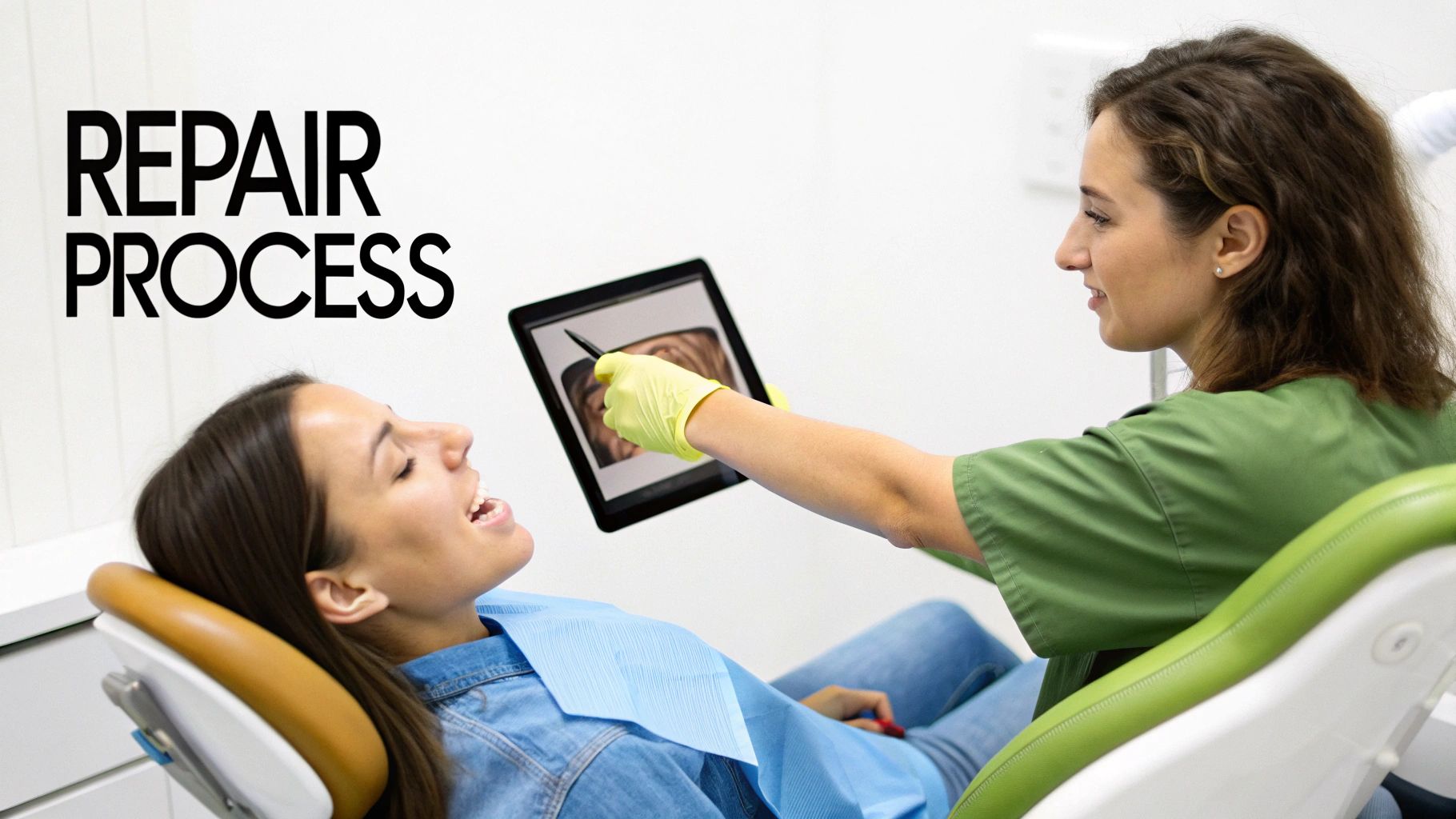
Fixing your tooth is a team effort. It starts with us listening carefully to your concerns and what you hope to achieve with your smile. After a close look at the damage, we'll map out a clear plan together, making sure your comfort and health are the top priorities every step of the way.
The First Step: Consultation and Assessment
Your first visit is all about figuring out what's going on to ensure we choose the best path to restore your tooth's health. We'll start with a detailed look at the chipped tooth and the area around it. This almost always includes digital X-rays to see what’s happening below the surface—checking for any hidden damage to the tooth's root or jawbone.
This diagnostic step is so important because it gives us the complete picture of your dental health. We can see exactly how deep the fracture goes and determine if the tooth's delicate inner pulp has been affected. With that information, we can sit down with you, discuss the best ways to fix it, and explain why one approach might be better than another for your specific situation.
Getting the Tooth Ready for Its New Look
Once we’ve settled on the perfect treatment plan, the next phase is preparing the tooth. The whole point here is to create a clean, solid foundation for the restoration to attach to, ensuring a long-lasting and healthy result. How much prep work is needed really depends on the repair method we've chosen.
- For Dental Bonding: This is the most conservative option. We just gently "etch" the tooth's surface with a special conditioning liquid. This creates thousands of microscopic pores that help the composite resin grip on for a super strong bond.
- For Veneers: We’ll need to remove a tiny amount of enamel from the front of the tooth—usually less than a millimeter. This small step is what allows the veneer to sit perfectly flush with your other teeth, creating a completely natural and seamless look.
- For Crowns: A crown needs to cover the whole tooth, so we have to reshape it a bit more. We’ll carefully reduce the tooth on all sides to make just enough room for the crown to slide over top without feeling bulky or out of place, ensuring a comfortable bite.
No matter what procedure we’re doing, your comfort comes first. For treatments like crowns or veneers that require more preparation, we use a local anesthetic to make sure the area is completely numb. You won't feel a thing while we work, guaranteeing a painless experience.
The Final Touch: Crafting and Placing Your Restoration
This is the most exciting part—where the magic happens and your smile is truly transformed. We meticulously place the final restoration, bringing the tooth back to its original strength, shape, and beauty. Just like the prep stage, the process looks a little different for each treatment.
The Bonding Process
Dental bonding is a one-and-done deal. We apply the tooth-colored resin layer by layer, carefully sculpting it to recreate the natural curves and contours of your tooth. We use a special light to harden the material in seconds, then we make a few final tweaks and polish it until it has a beautiful, lifelike shine. You'll leave the office with a restored smile.
The Veneer and Crown Process
Because these restorations are custom-made for you in a dental lab, they usually take two appointments to complete.
- First Visit: After we prepare your tooth, we'll take a highly accurate digital scan. This becomes the blueprint we send to our skilled lab technicians, who will craft a restoration that’s a perfect match for your other teeth in color, size, and shape. You'll go home with a temporary restoration to keep the tooth safe and comfortable.
- Second Visit: When your permanent veneer or crown is back from the lab, you’ll come back in. We'll remove the temporary, double-check that the fit and color of the final piece are perfect, and then permanently bond it into place. The final result is a strong, gorgeous restoration that blends right into your smile, boosting both your confidence and your long-term dental health.
Making Your Chipped Tooth Repair Affordable
Fixing a chipped tooth is a huge investment in your health and confidence, but we know the price tag can feel like a major hurdle. Here at Grand Parkway Smiles, we believe that understanding how to pay for your care is just as important as understanding the treatment itself. Our goal is to make sure nothing, especially cost, stands between you and the healthy, beautiful smile you deserve after a chipped tooth repair.
Putting off a repair because of financial stress can unfortunately lead to bigger health problems down the road. A small chip can turn into a major fracture or a site for decay, often leading to more complex and expensive treatments later on. We're committed to total transparency with our pricing and offering flexible solutions that work for your budget.
What Goes into the Cost of a Repair?
The cost to fix a chipped tooth isn't a one-size-fits-all number. It really depends on your specific situation, which is why a personal consultation is the only way to get an accurate quote.
Several key factors come into play:
- Type of Repair: A simple dental bonding procedure for a minor chip is going to be much more affordable than a custom-crafted porcelain veneer or a full dental crown needed for a larger break.
- Materials Used: High-quality materials like dental porcelain might cost more upfront, but they offer incredible durability and a natural appearance that can last for over a decade.
- Complexity of the Case: The location of the tooth and just how bad the damage is play a big role. A straightforward chip on a front tooth is a different ballgame than a fractured molar that’s impacting your bite and overall dental health.
These variables help us build a personalized treatment plan that gets your tooth back to 100% while also respecting your financial situation.
Your Payment and Financing Options
We offer several ways to make your chipped tooth repair fit into your budget. Our team is fantastic at helping patients navigate these options to find the best path forward for their family.
Dental insurance is a great place to start. Many PPO plans cover a good portion of restorative work like crowns or bonding, especially when it’s considered medically necessary to protect the tooth from further damage or decay. We’ll gladly help you make sense of your benefits and file claims on your behalf to get the most out of your coverage.
If you don't have insurance or have a remaining balance, we've got you covered with flexible solutions.
Navigating the financial side of dental care is a major concern for patients. In fact, online search trends show that after figuring out what a repair entails, one of the top public concerns is the cost of treatment.
This data really underscores how critical clear financial guidance is. Research looking at worldwide search behavior found that questions about treatment costs are incredibly common, showing that affordability is a huge factor when people decide whether to seek care. If you're interested in the data, you can explore the findings on public dental health queries here.
At Grand Parkway Smiles, we tackle this head-on with:
- In-House Savings Plans: These plans are a fantastic alternative to traditional insurance. For a low annual fee, you get significant discounts on a wide range of treatments.
- Third-Party Financing: We’ve partnered with trusted financing companies like CareCredit, which offer payment plans with low or even no interest. This is a great way to break down the total cost into manageable monthly payments, so you can get the care you need now and pay for it over time.
Why Trust Us with Your Smile Restoration
Choosing the right dental team is probably the single most important decision you'll make on your chipped tooth repair journey. It’s about so much more than just patching up the damage; it’s about restoring your confidence and ensuring your smile stays healthy and beautiful for the long haul. At Grand Parkway Smiles, we’ve built our entire practice around one simple idea: providing exceptional, all-in-one care that gets rid of the stress and delivers fantastic results.
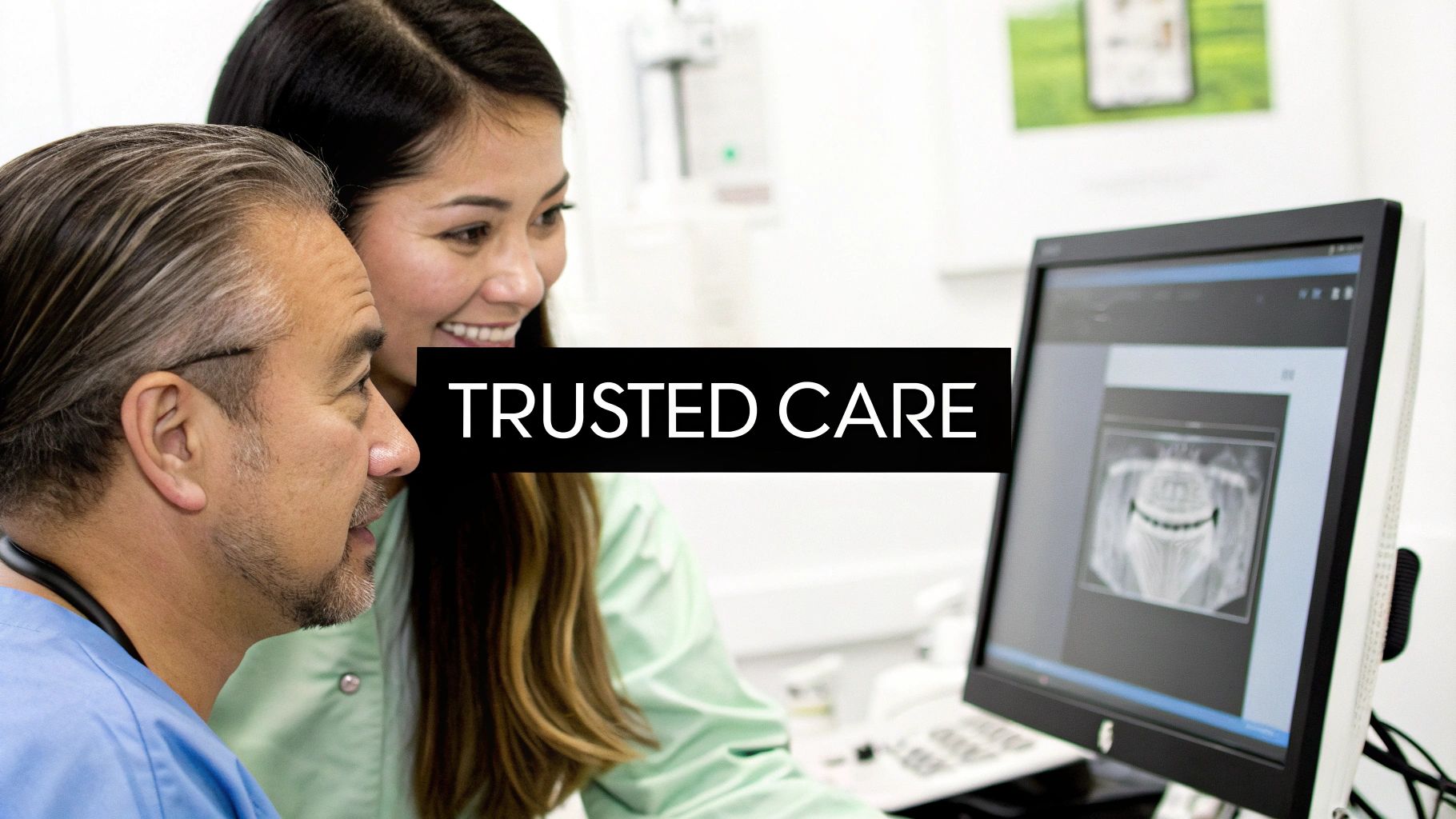
When you walk through our doors, you’re not just seeing one dentist. You're getting an entire collaborative team of specialists who all work together right here, under one roof. It creates a seamless and supportive experience that you just can't get anywhere else, all focused on your optimal dental health.
Integrated Expertise for Superior Outcomes
Imagine you’ve got a pretty bad chip, one that needs more than a quick fix. At many other dental offices, that would mean getting referred to an outside specialist—a different office, a new team, and a lot more appointments to juggle. We just don't think that’s the best way to do things for your health and convenience.
Our practice is home to a full team of in-house specialists, from prosthodontists who are masters of complex restorations to endodontists who are experts at saving deeply damaged teeth. This collaborative approach means that no matter what your chipped tooth needs, the expert you need to see is already here.
- Prosthodontists: These are the specialists who create incredibly durable and beautiful crowns, veneers, and other restorations.
- Endodontists: The experts in root canal therapy, essential for deep chips that have reached the tooth’s nerve.
- Pediatric Dentists: Skilled in making our youngest patients feel completely safe and comfortable during their repair.
This setup means you won’t be driving all over town to different offices. Instead, our specialists work together on your case directly, sharing insights and creating one unified treatment plan. The result? A repair that is both beautifully aesthetic and perfectly functional, ensuring your long-term health.
The benefit of a multi-specialty practice is more than just convenience. It’s about achieving a higher standard of care where every aspect of your dental health is considered, leading to better, more predictable, and longer-lasting results.
Technology That Enhances Your Repair
A successful chipped tooth repair all comes down to precision. To get the most natural-looking and durable results, we invest in leading-edge dental technology that gives us a critical advantage in both diagnosing and treating your injury with exceptional accuracy.
Our advanced 3D imaging and digital scanning systems let us see the damaged tooth in incredible detail. Think of it like creating a high-definition digital blueprint of your tooth and bite. This information allows us to design restorations with microscopic accuracy, guaranteeing a perfect fit that blends seamlessly with your smile.
This technology directly benefits your dental health and appearance by:
- Improving Accuracy: Digital impressions are far more precise than those old-fashioned putty molds, which means better-fitting crowns and veneers from the start.
- Enhancing Durability: A perfect fit leaves no tiny gaps where bacteria can hide, significantly extending the life of your restoration and protecting the underlying tooth.
- Creating Natural Aesthetics: We can precisely match the color, shape, and even the unique translucency of your natural teeth for a truly invisible repair.
A Commitment to Your Comfort and Care
We get it. A dental injury is stressful enough without piling dental anxiety on top of it. That’s why your comfort is at the absolute core of everything we do. From the moment you call our office, our goal is to make your experience as calm and reassuring as it can be, so you can focus on the positive outcome: a healthy, restored smile.
We offer same-day emergency appointments because we know that when a tooth is chipped, you need help now. You shouldn't have to wait around in pain or worry. On top of that, for patients who feel anxious about dental procedures, we provide sedation dentistry options. This allows you to relax completely while we take care of restoring your tooth, ensuring a painless and stress-free visit.
By combining a team of dedicated specialists, advanced technology, and a deep commitment to patient-centered care, we provide a level of service that turns a stressful dental injury into a positive, smile-restoring experience.
Your Questions About Chipped Tooth Repair, Answered
Even after going over the different ways we can fix a chipped tooth, it's completely normal to have a few more questions pop up. Getting the details straight can make all the difference, giving you the confidence you need to get your smile back. Here are some of the most common questions we hear from our patients right here in Katy and Houston, along with our straightforward answers.
Our job is to clear up any lingering uncertainty. We believe restoring your smile should be a positive, stress-free experience, and that all starts with getting you the right information for your health and peace of mind.
Is Chipped Tooth Repair Painful?
Most people are genuinely surprised to find out that chipped tooth repair procedures are typically not painful at all. The level of discomfort, if you feel any, really just depends on the specific fix you need. Your comfort is always our top priority, and we have a number of ways to make sure your visit is completely painless.
For small chips we fix with dental bonding, the process is almost always painless. It's a treatment that happens on the surface of the tooth, so anesthesia usually isn't even necessary. The primary benefit is a quick, comfortable improvement to your tooth's appearance.
If the chip requires a more robust solution like a porcelain veneer or a full dental crown, we'll use a local anesthetic to completely numb the tooth and the surrounding gum tissue. This ensures you won't feel a thing while we prepare the tooth and place your new restoration. For anyone feeling a bit nervous, we also have sedation dentistry options that can help you reach a state of deep relaxation, making the entire visit feel calm and easy.
How Long Does a Chipped Tooth Repair Last?
That’s a great question, because you want your repair to be a lasting investment in your smile's health and beauty. The durability of a chipped tooth repair really comes down to two things: the type of treatment you get and, just as importantly, how you take care of your teeth afterward.
Here’s a quick rundown of what you can generally expect:
- Dental Bonding: A very reliable fix that usually holds up for 3 to 10 years. Its lifespan is most affected by your bite and the kinds of foods you regularly eat.
- Porcelain Veneers: These are a significant step up in durability. With good care, veneers can last 10 to 20 years, sometimes even longer, maintaining their beautiful appearance.
- Dental Crowns: As the strongest solution available, dental crowns are built to handle serious biting forces and can easily last for over 15 years, fully protecting the tooth.
The secret to getting the most mileage out of your restoration is simple: great oral hygiene. We also strongly recommend kicking any habits that put extra stress on your teeth, like chewing on ice or fingernails, or using your teeth as tools to open things, to protect your investment.
Can a Chipped Tooth Heal on Its Own?
This is an important one, and the answer is a firm no, a chipped tooth cannot heal or grow back on its own. Unlike a bone that can mend, tooth enamel doesn't have the ability to regenerate once it's been chipped away.
Leaving even a tiny chip untreated can unfortunately open the door to much bigger dental health problems down the road. That chip creates a rough, vulnerable spot where bacteria love to hide, which skyrockets your risk for cavities. Over time, that small weak spot can lead to a much larger fracture or even a painful infection deep inside the tooth.
A chipped tooth is more than a cosmetic issue; it's a breach in your tooth's natural armor. The only way to seal that breach and protect the tooth from future damage is to see a professional.
And even if the chip isn't causing you any pain, its sharp edges can be a constant source of irritation for your tongue and the inside of your cheeks. Getting it fixed quickly is just as much about your comfort as it is about your long-term dental health.
What if the Chip Exposes the Tooth Nerve?
If a chip is deep enough to expose the inner pulp chamber—where the nerve lives—it's a serious dental emergency that puts your tooth's health at risk. You'll know it right away. This kind of injury usually comes with intense, throbbing pain and extreme sensitivity to anything hot or cold.
In this situation, you need to see us immediately. The goal is to prevent a severe infection from taking hold inside the tooth and spreading to your jawbone. A root canal is almost always the necessary treatment. Our in-house endodontist will gently remove the damaged nerve tissue, thoroughly clean the inside of the tooth, and seal it up to stop any bacteria from getting back in.
Once the root canal is done, the tooth will need a dental crown. The crown acts like a helmet, covering the entire tooth to give it back its strength, shape, and function. This two-part solution not only gets you out of pain but, more importantly, it saves your natural tooth from needing to be pulled, keeping your smile whole and healthy.
A chipped tooth doesn't have to cause you stress or make you hide your smile. At Grand Parkway Smiles, our team of specialists is ready to provide the expert, compassionate care you need to restore your smile's health and beauty. Don't wait for a small problem to become a big one—schedule your consultation with our Katy dental experts today and take the first step toward a flawless smile.