The ride home after wisdom teeth removal is often when the questions start. Your mouth is numb, the gauze feels awkward, and every small sensation makes you wonder, “Is this normal?”
Healing typically occurs without any major problem. Still, one complication gets a lot of attention because it can be surprisingly painful. That’s dry socket after wisdom teeth. If you’ve heard about it from a friend, seen it on social media, or had it before, it’s understandable to feel uneasy.
That worry usually comes from not knowing what’s happening inside the extraction site. Healing is easier to manage when you understand what your body is trying to do, what can interfere with it, and what signs mean it’s time to call your dentist.
A dry socket isn’t a sign that you did everything wrong. Sometimes it happens after a difficult extraction even when a patient follows instructions carefully. The good news is that it’s also something we can recognize, treat, and often prevent with smart planning and careful aftercare.
Your Guide to a Smooth Wisdom Teeth Recovery
A patient I often think about is the one who gets home, settles onto the couch with an ice pack, and checks the clock every hour. They’re not dramatic. They’re being careful.
That kind of attention is helpful after wisdom teeth surgery. Recovery goes more smoothly when you know what normal healing feels like and what stands out as a warning sign.
The first day typically involves rest, pressure from gauze, some swelling, and controlled soreness. Then the body starts building a seal inside each extraction site. If that seal stays protected, the gum and bone beneath it can rebuild in an orderly way.
If the clot breaks down or gets pulled out too early, the socket can become exposed. That’s when pain often shifts from expected soreness to something sharper and more persistent. Patients usually describe it as pain that seems out of proportion to what they expected.
Practical rule: Healing should slowly trend in the right direction. If pain is clearly worsening instead of easing, pay attention.
Understanding dry socket helps in three ways:
- You can spot it earlier. Early recognition usually means faster relief.
- You can lower your risk. Small habits after surgery are more critical than often realized.
- You can feel less anxious. Knowing why symptoms happen takes away some of the uncertainty.
Wisdom teeth removal often benefits long-term dental health by removing problem teeth that trap bacteria, crowd nearby teeth, or damage adjacent molars. A smooth recovery protects that benefit. It lets the mouth heal cleanly so you can move on from the procedure instead of worrying about every twinge.
What Is a Dry Socket? Understanding the Healing Process
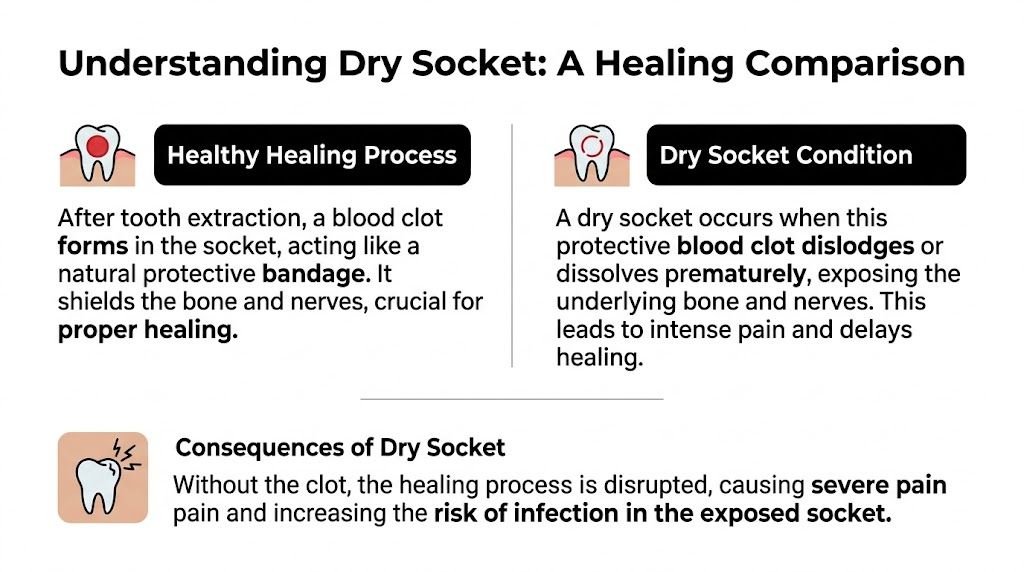
When a wisdom tooth is removed, your body creates a blood clot inside the empty socket. Think of that clot as a living bandage. It does the same job a scab does on a scraped knee, but in a deeper, more delicate space.
That clot covers the raw bone, protects the nerve endings, and creates the foundation for new tissue to grow. If it stays in place, healing can move forward smoothly.
If it comes loose too early, the socket loses that protection.
The clot is the first step in rebuilding
After an extraction, people often focus on the hole they can feel with their tongue. What matters more is what should be sitting inside that space.
The clot is not “leftover blood.” It’s part of the repair system. It acts like a plug and a scaffold at the same time. New tissue organizes around it.
Without that barrier, food debris, bacteria, air, and normal mouth movement can irritate the area. That’s why the pain can feel so intense. The tissue underneath wasn’t meant to be exposed.
What alveolar osteitis means
The clinical name for dry socket is alveolar osteitis. In plain language, it means the extraction site has lost its protective clot and the deeper socket is inflamed.
One oral surgery source notes that dry socket occurs when the clot dislodges and exposes bone and nerve endings. It also notes that routine extractions show 0.5% to 5.6% prevalence, while impacted lower wisdom teeth can reach 20% to 30%, and lower impacted wisdom teeth account for over 70% of cases according to this oral surgery overview of dry socket.
Those numbers matter because they explain why wisdom teeth patients hear about dry socket so often. Not every extraction carries the same biological challenge.
Why lower wisdom teeth are more vulnerable
Patients often ask why the lower jaw seems to cause more trouble than the upper jaw. The answer is mostly anatomy and blood supply.
Lower wisdom teeth are frequently more difficult to remove. They may be impacted, partially trapped in bone, or angled against the second molar. That often means more surgical manipulation of the socket.
The lower jaw also has denser bone. Dense bone can be less forgiving during healing because the socket environment is different from the upper jaw, which tends to have more porous bone. In simple terms, the lower jaw often gives the clot a harder place to stay stable while the tissue is trying to recover.
Movement also plays a role. The lower back part of the mouth deals with tongue motion, chewing pressure, and more direct mechanical disturbance. That doesn’t guarantee a problem. It explains why lower wisdom teeth deserve extra protection after surgery.
The clot isn’t just covering the wound. It’s creating the conditions the mouth needs to rebuild itself.
Why this matters for comfort and appearance
People usually think of wisdom teeth as a pain issue, but clean healing also protects nearby gum tissue and supports a healthier-looking smile. When healing stays on track, inflammation settles faster, the gum tissue closes more predictably, and patients can return to brushing and smiling without worrying about constant pain.
That’s why protecting the clot is such a big part of postoperative instructions. Every recommendation is built around one goal. Keep that natural bandage in place long enough for the body to take over.
Key Symptoms of Dry Socket and the Recovery Timeline
Normal recovery after wisdom teeth removal can be uncomfortable. Dry socket feels different in both timing and character.
The most common pattern is this. You expect each day to feel a little better, but instead the pain becomes stronger after the first day or two. Rather than being sore only at the extraction site, the pain may radiate toward the ear, temple, or jaw on the same side.
What patients usually notice first
Dry socket pain is often described as deep, throbbing, or sharp. It doesn’t act like ordinary post-surgical tenderness.
You may also notice:
- Pain that increases instead of decreases a few days after surgery
- A bad taste or bad breath that seems unusual
- An extraction site that looks empty or lacks the darker clot you expected
- Pain medicine that doesn’t seem to match the level of discomfort
Symptoms often emerge within 3 to 5 days and healing under treatment typically takes 7 to 10 days according to the prospective study and summary details in this review of dry socket prevalence after third molar extraction.
If you’re trying to decide whether your pain is “concerning” or just “annoying,” it can help to score it. Some patients find the Subjective Units of Distress (SUDS) Scale useful because it gives a simple way to describe how intense the pain feels from your perspective.
Healing Timeline Normal Recovery vs. Dry Socket
| Day Post-Surgery | Normal Healing Signs | Dry Socket Warning Signs |
|---|---|---|
| Day 0 | Oozing, numbness wearing off, expected soreness, swelling beginning | Severe pain right away is less typical for dry socket and may point to something else that still needs a call to your dentist |
| Day 1 | Tenderness, jaw stiffness, some swelling, clot staying protected | Pain already feels unusually severe or begins to escalate sharply |
| Day 2 | Site still sore, but discomfort is usually manageable and stable | Pain starts intensifying rather than settling |
| Day 3 | Gradual improvement should begin, even if you’re still swollen | Strong throbbing pain, radiating pain, unpleasant taste, or an empty-looking socket |
| Day 4 to 5 | Better function, less soreness, clot becoming more secure | Ongoing severe pain, little relief, pain traveling to ear or temple |
| After treatment | Continued healing and less sensitivity over time | Symptoms should begin easing once the socket is professionally cleaned and dressed |
Why timing matters
Dry socket is often delayed. That delay is what catches many people off guard.
In the same study above, prevalence after third molar extraction rose from 20.6% at 48 hours to 31.9% at one week, then 41.2% at two weeks, as summarized in the linked publication. That pattern shows that the problem can become more obvious as the days pass rather than appearing immediately.
That doesn’t mean every patient should stay on edge for two weeks. It means worsening pain deserves attention even if the first day seemed ordinary.
When confusion is common
Patients often get mixed up because normal healing can include:
- Mild bad breath
- Jaw soreness from holding the mouth open
- White or yellow healing tissue
- Tenderness when swallowing or chewing
Those can all happen without a dry socket. What changes the picture is the combination of worsening pain, timing a few days after surgery, and pain that seems to spread.
If your recovery feels like it took a sharp turn in the wrong direction, call. Dry socket is much easier to manage when you don’t wait it out.
Why Dry Sockets Happen Common Causes and Risk Factors
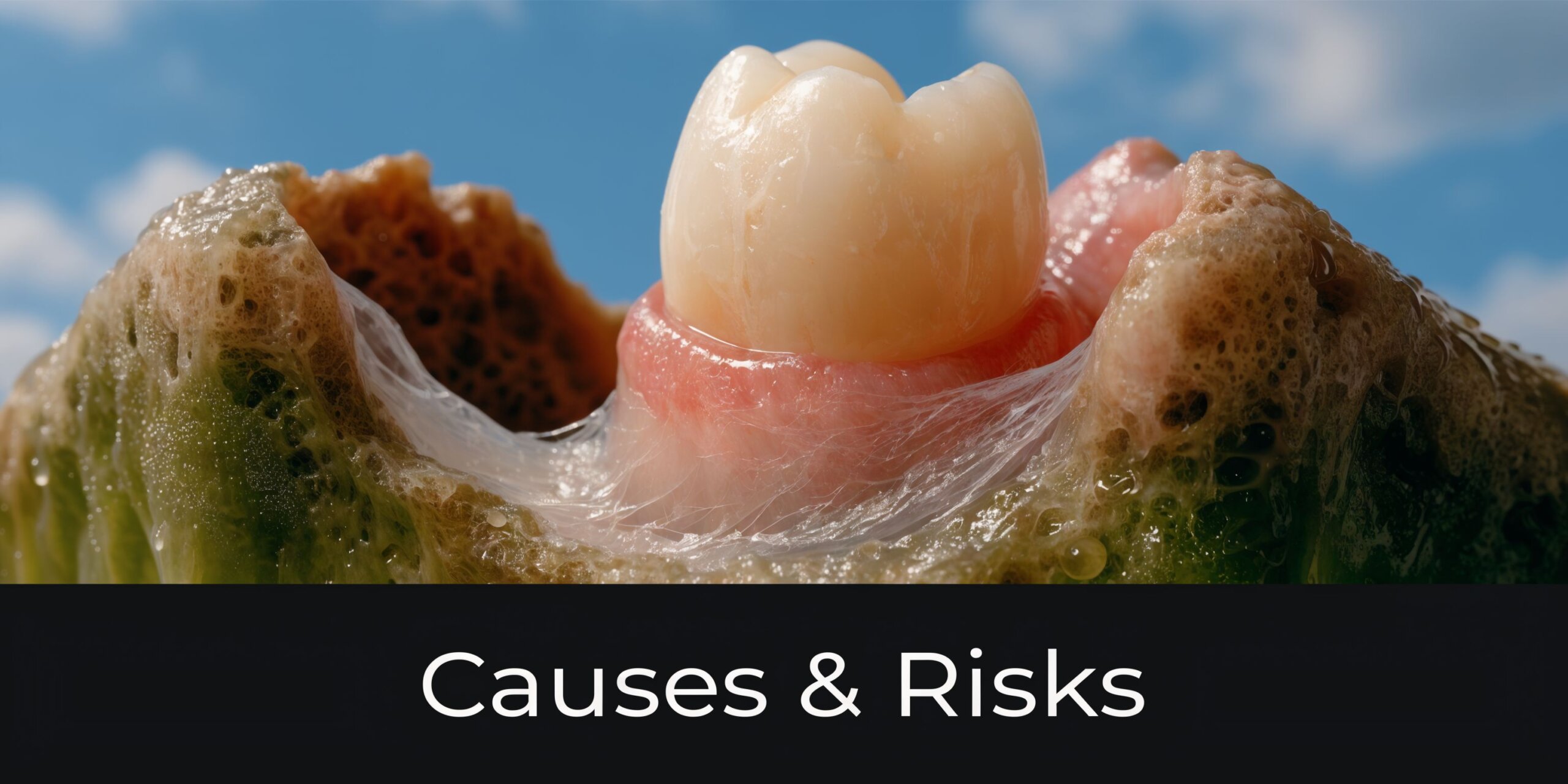
A dry socket forms when the blood clot is lost too early or doesn’t stay stable enough to protect the extraction site. That can happen because of physical force, chemical irritation, or the extraction itself.
The risk isn’t evenly distributed. In a study of extractions, overall dry socket incidence was about 3.2%, but it reached 15% for surgical extractions compared with 1.7% for non-surgical extractions. Smoking also mattered. Smokers had 12% incidence versus 4% in non-smokers, according to this clinical study on dry socket incidence and risk factors.
Mechanical causes
Some causes are simple physics. Suction and force can pull on a fresh clot before it anchors well.
Common examples include:
- Using a straw because the sucking motion creates negative pressure
- Forceful rinsing or spitting because it agitates the socket
- Poking the area with a tongue or finger because it physically disrupts the clot
- Early vigorous exercise because increased pressure and pulsing can aggravate a fresh site
These aren’t minor details. For the first several days, the clot is delicate.
Chemical and biologic causes
Other risks come from what the tissues are exposed to.
Smoking is a major one. Nicotine constricts blood vessels, and smoke or vaping aerosols can irritate the site directly. Together, that makes it harder for the socket to maintain a healthy protective clot.
Hormonal factors can also matter. Some patients taking oral contraceptives appear to have a higher risk because hormones can influence clot stability and fibrinolysis, which is the process that breaks down clots.
Poor oral hygiene can contribute too. A dirty healing environment makes it easier for debris and bacteria to interfere with the socket.
Surgical and anatomical causes
Not all risk factors are under your control.
An impacted lower wisdom tooth often requires more surgical work than an upper tooth that erupts more normally. More manipulation can mean more tissue trauma, which can make clot retention harder.
The lower jaw is also where anatomy works against us more often. The socket may sit in dense bone and in an area that experiences chewing pressure and tongue motion. That doesn’t mean lower wisdom teeth are unsafe to remove. It means they deserve more careful planning and aftercare.
What patients can control
It helps to separate risk factors into two groups.
You can influence behavior after surgery. You can’t change your anatomy or how difficult the extraction was. That distinction matters because it keeps the conversation practical rather than guilt-driven.
- Controllable risks include smoking, suction, rough rinsing, and ignoring aftercare instructions.
- Less controllable risks include impaction, lower jaw position, and a surgically difficult removal.
When patients understand the mechanism, the instructions make more sense. “Don’t use a straw” stops sounding random. It becomes a direct way to protect the healing clot.
Your Proactive Guide to Preventing Dry Socket
Prevention works best when it starts before the extraction and continues through the first week of healing. Dry socket prevention isn’t about one magic trick. It’s about giving the clot the calmest possible environment.
Before surgery
The planning visit matters more than people expect.
Tell your dentist or oral surgeon about smoking, vaping, birth control pills, prior dry socket history, and any medication that could affect healing. Those details help the team judge whether you’re in a higher-risk category, especially if the lower wisdom teeth are impacted.
For patients who want a practical checklist, this page on how to prevent dry socket organizes the basics in one place.
A few useful habits before surgery:
- Ask about timing. If you know you have a higher-risk lower extraction, ask how the team plans to protect the site.
- Prepare soft foods in advance. Yogurt, applesauce, soups, and smoothies eaten with a spoon make recovery easier.
- Make a no-smoking plan. Don’t wait until after surgery to decide. The first few days are when the temptation and the risk often collide.
The first 24 hours
This is the phase when the clot is most vulnerable.
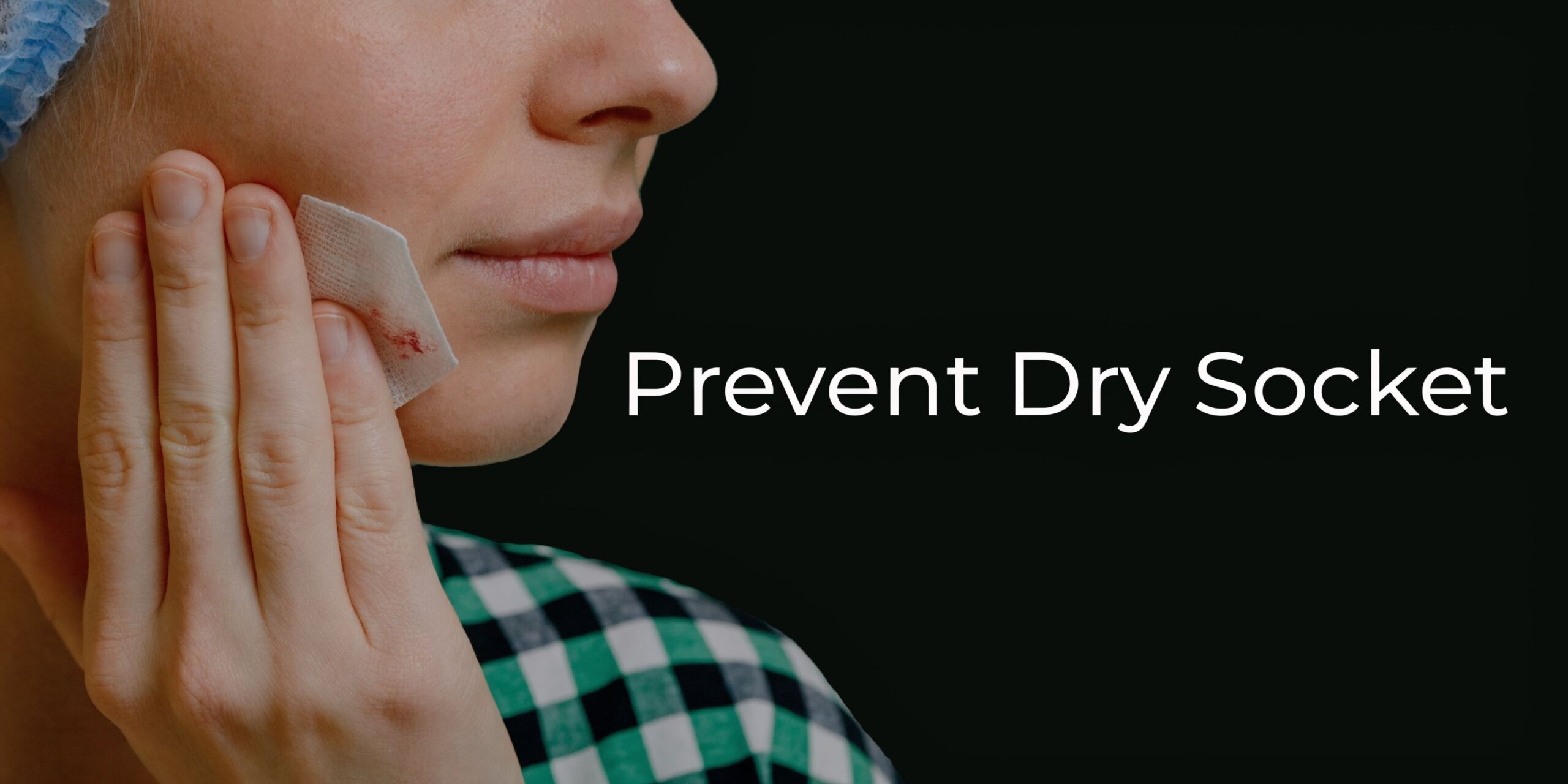
Bite on gauze exactly as directed. Rest. Keep your mouth quiet. Don’t rinse aggressively, spit forcefully, or drink through a straw.
It may help to think of the clot as wet cement. It needs stillness before it can hold shape.
Protect the extraction site from suction, friction, and heat. Most early mistakes fall into one of those three categories.
Food should be soft and cool to lukewarm. Chew away from the surgical side if possible. Avoid crunchy bits that can pack into the socket.
Days two through five
Once the initial bleeding settles, people often relax too soon. This is the period when many dry sockets begin to declare themselves, so gentle habits still matter.
Focus on:
- Careful cleaning with whatever rinse routine your dentist recommends
- Soft eating rather than testing the area with chips, nuts, or crusty bread
- Reduced mouth pressure by avoiding straws, forceful swishing, and forceful spitting
- Tobacco avoidance because nicotine and smoke can work against healing
If you feel anxious because you can’t tell whether you’re “doing enough,” simplify the goal. Keep the socket clean without disturbing it.
Why lower wisdom teeth need extra respect
Lower wisdom teeth often need more surgical effort and sit in an area where movement and pressure are harder to avoid. That’s why patients with lower extractions should be especially disciplined about postoperative instructions.
The upper jaw usually heals more easily. The lower jaw often demands more patience.
Modern techniques that support healing
Prevention isn’t only about what the patient does at home. Technique matters in the office too.
One modern approach is PRF, or platelet-rich fibrin. PRF is created from the patient’s own blood and placed into the extraction site to support clot stability and healing. According to this discussion of avoiding dry sockets after wisdom tooth removal, recent studies have shown PRF can reduce the incidence of dry socket in high-risk lower wisdom tooth cases by 40% to 50%.
That’s especially relevant for patients with impacted lower wisdom teeth, where the socket environment is less forgiving.
At practices that offer surgical technology such as 3D imaging, sedation, and PRF, including Grand Parkway Smiles, those tools can be part of a more deliberate plan for difficult extractions. The value isn’t hype. It’s that careful imaging can help with surgical planning, and PRF may give the socket a better start.
The mindset that helps most
Patients who do well usually don’t obsess over the socket itself. They protect the conditions around it.
That means less checking, less poking, less swishing, and more consistency. Gentle behavior gives the body a better chance to do what it’s already trying to do.
How Dentists Treat Dry Socket for Fast Pain Relief
If you develop dry socket after wisdom teeth, the main goal of treatment is straightforward. Reduce pain and create a cleaner environment so healing can resume.
The most important point is this. You do not need to tough it out.

What to do at home while waiting to be seen
If you suspect dry socket, call your dentist promptly. While waiting for the visit, keep the area calm.
Helpful steps often include:
- Use medication exactly as directed by your dental team
- Stick to gentle saltwater care if your dentist has recommended it
- Avoid digging at the socket with anything, including a cotton swab
- Choose soft foods and plenty of fluids
Some patients also look into temporary comfort tools for surface pain in other situations, such as a numbing topical cream, but a dry socket is deeper than a surface sore. That means topical products are not a substitute for a clinical exam and proper socket treatment.
What happens in the dental office
Patients are often relieved to learn that treatment is usually simple.
The dentist or oral surgeon will examine the site and gently irrigate the socket to remove trapped debris. Cleaning matters because even tiny food particles can keep the area irritated.
After that, a medicated dressing may be placed inside the socket. The purpose is to soothe the exposed tissues and protect the area while the body continues healing.
One clinical summary notes that management commonly includes saline irrigation and medicated dressings such as eugenol-soaked gauze, changed until healthy granulation tissue forms. It also notes 80% to 90% pain resolution in 3 to 5 days with this approach in the source’s treatment discussion, as described in the earlier clinical material on dry socket.
Why treatment works so quickly
Many patients expect a complicated fix. In reality, the pain is often coming from exposed tissue and ongoing irritation.
Once the socket is cleaned and covered, the pain source becomes less active. That’s why patients often feel relief much faster than they expected.
If you need a local office visit focused on this problem, this page on dry socket pain treatment explains the condition and what a treatment appointment may involve.
Fast relief usually doesn’t come from stronger willpower. It comes from cleaning the socket and protecting it properly.
What happens after the visit
Healing still takes a little time, but once the site is managed professionally, the trend should improve.
You may be told to return if the dressing needs to be changed. Follow those instructions closely. Keep eating softly, avoid suction, and continue the hygiene plan your dentist gives you.
The key difference after treatment is direction. Before treatment, symptoms often keep climbing. After treatment, patients usually start feeling like recovery is moving forward again.
Your Partner in Healing at Grand Parkway Smiles
Wisdom teeth removal should help your oral health, not leave you guessing through recovery. When troublesome wisdom teeth are removed well, patients often gain easier cleaning, less crowding pressure, and fewer repeated flare-ups around the back molars.
Dry socket can interrupt that recovery, but it doesn’t have to define it. The important things are recognizing the pattern, getting help quickly, and using prevention strategies that fit the specific extraction.
That’s especially true when lower wisdom teeth are involved. Those cases often need more surgical planning, more detailed instructions, and closer follow-up if pain takes a turn.
For families in Katy and the greater Houston area, what often matters most is practical access. Can you be seen quickly if pain worsens? Can anxious patients have sedation options? Can a single office handle surgery, follow-up care, and urgent complications without sending you all over town?
Those are reasonable questions. A practice that offers oral surgery support, same-day emergency evaluation, 3D imaging, sedation, and guidance on payment options can make the experience more manageable from start to finish.
Patients also benefit when care is coordinated under one roof. If a teenager needs wisdom teeth removed, a parent wants clear instructions, and someone in the family tends to get anxious during dental treatment, continuity matters. It makes the process feel less fragmented and more predictable.
The main message is reassuring. Dry socket after wisdom teeth is a real complication, but it’s one we understand well. With thoughtful surgical planning, careful home care, and prompt treatment if symptoms appear, most patients get back on course without long-term trouble.
Frequently Asked Questions About Dry Socket Recovery
When can I stop worrying about dry socket
The risk is highest in the first few days after extraction. According to this guidance on avoiding dry sockets after wisdom tooth removal, 95% of cases manifest by day 4, and if you’re asymptomatic by day 5, the risk becomes negligible.
That’s a very reassuring timeline for most patients. If you’re getting steadily better by day 5, that’s a good sign.
Do birth control pills matter
They can. Hormonal contraceptives are considered a risk factor because hormones may affect clot breakdown. If you use birth control pills and have upcoming wisdom teeth surgery, tell your dentist or oral surgeon before the procedure so they can factor that into your care plan.
The most useful step is communication. Don’t assume it’s irrelevant.
When is it safe to use a straw again
Follow your dentist’s specific instructions, especially if your extraction was surgical or involved lower wisdom teeth. In general, the concern is suction during the early healing period when the clot is still vulnerable.
If you’re not having symptoms and healing is progressing normally, your dentist will tell you when regular habits can resume. When in doubt, wait longer rather than testing the site too early.
Can light exercise trigger a problem
It can if you return too quickly. Activity that raises pressure or encourages pulsing and throbbing in the surgical area may aggravate a fresh extraction site.
Walking is usually easier to tolerate than vigorous exercise. If movement makes the area ache more, back off and give the clot more time.
Will dry socket ruin the benefits of wisdom teeth removal
No. It can make recovery more painful and frustrating, but it doesn’t erase the long-term benefit of removing a problematic tooth. Once treated, the site can still heal well.
If you’re dealing with worsening pain after wisdom teeth removal, or you want a surgical team that can guide you before and after treatment, Grand Parkway Smiles offers dental and surgical care in Katy, including support for wisdom teeth evaluation, emergency visits, sedation options, and recovery guidance.