For years, the go-to advice has been simple: see your dentist twice a year. While that’s a solid rule of thumb for many, the real answer to "how often should I see the dentist?" is a lot more personal. It really comes down to your unique oral health history, your lifestyle, and your specific risk factors to maintain your best dental health and appearance.
Rethinking the Six-Month Dental Checkup
The twice-a-year dental visit has been the gold standard for a long time, and for good reason. For many people, this schedule is perfect for getting a professional cleaning and an exam to catch small issues before they snowball. Think of it as preventative maintenance for your smile—it helps stop problems like cavities and gum disease before they turn into something that requires more invasive and expensive treatment, ultimately protecting your dental health.
But modern dentistry has moved beyond a one-size-fits-all approach. Your oral health needs are just as unique as your nutritional or fitness needs. That’s why we’ve shifted toward a personalized, risk-based model that ensures your dental care is perfectly aligned with what your smile needs to stay healthy and beautiful right now.
Finding Your Ideal Visit Frequency
The goal is to create a schedule based on your personal health profile, not just the calendar. This way, every visit is meaningful and provides the maximum benefit for your health and appearance.
When we customize your schedule, we focus on:
- Proactive Prevention: Catching things like early enamel wear or the first signs of gum inflammation before they escalate into painful problems.
- Enhanced Appearance: Regular professional cleanings are fantastic for removing surface stains, keeping your smile bright and confident.
- Long-Term Health: Protecting your teeth and gums is a huge part of your overall wellness, preventing issues that can affect your entire body.
This flowchart gives you a visual idea of how your risk level can influence how often you should be coming in for optimal dental health.
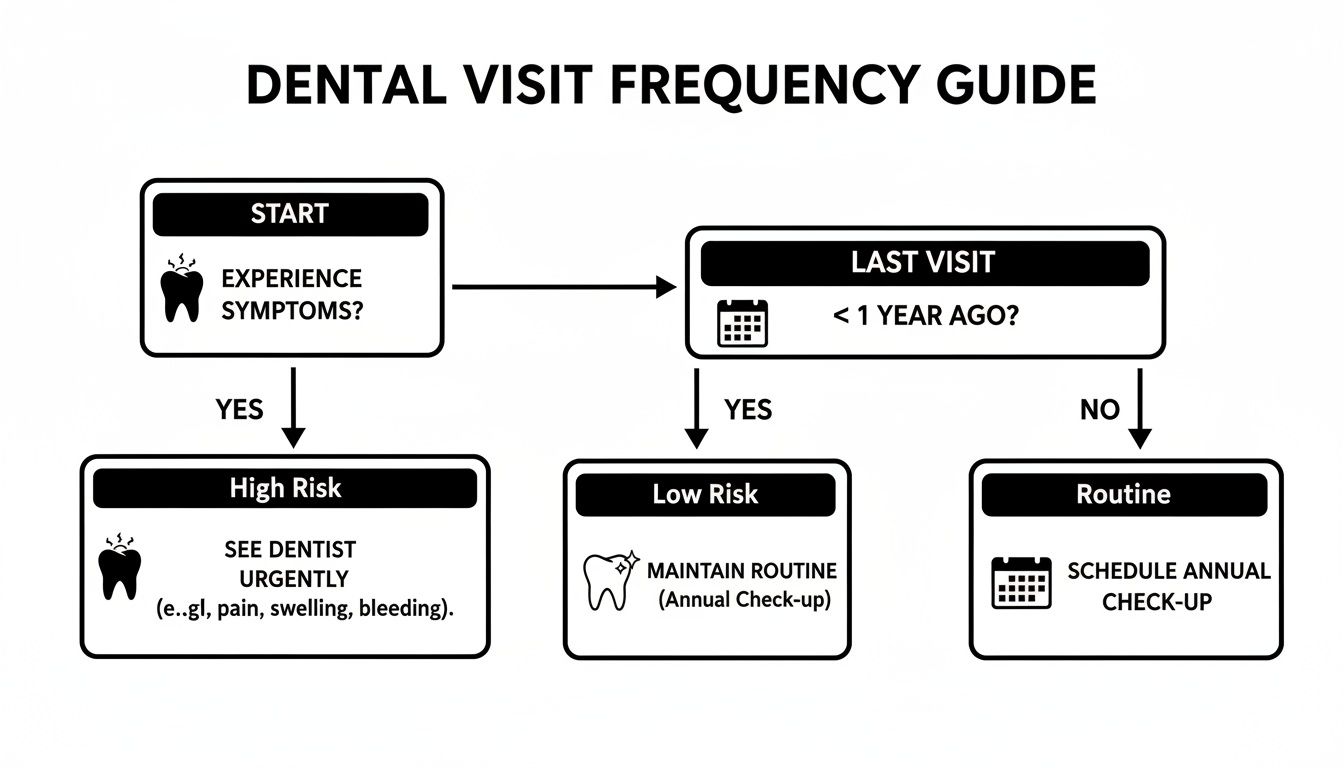
The key takeaway here is that your dental care plan should be dynamic. It should adapt to your current health status instead of just following a generic timeline to deliver the best results.
To give you a quick reference, here’s a breakdown of how different risk profiles influence your ideal checkup schedule. This at-a-glance table helps clarify why your neighbor might see the dentist more or less often than you do.
Your Recommended Dental Visit Frequency At-A-Glance
| Patient Risk Profile | Recommended Visit Frequency | Primary Goal of Visits |
|---|---|---|
| Low Risk (No cavities or gum disease) | Every 12–24 months | Maintain health, prevent new issues, professional cleaning for a bright smile. |
| Moderate Risk (Some past issues, minor plaque) | Every 6–9 months | Monitor known issues, prevent recurrence, targeted cleanings to boost gum health. |
| High Risk (Active gum disease, frequent cavities) | Every 3–4 months | Actively manage disease, prevent progression, deep cleanings for oral health restoration. |
This personalized approach isn't just a trend; it's backed by solid evidence. Research shows that while high-risk patients need to be seen every 3-6 months to effectively manage their conditions, about 30% of low-risk adults can safely extend their checkups to once every two years without any negative impact on their dental health.
This shift empowers dentists to create smarter, more effective care plans that are truly built around the patient's well-being.
At Grand Parkway Smiles, we partner with you to figure out the perfect schedule. We don't just look at a clock; we carefully assess your oral health to make sure your visits provide the most benefit, keeping your smile healthy and vibrant for years to come.
Ultimately, understanding the importance of regular dental check-ups is the first step. By working with our team, you can feel confident that your visit frequency is designed specifically for you to achieve the best possible oral health.
Key Factors That Determine Your Ideal Dental Visit Schedule
The old "see your dentist twice a year" rule is a decent starting point, but it's far from the full story. The real answer to "how often should I see the dentist?" is a lot more personal. Your oral health has its own unique story, influenced by your history, your habits, and your overall health.
Think of it like this: some people need an annual physical and they're good to go, while others with chronic conditions need to check in with their doctor more often. Your mouth works the same way. At Grand Parkway Smiles, we don't rely on a generic calendar. Instead, we look at the specific factors that shape your smile to figure out the perfect schedule for you.
Your History with Cavities and Fillings
One of the first things we look at is your track record with tooth decay. If you've sailed through life with few or no cavities, it's a great sign. It likely means you have strong enamel and your home care routine is effectively keeping bacteria in check. For someone in this low-risk group, a visit every year might be completely fine to maintain that excellent dental health.
On the other hand, if your dental chart shows a history of cavities and fillings, that tells us you might be more susceptible to decay. It could be due to anything from genetics to diet. Those existing fillings, crowns, and bridges also need a regular once-over to ensure they are protecting your teeth. They’re tough, but they don’t last forever.
We keep an eye on them for:
- Signs of wear and tear: Even tiny cracks can become a gateway for bacteria, leading to new decay under an old filling.
- The integrity of the margins: We make sure the seal where your filling or crown meets the tooth is still tight, preventing bacteria from seeping in.
- Overall stability: A loose crown isn't just annoying; it can compromise your bite and harm the health of the teeth supporting it.
Catching these little problems early means we can often repair them before you need a whole new restoration. This proactive approach saves you time, money, and protects the long-term health of your smile.
The Current Health of Your Gums
Your gums are literally the foundation of your smile, so their condition is a huge factor. Healthy gums are firm, pink, and don't bleed when you brush or floss—a clear sign of good oral health. If your gums are in great shape, a standard six-to-twelve-month cleaning schedule usually does the trick to keep them that way.
But if we see signs of gingivitis (the early, reversible stage of gum disease) or periodontitis (the more advanced stage), we need to see you more often. Redness, swelling, bleeding, or receding gums are all red flags indicating inflammation. For patients dealing with this, we often recommend cleanings every three to four months.
A more frequent cleaning schedule isn't a punishment. It's a targeted therapy to stop gum disease in its tracks and restore your gum health. These visits let us get below the gumline to remove tartar buildup and keep the disease from progressing to the point where you could lose teeth.
Your Lifestyle and Overall Health
What you do every day and your general health have a direct line to your mouth. If you have a sweet tooth, you're constantly feeding the bacteria that cause cavities. Habits like smoking dramatically raise your risk for both gum disease and oral cancer, making more frequent screenings absolutely essential for your health.
Beyond that, your mouth and body are deeply connected. Conditions like diabetes can weaken your body's ability to fight infection, including in your gums. This is why we base our recommendations on your personal risk factors. Studies show that high-risk individuals—like smokers or those with diabetes—benefit significantly from cleanings and exams every 3–4 months. It's a proactive approach that helps manage disease and prevent tooth loss far more effectively than a standard six-month schedule. You can read more about how risk factors affect dental visit frequency.
By piecing together your dental history, gum health, and lifestyle, we can move past a one-size-fits-all suggestion. We create a logical, evidence-based schedule that’s built just for you, ensuring your smile stays healthy and strong for years to come.
Your Dental Care Needs Change with Every Stage of Life
Just like you wouldn’t wear the same clothes you did as a kid, your dental needs aren't the same in your forties as they were in your teens. The real answer to "how often should I see the dentist?" isn't a one-size-fits-all number. It’s a recommendation that needs to adapt as you navigate different chapters of life to maintain optimal oral health.
Thinking proactively is the key to a lifetime of healthy smiles. A child's dental care is all about monitoring growth and building a strong foundation for healthy adult teeth. For an adult, the focus might shift to maintaining that smile and maybe even making cosmetic improvements for a more confident appearance. Each stage has its own priorities, and your dental care strategy should reflect that.
Pediatric Dental Visits: Setting the Stage for a Healthy Smile
A child's first few trips to the dentist can shape their attitude toward oral health for the rest of their life. That's why we recommend bringing your little one in for their first visit around their first birthday or when that first tiny tooth makes its appearance. These early appointments are designed to make the dentist a friendly, positive place, ensuring a future of good dental health.
After that, regular checkups every six months are absolutely essential. Here's why these visits are so beneficial:
- Tracking Growth: We keep a close eye on how their jaw is developing and make sure their teeth are coming in properly. This helps us spot any early bite issues, which can improve both function and future appearance.
- Prevention is Everything: Professional cleanings, fluoride treatments, and dental sealants are a powerful trio against childhood cavities, protecting their precious teeth from decay.
- Building Great Habits: We use these visits as a chance to show kids how to brush and floss the right way, giving them skills that will protect their dental health for decades.
Here at Grand Parkway Smiles, our pediatric team knows how to create a fun, welcoming atmosphere. We want your child to feel confident and trusting, setting them up for a lifetime of healthy smiles.
Keeping Adult Smiles Healthy in a Hectic World
For most adults, the game changes from development to maintenance. Between work, family, and a packed schedule, it’s all too easy to let dental appointments slide. But sticking with it is one of the most important things you can do for your health and appearance. For most healthy adults, a checkup every six to twelve months is the sweet spot.
These visits are focused on protecting the healthy smile you already have. We perform a deep cleaning to get rid of tartar buildup that you just can't remove at home—a critical step in preventing gum disease. We also screen for oral cancer and inspect existing dental work like fillings or crowns to ensure their integrity. Consistent visits keep your smile looking its best and stop small issues from turning into big, expensive problems.
Specialized Care for Seniors
Our bodies change as we get older, and our mouths are no different. Seniors often run into unique dental hurdles that need a more specialized approach to maintain their oral health. Things like dry mouth (a common side effect of many medications), a higher risk for decay at the tooth root, and general wear and tear become bigger concerns.
This is why regular dental visits are more important than ever for seniors. These visits provide key health benefits:
- Manage Dry Mouth: We can suggest products and treatments to restore comfort and lower the risk of cavities that comes with it.
- Monitor Gum Health: Keeping a close watch on gum recession and overall periodontal health is key to preventing tooth loss and maintaining a healthy mouth.
- Maintain Dentures: For patients with dentures, we check the fit to prevent sores and ensure you can eat and speak comfortably and confidently.
It's a common myth that you don't need a dentist if you have full dentures. That couldn't be further from the truth. Regular visits are crucial for checking the fit of your dentures, examining your gums for any signs of disease, and performing a vital oral cancer screening for your overall health.
Unique Needs: Pregnancy and Dental Implants
Some situations call for a slight change in the game plan to protect your dental health. During pregnancy, hormonal shifts can lead to "pregnancy gingivitis," making gums extra sensitive and prone to bleeding. A dental checkup during pregnancy is completely safe and something we highly recommend to keep both mom and baby healthy.
Likewise, if you have dental implants, protecting that investment in your smile is a top priority. While the implant itself can't get a cavity, the gums around it are still vulnerable to disease. Regular checkups let us monitor the health of your gums and make sure the implant is stable, ensuring your new smile stays strong and beautiful for years to come.
What Happens During a Modern Dental Checkup and Cleaning
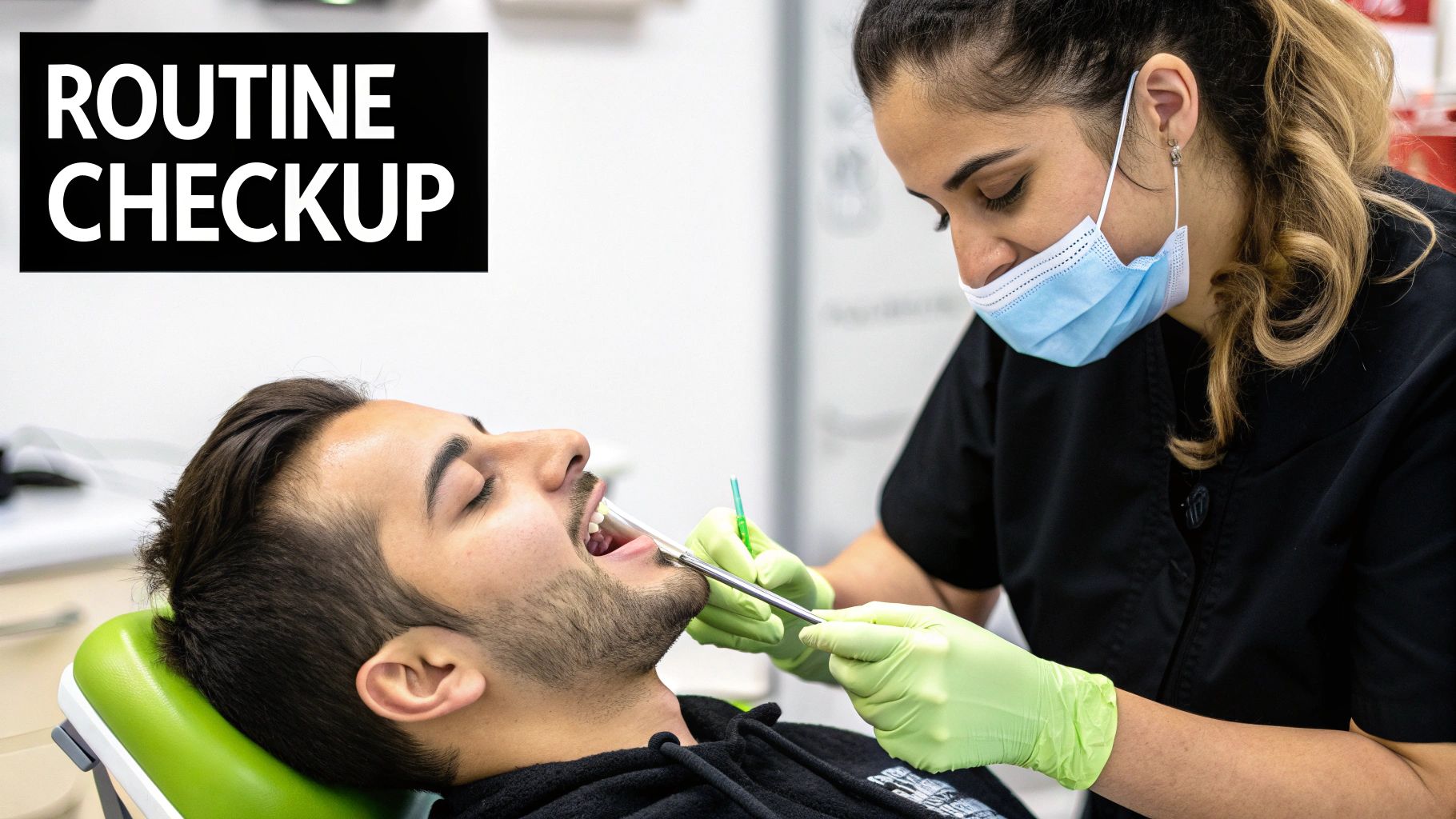
Knowing you should see a dentist is one thing, but understanding what actually happens during your visit can completely change how you feel about coming in. For a lot of people, any anxiety they feel comes from the unknown. So, let’s pull back the curtain and show you how a modern checkup is built for your comfort and long-term dental health.
A routine appointment at Grand Parkway Smiles is so much more than just "scraping your teeth." Think of it as a proactive, multi-step process designed to protect your oral health while keeping your smile looking its best. Every part of the visit has a distinct purpose, all working together to stop problems before they get a chance to start.
The Professional Cleaning Process
Even if you’re a rockstar with your brushing and flossing at home, you simply can't remove everything. That's where our amazing dental hygienists come in. They use specialized tools to gently and effectively get rid of plaque and tartar (which is just hardened plaque) from those tough-to-reach spots, especially along the gumline.
This step isn't just about getting that super-clean feeling; it’s a critical health procedure. Removing this buildup is the number one way to prevent gum disease, which remains the leading cause of tooth loss in adults. A professional cleaning keeps your gums healthy and also buffs away surface stains, leaving your teeth looking noticeably brighter and improving your smile's appearance.
A Comprehensive Oral Examination
After your cleaning, the dentist will sit down with you for a thorough examination of your teeth and gums. This isn't just a quick glance—it's a detailed inspection designed to catch potential issues when they're at their earliest and most treatable stage to preserve your dental health.
During the exam, we’re looking for things like:
- Early signs of decay: We can spot weak spots in the enamel long before they turn into full-blown cavities that require more extensive treatment.
- Gum health: We check the tiny pockets between your teeth and gums to screen for any signs of gingivitis or periodontitis, protecting the foundation of your smile.
- Existing dental work: We'll inspect your fillings, crowns, and bridges to make sure they’re still secure and properly protecting your teeth.
This proactive approach allows us to fix small issues with simple, conservative treatments. In the long run, this helps you avoid more complex and costly procedures, preserving your natural smile for life.
A key component of every checkup is a vital oral cancer screening. Your dentist will carefully check your lips, tongue, gums, and throat for any unusual signs. Early detection dramatically improves health outcomes, making this screening an essential part of your visit.
Advanced Digital Imaging
To get the complete picture of your oral health, we use advanced digital X-rays. These images let us see what the naked eye can't, like the health of your jawbone, the position of tooth roots, and any decay that might be hiding between your teeth.
Don't worry about safety. Modern digital X-rays are incredibly efficient, emitting up to 90% less radiation than the old-school film X-rays. They give us instant, crystal-clear images that help us diagnose issues with pinpoint accuracy, leading to better health outcomes.
Finally, we believe dental care should never be a source of stress. For patients who feel anxious or nervous, we offer safe and effective sedation dentistry options right here at Grand Parkway Smiles. Our goal is to make sure every single patient can get the care they need in a calm, supportive, and comfortable environment.
Warning Signs You Need to See a Dentist Immediately
While your regular checkup schedule is your best friend for long-term oral health, some situations just can’t wait. Think of routine visits as scheduled maintenance for your car, but sometimes, a warning light flashes on the dashboard that needs immediate attention. Ignoring these signals can turn a small, fixable issue into a complex, painful, and expensive problem.
Knowing these warning signs is just as crucial as keeping up with your cleanings. It gives you the power to act fast, protecting your teeth and your overall health. Pain is your body's natural alarm system, and when it comes to your mouth, it’s one you should never, ever ignore.
Persistent Tooth Pain or a Throbbing Toothache
A toothache that just won't quit—whether it's dull, throbbing, or sharp—is a major red flag. This isn't the quick "zing" you might feel from ice water; this is a constant pain that gets in the way of your day. It’s almost always a sign of a deeper issue that needs a professional eye to protect your dental health.
This kind of persistent pain is often caused by things like:
- Deep Cavities: Decay has burrowed its way into the sensitive inner pulp of the tooth, causing significant pain.
- An Abscess or Infection: A dangerous pocket of pus has formed around the root of a tooth, which can pose a serious risk to your overall health if not treated.
- A Cracked Tooth: Even a small fracture can allow bacteria to get in and irritate the tooth’s nerve, leading to pain and further damage.
Ignoring a toothache is like hitting snooze on a fire alarm. The problem will only get worse, and getting it checked out quickly is the key to saving the tooth and stopping an infection in its tracks.
Swollen, Bleeding, or Tender Gums
Let's be clear: healthy gums don't bleed when you brush or floss. If you notice your gums are puffy, red, or bleed easily, you're likely seeing the very first signs of gum disease. It might not seem like a big deal, but it's your body telling you your gum health is compromised.
Gums that consistently bleed or feel tender can point to gingivitis or, if left unchecked, the more advanced stage of periodontitis. Catching this early with a professional cleaning and evaluation can often reverse the damage and get your gums healthy again. Waiting too long can lead to receding gums and, eventually, tooth loss.
Don't ever dismiss bleeding gums as "normal." Healthy gums create a tight seal around your teeth, protecting the roots and bone. When that seal is broken by inflammation, the very foundation of your smile is at risk.
Sudden and Severe Sensitivity
If one of your teeth suddenly becomes incredibly sensitive to hot, cold, or even sweet foods, it’s time to pick up the phone. This isn't the same as the mild, generalized sensitivity some people have; this is a new, sharp pain that you can pinpoint to a specific spot. It often means the protective enamel has worn down or a new cavity has exposed the tooth's inner layer, called dentin, compromising your tooth's health.
A Chipped, Cracked, or Knocked-Out Tooth
A physical injury to a tooth is a clear-cut dental emergency. A chip or crack can leave sensitive nerves exposed and makes the tooth a prime target for decay. If a tooth gets knocked out completely, you're in a race against the clock—if you can get to a dentist within an hour, there's a very good chance the tooth can be saved and your smile restored.
At Grand Parkway Smiles, we know these things can't wait. That's why we offer same-day emergency services. You shouldn't have to sit around in pain, wondering when you'll get help. We're here to provide the expert care you need, right when you need it, to bring you relief and save your smile.
Making Your Dental Health a Priority Without Breaking the Bank
We get it. One of the biggest reasons people put off seeing a dentist is the worry about the cost. But we firmly believe that financial stress should never come between you and a healthy, confident smile. Here at Grand Parkway Smiles, we're committed to making top-notch dental care accessible for everyone in the Katy community.
Think of it this way: preventative care is always a smarter investment than restorative treatment. Scheduling regular checkups is one of the best ways to head off more complex and expensive procedures down the road. Our goal is to clear away those financial hurdles so you can focus on what really matters—your health and the appearance of your smile.
Navigating Your PPO Dental Insurance
If you have a PPO dental insurance plan, our team is fantastic at helping you get the most out of your benefits. We'll take care of the paperwork and direct billing to make everything as simple and transparent as possible. We want to ensure you receive the maximum coverage you're entitled to, every single time.
Before we begin any treatment, we’ll give you a clear breakdown of what your plan covers and any potential out-of-pocket costs. That way, you can make decisions about your care with total confidence and zero surprises, feeling good about investing in your smile.
Understanding your payment options is a powerful step toward taking control of your oral health. By removing financial uncertainty, we empower you to confidently pursue treatments that restore function and enhance your appearance.
Affordable Options Without Insurance
Don't have traditional dental insurance? No problem at all. We created our in-house savings plan as a fantastic alternative. It’s not insurance, but a straightforward membership program that makes dental care affordable for a low annual fee. Members get significant discounts on a wide range of services, from routine cleanings to major restorative work.
For more extensive treatments like dental implants or a full smile makeover, we also offer flexible financing options. These plans break down the total cost into manageable monthly payments designed to fit your budget, making your dream smile an achievable reality. For more details, check out our guide on understanding your financing options in Katy.
Cost and insurance are huge factors in how often people actually make it to the dentist. Nationally, only about 62–65% of adults had a dental visit in the past year, and access to affordable care is a major reason for that gap. By providing robust support for PPO plans and creating accessible in-house options, we're working to make consistent dental care a reality for our community.
Got Questions About Dental Visits? We Have Answers.
Even when you have a plan, a few questions are bound to pop up. It's completely normal. Here are some straightforward answers to the questions we hear most often, helping you feel totally confident about your path to a healthy smile.
Is It Really Okay to Go Longer Than a Year Between Visits?
For a very small group of adults with a stellar track record of oral hygiene and zero history of major dental issues, an interval of 12 to 24 months might be okay. But here’s the critical part: that call has to be made by a dentist after a really thorough risk assessment. It's a professional medical opinion, not a personal guess.
At Grand Parkway Smiles, we build a schedule based on your unique health profile, ensuring nothing gets missed. We can't stress this enough—please don't try to self-diagnose your risk level. Always work with your dentist to figure out the safest frequency for your smile's health.
I Have Dentures or Implants. Do I Still Need Checkups?
Absolutely, yes! Regular visits are essential for keeping your smile looking great and your mouth healthy. If you wear dentures, we check the fit to prevent sores and make sure the gums and bone underneath are in good shape. And for every single patient, we perform a crucial oral cancer screening to protect your overall health.
For those with dental implants, like the popular All-on-4 system, these checkups are non-negotiable. We need to monitor the health of the gums around the implants to spot trouble early. This is how we prevent complications and protect the investment you made in your beautiful smile.
A common myth is that if you don't have natural teeth, you don't need a dentist. That couldn't be further from the truth. Regular checkups are vital for monitoring jaw health, checking how prosthetics fit for comfort and function, and performing life-saving oral cancer screenings.
My Insurance Covers Two Visits a Year, but My Dentist Wants Me to Come in More Often. What Gives?
This is a classic dilemma, and you're not alone in asking. It’s important to understand that insurance plans are built on contracts and annual maximums, not on your specific clinical needs. If your dentist at Grand Parkway Smiles recommends more frequent visits, it's for a solid medical reason—like managing gum disease or a high risk for cavities to improve your oral health.
Our team will always take the time to explain the why behind our recommendation, so you understand the long-term health benefits. We’ll also work with you on making it affordable, whether through our in-house savings plan or flexible financing. Your dental health will always come first.
Your smile's health is our top priority. At Grand Parkway Smiles, our team is ready to create a personalized care plan that fits your life and keeps you smiling confidently. Schedule your appointment today and take the first step toward optimal oral health.