Just hearing the words "root canal" is enough to make many people feel a little uneasy. But modern dentistry has a powerful way to make sure you're comfortable from start to finish: sedation.
Using sedation for a root canal completely changes the experience, turning a procedure you might dread into a calm, simple path to better health. This allows your dentist to save your natural tooth, restore your smile, and get your dental health back on track—all without the stress you might be worried about.
Your Guide To A Comfortable Root Canal Experience
Let's be honest, the idea of a root canal often seems scarier than the toothache that brought you to us in the first place. That common fear keeps a lot of people from getting the care they need to save a tooth and, more importantly, end their pain.
The truth is, a root canal isn't the cause of your discomfort—it's the solution. The entire purpose of the procedure is to relieve the awful pain from a deep infection and preserve your natural tooth. Keeping your own tooth is always the best path forward for your overall dental health and the appearance of your smile.
This is where sedation dentistry comes in. It bridges the gap between your anxiety and the treatment you need to restore your oral health. By helping you reach a state of deep relaxation, sedation lets our team work efficiently and effectively. Not only does this make the whole process stress-free for you, but it also helps us achieve the best possible results for your smile.
When you're relaxed, your dentist can perform the delicate work of a root canal with much greater precision. This improves the long-term success of the treatment and helps keep your smile looking its best.
We know dental anxiety is real, but it doesn’t have to prevent you from achieving a healthy, pain-free mouth. In fact, your comfort is so important that it has driven major advancements in how we perform procedures to save teeth.
Sedation completely reframes the root canal. It’s no longer an ordeal to be endured, but a peaceful step toward restoring your health and appearance. It empowers you to get the essential care you need without sacrificing your comfort. You can learn more about how sedation dentistry eases anxiety and enhances dental procedures to see if it’s the right choice for you.
Understanding Your Sedation Options For A Root Canal
When we talk about sedation for a root canal, it’s helpful to think of the options on a spectrum. On one end, you have light relaxation, and on the other, a deep, sleep-like state. Finding the right spot on that spectrum is a personal choice you'll make with your dentist, ensuring your procedure is as stress-free and effective as possible for saving your tooth.
This isn't about being "knocked out." It’s about creating a calm, comfortable environment where your dentist can do their best work to preserve your smile. The main goal of a root canal is to clear out the infection and save your natural tooth, which is always the best outcome for your long-term dental health. Sedation simply helps lower the anxiety barrier so this important work can get done smoothly.
The Lightest Touch: Nitrous Oxide
The mildest form of sedation we offer is nitrous oxide, which most people know as "laughing gas." Imagine a light, floaty feeling where your worries just seem to drift away. You're completely awake and can talk with us the whole time, but your anxiety melts away, allowing you to get the treatment needed to restore your tooth to health.
This is a great option for patients who feel mild or moderate dental anxiety. One of the biggest advantages is how quickly it wears off. As soon as we remove the mask, you’ll feel like yourself again almost immediately, meaning you can drive home and get right back to your day with a healthier smile.
The infographic below shows the two main pillars of comfort during a root canal: sedation and local anesthetic.
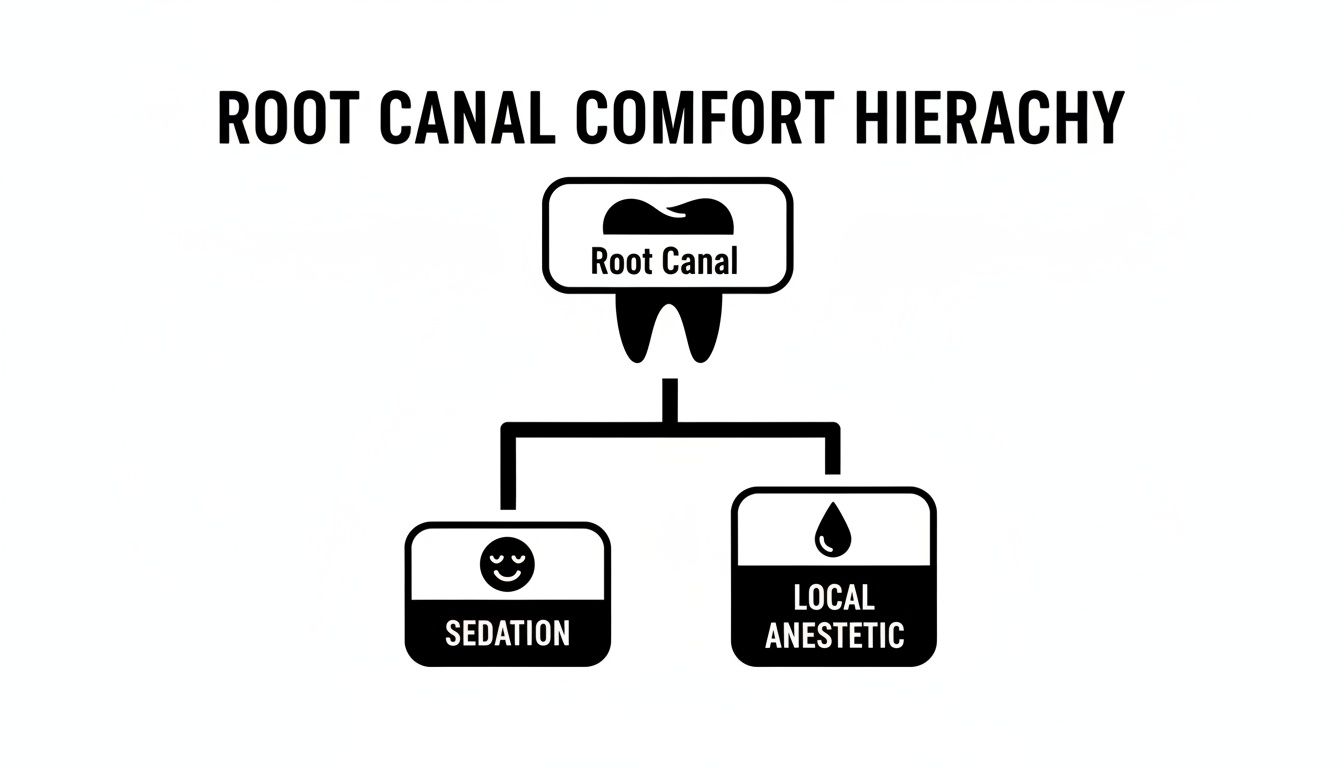
This diagram really drives home that we use both sedation for anxiety and local anesthetic for pain. The combination creates a truly comfortable, worry-free experience, allowing us to focus on the health of your tooth.
A Warm Blanket Of Calm: Oral Conscious Sedation
For a deeper level of relaxation, oral conscious sedation is an excellent choice. This involves taking a prescribed pill about an hour before your appointment. The best way to describe the effect is like being wrapped in a warm, heavy blanket of calm. You’ll feel deeply relaxed and drowsy, but you are still conscious.
Many patients can still respond to questions but are so at ease that they often have little to no memory of the procedure afterward. This amnesic effect is a huge plus for anyone with significant dental phobia, as it helps break the cycle of fear and allows them to receive vital care to save their tooth. Because the sedative’s effects take a while to wear off, you will need to have a friend or family member drive you to and from your appointment.
The Twilight Sleep: IV Sedation
The deepest level of conscious sedation we provide in our office is Intravenous (IV) sedation. People often call this a "twilight sleep." With this method, the sedative goes directly into your bloodstream, creating a powerful and immediate sense of profound relaxation. You aren't fully unconscious, but you'll be completely unaware of the sights, sounds, or feelings of the root canal procedure.
Patients who choose IV sedation often tell us it felt like they simply slept through the whole appointment, waking up with a healthier tooth and no memory of the treatment at all. This makes it the perfect solution for people with severe anxiety, a very strong gag reflex, or for those who need a longer, more complex procedure to restore their dental health.
The trend toward comfortable dentistry is backed by some serious data. A Korean study that tracked 786,003 patients receiving dental sedation found that nitrous oxide was the choice in 86.8% of cases. This really highlights how effective it is for calming patients during precise treatments like root canals, where keeping movement to a minimum is key to successfully treating the infection and saving the tooth. You can find more details in the full sedation trends study on pmc.ncbi.nlm.nih.gov.
Who Is A Good Candidate For Sedation Dentistry
Deciding on sedation for a root canal is ultimately your call, but some situations make it a really smart choice for your comfort and the procedure's success. It’s not just for people with a touch of nerves; it’s a practical solution that ensures the treatment to save your tooth goes as smoothly as possible.
Think of it this way: for a dentist to perform the delicate, precise work needed to save your tooth, the patient needs to be relaxed and still. If anxiety, a strong gag reflex, or general discomfort makes that a challenge, sedation helps create the perfect conditions for a great outcome. This ensures your root canal is as stress-free as it is effective in restoring your oral health.
Indicators You Might Benefit From Sedation
So, how do you know if sedation is the right choice for you? There are a few common signs that you’d be a great candidate. If any of these sound familiar, it’s definitely worth a conversation with our team about how we can help you achieve a healthier smile.
Many patients who find sedation helpful experience:
- Moderate to Severe Dental Anxiety: This is more than just a case of the jitters. If the very thought of a root canal fills you with dread or panic, sedation allows you to get the care you need to save your tooth without the emotional rollercoaster.
- A Strong or Sensitive Gag Reflex: For some people, just having dental tools in their mouth can trigger a powerful gag reflex. Sedation helps relax this response, making the procedure much more comfortable for you and easier for the dentist to perform the necessary treatment.
- A Low Pain Threshold or Very Sensitive Teeth: Even with excellent local numbing, some of us are just wired to be more sensitive. Sedation can help raise your pain threshold and simply makes you less aware of the sensations, keeping you comfortable while your tooth is being saved.
- The Need for Long or Complex Procedures: Let's face it, sitting perfectly still in a dental chair for a long time is tough for anyone. Sedation can make a lengthy appointment feel like it’s over in just a few minutes, allowing for complex work that restores function and appearance.
Your Health And Safety Are The Top Priority
Choosing to use sedation is a team decision made by you and your dentist, and your safety is always our number one concern. Before we even consider sedation, we'll sit down with you and do a thorough review of your medical history to make sure it's a safe and appropriate option for restoring your dental health.
Your well-being is paramount. We carefully consider your overall health, including any existing medical conditions and current medications, to select the safest and most effective sedation method for your root canal.
There are a few things that might change which type of sedation we recommend, or in some cases, mean it isn't the best path forward. These potential factors include:
- Certain respiratory conditions that could be affected by sedatives
- Pregnancy
- Known allergies to sedation medications
- Possible interactions with other medications you are currently taking
By having a frank and open chat about your health, we can make the right decision together. This ensures your experience is not just calm and comfortable but completely safe, paving the way for a successful health outcome. Exploring if IV sedation is right for you can offer further insights into making this important choice for your well-being.
The Sedation Process Before During And After Treatment
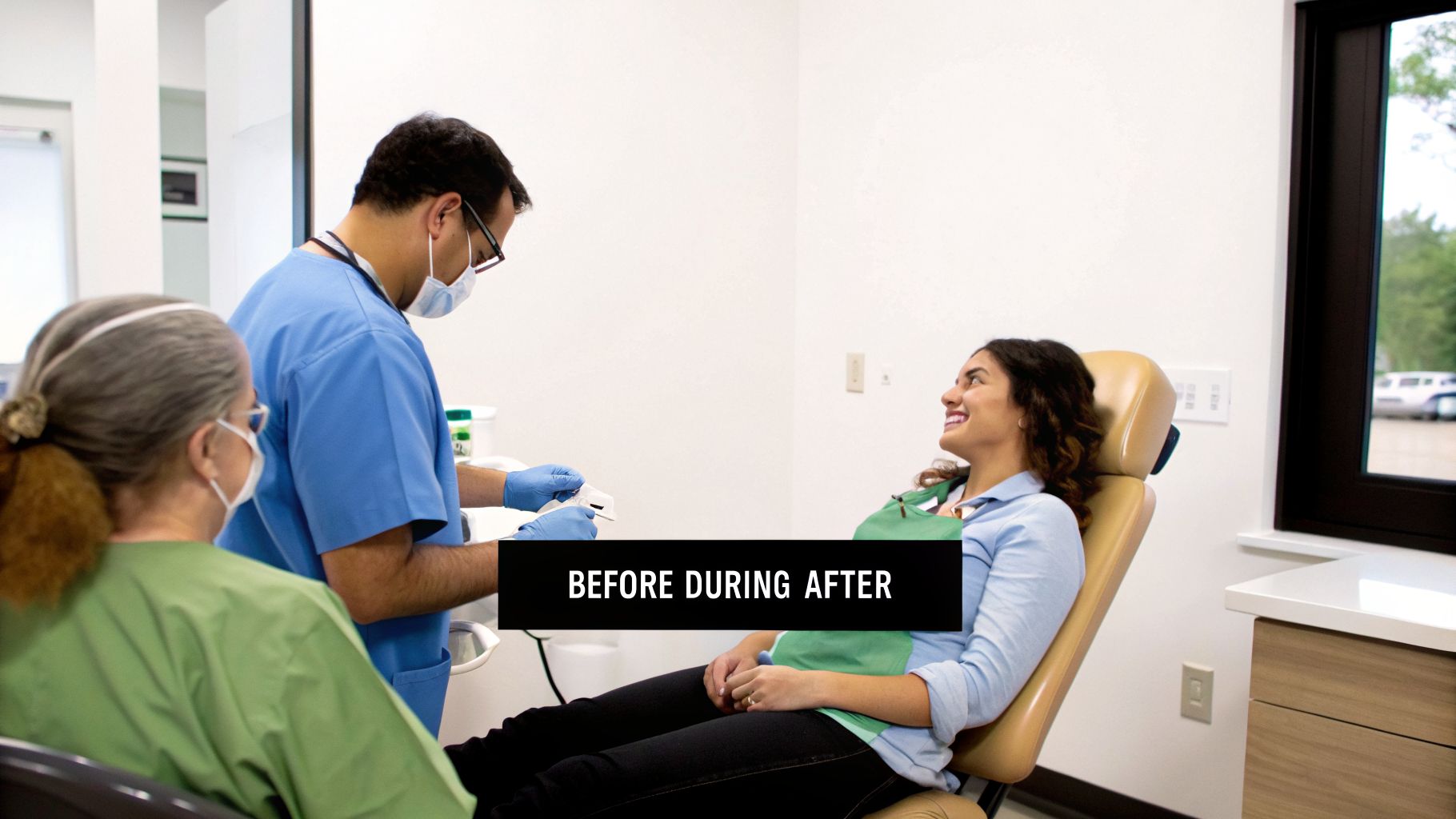
Knowing exactly what to expect on the day of your root canal can go a long way in calming any jitters. When you opt for sedation for a root canal, it's more than just a single step; it's a complete journey we plan out to ensure your safety and comfort from start to finish. This process helps you get the critical care needed to save your tooth and protect your oral health.
We can break it down into a simple, three-part path: the prep work before your visit, the careful monitoring during the root canal, and your recovery afterward. Each stage is shaped by the type of sedation you and your dentist decide on, all aimed at a smooth, stress-free experience that leads to a healthier smile.
Before Your Sedated Root Canal
Your sedation experience actually kicks off long before you’re in the dental chair. It starts at your initial consultation, where we’ll sit down and do a thorough review of your medical history. This conversation is incredibly important for choosing the safest and most effective sedation option to help you through this important procedure.
Once we’ve settled on the best method, we’ll give you a specific list of instructions to follow before your appointment. Following these is crucial for your safety and for the sedation to work as intended, ensuring a successful treatment.
- Fasting: For oral or IV sedation, you’ll probably be asked to avoid all food and drink for several hours beforehand. This is a standard safety protocol to prevent complications.
- Arranging a Ride: If you're having oral or IV sedation, you must have a responsible adult bring you to the office and drive you home. The sedative effects linger, making it completely unsafe for you to drive.
- Medication Adjustments: We’ll go over any medications you’re currently taking and let you know if you need to make any temporary changes before your procedure.
During The Procedure
When you arrive, we'll get you settled and comfortable before administering the sedation. If you chose nitrous oxide, we'll place a small, soft mask over your nose. For oral sedation, you will have already taken a pill as instructed. For IV sedation, our team will gently and expertly start an IV line.
Your safety is our absolute focus. Throughout the entire root canal, our highly trained team will continuously monitor your vital signs—including your heart rate, blood pressure, and oxygen levels—to ensure you remain safe and completely comfortable as we work to save your tooth.
The use of sedation has truly changed how people experience dental procedures around the world. For instance, a massive study from Korea tracked 1,649,688 sedation cases between 2007 and 2019. During that time, the number of procedures using sedation jumped from 14,128 to 316,916 per year. This shows a growing desire for comfort during treatments like root canals, which helps make essential dental care more accessible for everyone. You can learn more about the global rise in dental sedation on pmc.ncbi.nlm.nih.gov.
After Your Treatment
What your recovery looks like will depend entirely on which type of sedation you received. Our goal is to make sure you can get back to your normal routine safely and with ease, enjoying the benefits of your newly restored tooth.
If you had nitrous oxide, the effects will fade away within just a few minutes. You'll feel perfectly normal and can drive yourself home and go about the rest of your day.
With oral or IV sedation, however, you'll feel groggy and very relaxed for several hours. Your designated driver will take you home, where you should plan to take it easy and rest for the rest of the day. We strongly advise you to avoid making any big decisions, operating machinery, or drinking alcohol for at least 24 hours. This gives the sedative enough time to fully clear your system and helps support a smooth healing process for your newly treated tooth.
Investing In Comfort The Cost Of Sedation For A Root Canal

When you're planning for a root canal, it's completely normal for the cost to be on your mind. We encourage you to think of sedation for a root canal not as a luxury add-on, but as a key part of the treatment itself—an investment in your comfort and the overall success of the procedure to save your tooth.
The final price for sedation can vary quite a bit, and there's a good reason for that. Each type of sedation requires different levels of expertise, monitoring, and equipment. For example, IV sedation requires a highly trained professional to monitor you one-on-one throughout the entire appointment. This is a much different process than administering nitrous oxide, which is simpler and less intensive. That difference in resources is directly reflected in the cost.
Beyond The Price Tag The Value Of A Calm Experience
Honestly, the real benefit of sedation isn't something you can see on an invoice. For so many of our patients, it's the one thing that makes getting essential dental care possible in the first place. When anxiety is taken out of the equation, your dentist can focus entirely on the delicate, precise work needed for a successful root canal that protects your smile.
When you are completely relaxed, your dentist can perform the delicate, detailed work of a root canal without interruption. This calm environment contributes directly to a better, more predictable, and successful outcome for your tooth.
A comfortable, anxiety-free appointment does more than just give you peace of mind. It allows us to save your natural tooth and protect the long-term health and appearance of your smile.
Navigating Insurance And Payment Options
Figuring out dental insurance can feel like a puzzle, but we're here to help you put the pieces together. Most dental plans offer good coverage for the root canal itself, and that always includes the local anesthetic needed to numb the tooth.
Coverage for the sedation part, however, can be a different story. Some plans will cover it, particularly if there’s a documented medical need, while others consider it an elective part of the treatment. We will always review your benefits with you and provide a clear, upfront breakdown of all costs before we begin.
We believe financial worries shouldn't stand between you and a comfortable, health-restoring experience. That’s why we offer a few ways to make the cost more manageable:
- In-house Savings Plans: Our plans can help provide discounts on services that might not be fully covered by your insurance policy.
- Third-Party Financing: We work with companies like CareCredit, which allow you to finance the cost and pay it off over time with manageable monthly payments.
Our team at Grand Parkway Smiles is committed to making sure you can get the care you need without stress. We'll work with you to find a solution that fits your budget, so you can focus on what matters most—restoring your dental health and protecting your smile.
Frequently Asked Questions About Root Canal Sedation
Even after deciding sedation might be right for you, it's natural to have a few more questions. Getting clear, straightforward answers is the best way to feel confident and prepared for your root canal. Your comfort is just as important as the health of your tooth.
Will I Feel Any Pain During A Root Canal With Sedation?
No, you won't. This is the number one question we get, and the answer should put your mind at ease. We use a two-pronged approach to guarantee you’re comfortable: first, a local anesthetic completely numbs the tooth and surrounding gums. Then, sedation for a root canal helps calm your mind and manage any anxiety. You’ll be in a state of deep relaxation, free from any pain while we work to heal your tooth.
How Safe Is Dental Sedation?
In the hands of a trained and experienced dental team, sedation is incredibly safe. Your well-being is our absolute top priority. Before we even schedule your procedure, we’ll do a complete review of your medical history to choose the sedation method that’s safest and best for your specific health needs.
Throughout the entire root canal, our expert team will be right there with you, continuously monitoring your vital signs. This constant, careful observation ensures you are safe and comfortable from the moment you sit down to the moment you’re ready to go home with a healthier tooth.
This focus on safety means you can truly relax, knowing you are in excellent hands while you receive the care you need.
Can I Drive Myself Home After A Sedated Root Canal?
That really depends on which type of sedation you receive.
- Nitrous Oxide: Yes. The effects of “laughing gas” wear off just a few minutes after we stop administering it, so you’ll be perfectly safe to drive yourself home.
- Oral or IV Sedation: No, absolutely not. These forms of sedation create a lingering drowsiness that makes driving unsafe. You must have a trusted friend or family member drive you home to ensure your safety.
How Long Does Recovery From Sedation Take?
Recovery time is different for each type of sedation. With nitrous oxide, the effects are gone almost immediately. If you choose oral sedation, you should expect to feel groggy for several hours and plan on taking it easy for the rest of the day. IV sedation has a similar recovery period, and it's crucial that you don't drive or operate any machinery for at least 24 hours to give the medication time to fully leave your system. This rest also helps your body begin the healing process for your restored tooth.
At Grand Parkway Smiles, making sure you're comfortable is our mission. We offer several sedation options so your root canal is a positive, stress-free experience that gets your dental health back on track. Schedule your consultation today by visiting us at https://dentistkatytx.com.