You're probably staring at your mouth in the mirror right now, wondering if those stitches look normal, whether they're supposed to feel tight, and if today is the day they can come out. That's a very common feeling after oral surgery, especially when you want the area to look clean again and get back to brushing, chewing, and smiling without thinking about every tug. The good news is that suture removal timing in dentistry isn't random, it follows how quickly your gum tissue settles, how much stress the area is under, and how your body is healing overall.
Why Sutures Matter for Your Dental Recovery
The first thing many patients notice after a gum graft, extraction, or implant procedure is not the sutures themselves, but what they're protecting. Sutures help hold the tissue edges together, steady the area while a clot forms, and reduce the chance that chewing or talking pulls the wound open. They act like temporary scaffolding, keeping the repair site steady while the tissue underneath regains enough strength to hold itself.
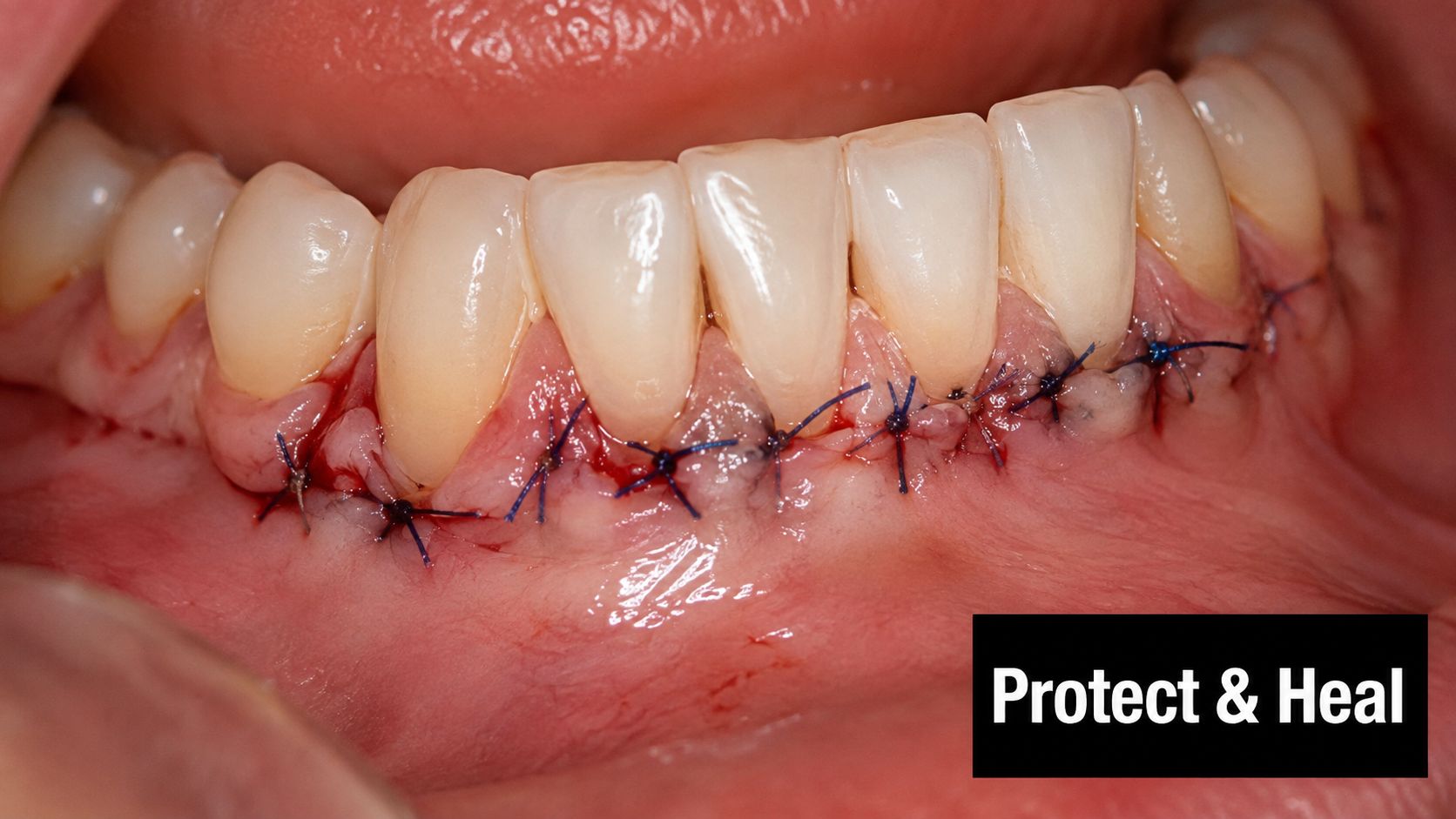
A patient who just had periodontal surgery may feel the stitches tug when they smile, speak, or swallow, then worry that something is wrong. That pulling sensation usually means the tissue is still in an early repair phase, not that the surgery has failed. Sutures buy the wound time to gain strength before the support comes off.
Why the schedule has to be individualized
The timing is tied to biology, not just the calendar. A review in PubMed review notes that suture removal timing varies from 3 to 14 days, and the final decision depends on wound location, comorbidity, and early signs of wound complications. That range makes sense because oral tissue does not heal at one fixed pace, and the mouth is a busy environment. Speech, chewing, moisture, and bacterial load all affect the repair process, so a site with more movement or pressure usually needs support for longer.
A gum graft, for example, depends on steady blood supply and very quiet tissue. If the area keeps moving, the delicate new connection between graft and gum has a harder time maturing. Extraction sites, implant sites, and soft-tissue repairs each place different demands on the sutures, which is why the plan is matched to the procedure rather than copied from a generic schedule.
If you want a plain-language overview of oral surgery itself, what is oral surgery can help connect the procedure to the recovery you are seeing now. For patients who want extra learning support, you can also explore Learniverse for dental alongside your aftercare notes.
The key idea is simple. Sutures stay in place long enough to protect the wound, but not so long that they start trapping debris, irritating the tissue, or making cleaning harder. That balance is why your follow-up date is chosen carefully, not guessed.
Dissolvable vs Non-Dissolvable Stitches in Dentistry
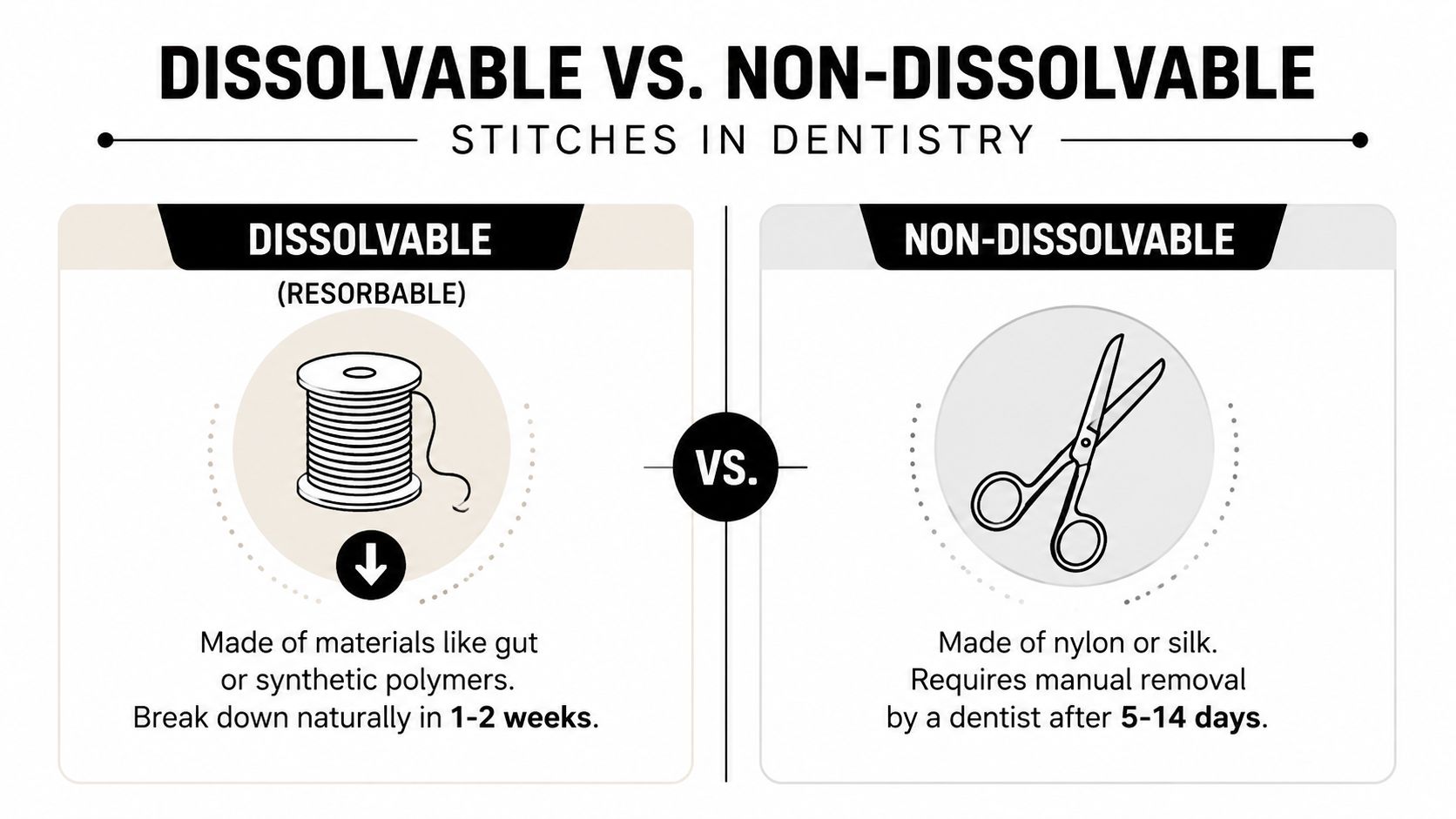
Some dental stitches disappear on their own, and some need to be removed by the dental team. That difference changes what you feel during recovery, what kind of follow-up you need, and how much control the dentist has over support time. In everyday practice, the choice usually comes down to whether the tissue needs short-term help or more precise, longer-lasting support.
Dissolvable stitches
Dissolvable, or resorbable, sutures are made from materials that break down over time in the mouth. They're often chosen when the dentist wants support without a separate removal visit. Many patients like them because there's one less appointment to worry about.
They're common when the area doesn't need a very precise, manually timed removal, or when comfort and convenience matter. In practice, they can be useful after some extractions and soft-tissue procedures, especially when the surgeon expects the site to settle predictably.
Non-dissolvable stitches
Non-dissolvable, or non-resorbable, sutures stay in place until the dentist removes them. They're used when the tissue needs firmer support, when alignment matters, or when the area is exposed to movement and tension. Suture removal timing becomes more critical here, because leaving them too short a time can risk reopening, while leaving them too long can increase cosmetic marks.
A clinical review for skin lacerations notes that nonabsorbable sutures are usually removed in a 7- to 14-day window, based on location and support needs AAFP review. Dentistry follows the same biological logic, even though the tissues are different.
The suture type isn't about convenience alone, it's about how much support the wound needs before it can hold itself together.
That's why two people can have the same kind of oral surgery and walk away with different stitch plans. One patient may get dissolvable sutures and no removal visit. Another may need manual removal because the gum line, flap position, or graft site needs tighter control.
If you're comparing recovery timelines more broadly, a surgery recovery timeline can help you understand how follow-up care often stretches beyond the first few days. For dental work, the difference between dissolvable and non-dissolvable stitches is mostly about how much supervision the healing tissue needs.
Typical Suture Removal Timelines for Common Dental Surgeries
Dental procedures don't all ask the same thing from the tissue. A simple extraction leaves behind a different healing environment than a gum graft or implant site, so the follow-up timing changes with the procedure. The numbers below are practical benchmarks, but they still have to be adjusted by the surgeon based on how the tissue looks.
| Dental Procedure | Typical Removal Window | Key Healing Considerations |
|---|---|---|
| Simple tooth extraction | Often within the broader 5 to 14 day clinical window | The gum edges need enough time to seal, but long retention can increase track marks if the site is calm and low tension. |
| Surgical extraction, including impacted wisdom teeth | Commonly 7 to 14 days | Swelling, flap size, and jaw movement can keep the area under strain longer than a simple extraction. |
| Dental implant placement | Often 7 to 14 days, sometimes longer when tissue support is still needed | The surgeon watches for stable closure and minimal pull at the incision line. |
| Periodontal surgery, gum grafts, flap surgery | May be 10 to 14 days or longer depending on the tissue goal | Graft sites often need firmer, longer support because the tissue is being protected while it reattaches and matures. |
Why extraction sites and grafts aren't treated the same
A patient who had a routine extraction may see the stitches look loose by the end of the first week and assume they're overdue. Another patient who had periodontal surgery may still have sutures in place longer because the tissue goal is different. In oral surgery, the schedule is not only about the calendar, it's about how much stability the wound needs before it can carry normal stress.
The oral surgery literature is useful here because it shows that timing can shift with the procedure itself. One clinical study in oral surgery found 5 days was the best interval among the time points tested, while a periodontal study on root coverage found that delaying removal to 2 weeks led to much better healing outcomes, including % root coverage of 91.5% versus 58.4%, and complete root coverage of 78.6% versus 38.2% oral surgery and periodontal study. Those results are not interchangeable, because the tissue goals are different.
Why your friend's stitches came out sooner
A friend may say, “Mine came out after a week.” That may be true for their procedure, but it doesn't tell you much about yours. The same mouth can contain low-tension tissue, mobile tissue, and grafted tissue, each with a different support need. Even within the same person, the schedule can vary by incision site.
Useful way to think about it: the dentist isn't choosing a date for the whole mouth, the dentist is choosing the safest date for that specific wound.
For a patient-facing explanation of recovery pacing, the what-to-expect-after-oral-surgery-healing-tips-timeline page can help tie the appointment to the healing stages you're already feeling. The main takeaway is that suture removal timing is meant to protect both function and appearance, not just to check a box.
Factors That Can Change Your Suture Removal Schedule
Two patients can have the same surgery and still need different follow-up days. Healing depends on what happened in the mouth and on how the rest of the body is responding. Your dentist is looking for tissue that has started to hold its own, not just a neat surface.
Health conditions and medications can slow the process
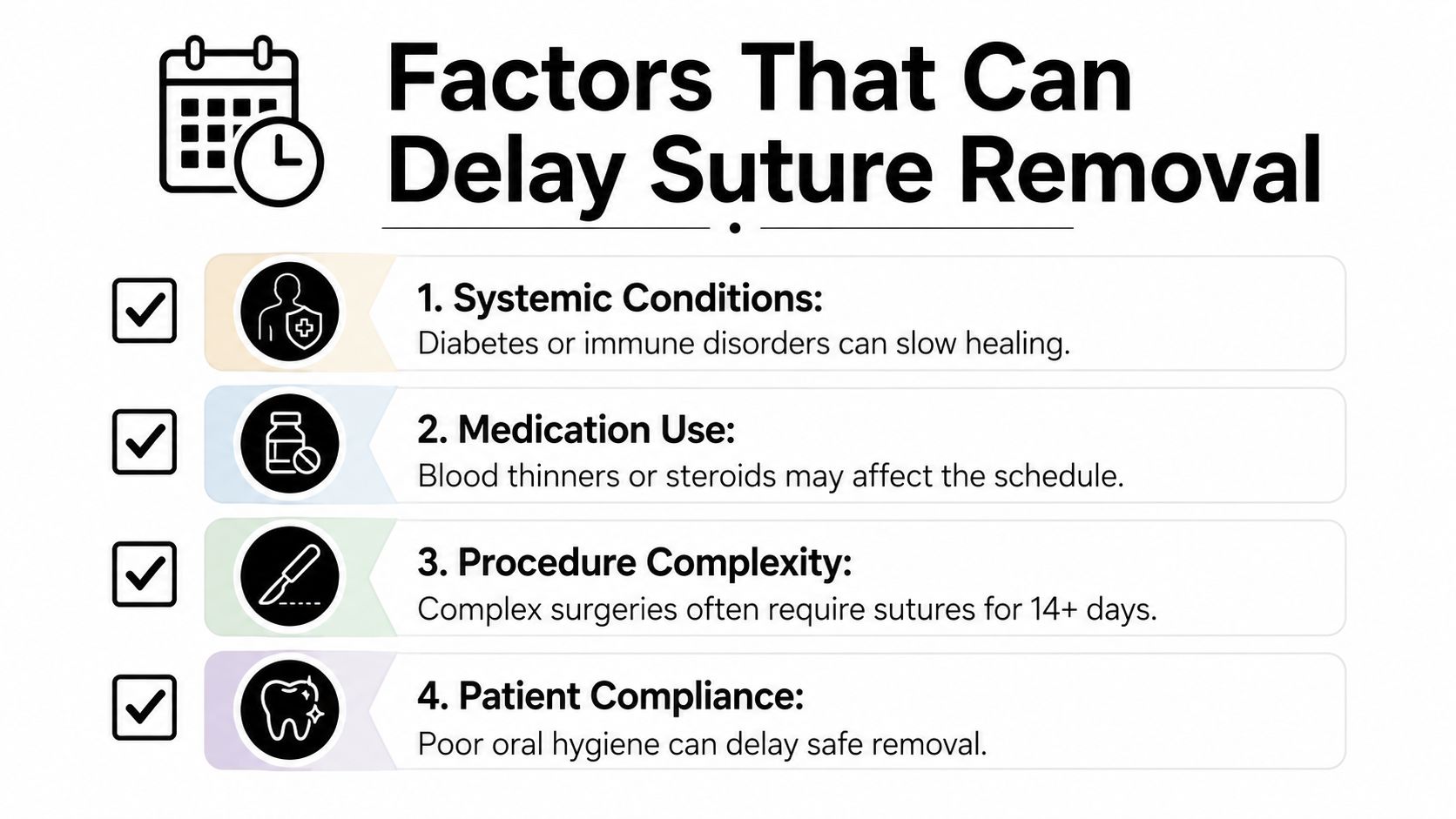
Comorbidity and early signs of wound trouble can change the timing decision, as noted in a PubMed review. That matters for people with diabetes, immune suppression, poor circulation, or infection risk, because tissue may build strength more slowly. In those cases, a dentist may leave sutures in longer to lower the chance that the wound opens again.
Medications can change the picture too. Blood thinners, steroids, and other systemic treatments may affect how the tissue repairs itself, even when the incision looks calm on the surface. The schedule may need to shift because healing happens below the level you can see in the mirror.
Local stress in the mouth matters too
A site under tension needs more time. If the gum flap sits near a moving area, or if chewing, talking, or brushing keeps tugging on it, the stitches may need extra support while the deeper tissue firms up. That follows the same general idea used in clinical wound care, where areas with more motion or strain are often supported longer, as described in the British Journal of Nursing guide.
Key consideration: the dentist chooses the safest date for that specific wound, not a generic calendar date.
A wound can look closed on the outside and still be weak underneath. Oral surgeons often delay removal around grafts or larger flaps for that reason. The site may appear quiet, but chewing and speech still pull on it, and blood supply helps tissue heal only if mechanical stress does not interrupt the repair.
What makes a dentist confident the stitches can come out
The dentist looks for tissue that is calm, edges that are staying together, and no sign that the site is starting to separate. A clean appearance helps, but it is only one part of the decision. If the tissue is still puffy, irritated, or under strain, the removal date may be pushed back.
Four practical questions usually guide the decision.
- Is the site stable? If the tissue edges are holding together, removal may be possible.
- Is there extra strain? If chewing, movement, or flap tension is still high, more support may be needed.
- Is healing predictable? If the wound is progressing cleanly, the plan may stay on track.
- Is there a complication? Infection or reopening usually means the plan changes.
A useful way to connect that to your own recovery is through a patient guide that explains how healing often unfolds after treatment, like this oral surgery healing timeline and recovery guide. Generic internet charts can miss the core issue. The right day is not just about the type of surgery, it is about how your body is handling that surgery.
What to Expect During Your Suture Removal Visit
Most patients worry that stitch removal will hurt. In dentistry, it's usually much less dramatic than that. The appointment is brief, the instruments are small, and the work is usually more of a light tug than a painful event.
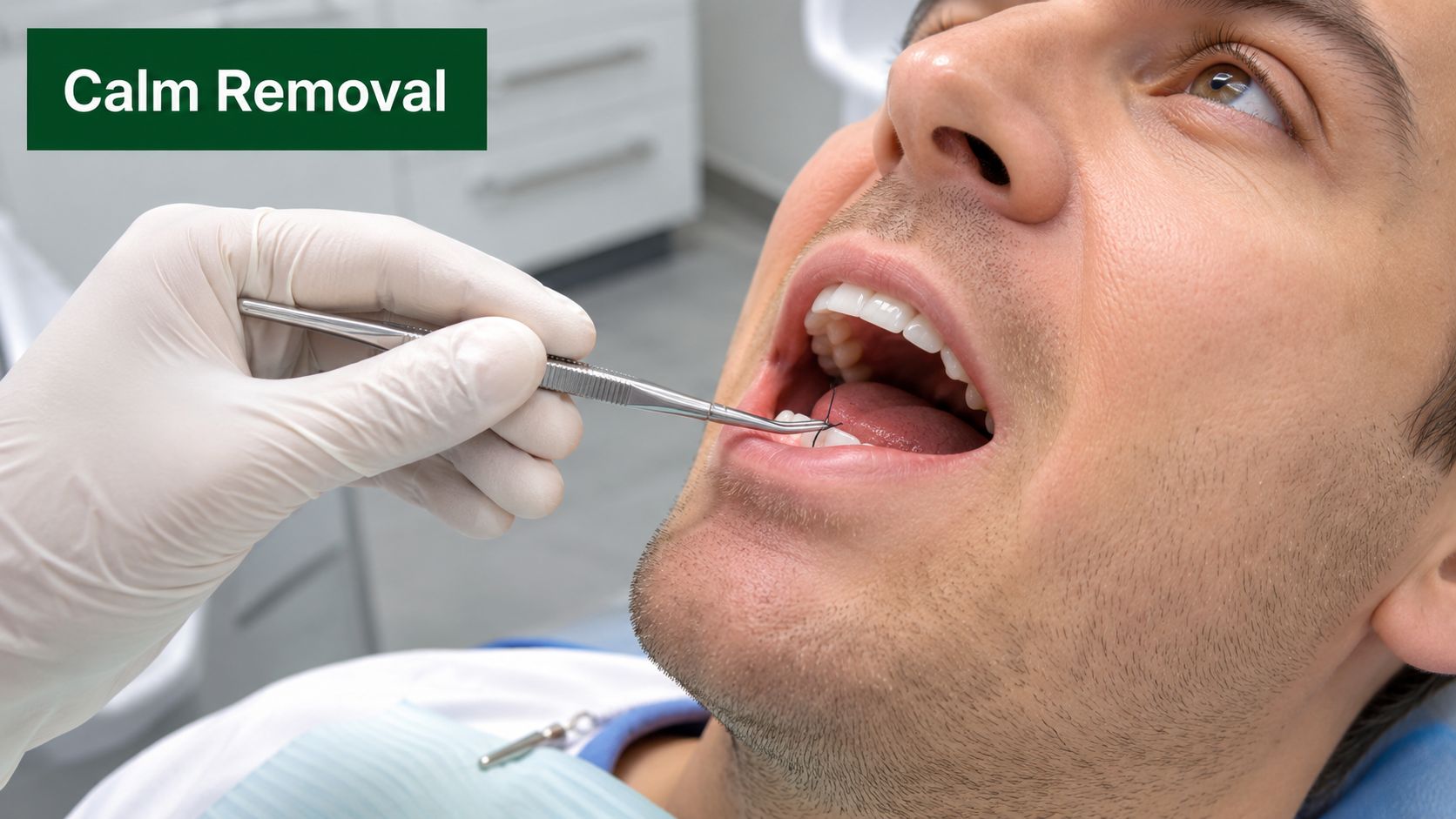
The visit usually follows the same sequence
First, the dentist or hygienist looks at the site closely. They're checking whether the tissue has closed well, whether the area is calm, and whether the sutures have done their job without causing irritation. If the site still looks stressed, they may choose to leave some support in place.
Then the team uses a small instrument to lift the knot, snip the suture, and slide it out gently. If you're anxious about the feeling, that's normal. The sensation is usually quick and more noticeable as pressure than as pain.
For people who feel nervous even before the appointment, some comfort-focused practices discuss options like safe lidocaine numbing options before any procedure that might cause sensitivity. That kind of preparation can help patients feel more in control, especially if they've had a difficult dental experience before.
What the dentist is looking for after the stitches come out
Removal isn't only about taking material out. It's also a check that the wound is behaving the way it should. The dentist wants to see firm, healthy closure, no active bleeding, and no signs that the tissue is starting to separate.
If the site is doing well, the visit often ends with simple home-care reminders. If it isn't, the dentist may adjust instructions, keep an eye on the area longer, or schedule another check. That follow-up matters because oral tissue can look acceptable at first glance and still need more support underneath.
The practical takeaway is reassuring. For most patients, suture removal is a short visit that confirms the healing plan is on track. The appointment is part of the treatment, not a separate inconvenience.
Post-Removal Care and When to Call Your Dentist
Once the sutures are out, the site still isn't finished healing. The tissue may look closed, but it can still be tender and a little fragile as it keeps remodeling. Good aftercare helps protect the appearance of the gum line and keeps the area from getting irritated again.
What to do after removal
Keep brushing and cleaning, but stay gentle around the healing site. Soft food is usually easier on the area for a short time, especially if the surgery involved a graft, flap, or extraction socket. If your dentist gave you specific rinsing or cleaning instructions, follow those closely because they're matched to the procedure you had.
A few common sense habits help too.
- Choose softer foods: This lowers pressure on the newly healed tissue.
- Brush carefully nearby: Clean the rest of your mouth well without scraping the site.
- Watch the area daily: Small changes are easier to catch early when you look once or twice a day.
- Follow the dentist's timing: The tissue may seem fine before it's ready for heavier use.
What should make you call
Some soreness is normal, and mild sensitivity can happen as the area adjusts. What's not normal is increasing pain, renewed bleeding, swelling that gets worse, or any sign the wound has opened. Those are the situations where the dental office should hear from you promptly.
If the site starts to separate, bleed heavily, or feel more painful instead of less painful, don't wait it out.
Infection signs matter too. Redness that spreads, pus, a bad taste that doesn't improve, or swelling that keeps building all deserve a call. The earlier the team sees a change, the easier it is to protect the outcome.
The bigger lesson is that suture removal timing is only one part of healing. The wound still needs a few more days of respect after the stitches come out, especially in the mouth where food and movement are constant. When patients follow the plan closely, the gum line usually settles more smoothly and the final appearance tends to be better.
If you're unsure whether your stitches are ready, or if you've noticed a change in how the site feels, schedule a check with Grand Parkway Smiles. Their team offers oral surgery care, follow-up visits, and recovery guidance that's specific to the type of procedure you had and how your tissue is healing.