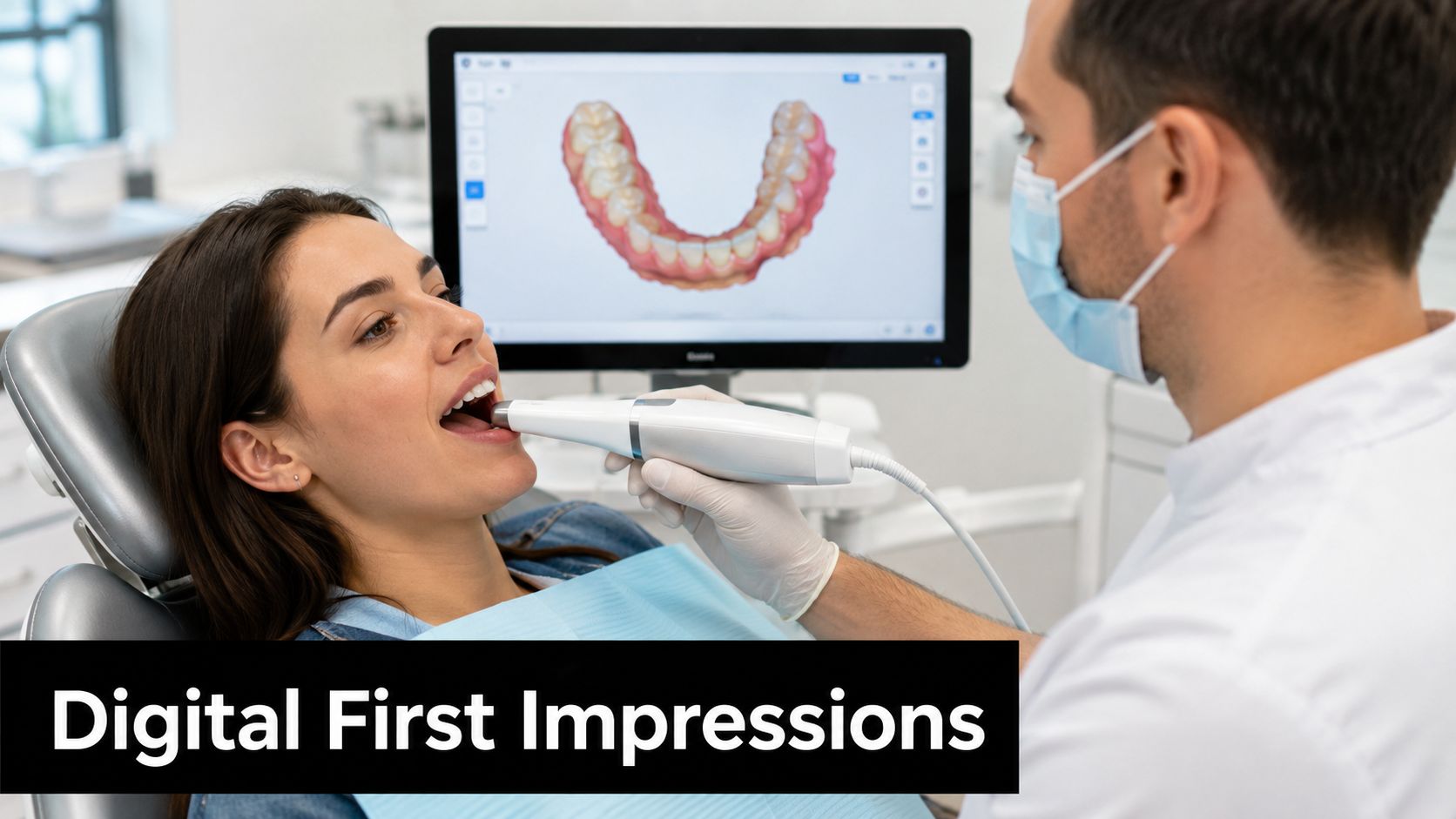
You might be sitting in the chair right now, trying not to think about the last time you had a mouthful of impression material and a long wait for a crown. Then the assistant picks up a small wand instead of a tray of goop, and a live 3D model starts forming on the screen while you're still reclined. That's digital dentistry in real life, not a futuristic demo.
It changes the visit in ways patients feel immediately. The scan is cleaner, the planning is more visual, and the work can move from exam to design to fabrication with far fewer handoffs. The bigger question is simple, how did dentistry get this comfortable and fast, and what does it do for your teeth and appearance?
A Familiar Visit That Already Feels Different
A patient settles into the chair expecting the old routine, the sticky impression tray, the gag reflex, the wait for a lab to send something back. Instead, a clinician moves a slim scanner around the teeth, the image builds on the monitor, and the appointment keeps moving without that messy middle step. For many people, that moment is the first time they realize dental care has already changed.
The comfort difference is easy to understand. A scanner feels more like having your teeth photographed than having them packed into material, and the result is a digital file that the team can review right away. That file can then support planning for a crown, bridge, implant, or cosmetic change without the stop-and-start rhythm many patients remember from older visits.
Practical rule: if a dental step can be shown on screen, it's easier for most patients to understand and easier for the team to verify before anything is made.
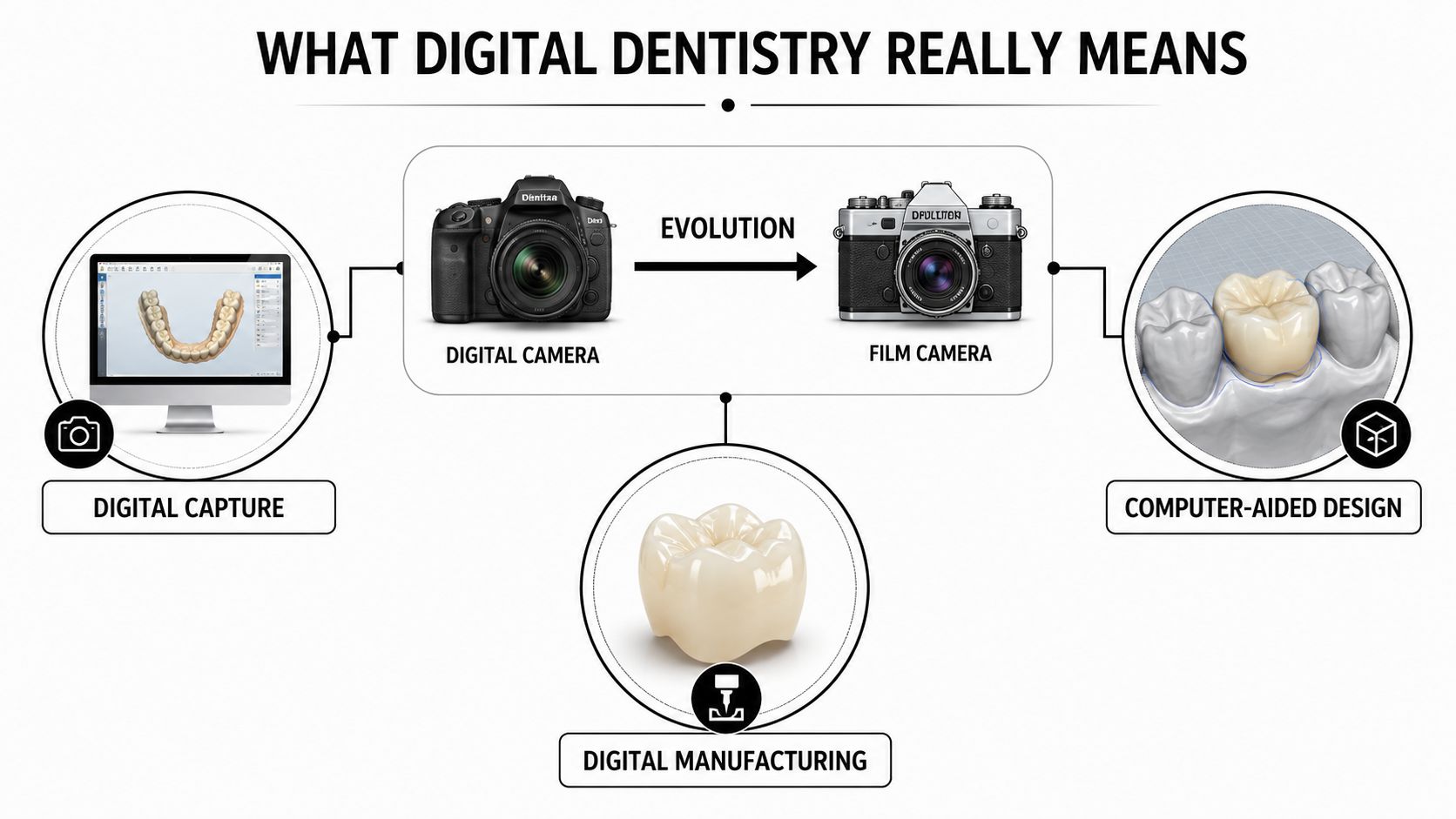
What makes this more than a nicer scan is the way the pieces connect. The same visit can move from capture to design to fabrication in one linked workflow, which is why patients often hear fewer “come back next week” instructions. In other words, the office isn't just using a gadget, it's using a chain of tools that work together.
That shift didn't happen overnight. The first practical CAD/CAM dental application appeared in 1984, when a French dentist used it to create dental impressions, and the field has grown into a broad digital workflow covering scanning, design, and manufacturing as described in the clinical history of digital dentistry.
What Digital Dentistry Really Means
A dental visit can feel very different once the office starts using digital tools. Instead of relying on a manual chain of impressions, models, and handoffs, the team can capture information, review it on a screen, and use that file to guide the next step with more clarity. That is the basic idea behind what is digital dentistry.
Digital dentistry is a technology-driven approach that uses tools such as intraoral scanners, CAD/CAM systems, 3D imaging, and software to improve diagnosis, treatment planning, and restoration fabrication from the clinical overview of digital dentistry. The scan is only the starting point. From there, the image can be shaped on a computer, checked by the dentist, and then used to make a crown, guide, or other restoration.
The workflow matters most
The value comes from the sequence of steps. The mouth is captured digitally, the restoration or treatment plan is designed digitally, and the final result is made or guided digitally. A single device does not define the field. The way the tools connect is what changes the appointment.
That broader meaning matters for patients who care about oral health and appearance. A more precise plan can help a crown fit better, a veneer look more natural, and an implant be placed with more predictable positioning. The goal is simple, a smoother path to a tooth that looks right, feels right, and functions the way it should.
The best digital workflow still depends on a dentist who knows when to trust the screen and when to adjust for the actual mouth in front of them.
If you want to see how that kind of workflow is described in practice, the overview at Grand Parkway Smiles' digital dentistry page shows how these tools fit into everyday care. For another patient-facing look at how digital systems are presented, you can also browse customer reviews from 3dprintzbysavage. The important idea is straightforward, digital dentistry is not one machine, it is a connected way of working.
The Core Technologies Behind Digital Dentistry
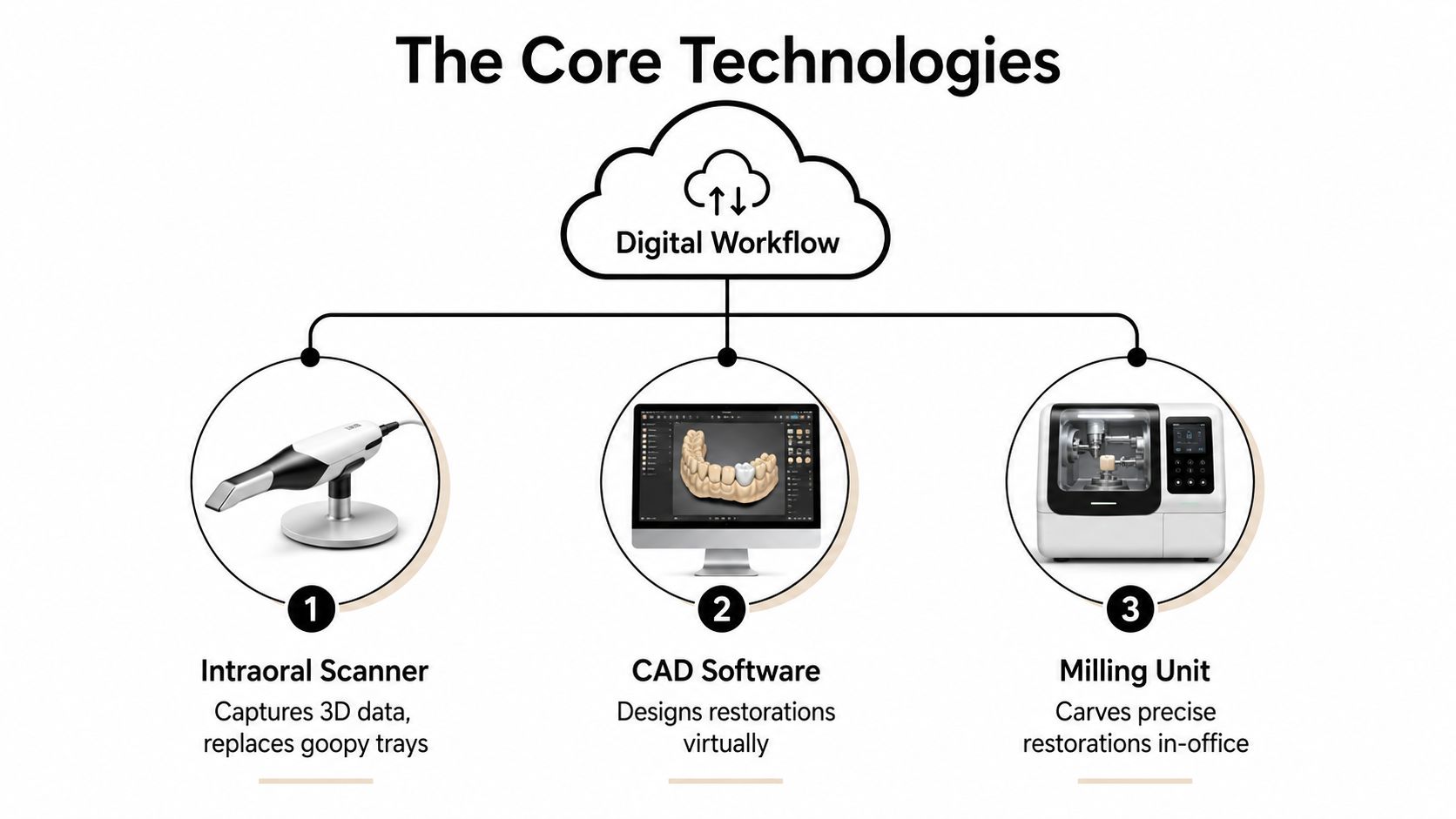
A scan appointment often starts the change before the patient leaves the chair. The old impression tray is replaced by intraoral scanners, which build a 3D model directly from the mouth. That process feels more like a careful camera pass than a molding step, and it lets the team move from capture to planning without waiting for a physical model. For the patient, that usually means less mess, less discomfort, and a quicker start to treatment.
The tools that work together
CAD/CAM software is the design table on the screen. The dentist or technician shapes the crown, veneer, bridge, or guide virtually, like tailoring a jacket before it is cut from cloth. That matters because changes can be made before anything is made in the mouth, which helps avoid surprises later.
In-office milling and 3D printing are the hands that turn the plan into a physical item. Milling carves a restoration from a block, while printing can create guides, models, or other supporting pieces. The practical value is less dependence on shipping back and forth and, in many cases, a faster return to a finished smile.
CBCT 3D imaging adds a deeper view of bone and surrounding anatomy, which is especially useful for implants and surgical planning. A flat X-ray shows one layer of the picture, while CBCT gives the team a view with depth and spacing. That extra detail helps the dentist place treatment more carefully and lowers the amount of guesswork.
Digital dentures, guided surgery, and related planning tools all fit into the same system. They are not separate islands, they are parts of one route from diagnosis to fabrication. If you want to see how a practice presents those tools to patients, the overview at Grand Parkway Smiles' digital dentistry page shows how the workflow connects to everyday care. If you want to hear how patients describe the finished results, you can also browse customer reviews from 3dprintzbysavage.
Adoption has moved well beyond a niche corner of dentistry. A market history estimate places the global market at USD 5.02 billion in 2025, rising to USD 5.47 billion in 2026 and projected to reach USD 11.13 billion by 2034, while another forecast projects growth from US$ 7.2 billion in 2026 to US$ 13.7 billion by 2033 in market research on the sector. Those figures point to the same basic reality, practices keep investing because the patient experience keeps improving.
How a Dental Visit Actually Changes with Digital Tools
A traditional crown visit often follows a familiar pattern. The dentist takes an impression, a lab designs the restoration later, a temporary tooth fills the gap, and the final piece comes back at a later appointment. A digital visit compresses that chain, and the difference is easier to feel than to explain.
| Step | Traditional Workflow | Digital Workflow |
|---|---|---|
| Impression method | Physical tray and material | Digital scan with an intraoral scanner |
| Design process | Manual or lab-based design after the visit | On-screen design with CAD software |
| Fabrication location | Outside lab in many cases | Often in-office or through a shorter digital handoff |
| Lab wait | Longer wait for return work | Shorter wait for fabrication and delivery |
| Number of visits | Often more than one | Often fewer, sometimes one for selected cases |
| Patient comfort | Messier, more time with temporary steps | Cleaner, faster, less disruptive |
The mechanics matter. Digital workflows reduced active working time by 38.4% for single-unit restorations and cut total treatment time by an average of 60.36%, while lab waiting time dropped from about two weeks to a few days according to the workflow analysis. For a patient, that can mean less time with a temporary crown and fewer return trips for small corrections.
What that feels like in the chair
A digital appointment usually starts with a scan, moves to screen-based design, and then ends with fabrication and placement once the team is satisfied with fit and bite. The patient doesn't have to guess what's happening, because the dentist can show the model on screen and explain the plan before anything is made. That visibility often lowers anxiety, especially when appearance matters as much as function.
For families who are booking new-patient exams and want the process to feel less drawn out, a service like SkipCalls for new patient exams is one example of how the modern dental experience is becoming easier to manage from the first visit. The bigger clinical point is that the digital workflow shortens the path from problem to solution.
If you want a closer look at how scanning and imaging change planning in a local practice, the treatment-focused overview at this 3D imaging page fits naturally with the workflow above. The patient takeaway stays the same, less waiting, fewer surprises, and a result that's easier to match to the rest of the smile.
Real Treatments Made Better with Digital Dentistry
Implants are one of the clearest examples of digital planning paying off. A CBCT scan can show bone, nearby structures, and available space before the team places anything, and that digital map helps guide the surgery rather than relying on guesswork. For complex cases, that planning can support options like All-on-4 and more advanced implant approaches, because the team can decide where the restoration should go before the procedure begins.
Where the tools show up in real care
Same-day restorations are another obvious win. A crown or veneer can be scanned, designed, milled, and placed without sending the case away for a long delay, which is especially helpful when appearance is the main concern and the patient doesn't want a temporary smile for long. The result is often a more efficient appointment with fewer handoffs between the dentist and the lab.
Pediatric visits benefit too. Many children tolerate a small scanner better than an impression tray, because the process feels less intrusive and less messy. The child is usually looking at a screen rather than staring at a mouthful of material, and that can make the next visit easier to start.
For oral surgery, root canal therapy, wisdom teeth removal, and full-mouth reconstruction, 3D imaging gives the team a better view of the anatomy they're working around. That doesn't remove the need for skill, but it does make planning more precise. In a multidisciplinary setting like Grand Parkway Smiles, those tools support care across implants, surgery, restorative work, and pediatric dentistry without treating every case like the same problem.
Useful clinical idea: digital planning doesn't replace judgment, it gives the dentist a cleaner map before making an irreversible decision.
Patients who want a practical reference point often look for how the scan, guide, and placement steps fit together. This simple sequence is the reason digital dentistry feels different during the visit and looks different after it.
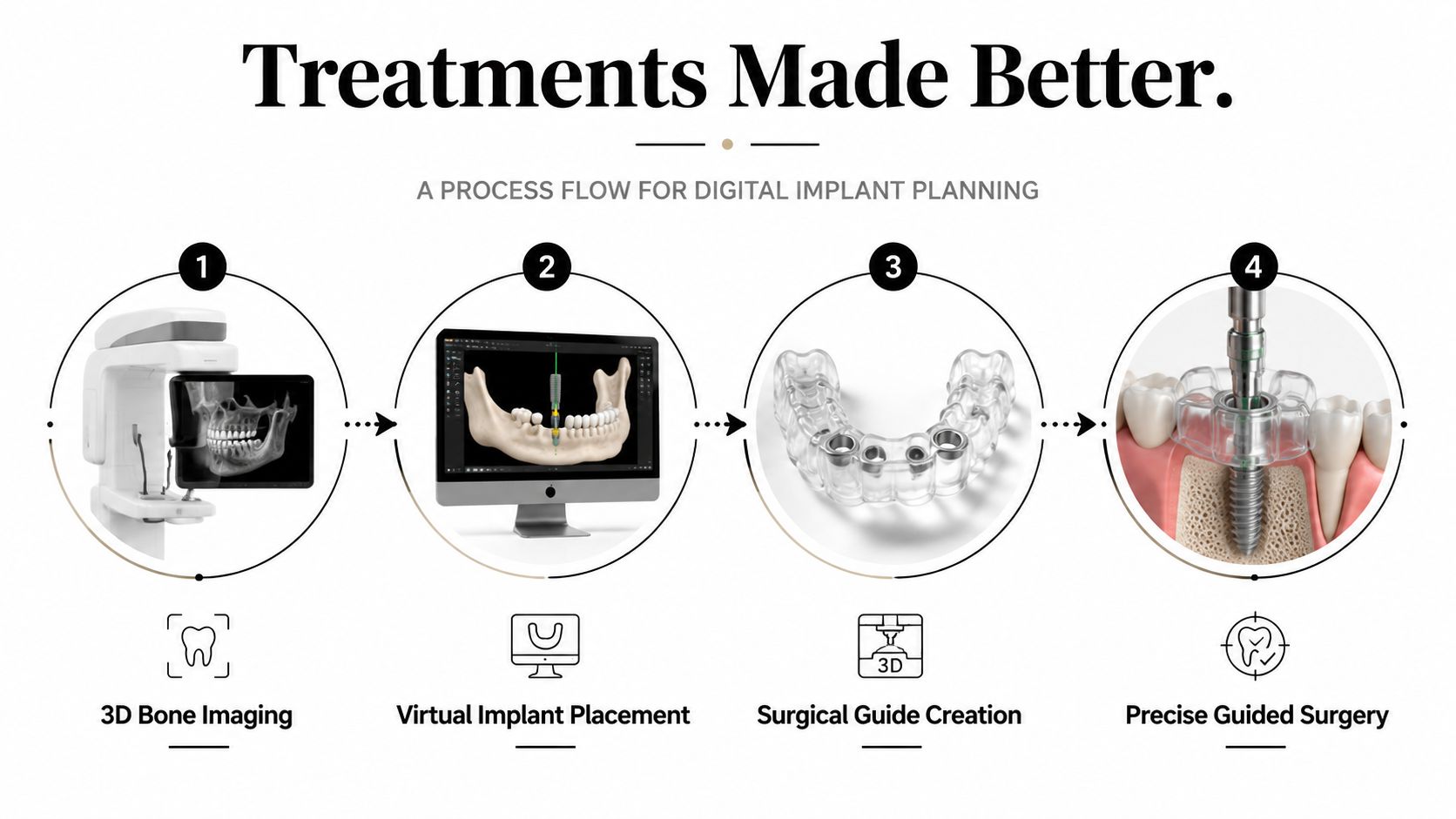
The main benefit is still the one patients care about most, a better fit, a more natural appearance, and a smoother path to getting there.
What Digital Dentistry Does Not Replace
Digital tools make dentistry easier to plan, but they don't turn it into an automatic service. An intraoral scanner still needs a trained operator who can capture the right areas cleanly, and CAD software still depends on the dentist's judgment to set the bite and shape the restoration properly. The equipment is only as good as the person using it.
That's why training still matters so much. A recent PubMed study found that 43.3% of dentists received no predoctoral digital dentistry training, and it also pointed to high costs and limited training as barriers to adoption in the recent evidence on training and access. In plain language, the skill gap is real, and good outcomes still come from experienced clinicians, not from the machine alone.
Teledentistry fits into the same honest picture. It can help with consultation, follow-up, and triage, but it can't replace hands-on procedures, bite adjustments, or a physical exam when the mouth needs to be seen directly. The digital side supports care, it doesn't erase the need for care in person.
That's also why patients sometimes hear terms used loosely online. Scanners, AI, and cloud records can all be part of the workflow, but they don't mean every part of dentistry can happen remotely or without supervision. The safest understanding is the simplest one, digital dentistry improves the delivery of care, it doesn't remove the clinician.
Cost, Insurance, and Access Considerations
Digital dentistry can change how a practice spends money, but it doesn't always change what the patient ultimately sees on the bill. A digitally designed crown may avoid some lab delays, yet the office still has to invest in scanners, software, and fabrication equipment. In other cases, guided implant planning adds a planning step that can pay off by making the procedure more predictable and reducing avoidable complications.
Insurance usually follows the procedure code, not the tool used to make it. That means a digitally designed crown is generally billed like a crown, not like a “digital crown.” Patients often care more about the practical result anyway, whether the treatment is covered, whether a temporary is needed, and how many visits they'll need to make.
Making the planning side less stressful
Practices that offer advanced digital care often pair it with practical payment options so treatment doesn't stall at the planning stage. Grand Parkway Smiles works with most PPO plans, offers in-house savings plans, and provides financing, which helps families and adults compare options without feeling rushed into a decision. That matters when the choice is between immediate repair and waiting on care that affects chewing, comfort, or appearance.
Access is still uneven, though. Recent evidence on teledentistry and digital workflows emphasizes that rural and mobility-limited patients can benefit from remote consultation and digital records, but the same literature also points to infrastructure gaps, digital-literacy barriers, and uneven adoption across regions in the access and equity review. So while the tools can expand access, they don't magically erase broadband, staffing, or training problems.
If you're trying to compare plans or verify what your benefits may cover, a guide like understand health insurance can help you ask better questions before treatment starts. That's often the simplest way to reduce surprises and keep the focus on the actual dental problem.
Your Next Steps with Grand Parkway Smiles
Digital dentistry means more precise diagnosis, more comfortable visits, and restorations that can be planned with the final look in mind. It can also mean less time in the chair, fewer temporary steps, and a smoother path from scan to result when the case is a good fit for digital tools.
A few questions come up again and again. Are digital impressions as accurate as traditional ones? In many cases, yes, and patients usually find them more comfortable. Are same-day crowns dependable? Yes, when the materials, design, and bonding are handled properly. Is digital dentistry safe? It can reduce radiation in some imaging workflows and improve planning in others, which is why dentists use it as part of a broader clinical decision, not as a shortcut.
If you've been putting off a checkup, thinking about an implant, or wanting to improve how a tooth looks, a consult can show you which parts of digital care fit your case. Grand Parkway Smiles can evaluate everything from routine exams to All-on-4 planning, and sedation options are available for patients who feel anxious in the chair.
If you're ready to see how digital dentistry could fit your smile, visit Grand Parkway Smiles to schedule a consultation. The team can walk you through scanning, imaging, and treatment planning in plain language, then build a plan around your comfort, your goals, and your oral health.