The key to stopping nighttime teeth grinding is a mix of practical strategies—things like wearing a custom-fitted night guard, learning to manage stress, and dialing in your sleep hygiene. It's not about finding one magic bullet; it's about combining these methods to protect your teeth from damage and preserve the beauty of your smile.
The Hidden Habit Affecting Your Dental Health

If you consistently wake up with a sore jaw, a nagging headache, or teeth that feel tender, you might be dealing with bruxism. That's the medical term for grinding or clenching your teeth, and since it usually happens while you’re asleep, most people have no idea they're doing it until real damage starts to show on their teeth.
This unconscious habit places a massive amount of pressure on your teeth and jaw. The consequences aren't just minor annoyances; they can seriously impact your dental health and even change your appearance over time.
That powerful grinding motion can literally wear away your tooth enamel, which is the tough, protective outer layer of your teeth. As this erosion continues, the sensitive dentin underneath gets exposed. This leads to that sharp pain when you drink something hot or cold and leaves you more vulnerable to cavities. You might also notice your smile changing as your teeth become shorter, chipped, or flattened from the constant friction, which can make you look older.
Why You Should Not Ignore the Signs
When you ignore the early signs of teeth grinding, you’re letting the damage build up. What starts as a simple sore jaw can snowball into bigger dental problems that compromise both the health and aesthetics of your smile.
That initial soreness can escalate into chronic pain, making it difficult to chew or even speak comfortably. This is often a sign of a temporomandibular joint (TMJ) disorder, a condition that can really disrupt your quality of life and facial comfort.
The force you exert during a night of grinding is powerful enough to cause some serious structural damage to your teeth and any dental work you've had done. The benefits of stopping this habit include preventing issues like:
- Fractured or Cracked Teeth: The pressure can be enough to break a tooth, often leading to the need for a crown or, in worst-case scenarios, an extraction. Protecting your teeth preserves their natural structure.
- Damaged Restorations: Fillings, crowns, and veneers can be chipped, loosened, or completely destroyed by the force. Protecting these investments is crucial.
- Gum Recession: All that clenching and grinding can cause your gums to recede, exposing the roots of your teeth and potentially affecting the look of your smile.
- Facial Muscle Pain: The constant tension in your jaw doesn't stay there. It can radiate out, causing pain in your neck, shoulders, and head, altering your facial appearance over time.
To help you spot the problem, here's a quick rundown of the common signs.
At-a-Glance Signs of Nighttime Teeth Grinding
| Symptom | What It Looks or Feels Like | Impact on Your Smile |
|---|---|---|
| Worn-Down Teeth | Teeth appear shorter, flatter, or have small chips and divots. | Can make your smile look uneven and aged, altering your facial proportions. |
| Morning Headaches | A dull, constant headache centered around your temples. | A sign of intense muscle strain that detracts from your well-being. |
| Jaw or Facial Pain | Soreness or tightness in the jaw muscles, especially upon waking. | Can lead to chronic TMJ pain and affect your facial contours. |
| Increased Tooth Sensitivity | Sharp pain when eating or drinking hot, cold, or sweet things. | Indicates enamel has worn away, exposing the sensitive inner tooth. |
| Cracked or Loose Teeth | You might notice a tooth feels loose or see visible fracture lines. | Can lead to tooth loss or require extensive restorative work to save your smile. |
| Loud Grinding Noises | A sleeping partner may hear scraping or grinding sounds. | The most direct evidence that your dental health is at risk while you sleep. |
Recognizing these symptoms is your first defense.
Catching bruxism early is the most important step you can take to protect your smile. Addressing it now not only prevents future damage but also keeps your teeth looking and feeling their best.
The Widespread Nature of Bruxism
If you're dealing with this, you're definitely not alone. It might surprise you just how common teeth grinding is.
Sleep bruxism is a global problem. According to a major review of studies from 2003 to 2023, it affects an estimated 21% of people worldwide. Here in North America, that number is even higher, climbing to 31%—the highest of any region. You can dig into the findings on sleep bruxism to see just how prevalent it is.
This data makes one thing clear: if you grind your teeth, you're in good company. Understanding the signs is the key to taking back control of your dental health before the damage goes too far.
Understanding the Root Causes of Teeth Grinding
To figure out how to stop grinding your teeth at night, we first have to get to the bottom of why it’s happening in the first place. Bruxism isn't just some random bad habit. More often than not, it's your body's way of reacting to an underlying problem. Pinpointing your personal triggers is the single most important step you can take to protect your teeth from damage and keep your smile looking its best.
For a huge number of people, the main driver is psychological. Things like stress, anxiety, and even intense focus can make your jaw muscles clench up without you even realizing it, especially when you're asleep and your defenses are down. That constant pressure is incredibly powerful—strong enough to wear down enamel, crack teeth, and put a serious strain on your temporomandibular joint (TMJ).
The Powerful Connection Between Stress and Your Jaw
When you’re stressed, your body kicks into "fight or flight" mode. This tenses up muscles all over, and your jaw is no exception. And this isn't just a daytime thing. All that pent-up stress from a tough job, money worries, or personal struggles can come out at night as intense jaw clenching.
This constant muscle workout can lead to some significant dental issues. The force can literally flatten the chewing surfaces of your molars, which can make your smile look older and uneven. It's also a major contributor to chronic headaches and facial pain, which are often early warning signs of a developing TMJ disorder. You can learn more about how we tackle these issues by checking out our TMD and jaw pain solutions.
Beyond Stress: Common Physical Triggers
While stress is a huge piece of the puzzle, it’s not the only one. Several physical conditions and even some lifestyle choices can lead to bruxism, impacting your dental health. Your dentist will look into these other possibilities to get the full picture.
- Sleep Apnea: This is a serious sleep disorder where you actually stop breathing multiple times a night. Your body's reflex is to clench the jaw to force the airway back open, which results in some seriously intense grinding.
- A Misaligned Bite (Malocclusion): When your top and bottom teeth don't fit together quite right, your jaw muscles can go into overdrive trying to find a comfortable resting spot. The result? Clenching and grinding that can wear down teeth unevenly.
- Certain Medications: Some antidepressants, especially a class of drugs called SSRIs, are known to have bruxism as a potential side effect that can harm your teeth.
- Lifestyle Habits: Regularly consuming stimulants like caffeine and depressants like alcohol can throw your natural sleep cycle out of whack and ramp up muscle activity, including in your jaw.
Finding the root cause isn't about placing blame; it's about building a strategy that actually works to preserve your dental health. A misaligned bite needs a totally different fix than stress-induced clenching, and that's why a professional diagnosis is so critical for your long-term dental health.
Bruxism also shows up differently depending on your age. It's pretty common in kids while their teeth and jaws are still growing, but when it sticks around into adulthood, it often points to a deeper issue. Interestingly, nighttime teeth grinding tends to decrease as we get older, dropping from 15% in adolescents to just 8% in middle-aged adults and only 3% in seniors. Still, the damage it can do is significant at any age. You can find more bruxism statistics and trends from the Sleep Foundation.
Ultimately, figuring out whether your grinding is from stress, a medical condition, or your lifestyle is the key. It's the only way to find a solution that doesn't just treat the symptoms but actually protects your smile for years to come.
Practical At-Home Remedies for Immediate Relief
While getting to the root cause of your teeth grinding is the end goal, you need relief now. You can't just wait for a dental appointment while you endure another night of jaw pain or risk chipping another tooth.
Thankfully, you don’t have to. There are several effective at-home remedies that can ease that overworked muscle tension and give your teeth a break from the nightly grind, starting tonight. The benefit of these steps is reduced pain and a better chance of preserving your teeth from further damage.
Soothe and Relax Your Jaw Muscles
That aching, stiff feeling in your jaw comes from overworked muscles. Just like a strained calf muscle after a run, your jaw muscles need some targeted care to loosen up. One of the best ways to do this is with moist heat.
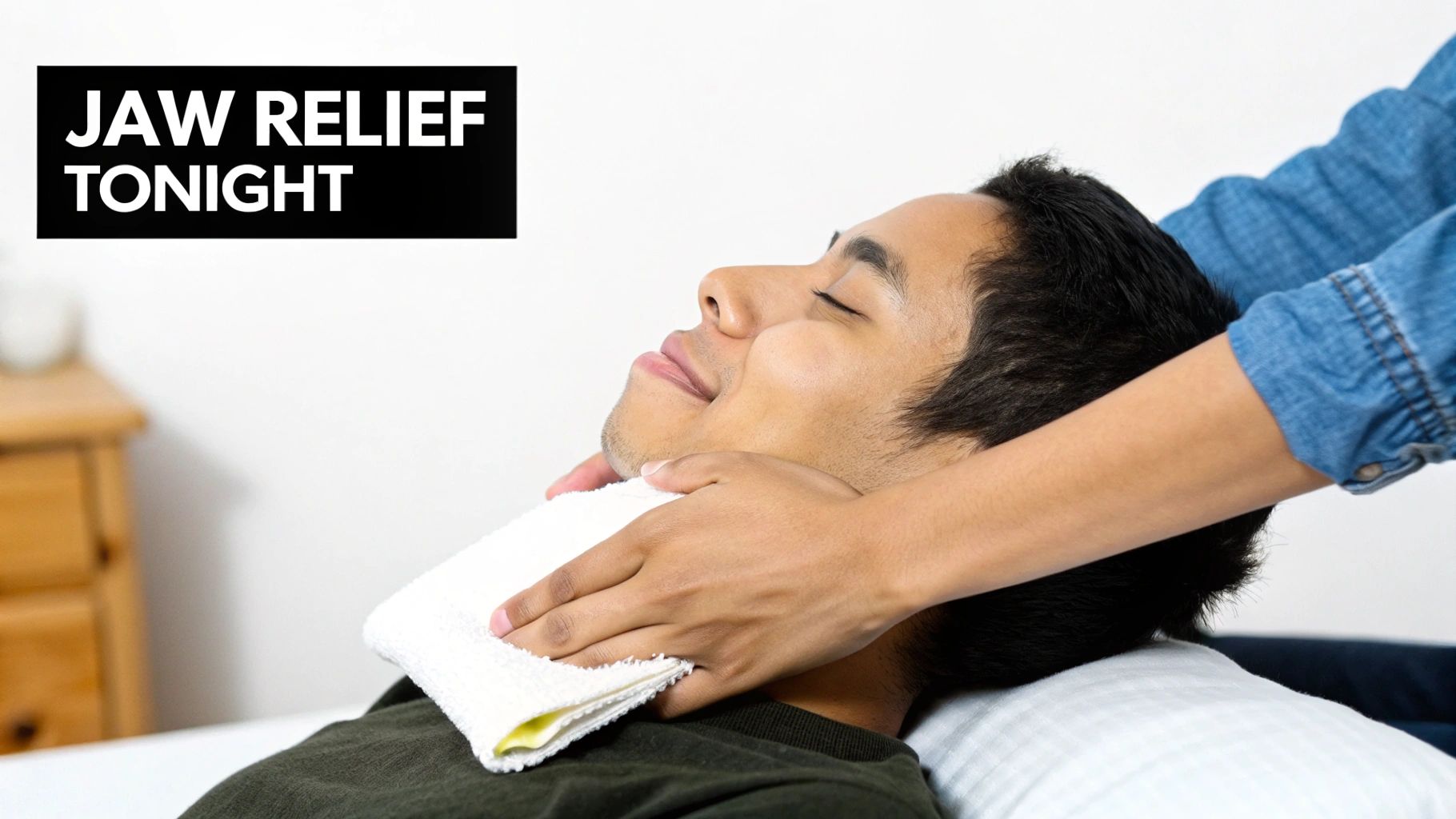
It’s simple: soak a washcloth in warm water, wring it out, and hold it against the sides of your face for 15-20 minutes before you go to sleep. This gentle warmth boosts blood flow and helps those tight masseter muscles—the powerful ones you use for chewing and clenching—finally relax. Making this a regular part of your wind-down routine can seriously reduce the intensity of your grinding, which directly benefits your teeth.
Your jaw is a complex system of muscles and joints. By treating the muscle strain with heat and gentle massage, you're helping to break the cycle of tension that leads to clenching and grinding at night. This is a great step for your dental health.
Practice Gentle Jaw Stretches
Along with heat, some gentle stretching can do wonders for releasing built-up tension. These aren't strenuous exercises; think of them as slow, deliberate movements designed to bring back flexibility and get rid of that locked-up feeling.
Try these a few times throughout the day, especially before bed:
- The Gentle Open: Slowly open your mouth as wide as is comfortable without pain. Hold it for five seconds, then slowly close. Do this 5-10 times.
- The Side-to-Side: Keep your teeth slightly apart and gently slide your lower jaw to the left. Hold for a few seconds, then slide it back to the center. Repeat on the right side.
- The Forward Push: Gently push your lower jaw forward so your bottom teeth are in front of your top teeth. Hold for a couple of seconds, then relax.
Be Mindful of Your Jaw Posture and Diet
What you do with your jaw during the day has a direct impact on what it does at night. A lot of us clench our teeth when we're stressed or concentrating without even knowing it. Try to consciously keep a relaxed jaw posture throughout the day: your teeth should be slightly apart and your tongue should be resting on the roof of your mouth, right behind your front teeth. This reduces unnecessary strain on your teeth.
Your diet matters, too. Give your jaw muscles a much-needed break by steering clear of really hard or chewy foods—think tough steaks, hard nuts, and sticky caramels. And if you chew gum, now's the time to quit. That habit basically trains your jaw muscles to stay in constant motion, which can make nighttime grinding even worse. Sticking to softer foods for a while can give your jaw the rest it desperately needs to recover, protecting your teeth from excess wear.
Managing Stress to Protect Your Dental Health
Since stress is one of the biggest reasons people grind their teeth, getting a handle on it is one of the best things you can do for your smile. This is about more than just feeling less frazzled during the day; it's a direct strategy to stop that nighttime clenching that wears down your enamel, cracks teeth, and often leads to expensive dental work down the road.
When you learn to manage your daily pressures, you physically reduce the muscle tension that causes so much damage while you're asleep. Think of it as an investment in your long-term dental health—just as important as brushing and flossing for maintaining a beautiful smile.
Create a Calming Bedtime Routine
That little window of time between your busy day and when your head hits the pillow is critical for de-stressing your jaw. If you jump into bed with your mind still racing at a hundred miles an hour, your jaw muscles are probably going to stay just as tense all night long, putting your teeth at risk.
Creating a solid, calming bedtime routine sends a clear signal to your body that it's time to power down. This means putting away the screens—phones, tablets, and TVs—at least an hour before you plan to sleep. The blue light is known to mess with your sleep cycle, but it's also the constant feed of information that keeps your brain on high alert.
Instead, switch to activities that actively lower your stress and help relax your face and jaw to protect your dental health.
- Sip Herbal Tea: A warm mug of something caffeine-free like chamomile can be incredibly soothing.
- Listen to Calming Music: Try some instrumental tunes or even nature sounds to help quiet your internal monologue.
- Read a Physical Book: Getting lost in a story lets your mind focus on one thing instead of the hundred little worries from the day.
Incorporate Mindfulness and Physical Activity
Mindfulness meditation is another fantastic tool if you're trying to figure out how to stop grinding teeth at night. Even just five or ten minutes of a guided meditation before bed can make you more aware of where you’re holding tension. It's like a training session for your brain, teaching you to consciously let go of the tightness in your jaw, neck, and shoulders, which benefits your oral health.
Don't underestimate the power of regular exercise, either. Physical activity is one of the best ways to burn off cortisol (the stress hormone) and get a nice boost of mood-lifting endorphins. A brisk walk after dinner, a gentle yoga session, or a light jog can make a world of difference. Just try to avoid super intense workouts right before bed, as that can actually wake you up more.
By addressing your stress levels, you aren't just treating a symptom—you're getting to one of the root causes of bruxism. This kind of proactive approach can save your teeth from years of unnecessary damage.
When you get right down to it, these techniques work by breaking the cycle of stress and tension. A calm mind leads to a relaxed body, and that finally gives your jaw muscles the break they desperately need. It’s a simple change that protects your dental health, prevents future problems, and keeps your smile looking and feeling its best.
Why a Custom Night Guard Is Your Best Defense
If you’ve tried managing stress and giving your jaw muscles a break but the nightly grinding just won't quit, it's time to bring in a stronger defense. Professional dental solutions are what stand between you and the long-term, irreversible damage bruxism can do to your smile. More often than not, a custom-fitted night guard is the most powerful tool in our arsenal.
Unlike the generic guards you find at a drugstore, a professionally made one is created from a perfect impression of your teeth. The benefit of this procedure is a snug, comfortable fit that acts as a durable barrier, absorbing the incredible forces generated by grinding. It essentially cushions your teeth, preventing that precious enamel from wearing away and protecting your crowns, fillings, and other dental work from fractures. It's a small device that plays a huge role in preserving the appearance and health of your smile.
Custom-Fit Versus Over-the-Counter Guards
So, what's the real difference between a custom night guard from your dentist and a "boil-and-bite" version from the pharmacy? Honestly, it's night and day, especially when it comes to your dental health. Over-the-counter guards are typically made from a softer, much bulkier material. While they might seem like a quick fix, their poor fit can sometimes make clenching even worse or, over time, cause your bite to shift.
A custom guard, on the other hand, is crafted from a slim yet incredibly tough acrylic. It’s designed for both maximum protection and comfort, meaning you're more likely to wear it. It snaps securely into place, so you don't have to worry about it feeling bulky or falling out while you sleep. This superior fit is what encourages people to actually wear it every night—and consistency is everything when it comes to stopping damage before it starts.
Choosing the right night guard is a crucial step in protecting your teeth from the effects of bruxism. Let’s break down the key differences to help you make an informed decision for your dental health.
Comparing Night Guards Custom-Fit vs Over-the-Counter
| Feature | Custom-Fitted (From a Dentist) | Over-the-Counter (Boil-and-Bite) |
|---|---|---|
| Fit & Comfort | Precisely molded to your teeth for a slim, snug fit that stays in place. | Bulky and often ill-fitting, which can be uncomfortable and may fall out. |
| Material & Durability | Made from a high-quality, durable acrylic that can withstand heavy grinding forces for years. | Softer, less durable material that can be chewed through quickly and may need frequent replacement. |
| Protection | Provides a balanced, even cushion that protects all teeth effectively and doesn't alter your bite. | Can create an uneven bite surface, potentially worsening TMJ issues or causing bite changes. |
| Cost | Higher initial investment, but a better long-term value due to its durability and effectiveness for your dental health. | Low upfront cost, but may require multiple replacements, leading to higher costs over time. |
While an over-the-counter guard might seem like a bargain, a custom-fitted device from a professional is a true investment in preserving your smile for the long haul.
Other Professional Dental Treatments
Sometimes, a night guard is just one piece of the puzzle. If your grinding is linked to an underlying issue with how your teeth meet and function, we might recommend other treatments to get to the root of the problem and improve your oral health.
- Occlusal Adjustment: This is a delicate procedure where we subtly reshape the chewing surfaces of your teeth to fix your bite. The benefit is that by making sure your teeth come together correctly, we can eliminate the strain that triggers grinding in the first place.
- Restorative Procedures: If grinding has already chipped away at your smile, we need to repair that damage. This could mean placing dental crowns on cracked or severely worn teeth to protect them from any more harm and restore their proper function and appearance.
- Orthodontics: For more significant bite misalignments, treatments like Invisalign can be a game-changer. By moving your teeth into their ideal positions, we create a more harmonious bite that reduces the impulse to grind, improving both the health and aesthetics of your smile.
For a deeper look into how these devices work, feel free to explore our detailed article on occlusal splints for bruxism.
A professional evaluation is the only way to know for sure what combination of treatments is right for you. We don't just put a bandage on the problem—we work to fix what's causing it for a solution that lasts and protects your smile.
The flowchart below shows how building a solid stress-management routine can work alongside your dental treatment to help shut down those grinding triggers.
As you can see, combining a consistent routine with mindfulness and physical activity is a powerful strategy. By actively managing your daily stress, you give your night guard a major assist in protecting your smile.
Ready to Protect Your Smile?
Putting a stop to nighttime teeth grinding isn’t just about kicking a bad habit. It’s a direct investment in the future of your dental health, your day-to-day comfort, and your confidence in your smile. While the strategies we've gone over can bring a lot of relief, the single most important step you can take is getting a professional diagnosis to figure out why you're grinding in the first place.
That’s the only way to create a treatment plan that will actually work for you and protect your appearance. For some people, a few simple tweaks to their sleep routine might be all it takes. For others, it might be a combination of stress management, a custom-fitted night guard, and some restorative work to fix existing damage. This is definitely not a one-size-fits-all problem, so your solution shouldn't be either.
You Don't Have to Figure This Out Alone
Trying to navigate all the options—from finding the right kind of night guard to exploring repairs with crowns or veneers—can feel like a lot to take on. That’s exactly why having a dental team you trust in your corner is so important. A professional can properly assess the extent of the wear and tear, get to the root cause, and guide you toward the treatments that will give you lasting results for your oral health.
This kind of comprehensive approach is key. It means you’re not just putting a temporary band-aid on the symptoms but actively preventing future damage. Frankly, it can save you from much more complex and expensive procedures down the road. And tackling bruxism does more than just protect your teeth; it can lead to better sleep, fewer headaches, and relief from that nagging jaw pain that affects your quality of life.
Taking action is the most powerful thing you can do for your smile. A consultation isn't just another appointment—it's the first real step toward taking back your nights and keeping your teeth healthy and strong for a lifetime.
Ignoring the signs of bruxism just allows the damage to continue, night after night. But you don't have to live with worn-down enamel, cracked teeth, and chronic pain. The path to a healthier, more comfortable smile starts with one simple decision: to ask for professional advice.
Don't let another night of grinding compromise your smile. The experienced team at Grand Parkway Smiles is here to give you a personalized diagnosis and create a treatment plan that fits your unique needs. Schedule your consultation today and take the first step toward lasting relief. Learn more and book your visit at https://dentistkatytx.com.