Once your tooth extraction is complete, the clock starts on the most critical phase of your recovery: the first 24 hours. What you do during this initial window is absolutely vital for a smooth healing process that protects your dental health. The main goals are simple but non-negotiable: control the bleeding and protect the blood clot that forms in the empty socket.
Getting this right from the start sets you up for a comfortable, complication-free recovery, paving the way for a healthy, functional smile.
Your First 24 Hours After Tooth Extraction
You might think the procedure is the hard part, but the moments immediately after you leave our chair are just as important for your long-term oral health. This initial period is all about giving your body the best possible environment to start healing properly.
Your body's first line of defense is a blood clot that forms in the socket. Think of it as a natural, living bandage. It stops the bleeding, shields the sensitive bone and nerve endings underneath, and creates the foundation for new tissue to grow. Everything you do today should be aimed at keeping that clot safe, as it's the first step toward restoring your smile.
Managing Bleeding and Protecting the Clot
We'll place a sterile gauze pack over the site before you leave. Your job is to bite down with firm, steady pressure. This simple action helps the bleeding stop and encourages that all-important clot to form, which is the cornerstone of good healing.
- Gauze is Key: Keep that first gauze pack in place for at least 30-60 minutes. If you're still seeing some bleeding when you remove it, don't panic. Just fold a fresh piece, place it over the site, and keep biting down for another half hour.
- Resist the Urge to Peek: Constantly checking on the site can disturb the clot just as it's trying to form. Trust the process and maintain consistent pressure for the best healing outcome.
- The Tea Bag Trick: If the bleeding seems a little stubborn, a damp black tea bag can work wonders. The tannic acid in the tea is a natural astringent that helps blood vessels contract and promotes clotting.
The timeline below gives you a great visual guide for what to focus on during the first day and beyond to ensure your dental health is protected.
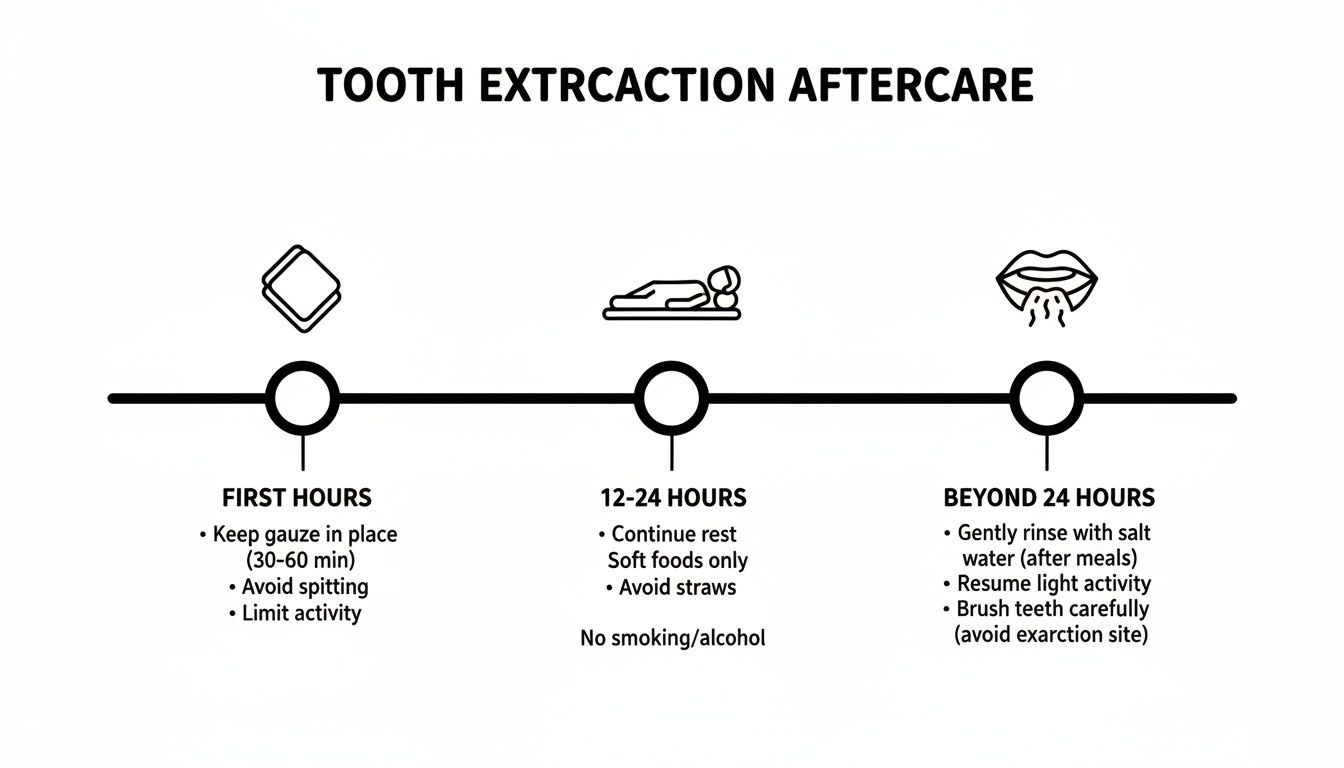
As you can see, the focus shifts from pure clot protection in the beginning to gentle care and cleaning after the first day has passed, all aimed at achieving a healthy result.
For a quick reference, here's a simple timeline to follow.
Immediate Aftercare Timeline For The First 24 Hours
This quick-reference guide breaks down the key actions and precautions to take hour-by-hour right after your tooth extraction for optimal healing.
| Timeframe | What to Do | What to Avoid |
|---|---|---|
| First Hour | Bite firmly on gauze. Rest and relax. | Talking, chewing, spitting, rinsing. |
| Hours 2-4 | Continue with gauze if needed. Apply an ice pack (20 min on, 20 off). | Strenuous activity, hot foods/drinks. |
| Hours 4-12 | Take pain medication as directed. Drink cool liquids. Eat soft foods like yogurt or applesauce. | Using straws, smoking, drinking alcohol. |
| Hours 12-24 | Keep head elevated with pillows when resting. Continue soft food diet. | Vigorous rinsing, poking the site. |
Following these steps will significantly reduce your risk of complications and help you maintain comfort as you heal.
The "Do Not" List for a Healthy Recovery
Certain actions create suction or pressure in your mouth, and that's the number one enemy of a fragile blood clot. If that clot gets dislodged, you can end up with a dry socket—a notoriously painful condition that will set your healing back significantly and delay the restoration of your smile.
Protecting the blood clot is non-negotiable. Avoiding spitting, smoking, or using a straw for at least the first 72 hours is the single most effective way to prevent the intense pain of a dry socket and ensure proper healing.
Make sure you strictly avoid these things to protect your oral health:
- Using Straws: That sucking motion is more than enough to pull the clot right out of the socket.
- Forceful Spitting: This creates a dangerous vacuum effect. Instead, just let saliva or liquids gently fall from your mouth into the sink.
- Smoking or Vaping: The suction is a major risk, plus the chemicals in smoke can interfere with healing, increase your chance of infection, and compromise your dental health.
- Vigorous Rinsing: Hold off on any rinsing for the first 24 hours. Tomorrow, you can start with very gentle saltwater rinses to promote a clean healing environment.
Pain and Swelling Management
It's completely normal to feel some discomfort as the local anesthetic wears off. Getting ahead of the pain is key to a more comfortable recovery.
We recommend taking your first dose of prescribed pain medication before the numbness is completely gone. For most people, over-the-counter anti-inflammatories like ibuprofen work very well.
Swelling usually peaks around 48-72 hours after the procedure. To keep it to a minimum and improve your appearance during recovery, use a cold pack or bag of frozen peas on the outside of your cheek. The rule is 20 minutes on, 20 minutes off for the first day. This constricts the blood vessels, which helps reduce both swelling and bruising.
One last pro tip: when you lie down to rest, use an extra pillow to keep your head elevated above your heart. Gravity is your friend here—it helps drain fluid away from the area and reduces pressure at the extraction site, aiding in a quicker recovery.
Navigating The First Week Of Healing Day By Day
Once you've made it through that critical first 24-hour window, your body really starts to kick the healing process into high gear. The main goal now is to keep the extraction site clean to pave the way for good long-term healing and protect your overall dental health. From day two to day seven, you should notice tangible improvements each day.

The initial discomfort you might have felt right after tooth extraction should start to fade into a more manageable soreness. That’s a great sign that you are healing correctly. While the risk of dislodging the blood clot goes down a bit each day, you still need to be incredibly gentle with the area to ensure the best outcome for your smile.
Days 2-3: Managing Soreness and Swelling
During this stretch, it's common for swelling to peak before it begins to go down. This is a normal part of your body's healing response. This is also when we switch up our strategy for handling the swelling and discomfort to promote faster recovery.
Here’s the key change: it’s time to swap from cold packs to warm compresses. While cold was best for the first 24-48 hours, warm, moist compresses now serve a different, crucial purpose. They boost circulation, which helps ease stiffness in your jaw and brings more oxygen and nutrients to the site to speed up healing. Just apply a warm, damp cloth to the outside of your cheek for about 10-15 minutes at a time, a few times a day.
Your pain management plan will likely change, too. You may be able to ease off prescription medication and find that over-the-counter options like ibuprofen or acetaminophen are sufficient. The smart move is to stay ahead of the pain—take your medication as needed, rather than waiting for soreness to become severe.
A crucial step in promoting dental health is starting gentle saltwater rinses after the first 24-hour mark. It’s a simple but effective way to reduce bacteria and soothe the tissue without disturbing the healing clot.
Making the rinse is easy. Just mix half a teaspoon of salt into an eight-ounce glass of warm water. Instead of swishing, gently tilt your head side to side, letting the solution wash over the extraction site. When you're done, just let the water fall out of your mouth into the sink—no forceful spitting! Aim to do this 2-3 times a day, especially after you eat, to maintain a clean healing environment.
Days 4-7: Promoting Healing and Oral Health
By the back half of the week, you should be feeling much more like yourself. The soreness should be minimal, and you can start reintroducing more foods. Just remember to steer clear of anything hard, crunchy, or chewy that could irritate the healing socket and compromise your recovery.
It's also vital to maintain your oral hygiene for your other teeth. Neglecting overall dental care during recovery can unfortunately lead to other issues, undermining the health benefits of your extraction.
- Gentle Brushing: You absolutely can and should continue brushing your other teeth.
- Avoid the Site: Use a soft-bristled brush and be extra careful to stay away from the extraction site and the teeth right next to it.
- No Waterpiks: Don't use a water flosser or any high-pressure cleaning gadget near the healing socket until we give you the all-clear.
Taking proper care of the site now pays off for your future smile. A clean, healthy healing process helps preserve the jawbone, which is essential if you're considering a dental implant. By preventing infection and encouraging good tissue growth, you’re setting the stage for the best possible cosmetic and functional outcome. By the end of this week, you'll see the gum tissue closing over the site, and you'll be well on your way to a full recovery.
Your Recovery Diet And Activity Guide
What you eat and how active you are after a tooth extraction are just as critical as keeping the site clean. The right foods provide the fuel your body needs to heal, while proper rest prevents setbacks. Think of these next few days as a direct investment in a smooth recovery and the future health of your smile.
Your body is essentially rebuilding where the tooth used to be. You need to give it the best building materials (good nutrition) and avoid anything that could disrupt the process. Following this guide will protect the area and help your smile heal perfectly.
Building Your Post-Extraction Menu
For the first few days, your diet needs to be soft, packed with nutrients, and easy to eat. Your jaw will likely be sore, so the main goal is to nourish your body without disturbing the healing socket. Good nutrition is a benefit that supports your entire body's recovery.
Here are a few go-to options I always recommend:
- Yogurt and Kefir: These are fantastic. They’re full of protein, easy to swallow, and the cool temperature can feel soothing.
- Smoothies: A perfect way to load up on vitamins. Blend your favorite fruits with milk or yogurt, but please remember the golden rule: absolutely no straws. The suction can dislodge the blood clot.
- Lukewarm Soups: Creamy, blended soups like tomato or butternut squash are great. Just make sure they aren't too hot, as high temperatures can disrupt healing.
- Applesauce and Mashed Bananas: Simple, gentle, and a good source of easy-to-digest nutrients.
- Scrambled Eggs: Once you feel ready for something more substantial, soft scrambled eggs are an excellent source of protein to help repair tissue.
This careful approach to food directly supports the healing of your jawbone and gums, paving the way for future dental health, whether that involves a dental implant or just letting the area heal completely.
Foods And Habits To Avoid
What you don't eat is just as important as what you do. Eating the wrong thing too soon can irritate the wound, dislodge that vital blood clot, and set your recovery back.
The number one priority with your diet is to avoid anything that could physically damage the extraction site. Healing properly now is what preserves the bone structure you'll need for any future dental work to restore your appearance and function.
For at least the first week, you’ll need to steer clear of these:
- Hard or Crunchy Foods: Things like chips, nuts, and popcorn are off-limits. Tiny fragments can get stuck in the socket, leading to pain and potential infection.
- Spicy or Acidic Foods: Anything with a kick, like citrus or spicy sauces, will irritate the open wound.
- Extremely Hot Foods and Drinks: Heat can dissolve the blood clot and cause bleeding to restart. Let everything cool to a lukewarm temperature.
- Sticky Foods: Gummy candies or caramel can pull at the healing tissues and any stitches you might have.
- Alcoholic Beverages: Alcohol can slow down your body's healing process and may interact poorly with pain medication.
Pacing Your Physical Activity
Rest is a non-negotiable part of the healing equation. For the first 24-48 hours, your activity level should be as close to zero as possible. Strenuous exercise or even just bending over quickly can spike your blood pressure and cause the extraction site to start bleeding.
Plan on taking it very easy. This is your official permission to relax on the couch. Try to keep your head elevated, even when you're resting, as this helps keep swelling to a minimum and promotes a faster return to your normal appearance.
After a few days, as you start feeling better, you can slowly reintroduce light activities. For a more detailed timeline, check out our guide on when it's safe to resume exercise after tooth extraction. Always listen to your body—if you feel any throbbing or pain in your jaw, that's your cue to stop and rest.
Recognizing And Preventing Complications
While the vast majority of tooth extractions heal without a hitch, knowing how to spot a potential problem is key to a stress-free recovery and protecting your health. Think of this as your guide for telling the difference between normal healing and the early signs of a complication.
Most issues are rare and highly preventable if you follow your aftercare instructions. Being informed means you can handle anything that comes up without unnecessary worry, ensuring your dental health is never compromised.

Understanding Dry Socket
The most talked-about complication is alveolar osteitis, or dry socket. It has a reputation for being intensely painful for good reason. A dry socket happens when the protective blood clot gets dislodged or dissolves too early, leaving sensitive bone and nerve endings exposed to air, food, and liquids.
The pain from a dry socket is very different from typical post-op soreness and usually starts 3-5 days after the procedure. Patients often describe it as a severe, deep, throbbing ache that can radiate toward the ear, eye, or neck.
Other tell-tale signs include:
- Visible Bone: You might see whitish bone in the socket instead of a dark, healing clot.
- Bad Breath or Taste: A foul taste or odor coming from the extraction site is a common clue.
- Pain That Won't Quit: The discomfort isn’t relieved by your prescribed pain medication.
Preventing a dry socket comes down to those critical day-one rules: no straws, no smoking, and no forceful spitting. If you think you might have a dry socket, call us right away. We can place a medicated dressing in the socket to soothe the area and get your healing—and your journey back to a healthy smile—back on track.
Identifying Signs Of An Infection
An infection is less common than a dry socket but is a more serious complication that needs immediate attention to protect your overall health. While some swelling and soreness are normal, an infection sends up much clearer warning signs.
Your body is good at fighting off bacteria, but an extraction site can occasionally get overwhelmed. The goal of aftercare is to prevent this. It’s a sobering fact that in a recent year in England, there were 30,587 hospital-based tooth extractions for kids aged 0 to 19, and a staggering 62% were due to preventable decay. This highlights why careful aftercare is so important for a healthy recovery.
Be on the lookout for these symptoms:
- Worsening Swelling: Swelling that gets worse or doesn't start to go down after the first 72 hours.
- Fever: Any sign of a fever or chills is a definite red flag.
- Pus or Discharge: Seeing yellow or white discharge coming from the socket.
- Persistent Pain: Pain that ramps up instead of gradually getting better after the first few days.
- Difficulty Swallowing or Breathing: This is a serious symptom that requires immediate medical attention.
Your health is our top priority. If you experience any of these symptoms, especially a fever or worsening swelling, it is essential to contact our office immediately. Timely treatment is a crucial benefit of our care.
When To Call Your Dentist: A Checklist
It’s easy to feel uncertain during recovery. Use this simple checklist. If you’re experiencing any of the following, it’s time to call us:
- Severe, Unmanageable Pain: Your pain medication just isn't cutting it.
- Bleeding That Won't Stop: A little oozing is normal, but continuous, active bleeding is not.
- Fever, Chills, or Just Feeling Unwell: If you feel sick, almost like you have the flu.
- Pus or a Foul-Smelling Discharge: These are clear signs of a bacterial infection.
- Swelling That Worsens After Day 3: Swelling should be on its way down by then, not up.
- Numbness Lingering Past 24 Hours: If your lip, chin, or tongue still feels numb.
Catching these things early ensures a simple fix and a quick return to comfortable healing. By acting fast, you're protecting not just the extraction site but your overall health and the foundation for your future beautiful smile.
Thinking Ahead: Planning For Your Future Smile
Healing after a tooth extraction is more than just getting through the first week. It’s the first step toward reclaiming your long-term dental health and a confident, complete smile. The choices you make now play a huge role in how your smile will look and function for years to come.
When a tooth is removed, it leaves an empty space in your jawbone. Without a tooth root to keep it strong, the bone in that area naturally starts to shrink back. This process, called resorption, can change the shape of your jaw and cause other teeth to shift, affecting your appearance.
Why Preserving Your Jawbone Is a Big Deal
This bone loss is a critical consideration, especially if you're thinking about replacing the missing tooth. A solid, healthy jawbone is the foundation needed for the best modern tooth replacement solutions, particularly dental implants, which offer superior stability and appearance.
To prevent this bone loss, we can perform a socket preservation graft. Right after the tooth is removed, we place a special bone grafting material into the empty socket. This material acts as a scaffold, encouraging your body to build new bone and preserving the natural shape and height of your jaw.
You can think of a socket preservation graft as a down payment on your future smile. It’s a proactive step that keeps all your options open for the most durable and natural-looking tooth replacements.
Taking this beneficial step right away means that when you're ready for a permanent replacement, your jaw will be ready, too. It can save you from needing more complicated and expensive bone grafting procedures later on.
Looking at Your Tooth Replacement Options
Once you’re healed, you have great options for filling that gap and getting your smile back to full strength and beauty.
Dental Implants: This is the gold standard for replacing teeth. An implant is a small titanium post that acts as an artificial tooth root. We place it into the jawbone and attach a custom-made crown on top. The result looks, feels, and works just like a natural tooth, offering a huge benefit to your appearance and dental health.
Dental Bridges: A bridge "bridges" the gap left by a missing tooth. It’s made up of a false tooth held in place by crowns on the healthy teeth on either side of the space. It’s a fixed solution that can restore your smile beautifully.
Partial Dentures: This is a removable option with one or more false teeth on a gum-colored base. It uses small clasps that grip onto your natural teeth to hold it steady, offering a functional and budget-friendly solution to improve your smile.
The best choice depends on your specific situation, budget, and long-term goals for your dental health and appearance.
The Rise of Dental Implants
For many of our patients, the path forward leads to a permanent fix like dental implants. The need for reliable tooth replacement is huge; globally, nearly 23% of people over 60 have lost all their teeth. Since 1965, an estimated 15 million people worldwide have gotten dental implants, with about 3 million placed every year in the U.S. alone. Over 2.3 million Americans get implants annually, which shows how popular and successful they are at restoring smiles. You can discover more insights about these dental implant statistics and trends to see how they’re changing lives.
Choosing an implant is an investment in a solution that can last a lifetime. Unlike a bridge, they don’t require altering healthy adjacent teeth and they provide stimulation to keep your jawbone strong. The benefit is a healthy, stable, and beautiful smile for years to come. Chat with your dentist soon after your extraction to make a clear plan for your ideal smile.
Got Questions About Your Tooth Extraction Recovery? We’ve Got Answers.
Even with the best instructions, it's normal for questions to pop up. Heading into recovery after a tooth extraction can feel uncertain, but getting clear answers can make all the difference for your peace of mind and dental health. We've gathered the most common questions we hear to help you.
How Long Is This Going To Hurt?
This is usually the first thing on everyone's mind. You can expect the most noticeable discomfort in the first 48 to 72 hours. After that, the sharp pain should start to fade into a more manageable soreness that gets better each day.
The key is knowing the difference between normal healing and a potential problem. If you get a new, throbbing pain around day three or four—especially if the pain medication isn't working—that could be a red flag for a dry socket. Normal recovery means things are improving. Pain that gets worse is your cue to call us to protect your dental health.
When Can I Go Back to Brushing My Teeth Like Normal?
Good oral hygiene is crucial for healing and overall dental health. Brush your other teeth right away, but for the first 24 hours, avoid the extraction site completely. Bumping it can dislodge the vital blood clot.
After that first day, you can start gently cleaning the teeth next to the socket. Most people are back to their normal brushing and flossing routine, even around the extraction area, within 7 to 10 days, once the gums have had a good head start on healing.
What Is This Supposed to Look Like While It's Healing?
A healthy healing socket isn't always pretty! For the first couple of days, you'll see a dark red blood clot filling the space.
Then, you might notice a white or yellowish film forming over the clot. Don't panic! This is granulation tissue, a fantastic sign of healthy healing. It’s the scaffolding your body builds for new gum tissue, the first step to a restored smile. An infection would look very different—think bright red gums, swelling that doesn't go down, and possibly pus.
Is It Normal for the Teeth Next to the Extraction Site to Ache?
Yes, this is common and usually nothing to worry about. The neighboring teeth can feel a bit sensitive or have a dull ache for a few days due to the pressure from the extraction and general inflammation.
This "sympathetic" pain should be mild and go away as the swelling subsides. If the pain in adjacent teeth is sharp, severe, or isn't getting better after a few days, let us know so we can ensure your dental health is on track.
Proper recovery is a step toward your long-term wellness. Research highlights a strong link between tooth loss and overall health. Among older U.S. adults, those who have had six or more teeth removed face a 1.91 times higher chance of having systemic chronic diseases. This drives home the importance of healing well and making a plan for tooth replacement. With oral disorders affecting an estimated 3.74 billion people globally, staying proactive is key to your health. You can read more about the connection between oral health and overall wellness to see the bigger picture.
At Grand Parkway Smiles, your long-term dental health and beautiful smile are what drive us. If you have more questions as you heal or if you're ready to talk about tooth replacement options like dental implants to get your smile back to full strength, we're here for you. Contact us today to schedule your consultation.