That little clink against a coffee mug, fork, water bottle, or your child’s head during roughhousing can make your stomach drop fast. You run your tongue over the edge of a front tooth and feel it right away. It’s rough. It looks uneven. And if the chip is visible when you talk or smile, the cost worry usually shows up within seconds.
Individuals don’t panic because of pain alone. They panic because a front tooth sits at the center of your smile. You notice it every time you look in a mirror. You wonder if it will get worse before you can be seen. You wonder whether this is a simple fix or the start of a very expensive one.
The reassuring part is that a chipped front tooth is a common and treatable problem. Modern dentistry can often restore both the health of the tooth and the appearance of your smile very well. Some chips need a quick cosmetic repair. Others need stronger protection because the tooth structure has been weakened. The key is matching the treatment to the damage.
This guide walks through the full patient journey, from the moment the injury happens to the practical side of planning for care in the Houston and Katy area. If you’re trying to understand chipped front tooth repair cost, your choices, and what happens next, you’re in the right place.
That Heart-Sinking Moment You Chip a Front Tooth
A chipped front tooth often happens during an ordinary moment. You bite into something harder than expected. A sports accident catches you off guard. A slip, fall, or elbow lands in just the wrong place. Then everything narrows to one question. How bad is it?
For some people, the first concern is pain. For others, it’s the mirror. Even a small chip can feel huge when it’s on a front tooth because it changes how your smile looks immediately. Patients often tell me the rough edge bothers them all day, even if the tooth doesn’t hurt much.
There are usually three worries mixed together:
- Health worry because you don’t know whether the tooth is cracked deeper than it looks
- Appearance worry because front teeth are highly visible when you speak and smile
- Money worry because you’re trying to guess whether this will be a small repair or a major restoration
The good news is that many chipped front teeth are very repairable, and the right treatment can often make the tooth look natural again. Dentistry today isn’t only about patching damage. It’s also about restoring the shape, color, contour, and comfort of the tooth so it blends back into your smile.
A chipped front tooth may feel urgent and embarrassing, but it’s usually a problem with a clear path forward once a dentist sees the extent of the damage.
If you’re reading this shortly after the injury, try not to assume the worst. A small-looking chip can sometimes be simple to fix. A larger one may still be very manageable. What matters most is getting the tooth evaluated before the damage spreads or sensitivity increases.
How Bad Is the Chip? Assessing the Damage
A chipped tooth is a little like a chipped windshield. What you can see on the surface isn’t always the whole story. A tiny missing corner may stay stable, or it may become the weak point where a larger fracture starts.
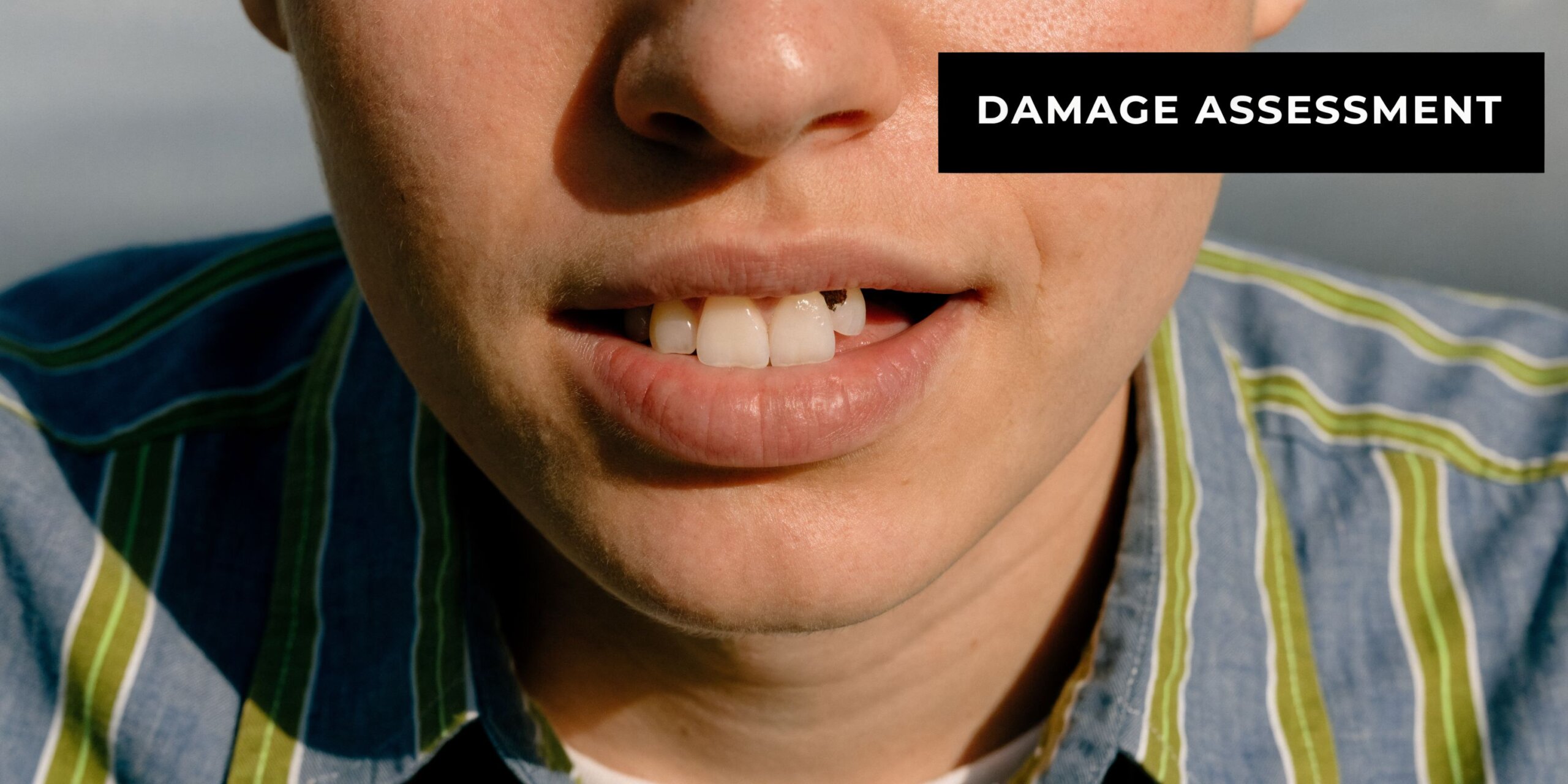
Minor chips
A minor chip usually affects the outer layer of the tooth and may feel rough more than painful. This type often happens at the edge of a front tooth.
Common signs include:
- A sharp edge that catches your tongue
- Little or no pain during normal chewing
- A small cosmetic change that you notice most in the mirror
These chips often matter more than people think. Even when the damage is shallow, the tooth can still lose its smooth protective contour, which makes it easier to irritate soft tissue or stain unevenly.
Moderate chips
A moderate chip removes more tooth structure. The tooth may look shorter, flatter, or visibly broken on one side. You may also notice sensitivity to cold drinks or air.
This level of damage can affect both appearance and function. Biting into sandwiches, fruit, or crusty bread may feel different. The tooth may still be savable with a conservative repair, but it needs prompt attention.
Severe chips and fractures
A severe chip goes deep enough that the inner part of the tooth may be involved. These cases often bring stronger pain, marked sensitivity, or a feeling that the tooth is unstable.
Watch for these signs:
- Pain that doesn’t settle
- Bleeding around the tooth after the injury
- A dark spot or deep center in the broken area
- Pain when biting or releasing pressure
Practical rule: If the tooth hurts on its own, reacts sharply to temperature, or looks deeply broken, don’t wait and “see if it settles.”
Even a small chip shouldn’t be ignored if it changes how your bite feels. Front teeth guide many normal movements of the jaw, and when their edges are altered, patients sometimes start chewing differently without realizing it.
A professional exam matters because treatment depends on more than what shows in the mirror. The size, depth, location, and strength of the remaining tooth all shape the right plan.
Your Repair Options From Minor Chips to Major Fractures
You look in the mirror after chipping a front tooth and the first question is usually simple. “Can this be fixed without doing too much?” In many cases, yes. The right repair depends on how much of the tooth broke, how strong the remaining tooth is, and whether the injury affected only the outer layer or reached deeper.
For Houston and Katy patients, treatment choices also tie into timing and budget. A small chip may be repaired in one visit with a conservative option. A deeper fracture can turn into a staged process that starts with pain relief and protection, then moves to a final restoration that looks natural in your smile. In a multi-specialty office like Grand Parkway Smiles, that matters because cosmetic, restorative, and root canal care can be coordinated under one roof instead of sending you across town after an injury.
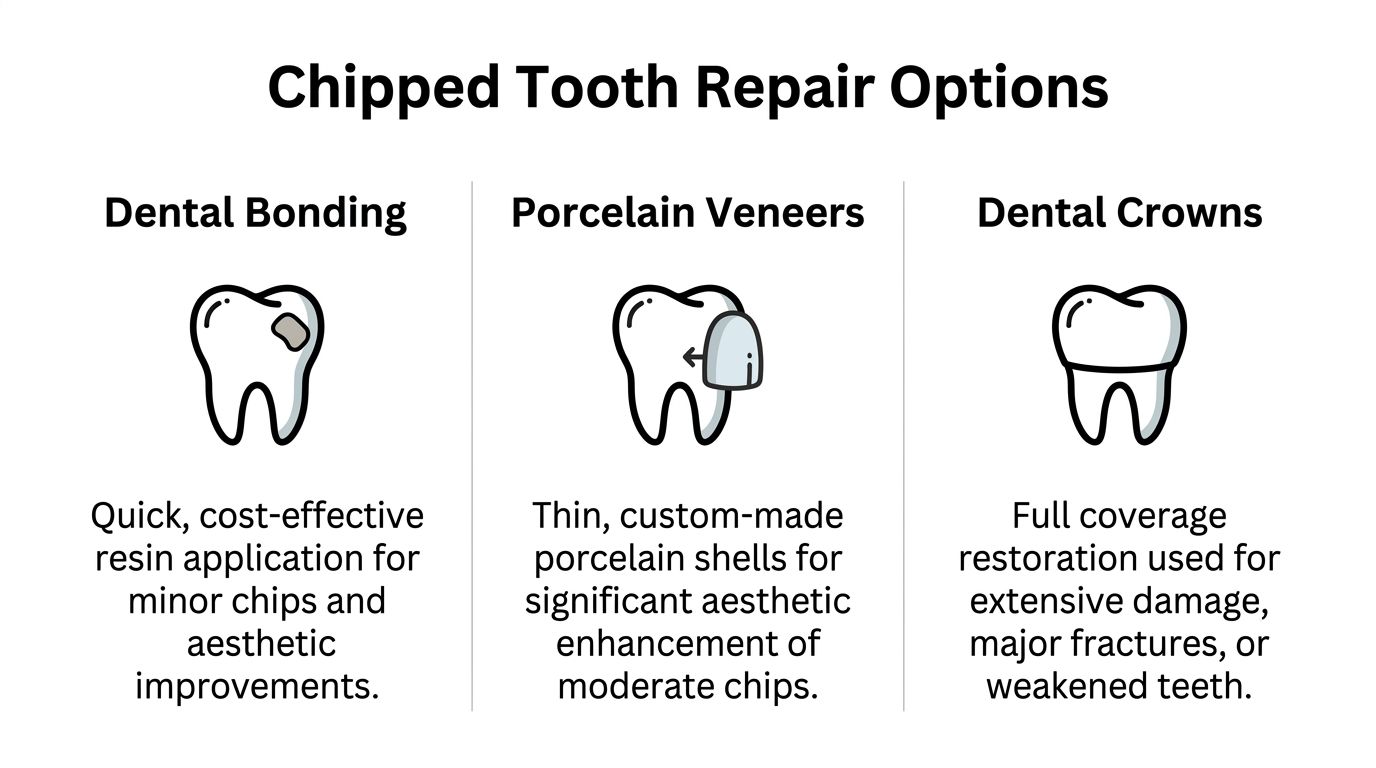
Here are the three repair options patients hear about most often.
Dental bonding
Bonding is often the best fit for a small chip on a front tooth. The dentist adds tooth-colored composite, shapes the missing edge, then polishes it so the tooth looks whole again.
This option works a lot like repairing a small nick in the corner of a marble countertop. If the structure underneath is still strong, you do not need to replace the whole surface. You rebuild the missing part carefully so it blends in and functions normally.
Bonding is usually a good choice when:
- The chip is small and shallow
- The tooth is still strong
- You want a faster, lower-cost cosmetic repair
- Preserving as much natural enamel as possible is a priority
Patients often like bonding because the improvement is immediate. The tooth can look smoother, more even, and less distracting when you smile or talk. If you want a clearer explanation of the material itself, this guide to composite bonding for chipped and worn teeth gives a helpful overview.
Porcelain veneers
A porcelain veneer covers the front-facing part of the tooth with a custom shell made to match your smile. Veneers are usually considered when the tooth is still solid but the chip is visible enough that appearance becomes the main concern.
A veneer works like a custom new facade for the front of the tooth. It does not cover the whole tooth the way a crown does. Instead, it improves what people see most. Shape, color, edge detail, and symmetry.
That can make veneers appealing if you want to do more than fill in a missing corner. Some Katy and Houston patients choose this route when the chipped tooth already had cosmetic concerns such as uneven edges, discoloration, or a mismatch with the neighboring front tooth.
Dental crowns
A crown covers the entire visible portion of the tooth. It is usually the better answer when a larger piece has broken away or the remaining tooth is no longer strong enough to trust with a smaller repair.
A simple way to understand the difference is this. Bonding repairs a missing spot. A crown protects and rebuilds the whole visible tooth. For a front tooth that takes daily biting pressure and needs to look natural from every angle, that extra coverage can make a big difference in both appearance and durability.
Crowns are often recommended when:
| Repair option | Best fit | Main benefit |
|---|---|---|
| Bonding | Small, shallow front tooth chips | Conservative repair with quick cosmetic improvement |
| Veneer | Visible chip with strong remaining tooth | High-level smile refinement on the front surface |
| Crown | Moderate to major damage | Full protection plus cosmetic restoration |
When a root canal enters the picture
Sometimes the fracture reaches the pulp, which is the living center of the tooth that contains the nerve and blood supply. At that point, the goal is no longer just to make the tooth look nice again. The tooth also needs internal treatment so pain, infection, or a future abscess does not develop.
That is when a root canal plus crown may be the recommended path. The exact fee varies by how complex the fracture is, which tooth is involved, what type of final crown is chosen, and whether emergency care, imaging, or specialist treatment is needed. In the Houston area, those local factors can shift the final total quite a bit.
This can sound like a big jump from “small chip” to “serious treatment,” but there is a clear reason for it. The root canal treats the injured inside of the tooth. The crown then seals and strengthens what remains on the outside. Together, they can keep your natural tooth in place and restore a front smile that feels stable again.
The best repair is the one that fits the actual injury, protects the tooth for the long term, and gives you a result you feel good showing.
What Factors Influence the Final Repair Cost
A chipped front tooth can look like a simple cosmetic problem, but the final fee usually reflects a series of clinical decisions. Dentists are deciding how to protect the tooth, how to make the repair blend with the teeth beside it, and how to reduce the chance that you will need more treatment later.
Why front teeth often cost more to restore
Front teeth are the teeth people see first. That changes the job.
A back tooth repair mainly has to handle chewing forces. A front tooth repair has to handle appearance, speech, bite contact, and symmetry with the matching tooth on the other side. Even a small mismatch in shape or polish can catch the light and draw attention when you talk or smile.
That is why front tooth treatment often involves more time for shade selection, contouring, and finishing.
The factors that usually change the estimate
Several details can move the cost up or down:
- How deep the injury goes. A small enamel chip is usually simpler to repair than a fracture that reaches dentin or the nerve.
- How much tooth structure is left. A tooth with strong remaining walls may support a conservative repair. A weaker tooth may need fuller coverage for protection.
- Which material fits the case. Composite resin can work well for many small chips. Porcelain or ceramic may be chosen when strength, stain resistance, or a more lifelike look matters more.
- How visible the tooth is in your smile. The more prominent the tooth, the more detail often goes into matching texture, translucency, and edge shape.
- Whether extra steps are needed. X-rays, emergency exams, bite adjustments, temporary restorations, or specialist care can all affect the total.
- Local Houston area costs. Lab fees, staffing, and overhead in Katy and greater Houston can differ from national averages, so local estimates matter more than generic online ranges.
One simple way to picture it is home repair. Patching a small nick in drywall costs less than rebuilding a damaged corner, repainting it to match, and making sure the structure underneath is still sound. Teeth work the same way. The visible chip is only part of the story.
Why artistry affects price on a front tooth
Front tooth dentistry is precise work. The repair has to look natural in bright sunlight, indoor lighting, and photos. It also has to feel right when you bite into food and when your tongue touches the back of the tooth.
Here is what your dentist is trying to match:
| Element | Why it matters |
|---|---|
| Shade match | The repair blends with neighboring teeth instead of looking brighter, duller, or flatter |
| Shape | Balanced contours help the tooth look even from the front and side |
| Edge design | The biting edge affects appearance, speech, and how the upper and lower teeth meet |
| Surface finish | A smooth, polished surface improves comfort and helps the repair look more natural |
In a multi-specialty office such as Grand Parkway Smiles, that planning can be especially helpful for Houston-area patients. If a chip turns out to involve cosmetic work, restorative treatment, or nerve care, the team can coordinate those pieces under one roof instead of sending you from office to office. That can save time, reduce guesswork, and give you a clearer sense of the full financial picture early in the process.
For patients who are already thinking beyond the first visit, it also helps to review dental financing options in Katy before treatment starts. A repair is easier to budget for when you understand both the immediate fix and the possible long-term plan for keeping that front tooth healthy and attractive.
Making Your Tooth Repair Affordable in Katy TX
Cost matters. Even when patients understand why a front tooth repair is worth doing, they still need a realistic way to fit treatment into the family budget.
For readers comparing local numbers, Houston-area chipped tooth repair pricing places dental bonding at $200 to $500 and crowns at $900 to $2,200. That same source notes that in-house savings plans or PPO insurance benefits can reduce out-of-pocket costs by 20 to 40% for some patients.
Start with the likely treatment category
A simple way to think about affordability is to sort your situation into one of two buckets.
If the tooth has a small visible chip and remains strong, a conservative repair may be enough. Those cases are often easier to fit into a monthly budget.
If the tooth is fractured, painful, or weakened, the plan may cost more upfront but can prevent a more complex problem later. Delaying treatment often narrows your options.
Use every payment tool available
Many Katy and Houston families bring the cost down by combining benefits rather than relying on one payment method alone.
Consider asking about:
- PPO dental benefits that may help with restorative treatment
- In-house savings plans if you don’t carry traditional dental insurance
- Pre-tax healthcare funds if they apply to your situation
- Monthly financing options for larger restorative cases
If you want a practical overview of common payment routes, this page on affordable dentistry in Katy understanding your financing options is a useful starting point.
A treatment plan becomes less intimidating when you separate the clinical decision from the payment strategy. First choose what protects the tooth. Then work out the most manageable way to pay for it.
Why timing affects cost
One of the easiest mistakes patients make is waiting because the tooth “doesn’t hurt much.” That can backfire. A small problem may stay simple, but once the tooth cracks further or the nerve becomes involved, the treatment becomes more involved and more expensive.
For families in Katy, prompt evaluation often offers the best financial value. It keeps more conservative options on the table and gives you time to compare benefits, ask questions, and plan.
The Treatment Journey From Emergency Visit to Final Smile
Most patients feel calmer once they know what the day will look like. The unknown is often worse than the procedure itself.
If a front tooth breaks suddenly, the first visit usually focuses on two things. Protect the tooth and decide how to restore it. In a practice with emergency availability and multi-specialty care, that can often happen without sending the patient to multiple offices.
The first appointment
At the emergency visit, the team checks the tooth, surrounding gums, bite, and symptoms. Imaging helps show whether the damage stays in the visible part of the tooth or extends deeper.
If you’re anxious, this is the point to say so. A good dental team adjusts the visit around that. Some patients want every detail explained. Others do better with a calm, simple plan and comfort support.
Treatment planning and repair
What happens next depends on the diagnosis.
A small chip may be repaired with bonding in a straightforward visit. A more extensive injury may require a staged process, especially if the tooth needs internal treatment before the final restoration.
Some practices also use same-day technology for certain cases, which can reduce the number of visits. That matters when the damaged tooth is front and center in your smile.

Recovery and aftercare
Aftercare is usually simple, but it matters.
- For bonding. Be mindful of biting directly into very hard foods if the repair is fresh.
- For veneers or crowns. Follow your dentist’s instructions about chewing, cleaning, and sensitivity.
- For deeper repairs. Keep all follow-up visits so the team can confirm the tooth is settling well.
Most patients care about one question most. Will it look like my tooth again? In many cases, yes. The best repairs restore more than structure. They give patients back the confidence to smile without thinking about the injury every few minutes.
Restore Your Smile with Confidence
A chipped front tooth can feel dramatic in the moment, but it’s a problem dentistry handles every day. The important parts are simple. Get the tooth assessed promptly, choose the repair that matches the level of damage, and make a financial plan that lets you move forward without delay.
The right treatment protects both oral health and appearance. Sometimes that means a small bonding repair. Sometimes it means a veneer, crown, or a more complex restoration if the tooth has deeper damage. Personalized care matters because no two chips affect the tooth in exactly the same way.
If you’re comparing providers, it helps to look for trusted dental professionals who can evaluate both the cosmetic and structural side of the injury.
For patients in Katy and the Houston area, Grand Parkway Smiles offers the advantage of multi-specialty care under one roof, including everything from cosmetic repair to endodontic and restorative treatment when a chip turns out to be more complex.
Frequently Asked Questions About Chipped Tooth Repair
| Question | Answer |
|---|---|
| Can I ignore a small chip if it doesn’t hurt? | It’s better not to. Even a small chip can leave a rough edge, change your bite, or make the tooth more vulnerable to further damage. |
| What’s usually the best repair for a small front tooth chip? | A small chip on a healthy front tooth is often a good candidate for bonding because it can restore shape while preserving most of the natural tooth. |
| When is a crown better than bonding? | A crown is usually a better fit when the tooth has lost too much structure, has a deeper fracture, or needs full coverage for strength. |
| Will the repaired tooth look natural? | That’s the goal. Front tooth repairs are designed to blend with the neighboring teeth in shape, color, and contour. |
| What if the chip reaches the nerve? | The tooth may need root canal treatment before it’s restored. That allows the dentist to treat the inside of the tooth and then protect it with a final restoration. |
| Does chipped front tooth repair cost vary by city? | Yes. Fees can differ by location, local lab costs, and the complexity of the cosmetic work needed. |
| Is treatment painful? | Many patients do well with local anesthesia and a calm, step-by-step approach. Comfort options may also be available for people with dental anxiety. |
| How long do repairs last? | Longevity depends on the type of repair, your bite, your habits, and how well you care for the tooth. Porcelain veneers are listed with a lifespan of 10 to 15 years in the earlier cost source. |
A chipped front tooth affects more than enamel. It can change how you chew, how you speak, and how confident you feel smiling. Getting it checked early usually gives you more options and a better chance of a conservative repair.
If you’re in Katy or the greater Houston area and want clear answers about your treatment choices, schedule a consultation with Grand Parkway Smiles. Their team can evaluate the damage, explain the best next step, and help you find a practical path to restoring your smile.