A dental filling is one of the most common and effective ways we repair a tooth damaged by decay. In simple terms, it's a routine treatment that patches up a cavity, restoring the tooth to its original shape and strength. More than just a simple fix, it’s a crucial step in stopping decay from spreading, preventing future pain, and keeping your smile healthy, functional, and beautiful for the long haul.
Why Filling a Cavity Protects Your Smile
It helps to think of a cavity as a small breach in your tooth's natural defense system. When bacteria produce acids that eat away at your enamel, they create a tiny hole. If left untreated, that small opening becomes a gateway for much deeper decay, eventually leading to serious pain, infection, and sometimes even tooth loss.
The process of filling a cavity is essentially a restoration project that renews your tooth's health and appearance. It's a straightforward and incredibly effective way to halt decay in its tracks and rebuild the damaged area. But this treatment does more than just plug a hole; it reinforces your tooth's structure, allowing you to chew comfortably and smile with renewed confidence.
Restoring Health and Function
One of the greatest benefits of a dental filling is the immediate improvement in your oral health. By removing the decayed portion of the tooth and sealing it off, we prevent harmful bacteria from causing further damage. This is a critical step in preserving your natural tooth and avoiding more complex treatments down the road.
Just as importantly, a filling restores the tooth to its full function. An untreated cavity can make chewing painful or cause sensitivity, forcing you to avoid certain foods. A filling eliminates that discomfort, restoring your bite's full strength and allowing you to enjoy your meals without pain or hesitation.
To help you see the value at a glance, here’s a quick summary of why getting a filling is such a smart move for your health and well-being.
Key Benefits of Filling a Cavity
| Benefit Category | How a Filling Helps | Long-Term Impact |
|---|---|---|
| Pain Relief | Removes decay and seals the tooth, eliminating sensitivity to hot, cold, and sweet foods. | Allows you to eat and drink comfortably without sharp pains or lingering aches. |
| Stopping Decay | Cleans out all bacteria and seals the opening to prevent them from re-entering the tooth. | Protects the tooth from further damage, preventing the need for root canals or extractions. |
| Structural Support | Rebuilds the part of the tooth lost to decay, restoring its original strength and shape. | Reinforces the tooth, making it strong enough for daily chewing and reducing the risk of fracture. |
| Aesthetic Improvement | Modern materials like composite resin match your natural tooth color for a seamless look. | Boosts your confidence by eliminating dark spots and creating a healthy, uniform smile. |
As you can see, a filling is much more than a simple repair; it's a proactive measure that safeguards your tooth from future complications and enhances your smile. Addressing a cavity early is one of the easiest ways to maintain your dental health and avoid more complex procedures.
Enhancing Your Smile's Appearance
Today's dental fillings don't just restore health—they can also make your smile look fantastic. With tooth-colored composite materials, we can blend your filling so seamlessly with your natural teeth that no one will ever know it’s there.
This aesthetic benefit is a game-changer, especially when a cavity appears on a visible tooth. Instead of a dark spot or a noticeable metal filling, you get a restoration that looks and feels just like your original tooth. This boosts your confidence and lets you share your smile freely. Ultimately, filling a cavity is a key part of keeping your smile healthy, beautiful, and functional for years to come.
Recognizing the Signs You Might Need a Dental Filling
A cavity doesn't usually announce its arrival. It starts quietly, when leftover sugars from your food and drinks team up with bacteria in your mouth. This combination creates acids that begin to wear away at your tooth's tough outer layer, the enamel.
Think of your enamel as the armor protecting your tooth. Once that armor is breached, even with a tiny hole, the softer, more sensitive layers inside are left exposed. This is the point where we can't just reverse the damage with fluoride anymore—you officially have a cavity that needs the restorative benefits of a filling.
Common Symptoms That Signal a Cavity
While some cavities are silent and can only be spotted on an X-ray, many will eventually send you signals. Paying attention to these signs is key to catching a small problem before it compromises your tooth's health and leads to pain.
Here are some of the most common signs you might need a dental filling:
- Tooth Sensitivity: A sudden zing of pain when you sip a hot coffee, eat ice cream, or enjoy something sweet is a classic sign. This happens when decay has reached the more sensitive dentin layer beneath the enamel.
- Persistent Toothache: Sometimes a cavity causes a dull, throbbing ache that just won't go away. Other times, it's a sharp, out-of-the-blue pain. Both can mean the decay is getting dangerously close to the tooth's nerve.
- Visible Holes or Pits: It might sound obvious, but you can sometimes see or feel a small hole or dark spot on your tooth's surface. This is a clear indicator that the tooth structure has been compromised by decay.
- Staining on Your Tooth: A cavity can show up as a white, brown, or even black stain on any part of your tooth. Not all spots are cavities, but any new discoloration is a great reason to seek a professional evaluation.
By the time a cavity starts to hurt, the decay has often made significant headway. That’s why we always tell our patients to come in at the first sign of trouble. Addressing it early means a simpler, smaller filling and preserving more of your natural tooth structure for a healthier smile.
The Unseen Threat: Why Regular Checkups Matter
The trickiest thing about cavities is that they love to hide between teeth or in deep grooves where you can't see them. You could have tooth decay progressing for months without a single symptom, completely unaware that a problem is brewing. This is exactly why your routine dental checkups are so important for maintaining your oral health.
Here at Grand Parkway Smiles, we use digital X-rays and other tools to find decay long before it becomes visible or causes pain. Catching a cavity when it’s small allows us to perform the most conservative treatment possible, which is always our goal. It saves more of your healthy tooth structure and helps you avoid much bigger problems down the road.
This isn't a rare issue, either. Globally, tooth decay is one of the most common health problems. For example, recent 2023 data from Sweden showed that about 1.3 million people needed at least one dental filling that year. That's a huge number, and it highlights just how persistent cavities can be. You can dive deeper into these dental health statistics to see the trends for yourself. For our families here in the Houston area, it's a powerful reminder that proactive care is the best way to keep your smile healthy and avoid treatments like root canals or extractions.
How to Choose the Right Filling Material
Deciding you need a filling is the first step. The next is choosing the right material to restore your tooth's health and appearance. This isn't just about patching up a cavity—it's about picking a solution that matches your goals for health, function, and aesthetics.
The right choice depends on a few factors: the cavity's location, the chewing pressure on that tooth, your personal preference for appearance, and your budget. Think of it like repairing a favorite coffee mug. You need something strong that will hold it together, but you also want the fix to blend in so it doesn't scream "repaired!" Dental fillings are much the same, each offering a different mix of strength and beauty.
This visual guide can help you figure out when it's time to give us a call about symptoms that might mean you need a filling.
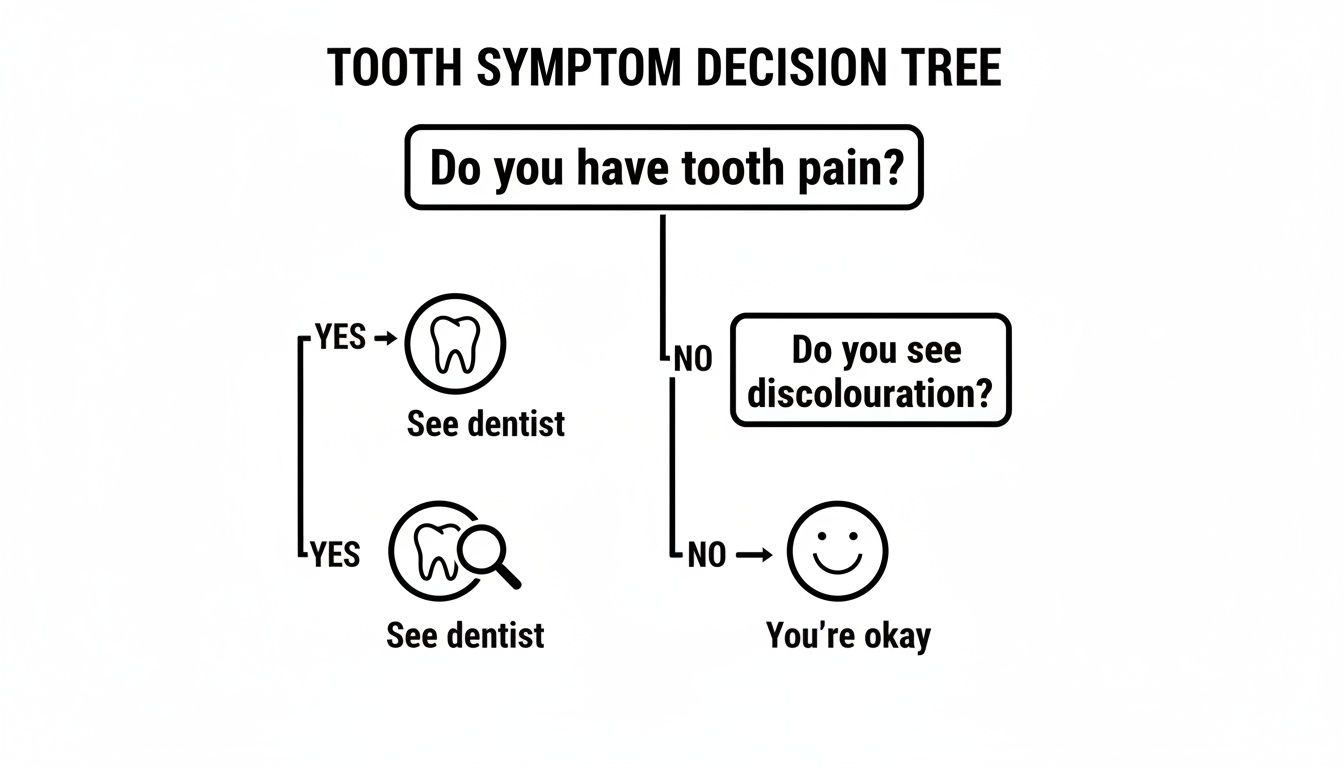
The main takeaway here is pretty clear: if you're feeling pain or seeing discoloration, your tooth is telling you it needs a professional look.
Modern Tooth-Colored Composite Fillings
For most people today, the ideal filling is one that's completely invisible. That's where tooth-colored composite resins really shine. These modern materials are a mix of plastic and fine glass particles, and we can match them perfectly to the natural shade of your teeth for a flawless finish.
One of their biggest health benefits is that they bond directly to the tooth, which adds support to the remaining structure. This often means we can be more conservative and remove less of your healthy tooth to place the filling—a huge win for your long-term dental health. Their ability to blend in seamlessly makes them the go-to choice for restoring front teeth or any other visible part of your smile.
You can get a deeper dive into how we use these materials for natural-looking results in our guide on tooth-colored dental fillings.
Durable and Strong Amalgam Fillings
When strength and durability are the top priority, nothing has a longer track record than amalgam fillings. You might know them as "silver fillings," and they're made from a tough, stable mix of metals like silver, tin, copper, and mercury. They are incredibly resilient and built to handle the heavy chewing forces on your back molars for years.
While their metallic look makes them less popular for teeth that show when you smile, their longevity and strength are hard to beat. They often last 10 to 15 years or even longer, making them a very practical and effective option for restoring cavities in the back of your mouth.
The choice between a natural-looking composite and a super-durable amalgam often boils down to balancing aesthetics with function. We'll help you weigh these factors to find the perfect match for your tooth and your lifestyle.
Premium Porcelain Fillings
If you're looking for the absolute best in both beauty and strength, porcelain (or ceramic) fillings are a fantastic premium choice. These aren't mixed and placed chairside; they're custom-made in a dental lab to fit your tooth perfectly before being bonded into place for a precise fit.
Porcelain is extremely resistant to staining and has a translucent quality that mimics natural tooth enamel better than any other material. This makes it one of the most aesthetically pleasing options available for restoring your smile to its natural beauty.
A Clear Comparison to Help You Decide
To make things simpler, let's break down the key differences in a table. This compares the most common materials based on what matters most to our patients: how they look, how long they last, and where they work best.
Comparison of Dental Filling Materials
This side-by-side look at the most common types of dental fillings can help you choose the best option for your needs.
| Material Type | Primary Benefit | Appearance | Typical Lifespan | Best For |
|---|---|---|---|---|
| Composite Resin | Excellent aesthetics | Tooth-colored; blends seamlessly | 5-10 years | Front teeth and other visible areas |
| Amalgam (Silver) | Maximum durability | Metallic silver | 10-15+ years | Back molars that handle heavy chewing |
| Porcelain (Ceramic) | Superior aesthetics & stain resistance | Natural and tooth-like | 10-15 years | Any tooth where appearance is a top priority |
Restorative dentistry is always moving forward, largely because patients are demanding better, more natural-looking solutions. In fact, the global market for dental fillings is expected to grow to around USD 13.84 billion by 2032, thanks to innovations in materials like composite resins. For our patients here in Katy and Houston, this means more and better choices for restoring teeth in a way that’s both strong and beautiful.
A Step-by-Step Guide to Your Filling Appointment
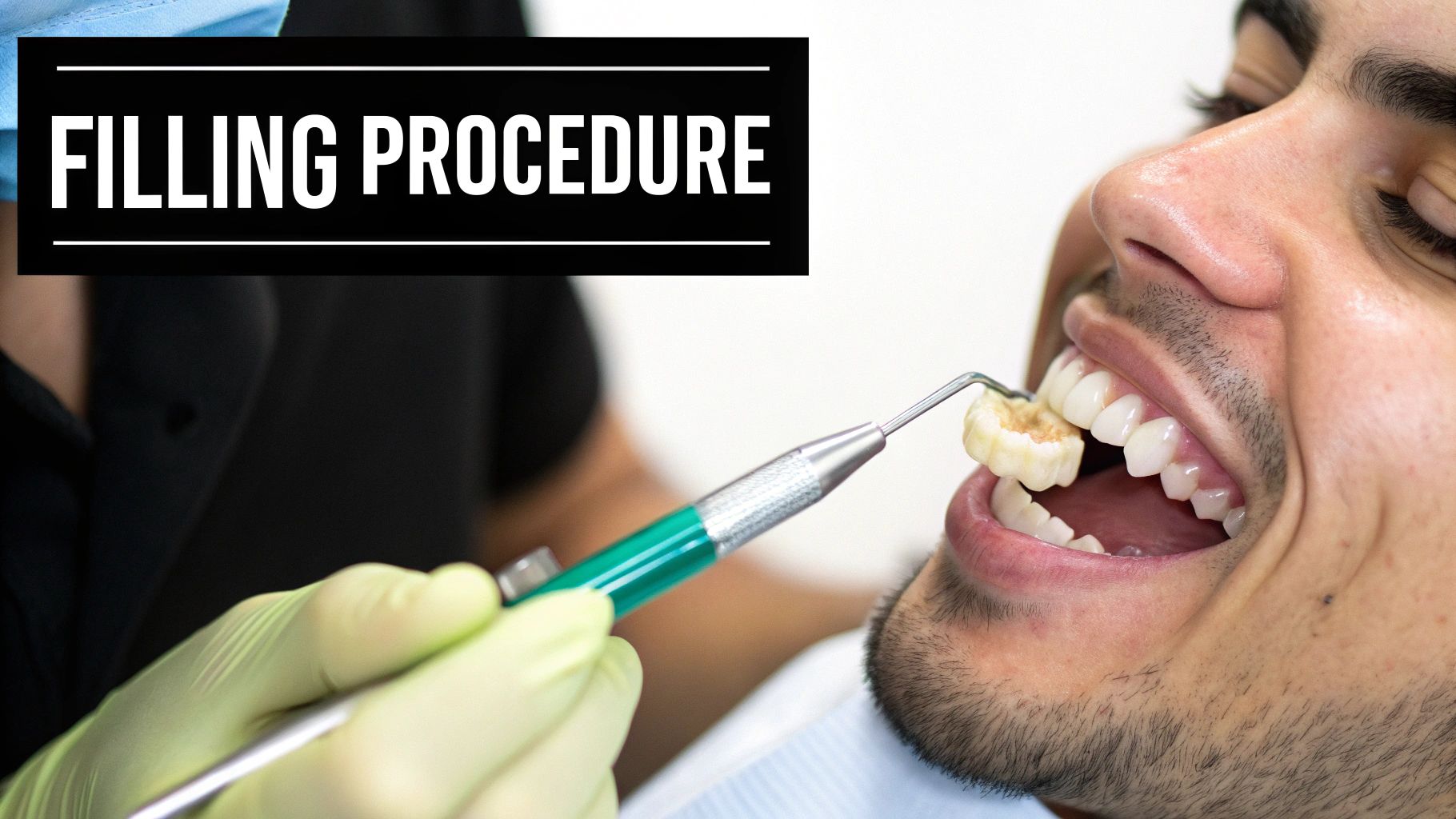
Knowing what to expect during a dental appointment can make all the difference, turning nervousness into a sense of calm and control. Getting a filling is a very common procedure we've designed to be as comfortable and efficient as possible. The goal is simple: to restore your tooth's health and appearance with minimal disruption to your day.
The entire experience is centered on your comfort. We understand that dental work can be stressful for some. But with modern techniques and a focus on gentle care, this is a straightforward, pain-free fix. Let’s walk through the process together so you know exactly what to expect.
Step 1: Numbing the Area for Total Comfort
First things first: we ensure you won't feel a thing. Your dentist will start by applying a topical numbing gel to your gums. This simple step preps the area so you barely notice the local anesthetic injection that follows.
Once the anesthetic is administered, it only takes a few minutes to completely numb the tooth and the surrounding tissue. You might feel slight pressure as we work, but you won't experience any pain. This is the key to a relaxed experience, allowing us to focus on meticulously restoring your tooth.
Step 2: Gently Removing the Decay
With the area completely numb, your dentist will use precise, specialized tools to gently clear out the decayed portion of the tooth. Think of it as carefully cleaning out a damaged spot to prepare for a strong, solid repair that will last.
Our priority is always to preserve as much of your healthy, natural tooth as possible. We meticulously clean the area, ensuring all bacteria and debris are gone. This creates a perfect, clean surface for the new filling, which stops decay in its tracks and prevents it from returning under the restoration.
The whole process is designed to be gentle. Modern dental tools give us incredible precision, letting us remove only what's necessary while leaving your healthy tooth structure intact. It's a conservative approach that's vital for your long-term dental health.
Step 3: Placing and Shaping Your New Filling
After the tooth is perfectly clean and dry, it's time to place the filling material. If you've chosen a tooth-colored composite, your dentist will apply it in thin layers. Each layer is expertly shaped to match the original curves and grooves of your tooth, restoring its natural form and function.
As each layer is applied, we use a special curing light. This blue light hardens the composite material in seconds, bonding it securely to your tooth. We repeat this layering and curing process until the cavity is completely filled and your tooth's anatomy is perfectly recreated, ensuring a strong bite and a beautiful result.
Step 4: Polishing for a Flawless Finish
The final step is to give the new filling a final polish. Your dentist will check your bite to ensure the filled tooth lines up perfectly with its neighbors. We'll make any tiny adjustments needed so that your bite feels completely natural and comfortable.
Finally, we polish the filling until it’s perfectly smooth and blends seamlessly with your natural tooth enamel. You'll leave our office with a tooth that’s not just healthy and strong, but also looks completely natural. No one will ever guess you had a filling—they'll just see your healthy, confident smile.
For anyone who feels extra anxious about dental visits, we have options to make sure your visit is stress-free. You can learn more about how we help patients relax by checking out our guide on how sedation dentistry can ease your dental anxiety.
Protecting Your New Filling for Long-Term Health
Leaving our office with a new filling is a great feeling. The decay is gone, and your tooth is whole, strong, and beautiful again. But that’s just the first step. Think of that filling as an investment in your oral health—and your daily habits are what protect it for years to come.
Taking care of your restoration properly starts the moment your appointment ends. The right aftercare and a consistent hygiene routine are simple but essential for making sure your filling functions well and looks great for the long haul.
What to Do Immediately After Your Appointment
The first few hours after filling a cavity are about letting your tooth settle. It’s very common to feel some temporary sensitivity to hot, cold, or pressure. This is completely normal as the tooth adjusts, and it usually fades within a few days to a week.
If you received a modern, tooth-colored composite filling, the material is already cured and hardened before you leave the chair. That means you can technically eat right away. Our advice? Wait until the local anesthetic wears off completely. This simple step prevents you from accidentally biting your tongue, lip, or cheek while they’re still numb.
For your first few meals, it's wise to choose softer foods that don’t require heavy chewing. Avoiding anything extremely sticky, hard, or crunchy on that side for a day or so gives the tooth all the time it needs to settle in comfortably.
Daily Habits to Safeguard Your Restoration
Once you're past the initial adjustment period, long-term care is all about a simple, consistent oral hygiene routine. Your new filling is durable, but the natural tooth structure around it can still get cavities. A great daily routine is your best defense for preserving your smile.
These habits are key to making your filling last:
- Brush Like You Mean It: Use a soft-bristled toothbrush and fluoride toothpaste to brush for at least two minutes, twice a day. Pay extra attention to the margin where the filling meets your tooth to keep it plaque-free.
- Don't Skip the Floss: Flossing every day is non-negotiable. It’s the only way to remove plaque and food from between your teeth and at the gumline, preventing new decay from forming at the edge of your filling.
- Rinse for Extra Protection: Using an antibacterial mouthwash can help reduce bacteria levels in your whole mouth, providing an extra layer of defense for both your filling and your natural teeth.
The whole point of your daily routine is to protect the seal between the filling and your tooth. When you keep that area plaque-free, you stop decay from creeping in at the margins—which is the number one reason fillings eventually need to be replaced.
The Don'ts: Habits That Can Wreck Your Filling
Just as important as what you do is what you don't do. Your teeth and fillings are built to be incredibly strong, but they aren't indestructible. Certain habits can put excessive pressure on your restorations, leading to chips, cracks, or even loosening the filling.
To keep your smile healthy and looking great, try your best to avoid these habits:
- Chewing on Hard Stuff: This includes ice, hard candies, un-popped popcorn kernels, and non-food items like pen caps or fingernails. This can create tiny fractures in both your filling and your natural tooth enamel.
- Using Your Teeth as Tools: Your teeth are designed for chewing, not for opening packages or cutting tape. Using them as a stand-in for scissors is a recipe for a dental emergency.
- Grinding or Clenching: Dentists call this bruxism, and it can put an incredible amount of force on your teeth and fillings, especially while you sleep. If you often wake up with a sore jaw, let us know. A custom-fit nightguard is a simple solution that can save your teeth from serious damage.
By making these simple care steps part of your routine, you can ensure your new filling does its job for many years, keeping your smile healthy and complete.
Why Choose Grand Parkway Smiles for Your Dental Fillings?
Picking a dentist for something as common as a cavity filling might seem straightforward, but the right choice can make a world of difference for your comfort and the long-term health of your tooth. It's about more than just patching up a hole; it's about a precise, comfortable repair that protects your overall dental health. Our entire practice is built on a foundation of trust, patient comfort, and using the best technology available.
We believe you can't treat what you can't see. That's why we start with advanced diagnostic tools, like 3D imaging, to get an incredibly detailed view of your tooth's structure. This lets us be surgically precise, removing only the decayed part while saving every bit of healthy tooth possible. The end result is a stronger, more durable filling that blends in perfectly with your smile.
A Team of Specialists Under One Roof
When you come to Grand Parkway Smiles, you're not just getting one dentist's opinion. You're getting the collective expertise of our in-house, multidisciplinary team. Our specialists in prosthodontics, endodontics, and pediatric dentistry all work together right here.
This team approach means that whether you need a simple filling or a more involved restorative procedure, you get specialized care designed just for you. It’s the best way to ensure a fantastic outcome for your oral health. We also know that dental anxiety is real. For anyone feeling nervous, we offer advanced sedation options to help you feel completely relaxed and at ease during your visit.
Our whole philosophy is centered on you. Your comfort and confidence are the most important part of our job. From the moment you walk through our doors, our goal is to give you a positive experience that restores both your tooth and your peace of mind.
Making Top-Tier Care Affordable
We're committed to making high-quality dental care accessible for every family in our community. A healthy, beautiful smile shouldn't come with a financial burden.
We work with most PPO insurance plans and have flexible financing and in-house savings plans to fit your budget. Our team is always here to help you understand your options so you can get the care you need, when you need it.
Choosing our practice means you’re choosing a dedicated partner in your oral health journey. We’re here to restore your tooth's function, improve your smile, and provide a supportive environment where you feel valued every step of the way.
Your Dental Filling Questions Answered
We know you probably have a few questions about getting a cavity filled. To help you feel completely informed and confident, we've put together answers to the questions we hear most often from our patients. Getting clear, straightforward answers is the best way to get peace of mind before your appointment.
Does Getting a Cavity Filled Hurt?
This is usually the number one concern, and we're happy to say that the procedure itself shouldn't be painful at all. Before we even think about starting, your dentist will use a local anesthetic to completely numb the tooth and all the gum tissue around it.
You might feel some slight pressure from the tools or hear some vibrations, but you won't feel pain. For anyone who feels particularly anxious about dental work, we also offer safe and effective sedation dentistry options to guarantee a comfortable and totally stress-free visit.
How Long Does a Dental Filling Last?
That’s a great question, and the honest answer is: it depends on a few things. The type of material we use, where the filling is in your mouth, and how well you take care of it all play a big part in its lifespan.
Here's a general idea of what you can expect:
- Amalgam (Silver) Fillings: These are known for being incredibly durable. They can easily last 10-15 years or even longer, which makes them a great choice for back molars that do all the heavy chewing.
- Composite (Tooth-Colored) Fillings: These fillings look fantastic and blend right in with your natural teeth. They typically last 5-10 years, and you can get the most out of them with excellent oral hygiene.
No matter which type you have, consistent brushing, daily flossing, and regular dental checkups will help extend the life of your filling and keep your whole smile healthy.
The single best way to protect your filling is to care for the tooth it's in. A filling can't get a cavity, but the natural tooth structure around it can. A strong daily hygiene routine is your best defense against needing a replacement.
Can I Eat Right After Getting a Filling?
This really comes down to the kind of filling you get. With modern, tooth-colored composite fillings, we use a special curing light to harden the material instantly right here in the office. That means you can technically eat as soon as you walk out the door.
However, we strongly suggest waiting until the numbness from the anesthetic wears off completely. It’s a simple precaution to keep you from accidentally biting your cheek, tongue, or lip while you can't feel them. For the more traditional amalgam fillings, it’s best to avoid chewing on that side for about 24 hours to give the material time to set to its full strength.
How Much Does It Cost to Fill a Cavity?
The cost of filling a cavity isn't one-size-fits-all. It can vary based on the material you and your dentist decide on, the size and location of the cavity, and of course, your dental insurance plan. As a general rule, composite fillings tend to cost a bit more than amalgam ones because of the materials and technique involved.
We believe in total transparency. Before we start any treatment, we'll give you a detailed plan that breaks down all the costs. Our team is also fantastic at helping you make sense of your insurance benefits and can discuss flexible payment options to make sure essential dental care is always affordable for your family.
At Grand Parkway Smiles, our focus is on providing gentle, precise, and beautiful dental fillings that get your oral health back on track and restore your confidence. If you have more questions or you're ready to book an appointment, please contact us today.