When you’re dealing with a serious tooth infection, the big question often boils down to this: root canal or extraction? The guiding principle we follow in modern dentistry is simple: saving your natural tooth is almost always the best path for your long-term dental health and the appearance of your smile.
A root canal is all about preserving your tooth, a procedure that helps maintain your smile's natural alignment and keeps your jawbone strong and healthy. On the other hand, an extraction removes the tooth entirely, which can kick off a chain reaction of other dental problems that compromise both the health and look of your smile.
Understanding the Goal: Save Your Natural Tooth

When a tooth is deeply infected or damaged, the living tissue inside—called the pulp—must be addressed to get you out of pain and stop the infection from spreading. From here, you have two very different options. One is a restorative path, designed to heal the tooth from the inside out and preserve your smile. The other involves removing the tooth completely.
Our primary goal is always to preserve your natural smile. Think of your teeth as an interconnected team. Each one has a specific job that supports your facial structure, your ability to chew, and your overall appearance. Losing even one member of that team can throw the whole system out of balance, affecting both your health and confidence.
Why Preservation Is the Priority
Opting to save a tooth with a root canal has major benefits for your dental health and appearance over simply pulling it. The entire treatment is designed to eliminate pain and infection while keeping your own tooth right where it belongs. This approach focuses on maintaining the natural, healthy smile you were born with.
Here are the key benefits of saving your tooth:
- Maintaining Jawbone Integrity: Your natural tooth root stimulates the jawbone, keeping it healthy and dense, which supports your facial structure. That stimulation stops the second a tooth is extracted, and bone loss begins almost immediately.
- Preventing Teeth Shifting: A gap left by an extraction is an open invitation for neighboring teeth to drift out of place. This can ruin the alignment of your smile and lead to bite problems.
- Preserving Natural Appearance: Nothing looks, feels, or functions quite like your own tooth. A preserved tooth blends seamlessly into your smile, maintaining its natural beauty.
The decision between a root canal or extraction isn't just about a single tooth; it's about the long-term health and stability of your entire smile. Preserving the natural root is the foundation for lasting oral wellness and a confident appearance.
Quick Comparison: Root Canal vs. Extraction
To understand the fundamental differences, let's look at what each procedure actually accomplishes for your dental health and smile. This initial comparison sets the stage for a more detailed analysis later on. If you want to dive even deeper, you can learn more about root canals in our complete guide.
| Feature | Root Canal Therapy | Tooth Extraction |
|---|---|---|
| Primary Goal | Save and restore the natural tooth for a healthy smile | Completely remove the tooth |
| Impact on Jawbone | Preserves bone by keeping the root, supporting facial structure | Leads to bone loss over time, which can alter appearance |
| Effect on Smile | Maintains natural alignment and a complete smile | Creates a gap, risking tooth shifting and cosmetic issues |
| Follow-Up Needs | Typically requires a dental crown to restore function | Requires tooth replacement (implant, bridge) to restore the smile |
Comparing the Patient Experience and Procedure
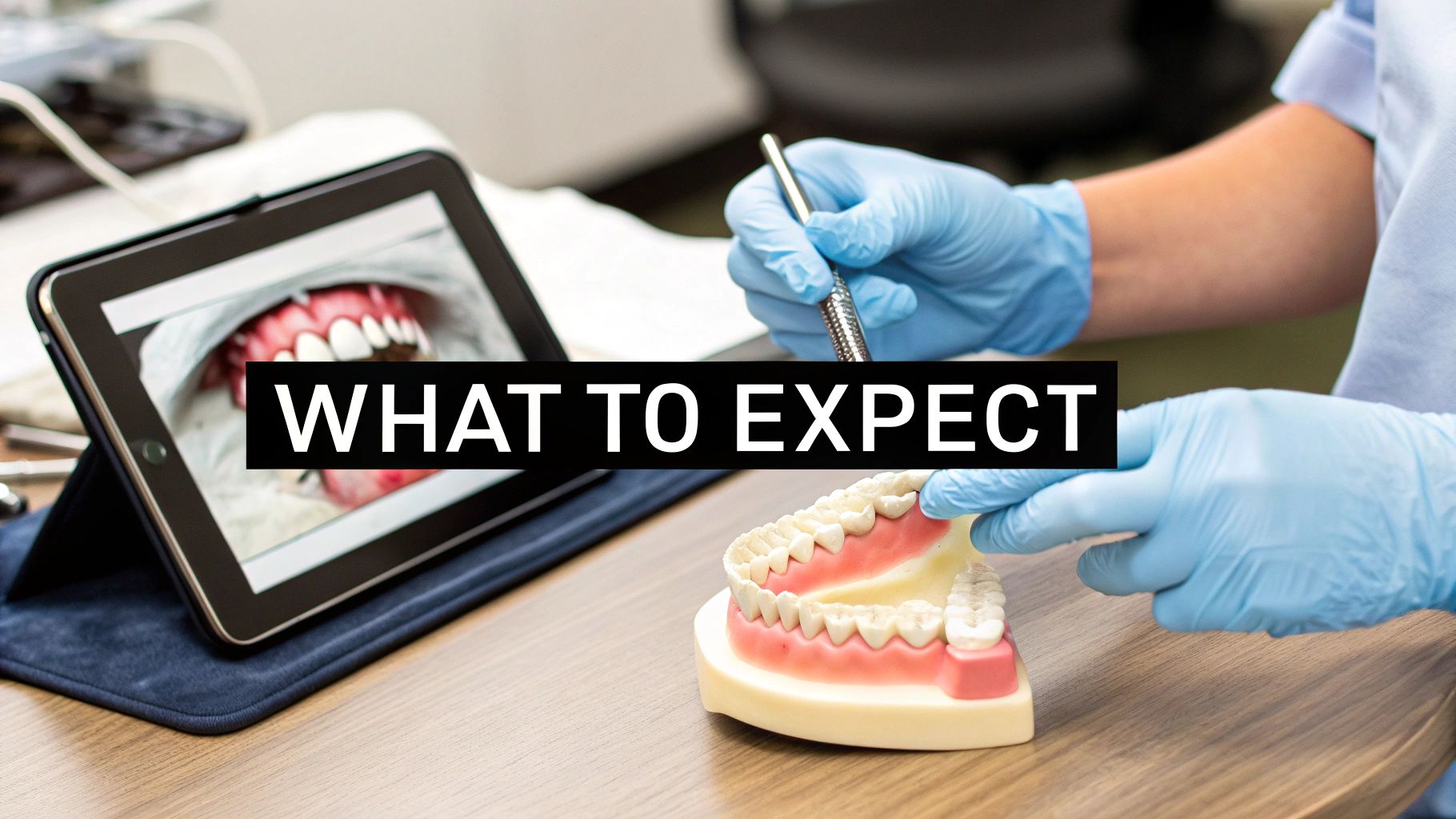
Knowing what actually happens during a dental procedure is often the first step in feeling comfortable and confident in your decision. When you're facing a choice between a root canal and an extraction, understanding the "what" and "why" behind each one can make a world of difference.
While both treatments are designed to solve the problem of a painful or infected tooth, their goals for your smile are worlds apart. One is about saving what you have, and the other is about starting a longer process of replacement. At Grand Parkway Smiles, we use advanced tools like 3D imaging for both procedures to ensure everything is precise, comfortable, and sets you up for the best possible outcome for your dental health.
The Modern Root Canal: A Gentle Restoration
Let's clear the air and forget the old myths. A modern root canal isn't the cause of pain—it's the cure. The real discomfort comes from the infection inside your tooth, and a root canal is the procedure that finally gets rid of it, bringing you significant relief and saving your smile.
The whole process is surprisingly straightforward and focuses entirely on your comfort and a beautiful, healthy result.
- Numbing the Area: First, we apply a powerful local anesthetic to make sure the tooth and surrounding tissue are completely numb. Your comfort is our priority, and you won't feel a thing during the procedure.
- Cleaning the Canals: We create a very small opening to access the infected inner tissue. Using specialized, tiny instruments, we carefully remove the damaged pulp and disinfect the inside of the tooth, eliminating the source of pain.
- Filling and Sealing: Once the canals are perfectly clean, we fill them with a biocompatible material called gutta-percha. This seals the tooth from the inside out, preventing any future infections.
- Final Restoration: The final step is placing a custom-made dental crown over the tooth. This protects it from future damage and restores its full strength and natural appearance, so you can chew and smile with complete confidence.
The Tooth Extraction Process: Removing and Replacing
Sometimes, a tooth has sustained too much damage to be saved. In these cases, an extraction becomes the right choice for your overall dental health. The goal is to safely remove the tooth to stop the pain and infection, giving you a clean slate for restoring your smile.
There are two main ways we do this:
- Simple Extraction: This is for a tooth that's fully visible. After numbing the area completely, we gently loosen the tooth and lift it out.
- Surgical Extraction: This is necessary if a tooth is broken at the gumline or hasn't fully emerged. It involves a small incision in the gum tissue to access and remove the tooth safely.
The core difference really comes down to the objective. A root canal is an act of preservation—it’s about rehabilitating your natural tooth so it can keep contributing to a healthy smile for years. An extraction is an act of removal, which then requires a separate plan to restore your smile’s appearance and function.
Choosing between a root canal or extraction isn't just about the procedure; it’s about the long-term plan for your smile. A root canal and crown give you a complete, beautiful solution, preserving the natural root that anchors your jawbone and keeps your other teeth perfectly aligned.
An extraction, on the other hand, is only the first step. It solves the immediate issue but creates a new one: a gap in your smile. That gap then needs a follow-up solution—like a dental implant or bridge—to restore your bite, prevent bone loss, and keep your smile looking its best. This is exactly why saving your natural tooth is always our first choice whenever it's clinically possible.
A Detailed Comparison of Long-Term Oral Health
The choice between a root canal or extraction goes way beyond treatment day. It’s a decision that echoes for years, shaping your overall oral health, your facial structure, and the appearance of your smile. While both get rid of a painful, infected tooth, they set you on two completely different paths for the future of your dental well-being.
One option is all about preservation, keeping the natural harmony of your smile intact. The other involves removal, which starts a much more complex journey to restore what was lost and prevent a cascade of other dental problems. To make the best choice for your health and appearance, you have to look at these long-term impacts.
Jawbone Integrity: The Silent Consequence of Tooth Loss
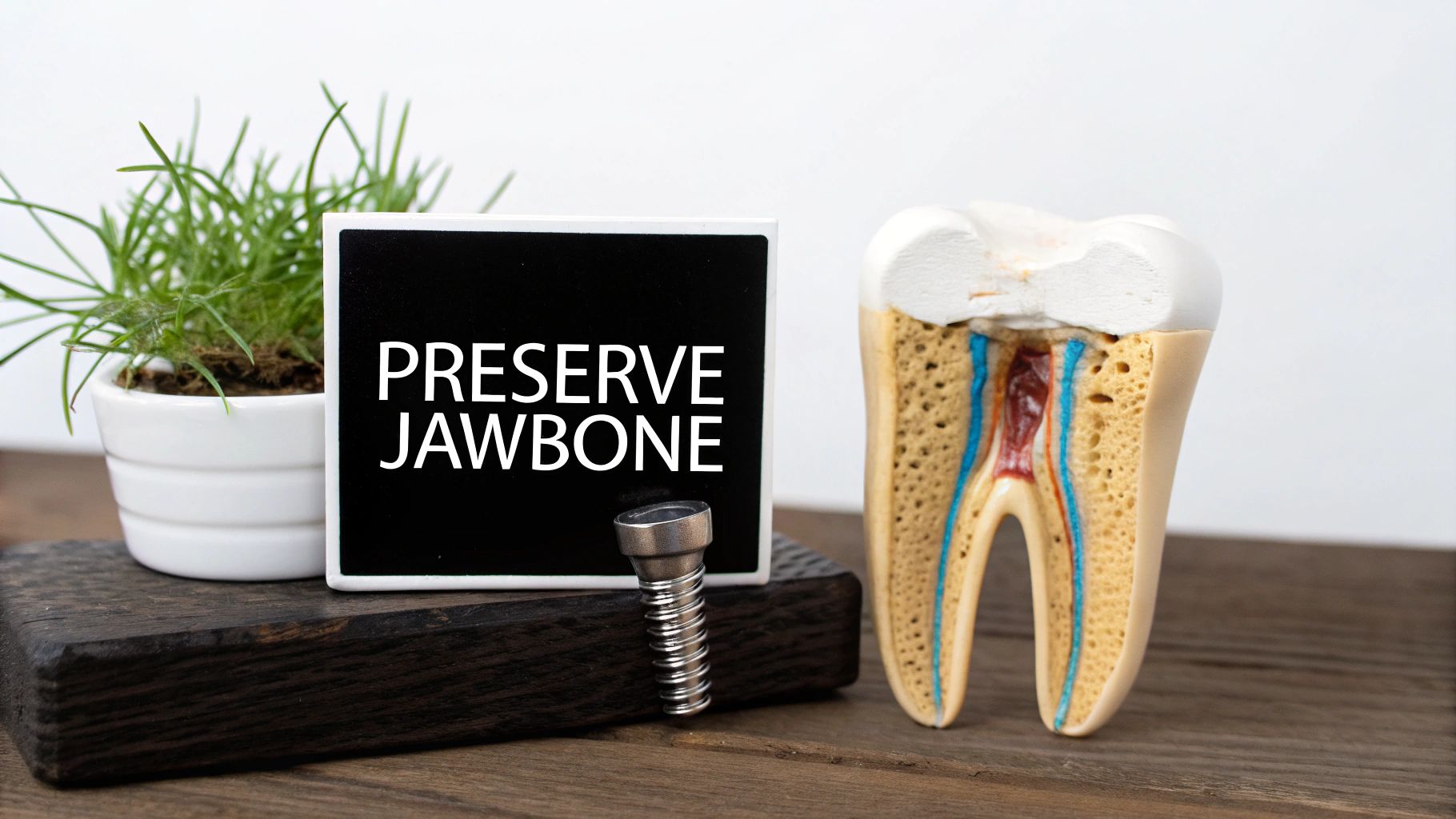
The single biggest long-term difference between these treatments is your jawbone. Your natural tooth roots do more than just hold your teeth in place; they actively stimulate the bone tissue around them. This stimulation signals your body to keep that part of the jaw strong and dense. A root canal saves the root, keeping that vital, health-preserving connection alive.
When a tooth is pulled, that stimulation is gone for good. Your body gets the message that the bone in that spot is no longer needed and starts a process called resorption, where the bone slowly melts away. This isn't a small detail—over time, it can lead to a sunken look in your face and weaken the foundation for neighboring teeth.
Choosing to save a tooth with a root canal is a direct investment in the structural integrity of your jaw. It stops the bone loss that starts almost immediately after an extraction, protecting your facial profile and the health of your entire smile.
The Ripple Effect on Adjacent Teeth and Bite Alignment
Your teeth work together in a very precise system. Take one out, and the whole balance is thrown off. That gap left by an extraction is an open invitation for neighboring teeth to start drifting and tilting into the empty space.
This shifting isn't just a cosmetic problem. It can disrupt your entire bite, leading to a host of health issues:
- Trouble Chewing: An off-balance bite can make it difficult to chew your food properly.
- Increased Wear and Tear: When teeth don't line up right, they can wear down much faster.
- TMJ Problems: The constant strain on your jaw from a misaligned bite can contribute to painful jaw joint issues, often called TMJ disorders.
A root canal avoids this domino effect completely. By saving the tooth and protecting it with a crown, you keep it right where it belongs, ensuring your bite stays stable and your smile remains beautifully aligned.
Comparing the Complete Treatment Journey
When thinking long-term, you have to look at the entire journey. A root canal and an extraction aren't equal endpoints. An extraction is really just the first step in a much longer, more involved process of restoration to get your smile back to full health and beauty.
Let's walk through what the typical timeline looks like for both choices.
Root Canal Therapy Journey:
- The Procedure: We remove the infected tissue from inside the tooth and seal it.
- The Restoration: A custom-made dental crown is placed over the tooth to protect it and restore its strength and appearance.
- The Result: Your natural tooth is back to being fully functional and looks great. The treatment is done, and your smile is whole.
Extraction and Replacement Journey:
- The Procedure: The entire tooth is removed from the socket.
- Healing Phase: The empty socket needs several weeks, sometimes months, to heal.
- Potential Bone Graft: If bone has already started to shrink, a bone graft might be necessary to rebuild the area for an implant.
- Implant Placement: A titanium post is surgically placed into your jawbone to act as a new root.
- Final Restoration: Finally, a crown is attached to the implant to fill the gap and replace the missing tooth, completing your smile.
The road after an extraction is much longer and more complex, involving multiple procedures over several months just to get back to a functional, complete smile. It's not just about removing the problem tooth; it's about everything that has to happen afterward. While a root canal saves the natural tooth, an extraction requires a comprehensive plan for replacement, which can involve solutions from dental implants to All-on-4 systems.
To make this even clearer, here's a direct comparison of how the two procedures measure up on key long-term factors for your dental health.
Root Canal vs. Extraction: A Side-by-Side Comparison
This table breaks down the crucial differences, helping you see how each choice impacts your oral health and smile in the long run.
| Factor | Root Canal Therapy | Tooth Extraction |
|---|---|---|
| Jawbone Health | Preserves bone by keeping the natural root intact, preventing resorption. | Leads to bone loss as the lack of a root eliminates natural stimulation. |
| Smile Alignment | Maintains natural position, preventing adjacent teeth from shifting. | Causes teeth to shift into the gap, disrupting bite and alignment. |
| Facial Appearance | Supports natural facial structure by preserving jawbone density. | Can lead to a sunken look over time due to bone and tooth loss. |
| Functionality | Restores full chewing function to the natural tooth with a protective crown. | Requires a replacement (implant or bridge) to restore chewing function. |
| Treatment Timeline | Complete restoration in just a few visits (procedure + crown). | Multi-stage process involving extraction, healing, and replacement over months. |
Ultimately, saving your natural tooth maintains the intricate system that keeps your mouth healthy, functional, and looking its best. While an extraction solves the immediate problem, it creates a new set of challenges that must be addressed to protect your future dental health and appearance.
The Real Story on Cost and Long-Term Value
When you’re weighing a root canal against an extraction, it’s natural for the upfront cost to be a factor. On the surface, an extraction often looks like the cheaper fix. But that’s a shortsighted view that doesn't account for the long-term health and financial benefits of saving your tooth.
To really get the full picture, you have to think about the lifetime value of each choice. Pulling a tooth isn't the end of the story—it's the start of a new, often much more expensive, chapter in your dental health.
The Hidden Financial Drain of a Tooth Extraction
Opting for an extraction creates a new problem: the empty space. Leaving a gap isn't a healthy option. It can cause your other teeth to shift, mess up your bite, and lead to jawbone loss. This means replacing the tooth isn't just for looks; it's a medical necessity to maintain your oral health.
And that’s where the real costs start adding up. The most beneficial replacement options each come with a significant price tag:
- Dental Implants: This is the best way to replace a tooth, but it’s a serious investment. A surgeon places a titanium post into your jawbone, a process that can take months to complete.
- Dental Bridges: A bridge uses your healthy neighboring teeth as anchors to hold a prosthetic tooth in the gap. The downside? We have to file down those perfectly good teeth and put crowns on them.
- Bone Grafts: If you wait too long after the extraction, your jawbone will start to shrink. Before you can even get an implant, you might need a bone graft to build the bone back up, adding another procedure and another bill.
Think of a tooth extraction as the down payment on a much more expensive restoration project. A root canal, on the other hand, is a one-time investment in keeping the valuable asset you already own: your natural tooth.
Root Canal and Crown: A One-and-Done Investment
Choosing a root canal, followed by a protective dental crown, is a complete solution that benefits your health and wallet. You're investing in saving your own tooth, which is invaluable. The procedure gets rid of the infection, restores the tooth to full function, and keeps your natural smile exactly as it should be.
Yes, the initial cost of a root canal and crown might seem higher than just pulling the tooth. But when you compare it to the total cost of an extraction plus a replacement, the root canal is almost always the more cost-effective choice. It prevents the domino effect of future procedures and expenses that a missing tooth creates. You get to skip the implants, bridges, and bone grafts, making it the smarter financial decision for the life of your smile.
The numbers back this up. While an extraction might have a mean cost of $280.10 and a root canal $689.10, the story flips once you add in the replacement costs. Research consistently shows that extraction becomes the more expensive path when you account for the necessary follow-up treatments. You can explore the full financial analysis of long-term dental treatment choices to see the data for yourself.
We Make the Best Decision Affordable
Here at Grand Parkway Smiles, we don’t believe cost should prevent you from getting the best possible care for your dental health. We work with most PPO insurance plans to maximize your benefits and also offer flexible financing options. Our goal is to help you see a root canal not as an expense, but as a wise investment in a healthy, beautiful smile that will last a lifetime.
Recovery Aftercare and What to Expect
Let's talk about what happens after the procedure, because recovery is a big part of the experience. You've probably heard myths about root canals, but modern dentistry has completely changed the game. The whole point of a root canal is to get you out of pain, not put you in it.
Thanks to incredibly effective local anesthesia, the treatment itself is comfortable. What surprises most patients is that the recovery is usually much smoother and quicker than what you go through after an extraction. Knowing what the healing journey looks like for each is a huge part of making the right call for your health and comfort.
The Gentle Recovery from a Root Canal
Once a root canal is done, the main job is to let the tooth and gums settle down. That intense, throbbing pain from the infection? Gone. It’s replaced by some mild soreness or sensitivity that’s very manageable and typically fades within a few days.
Most of our patients are back to their normal routines almost immediately. We just give them a few simple guidelines to follow for optimal healing:
- Pain Management: For any tenderness, over-the-counter pain relievers like ibuprofen are usually all you'll need.
- Dietary Adjustments: For a day or two, stick to softer foods. It's also best to avoid chewing directly on that tooth until we've placed your permanent crown.
- Oral Hygiene: Keep brushing and flossing like you normally would, just be a bit more gentle around the treated area for a little while.
The recovery is so straightforward because we've kept your natural tooth right where it belongs. There’s no open wound to care for, which dramatically lowers the risk of complications and speeds up the healing process, getting you back to your life faster.
The More Complex Healing After an Extraction
Recovering from an extraction is simply a more involved process. Your body has to heal an open socket where your tooth used to be, and that requires careful attention to ensure proper healing.
The initial healing can take anywhere from a few days to a week and often involves more noticeable discomfort, swelling, and stricter limits on what you can eat. A major concern during this time is a painful condition called dry socket, which happens if the protective blood clot in the socket gets dislodged. For a complete rundown, you can review our instructions after a tooth extraction.
The aftercare for an extraction is far more demanding. It requires strict adherence to post-operative instructions to avoid infection and complications like dry socket, making the healing journey longer and more delicate than that of a root canal.
Because an extraction leaves you with a gap, the healing is only the first chapter. The recovery period is often just a waiting game before you can start the next phase of treatment: replacing the tooth. This extended timeline is a huge factor to consider. Choosing a root canal lets you skip this long, multi-stage restoration journey entirely, getting you back to a healthy, complete smile with minimal disruption.
Making an Informed Choice for Your Smile
When you're facing a choice between a root canal or extraction, it's about more than just one tooth; it’s about the big picture for your long-term oral health and appearance. After looking at the procedures, recovery, and costs, the professional consensus is clear: saving your natural tooth is almost always the best way to preserve your smile’s health, function, and beauty. Pulling the tooth might feel like a quick fix, but it often kicks off a much longer and more complicated journey to restore your bite and smile.
A root canal isn't just a temporary patch. It's a definitive treatment designed to heal your tooth from the inside out and restore its strength. This approach keeps the natural balance of your smile intact, preventing the chain reaction of problems that can start when a tooth is lost. Here at Grand Parkway Smiles, our advice is always driven by this principle of preservation whenever it’s clinically possible.
Your Personalized Treatment Path
So, how do we determine the best path forward for you? Our team starts with a thorough evaluation. We're not just looking at the problem tooth; we're looking at the entire health and structure of your mouth.
Here are the key things we consider to ensure the best outcome for your smile:
- Extent of Damage: Is there enough healthy tooth structure left to securely hold a crown after the treatment?
- Infection Severity: Has the infection stayed inside the tooth, or has it started to affect the surrounding gum and bone tissue?
- Bone Health: The health of your jawbone is a huge factor in the long-term success and appearance of either option.
This detailed assessment lets us build a treatment plan that’s made specifically for you. The end goal is to give you a lasting result that lets you eat, speak, and smile with complete confidence for years to come. Ultimately, the decision between a root canal or extraction is one we make together.
The best decision is a shared one. We provide the clinical expertise and clear information; you provide the insight into your lifestyle and goals. Together, we choose the path that best protects your smile for a lifetime.
If you’re considering this procedure, you’re definitely not alone. Root canal treatment is a cornerstone of modern dentistry that millions of people rely on. In fact, a 2023 systematic review found that over half of the global population studied has had at least one root canal, which shows just how vital this procedure is for saving natural teeth around the world. You can read more about the global prevalence of this treatment to see its impact.
This infographic gives you a simple visual guide for what to generally expect from recovery after each procedure.
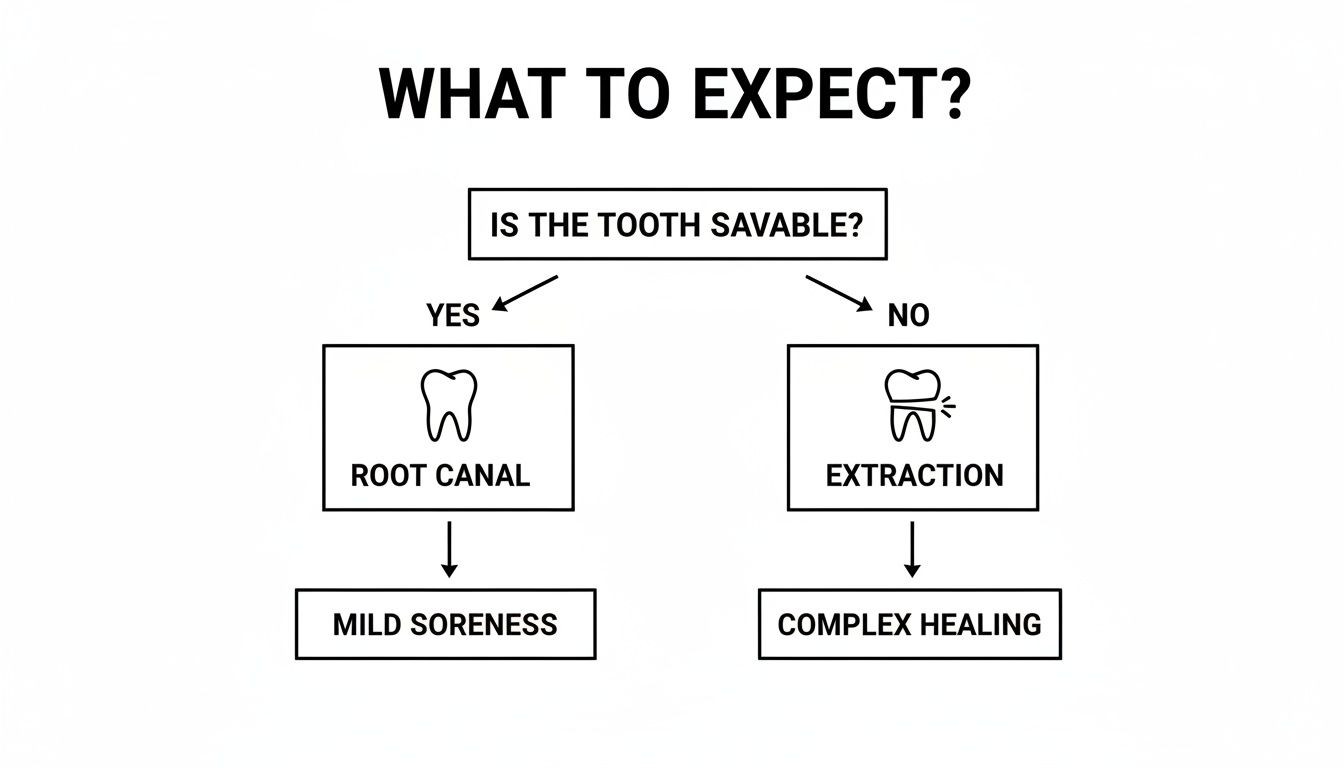
As the chart shows, recovery from a root canal is typically pretty straightforward, leading directly to a restored, healthy tooth. An extraction, on the other hand, usually marks the beginning of a more involved healing and restoration journey. The most important step you can take right now is to schedule a consultation at our Katy office so we can figure this out together.
Frequently Asked Questions About Your Treatment Options
It's completely normal to have questions when you're deciding between a root canal or an extraction. Getting clear answers is the first step toward feeling confident in your choice for your dental health. Here are some of the most common questions we hear from our patients every day.
Is a Root Canal Painful?
This is probably the number one question we get, and the answer is a benefit you'll love: no. Modern root canal therapy is designed to get you out of pain, not cause it.
The intense toothache you're feeling is from the infection deep inside the tooth. Thanks to highly effective local anesthesia, the procedure itself is quite comfortable. Most of our patients say it feels a lot like getting a simple filling. The benefit of the procedure is immediate pain relief and saving your tooth.
How Long Will My Restored Tooth Last?
When a tooth is properly restored with a root canal and a protective crown, it can absolutely last a lifetime with good care. This is a major benefit of choosing preservation.
The success rate for root canal treatment is incredibly high—often over 95%. By choosing to save your natural tooth, you’re making a smart investment in a durable, long-term solution that keeps your smile whole and healthy. All it takes to protect that investment is good brushing, flossing, and regular check-ups.
What Happens If I Extract a Tooth and Do Nothing?
Deciding to pull a tooth and then just leave the gap is one of the worst things you can do for your long-term oral health and appearance. The consequences go way beyond just having a missing tooth.
- Bone Loss: The jawbone needs stimulation from tooth roots to stay strong. Without that root, the bone in that area starts to shrink and weaken almost immediately.
- Teeth Shifting: Like books on a shelf with one removed, the neighboring teeth will start to drift and tilt into the empty space. This can ruin your smile's alignment.
- Changes in Appearance: Over time, significant bone loss can lead to a sunken, aged look in your cheeks and jawline, changing your facial structure for the worse.
Neglecting to replace an extracted tooth sets off a domino effect of negative consequences, impacting everything from your jaw's structure to the alignment and appearance of your entire smile. It is never a recommended long-term strategy for your health.
Can Any Dentist Perform a Root Canal?
While many general dentists are well-equipped to handle routine root canals, more complex cases often get referred to an endodontist for the best possible health outcome.
Think of an endodontist as a root canal specialist. They’ve completed several extra years of focused training dedicated to diagnosing tooth pain and performing root canal procedures. They are the experts in saving natural teeth and have the specialized tools to manage even the trickiest cases, ensuring you get a beautiful and lasting result.
At Grand Parkway Smiles, we have the expertise to help you navigate this decision and find the right path for your unique situation. If you're dealing with tooth pain, don't wait for it to get worse. Schedule a consultation with our team today, and let's find a lasting solution that puts your health, comfort, and smile first.