When a throbbing toothache flares up, your first instinct might be panic. But the best thing you can do is take a deep breath and focus on calming the immediate crisis. The first hour is critical, and a few simple, targeted actions can make a world of difference in your comfort level and help protect your dental health.
This isn’t about finding a permanent fix—that’s a job for a dental professional. This is about taking back control from the pain so you can think clearly and get through the next few hours while preserving the health of the affected tooth and surrounding gums.
Your First Moves for Immediate Tooth Pain Relief
A sudden toothache can bring your entire day to a screeching halt, impacting everything from your work to your sleep. In that moment, your goal is simple: get relief, and get it fast.
Knowing what to do right away with things you probably already have at home is your bridge to getting professional care. These initial steps are designed to reduce pain, prevent further irritation, and give you the breathing room to schedule a dental visit, which is essential for your long-term oral health.
When pain strikes, it’s easy to feel helpless. Instead of scrambling, here’s a quick reference table for what to do right now. These are safe, effective first-aid steps to manage the immediate crisis and protect your dental health.
Immediate Actions for Fast Tooth Pain Relief
| Action Item | Why It Works | Instructions & Cautions |
|---|---|---|
| Warm Salt Water Rinse | It’s a natural antiseptic that cleans the area, reduces bacteria, and gently draws fluid out of swollen gums, promoting a healthier oral environment. | Mix 1/2 teaspoon of salt in a cup of warm (not hot) water. Swish gently for 30 seconds, focusing on the sore spot, then spit. |
| Cold Compress | Narrows blood vessels to reduce swelling and inflammation. It also creates a numbing effect on the nerves, protecting tissue from further irritation. | Wrap a cold pack or ice in a thin towel. Apply to the outside of your cheek for 15-20 minutes at a time. |
| Over-the-Counter Pain Relievers | Anti-inflammatory medications like ibuprofen can directly target the inflammation causing the pain, which is key to protecting the tooth’s nerve. | Always follow the dosage on the package. Never place aspirin directly on the tooth or gums, as it can cause a chemical burn. |
| Clove Oil (Used with Care) | Eugenol, the active ingredient, is a natural anesthetic. It can provide potent, temporary numbing to help you function. | Put 2-3 drops on a cotton ball and place it gently against the tooth. Avoid getting it on your gums or tongue, as it can cause irritation. |
These are your go-to strategies for the first hour of pain. They are temporary measures designed to get you comfortable while you arrange for a proper dental evaluation to ensure the health of your tooth.
Cleansing the Area with a Salt Water Rinse
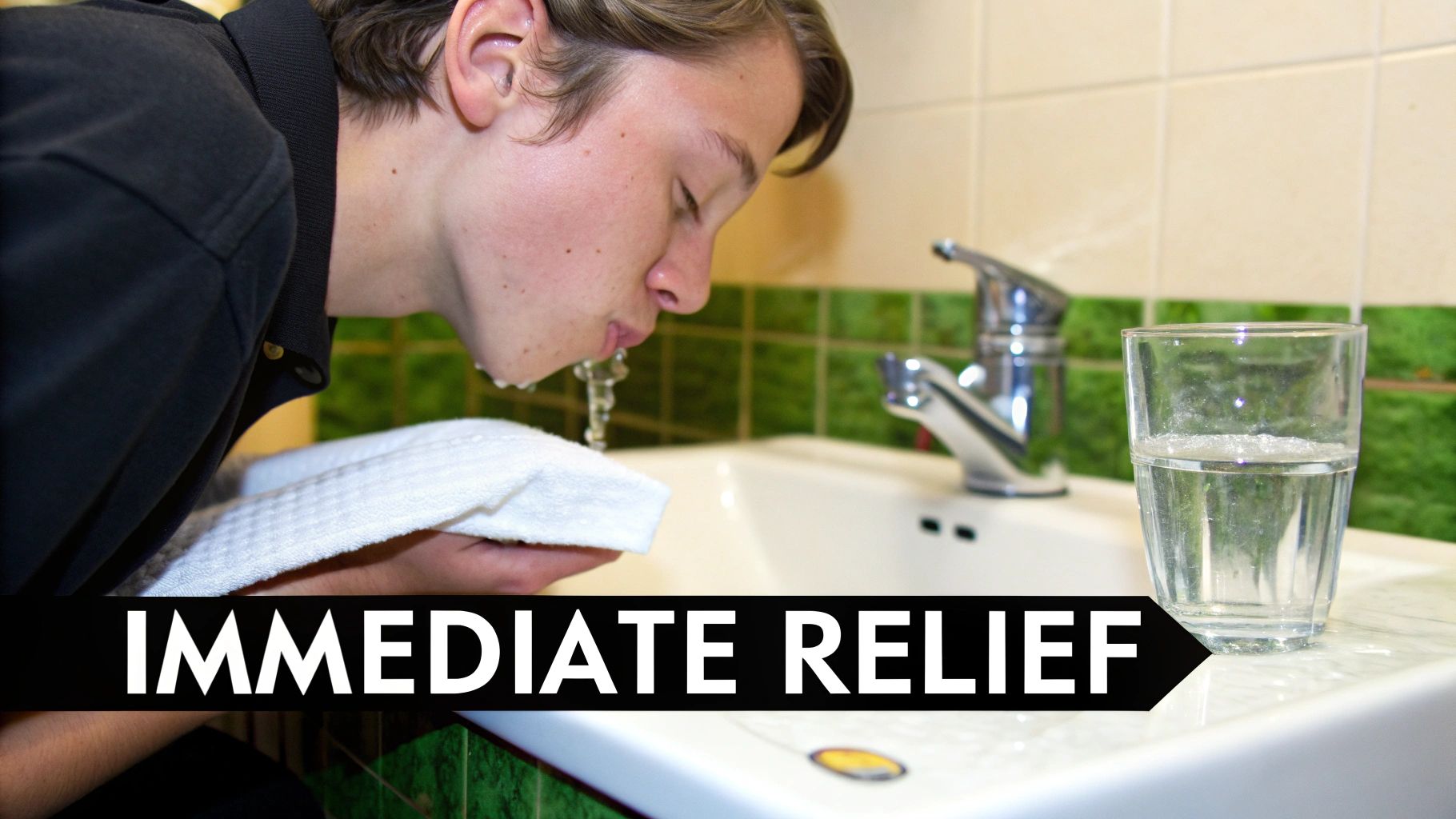
One of the oldest and most reliable tricks in the book is a simple warm salt water rinse. Just mix about half a teaspoon of table salt into a cup of warm water until it dissolves. Don’t make the water too hot, as that can aggravate an already sensitive tooth.
Swish that solution around your mouth for about 30 seconds, making sure it gets all around the painful area, and then spit it out.
Doing this accomplishes a few key things right away for your dental health:
- It gently cleanses the area, flushing out any food debris that might be stuck and causing irritation.
- The salt helps reduce inflammation by drawing excess fluid out of the swollen gum tissue around the tooth, promoting healing.
- It creates a less hospitable environment for bacteria, which can help prevent an infection from getting worse.
Numbing the Pain with a Cold Compress
After you’ve rinsed, the next step is to tackle the pain signals head-on. A cold compress is your best friend here. Grab a bag of frozen peas or an ice pack, wrap it in a dish towel, and hold it against your cheek over the painful tooth.
Apply it for about 15-20 minutes on, then take a break for 20 minutes before reapplying if needed. The cold works by constricting the blood vessels, which brings down swelling and inflammation. Just as importantly, it helps numb the nerve endings, providing blessed relief from that sharp, throbbing ache.
Important Takeaway: Whatever you do, never apply heat to the side of your face for a toothache. Heat can feel comforting, but it can also draw an infection toward the surface and seriously worsen an abscess, jeopardizing your dental and overall health. Always stick with cold.
These initial steps are your first line of defense. They calm the immediate crisis and buy you time. If you’re dealing with a nasty toothache, knowing these basics is essential. For a deeper dive into what might be causing the issue, check out our detailed guide on what to do for a toothache.
Getting Smart With Over-the-Counter Pain Relief
When a toothache hits hard, that pharmacy aisle can be a blur. Grabbing the right bottle is your first real step in how to stop tooth pain fast, but knowing which medication to pick—and why—can make all the difference in your comfort level and help protect the tooth.
Most of the time, the misery of a toothache comes down to one thing: inflammation. Whether it’s from an infection, a deep cavity, or an injury, your body’s response is to swell up, putting immense pressure on the sensitive nerves deep inside your tooth. That’s why just blocking the pain signal often isn’t enough to get real relief.
Why Dentists Point to NSAIDs First
When you’re dealing with dental pain, not all pain relievers are built the same. We almost always recommend nonsteroidal anti-inflammatory drugs (NSAIDs) as the best place to start. The ones you’ll see on the shelf are ibuprofen (Advil, Motrin) and naproxen (Aleve).
Unlike acetaminophen (Tylenol), which just tells your brain to ignore the pain, NSAIDs pull double duty. They don’t just reduce pain; they actively fight the inflammation causing it. By calming down the swelling in and around the tooth, ibuprofen delivers more targeted, meaningful relief that helps protect the tooth’s delicate nerve tissue.
It helps to think of it this way: acetaminophen is like turning down the volume on a fire alarm, but ibuprofen actually helps put out the fire.
Combining Medications for Serious Pain
For that severe, throbbing pain that keeps you staring at the ceiling all night, there’s a specific combination of OTC meds that provides surprisingly powerful relief. And it’s not just a hunch—it’s backed by solid clinical evidence.
A massive review of data from over 58,000 patients found that combining 400 mg of ibuprofen with 1,000 mg of acetaminophen was more effective for acute dental pain than even some prescription opioids. Plus, it comes with far fewer side effects. You can read more about these oral analgesic guidelines directly from the American Dental Association.
This one-two punch works because each drug tackles the pain from a different angle. Ibuprofen gets to work on the inflammation right at the tooth, while acetaminophen intercepts the pain signals in your central nervous system. Together, they create a synergy that can get you through the worst of it.
Crucial Safety Note: Always, always read and follow the dosing instructions on the package. Never go over the maximum daily dose for either medication. Also, be careful about other medicines you might be taking (like for a cold or the flu) that could contain hidden acetaminophen.
Best Practices for Safe Dosing
To keep your pain under control without risking your health, stick to these guidelines:
- Start with Ibuprofen: For pain that’s manageable but still nagging, start with a standard dose of ibuprofen (400-600 mg) every 6-8 hours.
- Stagger Your Doses: If you need to combine medications for severe pain, don’t take them at the same time. Take your ibuprofen first, then take the acetaminophen about three hours later. This keeps a more consistent level of relief in your system.
- Don’t Take on an Empty Stomach: Always take NSAIDs like ibuprofen with a bit of food or a glass of milk. It helps protect your stomach lining from irritation.
Remember, using over-the-counter pain medicine is a temporary fix. It’s meant to keep you comfortable until you can get to our office for a permanent solution. This strategy helps you manage the immediate crisis so we can focus on protecting your long-term dental health.
Home Remedies That Actually Provide Relief
While you’re waiting for your dental appointment, your kitchen cabinet might hold the key to some immediate, gentle comfort. Let’s be clear: these are not permanent fixes. But when you’re desperate to stop tooth pain fast, they can provide very real, temporary relief and promote a cleaner oral environment.
Using these remedies correctly helps manage the ache, keep the area clean, and prevent further irritation. Each method works a little differently, from reducing inflammation to providing a natural numbing effect. They’re simple, accessible, and can make a huge difference in your ability to get through the day or night.
Simple Solutions for Soothing Discomfort
A saltwater rinse is often the first thing we dentists recommend, and for good reason. It’s a natural disinfectant that helps clean the area, reduce bacteria, and calm down angry, inflamed gum tissue. The salt gently draws out fluid that causes that painful swelling, helping create a cleaner environment around the sore tooth.
In the same way, a well-applied cold compress is your best friend for managing both pain and swelling. By constricting the blood vessels in the area, it reduces inflammation and creates a temporary numbing sensation on the nerve endings in your jaw.
Key Takeaway: Always apply a cold compress to the outside of your cheek, never directly to the tooth itself. Use it for 15-20 minutes at a time to effectively numb the area without risking any tissue damage.
Harnessing Natural Anesthetics
For a more targeted approach, a couple of natural remedies can be surprisingly effective. These work by directly addressing the pain signals coming from that agitated nerve.
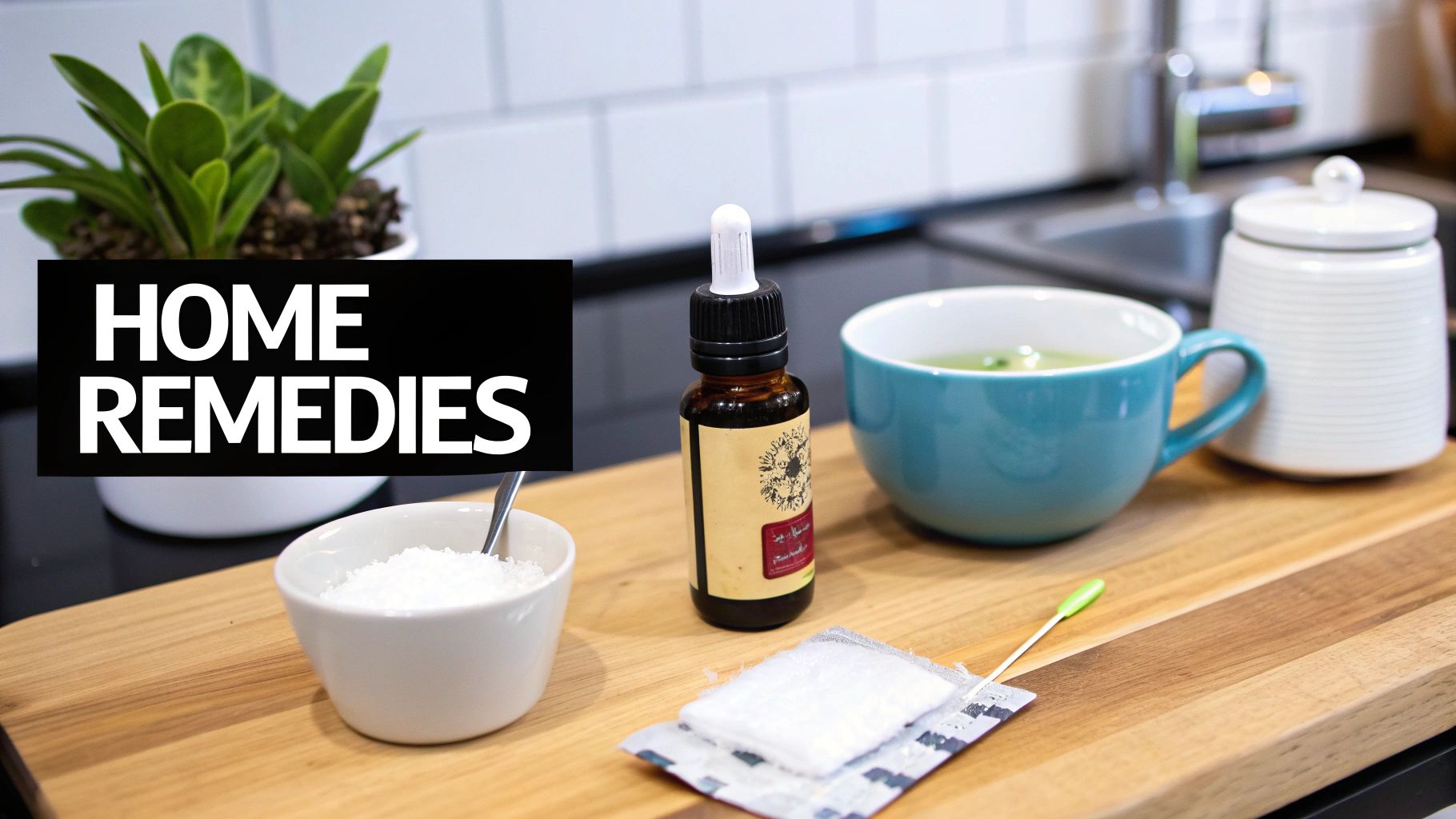
- Clove Oil: This is a classic remedy because it contains eugenol, a natural anesthetic. Just put two or three drops on a cotton ball and hold it gently against the aching tooth. Be very careful to avoid getting it directly on your gums or tongue, as it can cause some irritation.
- Peppermint Tea Bags: After you’ve brewed a cup of tea, don’t toss the bag! A used, cooled peppermint tea bag can have a mild numbing effect. Peppermint contains menthol, which is known for its soothing properties. Just place the cool, damp bag against the affected area for a few minutes.
There’s also a growing interest in other plant-based options, with some research exploring things like aloe juice for oral care benefits.
Think of these remedies as your temporary support system. They are designed purely to bridge the gap until you can get professional care from us. They help manage the immediate symptoms, ensuring the problem doesn’t get worse. But remember, the ultimate goal is to see a dentist to address the root cause, restore your tooth’s health, and protect that beautiful smile.
When you’re dealing with a toothache, the only thing on your mind is getting it to stop. And fast. But figuring out why it’s hurting is the key to finding a real, lasting solution. That nagging throb or sharp zing isn’t just random—it’s your body’s way of sending up a flare, signaling that something is wrong with your dental health.
Think of that pain as a very specific alarm. Different kinds of pain point to different problems, and only a dentist can truly get to the root of the issue and turn that alarm off for good, preserving your tooth and smile.
Common Reasons Your Tooth Might Be Hurting
A sudden, sharp pain when you eat something sweet or drink something cold? That’s often the classic sign of tooth decay, better known as a cavity. This is what happens when bacteria eat through your protective enamel and expose the sensitive layer underneath. If you ignore it, the decay can work its way deeper, turning that temporary zing into a constant, miserable ache.
Another frequent offender is a cracked or fractured tooth. Sometimes it’s obvious you’ve damaged a tooth after an injury, but other times it’s a tiny hairline fracture from grinding your teeth at night or biting down on something hard like ice. This kind of damage can expose the nerve, causing a jolt of pain every time you chew and compromising the tooth’s structure.
A deep, throbbing ache that just won’t quit, especially if it comes with swollen gums or a funky taste in your mouth, is a major red flag for an abscess. This is a serious infection at the root of your tooth and it’s not something to wait on—it needs immediate dental care before the infection has a chance to spread and threaten your overall health.
When the Problem Isn’t Just the Tooth
Sometimes, the pain you feel in your tooth isn’t actually starting in the tooth at all. Several other issues can send pain signals that feel exactly like a toothache, which is why a professional diagnosis is so important for your dental health.
- Gum Disease: In its early stages, you might just have some minor sensitivity. But as gum disease gets worse (periodontitis), it can cause a deep, aching pain when the gums pull away from the teeth, creating pockets where infection can settle in and threaten the stability of your teeth.
- Sinus Pressure: Ever notice a toothache when you have a bad cold? Your maxillary sinuses are located right above your top molars. When they get inflamed from allergies or an infection, the pressure can push down on the roots of your upper teeth, perfectly mimicking a toothache.
- Damaged Fillings: Old fillings don’t last forever. When one cracks or comes loose, it can suddenly expose the sensitive parts of your tooth, leading to sharp pain and sensitivity out of nowhere. This leaves your tooth vulnerable to further decay.
It’s a common belief that antibiotics are a cure-all for a toothache. The truth is, their role is pretty limited unless there’s a widespread infection. With up to 35% of people worldwide walking around with untreated cavities—a major source of dental pain—the most direct path to relief isn’t a pill, but a dental procedure to fix the actual problem. You can learn more about the proper use of antibiotics in dentistry and get more insights from this in-depth research on managing dental pain.
Recognizing a True Dental Emergency
Most of the time, a toothache is just an annoying problem you have to manage for a day or two. But sometimes, that pain is a sign of something much more serious happening under the surface. It’s really important to know when tooth pain crosses the line from a nuisance into a full-blown dental emergency.
Knowing the difference means you can stop trying to fix it at home and get the immediate, professional care you need to protect your overall health. Ignoring these kinds of warning signs won’t make them disappear; it can actually let an infection spread and turn into a much bigger health crisis. Spotting these signs is a critical part of stopping tooth pain fast—and making sure it stays gone.
Warning Signs That Demand Immediate Attention
If your toothache comes with any of the symptoms below, it’s time to call a dentist right away. These are crystal-clear signs that a home remedy isn’t going to cut it and your dental health is at serious risk.
- Severe, Throbbing Pain: We’re not talking about a little twinge. This is pain so intense that over-the-counter medications barely touch it. It’s a constant, powerful ache that makes it impossible to eat, sleep, or even think straight.
- Facial Swelling: If your cheek, jaw, or the area around your eye starts to swell up, that’s a major red flag. This usually means an infection, like a dental abscess, is spreading into the nearby soft tissues.
- Fever: A toothache plus a fever is a classic sign your body is fighting a serious infection. It means the problem is no longer just in your tooth and needs immediate medical help.
- A Foul Taste or Odor: Do you have a persistent salty, metallic, or just plain awful taste in your mouth? If you also see a small, pimple-like bump on your gums, you could have a draining abscess. That’s a sign of a serious infection releasing pus into your mouth.
This decision tree can help you start figuring out where your pain might be coming from.
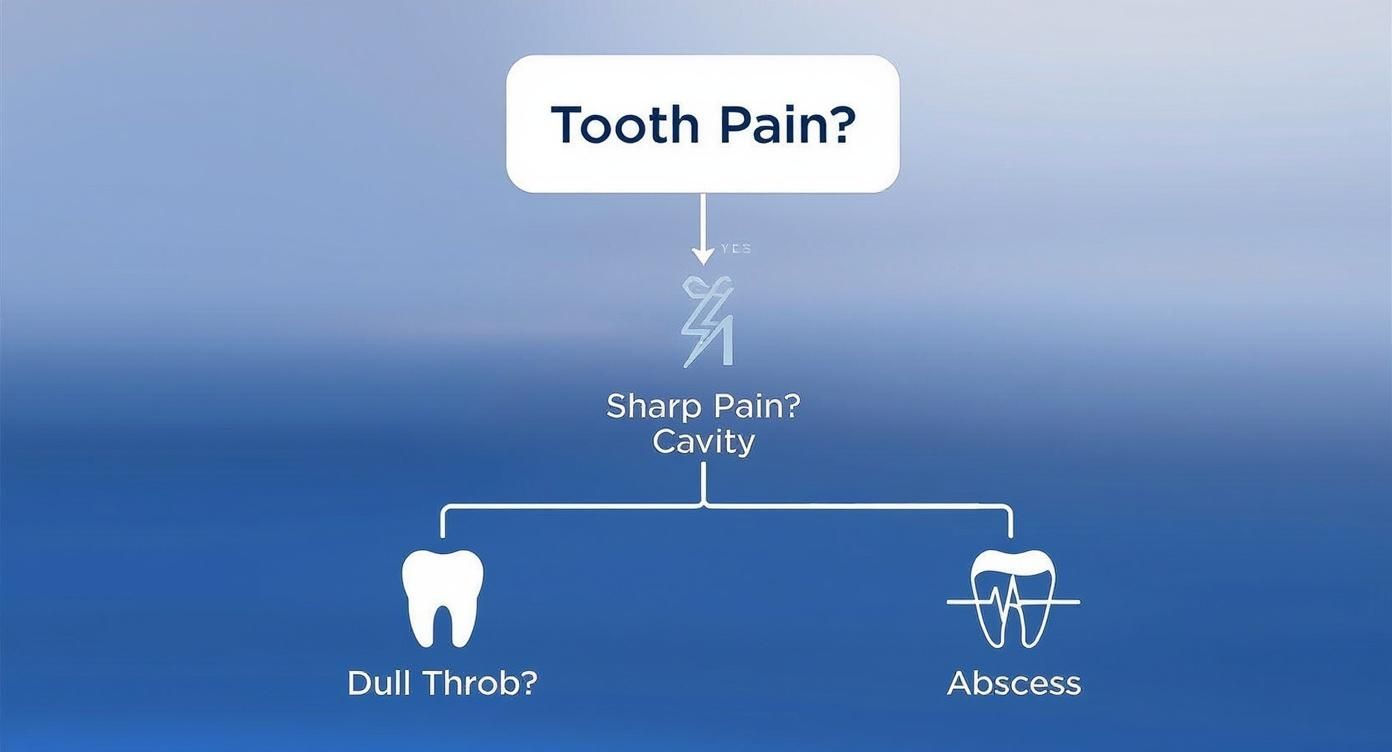
As you can see, different types of pain often point to very different problems, which is exactly why getting a professional diagnosis is so important for your long-term dental health.
When to Take Action
A dental emergency isn’t always about agonizing pain. If you have any difficulty breathing or swallowing, that is an absolute medical emergency requiring an immediate trip to the hospital. It could mean an infection is threatening your airway. Likewise, any kind of trauma or injury to your face or mouth that loosens or knocks out a tooth needs professional attention right away to save the tooth.
Any of these symptoms should be taken seriously. An untreated dental abscess can lead to a life-threatening condition called sepsis. The goal isn’t to scare you, but to empower you to act swiftly to protect your health.
Understanding the difference between a simple ache and a true crisis is vital. If you’re experiencing any of these severe symptoms, it’s important to know what to do during a toothache or injury. Our team put that guide together to help you navigate a stressful situation. Your health is the number one priority, and taking quick action can keep a small issue from becoming a major one.
Getting Real, Lasting Relief at Grand Parkway Smiles
Let’s be honest: while home remedies and over-the-counter pills can take the edge off, they’re just a band-aid. They quiet the pain for a little while, but they do absolutely nothing to fix what’s actually causing it.
True, lasting relief from a toothache only comes from getting to the root of the problem with professional dental care. This isn’t just about stopping the pain; it’s about protecting your long-term health and keeping your smile looking great.
Even if the pain seems to disappear on its own, the issue—whether it’s decay, a hidden infection, or a tiny crack—is still there, lurking. Ignoring it just gives the problem time to get worse, often leading to more complicated and expensive treatments down the line. This is your most important next step for your dental health.
Your Path to a Healthy, Pain-Free Smile
At Grand Parkway Smiles, we know a toothache is a full-blown emergency. You can’t eat, you can’t sleep, you can’t think. That’s exactly why we offer same-day emergency appointments—to get you out of that misery as fast as humanly possible. Our goal isn’t just to make the ache go away; it’s to restore your tooth so it’s healthy, strong, and looks completely natural again.
Professional treatments are designed to solve the problem for good and improve your oral health and appearance:
- Dental Fillings are the go-to for cavities. We gently remove the decay and seal the tooth with a tooth-colored material, stopping further damage and restoring the tooth’s original, healthy appearance.
- Root Canals sound scary, but they are lifesavers for a deeply infected tooth. This procedure cleans out the infection from the inside, saving your natural tooth from needing to be pulled and keeping your smile whole and healthy.
- Crowns act like a helmet for a weak or cracked tooth. A custom-made crown covers the entire tooth, giving it the strength it needs so you can chew without worry while restoring its beautiful, natural shape.
Getting professional help quickly is the single best thing you can do. It’s the difference between putting a temporary patch on the problem and finding a permanent solution that protects your health and your smile for years to come.
Common Questions About Stopping Tooth Pain
When you’re dealing with a sudden toothache, questions pop up fast. Here are some clear, straightforward answers to the things we get asked most often.
Can I Use Numbing Gels for Severe Tooth Pain?
Topical numbing gels with benzocaine, like Orajel, can give you a moment of relief for discomfort on the surface of your gums. They work by numbing the immediate area they touch.
But for that deep, throbbing pain coming from inside the tooth—likely from a cavity or infection—these gels just can’t reach the nerve. It’s like putting a band-aid on a broken bone. For that kind of internal pain, an anti-inflammatory medication like ibuprofen is a much better choice while you’re waiting to see us. It gets to the root of the problem by reducing the inflammation that’s causing all that pressure on the tooth’s nerve.
Is It Safe to Put Aspirin Directly on My Tooth?
No, this is a dangerous myth, and you should absolutely avoid it. Placing an aspirin tablet on your tooth or gum won’t do anything for the pain. What it will do is cause a painful chemical burn on the soft tissue in your mouth.
Aspirin is an acid. It only works as a pain reliever when it’s swallowed and absorbed into your bloodstream. Always take any medication exactly as the package directs to make sure it’s both safe and effective for your overall health.
Crucial Takeaway: If severe, throbbing pain suddenly just stops, don’t celebrate yet. This can actually be a bad sign, often meaning the nerve inside the tooth has died from an infection. The infection itself is still there and can be spreading silently, posing a risk to your jawbone and overall health.
What if My Tooth Pain Suddenly Goes Away?
Even if the pain vanishes completely, it is critical that you still see a dentist. When a tooth nerve dies from an infection, the intense pain often stops simply because the nerve can’t send pain signals to your brain anymore.
The infection that killed the nerve, however, is still very much active. It can silently lead to a much more serious problem, like a dental abscess that can damage your jawbone. Getting professional treatment is the only way to clear out the infection, protect your long-term health, and prevent it from spreading elsewhere in your body.
Don’t wait for the pain to come back with a vengeance. The expert team at Grand Parkway Smiles can figure out the true cause of your toothache and provide a solution that lasts, protecting your dental health and restoring your beautiful smile. Schedule your same-day emergency visit now at https://dentistkatytx.com.