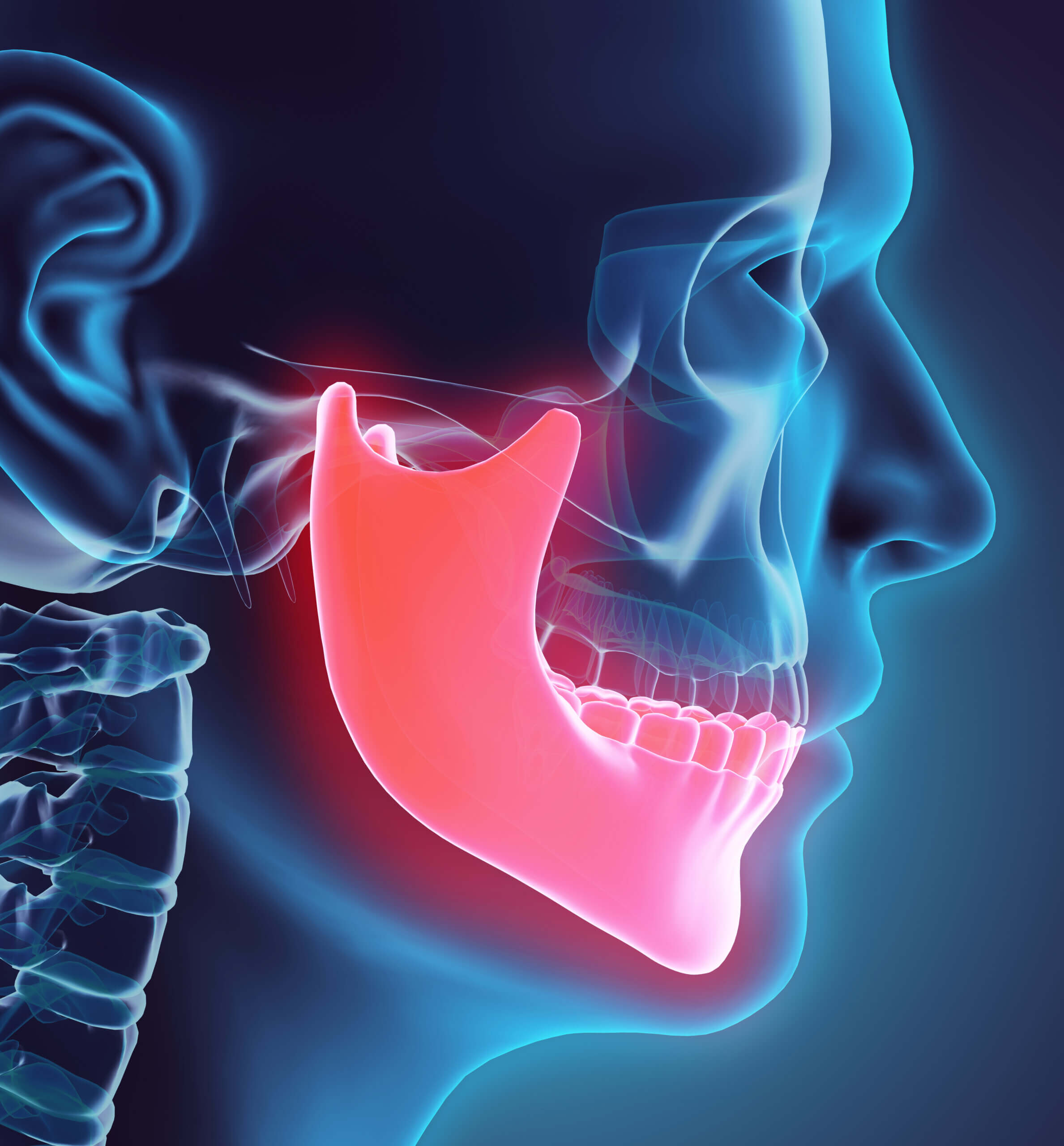
Osteonecrosis of the Jaw
Osteonecrosis is death of the bone tissue in some portions of the jaw. This condition indicates that portions of the bone is no longer live tissue. Thus, this bone tissue cannot regenerate as it lacks sufficient blood supply.
This condition can occur as a result of radiation therapy (osteoradionecrosis) or certain medications (osteonecrosis).
Diagnosis
There is no one simple diagnostic test. The condition can only be diagnosed when exposed bone is detected and exists or has existed for 8 weeks or longer.
Symptoms
The most common symptoms are pain in the mouth or jaw, swelling of portions of the jaw, or pain or infection of one of the jaw teeth. Also, a sore or ulcer in the that does not heal, numbness or less feeling in the jaw or anywhere in the mouth, or exposed bone that is visible. Dry mouth may also be a contributing cause or an aggravating condition. Osteonecrosis or osteoradionecrosis can be detected by a dental examination, MRI, X-ray, CT Scan or MRI
Other Causes may include irritation from dentures, tooth extraction, cancer biopsy, cancer surgery, long term use of steroids, or other kinds of trauma. Excess use of alcohol and smoking can be contributing causes.
Potential for Osteonecrosis
It is estimated that 1 in 5 older women over 50 develop osteoporosis, wherein the quality and density of the bone is diminished. The result is that the bone becomes fragile and porous. This can occur without symptoms, progressively and silently. Often the first knowledge a woman that she has the condition is the fracture of a hip or other bone.
However, many women over 50 these days will be prescribed “bone density” tests as a routine gynecologic examination. If a woman is found to have osteoporosis, it is common to prescribe a class of medications called “bisphosphonates” such as Fosamax to prevent further bone deterioration. Some may be prescribed bisphosphonates as a preventative even before osteoporosis is present. An unfortunate side-effect, in some cases, of taking this class of medications (especially intra-venously) may be osteonecrosis.
If you are taking, or have taken, bisphosphonates, such as Fosamax, be sure to advise your dentist ahead of time, before he begins any dental treatment!
Osteoradionecrosis
Osteoradionecrosis is necrosis caused by radiation therapy. Osteoradionecrosis may develop in other bones in the body. As the amount of radiation increases, the risk of osteoradionecrosis increases.
Cancer Treatment and Osteoradionecrosis
If you are required to be treated for cancer, it is critical that you have a complete dental examination and tend to all of your dental health needs prior to beginning any kind of radiotherapy. If you need to have a tooth removed, it must be done before any kind of radiotherapy! In fact, your dentist should do everything possible to avoid removing a tooth. It is far preferable to have a root canal and other corrective procedures to do everything possible to save the tooth rather than extracting the affected tooth. After a diagnosis of osteonecrosis, from whatever source (whether from radiotherapy or medications) oral health in general is of critical importance. Periodic dental examinations, professional cleaning and meticulous brushing, flossing and general dental care is vital. Removing a tooth after being diagnosed with osteonecrosis can have profoundly serious consequences.
Treatment for Osteonecrosis
In serious or advanced cases of osteonecrosis, intervention to surgically incise the affected bone tissue is often necessary. Other optional procedures may be available for less advanced cases.
A process of systematically and less rapidly scraping and removing the necrotic area may be effective, in some cases.
In very mild cases, the use of analgesics and some kinds of oral mouthwashes may also be effective.
Antibiotics tend to be less effective because of the reduced blood supply to the affected area as necrotic areas tend to become infected. However, in cases which are detected early in the process or tend to be classified as mild to moderate, antibiotics may be effective.
Oxygen Therapy
In some cases, a process called Hyperbaric oxygen therapy may be recommended. This process involves placing the patient in a pressurized chamber and involves breathing pure oxygen, thus allowing the additional pressure to force more oxygen into the patient’s blood stream, thus providing additional healing to the affected area.
This treatment is often used in conjunction with wound care. It is often recommended prior to any tooth extraction.
Osteonecrosis and Dental Implants
Dental implants are not recommended for patients who have demonstrated osteonecrosis or osteoradionecrosis.
Prevention
The best method for preventing osteonecrosis or any dental condition is exceptionally good oral health. This obviously includes systematic brushing and flossing the teeth, periodic professional teeth cleaning by a dental hygienist and prompt attention to any infection anomaly with the teeth, tongue, gums, jaw or any part of the oral cavity.
Prospect for Recovery
Osteonecrosis of the jaw can be treated successfully and cured in many cases. Conservative therapy can be employed in early detection or early stage cases. Surgical interventions may be required in more severe cases.