The phrase "root canal" often brings a sense of dread, but understanding why this procedure is necessary is the first step toward alleviating fear and preserving your natural smile. A root canal isn't the cause of pain; it's the solution to it. When the soft tissue inside your tooth, known as the pulp, becomes inflamed or infected, the pain can be intense and disruptive. Ignoring it won't just prolong your discomfort; it can jeopardize your oral health, leading to abscesses, bone loss, and even the complete loss of your tooth.
This guide is designed to help you recognize the subtle and overt signs you need a root canal. We will break down the seven most common symptoms, from persistent, throbbing pain to less obvious clues like tooth discoloration or a sudden, unexplained bad taste in your mouth. Understanding these warning signals is crucial for taking prompt action to protect your smile. For families in Katy and the greater Houston area, knowing when to seek emergency dental care can make the difference between saving a tooth and facing more complex, costly procedures like dental implants or full-mouth reconstruction later on.
Our goal is to provide clear, actionable information so you can make informed decisions about your dental health. For each sign, we'll explain the underlying cause, the benefit of seeking treatment, and the immediate steps you should take. Whether you're a parent concerned about a child's toothache or an adult experiencing dental anxiety, this comprehensive list will empower you to identify potential problems early and seek the gentle, effective treatment you need to restore your oral health and maintain a beautiful, functional smile.
1. Severe Tooth Pain When Chewing or Applying Pressure
Of all the potential signs you need a root canal, sharp or severe pain when you bite down is perhaps the most classic and urgent. This isn't the mild, fleeting sensitivity you might get from a cold drink; this is a distinct, often intense pain that makes eating uncomfortable or even impossible. It’s a clear signal from your body that a specific tooth is in distress and requires immediate professional attention to restore its function and health.
What Causes This Specific Pain?
This type of pain originates deep within the tooth, in an area called the pulp. The pulp is a soft tissue containing nerves, blood vessels, and connective tissue. When it becomes inflamed or infected due to deep decay, a crack in the tooth, or trauma, it swells.
However, unlike a swollen ankle, the pulp is encased in a hard, unyielding shell of dentin and enamel. When you apply pressure by chewing or biting, this action compresses the inflamed, swollen pulp tissue against the rigid inner walls of the tooth. This pressure directly stimulates the highly sensitive nerve endings, resulting in a sharp, sometimes throbbing, jolt of pain.
How to Differentiate This Pain
It's important to distinguish this symptom from other types of dental discomfort. Here’s what makes it a likely indicator for root canal therapy:
- Specificity: The pain is localized to a single tooth. You can often point directly to the offender.
- Trigger: It occurs specifically when pressure is applied, like when biting into an apple or chewing bread. The pain might stop as soon as you release the bite.
- Intensity: The pain is typically moderate to severe, not just a minor ache. Many patients describe it as sharp, shooting, or a deep, throbbing ache that intensifies with pressure.
Expert Insight: Pain that lingers long after you’ve released your bite is a particularly strong indicator. If the throbbing continues for minutes after you stop chewing, it suggests the inflammation inside the pulp is significant and the nerve is severely damaged. Acting quickly can save the tooth.
What Are Your Next Steps?
If you are experiencing severe pain when chewing, this is not a "wait and see" situation. The infection causing the pain cannot heal on its own and will only worsen, potentially leading to an abscess, bone loss, or the need for a tooth extraction.
- Contact Your Dentist Immediately: Describe your symptoms clearly. This type of pain often warrants an emergency dental visit.
- Avoid Chewing on That Side: Until your appointment, try to chew on the opposite side of your mouth to avoid triggering the pain.
- Use Over-the-Counter Pain Relievers: Anti-inflammatory medications like ibuprofen can help manage the pain temporarily but will not solve the underlying problem.
Prompt diagnosis and treatment are crucial. A root canal procedure can remove the infected pulp, relieve the pain, and, most importantly, save your natural tooth from extraction, preserving your smile and oral function. The benefit is immediate relief and the preservation of your natural tooth structure.
2. Prolonged Sensitivity to Hot and Cold Temperatures
While many people experience brief tooth sensitivity, one of the key signs you need a root canal is when that sensitivity to hot or cold temperatures becomes intense and lingers for a significant amount of time. This isn't the quick "zing" you feel from ice cream that vanishes in a second. Instead, it’s a deep, dull ache or sharp pain that persists for 30 seconds, minutes, or even longer after the hot coffee or cold water is gone, signaling a problem deep within the tooth that threatens its health.
What Causes This Specific Pain?
This lingering pain is a direct distress call from the tooth's pulp, the soft inner tissue containing nerves and blood vessels. In a healthy tooth, the pulp is protected by layers of dentin and enamel. However, when deep decay, a crack, or trauma allows bacteria to reach the pulp, it becomes inflamed or infected.
This damage makes the nerve endings inside the pulp hyper-reactive. When a hot or cold stimulus is introduced, the damaged nerve sends an exaggerated and prolonged pain signal. The lingering sensation occurs because the pulp is unable to recover quickly from the temperature shock, indicating that the nerve is likely dying or severely compromised.
How to Differentiate This Pain
It's crucial to distinguish this serious symptom from common, less severe forms of tooth sensitivity. Here’s how to tell the difference and identify a potential need for root canal therapy:
- Duration: The key differentiator is how long the pain lasts. Normal sensitivity is fleeting, while pulp-related pain lingers long after the stimulus is removed.
- Character of Pain: The sensation is often more than just a quick shock. It can evolve into a deep, throbbing ache that radiates from the tooth.
- Consistency: The pain happens reliably every time the tooth is exposed to hot or cold, and it may worsen over time as the inflammation progresses. For example, a sip of hot tea might trigger a dull ache that lasts for several minutes.
Expert Insight: Pain from hot stimuli is a particularly telling sign. While cold sensitivity can be caused by various issues like gum recession, a strong, lingering pain in response to heat often points directly to an irreversibly damaged or dying nerve inside the tooth, making a root canal highly probable to save the tooth.
What Are Your Next Steps?
Lingering temperature sensitivity is a clear warning that should not be ignored. The underlying infection can spread, leading to a painful abscess, bone damage around the tooth's root, and eventually, tooth loss. Prompt action is vital for preserving your oral health.
- Schedule a Dental Appointment: Contact your dentist right away and describe the duration and intensity of the pain. This symptom warrants a prompt evaluation.
- Avoid Temperature Extremes: In the meantime, try to consume lukewarm foods and drinks to avoid triggering the severe pain.
- Note the Offending Tooth: Pay close attention to which specific tooth is reacting. This information will help your dentist pinpoint the problem quickly during your examination.
Ignoring this sign allows the infection to worsen. A root canal is a definitive solution that removes the damaged pulp, eliminates the source of the pain, and saves your natural tooth, protecting your smile's appearance and your ability to chew comfortably.
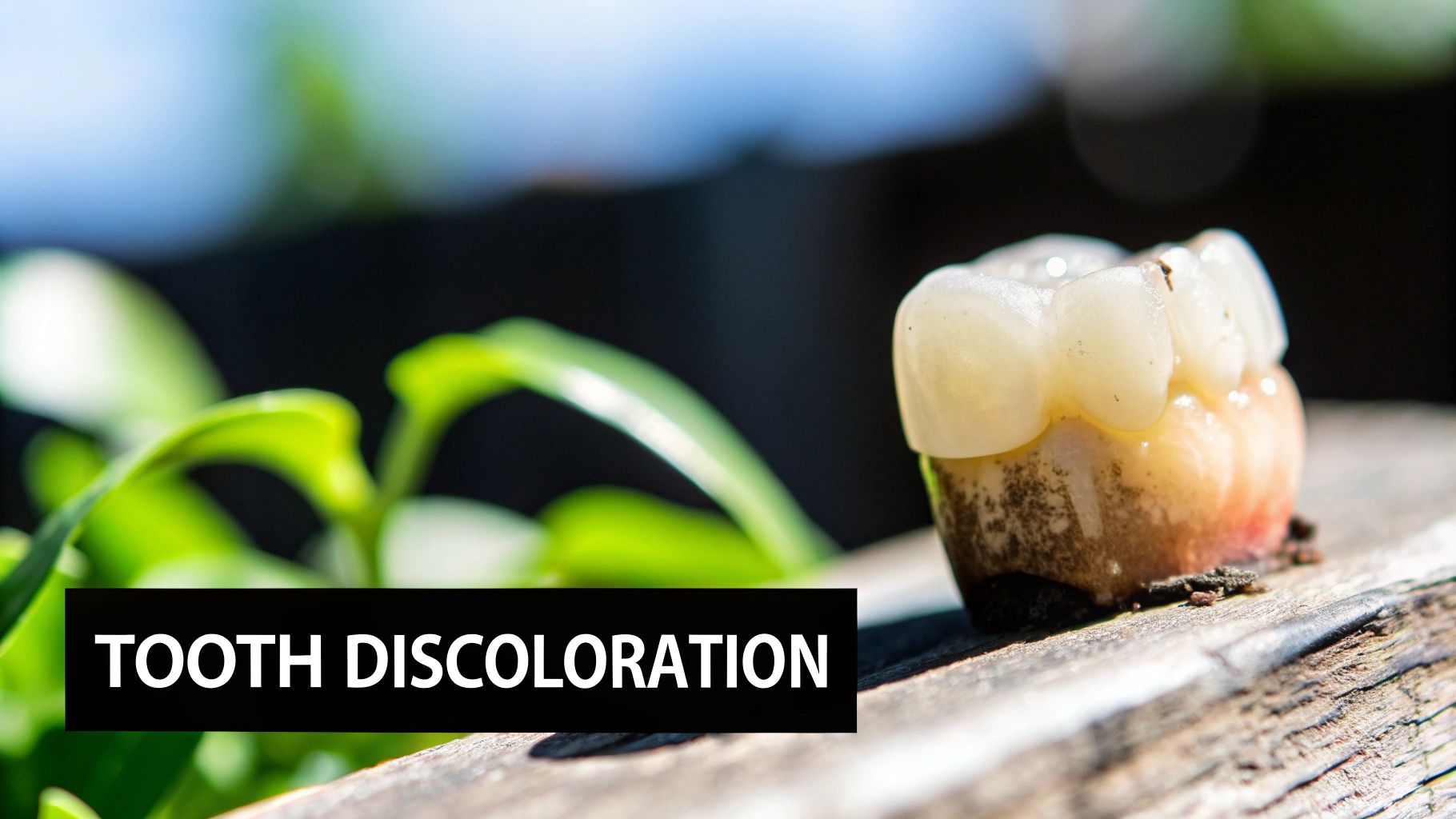
3. Discoloration or Darkening of the Tooth
While many dental issues announce themselves with pain, some signs you need a root canal are purely visual. A tooth that becomes noticeably gray, brown, or darker than its neighbors is a significant red flag affecting your smile's appearance. This internal discoloration isn't a surface stain from coffee or wine; it’s a sign of trauma or decay deep within the tooth, indicating that the vital pulp tissue inside is dying or has already died.
What Causes This Specific Discoloration?
The living pulp inside your tooth, which contains nerves and blood vessels, is what gives a healthy tooth its natural, translucent appearance. When this pulp is damaged by trauma (like a fall or blow to the mouth) or a deep infection, it begins to break down.
As the pulp tissue and blood cells decompose, they release pigmented byproducts, similar to how a bruise forms under the skin. These dark pigments seep into the microscopic tubules of the surrounding dentin layer, staining the tooth from the inside out. This internal staining is why the tooth takes on a dull, lifeless, and often grayish or brownish hue.
How to Differentiate This Discoloration
It’s crucial to distinguish internal discoloration from common external staining. Here’s what makes it a probable indicator for root canal therapy:
- Isolated Change: The discoloration is typically confined to a single tooth, making it stand out against the others.
- Color Tone: The shade is often gray, dark yellow, or brownish, appearing dull and opaque rather than having the surface-level streaks you might see from food or drink.
- Ineffective Whitening: Standard whitening toothpastes, strips, or even professional external bleaching treatments will have little to no effect because the stain is internal.
Expert Insight: Discoloration following an old injury, even one that happened years ago, is a classic sign of a "necrotic" or dead tooth. The change can be very gradual, so you might not notice it until it becomes significantly darker than the adjacent teeth. This is your tooth’s quiet way of telling you it needs help to restore its health and appearance.
What Are Your Next Steps?
A discolored tooth is more than a cosmetic concern; it's a sign of a non-vital tooth that could harbor a hidden infection. This infection can spread to the jawbone and cause an abscess or other serious complications, compromising your overall dental health.
- Schedule a Dental Evaluation: Contact your dentist to have the tooth examined. They will likely take an X-ray to check for signs of infection at the root tip.
- Avoid DIY Whitening: Do not attempt to fix the discoloration with aggressive whitening products, as they will be ineffective and won't address the underlying health issue.
- Note Any Other Symptoms: While discoloration can occur without pain, be sure to tell your dentist if you also experience any sensitivity, swelling, or a pimple-like bump on your gums.
A root canal can remove the dead pulp tissue causing the discoloration. After the procedure, the tooth's appearance can often be restored with internal bleaching or a cosmetic restoration like a crown or veneer, saving the tooth and reviving your confident smile.
4. Swelling and Tenderness in the Gums and Jaw
While internal pain is a major red flag, external symptoms like swelling are equally critical signs you need a root canal. When you notice swelling in your gums, cheek, or jaw, it’s a visible signal that an infection, which started deep inside your tooth, is now spreading into the surrounding tissues. This is a serious development that requires immediate dental intervention to protect your overall health.
What Causes This Specific Swelling?
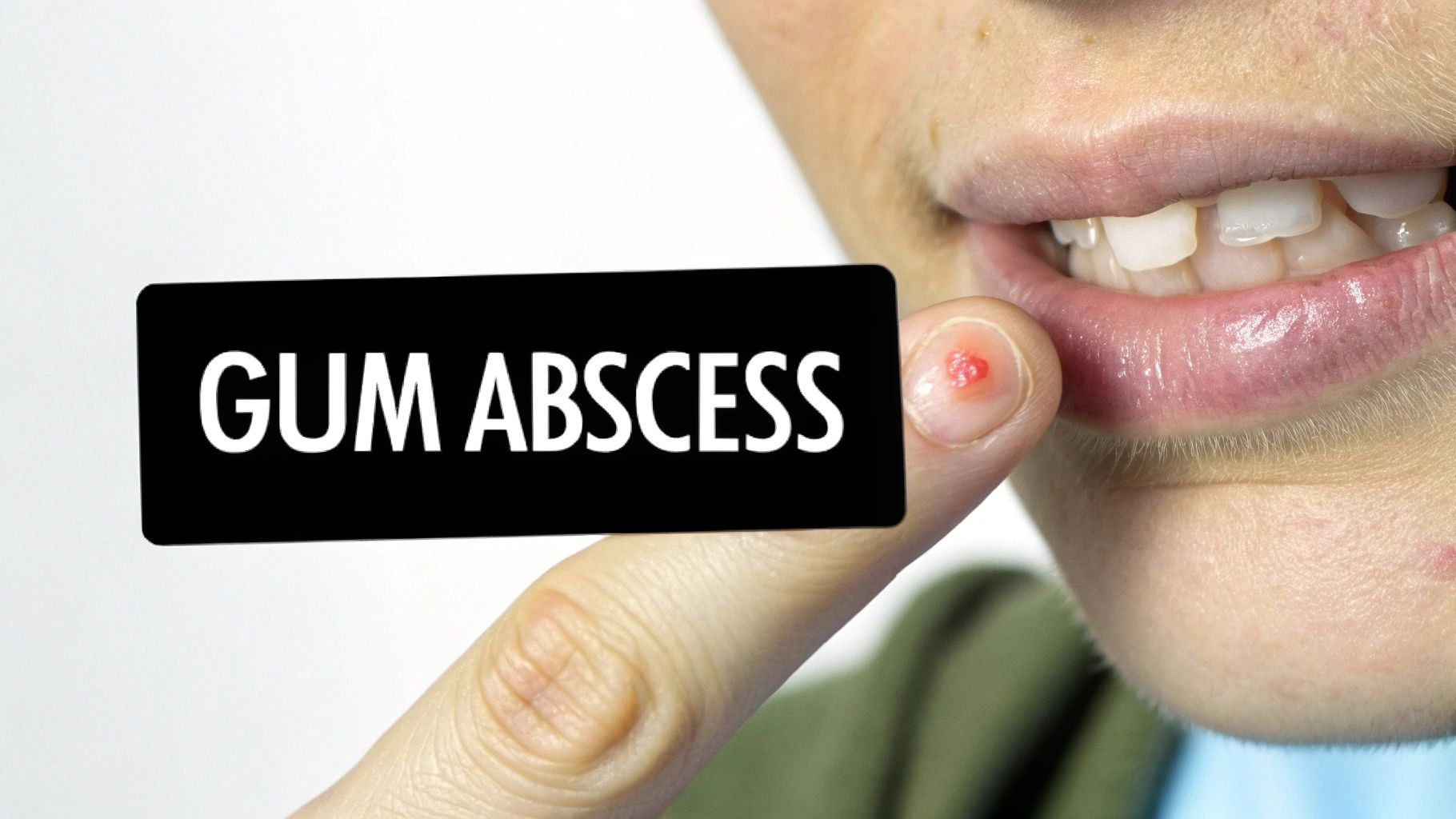
Swelling is your body's inflammatory response to a significant infection. When the pulp inside a tooth dies, bacteria multiply and can exit through the tiny opening at the tip of the tooth’s root. This leakage of bacteria and pus into the surrounding jawbone creates a pocket of infection known as an abscess.
Your body attempts to contain this infection, leading to localized inflammation, fluid buildup, and tenderness. The pressure from the abscess can cause the bone to erode, eventually finding a path of least resistance to drain. This often results in a small, pimple-like bump on the gums near the infected tooth, which may ooze pus if pressure is applied.
How to Differentiate This Swelling
Not all gum irritation is a sign of a root canal. It's important to distinguish an abscess from other issues like gingivitis or a lodged piece of food.
- Location: The swelling is typically localized near the root of one particular tooth. You might also notice visible swelling on the outside of your face or jaw on the same side as the painful tooth.
- Accompanying Symptoms: It is almost always accompanied by other symptoms, such as a severe toothache, sensitivity to temperature, or pain when chewing.
- Presence of a "Pimple": The appearance of a small, persistent bump on the gum (a fistula or gum boil) is a telltale sign of a draining abscess linked to an infected tooth root.
Expert Insight: Facial swelling that is warm to the touch or spreads to the neck or eye area is a dental emergency. This indicates the infection is spreading rapidly and could become life-threatening if it enters the bloodstream or obstructs your airway. Do not delay seeking care to safeguard your health.
What Are Your Next Steps?
Swelling associated with a toothache means the infection has progressed significantly. It will not resolve on its own and poses a risk to your overall health.
- Contact Your Dentist for an Emergency Visit: Swelling is a high-priority symptom. Clearly explain what you're experiencing to be seen as soon as possible.
- Do Not Squeeze the Gum Pimple: Attempting to pop or drain an abscess at home can force the bacteria deeper into your tissues and worsen the infection.
- Use a Saltwater Rinse: Gently rinsing your mouth with a warm saltwater solution (1/2 teaspoon of salt in 8 ounces of water) can help soothe gum inflammation and draw out some of the fluid temporarily.
A root canal is essential to remove the source of the infection from within the tooth. This procedure will not only alleviate the pain but also stop the infection from spreading, prevent bone loss, and save your natural tooth, protecting both your oral and systemic health.
5. Persistent Bad Taste or Odor in the Mouth
While less dramatic than severe pain, a persistent foul taste or bad breath that seems to come from one specific area is a significant and often overlooked sign you need a root canal. This isn't the same as general bad breath (halitosis) from food or poor hygiene. Instead, it’s a localized, unpleasant taste or odor signaling that a serious infection is festering deep inside a tooth, threatening your dental health.
What Causes This Specific Symptom?
This symptom is a direct result of a pulp infection that has progressed to the point of creating pus. When bacteria invade the tooth’s pulp chamber, they begin to break down the nerve and blood vessel tissues. This process of decay and infection produces foul-smelling gases and a liquid byproduct, known as pus, which is a collection of dead bacteria, dead tissue, and white blood cells.
This pus builds up inside the tooth and surrounding bone, forming an abscess. The pressure from the abscess seeks an escape route, often creating a small channel (a fistula or sinus tract) that drains into your mouth. This drainage is what causes the persistent metallic, salty, or generally foul taste and localized bad odor. You might notice it more when flossing a specific tooth or when pressure is applied to the area.
How to Differentiate This Symptom
It’s crucial to distinguish this specific sign from more common oral hygiene issues. Here’s what makes it a strong indicator for an underlying infection requiring root canal therapy:
- Localization: The bad taste or odor is distinctly traceable to a single tooth or a small area in your mouth, not your entire mouth.
- Persistence: Unlike morning breath, it doesn’t go away with brushing, flossing, or mouthwash because the source is internal.
- Associated Drainage: You may see a small, pimple-like bump (a parulis) on the gum near the tooth, which may occasionally release pus. Flossing the area might produce a foul-smelling discharge.
Expert Insight: A foul taste or odor, especially when combined with a pimple on the gum, is a classic sign of a dental abscess. Even if there is no pain, the infection is active and damaging the bone around the root of your tooth. Ignoring it is not an option for maintaining good oral health.
What Are Your Next Steps?
An unpleasant taste or odor originating from a tooth is a clear sign of an active infection that requires immediate dental intervention. The infection will not clear up on its own and can lead to serious complications, including bone loss, infection spreading to other parts of your body, and eventual tooth loss.
- Schedule a Dental Visit: Contact your dentist right away and be specific about your symptoms, mentioning the localized taste and any visible drainage or bumps on your gum.
- Maintain Oral Hygiene: Continue to gently brush and floss the area to keep it clean, but do not try to "pop" any pimple on your gum.
- Avoid Masking the Problem: Using mints or mouthwash will only provide temporary relief and can delay a necessary diagnosis. The priority is to treat the source of the infection.
A root canal is designed to eliminate this type of infection. By cleaning out the diseased pulp and sealing the tooth, the procedure removes the source of the pus and odor, resolving the unpleasant taste and saving your natural tooth from extraction. This is a crucial step for restoring freshness and health to your mouth.
6. Tooth Trauma or Visible Cracks and Chips
Physical injury to a tooth is a dramatic event that can necessitate a root canal, sometimes long after the initial incident. A blow to the mouth from a sports injury, a fall, or an accident can cause obvious damage like a chip or crack, but it can also inflict hidden trauma deep within the tooth. This makes any form of tooth injury a significant and unpredictable sign you need a root canal, as the damage may not be immediately apparent and can affect your smile's appearance and health.
What Causes This Specific Problem?
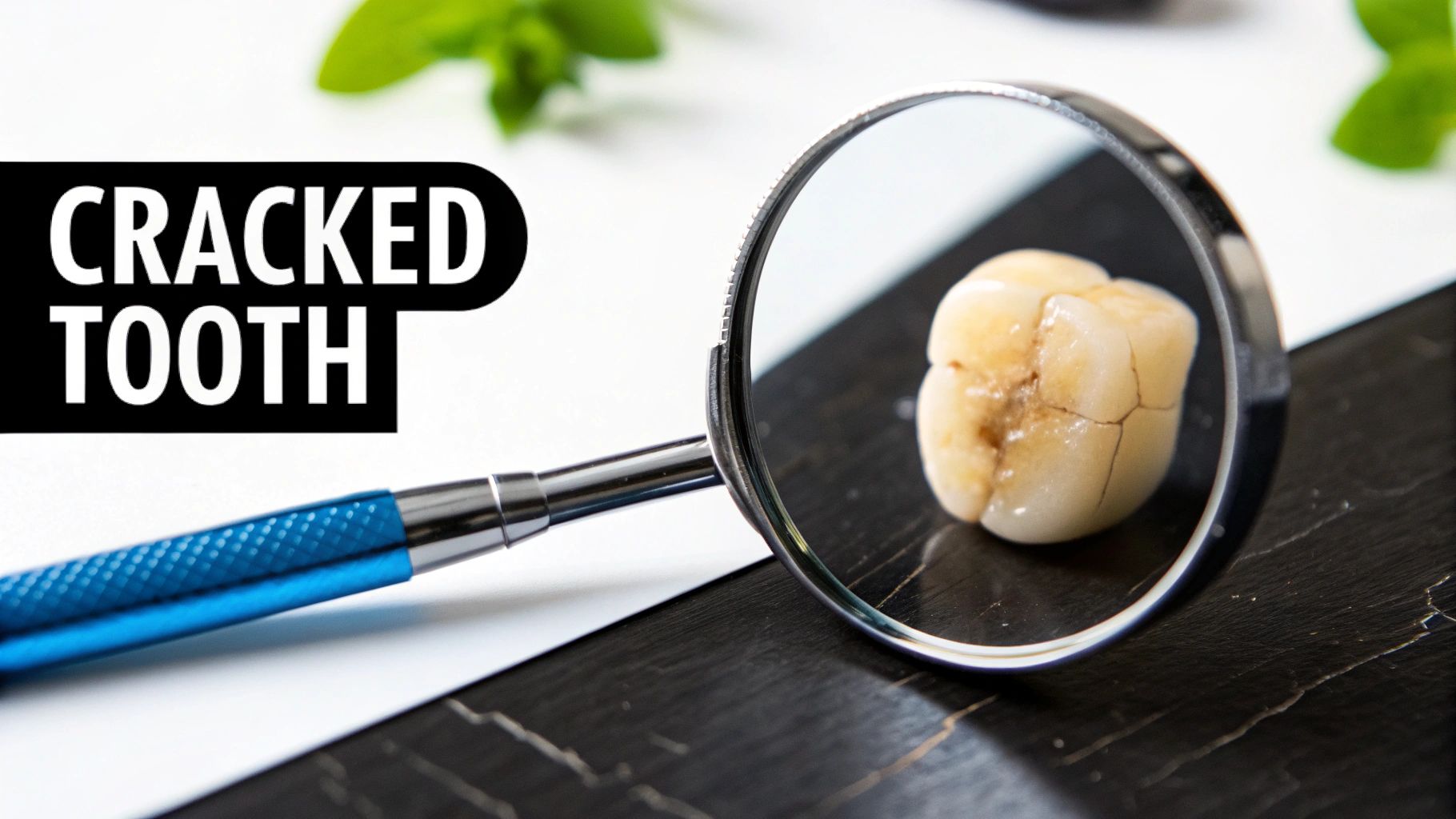
The issue stems from trauma compromising the tooth's protective outer layers and damaging the delicate pulp inside. A forceful impact can sever the blood supply to the pulp, causing the nerve and tissues to die over time. Alternatively, a crack or deep chip can create a direct pathway for oral bacteria to invade the pulp chamber, leading to infection and inflammation, just like deep decay would.
Even a seemingly minor crack, sometimes invisible to the naked eye, can be a serious threat. As you chew, the crack can flex, irritating the pulp. Over time, this repeated irritation can cause irreversible damage, or the crack can allow bacteria to seep in, leading to an infection that requires root canal therapy to resolve.
How to Differentiate This Situation
It's crucial to recognize the signs of trauma-induced pulp damage, which can differ from decay-related symptoms:
- Discoloration: The tooth may darken, turning gray, yellow, or black. This indicates that the blood supply has been cut off and the internal tissue is dying, affecting your smile's aesthetics.
- A Visible Defect: You can see a clear chip, fracture line, or crack on the tooth's surface.
- Delayed Pain: The pain might not be immediate. It can develop weeks, months, or even years after the initial injury as the pulp slowly dies and becomes infected. This pain can be spontaneous or triggered by temperature changes.
Expert Insight: A small pimple-like bump, known as a fistula or gum boil, appearing on the gums near a previously injured tooth is a definitive sign of a deep-seated infection. This is your body’s way of trying to drain the pus from an abscess at the root tip, and it absolutely requires a dental evaluation to save the tooth.
What Are Your Next Steps?
Any trauma to a tooth warrants a professional evaluation, even if there's no immediate pain or visible damage. An untreated cracked or traumatized tooth is a ticking time bomb that can lead to a severe abscess, bone loss, and ultimately, tooth loss.
- Seek Immediate Dental Care: After any blow to the mouth, see your dentist right away for an examination and X-rays to assess for hidden damage.
- Monitor the Tooth: Keep an eye on the tooth for any changes in color, sensitivity, or the development of gum swelling in the following weeks and months.
- Wear Protective Gear: If you or your children play sports, a custom-fitted mouthguard is essential for preventing dental injuries.
- Address Grinding: If you grind your teeth (bruxism), talk to your dentist about a night guard to prevent stress fractures and cracks.
A root canal can effectively treat the internal damage from trauma, relieving pain and saving the tooth from extraction. This allows you to maintain the natural structure and appearance of your smile, even after an injury. The procedure is key to restoring both the health and aesthetics of a damaged tooth.
7. Sudden Relief of Severe Pain (Possible Pulp Death)
While severe pain is a well-known indicator, one of the most deceptive and dangerous signs you need a root canal is the sudden disappearance of that pain. A patient might endure days or weeks of intense throbbing, only to wake up one morning feeling complete relief. This absence of pain can create a false sense of security, making it seem like the problem has magically healed. In reality, it often signals a more advanced and critical stage of infection that silently threatens your jawbone and overall health.
What Causes This Specific Pain (and Its Disappearance)?
This paradoxical symptom occurs when the infection inside the tooth's pulp becomes so severe that it overwhelms and destroys the nerve tissue. The pulp, containing the nerves and blood vessels, essentially dies. Since the nerve is no longer alive, it can no longer send pain signals to the brain, and the intense ache you were feeling vanishes.
However, the bacteria that caused the infection are still very much present and active. With the pulp dead, the infection has a clear pathway to exit through the bottom of the tooth's roots and spread into the surrounding jawbone. This leads to the formation of an abscess, a pocket of pus that can cause serious damage to bone and surrounding tissues, and potentially lead to systemic health issues if left untreated.
How to Differentiate This Symptom
It's critical to recognize this "symptom of no symptom" for what it is: a major warning sign for your dental health. Here’s what makes it a likely indicator for root canal therapy:
- History of Pain: The relief follows a distinct period of moderate to severe toothache. You might recall having significant pain that simply stopped on its own.
- Other Subtle Signs: Even without pain, you may notice other indicators like a small, pimple-like bump (a fistula) on the gum near the tooth, a bad taste in your mouth, or gradual discoloration of the tooth as it turns grayish or dark.
- No Trigger Needed: Unlike pain from a live nerve, which is often triggered by hot, cold, or pressure, a dead tooth won't react at all.
Expert Insight: Never assume that the absence of pain means the problem is resolved. A dead pulp is an incubator for infection. The bacteria will continue to multiply and spread silently, and the pain will almost certainly return later as a much more severe and widespread abscessed infection. Prompt treatment is the only way to protect your health.
What Are Your Next Steps?
If you had a severe toothache that suddenly vanished, you must treat this as a dental emergency. The infection is progressing, and immediate intervention is necessary to prevent bone loss, the spread of infection to other parts of your body, and the eventual loss of the tooth.
- Call Your Dentist Immediately: Explain that you had severe pain that has now stopped. This context is crucial and will signal the urgency of the situation to your dental team.
- Monitor for Other Signs: Pay close attention to any swelling in your gums, face, or jaw, a foul taste, or fever, as these indicate a spreading infection.
- Do Not Delay Treatment: The problem has not gone away; it has only become "silent" for a short time. Delaying treatment greatly increases the risk of complications.
A root canal procedure is essential in this scenario to clean out the dead tissue and bacteria, disinfect the root canals, and seal the tooth. This not only saves your natural tooth but also eliminates the source of infection, protecting your overall health. To better understand the procedure and what to expect, learn more about how to prepare for a root canal.
7 Signs You May Need a Root Canal — Comparison
| Symptom | Diagnostic Complexity | Resource Requirements | Expected Outcomes | Ideal Use Cases | Key Advantages |
|---|---|---|---|---|---|
| Severe Tooth Pain When Chewing or Applying Pressure | Low–Moderate — clear but can mimic cavities | Clinical exam, bite tests, dental x‑ray | Indicates pulpal inflammation; timely RCT prevents spread | Acute, localized pain on biting or chewing | High alarm value; easily described to clinician |
| Prolonged Sensitivity to Hot and Cold Temperatures | Moderate — must differentiate from dentin hypersensitivity | Thermal testing, exam, x‑ray, vitality tests | Early pulpal irritation; risk of progressing to irreversible pulpitis | Single‑tooth lingering temperature sensitivity | Early warning sign enabling preventive care |
| Discoloration or Darkening of the Tooth | Low–Moderate — visual cue but needs confirmation | Visual exam, pulp vitality tests, radiographs | Often indicates pulp necrosis; cosmetic and treatment implications | Gradual single‑tooth color change, especially post‑trauma | Observable sign that prompts professional evaluation |
| Swelling and Tenderness in the Gums and Jaw | Moderate — clear infection sign, localizing may need imaging | Urgent exam, x‑ray/CBCT, possible antibiotics/drainage | Advanced infection; urgent RCT, drainage, or extraction may be needed | Visible gum abscess, facial or jaw swelling, tenderness | Clear, urgent indicator that mandates prompt care |
| Persistent Bad Taste or Odor in the Mouth | Moderate — localizes infection but may be confused with halitosis | Oral exam, probing, radiographs; check for drainage | Suggests active pulpal infection with drainage; requires treatment | Foul/metallic taste localized to one area or tooth | Distinct sensory cue reinforcing other symptoms |
| Tooth Trauma or Visible Cracks and Chips | Moderate–High — cracks may be occult, diagnosis can be complex | Clinical exam, x‑ray/CBCT, possible specialist assessment | Risk of pulpal injury; may require RCT plus restorative work | Recent trauma, sports injury, or chronic bruxism with damage | Clear etiologic cause that guides immediate intervention |
| Sudden Relief of Severe Pain (Possible Pulp Death) | Moderate — counterintuitive sign needing confirmatory tests | Exam, radiographs, pulp vitality testing, urgent consult | Often indicates pulp death with ongoing infection risk | Prior severe pain that abruptly stops | Critical red flag to seek evaluation despite no pain |
Taking Control of Your Dental Health: Your Next Steps to a Pain-Free Smile
Navigating the world of dental symptoms can feel overwhelming, especially when severe pain or unusual changes disrupt your daily life. This guide has walked you through the seven most critical signs you need a root canal, from the unmistakable throbbing pain when you chew to the subtle but serious darkening of a tooth. We've explored how prolonged sensitivity, swollen gums, and even a sudden disappearance of pain can all point to a deep-seated infection within your tooth's pulp. Understanding these signals is the first, most crucial step toward preserving your natural tooth and restoring your oral health.
The key takeaway is that your body provides clear warnings when something is wrong. These symptoms are not minor annoyances to be ignored or masked with over-the-counter pain relievers. They are direct communications from your nervous system and surrounding tissues, indicating that an infection is present and likely worsening. Delaying action can lead to more severe consequences, including the spread of infection, bone loss in your jaw, and ultimately, the complete loss of the tooth.
From Symptoms to Solutions: A Clear Path Forward
Recognizing the signs is only half the battle. The next, and most important, step is to take decisive action. Procrastination is the biggest threat to saving a compromised tooth. What might be a straightforward root canal today could become a more complex extraction and implant procedure in a matter of weeks or months.
Here is a practical, actionable plan to follow if you are experiencing any of the symptoms discussed:
- Don't Wait and See: If you experience severe, persistent pain, gum swelling, or a pimple-like bump on your gums, treat it as a dental emergency. These are urgent signs you need a root canal, and immediate professional evaluation is necessary to prevent the infection from spreading.
- Document Your Symptoms: Before your appointment, make a few notes. When did the pain start? What triggers it (hot, cold, pressure)? Is it constant or intermittent? This information provides your dentist with vital clues for an accurate diagnosis.
- Seek an Expert Diagnosis: A self-diagnosis is never sufficient. Only a dental professional with access to X-rays and other diagnostic tools can confirm if the tooth's pulp is infected and determine if a root canal is the appropriate treatment. They will also rule out other potential issues, such as gum disease or a simple cavity.
The True Value of Root Canal Therapy
The phrase "root canal" often carries a heavy, outdated stigma associated with pain and discomfort. However, the reality of modern endodontics is vastly different. Today's procedures, especially when combined with advanced techniques and sedation options, are designed for patient comfort.
Key Insight: A root canal isn't the cause of your pain; it is the solution to it. The procedure removes the infected, painful nerve tissue, cleanses the inner tooth, and seals it from further infection, effectively stopping your discomfort at its source.
By choosing to save your natural tooth with a root canal, you are investing in your long-term health and well-being. You maintain your natural bite, prevent neighboring teeth from shifting, and avoid the more extensive and costly procedures associated with tooth replacement, like dental implants or bridges. Ultimately, it’s about restoring function, eliminating pain, and preserving the beautiful, natural smile you were born with.
If you're in the Katy or greater Houston area and recognize any of these symptoms, don't let dental anxiety or uncertainty hold you back. The experienced and compassionate team at Grand Parkway Smiles specializes in gentle endodontic care, emergency services, and sedation dentistry to ensure your comfort. Visit Grand Parkway Smiles to schedule an urgent evaluation and take the first step toward a healthy, pain-free smile.