Proper tooth extraction recovery is the first step toward restoring your oral health and paving the way for a beautiful, functional smile. The journey begins the moment you leave our office, with the first 24-hour window being the most critical phase of your healing process. The primary goal is to protect the blood clot that forms in the empty socket. This natural bandage is essential for preventing complications and allowing new, healthy tissue to grow, which is vital for the long-term health and appearance of your smile.
Your Guide to the First 24 Hours Post-Extraction
That initial day sets the stage for a smooth and efficient healing process. Your body’s main job is to form a stable blood clot, which serves as the foundation for new bone and tissue. Getting this part right not only enhances your comfort but also ensures the best possible outcome for your dental health.
Protecting that clot is crucial for avoiding a painful complication called a dry socket, which occurs when the clot is dislodged prematurely. Our team at Grand Parkway Smiles provides these instructions to give you the confidence and knowledge to navigate this first day successfully, ensuring your jaw remains healthy for any future restorative work, like implants or bridges.
Here's what we're focused on for the first 24 hours:
- Protect the Blood Clot: This is your top priority. It's a protective seal over the bone and nerves, essential for proper healing and preserving the jaw's structure.
- Manage Swelling: Swelling is a natural part of the healing process. Controlling it early reduces discomfort and helps maintain your normal facial appearance sooner.
- Control Bleeding: Minor oozing is normal, but it should gradually decrease as the clot stabilizes.
- Rest Up: Resting allows your body to dedicate its energy to healing the extraction site, leading to a faster and more effective recovery.
The Three Pillars of Immediate Aftercare
To achieve these goals, focus on three simple but crucial actions: managing the gauze we provided, using cold packs, and keeping your head elevated.
Each action plays a specific role in promoting optimal healing. The gauze helps stop bleeding so a healthy clot can form. Cold therapy is your best tool for minimizing swelling and preserving your facial contours. And keeping your head propped up reduces both swelling and throbbing, contributing to your overall comfort.
This visual guide breaks down the essential steps for your first 24 hours.
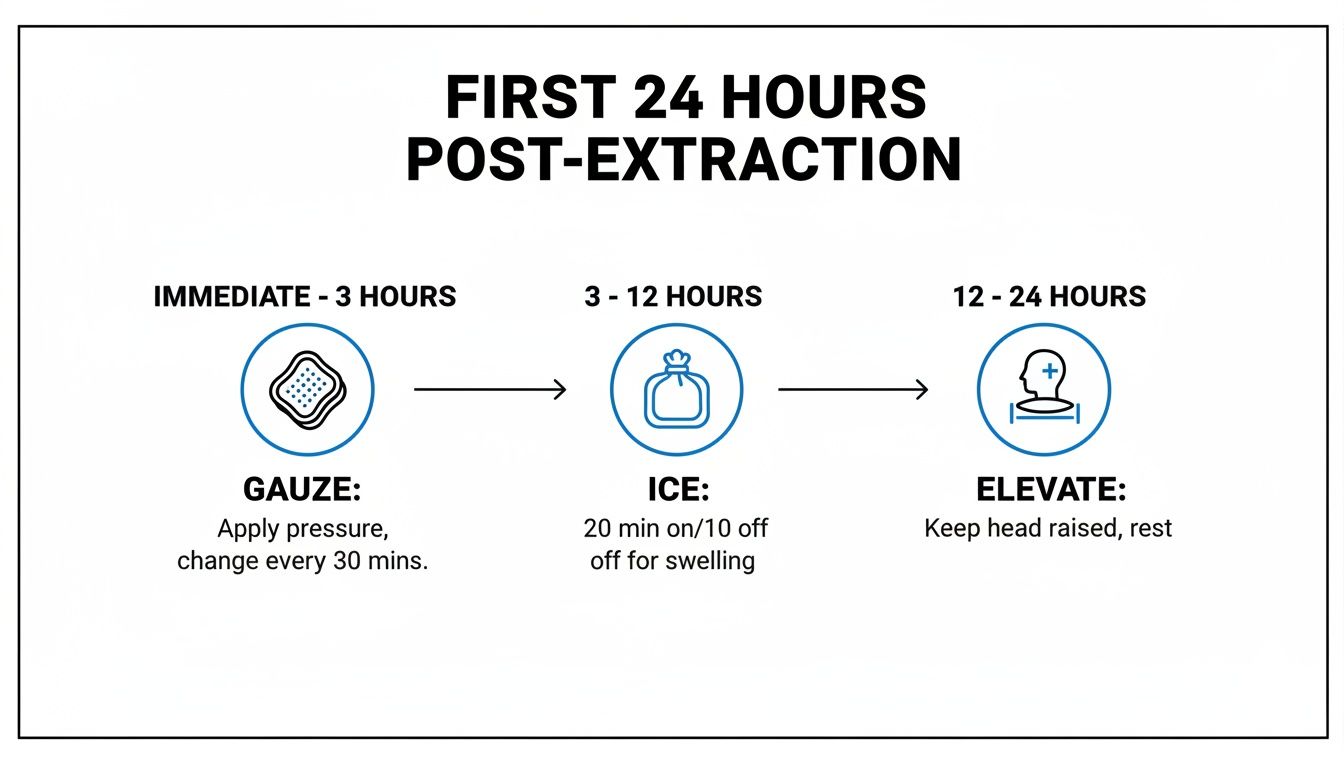
As you can see, consistent, gentle care is key. Mastering these simple steps puts you on the fast track to a smooth recovery and a healthier mouth.
Mastering Gauze and Bleeding Control
We sent you home with a sterile gauze pack over the extraction site. Your job is to maintain firm, steady pressure by biting down. This pressure is what stops the bleeding and allows the protective blood clot to form properly.
Plan to change the gauze pad every 30-45 minutes or sooner if it becomes soaked. A little oozing is expected and is a normal part of healing. However, if you notice persistent, bright red bleeding that doesn't slow down, please give our office a call.
A common mistake is chewing or fiddling with the gauze. Avoid this. Think of it as a constant, gentle squeeze. That steady pressure is what ensures the site is protected and can begin healing correctly.
Reducing Swelling with Cold Compresses
Swelling typically peaks around 48 to 72 hours after the procedure, but you can get ahead of it by applying cold packs immediately. Place a cold compress or an ice pack on the outside of your cheek, directly over the extraction area.
The cold helps constrict blood vessels, which is excellent for reducing inflammation and maintaining your normal appearance. It also provides a pleasant numbing effect that can soothe any discomfort.
Here's the routine to follow:
- Application: Apply the ice pack for 20 minutes on, then remove it for 20 minutes.
- Timing: Repeat this cycle as much as possible during the first 24 hours while you're awake.
- Tools: A bag of frozen peas wrapped in a kitchen towel works perfectly, as it conforms to the shape of your face.
This simple on-and-off cycle is one of the most effective things you can do to manage swelling and improve your comfort. It's a small effort that contributes significantly to a better healing experience.
To help you visualize your entire recovery journey, we've put together a handy timeline. This table breaks down what to expect and what to do at each stage, from the moment you leave our clinic to when you're fully healed.
Tooth Extraction Recovery Timeline at a Glance
This table provides a summary of key recovery milestones and recommended actions for each phase of your healing journey.
| Recovery Phase | What to Expect | Key Actions and Tips |
|---|---|---|
| First 24 Hours | Minor bleeding, swelling begins, discomfort. | Bite on gauze, use ice packs (20 min on/off), rest with head elevated, take pain meds as prescribed, stick to liquids. |
| Days 2-3 | Swelling peaks, bruising may appear, soreness continues. | Continue soft foods, start gentle warm salt water rinses after meals, avoid straws and smoking, limit strenuous activity. |
| Days 4-7 | Swelling and discomfort gradually decrease, healing progresses. | Slowly reintroduce more solid foods as tolerated, continue salt water rinses, maintain gentle oral hygiene around the site. |
| Weeks 2-4 | Socket continues to heal and fill in with new tissue, minimal to no discomfort. | Resume normal diet and activities, continue to keep the area clean, be mindful of food getting trapped in the socket. |
Following this guide helps ensure you're taking the right steps at the right time. As always, if your experience differs significantly or you have concerns, don't hesitate to reach out to us at Grand Parkway Smiles.
How to Effectively Manage Pain and Swelling
You've successfully navigated the first 24 hours. Now, the focus shifts to ensuring your comfort by managing the two most common sidekicks of any healing process: pain and swelling.
Think of these as normal signals that your body is working to repair itself. Our goal is not to fight these signals but to keep them manageable so you can rest and heal properly. Staying ahead of discomfort is the secret to a much smoother tooth extraction recovery and a quicker return to your daily life.
Your Medication Strategy
The single biggest mistake patients make is waiting for pain to become severe before taking medication. It’s far more effective to prevent the fire than to put it out.
Stay on a strict schedule with whatever pain reliever we recommended or prescribed. Set an alarm on your phone if needed! If we suggested alternating between two types of medication, stick to that timing. This approach maintains a steady level of relief in your system and keeps inflammation under control, promoting faster healing.
Our Pro Tip: Take your first dose of pain medication before the numbness from the procedure wears off completely. This allows the medicine to take effect, creating a seamless transition and preventing a sudden onset of discomfort.
When you manage pain effectively, you can rest properly. Quality rest is non-negotiable for rapid, effective healing and better overall health.
The Hot and Cold Transition
For the first 48 hours, cold is your best friend. Continue using an ice pack on the outside of your cheek, sticking to a 20 minutes on, 20 minutes off cycle. This helps shrink blood vessels, which reduces swelling and provides a gentle, numbing sensation, helping you feel and look more like yourself.
After that 48-hour mark, it's time to switch gears.
Now, we introduce warmth. A warm, moist compress applied to the same area for 15-20 minutes at a time, a few times a day, can work wonders.
So, why the switch from cold to warm?
- Boosts Blood Flow: Warmth opens up the blood vessels, bringing a fresh supply of oxygen and nutrients to the site to accelerate tissue repair and regeneration.
- Soothes Sore Muscles: It helps relax any jaw stiffness you might have, improving your comfort and function.
This simple transition from cold to warm therapy is a time-tested technique that supports your body's natural healing stages.
What’s a “Normal” Amount of Discomfort?
It’s easy to worry if what you're feeling is normal. For the vast majority of our patients, the discomfort is quite manageable and begins to fade significantly after day three.
You don't just have to take our word for it. A large-scale study on patient experiences after tooth extraction found that while most people took 1-3 days off from work, their overall satisfaction was high because the symptoms were temporary and resolved quickly. In fact, most of the pain reported was considered mild. You can read more about these tooth extraction recovery insights on the National Center for Biotechnology Information's site.
This tells us that some discomfort is expected, but it's typically short-lived. Following these instructions is your best bet for ensuring your recovery is just as smooth, getting you back to feeling great and smiling confidently.
What to Eat and How to Stay Active Safely

What you eat and how much you rest are two of the most important factors you can control after a tooth extraction. Proper nutrition fuels your body’s repair processes, while adequate rest channels energy directly to the healing site. Both are essential for protecting the empty socket and ensuring your dental health is on the right track.
The goal is to protect the blood clot that forms in the socket. Dislodging it can lead to a painful condition called dry socket, which can delay your recovery. Let's cover the specifics of diet and activity to prevent this and promote a healthy outcome.
Your Post-Extraction Menu: A Guide to Soft Foods
For the first few days, your diet should consist of soft foods. This isn’t just for comfort—it’s a critical step in protecting the healing socket. Hard, crunchy, chewy, spicy, or overly hot foods can irritate the area and disrupt the healing process.
If you have to chew it much, it’s off the menu for now. Think of it as a temporary liquid and purée diet, which is a great opportunity to enjoy nutrient-rich comfort foods that are gentle on your mouth.
Here are some go-to options:
- Smoothies: A fantastic way to pack in fruits, veggies, and protein. The one golden rule? No straws. The suction can dislodge the vital blood clot.
- Yogurt and Kefir: These are cool, soothing, and easy to eat. Plus, they support your immune system.
- Lukewarm Soups: Creamy soups like tomato or butternut squash are perfect. Let them cool first and ensure there are no large chunks.
- Mashed Potatoes or Sweet Potatoes: A classic comfort food that is filling and requires no effort from your jaw.
- Applesauce, Puddings, and Jell-O: Simple, easy options that won't disturb the healing site.
The goal is simple: fuel your body for healing without putting any physical stress on your mouth. Getting this right is a huge part of a successful recovery.
Transitioning Back to a Normal Diet
After a few days, as the initial soreness subsides, you can gradually reintroduce more textures. Listen to your body—if something feels uncomfortable, back off and give it another day or two.
The key to transitioning your diet is patience. Rushing back to your favorite crunchy snacks too soon is one of the quickest ways to cause a setback. Let comfort be your guide every step of the way.
Start with foods that have more substance but still don’t require heavy chewing.
Good foods to try around Day 3-5:
- Scrambled eggs
- Oatmeal or cream of wheat
- Soft-cooked pasta or mac and cheese
- Flaky fish like salmon or cod
- A ripe banana
Most patients find they can slowly return to their regular diet by the end of the first week. Just continue to avoid very hard or sticky foods for at least another week. This careful transition protects the new tissue as it forms, which is crucial for maintaining a healthy jaw structure, especially if you plan on getting a dental implant in the future.
Why Pausing Strenuous Activity is Crucial
Rest is non-negotiable, particularly in the first 48-72 hours. Any activity that increases your heart rate also raises your blood pressure, which can lead to more bleeding and throbbing at the extraction site. This means no gym workouts, heavy lifting, or running.
For the first 24 hours, your only job is to take it easy. Propping your head up with an extra pillow can help significantly. After the first day, you can begin to move around more with short, slow walks.
When can you return to your normal routine? It depends on your procedure and how you feel. For a deeper dive, we have an article on exercising safely after a tooth extraction. Generally, most people can ease back into moderate exercise after 5-7 days. For more complex extractions, like impacted wisdom teeth, you may need more time. Always follow our specific instructions; pushing yourself too soon only risks delaying your healing and compromising the final result.
Keeping Your Mouth Clean Without Disturbing the Site
Keeping your mouth clean after an extraction requires a delicate balance. You need to prevent infection without disturbing the healing socket. Mastering this balance is the secret to a smooth tooth extraction recovery and optimal long-term oral health.
Your goal is not to deep-clean the area but to gently manage the environment around it. This careful approach keeps harmful bacteria in check, significantly lowering the risk of complications and ensuring the site heals cleanly, which is essential for both health and appearance.
The Gentle Art of Brushing
For the first 24 hours, leave the extraction site alone. Do not brush the teeth immediately next to it. You can and should brush and floss the rest of your teeth as you normally would, just do so slowly and carefully.
On day two, you can begin to gently brush the teeth adjacent to the socket. Use a soft-bristled toothbrush with an incredibly light touch. The goal is to clean the surfaces of these neighboring teeth without touching the healing gum tissue. This step is vital for preventing plaque buildup and maintaining the health of the surrounding teeth while the site heals.
Introducing the Saltwater Rinse
After the initial 24-hour period, it’s time to introduce a saltwater rinse. This is a proven method for creating a clean oral environment and soothing inflamed tissue.
Here’s the right way to do it:
- Mix it up: Dissolve half a teaspoon of table salt into an eight-ounce glass of warm (not hot) water.
- Rinse gently: Take a small sip and let the solution flow around your mouth. Do not swish, gargle, or spit vigorously.
- Let it go: When you're done, simply tilt your head over the sink and let the water fall out of your mouth.
Perform this gentle rinse 3-4 times a day for the first week, especially after meals. It’s an effective way to dislodge food particles without putting pressure on the crucial blood clot.
A common mistake is swishing aggressively, like using a strong mouthwash. This can easily dislodge the blood clot. Remember, this is a gentle, passive wash, not a power clean.
What to Avoid for a Healthy Healing Site
What you don't do is just as important as what you do. Protecting the extraction site is your top priority, and a few common habits can jeopardize your healing.
Here are the main things to steer clear of:
- Commercial Mouthwash: Most store-bought mouthwashes contain alcohol, which can irritate healing tissue and cause stinging. Stick with the saltwater rinse until we give you the all-clear.
- Vigorous Spitting or Swishing: Any forceful action can dislodge the blood clot. This includes spitting out toothpaste too hard. Let it dribble out of your mouth instead.
- Using a Water Flosser: While excellent for daily care, water flossers are too powerful for a fresh extraction site. Avoid using one near the socket for at least a week, or until our team at Grand Parkway Smiles says it's okay.
By following these simple, gentle instructions, you can maintain your oral hygiene effectively. This careful approach prevents infection and helps your body heal, setting the foundation for lasting dental health.
Recognizing Warning Signs to Prevent Complications
Knowing the difference between normal healing and potential complications during your tooth extraction recovery can provide significant peace of mind. Your body is an incredible healer, but sometimes it needs help. Spotting an issue early is the best way to prevent a minor hiccup from becoming a major setback that could affect your long-term dental health.
Our goal is to empower you with knowledge. Being an informed partner in your healing allows you to monitor your progress confidently and know exactly when to call us at Grand Parkway Smiles.
Understanding Dry Socket Symptoms
The most discussed complication is alveolar osteitis, commonly known as a dry socket. This painful condition occurs when the protective blood clot is dislodged or dissolves too soon, exposing the underlying bone and nerves. While it affects only a small percentage of patients, recognizing the signs is crucial for your well-being.
The key symptom of a dry socket is a specific type of pain—often a throbbing, deep-seated ache that can radiate from the socket toward your ear, eye, or temple on the same side of your face.
Keep an eye out for these key signs:
- Intense Pain: Discomfort that begins 2-4 days after your procedure and suddenly worsens instead of improving.
- Visible Bone: You might see the whitish, bony surface of the socket instead of a dark blood clot.
- Unpleasant Taste or Odor: A foul taste or persistent bad breath that wasn't there before can also be indicators.
If these symptoms sound familiar, call our office immediately. A dry socket is very treatable but requires professional care to resolve. We have a detailed guide that can help you see what a dry socket looks like and understand why early intervention is key to a comfortable recovery.
Identifying Signs of an Infection
An infection, while less common than a dry socket, is another issue that requires prompt attention. An infection can delay healing and, if left untreated, lead to more significant health problems. Unlike the focused pain of a dry socket, an infection's signs are often more widespread.
Think of it as your body sounding a different alarm—you may feel generally unwell in addition to experiencing localized symptoms.
Be on the lookout for symptoms that persist or worsen after the first few days. While some swelling and soreness are normal, if things decline after day three or four, it’s a signal to pay closer attention.
Watch for these specific warning signs:
- Persistent or Worsening Swelling: Swelling that increases after the third day.
- Fever or Chills: Any sign of a fever indicates your body is fighting an infection.
- Pus or Discharge: Seeing yellowish or whitish fluid coming from the extraction site.
- Prolonged Numbness: Numbness in your lip, chin, or tongue that doesn't go away.
These symptoms are your body's way of asking for help. Contacting Grand Parkway Smiles right away allows us to intervene early, protecting your overall health and getting your recovery back on track.
Ultimately, a smooth recovery is our top priority. For our Katy patients, especially those considering future treatments like dental implants, a complication-free healing process is the foundation for everything that comes next. A healthy recovery preserves the structure of your jaw, paving the way for a beautiful, functional smile for years to come.
Got Questions About Your Tooth Extraction Recovery?
Even with a detailed guide, it’s normal to have questions during your tooth extraction recovery. While tooth extraction is a routine procedure, each person's healing journey is unique. We've compiled the most common questions we hear from our patients at Grand Parkway Smiles to provide you with clear, straightforward answers.
Our goal is to eliminate any anxiety. Knowing what to expect allows you to focus on what matters most: resting and healing properly to restore your oral health.
How Long Will I Be Numb After the Extraction?
The local anesthetic we use keeps you comfortable during the procedure and typically lasts for a few hours afterward. You can expect the numbness in your lip, tongue, and cheek to wear off within 2 to 4 hours.
Be very careful during this time, as it's easy to bite your cheek or tongue without realizing it. We also recommend avoiding hot drinks until the feeling returns completely to prevent accidental burns.
When Will I Feel Completely Normal Again?
"Feeling normal" varies, but most of our patients are back to their usual routines within about a week. The initial soreness and swelling usually peak around day three and then steadily improve. By the end of the first week, you should feel a significant difference.
However, the socket itself follows a longer healing timeline. The gum tissue will close over in about 2-3 weeks, but the underlying bone needs several months to fully regenerate. This complete healing is essential for the long-term stability and health of your jaw.
Is It Okay to Still See Some Blood After the First Day?
Yes, a little oozing or seeing pink-tinged saliva is perfectly normal for up to 48 hours after your procedure. It's common to see a small pink spot on your pillow the next morning.
What you don't want to see is active, bright red bleeding. If your mouth is filling with blood or the bleeding doesn't slow after applying firm, steady pressure with gauze for 30-45 minutes, it's time to call our office for advice.
A little pro tip: Don't panic if your saliva looks very red. A tiny amount of blood can make a whole lot of saliva look dramatic. The real question is whether the bleeding is active and won't stop.
Why Do So Many People Get Their Teeth Pulled?
If it seems like everyone you know has had a tooth extracted, you're right—it's one of the most common dental procedures. Removing a problematic tooth is often the best way to eliminate pain, stop the spread of infection, and create a healthy foundation for the rest of your mouth, ultimately improving your overall well-being and appearance.
In fact, a huge study of over 26 million patients found that by age 25, roughly 80% had at least one tooth extracted. The same research showed that patients typically deal with swelling and discomfort for 3-7 days, and the socket heals nicely in 1-2 weeks when aftercare instructions are followed. Sticking to our guide is your best defense against issues like dry socket, which fortunately only happens in about 2-5% of cases. You can read more about these dental extraction statistics if you're curious about how common this really is.
Here at Grand Parkway Smiles, we firmly believe that an informed patient is a confident one. If any other questions or concerns come up during your recovery, please don't hesitate to reach out. Our team is always here to make sure you heal safely and comfortably.