Losing a tooth can feel like a major setback, but we see it differently. When we recommend tooth extractions and dentures, it's not an ending. It's the first step on a clear path toward eliminating pain, stopping further dental health problems, and giving you back a beautiful smile you can be proud of. This is all about moving past nagging dental issues and into a new chapter of improved health and renewed confidence.
Your Journey From Tooth Extraction To A Confident Smile
Making the choice to go ahead with extractions is a big decision, and it often marks a real turning point for your oral health and appearance. This isn't about losing something; it’s about taking control and choosing to solve problems that simply can't be fixed any other way. A badly damaged tooth can be a source of constant pain, affect your confidence, and even put your overall health at risk.
Think of it this way: if a support beam in your home’s foundation was rotting, you wouldn't just patch it up. You’d remove it to protect the entire house. It’s the same with a tooth that’s beyond repair. Extracting it is often the smartest move to safeguard your healthy teeth, gums, and jawbone, paving the way for a complete and beautiful smile.
Why Extraction Is a New Beginning for Your Smile
When a tooth is struggling with severe decay, advanced gum disease, or major damage, it takes a toll on your quality of life. Chronic pain makes it hard to enjoy meals, and you might find yourself hiding your smile in social situations. Removing the source of the trouble gives you a fresh start for both your health and appearance.
This step clears the way for a modern, comfortable, and natural-looking solution: a set of custom-made dentures. These are a world away from the false teeth of the past. Today’s dentures are designed to restore your ability to eat, talk, and smile with total confidence, enhancing your facial aesthetics and overall well-being.
The goal is to move beyond managing a failing tooth and instead invest in a lasting solution that enhances your daily life. This procedure directly addresses health issues and dramatically improves your smile’s appearance.
Your first step is to understand the options you have right after your procedure. Knowing what to expect helps you feel more in control of the road ahead toward your new smile.
Immediate Post-Extraction Denture Options
After your extractions, you have two main choices for getting your new teeth. Each has its own timeline and benefits that affect how you look and heal. Getting familiar with them now will help you have a great conversation with your dentist about what’s right for your health and aesthetic goals.
Here’s a quick guide to help you compare these two common options.
Quick Guide: Denture Options After Extraction
| Denture Type | When It's Placed | Primary Benefit | Consideration |
|---|---|---|---|
| Immediate Dentures | Same day as extractions | Appearance: You never have to be without teeth in public, which is great for your confidence. | Fit: Requires adjustments and a reline or replacement after gums heal and shrink. |
| Conventional Dentures | 8-12 weeks after extractions | Health: Gums are fully healed, allowing for a precise and stable final fit for optimal function. | Appearance: You will have a temporary period without teeth while your mouth heals. |
Deciding between immediate and conventional dentures really comes down to what you value most—immediate appearance or waiting for the most precise, long-term fit from the start. Both paths lead to a beautiful, functional smile that improves your quality of life.
When you're ready, we'll talk through these choices at Grand Parkway Smiles to make sure you land on the one that perfectly fits your lifestyle and health needs.
When Extractions Are The Best Path To Oral Health
Deciding to pull a tooth is a big deal, and it's a decision we never take lightly. While our number one goal is always to save your natural teeth, sometimes the most direct path to protecting your long-term health and restoring your appearance is through tooth extractions and dentures. This step can be what it takes to finally stop the pain, prevent bigger problems down the road, and get your complete, beautiful smile back.
Think of it like this: if you have a beautiful wooden fence and one of the posts starts to rot, just painting over it isn't going to fix the deep-down problem. That rot will just keep spreading, eventually weakening the whole fence. The only real solution is to remove that bad post and replace it. A failing tooth is a lot like that rotting post; removing it is a benefit to your overall dental health.
Severe Tooth Decay
When a cavity is left to its own devices, it can grow so big that it destroys most of the tooth. At a certain point, a filling or even a crown just won't be enough to fix the damage. The decay can burrow deep into the tooth's core, hitting the sensitive pulp and causing some serious, non-stop pain.
If the tooth is just too structurally compromised, an extraction becomes the best way to keep that infection from spreading into your jawbone or to the teeth next door. By removing the source of the problem, we can finally end that chronic ache and start planning how to restore your smile's look and function, giving you back your peace of mind. Sometimes, Extractions are simply the necessary first step toward better oral health.
Advanced Gum Disease
Periodontal disease, or advanced gum disease, is another major reason we might recommend an extraction. It often starts as simple gingivitis, but if it progresses, it turns into a serious infection that attacks the very bone and ligaments holding your teeth in place. As the disease gets worse, it creates deep pockets around the teeth and eats away at the supporting bone.
Eventually, this can cause teeth to become loose, shift around, or just hurt. When the bone loss is too severe, there’s no way to save them. In these cases, extractions are necessary to:
- Eliminate the widespread infection, which is a direct benefit to your overall health as it stops bacteria from entering your bloodstream.
- Stop the progressive bone loss and save what's left of your jaw structure for a future denture, preserving your facial profile.
- Remove loose, painful teeth to improve your quality of life and give us a healthy foundation for a stable replacement.
Taking this proactive step is key to stopping the disease in its tracks and rebuilding your oral health from a clean, healthy foundation.
Major Dental Trauma or Injury
A sudden accident or a hard hit can fracture a tooth in a way that’s simply impossible to repair. If a crack runs below your gumline, or if the tooth splits completely, an extraction is often the only realistic option. Trying to patch up a tooth that's this badly damaged can just lead to more infections and complications later on.
By removing the broken tooth, we clear the way for a stable and predictable restoration, like a denture. This decision doesn't just solve the immediate problem; it prevents long-term issues, ensuring your smile stays healthy and looks great for years to come.
Removing a compromised tooth is not a failure; it is a strategic decision to protect your overall dental health. It’s about eliminating a source of chronic infection and pain to create a healthy foundation for a beautiful, functional smile.
It's unfortunate, but many extractions happen because of preventable issues. The rates of tooth decay, especially among kids, show just how important it is to be proactive. For instance, in England during the 2025 financial year, a shocking 56,143 tooth extraction procedures were performed in hospitals on children and teens aged 0 to 19. A huge chunk of those—33,976 to be exact—were due to tooth decay. That works out to a child having a tooth pulled roughly every 15 minutes.
Once you and your dentist have decided that tooth extractions are the necessary next step, you get to move on to the more exciting part: choosing how you’ll bring back your full, confident smile. Today's dentures are a world away from the one-size-fits-all options of the past. We can find a solution that fits your health, your lifestyle, and your aesthetic goals. This is about more than just replacing teeth—it’s about restoring your quality of life and appearance.
The decision to move forward with extractions is always made with your long-term health and well-being in mind. This is the first step on the path to getting your new dentures.
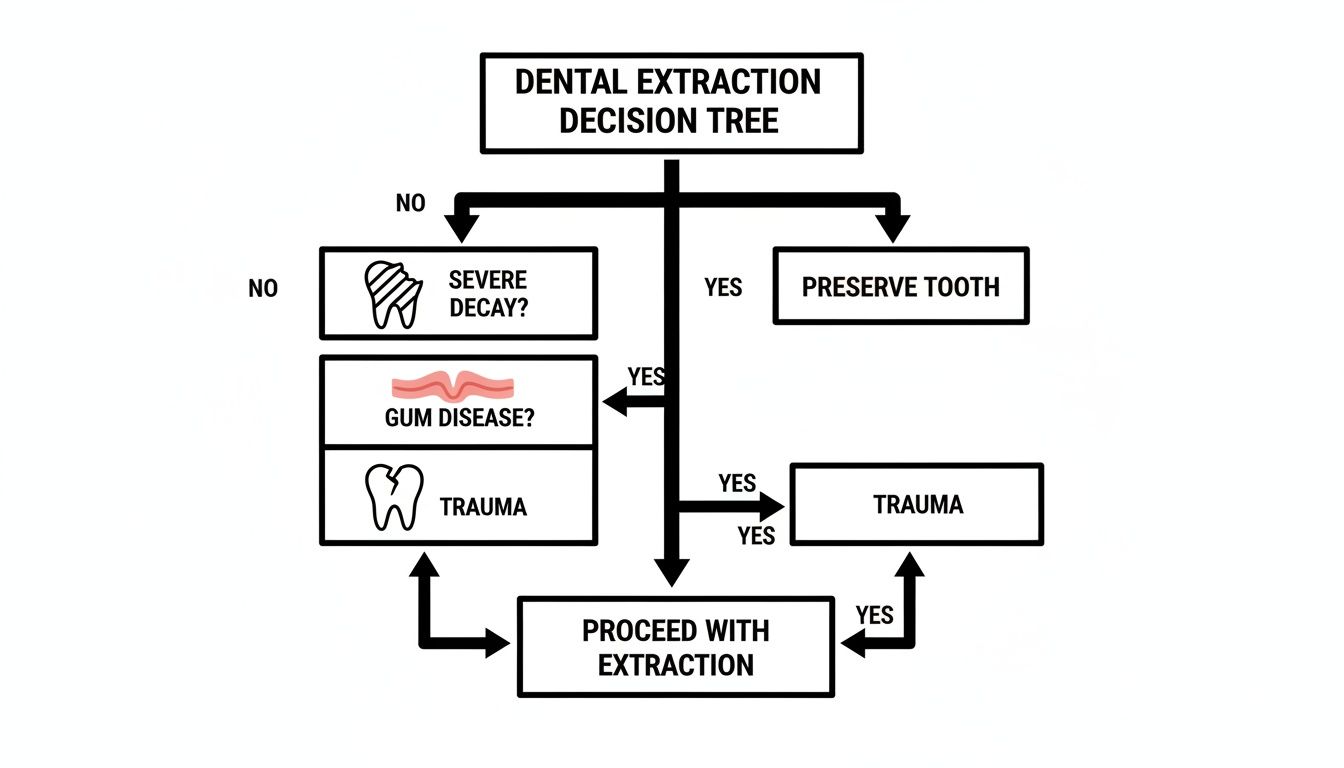
As you can see, issues like severe decay, advanced gum disease, or serious trauma often mean a tooth can't be saved. Removing it is essential to protect your overall oral health. Understanding this helps make it clear why dentures are such a beneficial and healthy choice for restoring your smile.
Immediate Dentures: Your Same-Day Smile
One of the biggest worries we hear from patients about the tooth extractions and dentures journey is the idea of having to go without teeth while their gums heal. Immediate dentures solve that problem entirely. They are your "same-day smile," crafted and ready to be placed on the very day of your extraction.
Think of an immediate denture as a protective, functional bandage for your gums. It covers the sensitive tissue, protecting it as it heals, while giving you a complete set of teeth from the moment you leave our office.
- A huge confidence boost: You walk out with a full, beautiful smile, with no gaps to worry about.
- A head start on function: You can start getting used to talking and eating with a denture right away, speeding up your adaptation.
Immediate dentures are a fantastic solution for that initial healing period. Just know that as your gums and jawbone heal over the next few months, they will change shape, and your immediate denture will need some adjustments to keep it fitting well. This is a perfectly normal part of the process for achieving long-term comfort and health.
Conventional Dentures: The Custom-Crafted Final Fit
A conventional denture is the classic, time-tested approach to replacing a full arch of teeth. The key difference here is patience. Instead of placing the denture right away, we wait until your gum tissues have completely healed after your extractions, which usually takes 8-12 weeks.
That healing time is crucial. It allows your gums to stabilize, so when we take impressions, they are incredibly precise. The result is a denture that is custom-made to the exact final contours of your mouth, giving you a superior, comfortable fit and a wonderfully natural appearance right from the start.
By waiting for your gums to heal, you ensure that your final denture is built on a stable, predictable foundation. This leads to better long-term comfort, function, and oral health.
Implant-Supported Dentures: The Gold Standard
If you're looking for the absolute best stability, function, and natural feel, implant-supported dentures are the clear winner. This modern solution gives you the full coverage of a denture but anchors it securely with dental implants. The result feels and works much more like your natural teeth ever did.
Here's how it works: We surgically place a few small titanium posts (the dental implants) into your jawbone. These posts act like artificial tooth roots. Once your bone has fused to them, your custom denture is made to snap securely onto these anchors.
The benefits for your health and appearance are truly game-changing:
- Unmatched Stability: Your denture is locked in. No slipping, clicking, or shifting when you eat, talk, or laugh, giving you incredible confidence.
- Jawbone Preservation: Implants stimulate the jawbone, which stops the bone loss that naturally happens after teeth are removed. This helps preserve your facial structure and youthful appearance over the long term.
- Powerful Chewing: You can get back to eating all the foods you love, even tough things like steak or crunchy apples, improving your nutrition and enjoyment of meals.
It’s no surprise this method has become so popular. The global market for dental implants and prosthetics is expected to jump from $12.57 billion in 2025 to $18.79 billion by 2030, showing just how many people are choosing this long-term health investment. Each denture option has its own advantages, and we’re here to help you understand them all. To dive even deeper, you may want to check out our detailed guide on the types of dentures available.
The Treatment Timeline What To Expect Step By Step

Knowing what’s coming next can make all the difference. When you’re facing tooth extractions and dentures, the whole process can feel a bit overwhelming. That's why we’ve laid out the entire timeline for you, turning uncertainty into a clear, predictable path toward getting your healthy, beautiful smile back.
Think of it as a roadmap. Each step has a specific purpose, all leading to one destination: a comfortable, beautiful, and fully functional new smile that boosts your health and confidence.
Step 1 Initial Consultation and Smile Design
Everything starts with a conversation. Your first appointment is where we sit down to map out your journey, discuss your health history, and really listen to your goals for your new smile. It’s the perfect time to ask us anything.
This is also where we get to design your smile together. Using advanced 3D imaging, we get a crystal-clear picture of your jawbone and oral anatomy. This tech lets us plan the final result digitally before we even begin, so you can see what’s possible and feel confident that you’ll love the appearance of your new smile.
Step 2 The Extraction Day Procedure
On the day of your extractions, your comfort is our top priority. We get it—this step can cause some anxiety. That’s why we offer several sedation options to help you feel completely calm and relaxed throughout the entire procedure.
Our team will ensure the area is totally numb before we start. Whether you opt for a local anesthetic or something deeper, you won’t feel any pain. Our only goal is to make the experience as smooth and stress-free as we can, for your complete peace of mind.
After the extractions, we'll give you clear instructions for your initial recovery. Knowing what to do—and what not to do—is crucial for proper healing and the health of your gums. For a detailed list, it's helpful to understand what not to do after a tooth extraction.
Step 3 The Healing and Adaptation Period
This next phase is all about giving your body the time it needs to heal. After extractions, your gums and jawbone will naturally change and remodel, which is essential for a great long-term denture fit and overall oral health. This healing period usually lasts for several weeks.
Here’s what you can generally expect during this time:
- Swelling and Soreness: This is totally normal for the first few days. We’ll make sure you know how to manage it with medication and cold compresses for a comfortable recovery.
- Tissue Remodeling: Your gums will shrink and reshape as they heal. This natural process is exactly what we want to see, as it creates a stable base for your final dentures.
- Learning to Adapt: If you receive immediate dentures, you’ll begin getting used to talking and eating with them. It takes a little practice, but you’ll be surprised how quickly you adapt to your new, functional smile.
Following our aftercare instructions is key here. It helps prevent any issues and ensures your healing is as quick and comfortable as possible. You can find more tips on our page with https://dentistkatytx.com/instructions-after-tooth-extraction/.
Step 4 Final Denture Fitting and Adjustments
Once your gums have completely healed and stabilized—which typically takes around 8-12 weeks—it’s time for the final, exciting step. This is when we’ll fit your permanent conventional denture or finalize your implant-supported one.
We take new, incredibly precise impressions of your healed gums. This allows us to create a denture that perfectly matches the unique contours of your mouth, which is the secret to amazing comfort and a natural look.
We’ll have you try in the denture to check everything: the fit, the bite, and how it looks. Our team makes tiny, meticulous adjustments right then and there to eliminate any pressure spots and ensure your bite feels strong and even. This final fitting makes sure your new smile isn't just beautiful, but perfectly ready for everyday life.
Understanding The Cost Of Extractions And Dentures
Let's be honest, when you’re thinking about dental work like tooth extractions and dentures, one of the first questions on your mind is probably, "What's this going to cost?" It’s a perfectly normal and valid concern, and we believe in being completely transparent about it.
It's helpful to see this not just as a cost, but as a true investment in yourself—in your ability to eat the foods you love, to smile without a second thought, and in your overall health for years to come. The final price tag isn't a one-size-fits-all number; it's tailored to your unique situation and health goals.
What Determines The Final Cost
The total investment for your new smile is based on a few key variables. We put together a treatment plan that addresses your specific needs, and each of these elements plays a part.
- Number of Extractions: The cost will naturally depend on how many teeth need to be removed. It also matters whether they are simple extractions or more complex surgical ones.
- Type of Denture: There's a difference in cost between a conventional denture and an implant-supported one, which offers superior benefits for jaw health and function.
- Materials Used: The materials we use to craft your dentures affect everything from how they look to how long they last, which is also reflected in the price.
Talking about cost can feel overwhelming, but it's a major part of dental care for millions. Restorative dentistry is a priority in the U.S., with spending expected to pass $124 billion. Still, we know that cost is a real hurdle— 46% of Americans have skipped care because of it, and 76.5 million people don't have dental insurance. You can discover more insights about dental care statistics and trends to see the bigger picture.
Making Your New Smile Affordable
We are firmly committed to the idea that everyone deserves to feel healthy and confident in their smile. That’s why we work hard to make getting tooth extractions and dentures a financially manageable process for our patients. There are several paths we can explore to make this life-changing treatment fit your budget.
Think of your new smile not as an expense, but as an investment. You are investing in years of confident smiling, comfortable eating, and improved oral health that will pay dividends for the rest of your life.
Our team is here to walk you through every option, ensuring that financial stress doesn't stand in the way of getting the beneficial care you need.
Your Payment and Financing Options
At Grand Parkway Smiles, we provide straightforward and flexible ways to manage the cost of your treatment. Our goal is to give you all the information you need to move forward with peace of mind.
- Dental Insurance: We proudly accept most PPO insurance plans. Our front office team is fantastic at helping you understand your benefits and will work to maximize your coverage, reducing what you need to pay out-of-pocket.
- Health Savings Accounts (HSA) & Flexible Spending Accounts (FSA): Using pre-tax dollars from your HSA or FSA is a smart way to pay for your treatment.
- Flexible Financing: For those who prefer to pay over time, we partner with trusted third-party financing companies. They offer plans with low or even no interest, breaking the total cost into smaller, predictable monthly payments.
- In-House Savings Plan: Don't have insurance? No problem. Our in-house plan offers significant discounts on our services for a low annual fee, making quality care more accessible.
Of course. Here is the rewritten section, crafted to sound completely human-written and natural, following the specific style and tone of the provided examples.
Answering Your Top Questions About Tooth Extractions and Dentures
Making the decision to move forward with tooth extractions and dentures is a big one, and it's completely normal to have a lot of questions. We find that when patients have clear, honest answers, they feel much more confident and at ease with the entire process.
We've put together this guide to answer the most common questions we hear at our office. Our goal is to give you the practical information you need to feel positive about restoring your smile’s health and appearance.
Will The Extraction and Denture Process Be Painful?
This is usually the very first thing people ask, and we're always happy to put minds at ease. Your comfort is our number one priority here at Grand Parkway Smiles, period. The extraction itself is done using a very effective local anesthetic that completely numbs the area. You won't feel any pain during the procedure, just a bit of pressure.
For anyone feeling particularly nervous, we also offer several sedation dentistry options, including IV sedation, to help you feel completely calm and relaxed.
After the procedure, it's normal to have some soreness and swelling as you heal. However, this is very easy to manage with the pain relief medication we provide and simple at-home care, like using a cold compress.
When you first get your dentures (especially immediate ones), your gums might be a little tender as they get used to them. This is totally normal and temporary. We'll have you come in for follow-up visits to make small adjustments, relieving any pressure spots to make sure your new smile feels as wonderful as it looks.
How Long Until My Dentures Feel Normal?
There’s definitely an adjustment period for every new denture wearer, but how long it takes really varies from person to person. Most people find it takes anywhere from a few weeks to a couple of months to feel totally comfortable and for the dentures to feel like a natural part of their mouth.
At first, you might notice a few things:
- A feeling of fullness in your mouth as you get used to having the denture there.
- More saliva than usual as your mouth adjusts to the new appliance.
- Minor challenges with speech while your tongue learns how to work around the denture. A great tip is to read out loud for a few minutes each day to speed this up!
Eating will take some practice, too. We always suggest starting with soft foods cut into small, easy-to-manage bites. As you get more confident, you can slowly start adding a wider variety of foods back into your diet, which is a major benefit for your nutrition and overall health.
Think of it like breaking in a new pair of high-quality shoes. They might feel a little stiff at first, but with a little time and minor adjustments, they soon become perfectly comfortable and supportive for everyday life.
Will My Dentures Look Like Natural Teeth?
Absolutely. This is one of the areas where modern dentistry has made incredible strides. Today’s dentures are a world away from the old-fashioned "false teeth" you might be picturing. They are carefully crafted with aesthetics in mind to give you a smile that is both beautiful and stunningly natural.
The whole process is very personalized. We work side-by-side with you to design your smile, considering a few key factors for a lifelike result:
- Tooth Shade: We’ll help you pick a color that looks bright and healthy while complementing your skin tone.
- Tooth Shape and Size: The teeth are shaped and sized to match your unique facial features for a balanced, harmonious look.
- Gum Color: The pink acrylic base is specially tinted to realistically mimic the look of your natural gum tissue.
For patients who want the most realistic and functional outcome possible, implant-supported dentures are the gold standard. Since they are anchored right to your jawbone, they don't move or slip, allowing them to look, feel, and function just like natural teeth. Our ultimate goal is to give you a smile that makes you feel great and that you can't wait to share.
How Do I Care For My New Dentures?
Good daily care is the key to keeping your dentures in excellent condition and making sure your mouth stays healthy. Think of it as protecting a long-term investment in your health and confidence. A simple routine is all it takes.
First, you'll need to clean your dentures every day, just like you would natural teeth. Use a soft-bristled denture brush and a non-abrasive denture cleanser to get rid of any food bits and plaque. This not only keeps your dentures looking their best but also promotes a healthy oral environment.
Second, whenever your dentures aren't in your mouth, they need to be stored properly. They should always be kept moist to keep them from drying out and losing their shape. Soaking them overnight in water or a denture solution is the best way to do this.
Finally, don't forget to clean your mouth! Even with no teeth, you should gently brush your gums, tongue, and the roof of your mouth with a soft toothbrush. This removes plaque, stimulates circulation in the tissues, and keeps your gums healthy, which is vital for a good denture fit. And of course, regular check-ups at our office are essential so we can professionally clean your dentures and check on the health of your mouth.
At Grand Parkway Smiles, we're here to support you through every single stage of your journey with tooth extractions and dentures. If you have more questions or you’re ready to explore your options for a brand-new smile, schedule a consultation with our experienced team today. Visit us at https://dentistkatytx.com to get started.