Wondering what can be done for receding gums? The good news is, there are effective solutions that range from simple tweaks in your home care routine and professional deep cleanings all the way to advanced surgical procedures designed to restore your gum line. The right approach can stop recession in its tracks, protect your teeth from damage and decay, and bring back the healthy, confident smile you deserve.
Understanding Gum Recession and Its Impact on Your Smile

It can be unsettling to look in the mirror and see your gums pulling back from your teeth. It’s one of those clear signals that something isn’t quite right with your oral health.
A good way to think about it is like soil slowly eroding from the base of a tree. As the soil washes away, it exposes the sensitive roots, leaving the tree vulnerable. This process, known as gum recession, does a lot more than just change how your smile looks—it weakens its very foundation and compromises your dental health.
This isn't just a cosmetic issue. Gum recession has a direct impact on both the health and appearance of your teeth, creating a cascade of potential problems that you really shouldn't ignore. Catching these signs early is the first and most important step toward getting things back on track and preserving your smile.
The Aesthetic and Health Consequences
As your gums recede, they expose the root surfaces of your teeth. This is what leads to that noticeable change in your smile, often making teeth appear "longer" than they used to. Naturally, this aesthetic shift can make a lot of people feel self-conscious, impacting their confidence when they speak or smile.
But beyond appearances, the health implications are what we really need to focus on. Those exposed roots aren't protected by the same tough enamel that covers the crowns of your teeth. This leaves them far more susceptible to cavities and physical damage. It’s a key reason why managing your periodontal health is crucial for a healthier smile.
Another common side effect is a sudden spike in tooth sensitivity. Without that protective blanket of gum tissue, the roots can become extremely sensitive to hot, cold, sweet, or even acidic foods and drinks. That sharp pain can really get in the way of enjoying everyday meals.
Gum recession is a highly treatable condition. It's not something you have to live with. Modern dental treatments can effectively halt its progression and, in many cases, restore the gum line to its original, healthy position, improving both the health and appearance of your smile.
The best part is that this is a very common condition with a clear path to resolution. Understanding what can be done for receding gums is the key to restoring your smile's health, function, and beauty. This guide will walk you through everything you need to know, from simple preventive habits you can start today to professional treatments that can rebuild your gum line.
The Hidden Causes Behind Receding Gums
To figure out the best way to treat receding gums, we first have to understand what's causing them to pull back in the first place. Think of it like a detective at a crime scene—you need to identify the culprit before you can find the right solution. Gum recession isn't something that happens overnight; it’s almost always the result of one or more factors that have been at play for some time.
Getting to the bottom of these issues is the most important step in creating a treatment plan that actually works. By pinpointing the specific cause, you and your dentist can address the root of the problem, not just the symptom. This ensures a lasting fix that protects your smile for years to come.
Periodontal Disease: The Main Offender
The number one cause of gum recession is, without a doubt, periodontal disease. This is a bacterial infection in your gums that, if left to its own devices, can do some serious damage to your dental health. It often starts quietly as gingivitis—you might notice red, swollen gums that bleed a little when you brush.
When plaque isn't cleaned off daily, it hardens into a tough substance called tartar (or calculus) right along your gum line. Tartar acts like a tiny wedge, creating small pockets between your teeth and gums. Nasty bacteria love to hide in these pockets, releasing toxins that break down both the gum tissue and the bone that holds your teeth securely. As this support structure gets destroyed, the gums literally start to pull away, or recede. It’s a problem that only gets worse without a professional stepping in.
Imagine the foundation of a house slowly being chipped away. That’s exactly what periodontal disease does to the bone and tissue that support your teeth. Stopping this process is our first priority to preserve your dental health.
Everyday Habits That Can Have Big Consequences
Beyond disease, several common habits and conditions can either directly cause or worsen gum recession. These factors can work on their own or team up, speeding up the damage to your gum line and leaving your teeth exposed.
- Aggressive Brushing: Brushing your teeth is vital, but doing it too hard is counterproductive. Using a stiff-bristled brush or just scrubbing with too much muscle can physically wear away your delicate gum tissue over time, causing it to retreat.
- Teeth Grinding (Bruxism): Lots of people clench or grind their teeth without even knowing it, especially while sleeping. This constant, heavy force puts a huge amount of pressure on your teeth and gums, which can cause the gum tissue to recede from the sheer strain.
- Tobacco Use: Whether you smoke it or chew it, tobacco is terrible for your gums. It chokes off the blood flow to the gum tissues, making it harder for them to heal and fight infection. This leaves tobacco users far more vulnerable to periodontal disease and recession.
Factors That Are Out of Your Control
Sometimes, the reasons for receding gums are tied to things that are harder to manage on your own. Knowing about these can help you and your dentist create a more effective game plan for prevention.
One of the biggest factors is simple genetics. Research shows that about 30% of people may be genetically predisposed to gum disease, no matter how well they brush and floss. If your parents struggled with their gums, you might have a higher risk, too.
Hormonal shifts can also play a part. Big life events like puberty, pregnancy, and menopause trigger changes in your hormones that can make your gums more sensitive and susceptible to the bacteria that cause recession. Even a misaligned bite or crooked teeth can put uneven pressure on certain spots in your mouth, leading to gum recession in just those areas. Understanding these risk factors is a key part of figuring out the best path forward for your smile.
Halting Gum Recession with At-Home Care
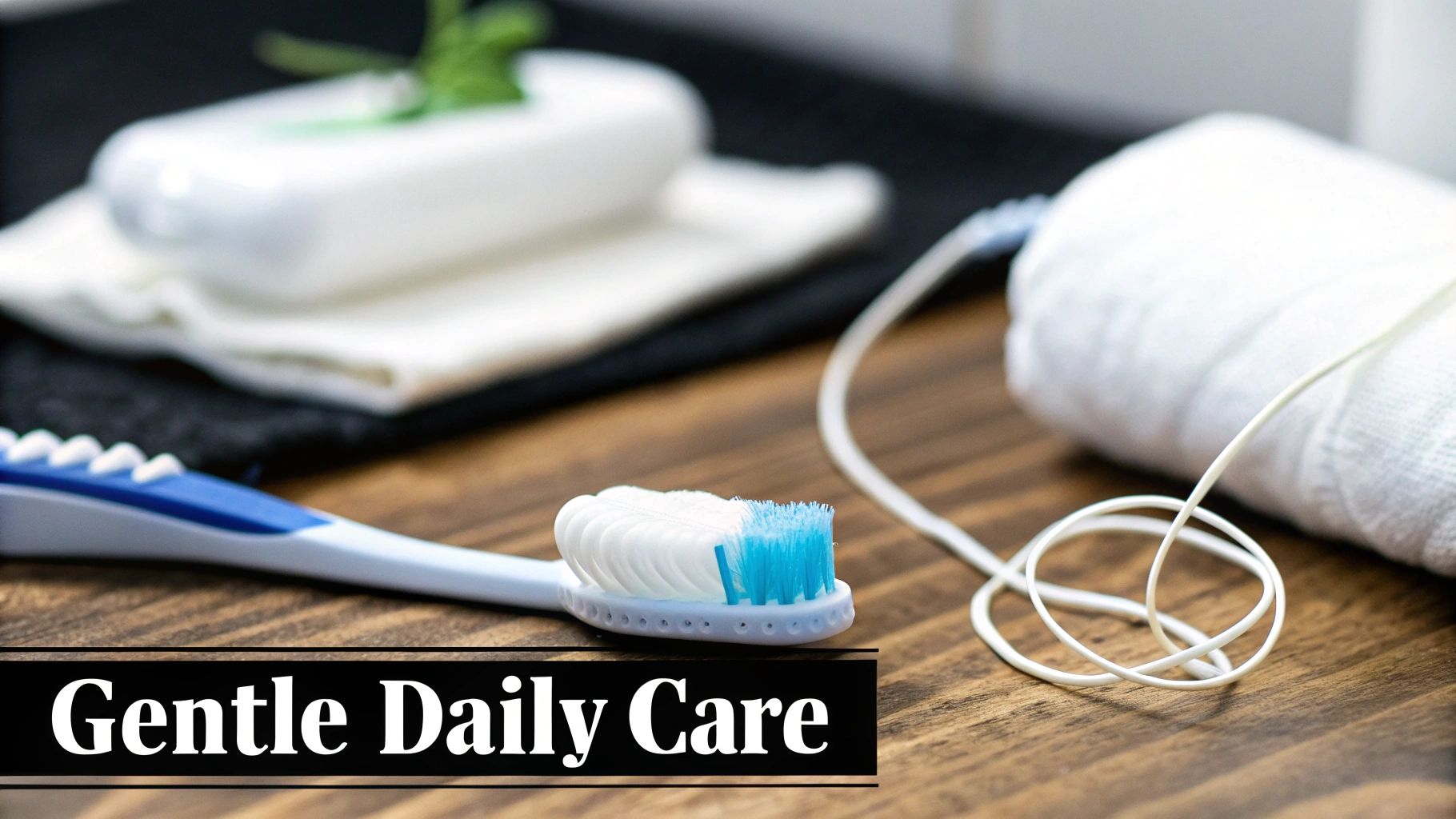
While professional treatments are crucial for more serious cases, your daily habits are truly your first and best line of defense against gum recession. The answer to "What can be done for receding gums?" starts right in your own bathroom. With consistent, gentle care, you can often stop early-stage recession in its tracks and prevent any further damage.
Think of it as protecting your smile’s foundation. Just a few minutes each day, using the right techniques, can preserve your gum health for years to come. It’s an investment that pays off every time you eat, speak, or smile, and it can save you from needing more involved procedures down the road.
These at-home strategies are your most critical step. Mastering them puts you in direct control of your gum health.
Mastering the Art of Gentle Brushing
Believe it or not, one of the most common mistakes people make is simply brushing too hard. Aggressive scrubbing can physically wear away your delicate gum tissue. The goal is to clean your teeth thoroughly, but without causing any harm. Technique is everything here.
First things first: switch to a soft-bristled toothbrush. Hard bristles are just too abrasive for your gums. When you brush, hold the brush at a 45-degree angle to your gum line and use gentle, circular motions. Avoid that harsh back-and-forth sawing motion at all costs.
This simple method cleans plaque from both the tooth surface and just underneath the gum line, where all the trouble starts. It’s a small adjustment that protects your gums while still giving you a fantastic clean.
Your toothbrush should feel like it's massaging your gums, not scrubbing them. If the bristles are splayed out after a few weeks, it's a clear sign you're applying too much pressure.
Essential Daily Habits for Gum Protection
Beyond brushing, a couple of other daily practices are non-negotiable if you’re concerned about receding gums. These habits get into the spaces your toothbrush just can't reach.
- Daily Flossing: This is absolutely crucial. Flossing removes plaque and food particles from between your teeth and under the gum line. If you leave that plaque there, it hardens into tartar, which physically pushes the gums away from the teeth.
- Antiseptic Mouthwash: A good antiseptic mouthwash can help knock down the bacteria in your mouth, control plaque, and give your gums extra support. It’s a great way to finish off your routine.
Lifestyle Adjustments with a Big Impact
What you do outside of your oral hygiene routine also plays a huge role in your gum health. Tackling these factors can dramatically slow down or even stop gum recession.
One of the biggest culprits is teeth grinding (bruxism). If you clench or grind your teeth, especially at night, that constant pressure can seriously accelerate gum recession. A custom-fitted nightguard from your dentist acts as a protective cushion, absorbing the force and giving your gums a much-needed break.
Don't forget about your diet, either. Eating a balanced diet rich in vitamins—especially Vitamin C—supports your body's natural ability to maintain healthy gum tissue. Foods like citrus fruits, leafy greens, and broccoli can boost your gum health from the inside out, making them more resilient.
Your First Professional Step: Non-Surgical Treatments
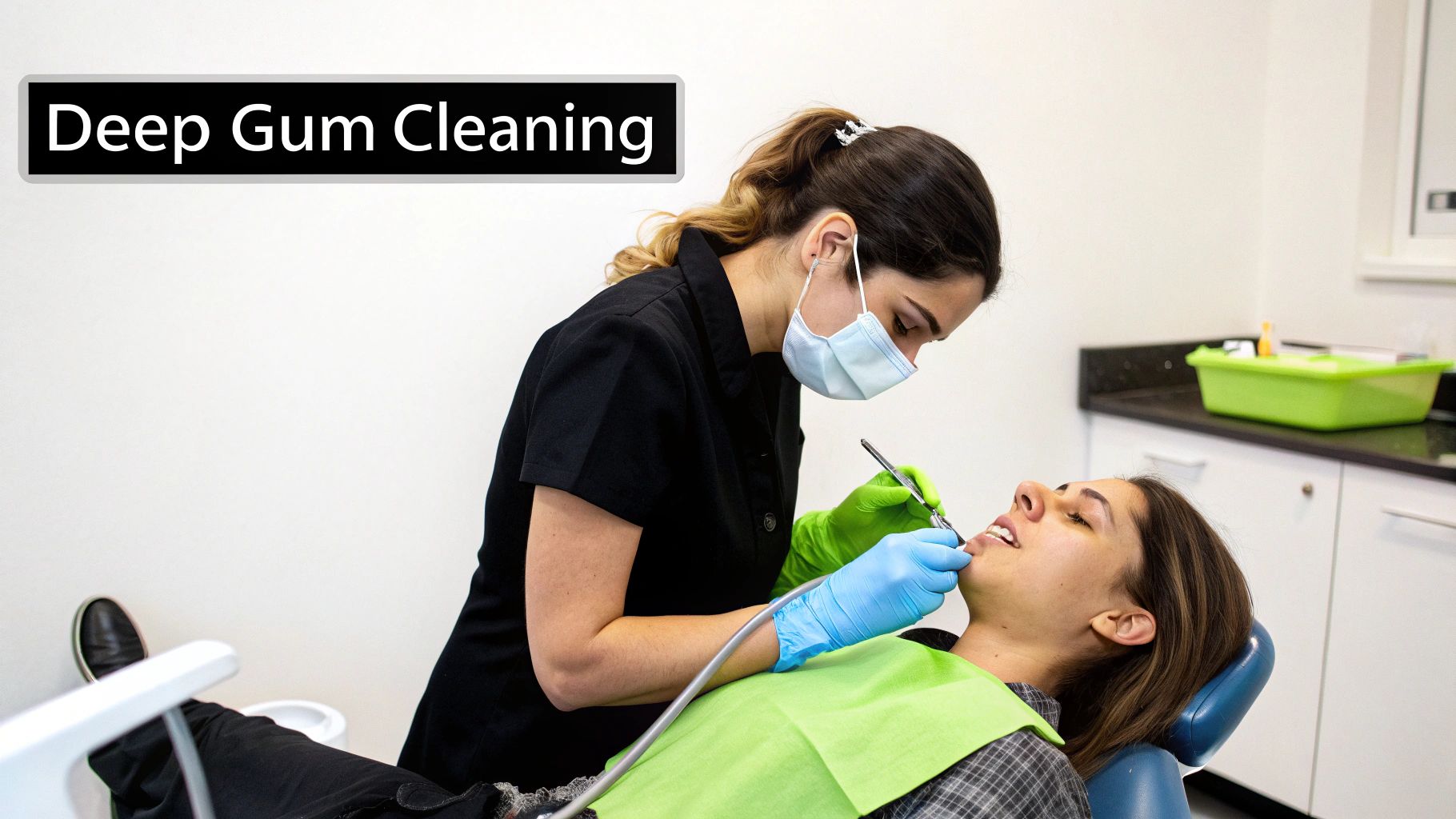
When diligent at-home care isn't quite enough to stop gum recession in its tracks, it's time to bring in the professionals. The good news is that the first line of defense is a highly effective, non-surgical treatment that gets right to the root of the problem.
This fundamental procedure is known as scaling and root planing (SRP), but you might know it better as a 'deep cleaning.' It’s designed to go where your toothbrush and floss simply can't reach—down below the gum line. For many people dealing with mild to moderate gum recession, SRP is the key to halting the process entirely, leading to healthier gums and a brighter smile.
What Is Scaling and Root Planing?
Think of SRP as a two-part mission to reset your gum health. The first phase, scaling, tackles the buildup, while the second, root planing, smooths the way for healing. Together, they create a clean slate so your gums can finally heal and reattach to your teeth.
The main objective is to clear out the bacterial colonies that have set up camp in the pockets between your teeth and gums. By removing this harmful gunk, we stop the destructive process that causes your gums to pull away in the first place. Often, this is all it takes to improve gum health without ever needing to talk about surgery.
The Scaling Process: Removing Harmful Buildup
Scaling is all about the meticulous removal of tartar (hardened plaque) from every surface of your teeth, both above and below the gum line. Our hygienists use special tools to carefully scrape away this stubborn, bacteria-filled substance.
It’s a bit like trying to remove barnacles from the hull of a boat. You need the right instruments and a precise touch to get the surface clean without causing any damage. That’s exactly what scaling does—it eliminates the primary irritant that’s making your gums inflamed and causing them to recede.
This deep cleaning process is a cornerstone of periodontal therapy. It directly addresses the bacterial infection causing gum recession, creating a healthy foundation for the gums to heal.
The Root Planing Process: Smoothing the Way for Healing
Once scaling has cleared away the debris, the next step is root planing. This involves carefully smoothing out the surfaces of your tooth roots. It might sound minor, but this part of the process is absolutely critical for two big reasons:
- It discourages bacteria: A smooth root surface is much harder for new plaque and bacteria to latch onto, which helps keep the problem from coming back.
- It promotes reattachment: It creates a clean, receptive surface for your gums to heal and form a tight seal against the tooth root once again.
You can think of it like sanding a rough piece of wood before you paint it. The smoothing action ensures a better, more secure bond for the future. You can learn more about the benefits of a professional deep cleaning in our detailed guide.
We know that the idea of any dental procedure can be a little nerve-wracking, and your comfort is our top priority. We use a local anesthetic to completely numb the area, ensuring you don’t feel any discomfort during the treatment. At Grand Parkway Smiles, we also offer sedation options to make the whole experience as low-stress and comfortable as possible.
Restoring Your Gum Line with Advanced Surgical Options
When gum recession has progressed to a certain point, non-surgical treatments just can't bring back the tissue that’s been lost. For these more advanced cases, modern surgical options offer a reliable and highly effective way to rebuild your gum line, protect your teeth, and restore the health and appearance of your smile for the long haul.
I know the word "surgery" can sound a little intimidating, but today's techniques are incredibly precise and designed with your comfort in mind. The results are beautiful and look completely natural. The main goal is always to cover those exposed tooth roots, which gives them a powerful shield against decay and sensitivity while making a huge difference in how your smile looks.
Understanding Gum Grafting: The Gold Standard
The most common and trusted surgical fix for receding gums is a procedure called a gum graft. The easiest way to think about it is like patching a bare spot on your lawn with a healthy piece of sod. We take a small piece of tissue and expertly place it over the exposed root, essentially rebuilding the gum line right where it used to be.
This procedure doesn't just put a bandage on the problem; it creates a lasting solution by adding living, healthy tissue back to the area. This new tissue integrates with your existing gums, forming a stable, durable barrier that protects the root and stops recession in its tracks. The primary benefit is restoring your oral health and preventing further damage.
The results we can achieve are remarkable. Gum grafting is considered the gold-standard treatment for a reason—it’s proven to cover exposed roots and regenerate healthy tissue in 85-95% of cases. Here at Grand Parkway Smiles, our oral surgeons regularly perform connective tissue grafts that achieve an average of 2-3 mm of root coverage, with patient satisfaction rates consistently over 90%.
These procedures are vital for many of the 64.7 million American adults dealing with periodontitis, as grafting is a key step in preventing further bone loss. If you're interested in the data, you can learn more about the global impact of gum disease from studies compiled by experts like Portland Periodontics.
Different Types of Gum Grafts
Not all gum recession is the same, so not all grafts are the same. We’ll recommend the best type of graft for you based on your unique situation—how much recession you have and the amount of healthy gum tissue available.
Here are the three main approaches:
- Connective Tissue Grafts: This is the go-to method for most situations. A small flap is created on the roof of your mouth, and a tiny piece of connective tissue from just underneath that top layer is removed. That tissue is then stitched over the exposed tooth root, and the flap on your palate is stitched neatly back down.
- Free Gingival Grafts: This technique also uses tissue from the roof of the mouth, but instead of taking tissue from under a flap, a small piece is taken directly from the surface. We often use this approach for patients who have naturally thin gums and need to build them up for better long-term stability.
- Pedicle Grafts: This type of graft is a bit different because it uses tissue from the gum right next to the tooth needing repair. A flap is partially cut away and then stretched over to cover the exposed root and stitched into place. This is only an option if you have plenty of healthy gum tissue right near the affected tooth.
No matter which technique is used, the ultimate goal is the same: to create a healthy, stable gum line that protects the tooth root, gets rid of sensitivity, and gives you a more even, aesthetically pleasing smile.
The Benefits of Surgical Intervention
Making the decision to go forward with a surgical solution is a big step, but the benefits for your dental health and confidence are profound. By tackling severe recession head-on, you aren't just improving how your smile looks—you're reinforcing its very foundation for years to come.
Key advantages of gum grafting include:
- Eliminating Tooth Sensitivity: Covering those exposed roots brings immediate relief from the sharp, zinging pain caused by hot, cold, or sweet things.
- Shielding Roots from Decay: The new gum tissue acts as a natural barrier, protecting the softer root surfaces from the bacteria that cause cavities.
- Preventing Further Bone and Gum Loss: A successful graft halts the progression of recession and helps stabilize the underlying bone structure that holds your teeth in place.
- Improving Your Smile's Appearance: Creating a more balanced and even gum line has a dramatic positive effect on the overall look of your smile, restoring a healthier and more youthful appearance.
Accelerating Healing with PRF Technology
At Grand Parkway Smiles, we're always looking for ways to make your recovery as quick and comfortable as possible. One of the advanced techniques we use is Platelet-Rich Fibrin (PRF). PRF is a healing concentrate created from a small sample of your own blood, which we spin in a centrifuge to isolate platelets and powerful growth factors.
When we place this PRF membrane at the surgical site, it acts like a natural "super bandage" that slowly releases healing proteins. Studies show this simple step can speed up the healing process by up to 40%, which means less post-operative discomfort and swelling for you. It's an incredible way to support your body’s own ability to heal, ensuring a better and faster recovery.
Creating Your Personalized Treatment Plan
Knowing what can be done for receding gums is one thing, but taking that first step is what really brings your smile back to life. Real, lasting solutions are absolutely within reach, and it all starts with a professional consultation where we map out a game plan designed specifically for you. This is your chance to team up with us and get back on the path to healthy gums.
Your first visit is very much a partnership. We'll start with a detailed look at your teeth and gums, assessing everything with precision. We use advanced tools like 3D imaging to get a perfectly clear picture of your underlying bone structure. This lets us see exactly what's causing the recession and how far it has progressed.
Designing Your Path Forward
Getting all that diagnostic info is critical to building the right plan. Once we have the full picture, we’ll sit down and talk through your specific situation and what you hope to achieve. We believe you should be an active partner in your own health care, so we'll work together to decide on the best course of action.
Your personalized options might include:
- Non-Surgical Therapy: For mild to moderate cases, a deep cleaning (also known as scaling and root planing) can often be enough to stop the recession in its tracks.
- Surgical Restoration: If you've lost more significant tissue, a gum graft can rebuild your gum line, protect your exposed tooth roots, and restore a balanced, healthy-looking smile.
This decision tree gives you a simplified look at the choices you face with more advanced recession and where each path leads.

As the chart shows, doing nothing unfortunately leads to more damage. But being proactive with a procedure like a gum graft directly restores your gum health and gives your teeth the protection they need.
The most important thing to remember is that you have options. Our job is to explain each one clearly—the pros, the cons, and what to expect—so you feel completely confident and informed every step of the way.
We also make sure practical matters don't get in the way of your health. Our team is here to help you understand your insurance benefits, go over our in-house savings plan, and discuss flexible financing options. Your journey to a healthier smile begins with a simple conversation.
Gum Recession FAQs
When you're dealing with receding gums, it's natural to have a lot of questions. Getting clear, straightforward answers is the first step toward feeling in control of your oral health again. We want you to feel confident and fully informed about the path ahead.
Here are a few of the most common questions we hear from our patients in Katy and Houston.
Can My Gums Grow Back on Their Own?
This is one of the first things people ask, and the honest answer is no. Once gum tissue is gone, it doesn't regenerate by itself. Think of it like soil that has eroded away from a riverbank—it doesn't just reappear on its own.
But here’s the good news: just because it can't grow back naturally doesn't mean we can't fix it. Modern dental treatments are designed to solve this exact problem. Procedures like gum grafting can rebuild your gum line, covering exposed roots and restoring the protective barrier your teeth need to stay healthy.
Is Gum Recession Treatment Painful?
We know that worrying about pain can keep people from getting the care they need. That’s why your comfort is our absolute priority from start to finish. We take every possible step to make sure your experience is a positive one.
For non-surgical treatments like deep cleanings, we'll completely numb the area with a local anesthetic. You won't feel anything during the procedure. For surgical options like gum grafting, we offer several sedation methods to help you feel completely relaxed and at ease.
Most people are pleasantly surprised by how manageable recovery is. Any post-procedure soreness is usually mild and can be handled easily with over-the-counter pain relievers. We'll send you home with detailed aftercare instructions to ensure your recovery is as quick and comfortable as possible.
What Does Gum Recession Treatment Cost?
The investment in your gum health really depends on your specific situation. The main factors are the extent of the recession and which treatment is right for you. A non-surgical deep cleaning, for example, will have a different cost than a gum graft covering several teeth.
We believe in being completely upfront about the financial side of your care. During your consultation, we’ll give you a detailed breakdown of all the costs. No surprises, no hidden fees.
Our goal is to make sure you can get the care you need without financial stress. We offer several ways to make treatment manageable:
- We accept most major PPO insurance plans.
- We have an in-house savings plan if you don't have insurance.
- Flexible financing options are available to spread the cost over time.
We're here to work with you to find a solution that fits your budget, so you can move forward with protecting your smile.
Ready to take the first step toward a healthier gum line and a more confident smile? The expert team at Grand Parkway Smiles is here to create a personalized treatment plan just for you. Schedule your consultation today by visiting us at https://dentistkatytx.com.