It's completely normal—and even expected—to feel some tenderness or pain after a root canal. Don't worry, this doesn't mean the procedure failed. It’s actually a sign that your body has kicked off the healing process, which is the first step toward securing the long-term health of your tooth. The discomfort should be mild to moderate and will gradually disappear over the next few days, leaving you with a healthy, functional tooth.
Why Your Tooth Aches After a Root Canal
Feeling pain from a tooth that was just treated to stop pain can feel a bit backward, right? The key is knowing where that ache is actually coming from. The infected nerve inside your tooth, which was the source of all that trouble, is gone. The sensitivity you're feeling now isn't from the tooth itself but from all the healthy tissues surrounding it as they heal.
Think of it like this: your tooth had a deep infection that threatened its survival. The root canal was a sight-saving procedure, cleaning out the infection and preserving your natural tooth. The repair work itself can temporarily stir things up in the neighborhood—your gums, your jawbone, and the ligaments that hold your tooth in place. Just like any part of the body healing after an intervention, these tissues are a little tender and need some time to settle down.
What Causes the Soreness
That post-procedure ache is almost always due to inflammation. It's your body's natural response to send healing cells to the area, which causes some temporary swelling and sensitivity. This is actually a great sign that your immune system is on the job, repairing the area and solidifying the foundation for your healthy tooth.
So, where is the discomfort usually coming from?
- Tissue Inflammation: The ligaments and bone around the very tip of the tooth's root were inflamed from the infection and the cleaning process. They need a little time to calm down and heal.
- Procedural Irritation: The tiny instruments we use to meticulously clean the canals can sometimes go a hair past the root tip. This can cause minor irritation to the sensitive bone tissue just beyond it as it heals.
- The Temporary Filling: If we placed a temporary filling, it might sit just a little higher than your other teeth. This can make things sore when you bite down, but it's a short-term issue that goes away once your permanent, natural-looking crown is placed.
This healing-related pain feels very different from the sharp, relentless throb of an infected tooth. And the research backs this up. Studies have found that while about 40% of patients feel some pain 24 hours after their root canal, that number drops off quickly. Most people feel significant relief within a week. You can read more about the findings on post-treatment pain prevalence to see how common this is.
The goal of a root canal isn't just to stop your pain—it's to save your natural tooth and keep your smile's structure and function intact. By stopping the infection, we protect both your dental health and your overall health. A few days of manageable discomfort is a small trade-off for saving a tooth that can last a lifetime.
Your Root Canal Recovery Timeline
Knowing what to expect after a root canal makes the recovery process so much easier. Think of the next week or so as a roadmap for your healing. When you know the typical milestones, you can feel confident that your body is recovering just as it should. After all, you’ve just done something incredible for your dental health—saving your natural tooth and stopping an infection in its tracks.
A little tenderness at first is a completely normal part of the process. While the procedure cleaned out the infection inside the tooth, the tissues surrounding it—like the ligaments and jawbone—were also inflamed and need a bit of time to calm down and fully heal.
Let's walk through what a typical first week looks like.
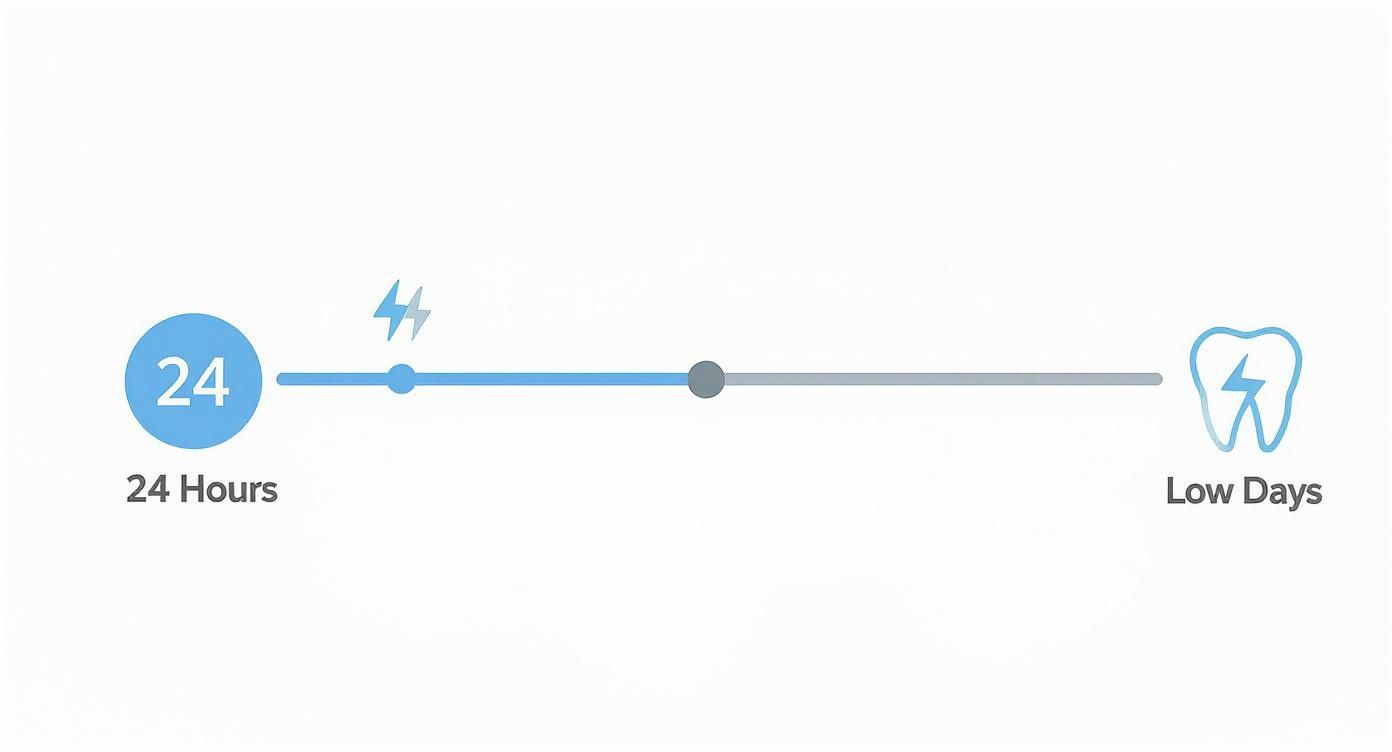
As you can see, discomfort usually peaks in the first day or so and then gets steadily better as the inflammation goes down, paving the way for a healthy, pain-free tooth.
To give you a clearer picture, here’s a day-by-day breakdown of what you can generally expect during that first week.
A Typical Root Canal Recovery Timeline
| Timeframe | What You Might Feel | How to Manage It |
|---|---|---|
| First 24-72 Hours | A dull, throbbing ache around the tooth. Sensitivity to pressure is common. This is the peak of your discomfort as healing begins. | Use over-the-counter anti-inflammatories (like ibuprofen). Apply a cold compress for 15 minutes at a time. Rest and allow your body to heal. |
| Days 4-5 | The constant ache should be fading significantly. You'll notice it feels much better each morning. | Continue to avoid chewing on the treated side to protect the tooth. Stick to soft foods. Keep the area clean as instructed for optimal healing. |
| End of the First Week | Most of the initial discomfort should be gone. You might feel a little tenderness, but the sharp pain is a thing of the past. | You can slowly reintroduce more foods, but still be gentle. The tooth is healing, so protect the temporary filling ahead of getting your permanent crown. |
This table is just a guide, of course, but it covers what the vast majority of our patients experience. The key takeaway is steady, daily improvement toward a fully restored tooth.
The First 24 to 72 Hours
This initial window is when you'll feel the most noticeable discomfort. It’s important to know this isn't the same sharp, agonizing pain of the original tooth infection. Instead, it’s more of a dull ache or throbbing sensation, which is a sign of healing. You’ll probably also feel some sensitivity if you accidentally bite down on the tooth.
So, what’s going on in there? The main reason for this feeling is the periodontal ligament—the tiny tissue that acts as a shock absorber for your tooth. It’s been irritated by both the infection and the cleaning process, so it's inflamed. This is just a sign that your body’s natural healing response is kicking into gear to support your newly saved tooth.
During this phase, managing the discomfort is pretty straightforward:
- Over-the-counter medication: An anti-inflammatory pain reliever like ibuprofen is your best friend here.
- Cold compress: Applying an ice pack to your cheek in 15-minute intervals really helps reduce swelling and numb the area.
- Rest: Your body needs energy to heal, so avoid hitting the gym or doing anything too strenuous for the first day or two.
Day 4 to the End of the First Week
Once you get past that 72-hour mark, you should notice a real difference. That constant, dull ache will start to fade into the background, and the tooth will feel less "angry" when you touch it. Every day should bring a little more relief and bring you closer to enjoying your healthy tooth.
Even though you’re feeling much better, the area is still healing under the surface. It's crucial to keep protecting the tooth to make sure recovery stays on track. Your temporary filling isn't as tough as a permanent crown, so it's a good idea to avoid chewing directly on that side for a while.
Your goal this week is simple: let the inflammation go down without any interruptions. When you follow your aftercare instructions, you're not just managing pain—you're playing an active role in the long-term success of your root canal and the health of your smile.
Good nutrition is also a huge part of healing. Sticking to soft foods means you won't put any unnecessary pressure on the treated area. For some great ideas, it helps to know what to eat after a root canal to support your recovery without causing any setbacks.
By the end of that first week, most people find that the significant pain after a root canal is gone, leaving only some minor tenderness that continues to get better. This steady progress is the best sign that the treatment was a success and your body is healing beautifully.
What Factors Can Make Post-Treatment Pain Worse?
While a smooth recovery is what we always aim for, it’s good to know why your experience with pain after a root canal might feel different from someone else's. Several things can change the intensity and length of your discomfort, and understanding them helps you appreciate the healing process. This information is key to having a positive and confident recovery.
Your healing journey is as unique as you are, and the condition of your tooth before we even started plays a huge role in how you feel afterward. A tooth that was badly infected or already causing you a lot of pain is starting from a point of high inflammation. The procedure successfully removed the source of the problem, but it takes time for the surrounding tissues to fully calm down.
The Impact of What Was Already Going On
If your tooth needed a root canal, it was because of deep decay or an infection. Your body’s natural response is to send inflammatory cells to fight it, which makes all the tissues around the root tips—deep in your jawbone—sensitive and irritated. The root canal procedure gets rid of the source of the problem, allowing these tissues to finally heal without the constant threat of infection.
This pre-existing inflammation is often what dentists diagnose as symptomatic apical periodontitis. Breaking that down, it just means there was painful inflammation (periodontitis) right at the tip, or apex, of the tooth's root. If this was your diagnosis, it makes perfect sense that you might feel more post-treatment soreness as those highly agitated tissues finally get a chance to recover.
Why Your Tooth’s Anatomy Matters
No two teeth are ever exactly alike. Just like we all have unique fingerprints, the canal systems inside our teeth can be surprisingly different. Some teeth have simple, straight canals, while others have complex networks with tiny branches or sharp curves.
Navigating these tiny, intricate systems takes a ton of skill and precision to ensure the tooth is perfectly clean and sealed. This delicate work is what saves your tooth for a lifetime. The more complex the tooth's anatomy, the more detailed work is needed, which can sometimes lead to a bit more irritation of the surrounding tissues. This may result in a little extra soreness during the first few days of healing. It doesn't mean anything went wrong; it just reflects the thorough work it took to preserve your unique tooth.
Knowing about these variables is the key to having realistic expectations. Your recovery isn’t just about the procedure itself, but also about the specific situation with your tooth and your body's own healing response, all leading to a healthy, functional tooth.
Plenty of research has looked into what might predict more significant discomfort after a root canal. Studies have shown a clear link between the level of pain someone feels before their procedure and the discomfort they experience after.
One large-scale study identified several key predictors for more intense pain following treatment. These included:
- The intensity of pre-operative pain.
- Whether that pain was interfering with daily life.
- A diagnosis of symptomatic apical periodontitis.
Interestingly, age was also a factor, with the likelihood of moderate or severe pain increasing as patients get older. You can read the full research on post-treatment pain predictors to explore these findings further.
How You Personally Perceive Pain
Finally, we have to remember that everyone feels and handles pain differently. Things like your stress level, any anxiety you might have about dental work, and even your genetics can influence how your brain processes pain signals. What one person might call mild pressure, another could feel as a more noticeable ache.
This is a totally normal part of being human. Just recognizing that your personal pain threshold is part of the equation can help you talk more openly with your dentist. The goal is always the same: to ensure the long-term health and function of your natural tooth. By getting rid of the infection, the root canal provides a massive benefit, preventing tooth loss and protecting your smile for years to come.
Warning Signs That Need a Dentist's Attention
After a root canal, it’s absolutely critical to know the difference between normal healing and a genuine complication. A little discomfort is part of the process, but some symptoms are your body's way of sounding the alarm—signals that you need to call a professional to ensure your recovery stays on track.
Ignoring these signs can undo all the hard work of your root canal and risk the very tooth you were trying to save. The whole point is to keep your natural tooth, which is vital for your smile and bite. Acting quickly on a problem protects that investment in your long-term dental health.
Here are the specific red flags that mean you should get in touch with your dentist right away.
Pain That Gets Progressively Worse
This is the big one. Post-procedure pain should peak within the first 72 hours and then get noticeably better each day. If your pain after a root canal is actually ramping up after day three, something isn't right.
We're not talking about small ups and downs here; this is a clear, steady increase in discomfort. Worsening pain could point to a stubborn infection that wasn't fully cleared, a hidden crack in the tooth, or a problem with the temporary filling. Don't just try to tough it out—that phone call is your next best step to protect your tooth.
Significant Swelling Inside or Outside Your Mouth
A little bit of puffiness right around the tooth is normal for a day or two. But if you see significant swelling in your cheek, jaw, or gums that's spreading or feels hard to the touch, that’s a classic sign of an active infection.
This kind of inflammation won't go away on its own and requires immediate professional care to stop it from getting worse. Tackling it early is the key to getting your recovery back on track and ensuring a successful outcome.
The Return of Your Original Pre-Procedure Pain
Remember that awful, throbbing pain that sent you to the dentist in the first place? If that exact same, severe pain makes a comeback, it's a major warning sign.
A root canal is designed to eliminate that specific pain by removing the infected nerve tissue. If it returns, it might mean a tiny canal was missed during the procedure or the tooth has somehow gotten re-infected.
Your body has a good memory for pain. If you feel the same distinct, severe ache you had before your treatment, it's a clear signal that the underlying problem hasn't been fully resolved. This is not the time to wait and see; it’s time to call your dentist.
Other Important Symptoms to Watch For
Beyond those major red flags, a few other issues also warrant a call to the office. They might not seem as dramatic, but they can still indicate a developing problem.
- Signs of an Allergic Reaction: If you get a rash, hives, or start itching after taking any prescribed medication (like antibiotics or painkillers), you could be having an allergic reaction. Stop taking the medicine and call your dentist or doctor immediately.
- Fever or Feeling Unwell: Running a fever is not a normal part of healing from a root canal. It often means your body is fighting off a more widespread infection that needs attention.
- A Dislodged Temporary Filling: That temporary filling is there to seal and protect your tooth. If it comes out, the inside of your tooth is exposed to bacteria and food particles, which can easily cause a new infection and jeopardize the procedure.
Contacting your dentist at the first sign of trouble is the smartest thing you can do to ensure your root canal is a long-term success. At Grand Parkway Smiles, we always tell our patients to call with any concerns. Prompt action protects your tooth, heads off complications, and gets you back to the healthy, pain-free smile you deserve.
Practical At-Home Pain Management Strategies
Taking an active role in your own recovery is the best way to handle the temporary discomfort that can follow a root canal. Good pain management is about more than just popping a pill; it’s about creating the right environment for your body to heal properly. With just a few simple strategies at home, you can make a huge difference in your comfort level and get back to normal as quickly as possible.
Think of it this way: a few days of mindful care is a small investment that protects the long-term health of your smile and ensures the success of saving your natural tooth.

Choosing the Right Over-the-Counter Medication
When you're dealing with pain after a root canal, knowing your options helps. Most of the discomfort isn't from the tooth itself but from the inflammation of the tissues around it. Because of this, anti-inflammatory medications are usually your best bet.
- Anti-inflammatories (NSAIDs): Medications like ibuprofen (Advil, Motrin) are fantastic because they go straight to the source and reduce inflammation, which is what's causing the soreness. For most people, this is the go-to for post-procedure aches.
- Pain Relievers: Acetaminophen (Tyl) works differently by blocking pain signals in your brain. It won't do much for the swelling, but it's a solid alternative if you can't take NSAIDs for any reason.
Always stick to the dosage instructions on the package—never take more than recommended. If you have any health conditions or are unsure, a quick call to your dentist or doctor is always the safest move. For more immediate solutions, check out our guide on how to stop tooth pain fast for some extra tips.
Simple Steps for Comfort and Healing
Beyond medication, a few easy at-home tricks can make you much more comfortable, especially in those first 24 to 48 hours.
1. Apply a Cold Compress
For the first 24 hours, a cold pack on your cheek is your best friend. It helps shrink the blood vessels, which works wonders for minimizing swelling and numbing the area. Just be sure to wrap an ice pack in a towel and apply it for 15 minutes on, then 15 minutes off, to keep your skin happy.
2. Elevate Your Head
When you lie down to rest or sleep, prop your head up with an extra pillow. This simple adjustment uses gravity to your advantage, helping reduce blood flow to the area and preventing that throbbing feeling while you sleep.
3. Eat Soft, Gentle Foods
Your tooth is in recovery mode and needs a little TLC. Stick to soft foods that don't require much chewing—think yogurt, smoothies, soup, and mashed potatoes. Steer clear of anything hard, crunchy, or sticky that could put pressure on the tooth or mess with your temporary filling.
The goal of these strategies is to create an ideal healing environment. By reducing pressure, minimizing inflammation, and giving your body the rest it needs, you are actively participating in your own successful recovery and preserving your natural smile.
Protecting the Treated Tooth
Finally, one of the most critical parts of your at-home care is simply protecting the tooth itself. That temporary filling is just a placeholder; it’s not nearly as strong as your permanent crown will be.
Make a conscious effort to chew on the opposite side of your mouth. This is a small habit that makes a big difference. It prevents you from putting direct force on the healing tooth and its temporary seal, which is crucial for preventing cracks or reinfection and ensuring the long-term success of your root canal.
How Modern Dentistry Maximizes Your Comfort
The success of a root canal—and how you feel afterward—really comes down to the skill of the dentist and the technology they use. A modern, patient-first approach is all about minimizing problems after the fact, especially the pain after root canal that everyone worries about. It's a blend of having the right tools for the job and providing truly compassionate care.
This focus on your comfort starts long before the procedure itself. Choosing a dental practice that invests in modern technology is a huge step toward ensuring your root canal is not just successful, but a genuinely positive move for your long-term health and the appearance of your smile.
Advanced Imaging for Unmatched Precision
One of the biggest game-changers in endodontics is 3D Cone Beam Computed Tomography, or CBCT scans. If you think of a traditional dental X-ray as a flat, two-dimensional map, it's helpful but doesn't show you the whole landscape. A CBCT scan, on the other hand, is like a detailed 3D GPS of your tooth, mapping out the entire root canal system from every angle.
This incredible level of detail lets your endodontist see everything—tiny extra canals, sharp curves, and complex anatomy that would be completely invisible on a standard X-ray. By finding and treating these hidden areas, we can prevent lingering infections and future pain. It ensures the job is done right, and done thoroughly, preserving your tooth for a lifetime.
With over 15 million elective root canal treatments performed every year in the United States, it’s clear that people trust the procedure. That confidence is a direct result of how modern techniques have improved both the results and the patient experience.
Prioritizing a Calm and Relaxed Experience
Let's be honest: dental anxiety is very real, and it can make any procedure feel overwhelming. Modern dentistry tackles this head-on with sedation options designed to help you feel completely relaxed and at ease. From mild sedatives to deeper IV sedation, we have methods to ensure you can get the critical care you need without the fear or stress.
A less stressful experience almost always leads to a smoother, more comfortable recovery. When your body isn't tense, the procedure itself is often more efficient, which can help reduce post-op soreness. It’s all part of a broader effort to improve the entire patient journey, which includes effective patient satisfaction strategies.
At the end of the day, these advances in technology and patient care do more than just make the procedure easier; they lead to better overall health. In fact, research shows that endodontic treatments have benefits that go beyond just saving a tooth. One study even found that patients who had multiple treatments saw a 45% reduced risk of certain cancers. You can read more about this fascinating connection in the research on the overall health benefits of root canals.
Got Questions About Root Canal Pain? We've Got Answers.
Even when you know what to expect, it’s completely normal to have questions pop up as you heal. Getting clear, straightforward answers can make all the difference in feeling confident about your recovery and the beautiful, healthy smile you're working toward.
We’ve put together some of the most common questions we hear from our patients after they’ve had a root canal. Think of this as your quick-reference guide to a smooth, stress-free healing process.
How Long Until I Can Eat After My Root Canal?
We know you're probably hungry, but it's best to wait until the numbness from the anesthesia completely wears off. This usually takes a few hours. Trying to eat while your mouth is still numb is a recipe for accidentally biting your cheek, tongue, or lips without even feeling it.
Once the feeling is back, stick to soft foods for the first day or two. And here’s a pro tip: try to chew on the opposite side of your mouth. This simple trick protects the temporary filling and the underlying tooth, which is a crucial step before you get your permanent, durable crown.
Is It Normal for My Jaw to Feel Sore?
Yes, a little bit of jaw soreness is very common and nothing to worry about. Think about it—your mouth was held open for a while during the procedure. Just like any other muscle in your body after a workout, your jaw muscles can feel a bit strained and tired afterward.
This discomfort is temporary and should start to fade within a day or two. If it’s bothering you, applying a warm, moist compress to the outside of your jaw can really help relax those muscles and ease any stiffness.
Can I Brush My Teeth Like Normal?
Absolutely, and you definitely should. Great oral hygiene is more important than ever to keep the area clean and support a healthy healing environment. You can brush and floss just like you normally would, but with one small tweak.
Be extra gentle around the tooth we just treated. The temporary filling is just that—temporary—and aggressive brushing could knock it loose. A soft-bristled toothbrush and a light touch are all you need to maintain a clean and healthy mouth, which is the best foundation for a successful, long-lasting restoration.
When Can I Get Back to the Gym or My Normal Routine?
Most people feel fine returning to work or school the very next day. When it comes to more strenuous activities, though, it’s a good idea to take it easy for at least the first 24 to 48 hours.
Heavy exercise gets your heart pumping and increases blood flow, which can sometimes lead to a throbbing sensation or extra pressure around the treated tooth. Giving your body a couple of days to rest lets the inflammation go down and helps make your recovery that much smoother, ensuring the best possible outcome for your tooth.
If you're dealing with persistent pain after a root canal or have any other concerns about how you're healing, please don't wait. The expert team at Grand Parkway Smiles is here to help with same-day emergency appointments and advanced endodontic care. We're committed to your comfort and long-term dental health. Schedule your consultation at https://dentistkatytx.com today.