Seeing the difference in caps for teeth before and after really shows how one of the most common dental restorations can completely transform your smile’s health and appearance. A cap, known in dentistry as a crown, is a custom-made cover that brings a damaged tooth back to its original strength, shape, and function. It transforms a weak, compromised tooth into one that looks and feels healthy and natural.
This procedure is a true workhorse in modern dentistry, resolving significant dental health issues while also giving your smile a major aesthetic boost.
What Are Dental Caps and Why Do You Need Them
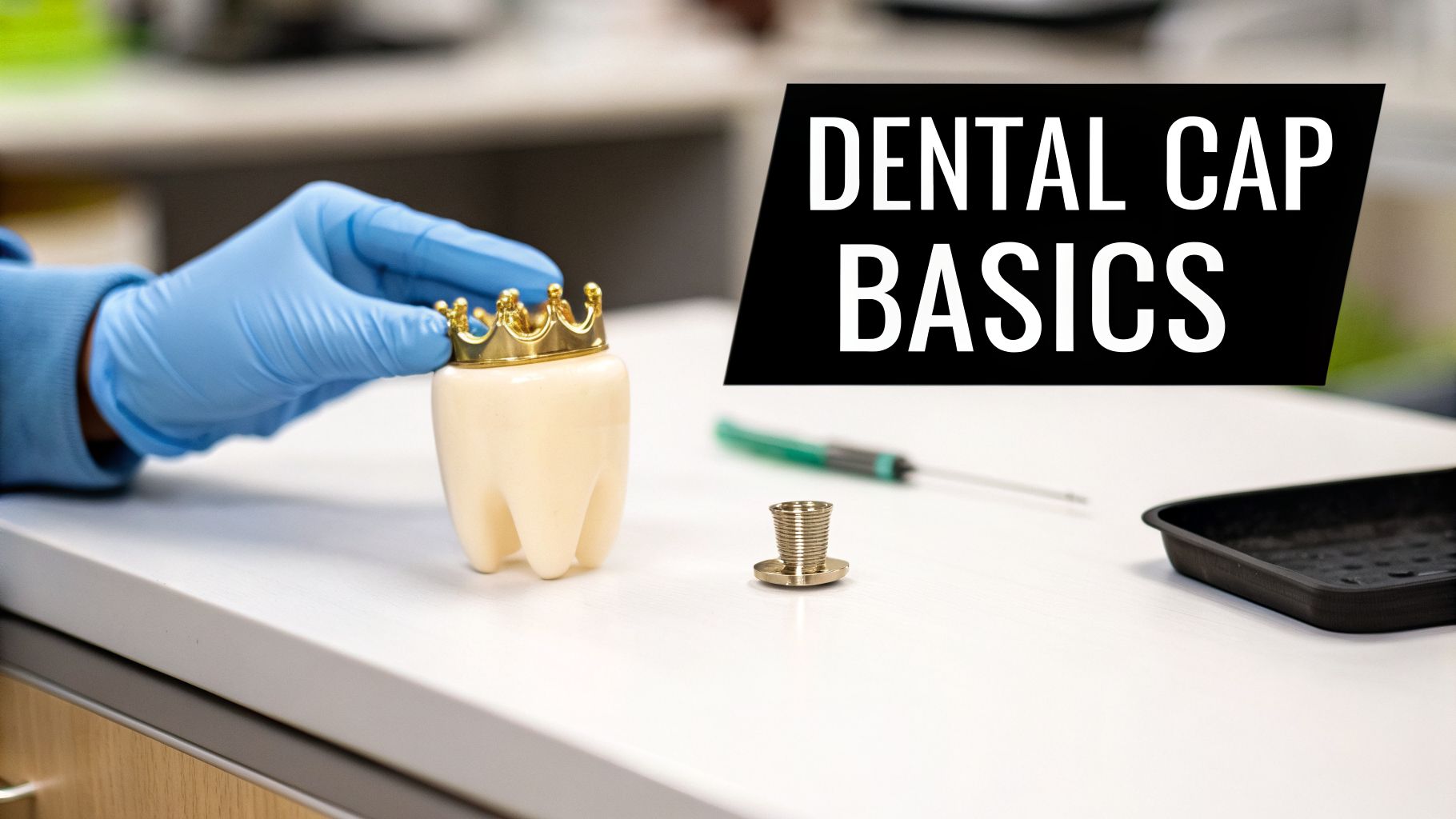
The easiest way to think of a dental cap, or crown, is as a custom-fitted helmet for your tooth. Its main purpose is to cover and protect a tooth that’s been weakened, restoring it to its former glory. But unlike a filling, which just patches up a small hole, a cap covers the entire visible part of the tooth right down to the gumline. This full coverage provides comprehensive protection and restores the tooth’s natural form.
This makes crowns the go-to solution for a whole host of common dental health problems. When you look at the "before" photos, you start to see a pattern. The number one reason people need a cap is that the tooth is too damaged for a simple filling to fix, compromising both its strength and appearance.
Common Reasons for Getting a Dental Cap
Many of our patients come to us needing a cap because their tooth's structure is compromised, impacting their dental health and confidence. This usually happens for a few key reasons:
- Extensive Decay: When a cavity gets too big, it can weaken the tooth so much that a regular filling just won't hold. The tooth would be at high risk of fracturing without the full coverage of a crown, which restores its strength.
- Cracked or Broken Teeth: Whether from an accident or just biting down on something hard, a fractured tooth can expose the sensitive pulp inside, leading to pain and potential infection. A crown acts like a brace, holding the tooth together and sealing it off from further harm.
- After a Root Canal: A tooth that’s had a root canal becomes brittle and much more likely to break over time. Placing a cap over it is standard practice to give it the strength it needs to function properly for years to come.
- Large, Failing Fillings: Old, large fillings don't last forever. They can wear down, start to leak, or even cause the natural tooth around them to crack. In these cases, replacing the old filling with a durable crown is the best way to secure the tooth's long-term health.
A dental crown is much more than just a cover; it's a long-term investment in your health, appearance, and confidence. It's trusted worldwide because it saves teeth that might otherwise be lost.
Restoring Both Function and Aesthetics
Beyond just fixing what's broken, dental caps are critical for improving how your teeth work and how they look. A tooth that’s worn down or misshapen can throw your entire bite off, causing problems with chewing or even leading to jaw pain. A well-made crown restores the tooth’s original anatomy, making sure your bite feels balanced and comfortable again. When you're looking into any procedure, it's always a good idea to see what other patients have to say. For example, you can find real-world testimonials for practices like 4squares Dentistry to see their results.
And aesthetically, the change can be incredible. Caps are perfect for fixing severe discoloration, correcting awkward shapes, and even closing gaps between teeth to give you a seamless, natural-looking smile.
At the end of the day, a dental cap is a remarkably versatile tool that addresses both the health and beauty of your smile, making it one of the most valuable procedures we offer.
The Ultimate Guide to Caps for Teeth Before and After
Seeing the transformation in caps for teeth before and after photos is powerful. It’s not just about a prettier smile; it’s about watching someone regain their dental health, confidence, and ability to smile without hesitation. We’ve talked about why you might need a crown, but this is where you can see the real-world difference it makes.
These stories aren’t just about fixing a tooth. They're about restoring someone's ability to eat the foods they love, speak without hesitation, and smile freely. Whether it's a single chipped front tooth or a whole set of molars worn down from grinding, a dental cap is often the answer.
From Hiding a Smile to Showing It Off
One of the most frequent reasons we place crowns is to repair damage to the front teeth. Think about someone who chipped a central incisor in a small accident. Before getting it fixed, they might find themselves covering their mouth when they laugh or feeling self-conscious in photos. A chip can throw off the whole smile line and detract from their appearance.
The "after" is a total game-changer. A custom-made porcelain crown doesn't just act like a patch—it completely remakes the tooth to restore its natural beauty.
- Before: The tooth might be chipped, uneven, or discolored, making someone feel anxious about their appearance.
- After: A perfectly matched all-ceramic or zirconia crown is bonded into place. It blends in so well that it looks just like a natural tooth, bringing back symmetry and giving that person a reason to smile big again.
This is more than a cosmetic touch-up. The crown also strengthens the weakened tooth, protecting it from breaking further or developing decay. This functional benefit means you can forget it was ever damaged in the first place.
Rebuilding a Bite Worn Down by Grinding
Another incredible "before and after" comes from patients dealing with bruxism, which is the clinical term for chronic teeth grinding. Over many years, this unconscious habit can literally grind away the chewing surfaces of your back teeth, creating major dental health problems.
In the "before" picture, these molars look flat. This isn't just a cosmetic issue; it can cause your bite to collapse, lead to jaw pain (TMD), and make it tough to chew your food properly. The "after" involves using strong, durable crowns to rebuild everything that was lost, restoring proper function.
A dental crown does more than just repair a single tooth; it often plays a critical role in restoring the entire harmony of your bite. For patients with extensive wear, crowns can effectively turn back the clock on years of damage.
For grinders, zirconia crowns are usually our top recommendation. They have unbelievable strength and can handle the heavy forces of grinding, all while looking just like natural teeth. The end result is a bite that works correctly, relief from jaw pain, and the freedom to enjoy a meal without a second thought.
Erasing Severe Discoloration and Decay
Sometimes, the issue isn't a chip or wear, but deep staining that no whitening treatment can touch. This can happen when old metal fillings start to show through the tooth, or after a root canal leaves a tooth looking gray and dull.
A person's "before" smile can be spoiled by just one dark tooth that really stands out. The "after" is a story of total renewal. We place a precisely color-matched porcelain crown over that discolored tooth, and just like that, the dark spot is gone. It blends right in with the teeth next to it, and that single fix can make the whole smile look brighter and healthier.
Modern dental materials have made a world of difference here. Before 2000, crowns with a metal base were standard, but they had a 25% failure rate within 10 years. After all-ceramic options became popular post-2010, those failure rates plummeted to under 5%. Today's zirconia crowns have a 99% survival rate at the 10-year mark. For our patients, the "before" often meant dealing with a visible dark line at the gum, while the "after" means a seamless, natural-looking tooth.
This amazing progress means today’s crowns aren't just tougher—they’re far more beautiful, giving us results that enhance both health and appearance.
Your Dental Crown Procedure From Start To Finish
The thought of any dental work can feel a little intimidating, but getting a crown is actually a very routine process that we've refined to be as smooth and comfortable as possible. It all boils down to just two visits to our office. We believe in keeping you in the loop, so let’s walk through exactly what you can expect from start to finish.
The whole journey begins with your first visit, which is all about preparing your tooth for its new, healthy covering. We'll start with a detailed examination, take some digital X-rays, and make sure a crown is truly the best path forward for you. Once we've got a plan, we make sure you're completely comfortable before we begin any work.
The First Visit: Tooth Prep and a Temporary Crown
This appointment is where we do the groundwork. We'll prepare your tooth and take a perfect impression that our lab will use to create your final crown. Here's a simple breakdown of what happens:
-
Getting Numb and Comfortable: We always start by numbing the tooth and the surrounding gum tissue. If you feel anxious about dental visits, don't worry—we offer sedation options at Grand Parkway Smiles to ensure your experience is totally relaxed and stress-free.
-
Shaping the Tooth: Next, we'll gently remove any decay and reshape the tooth. This creates the ideal foundation for your new crown, ensuring it fits snugly and aligns perfectly with your bite for optimal health and function.
-
Digital Impressions (No More Goop!): Forget those messy, gag-inducing putty molds from the past. We use a digital 3D scanner, which is a small handheld wand that quickly captures thousands of precise images of your tooth. This creates a flawless digital blueprint for your crown. Throughout the dental crown procedure, modern clinics rely on advanced software for dentists to ensure precise imaging, efficient practice management, and excellent patient care.
-
Your Temporary Crown: You won't leave with a vulnerable tooth. We'll fit you with a custom temporary crown that protects the prepared tooth from sensitivity. It allows you to eat, talk, and smile normally while our lab artists get to work on your permanent one.
This diagram shows the journey from a chipped, compromised tooth to a strong, beautiful final restoration.
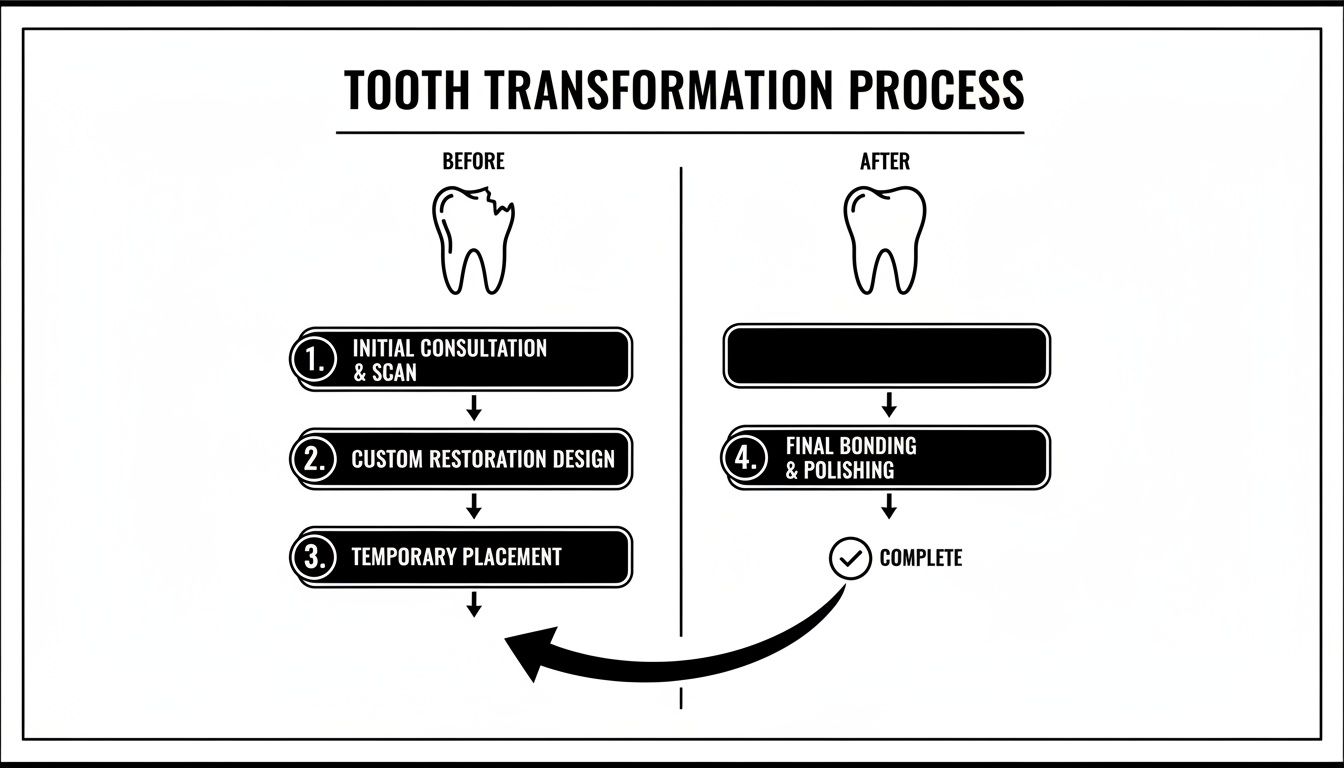
It’s a clear visual of how we transform a tooth, step by step, back to its full strength and natural appearance.
The Second Visit: Placing Your Permanent Crown
About two weeks later, your permanent, custom-crafted crown will be ready and waiting for you. You'll come back for your second and final appointment, which is usually much quicker than the first.
To get started, we'll gently remove your temporary crown and clean the tooth underneath. Then comes the exciting part: we'll place your new permanent crown to check how it fits, how the color matches, and how it feels when you bite down. We'll make any tiny adjustments needed to get it just right.
At Grand Parkway Smiles, we don’t consider the job done until the fit is flawless and you are thrilled with the result. Precision is key to both the look and long-term health of your restoration.
Once you’ve given us the thumbs-up and are completely happy with the look and feel, we bond it permanently in place with a strong dental cement. A final polish makes it shine, and you're all set. You’ll leave that same day with a strong, beautiful, and fully functional new tooth. The caps for teeth before and after results are immediate and truly satisfying.
How to Choose the Right Material for Your Crown
When it comes to dental crowns, one size definitely does not fit all. Picking the right material for your new cap is a big decision, and it’s a conversation we’ll have together. The best choice depends on the tooth's location, its function, and your aesthetic goals.
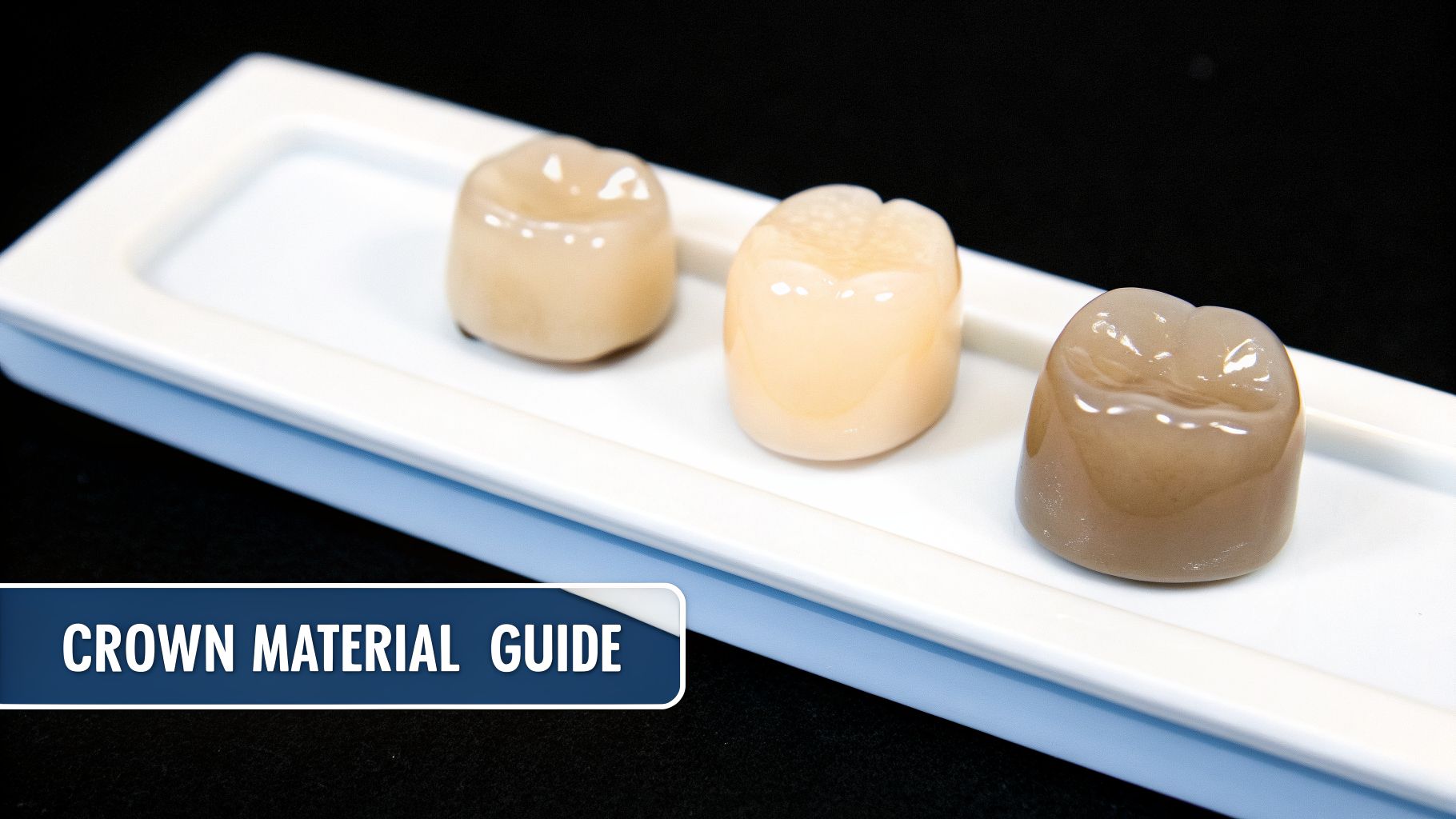
Think of it this way: the needs of a front tooth that everyone sees are very different from a back molar that does all the heavy lifting when you chew. The material we choose is the key to getting you a fantastic caps for teeth before and after result that looks great and lasts for years. Let’s walk through the most common options.
All-Porcelain Crowns for Ultimate Aesthetics
If appearance is your number one priority, especially for those front teeth in your "smile zone," then all-porcelain crowns are the way to go. There’s nothing better for mimicking the natural, slightly translucent look of real tooth enamel.
We love working with porcelain because it allows for true artistry. It can be shaded and layered to match the unique color of your neighboring teeth, making the final crown virtually disappear into your smile. For a chipped or stained front tooth, a porcelain crown creates a seamless "after" that looks completely natural.
- Pros: The most beautiful and natural-looking option, very gentle on gum tissue, and perfect for front teeth.
- Cons: Not as tough as other materials, so we generally don’t recommend them for back molars that take a lot of chewing pressure.
Zirconia Crowns: The Best of Both Worlds
Zirconia is a real game-changer in modern dentistry. It’s a super-strong, tooth-colored crystal that offers an incredible blend of durability and beauty. Some people even call it "ceramic steel" because it’s so tough and resistant to chipping.
This makes zirconia a fantastic choice for any tooth in the mouth, including those hard-working molars. It’s strong enough to stand up to heavy chewing and even teeth grinding, but it’s also milled and shaded to look like a natural tooth. You get strength without sacrificing aesthetics.
For patients who grind their teeth or need a crown on a molar, zirconia is often our top recommendation. Its durability ensures long-term success where other materials might not hold up, giving you both function and peace of mind.
Zirconia’s versatility makes it our go-to for many situations, from a single broken tooth to a full bridge. It perfectly closes the gap between the beauty of porcelain and the raw strength of metal.
Porcelain-Fused-to-Metal (PFM) Crowns
Porcelain-fused-to-metal (PFM) crowns have been a reliable workhorse in dentistry for decades. The design is straightforward: a strong metal alloy base provides the structure, and it’s covered with a layer of porcelain for a tooth-like appearance.
This hybrid approach makes PFM crowns much stronger than an all-porcelain crown, so they can be used just about anywhere in the mouth. They do have one cosmetic downside, though. Over time, especially if your gums recede a bit, the metal underneath can show as a thin, dark line right at the gumline.
While newer options like zirconia often give a better cosmetic result without that risk, PFM crowns are still a proven and cost-effective choice for many people. Understanding these trade-offs is the final piece of the puzzle in designing the perfect restoration for you.
Protecting Your Investment for Long-Term Success
Getting a new dental cap is a fantastic step toward restoring your tooth's health and appearance. To make sure that beautiful new smile lasts for years, it's all about teamwork. We handle crafting a durable, perfect-fit crown, and your daily habits will keep it—and the tooth underneath—in great shape.
The process of caring for your new restoration starts the minute you leave our office. Before you get your permanent crown, you'll wear a temporary one for a short while. This temporary cap is a bit more delicate and is held on with a weaker cement, so it needs a little extra TLC to keep it in place.
Immediate Aftercare for Your Temporary Crown
You’ll typically only have a temporary crown for about two weeks, but following a few simple guidelines during this time is really important. These steps protect the tooth we’ve prepared and ensure your dental health is maintained before we place your final crown.
- Avoid Sticky and Hard Foods: Try to stay away from things like caramel, chewing gum, nuts, or hard candies. Chewing on them with the side of your mouth that has the temporary crown can easily pull it off or break it.
- Slide Floss Out, Don’t Pull Up: When you floss, be gentle. Instead of lifting the floss straight up from between your teeth, which can catch the edge and pop the temporary off, just slide it out to the side.
- Manage Sensitivity: It’s completely normal to have some mild sensitivity to hot, cold, or pressure right after the tooth is prepared. This feeling is temporary and should fade in a few days. A toothpaste made for sensitive teeth can really help.
If your temporary crown does happen to come loose or fall off, please give our office a call right away. It's crucial that we re-cement it to keep the underlying tooth protected.
The Myth of the Invincible Crown
Once your permanent cap is cemented in place, it’s easy to think of the tooth as being bulletproof. And while modern crowns are incredibly strong, it’s a myth that they can’t be damaged or that the tooth underneath is now immune to problems. The most common trouble spot is the margin—that tiny seam where the crown meets your natural tooth, usually right at the gum line.
A dental crown does not protect against gum disease or new decay around its edges. The health of your underlying tooth and surrounding gums is the foundation that supports your restoration for the long term.
Plaque can still find its way to this margin and cause cavities or gum inflammation if it's not cleaned away. That's why your daily oral hygiene routine is just as critical as ever. Caring for a crowned tooth isn’t hard, but it does require you to be consistent.
Long-Term Maintenance for a Lasting Smile
Making your crown last as long as possible really comes down to a few core habits. Follow these simple steps, and you’ll be maximizing the life of your crown while keeping your whole smile healthy.
- Brush Thoroughly: Brush twice a day with a fluoride toothpaste, making sure to pay close attention to the gum line area around your new crown.
- Floss Daily: Flossing is non-negotiable. It’s the only way to remove plaque from that critical margin where your toothbrush just can't reach.
- Regular Dental Check-ups: Visiting Grand Parkway Smiles for your routine cleanings and exams lets us professionally clean around the crown and keep an eye on its condition and the health of the tooth below it. If you're curious about financial considerations, you can find more details in our guide on the cost of a crown.
By making these practices part of your daily routine, you can enjoy your fantastic caps for teeth before and after results for 15 years or even longer.
Frequently Asked Questions About Dental Caps
As you consider dental caps, it's natural to have a few questions. We've put together answers to some of the most common things our patients ask to help you feel clear and confident about the process. You can see the incredible difference in our gallery of caps for teeth before and after, and these answers will help fill in the rest of the picture.
How Much Do Dental Caps Cost and Will Insurance Help?
The final cost for a dental cap really comes down to the material we use—whether it’s a beautiful all-porcelain crown or one made from high-strength zirconia—and what your specific tooth needs to be fully restored. At Grand Parkway Smiles, we work with most PPO insurance plans, and they often cover a good portion of the cost for crowns that are medically necessary.
We firmly believe that finances shouldn't stand in the way of a healthy smile. That's why we offer flexible financing and a fantastic in-house savings plan. We’re all about transparency, so you’ll get a clear, detailed cost breakdown during your consultation with no surprises.
Is Getting a Dental Cap a Painful Procedure?
Making sure you're comfortable is our top priority, from the moment you sit in the chair to the moment you leave. We always start by completely numbing the area with a local anesthetic. That means you won’t feel any pain while we prepare the tooth or when we place your final crown. Our goal is to make the entire appointment feel completely stress-free.
For patients who feel anxious or nervous about dental work, we offer several sedation dentistry options, including IV sedation. This allows you to enter a state of deep relaxation, making the entire procedure feel like a calm and easy process.
It's normal to have some mild sensitivity for a few days after, but this is temporary and easily managed.
How Long Can I Expect My New Crown to Last?
When you take good care of it with proper oral hygiene and regular dental check-ups, a high-quality crown from our office can easily last for 15 years or even longer. The lifespan of your cap is tied to the material we choose, how well you care for it at home, and whether you avoid habits like chewing ice or grinding your teeth. We only use the most advanced and durable materials available to give your new smile maximum longevity.
Ready to see your own incredible "before and after" transformation? The team at Grand Parkway Smiles is here to restore your smile’s health, function, and beauty. Schedule your consultation with us today!