That deep, persistent, throbbing toothache—the kind that feels different from anything you've had before—is almost always the first and most unmistakable sign of a dental abscess. You can think of this pain as your body's emergency alert system. An aggressive bacterial infection is building intense pressure deep within your tooth or gums, and ignoring it puts more than just your tooth at risk. Protecting your dental health starts with recognizing these serious warning signs.
What Are the First Signs of a Dental Abscess

So, what's actually happening in there? When bacteria get past the tooth's outer defenses, your immune system goes on the attack, sending in white blood cells to fight the invasion. This intense battle creates a pocket of pus, which is what we call an abscess. As that pus builds up with nowhere to drain, it puts immense pressure on the sensitive nerves inside and around your tooth. That’s where the severe, pulsating pain comes from.
This is not a simple toothache that might just go away. An abscess is a serious infection that absolutely requires a dentist to resolve it. Left alone, it won't just lead to potential tooth loss; the infection can spread into your jawbone and even into your bloodstream, affecting your overall health and the appearance of your smile.
Top Warning Signs to Watch For
Recognizing the earliest symptoms is your best defense for preserving your oral health. While that severe toothache is the headliner, several other signs often show up alongside it. These symptoms can get worse very quickly, so paying close attention is key to protecting your health and saving the tooth. Because many of these red flags overlap with other issues, it helps to understand the specific signs you need a root canal, as that’s a very common treatment for abscessed teeth that restores the tooth's health and function.
To help you spot trouble early, here's a quick rundown of the most common initial symptoms.
Quick Guide to Early Abscess Symptoms
| Symptom | What It Feels Like |
|---|---|
| Severe, Persistent Pain | A constant, throbbing ache that makes it hard to focus or sleep. |
| Sensitivity to Temperature | Intense, sharp pain when eating or drinking anything hot or cold. |
| Pain When Chewing | A sharp or deep pain when you bite down or put pressure on the tooth. |
| Swelling | Noticeable puffiness in your cheek, face, or the gums near the tooth. |
| Tender Lymph Nodes | The glands under your jaw or in your neck might feel swollen and sore. |
If you're experiencing any of these, especially in combination, it's time to call a dentist right away. These aren't "wait and see" symptoms. Swift action is the best way to ensure a positive outcome for your dental health.
These infections are surprisingly common. Dental abscesses are behind roughly 25% of all emergency room visits for oral health problems, impacting hundreds of thousands of people every year. Most often, the culprit is an untreated cavity that gave bacteria a direct path into the tooth. This statistic alone highlights why delaying treatment can jeopardize your oral health.
An abscessed tooth will not heal on its own. Professional treatment is essential to drain the infection, save the tooth, and restore your oral health, preventing it from spreading to the jawbone or surrounding tissues.
Understanding What Causes a Tooth Abscess
That throbbing, persistent pain in your tooth is more than just a bad toothache—it could be a dental abscess. Think of it as a serious warning sign from your body that a deep-seated bacterial infection has taken hold, threatening the health and stability of your smile.
An abscess is a pocket of pus that forms when bacteria find a way inside or around your tooth. This isn't a problem that will resolve on its own. The infection creates intense pressure, leading to severe pain and swelling, and it needs a dentist’s help to be cleared up for good, preserving your tooth and protecting your appearance.
The Pathways to Infection
So, how do bacteria get in? A dental abscess usually starts when bacteria exploit an opening in your tooth's defenses. This can happen in a few different ways, leading to three distinct types of abscesses.
- Periapical Abscess: This is the most common type. It forms at the very tip of a tooth’s root. Almost always, the culprit is an untreated cavity that has burrowed through the hard outer enamel and into the soft inner pulp. Once inside, the infection travels down the root canal and forms an abscess in the jawbone, threatening the foundation of your tooth.
- Periodontal Abscess: This infection starts in the gums next to a tooth, not inside it. It’s usually a painful complication of advanced gum disease (periodontitis). As the disease progresses, pockets form between the gums and teeth, trapping bacteria and creating the perfect breeding ground for an abscess that can damage both your teeth and gums.
- Pericoronal Abscess: This one is specific to a tooth that hasn’t fully erupted through the gum line, most often a wisdom tooth. A small flap of gum tissue can cover part of the tooth, trapping bacteria and debris. This leads to irritation and, eventually, a painful infection that affects the surrounding gum and bone.
No matter where it starts, the root of the problem is always a bacterial invasion. That’s why getting professional care right away is so critical. We need to get to the source of the infection to restore your oral health, not just put a temporary patch on the symptoms.
An abscess is your body's attempt to wall off an infection. The pus that builds up creates immense pressure on the nerves in your jaw, which is what causes that signature severe pain, swelling, and sensitivity that can disrupt your life.
Comparing the Three Types of Dental Abscesses
While any abscess is a serious issue, figuring out the specific type helps us pinpoint the cause and map out the most effective treatment. Getting the diagnosis right is the key to resolving the infection, saving your tooth, and protecting the rest of your mouth.
Here’s a quick breakdown to help you see the differences:
| Type of Abscess | Location in Your Mouth | Most Common Cause |
|---|---|---|
| Periapical | At the tip of the tooth root | An untreated cavity or tooth decay |
| Periodontal | In the gums alongside a tooth | Advanced gum disease (periodontitis) |
| Pericoronal | In the gum tissue around a partially erupted tooth | An impacted wisdom tooth |
These distinctions are exactly why a self-diagnosis just won’t cut it. Only a dentist can use a hands-on exam and x-rays to confirm what kind of abscess you have and create a treatment plan that eliminates the infection at its source—getting your smile back to full health.
Red Flag Symptoms of a Spreading Infection
That initial, throbbing pain from an abscess is your body's first alarm bell. But certain symptoms signal a much bigger, more dangerous problem. If a localized abscess is a contained issue, a spreading infection is a full-blown crisis for your overall health.
These red flag symptoms are your sign that the infection is no longer just a tooth problem. It's becoming a systemic issue that requires immediate, same-day emergency care. Ignoring these signs can put your overall health at serious risk, turning a dental issue into a medical emergency that can affect your ability to breathe and swallow, and even alter your facial appearance.
When to Seek Emergency Dental Care
If you spot any of the following symptoms along with your toothache, it’s a crystal-clear sign the infection is on the move. Don’t wait to see if they get better on their own. They won’t. Prompt professional evaluation is crucial to protect your health.
- Visible Swelling in Your Face, Cheek, or Neck: When the swelling moves beyond the gumline and becomes obvious in your face or neck, it means the infection has escaped and is threatening surrounding tissues and your appearance.
- Fever: A fever is the classic signal that your body is fighting a widespread infection. If you have a temperature along with your tooth pain, it's a strong indicator that bacteria have entered your bloodstream, posing a risk to your overall health.
- Difficulty Breathing or Swallowing: This is the most dangerous red flag. Swelling that reaches the floor of your mouth or airway can cut off your ability to breathe. This is a life-threatening condition called Ludwig's angina and requires an immediate trip to the ER.
- Swollen, Tender Lymph Nodes: Your lymph nodes are a key part of your immune system. If they become swollen and sore, it means they’re working overtime to fight an infection that has moved well beyond the original tooth.
- A Sudden Rush of Foul-Tasting Fluid: Sometimes, the pressure from the abscess builds until it bursts. You’ll know it if you suddenly get a foul, salty taste in your mouth as the pus drains. While this might bring temporary pain relief, the source of the infection is still active and requires professional treatment to prevent further damage.
These symptoms show how a manageable dental issue can quickly escalate into a serious health crisis. You can get a deeper understanding of this process by reading our guide on if a root canal infection can spread to other parts of the body.
A spreading dental infection is a medical emergency. If you have any difficulty breathing or swallowing, go directly to the nearest hospital emergency room. For other serious symptoms like facial swelling or fever, call your emergency dentist right away to protect your health.
The first step for any dentist is figuring out exactly where the infection is coming from. This chart gives you a peek into how we start that diagnostic process, using the location of your pain as the first clue.
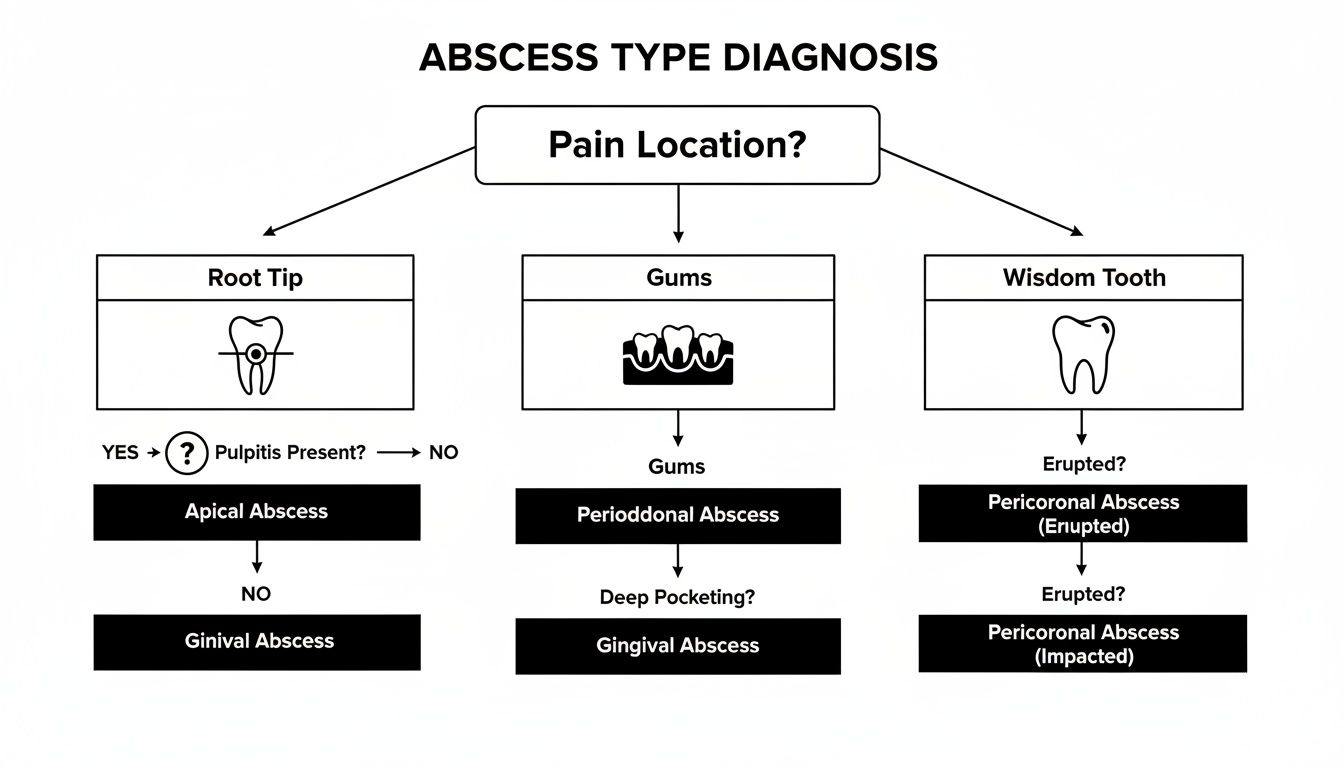
As you can see, simply telling us whether the pain is centered on the tip of the root, the gums next to the tooth, or around a wisdom tooth gives us the critical starting point for your diagnosis and for restoring your oral health.
How Dentists Diagnose and Treat an Abscess

Walking into our office with severe tooth pain is understandably stressful. Knowing what to expect can make a big difference. When you come in with symptoms of a dental abscess, our first priority is to get you out of pain, identify the source of the infection, and create a plan to save your tooth and protect your overall dental health.
The process starts with a conversation about your symptoms, followed by a careful visual exam for classic signs like swelling, redness, or a small pimple on your gum (a fistula). These clues guide our diagnostic process.
Pinpointing the Source of Infection
To get to the bottom of things, we use a few key tests. A percussion test, where we gently tap on your teeth, helps us find the infected tooth, as it will be more sensitive to pressure.
However, the most crucial tool is advanced dental imaging. We use digital X-rays and our 3D cone-beam CT scanner (CBCT) to get a detailed view of the tooth roots and surrounding bone. This technology lets us see the abscess's exact size and location, which is critical for planning the right treatment and ensuring the best possible outcome for your dental health.
Your Path to Relief and Recovery
Once we have a clear diagnosis, our goal is always the same: eliminate the infection, save the tooth whenever possible, and prevent this from happening again. We know how important your smile's appearance and function are. Depending on the abscess's location and severity, we will recommend one of three main treatment paths to restore your health.
- Incision and Drainage: For significant swelling, the first step is often to provide immediate relief. A small, precise incision in the gum allows the pus to drain, instantly easing the pressure and the intense pain it causes. This is the first step toward healing.
- Root Canal Therapy: For a periapical abscess, a root canal is the gold standard for saving the tooth. We remove the infected pulp, thoroughly clean and disinfect the inner chambers, and seal the tooth to protect it from future infection. This procedure restores the tooth's health so it can function for years to come.
- Tooth Extraction: In cases where a tooth is too damaged to be saved, an extraction is the necessary step. Removing the tooth eliminates the source of the infection. Afterward, we can discuss excellent replacement options like dental implants to fully restore your smile's function and appearance.
The goal of any abscess treatment is two-fold: resolve the immediate pain and protect the long-term health, function, and look of your smile. Every step is carefully planned to get you back to living your life pain-free and with a healthy smile.
Ensuring a Comfortable and Pain-Free Treatment
The very idea of a dental procedure, especially when you’re already in pain, can be intimidating. We get it. The fear of discomfort should never prevent you from getting the critical care you need for a dental abscess. That's why we've put your comfort and peace of mind at the absolute center of our approach.
Our very first step is to make sure the area is completely numb. Using a powerful local anesthetic, we can effectively block the nerve signals, creating a genuinely pain-free experience for your treatment. Our standard of care is simple: you shouldn't feel any pain during the procedure, allowing us to focus on restoring your dental health.
Advanced Comfort for Anxious Patients
We know that for some people, dental anxiety is a real and significant hurdle. If you're feeling nervous about your appointment, we offer advanced sedation options to help you feel completely at ease. IV sedation, for instance, allows you to drift into a state of deep relaxation and comfort for the entire duration of your treatment.
Most patients who choose this option have little to no memory of the procedure afterward. This creates a completely stress-free experience, letting us do our work to resolve the infection while you rest comfortably and safely.
Knowing that you will be comfortable and relaxed allows you to focus on what truly matters: eliminating the infection, relieving your pain, and protecting your long-term dental health and appearance.
Managing Discomfort After Your Treatment
What happens after the procedure is just as important as the treatment itself. Once we’ve addressed the abscess, it's normal to feel some mild soreness or tenderness as your body begins its natural healing process.
We’ll send you home with specific, easy-to-follow instructions to manage any post-treatment discomfort and ensure a smooth recovery. These typically include:
- Pain Relievers: Over-the-counter or prescribed medications work very well to handle any lingering soreness.
- Cold Compresses: Applying a cold pack to the outside of your cheek in short bursts helps a lot with reducing swelling and providing a numbing effect.
- Warm Compresses: After the first 24 hours have passed, switching to gentle warmth can help improve blood flow to the area and promote faster healing.
When considering various approaches to alleviate discomfort and ensure a more comfortable experience during treatment, it's beneficial to gain a deeper understanding the science behind pain relief methods. Following our guidance will help make your recovery as quick and smooth as possible. Our ultimate goal is to get you back to living your life, free from pain and smiling with confidence.
Simple Steps to Prevent Future Abscesses
Once you've had a dental abscess treated, the last thing you want is a repeat performance. The good news is that preventing another one is almost entirely in your hands, and it all comes down to solid, consistent oral hygiene that protects your dental health.
Think of it this way: the main culprits behind abscesses are plaque and the decay and gum disease it causes. Your best defense is simply not letting plaque stick around. A healthy smile starts with what you do at home every single day.
Your Daily Defense Strategy
Those few minutes you spend on your teeth each day are your most powerful weapon against the kind of problems that lead to serious dental abscess symptoms. A thorough and consistent routine is the key to maintaining great oral health.
- Effective Brushing: You’ll want to brush twice a day for a full two minutes. Use a soft-bristled brush and a fluoride toothpaste. The key is to clean every surface of every tooth, paying special attention to the gumline to prevent decay and gum disease.
- Consistent Flossing: Flossing at least once a day is non-negotiable. It’s the only way to clear out the food and plaque that gets stuck between your teeth, where cavities often start. This simple habit protects your smile from the inside out.
Taking these steps every day directly breaks the cycle that can lead to a periapical or periodontal abscess, safeguarding the health and appearance of your smile.
What you do every day is the absolute foundation of an infection-free smile. That commitment to brushing and flossing is what keeps your teeth and gums healthy for the long haul. But even the best home routine needs professional backup.
The Role of Professional Care
Think of your regular dental visits as your personal early-detection system. During your checkups and cleanings, our team can catch small issues long before they turn into painful emergencies. We have the tools to remove stubborn tartar (hardened plaque) and use advanced imaging to monitor the health of your teeth and jawbone.
Protecting your teeth from injury is also a big piece of the puzzle. If you’re active in sports, a custom-fitted mouthguard is a simple and incredibly effective way to prevent cracks or breaks that can let bacteria in and compromise your smile.
When you combine great habits at home with regular professional care, you build a powerful defense against future abscesses. You’re not just protecting your teeth—you’re investing in a healthy, confident smile for years to come.
Common Questions About Dental Abscesses
When you're dealing with the pain and worry of a potential dental abscess, it's natural to have a lot of questions. Getting clear, honest answers can help you feel more in control and understand the importance of seeking care for your dental health.
Can A Dental Abscess Go Away On Its Own?
Let's be direct: No, a dental abscess will never heal on its own. It's a sign of a significant bacterial infection deep within your tooth or gums that your body simply can't fight off without professional help. Even if the abscess drains and you feel a moment of relief, the source of the infection is still there, ready to cause more damage to your tooth and jaw.
How Long Does Recovery From An Abscess Treatment Take?
Your recovery timeline really depends on the treatment you receive. After an incision and drainage, you’ll feel better almost immediately as the painful pressure is released, with the area usually healing completely within a week. After a root canal, most people are back to their normal routine in just a few days, with the benefit of having saved their natural tooth.
While a dental abscess isn't contagious like a common cold—you can't give it to someone else through a kiss—the bacteria causing it can spread throughout your own mouth. If left untreated, the infection can easily put neighboring teeth and gums at risk, jeopardizing your overall oral health.
What Should I Do If My Abscess Bursts At Home?
If an abscess ruptures on its own, you'll know it. There’s often a sudden, unpleasant rush of salty, foul-tasting fluid. Your first step is to immediately and gently rinse your mouth with warm salt water to help clean the area. While the pain might ease, this is a critical moment—you still need to see your dentist right away to address the root cause of the infection and ensure your tooth is saved.
If you're experiencing any dental abscess symptoms, please don't wait and hope it gets better. The expert team at Grand Parkway Smiles offers same-day emergency appointments to give you the immediate relief and professional care you need. Protect your health and let us help you get your smile back by visiting us at https://dentistkatytx.com to book your appointment today.