Getting your wisdom teeth removed is a proactive step for your long-term oral health and the future of your smile. But once the surgery is over, the real healing begins. To achieve the best results and ensure your new, healthier smile heals beautifully, how you rest in that first 24 hours is just as crucial as the procedure itself. Making proper sleep a priority is the single best thing you can do to manage discomfort and kick off a smooth healing process that protects your investment in your dental health.
Your First 24 Hours After Wisdom Teeth Removal
That first day after your wisdom teeth are out really sets the stage for your entire recovery and the final outcome of your procedure. This is when your body works its hardest to heal the surgical sites. Focusing on rest isn't just about taking it easy—it's an active part of ensuring your jaw and gums heal correctly. By prepping your sleep space and managing your symptoms, you're laying the groundwork for a faster, more comfortable experience and a better-looking smile.
Prepare for Restful Healing
Before you even head to your appointment, get your recovery zone ready. You'll want a comfortable spot on the couch or in bed where you can easily prop yourself up to support optimal healing.
- Pillow Fort: Stack a few pillows to create a supportive incline. The goal is to keep your head elevated above your heart to minimize swelling, which helps your facial contours return to normal faster.
- Ice on Standby: Have a couple of gel ice packs ready to go in the freezer. Applying them on and off is your best tool for reducing inflammation and keeping your face from looking puffy.
- Recovery Station: Set up a small table with your prescribed pain medication, a glass of water, and your post-op instructions so everything you need for a smooth recovery is within arm's reach.
We've seen it time and time again: the first 24 hours are critical for healing. This is when swelling and pain are usually at their worst. In our experience, patients who prioritize sleeping in an upright position often report 30-40% less discomfort the next day, which contributes to a more positive overall healing journey.
To help you stay on track, we've put together a quick checklist. Following these steps is key to promoting healing and protecting the health of the surgical sites while you sleep.
Immediate Post-Op Sleep and Recovery Checklist
| Action Item | Why It's Important for Dental Health | Pro-Tip for Comfort |
|---|---|---|
| Elevate Your Head | Reduces blood flow to the head, which minimizes swelling, throbbing pain, and bleeding at the surgical sites, promoting a faster return to your normal appearance. | Use a wedge pillow or stack 2-3 firm pillows to create a stable 45-degree angle. Don't let your head slump down during the night. |
| Use Ice Packs | Constricts blood vessels to significantly reduce inflammation and numb the area, helping to preserve your natural facial shape during recovery. | Apply a gel ice pack wrapped in a thin towel for 20 minutes on, then 20 minutes off. Keep a second one in the freezer to rotate. |
| Stay Ahead of Pain | Taking medication on a set schedule prevents pain from becoming severe, allowing your body to focus its energy on healing the tissues in your mouth. | Set an alarm to take your medication as prescribed, even if it means waking up. This ensures the healing process is not interrupted by intense pain. |
| Manage Bleeding | Gentle pressure on gauze helps form a stable blood clot, which is the foundation of the healing process and essential for preventing complications. | Bite down gently but firmly on gauze. If oozing persists, try a moistened black tea bag—the tannic acid can help with clotting and protect the site. |
Focusing on these simple but crucial actions will make a huge difference in how you feel and how quickly your mouth heals.
Navigating the First Night
That first night can feel a little intimidating, but a few key moves can ensure your smile is healing properly. As we've mentioned, proper elevation is absolutely non-negotiable. Lying flat will increase blood pressure in your head, which can lead to more throbbing, swelling, and bleeding, ultimately slowing down the healing of your gums and jaw.
This visual timeline breaks down the key recovery goals for the first three days, which are all designed to get you the best possible result.
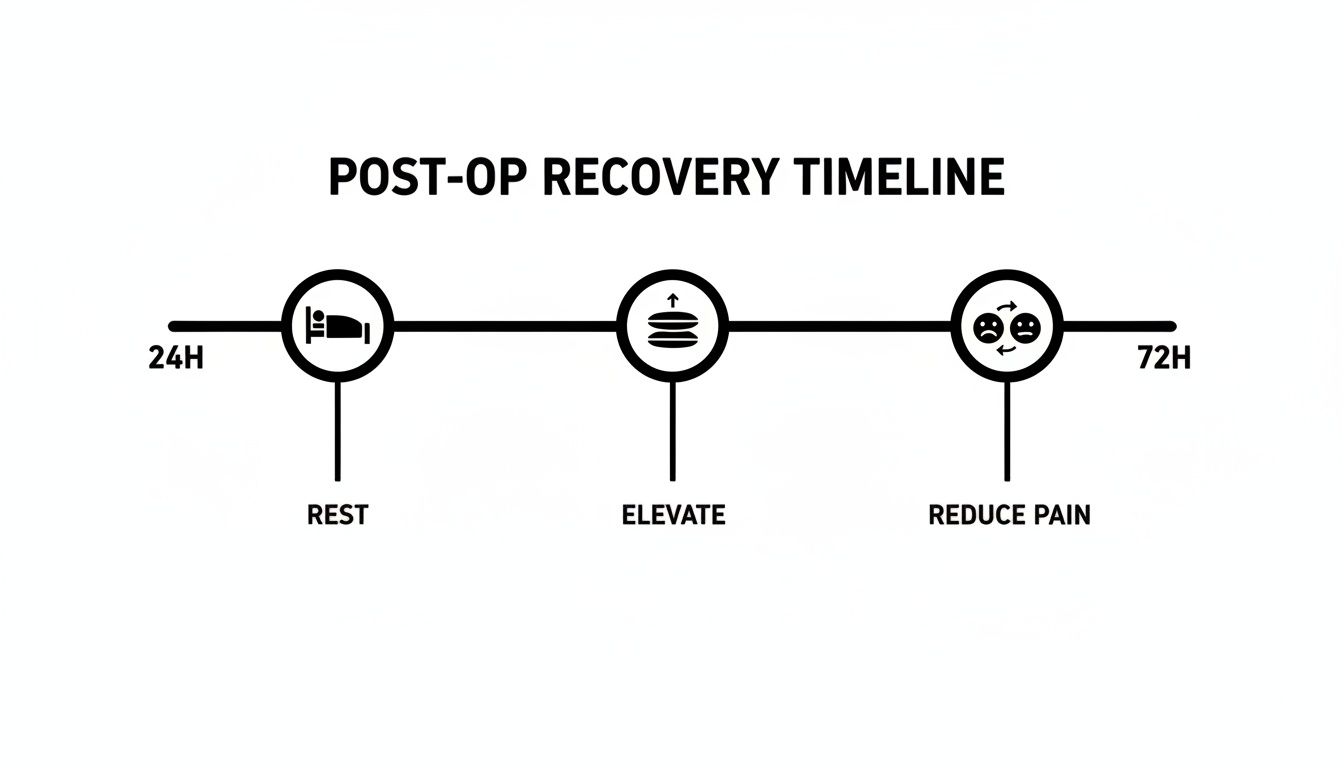
As you can see, the main focus for the first 48 hours is on rest and elevation to support your body through the most intense phase of healing. A little bit of oozing is normal, but if you do happen to get some blood on your pillowcase, you might find this guide on how to remove blood on sheets helpful.
Most importantly, follow your surgeon's specific care plan. You can also review our detailed instructions after a tooth extraction for a refresher. Staying ahead of the pain by taking your medication on schedule—even with a middle-of-the-night alarm—is one of the smartest things you can do for a good night's sleep and a beautiful, healthy recovery.
Finding the Best Sleeping Position for Healing
You might not think much about how you sleep, but after wisdom teeth removal, it becomes one of the most important parts of your recovery. The right position makes a world of difference in your comfort, swelling, and pain levels, setting the stage for your body to heal properly and for your final appearance to be just right.

The main goal is simple: keep your head elevated above your heart. This isn't just a random suggestion; it uses gravity to your benefit. Elevating your head helps lower the blood pressure at the extraction sites. That means less throbbing, reduced bleeding, and most importantly, less swelling—which is a major factor in both post-op pain and how quickly your face returns to its normal shape.
The Science of Sleeping Upright
When you lie down completely flat, blood naturally pools in your head. This rush of fluid causes the delicate, healing tissues in your mouth to swell up. That pressure doesn't just hurt; it can put a strain on your stitches and threaten the fragile blood clots that are forming in the empty tooth sockets. Protecting those clots is everything—they are the foundation for new tissue growth and proper healing of the jawbone.
For 90% of patients, pain typically peaks within the first 48 hours. If you had impacted teeth, which is the case for over 70% of wisdom tooth extractions, proper care is even more vital for a successful outcome. We’ve seen firsthand at Grand Parkway Smiles that patients who sleep elevated report a much more comfortable recovery and experience up to 40% less bruising, which greatly improves their appearance in the days following surgery.
Creating Your Recovery Nest
For at least the first few nights, sleeping on your back is the best way to protect your healing smile. To keep yourself from accidentally rolling onto your side or stomach, you can build a supportive "pillow nest." The idea is to secure your entire upper body, not just prop up your head.
- Foundation: A wedge pillow is perfect for this, but stacking two or three firm pillows works just as well. You're aiming for a stable 45-degree angle to promote drainage and reduce swelling.
- Side Supports: Tuck extra pillows along both sides of your body. These act as bumpers, preventing you from turning over and putting pressure on your healing jaw.
- Knee Support: Placing a small pillow under your knees takes the pressure off your lower back, which makes staying on your back all night much more comfortable.
There are several great ways to achieve this, and you can learn more about how to elevate the head of your bed for better rest.
A Tip for Side-Sleepers: If you’re a lifelong side-sleeper, we know this change is difficult. But think of it as a short-term investment for a huge long-term payoff. A few nights of careful sleeping are well worth it to prevent a painful dry socket and ensure your jaw and gums heal evenly for the best aesthetic result.
If you happen to wake up during the night, just take a second to check your position. If you’ve slid down or rolled over, gently get yourself back into your elevated nest. The key is to avoid any quick, jerky movements that could disturb the healing sites. That little bit of awareness is a huge part of achieving a smooth, healthy recovery.
Managing Nighttime Discomfort and Symptoms
Waking up from a jolt of pain or the metallic taste of blood can be unsettling, but it's a normal part of the body's healing process. Knowing what to do is the best way to stay calm and get back to the sleep your body needs to repair itself, ensuring the best outcome for your oral health.
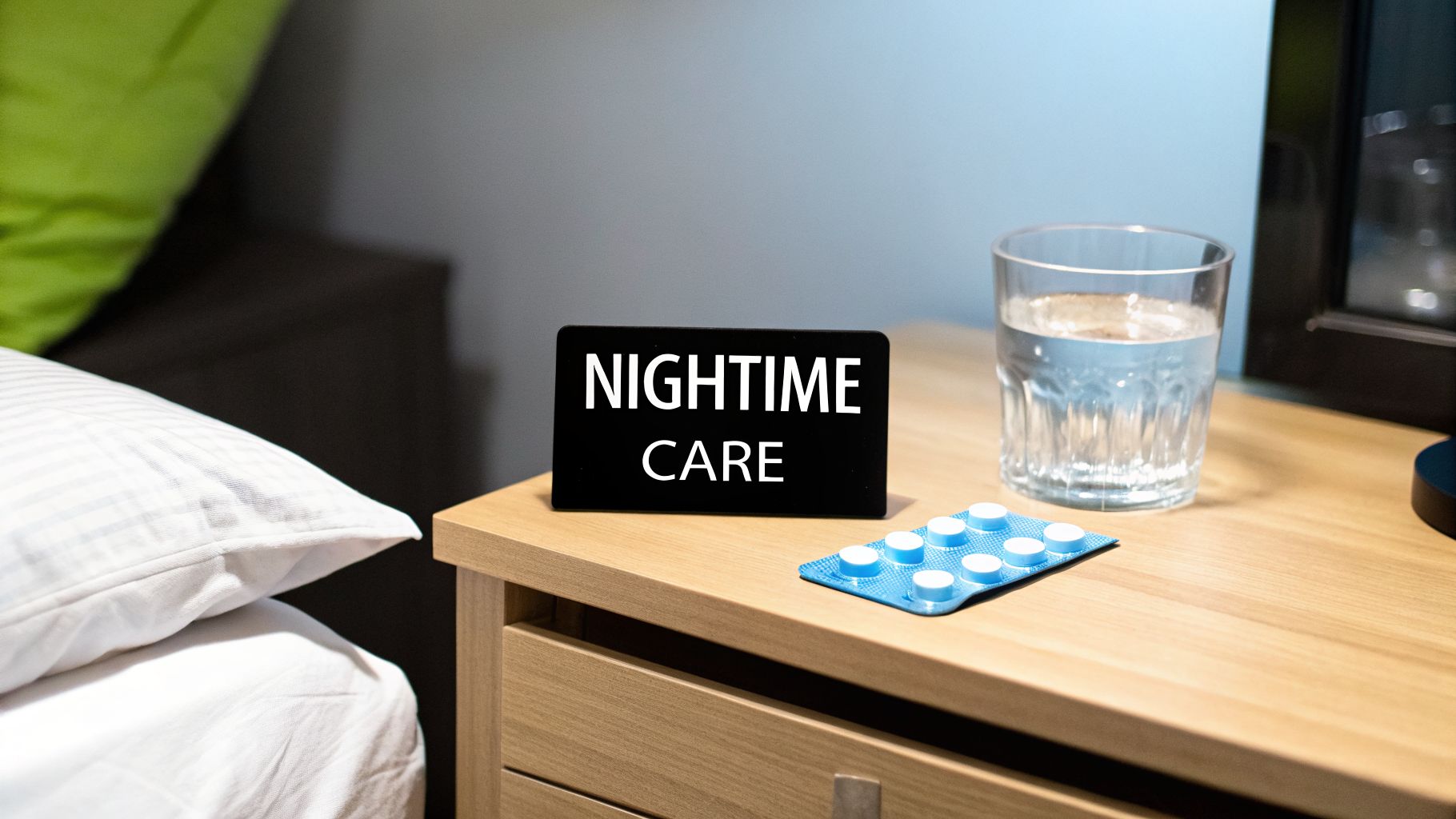
The goal is to stay ahead of the pain, not chase it. Your oral surgeon gave you a specific medication schedule for a reason. Sticking to it, especially in the first 48-72 hours, is absolutely critical for comfortable healing. If pain is what woke you up, it’s a sure sign your last dose has worn off and your body needs support.
Try to time your doses to provide coverage through the night. If your instructions say to take medicine every six hours, take a dose about an hour before you plan to go to sleep. This gives it time to fully kick in. Setting an alarm for middle-of-the-night doses ensures pain doesn't disrupt your body’s vital healing and repair cycles.
Handling Nighttime Bleeding and Swelling
It can be alarming to wake up and see a bit of blood, but it's important to know the difference between normal oozing and active bleeding. A little pink saliva is nothing to worry about. If your mouth is actively filling with dark red blood, you need to take action to protect the healing site.
- For minor oozing: This is completely expected. Just swap out your gauze before bed. You shouldn't sleep with gauze in your mouth unless your surgeon specifically told you to, as it can be a choking hazard.
- For active bleeding: Grab a clean piece of gauze, place it over the extraction site, and bite down with firm, steady pressure for 30-45 minutes. This pressure helps form the protective blood clot that is essential for healing.
A great at-home remedy we often suggest is to use a moistened black tea bag instead of gauze. The tannic acid in the tea is a natural astringent that helps constrict blood vessels and encourages the clot to form, which is the first step toward healthy new tissue growth.
Swelling usually peaks around day two or three. Applying an ice pack to your cheek for 20 minutes before bed can work wonders. It helps reduce inflammation and has a numbing effect, helping you rest while also minimizing facial puffiness for a quicker return to your normal appearance.
Easing Jaw Stiffness with Heat
After the first 48-72 hours, your strategy for discomfort will change. While ice is best for initial swelling, your jaw muscles might start to feel stiff. This is when you should switch to moist heat to promote healing.
Starting on day three or four, apply a warm, damp towel to your cheeks for 15-20 minutes before bed. This increases blood flow, which relaxes tight muscles, reduces soreness, and brings vital nutrients to the area to speed up tissue repair. This switch from cold to warm therapy is a huge milestone in your recovery, helping you move past the acute phase and restore comfortable jaw function.
How Sedation Affects Your Sleep and Recovery
If you chose IV sedation for your wisdom tooth removal, your first day of recovery will look a little different. This is a fantastic option that eliminates procedural anxiety and discomfort. However, the anesthesia takes several hours to wear off completely.
Right after your surgery, expect to feel very drowsy and a bit groggy. That’s perfectly normal as your body processes the medication. At this stage, the goal is resting safely while the anesthesia fades, which is the first step toward your body's natural healing.
Why You Need a Chaperone
For the first 24 hours after IV sedation, it is absolutely essential that a responsible adult stays with you. This is a critical safety requirement to ensure a smooth start to your recovery.
The lingering effects of the anesthesia can impair your judgment, balance, and coordination. You might not remember conversations, and your reflexes will be much slower. Having someone with you prevents accidents and ensures you follow the post-op care plan correctly, which is vital for proper healing.
Think of your chaperone as your recovery partner. Their role is to help you with medications, get you food and water, and just keep an eye on you. This ensures you stay safe and on track for a successful recovery from the moment your procedure is done.
Shifting from Sedation to Natural Sleep
As the heavy drowsiness from the anesthesia lifts, you can begin focusing on getting real, quality sleep. Helping your body transition smoothly makes a huge difference in your overall recovery and the final health of your mouth. If you’re curious, we have a guide that explains what IV sedation feels like in more detail.
To help your body get back on track and set yourself up for better sleep:
- Hydrate Well: Sipping water consistently helps your body flush the anesthetic drugs from your system, allowing your natural healing processes to take over.
- Eat Something Soft: Once you feel up to it, a small amount of soft food like applesauce or yogurt helps stabilize your blood sugar and provides nutrients for tissue repair.
- Follow Your Post-Op Plan: Even if you just feel like crashing, it’s important to stick to the schedule for your pain medication and keep your head elevated to manage swelling. This sets the foundation for a healthy recovery.
Following this advice helps clear the anesthetic so your body’s natural sleep cycle can begin. That's what truly kicks the healing process into high gear, reducing inflammation and setting you up for a complication-free recovery and a great long-term outcome.
Recognizing Warning Signs During Recovery
Knowing what’s normal versus what's a red flag is one of the most important parts of ensuring a complication-free recovery. Most discomfort after wisdom tooth surgery is temporary. Paying close attention to your body helps you protect your oral health by catching any potential issues early.
Most people start feeling significantly better within a few days. The average recovery time is around 2.27 days, and getting enough rest is a huge part of that. While swelling tends to peak around the 48-72 hour mark, getting 7-9 hours of elevated sleep each night will help it resolve much faster and improve your appearance. In fact, with the right post-op care, about 85% of people are back to their normal routines by day 3 to 5. If you're curious about the day-by-day process, you can read about a typical wisdom tooth recovery timeline.
It's all about knowing when to rest and when to reach out for professional help. Trust your instincts—if something feels wrong, it's always better to call to protect the outcome of your procedure.
When to Contact Your Surgeon
A little pain and swelling are part of the deal, but some symptoms indicate a problem that could compromise your healing. You should call our office right away if you notice any of the following:
- Severe or Worsening Pain: If the pain isn't getting better with your prescribed medication or it actually gets worse after the third day, this is a red flag that healing is not proceeding correctly.
- Persistent Heavy Bleeding: Light oozing is normal. But if bleeding is continuous and won’t stop after 30-45 minutes of firm pressure, the healing site may need professional attention.
- Fever or Chills: A temperature of 101°F (38.3°C) or higher is a sign your body might be fighting off an infection at the surgery site, which can threaten the surrounding tissues.
- Pus or Foul-Smelling Discharge: Any yellow or white fluid seeping from the extraction site is a clear sign of infection that requires immediate treatment to prevent it from spreading.
One of the most talked-about complications is a dry socket. It happens to about 3-5% of patients, usually between the second and fifth day. It’s caused by the protective blood clot getting dislodged, which exposes the underlying bone and nerves and severely disrupts the healing process.
Dry Socket and Infection Symptoms
It's helpful to know the specific signs of a dry socket versus an infection, as both require immediate attention from your surgeon to ensure your mouth heals properly.
Signs of Dry Socket:
- A deep, throbbing pain at the extraction site that pain meds don't seem to touch.
- You might be able to see the whitish color of bone in the empty socket.
- A bad taste in your mouth or persistent bad breath that indicates tissue is not healing.
Signs of an Infection:
- Swelling, redness, or tenderness around the site that gets worse after day three.
- Increasing difficulty with opening your mouth, swallowing, or breathing.
- Numbness or a tingling sensation that lingers in your lip, chin, or tongue.
If you experience any of these symptoms, don't just hope they'll go away. Call your surgeon. Getting it checked out quickly is the best way to get your healing back on track and protect your long-term dental health.
Common Questions We Hear After Wisdom Teeth Surgery
Even after we've gone over the recovery plan, it's totally normal for new questions to pop up once you get home. Here are answers to common concerns, all focused on helping you heal well for the best possible dental health outcome.
Let's tackle some of the most common questions we hear about sleeping after wisdom teeth removal, so you can heal comfortably and confidently.
How Long Should I Sleep with My Head Propped Up?
You'll want to sleep with your head elevated for at least the first 48 to 72 hours. This is the critical window when swelling peaks. Keeping your head raised is one of the best ways to minimize swelling, throbbing, and discomfort, which helps your face return to its normal appearance much faster.
After three days, if swelling is decreasing and you feel more comfortable, you can slowly transition back to your usual sleeping position. That said, many patients continue sleeping slightly elevated for up to a week because it helps them rest better and supports the final stages of healing.
Is It Okay to Sleep on My Side?
For the first few nights, you really need to avoid sleeping on your side. The best position for a healthy recovery is on your back with your head elevated. Lying on your side puts pressure on your jaw, which can increase pain and swelling and slow down healing.
This pressure can also disturb the delicate blood clot that is essential for proper healing and preventing a painful dry socket. Protecting that clot is crucial for ensuring new, healthy tissue forms correctly.
To keep from rolling over, try building a "pillow fort." Tuck extra pillows along both sides of your body. They'll act as soft bumpers to keep you comfortably on your back, protecting your healing jaw all night.
What if I Wake Up in Pain?
Waking up from pain is common, especially during the first night or two. The best strategy is to be proactive. Stick to the medication schedule your surgeon gave you, even if it means setting an alarm. This ensures your body can focus on healing without interruption.
If you do find yourself waking up in pain, here's a quick plan:
- Take Your Medication: If it's time, take your next scheduled dose of pain medication.
- Grab a Cold Pack: Apply an ice pack to your cheek for 20 minutes. This can help numb the area and reduce the inflammation that contributes to pain.
- Check Your Position: Make sure your head is still propped up properly to minimize pressure on the surgical sites.
If the pain is severe and doesn't improve with medication, call your oral surgeon. This could be a sign of a complication that needs professional attention to protect your health.
Can I Take a Sleeping Aid to Help Me Sleep?
You should never take any sleeping aids—over-the-counter or prescription—without talking to your oral surgeon first. Mixing medications can be dangerous, especially with the prescription pain relievers you've likely been given after surgery.
Many stronger pain medications already cause drowsiness, which is often enough to help patients rest. If you're struggling to fall asleep due to anxiety, please call our office. Your safety and a successful recovery are our top priorities, and we can find a safe way to help you get the rest you need for optimal healing.
At Grand Parkway Smiles, our whole team is here to make sure your entire experience—from the first consultation to your final recovery—is as comfortable as it can be. We are committed to helping you achieve and maintain excellent dental health. If any other questions or concerns come up, please don't hesitate to reach out. For comprehensive dental care for your whole family, visit us at Grand Parkway Smiles.