You might be reading this after your child's checkup was scheduled, or because your own teeth sting when you sip iced water or hot coffee. A lot of people hear “fluoride” and think only of kids or cavity prevention. That's part of the story, but it's not the whole story.
Fluoride treatment is one of the simplest preventive steps in dentistry. It helps protect teeth, supports a healthier smile, and can also make daily life more comfortable for adults dealing with sensitivity. When patients understand what it does and what to expect, the decision usually feels much easier.
Understanding How Fluoride Strengthens Your Teeth
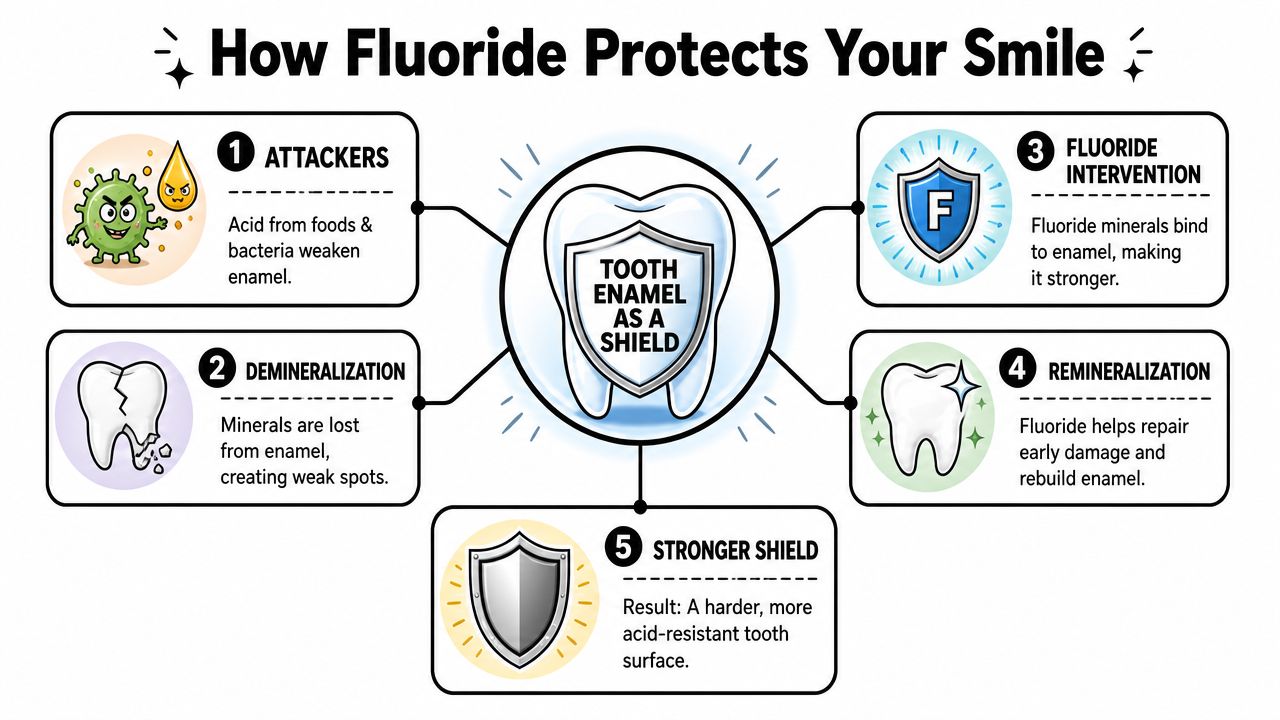
Your enamel is like a shield on the outside of each tooth. That shield is strong, but it isn't under constant protection. Every day, acids from food, drinks, and bacteria press against it.
When those acids pull minerals out of enamel, that's called demineralization. If minerals go back into the enamel, that's remineralization. Your mouth moves between those two states all day long.
The daily tug of war on enamel
Think of enamel like armor that takes repeated hits. A soda, a sports drink, a sweet snack, or even normal plaque buildup can create the kind of acidic environment that weakens the tooth surface.
If the damage stays mild, the surface can often be repaired before a true cavity forms. That's where fluoride becomes so useful. It helps the tooth rebuild in a stronger form instead of trying to recover on its own.
How fluoride changes the repair process
Fluoride acts like a skilled blacksmith repairing worn armor. It doesn't just patch the weak area. It helps form fluorapatite, a mineral that's more resistant to acid than the tooth's original mineral structure.
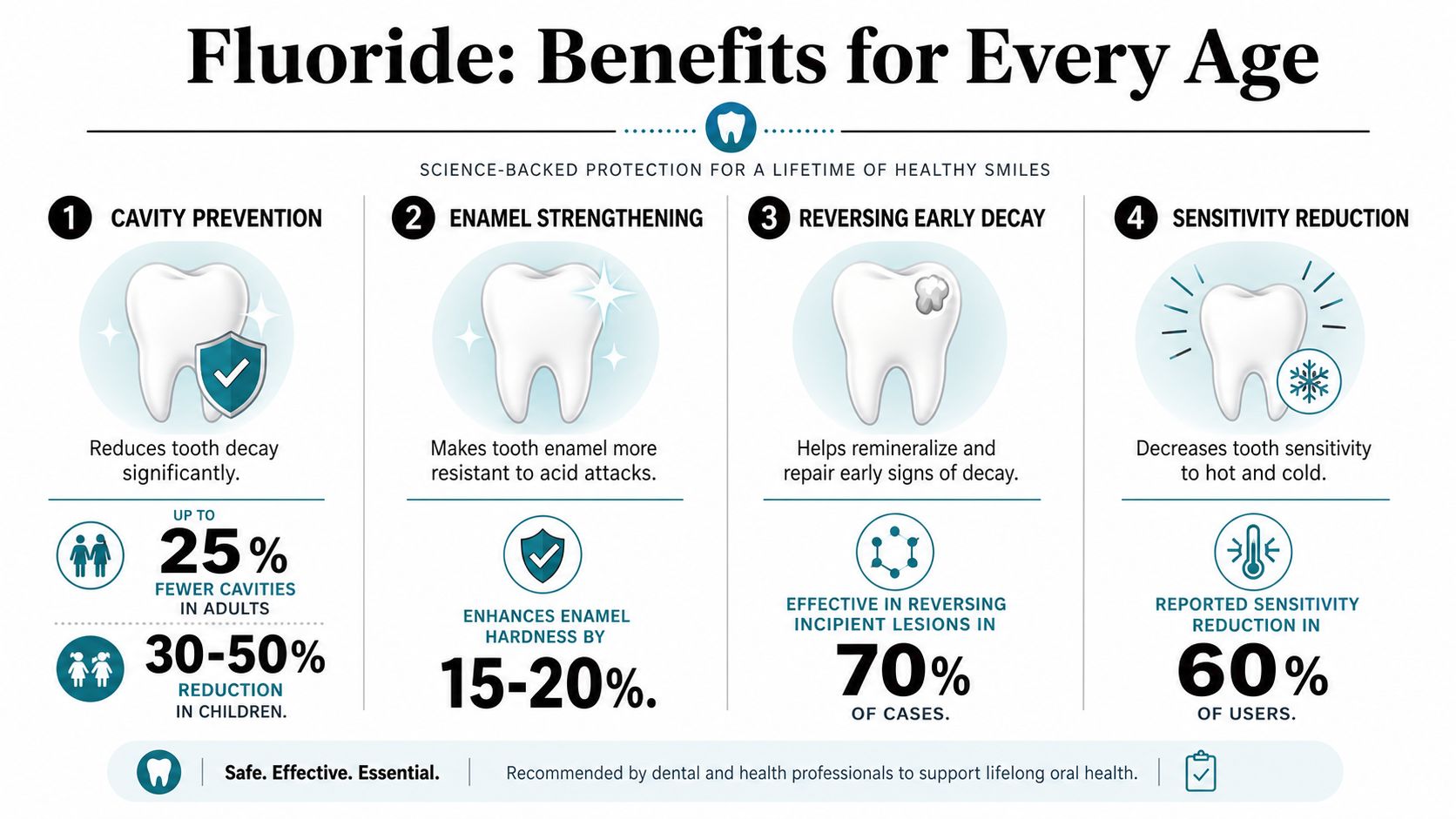
Topical fluoride treatments also help in two ways at once. They reduce acid production from cavity-causing bacteria and support enamel repair. Clinical evidence cited by Dimensions of Dental Hygiene on topical fluoride and remineralization notes that this process can arrest early cavities and reduce caries incidence by approximately 25%.
Practical rule: Fluoride works best when it's part of regular prevention, not only after a tooth starts to hurt.
That “topical” part matters. In plain language, fluoride helps most after teeth have erupted into the mouth, because it keeps working on the outside surface where acid attacks happen. If you'd like a simple visual explanation of that repair cycle, this guide on enamel remineralization explained is a helpful companion to what your dentist discusses in the office.
Why this matters for appearance too
Strong enamel isn't only about avoiding decay. Healthy enamel also helps teeth keep a smoother, brighter-looking surface. When enamel weakens, teeth can look duller, rougher, and more prone to wear.
That's one reason fluoride treatment benefits go beyond “fewer cavities.” It supports the surface layer that gives teeth their durability and clean appearance.
The Proven Benefits of Fluoride for All Ages
A common family pattern looks like this. A child comes in for cavity prevention, and a parent sitting in the next chair mentions, almost as an afterthought, that cold water has started to sting a few teeth. Fluoride can help both patients, but for different reasons.
Fluoride remains a long-standing part of preventive dentistry because it supports teeth at many stages of life. Children benefit while their brushing habits and newly erupted teeth are still developing. Adults often benefit in a less obvious way, especially when sensitivity, dry mouth, gum recession, or older dental work start to change how the mouth responds to everyday foods and drinks.
Fewer cavities and less drilling later
One of the clearest fluoride treatment benefits is earlier protection against decay. Professional fluoride treatments can reduce the incidence of dental caries by up to 60%, according to Sky Pediatric Dentistry's summary of fluoride treatment effectiveness.
A small weak area on enamel is far easier to manage than a cavity that has already formed a hole. When we can strengthen that surface early, patients often avoid fillings, crowns, and loss of natural tooth structure. That is good for comfort, cost, and long-term tooth preservation.
The benefit adults often miss
Many adults assume fluoride is mainly for kids. In daily practice, one of its overlooked uses is helping with tooth sensitivity.
If cold air, ice water, sweets, or brushing near the gumline causes a quick sharp sensation, the tooth may have exposed dentin or worn enamel. Professional fluoride applications can strengthen those vulnerable surfaces and help reduce the pathways that trigger that discomfort, as explained in Dr. Wudds' discussion of fluoride for sensitivity relief.
Sensitive teeth do not automatically point to a major procedure. Sometimes they point to a surface that needs better protection.
This is especially helpful for adults with gum recession, enamel wear, dry mouth, a history of frequent decay, or older restorations that create more plaque-retentive edges. In those cases, fluoride supports comfort and prevention at the same time.
Early damage can often be managed without a filling
Teeth usually show warning signs before a cavity becomes large enough to need drilling. Early enamel damage often starts as a weak spot, much like a small scuff on a wall before the paint chips away. At that stage, the surface may still be repaired rather than restored.
Fluoride is useful during that early window. It supports mineral repair and slows further acid attack, which can help keep a small problem from turning into a larger one. For parents, this is one reason a dentist may recommend fluoride before a child has pain. For adults, it is often part of a plan to protect areas that are starting to wear down.
For children at higher risk of decay, fluoride also works well alongside other preventive tools such as dental sealants for kids, which protect the deep grooves on back teeth where brushing can miss.
Why children, teens, adults, and seniors all benefit
The benefit stays consistent. The reason for using it changes with age.
- For children: Newly erupted teeth are still settling in, and cleaning those back grooves well takes practice.
- For teens: Braces, sports drinks, frequent snacking, and inconsistent home care can all raise cavity risk.
- For adults: Sensitivity, dry mouth, exposed root surfaces, and older fillings often become more important than people expect.
- For seniors: Gum recession, medication-related dry mouth, and more delicate root surfaces can make decay start faster and spread more easily.
That broad age range is what makes fluoride so useful in a family practice. The goal is not only to prevent cavities in children. It is also to help teenagers protect hard-to-clean teeth, help adults stay comfortable, and help older patients keep natural teeth healthy for as long as possible.
Professional Fluoride Options at the Dentist
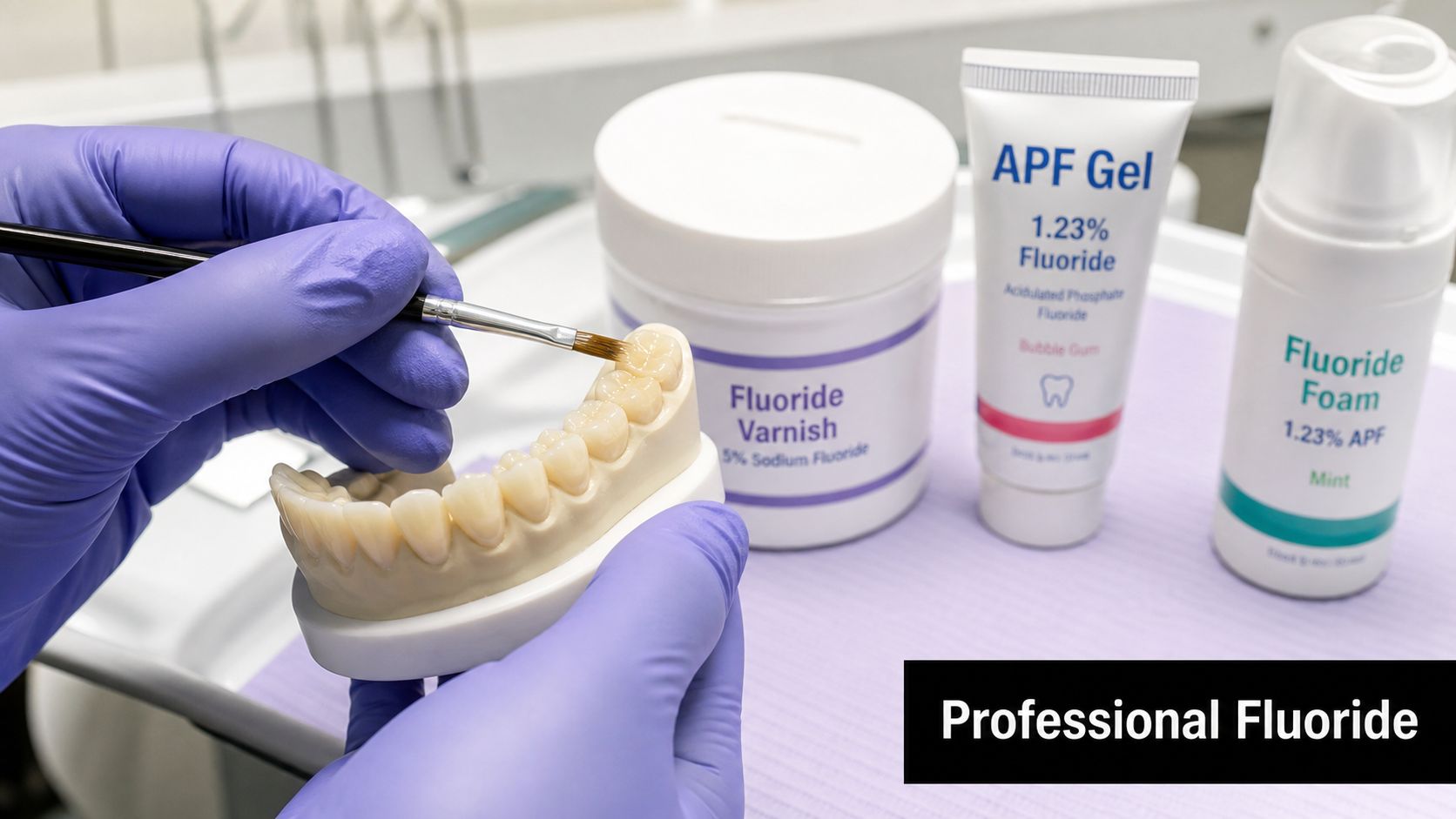
When people hear “fluoride treatment,” they often picture one thing. In practice, dentists may use varnish, gel, or foam. All three are topical options, but the patient experience is a little different.
The science behind the recommendation is straightforward. The fluoride effect is predominantly topical, and keeping a low level of fluoride in saliva and plaque is key. A review discussed by the National Library of Medicine on topical fluoride and caries reduction reports caries reductions of 30–59% in primary teeth and 40–49% in permanent teeth through consistent topical application.
A simple comparison of the main options
| Type | How it's applied | What it feels like | Common reason it's chosen |
|---|---|---|---|
| Varnish | Painted onto teeth with a small brush | Quick, sticky coating that sets on the teeth | Easy for kids and adults, stays in contact with enamel |
| Gel | Placed in trays that fit over teeth | Usually sits for a short period during the visit | Covers many teeth at once |
| Foam | Also delivered in trays | Light texture, brief chair time | Another tray-based option for topical fluoride delivery |
Why varnish is so common now
Many offices use varnish often because it's fast, simple, and easy to tolerate. Children usually handle it well because it doesn't require holding trays in the mouth. Adults tend to like it for the same reason.
A dentist may also pair fluoride with other preventive tools based on your risk level. For children with deep grooves in molars, dental sealants for kids may be discussed alongside fluoride because the two approaches protect teeth in different ways.
Varnish is often the most practical choice because it goes on quickly and keeps the fluoride where it's needed.
How dentists choose the right form
The right option depends on age, cavity risk, comfort, and the condition of the teeth. A child with newly erupted molars may benefit from varnish for easy application. An adult with generalized sensitivity may also do well with varnish because it targets exposed surfaces directly.
At Grand Parkway Smiles, fluoride is one preventive option that may be recommended as part of a broader care plan based on what the exam shows.
What to Expect During Your Fluoride Appointment
Most fluoride visits are short, easy, and painless. If you've never had one, the process usually feels much simpler than people expect.
The first thing to know is that there's no drilling and no numbing. In many cases, fluoride is added to a routine preventive visit after the cleaning and exam.
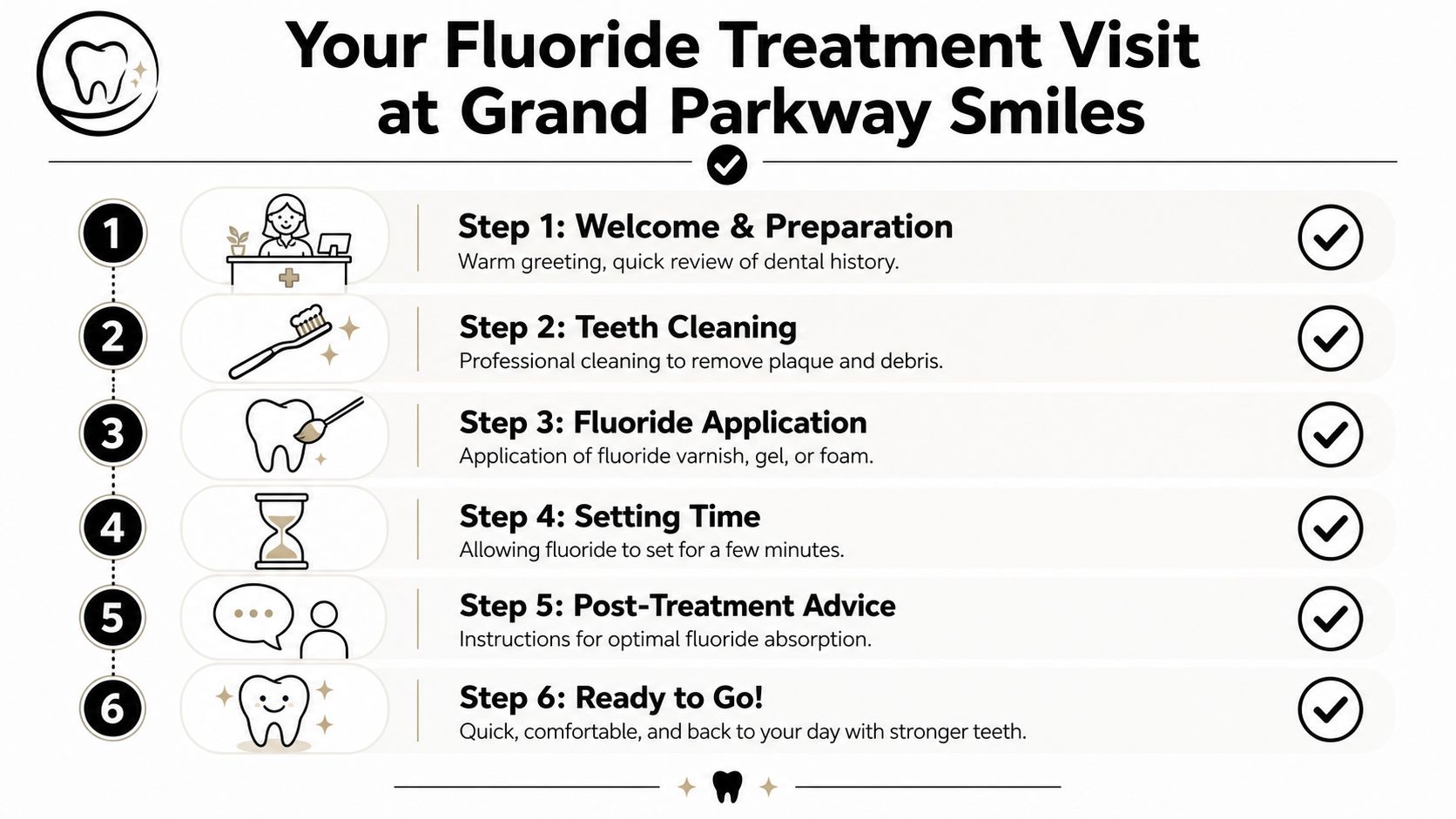
The appointment step by step
A quick review
Your hygienist or dentist checks your recent history, current symptoms, and cavity risk. If you've had sensitivity, dry mouth, or a new area of concern, mention it.Cleaning the teeth
Fluoride is often placed after a professional cleaning so it can contact the tooth surfaces more directly.Application
The fluoride is applied as varnish, gel, or foam. Varnish is brushed on. Gel and foam are usually placed with trays.A short setting period
The product needs a little time to sit on the teeth. Your team will tell you exactly when to eat or drink again, depending on the material used.Back to your day
You can return to work, school, or errands right away.
Questions patients ask most often
People usually ask two things. How often do I need it, and is it safe?
The answer to frequency depends on your risk level. Some children benefit from regular in-office fluoride because they're still learning home habits or have a history of decay. Some adults benefit because of sensitivity, dry mouth, or frequent restorative work. The exact schedule should come from your dentist's risk assessment rather than a one-size-fits-all rule.
A clear word about safety for children
Parents often worry about fluorosis, and that concern deserves a straight answer. Fluorosis is a cosmetic change that happens during tooth development when too much fluoride is ingested. That's different from a carefully placed professional topical treatment.
For parents considering preventive care, the Cleveland Clinic explanation of fluoride varnish for children notes that in-office fluoride varnish prevents approximately one-third of all cavities in primary teeth. That's a meaningful benefit for young children, especially when the goal is to avoid pain, infection, and early dental treatment.
For erupted teeth, the key benefit is topical. The fluoride needs to be on the teeth, not swallowed in large amounts.
What children and adults usually notice after treatment
Most children notice almost nothing beyond the feel of the coating. Adults with sensitivity sometimes report that hot and cold triggers become less bothersome after professional fluoride is added to their preventive care plan.
The treatment doesn't replace brushing, flossing, balanced eating, or regular exams. It supports all of them by giving enamel extra protection where daily life tends to wear it down.
Is Fluoride Treatment Covered by Insurance
A common family question sounds like this: “Will insurance pay for fluoride for my child, and does it cover anything for me too?” The answer is often yes for children, sometimes for adults, and always with plan-specific details that are worth checking before the visit.
Many dental plans place fluoride under preventive care, especially for pediatric patients. That usually means coverage is tied to age limits, how often the treatment is allowed, and whether your child is due based on the plan's schedule. Adult coverage is less predictable, which surprises many patients. Even so, adults with sensitivity, dry mouth, exposed roots, or a history of frequent dental work may still find fluoride a practical out-of-pocket preventive step because it can help lower the chance of bigger treatment needs later.
Cost matters.
Fluoride is generally a small service compared with the cost of treating decay after it progresses. The same prevention-first logic applies whether you are trying to protect a child's newly erupted teeth or reduce cold sensitivity on an adult tooth that has worn areas near the gumline.
What this means for families
If your child has dental insurance, fluoride is often one of the easier preventive benefits to use. A quick benefits check can confirm the age cutoff, the number of covered applications per year, and whether the treatment is included during a routine preventive visit.
For adults, the better question is not only “Is it covered?” but also “Is it likely to help my specific problem?” If the goal is cavity prevention, sensitivity relief, or added protection for dry mouth, your dentist can explain whether professional fluoride makes sense even if your plan does not pay for it.
If you do not have insurance, prevention is still usually less expensive than repairing a cavity, replacing a filling, or treating a more sensitive tooth later. If you want to see how fluoride fits with exams, cleanings, sealants, and other preventive dentistry services at Grand Parkway Smiles, that broader view can help you compare short-term cost with long-term value.
Your Partner in Preventive Care at Grand Parkway Smiles
Fluoride works best when it's part of a bigger preventive picture. Cleanings remove buildup. Exams catch weak spots early. Sealants can protect the grooves of molars. Fluoride strengthens tooth surfaces and helps reduce the chance that early damage turns into a bigger repair.
That combination matters because families rarely have the same needs across every age group. A child may need help protecting new permanent teeth. A parent may be dealing with cold sensitivity. A grandparent may need support for exposed root surfaces and dry mouth. Preventive care works best when it's individualized.
Building a prevention plan that fits your family
A fluoride recommendation should make sense in the context of your full oral health picture. That includes your home habits, your history of cavities, any sensitivity, the shape of your teeth, and how easy it is to keep certain areas clean.
If you want to see how fluoride fits into broader long-term protection, preventive dentistry at Grand Parkway Smiles outlines the other services that often work alongside it.
The best preventive plan is the one your family can keep up with consistently.
Fluoride treatment benefits are practical, not complicated. Stronger enamel, fewer weak spots, better comfort for sensitive teeth, and extra support for children who are still building lifelong oral health habits. Those are meaningful wins for both dental health and the appearance of the smile.
If you have questions about fluoride for yourself or your child, talk with the team at Grand Parkway Smiles. They can review your cavity risk, sensitivity concerns, insurance details, and preventive options so you can make a confident choice for your family's dental health.